5 587 résultats
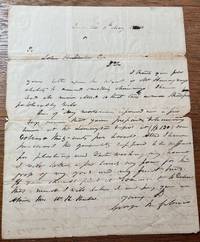
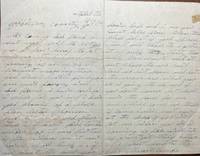
186436375Jefferson County Georgia: n.p. 1864. Letter. Good. Letter. Single sheet folded to make 4 pages. Approximately 9" x 7.5". Multiple folds. Light toning to the paper. <br /> <br /> Contents very difficult to read but the writer is discussing a potential land purchase and purposes meeting the letter recipient at Thomson. The writer instructs the recipient to "send your letter to Reedy Creek Post Office." The writer states "it is good fresh land and close to Augusta it is only thirty three miles from Augusta and it close to no rail road so rit soon and let the man no what you are a going to do." Letter contains no direct Civil War content. n.p. unknown
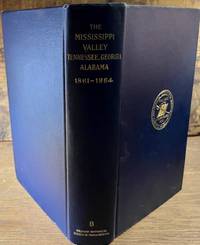
191034968Cadet Armory Ferdinand Street Boston: The Military Historical Society of Massachusetts 1910. First Edition. Hardcover. Very good. Small quarto. 1 xii 619 pages. Illustrated with 8 folding maps in back. Blue cloth hardcover with gilt Military Society of Massachusetts seal on the front cover. Gilt title on the spine. A flew blemishes to cloth binding. Interior contents and maps in very good condition. The Military Historical Society of Massachusetts hardcover
187434803Albany New York: Joel Munsell 1874. First Edition. Wraps. Very good. Wraps. x errata slip 184 pages. Original printed green stitched wraps. Black title on the front cover. Pages uncut and untrimmed. Appears unused. Light wear to the covers and foredge. A small chip and paper split on the spine. <br /> <br /> Howes J 205; Derenne Georgia catalog volume 2 page 747. Joel Munsell unknown
85012Rome GA: 1908. Typed letter signed. 1pp on Maddox's law office stationery; Sept. 6 1908; seeking appointment to the Commission for the Chickamauga and Chattanooga National Park. 27 lines ca 220 words; signed in full. With "Received" stamp of the Office of the Secretary of War dated Sep 14 1908; docketed on verso in Joseph G. Cannon's hand with a ca. 100-word endorsement of Maddox's application. Old folds; lightly browned; Very Good. <br /> <br /> Maddox a Confederate veteran and five-term Congressional Representative for Georgia 1893-1905 writes seeking appointment to the Commission in charge of the Chickamauga and Chattanooga National Military Park which as part of its charter required that at least one Confederate veteran be a member: ".As you know I was a Confederate soldier; and I was in the battle of Chickamauga before I was sixteen years old. The Chickamauga Battlefield is in my old Judicial Circuit when I was Judge of the Superior Court and it is in the District which I represented in Congress for twelve years.I would certainly take great pride as I always have done heretofore in the protection and care of this great National Park and I feel that if you would be kind enough to write or tell the President who I am and what you know of me as a Representative in Congress it would go a long way in securing the appointment." On verso is Cannon's holograph statement addressed to "the President" supplying the requested recommendation: ".John W. Maddox was for several terms a Democratic member of Congress from Georgia. He was one of the most efficient members of the minority & while a good partisan had the ability & courage to distinguish between partisanship & legislature.if I had the authority I would appoint Mr. Maddox" signed "JG Cannon" dated 9/11 1908. unknown
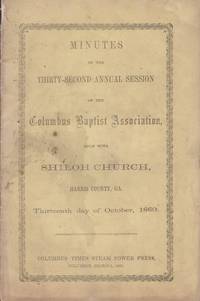
186030260Columbus: Columbus Times Power Press 1860. First Edition. Wraps. Good. Wraps. Approx. 8.5" X 5.5". 20 pages. Original printed stitched yellow wraps. Light soiling to outer wrap. Columbus Times Power Press unknown
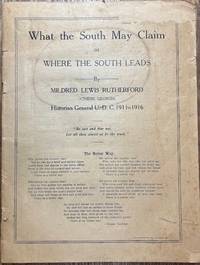
191634768Athens: McGregor Company 1916. Newspaper. Fair. Newspaper. 42 pages that includes 4 pages of advertisements a few illustrated. Toned brittle fragile paper has dozens of edge tears and chips with loss of paper. Front cover has a faint ring. Contents are pro Confederacy with several short articles covering history of the South. Advertisements include books education illustrated Klan outfit announcement for "Birth of a Nation" promotion of the Lucy Cobb Institute etc.<br /> <br /> From wikipedia:<br /> <br /> Mildred Lewis Rutherford July 16 1851 – August 15 1928 was a prominent white supremacist speaker educator and author from Athens Georgia. She served the Lucy Cobb Institute as its head and in other capacities for over forty years and oversaw the addition of the Seney-Stovall Chapel to the school. Heavily involved in many organizations she became the historian general of the United Daughters of the Confederacy UDC and a speech given for the UDC was the first by a woman to be recorded in the Congressional Record. She was a prolific writer in historical subjects and an advocate of the Lost Cause narrative. Rutherford was distinctive in dressing as a southern belle for her speeches. She held strong pro-Confederacy proslavery views and opposed women's suffrage. McGregor Company unknown
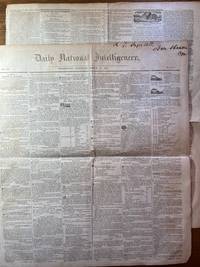
183236785Washington DC: Gales & Seaton 1832. Newspaper. Good. Newspaper. Approx. 21" x 18." 4 pages. Two folds. Sheets are detached. Newspaper has light toning. Name of R. J. Ingersoll New Haven Con" written top of issue. Possibly the same Ingersoll that served 4 terms in Congress from 1825-1833. <br /> <br /> Entire contents of page 2 concern "The Cherokee Case. Opinion of the Supreme Court delivered by Mr. Chief Justice Marshall January Term 1832. Samuel A. Worcester vs. The State of Georgia." The case is also printed on the first column of page 3. Supreme Court case of Samuel Worcester. From the Brittannica website: <br /> <br /> Worcester v. Georgia involved a group of white Christian missionaries including Samuel A. Worcester who were living in Cherokee territory in Georgia. In addition to their missionary work the men were advising the Cherokee about resisting Georgia's attempts to impose state laws on the Cherokee Nation a self-governing nation whose independence and right to its land had been guaranteed in treaties with the United States government. In an effort to stop the missionaries the state in 1830 passed an act that forbade "white persons" from living on Cherokee lands unless they obtained a license from the governor of Georgia and swore an oath of loyalty to the state. Worcester and the other missionaries had been invited by the Cherokee and were serving as missionaries under the authority of the U.S. federal government. They did not however have a license from Georgia nor did they swear a loyalty oath to that state. Georgia state authorities arrested Worcester and several other missionaries. After they were convicted at trial in 1831 and sentenced to four years of hard labour in prison Worcester appealed to the U.S. Supreme Court.<br /> <br /> Worcester argued that Georgia had no right to extend its laws to Cherokee territory. He contended that the act under which he had been convicted violated the U.S. Constitution which gives to the U.S. Congress the authority to regulate commerce with Native Americans. The Constitution also bars the states from passing laws that alter the obligations of contracts-in this case treaties. Several treaties between the Cherokee and the U.S. government recognized the independence and sovereignty of the Cherokee Nation. Furthermore Worcester argued that the Georgia laws violated an 1802 act of Congress that regulated trade and relations between the United States and the Indian tribes.<br /> <br /> The Supreme Court agreed with Worcester ruling 5 to 1 on March 3 1832 that all the Georgia laws regarding the Cherokee Nation were unconstitutional and thus void. Writing for the court Chief Justice John Marshall held that "the Indian nations had always been considered as distinct independent political communities retaining their original natural rights as the undisputed possessors of the soil." Even though Native Americans were now under the protection of the United States he wrote that "protection does not imply the destruction of the protected." Marshall concluded:<br /> The Cherokee Nation then is a distinct community occupying its own territory.in which the laws of Georgia can have no force and which the citizens of Georgia have no right to enter but with the assent of the Cherokees themselves or in conformity with treaties and with the acts of Congress. The whole intercourse between the United States and this Nation is by our Constitution and laws vested in the Government of the United States.<br /> <br /> Georgia however ignored the decision keeping Worcester and the other missionaries in prison. Eventually they were granted a pardon and were released in 1833. Pres. Andrew Jackson declined to enforce the Supreme Court's decision thus allowing states to enact further legislation damaging to the tribes. The U.S. government began forcing the Cherokee off their land in 1838. In what became known as the Trail of Tears some 15000 Cherokee were driven from their land and were marched westward on a grueling journey that caused the deaths of some 4000 of their people.<br /> <br /> The Supreme Court agreed with Worcester ruling 5 to 1 on March 3 1832 that all the Georgia laws regarding the Cherokee Nation were unconstitutional and thus void. Writing for the court Chief Justice John Marshall held that "the Indian nations had always been considered as distinct independent political communities retaining their original natural rights as the undisputed possessors of the soil." Even though Native Americans were now under the protection of the United States he wrote that "protection does not imply the destruction of the protected." Marshall concluded:<br /> The Cherokee Nation then is a distinct community occupying its own territory.in which the laws of Georgia can have no force and which the citizens of Georgia have no right to enter but with the assent of the Cherokees themselves or in conformity with treaties and with the acts of Congress. The whole intercourse between the United States and this Nation is by our Constitution and laws vested in the Government of the United States.<br /> <br /> Georgia however ignored the decision keeping Worcester and the other missionaries in prison. Eventually they were granted a pardon and were released in 1833. Pres. Andrew Jackson declined to enforce the Supreme Court's decision thus allowing states to enact further legislation damaging to the tribes. The U.S. government began forcing the Cherokee off their land in 1838. In what became known as the Trail of Tears some 15000 Cherokee were driven from their land and were marched westward on a grueling journey that caused the deaths of some 4000 of their people. Gales & Seaton unknown
183434357New York: Thomas Illman 1834. First Edition. Map. Good. Map. Approximately 15" x 13" wider margins than other copies. Colored map shows Cherokee Tribal lands in North Georgia. A couple of very small edge tears on the right center edge not affecting content. Map is clean and in good condition. Entered according to an act of Congress in the year 1834 by Thos. Illman. Pencil note in the upper left corner on the verso states "From Burr's "A New Universal Atlas" Phillips No. 771 New York 1835 D.S. Stone/Thomas Illman Plate No. 52." Drawn before the forced removal of the Cherokee Indian Tribe in North Georgia. Thomas Illman unknown
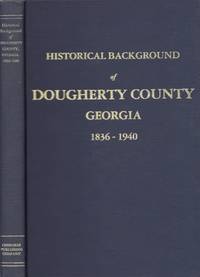
198133409Atlanta: Cherokee Publishing Company 1981. Reprint. Hardcover. Very good. Octavo. xii 260 pages. Illustrations. Blue cloth hardcover with silver title on the front cover and spine. Light shelf wear to the hardcover. Cherokee Publishing Company hardcover
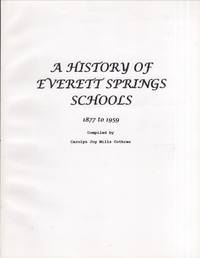
200533880Armuchee GA: Self published 2005. Soft cover. Good. Quarto size. Bound white soft cover with title in black on the front cover. Illustrated with color picture on Everett Springs school on the title page and dozens of black and white pictures of people places documents etc. 126 pages printed on glossy paper front sides only. Light soil to the covers with a reddish spots on the back cover. A taped note on the verso of the front cover has the compilers name and address. Everett Springs is located in Floyd County Northwest Georgia. The compiler was a student of Everett Springs school from the 1st thru the 7th grade class of 1947 1948. This is a limited scarce publication. Self published unknown
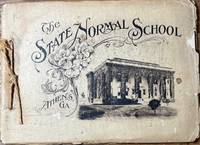
34749Brooklyn: The Albertype Company n.d. Wraps. Good. Oblong string tied illustrated wraps. 1 16 leaves. Illustrated with photogravures on the rectos only. Covers are edge worn light damp stained and soiled. Interior contents clean with ocassional light blemish in the extreme margins. <br /> <br /> The State Normal School was a teaching college for women in Athens founded in 1891. Photogravures show the various campus buildings class rooms campus views etc. The Albertype Company unknown
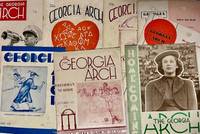
192834658Athens: University of Georgia 1928. Magazine issue. Fair. A misc. lot of 21 magazines titled "The Cracker." Published by University of Georgia between the years 1921-1928. Condition ranges from fair to good. Several issues have light to moderate soil and wear to the covers. A few covers are detached. Small edge tears to several issues. Some of the 21 issues are extras. Contents are mainly literature and humor. Drawn illustrations and several advertisements located inside. Issues include:<br /> <br /> October 1921. 36 pages. front cover damaged at top<br /> December 1921. 32 pages<br /> January 1922. 20 pages<br /> June 1922. Commencement Issue 24 pages<br /> November 1923. 2 copies. 28 pages. <br /> December 1923. 32 pages<br /> January 1924. 32 pages<br /> March 1924. 2 copies. 32 pages<br /> April 1924. 2 copies. 32 pages<br /> May 1924. 32 pages <br /> June 1924. 32 pages<br /> December 1925. 28 pages<br /> January 1926. 32 pages<br /> May 1926 28 pages<br /> June 1926. Commencement Issue 24 pages<br /> December 1928. 3 copies. 24 pages. University of Georgia unknown
193734659Athens: University of Georgia 1937. Magazine issue. Good. Magazine issues. Illustrations. Condition varies from fair to good with creases small tears and light soiling to the covers. A few issues have light scattered foxing. Contents include several advertisements some illustrated. Color illustrated advertisements on the back covers. Contents cover fiction humor photography sports a Military Ball and more. Issues include:<br /> <br /> February 1937. 24 pages<br /> March 1937. 24 pages<br /> June 1937 Graduation number. 28 pages<br /> October 1937. 24 pages<br /> February 1938. 20 pages<br /> March. 1938. 22 pages<br /> November 1938. 28 pages<br /> February 1939. 24 pages. University of Georgia unknown
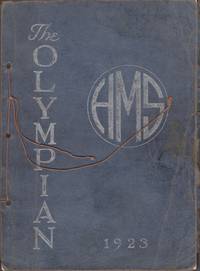
192334882Marietta Georgia: Marrietta High School 1923. First Edition. Soft cover. Good. Blue string tied wraps with silver title on the front cover. Blue end papers. Illustrated with photographs of faculty students activities sports etc. 100 pages 24 pages of advertisements. Covers are edge creased with small tears and light damp staining. Paper spine worn at the top and bottom. Interior contents clean with no writing. Blue rubber stamp on the title page reads "Property of Jas. T. Manning Marietta GA.". Manning was a former member of the Georgia House of Representatives Georgia Senate Assistant U.S. Attorney in Atlanta and elected Cobb County Judge. Marrietta High School unknown
192835855Atlanta: Foote & Davies 1928. First Edition. Soft cover. Good. Tall quarto brown soft cover with embossed title on the front cover. 88 pages. Illustrated with numerous photographs of the students school faculty etc. Several advertisements. Edge wear to the covers. Rear end sheet torn out. Pages 85 and 86 with a color illustration by the printer is detached. Name card of "Myra Diamond Thompson" glued down in the upper right corner of the title page. A list of hand written autographs located on page 87. A couple of doodles and date 30' written on the last page. On the rear paste down is a small written rhyme by Myra dated 6/3/30 at 8:45 p.m. From wikipedia:<br /> <br /> Russell High School was a high school in East Point Georgia United States that opened in 1924. Industrialist and philanthropist John J. Eagan donated the land for the school provided the school was named after his uncle the late William A. Russell a Confederate general. After Eagan's father died Russell gave financial and spiritual support to three-month-old John Eagan and his mother Russell's sister.<br /> <br /> The school closed in 1988 when it was combined with Headland High School East Point College Park High School College Park and Hapeville High School Hapeville to form Tri-Cities High School.1 At the time of its closing Russell was the oldest school in the Fulton County system. The schools were merged due to declining populations and the aging of the communities as North Fulton was exploding with growth at the time. Foote & Davies unknown
200905345Paris, Albin Michel - wiz, 2003 ; grand in-12, 398 pp., broché, couverture illustr (une pliure sur le 1er plat). Traduit de l'anglais par Pascale Jusforgues.
196234767Hapeville Georgia: Longino & Porter Inc 1962. Soft cover. Good. Soft cover. xiv 158 pages. Tan covers with blue title on the front. Light edge wear top of the front cover. Light toning to the covers. Title hand printed on the spine. A clipped cut bibliographic catalog description is pasted down bottom of page iii. A few pieces of ephemera laid inside including a review of this reprint by Georgia genealogist Kenneth Thomas and a 1981 book order sheet from the Reprint Company. Previous owner pencil inscription written inside the front cover. Longino & Porter, Inc unknown
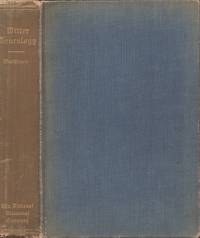
192936541New York: The National Historical Company 1929. First Edition. Hardcover. Fair. Octavo. 394 pages. Illustrations. Color engraved armorial crest frontispiece. Blue cloth hardcover with title on the spine. Some fading to the blue cloth binding. Both hinges are broken exposing the webbing. Covers still securely attached and no loose pages. Genealogy notes laid inside the front cover. Previous owner inscription on the front paste down. One page of handwritten family notes on the verso of the right front flyleaf. Another page of notes written on the blank recto of the frontispiece. Pieces of paper laid in between pages 162-163. Five pages of Witter family notes written on the blank rear end sheets following page 394. Contents mostly clean inside with a few small check marks in the text. Fair. The National Historical Company hardcover
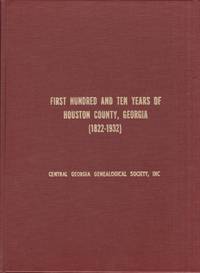
198336561Warner Robbins Georgia: Central Georgia Genealogical Society Bookcrafters Inc. Chelsea Michigan 1983. Hardcover. Good. Tall quarto. xii 435 pages. Burgundy hardcover with gilt title on the front cover and spine. Light brown spots and foxing to the text block edges and end sheets. Previous owner ink inscription written on the right front flyleaf. Interior contents are clean and unmarked. Central Georgia Genealogical Society Bookcrafters, Inc. Chelsea, Michigan hardcover
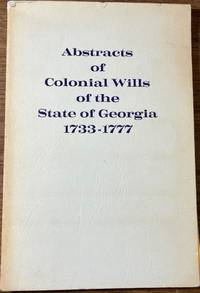
191034880Atlanta: Chas. A. Byrd State Printer 1910. First Edition. Hardcover. Very good. Octavo. Two parts in one. 172 pages in the first part and the second part titled "Logan Manuscript" has 121 pages. 19 pages of advertisements in back. Blue cloth hardcover with illustration and title in black on the front cover. Black title on the spine. Light shelf and edge wear to the cloth binding. <br /> <br /> Contents include an extensive list of names from 18 Georgia counties including Bryan Burke Camden Chatham Columbia Effingham Elbert Franklin Glynn Greene Hancock Liberty Montgomery Oglethorpe Richmond Screven Warren and Wilkes. More names listed in the Logan manuscript section. Chas. A. Byrd, State Printer hardcover
199536605Spartanburg: The Reprint Company 1995. Hardcover. Very good. Octavo. xviii 671 pages 4 blank pages to be used for recording marriages births etc. Illustrated. Blue cloth hardcover with gilt title on the front cover and spine. Several illustrations. Illustrated map end papers. Interior contents clean and unmarked. Scarce. The Reprint Company hardcover
184636641Lexington Georgia: n/a 1846. Letter. Fair. Letter. 2 pages. Written from Lexington Georgia May 11th 1846 to John H. Newton Esq. of Athens Georgia. The paper has multiple folds edge chips and splits at the folds. Small tape repairs made to the paper on the verso. Contents of the letter are difficult to transcribe but it appears to be some sort of property deal. A crude sketch is located on the second page. Fair only. From wikipedia:<br /> <br /> Gilmer's career consisted of multiple alternating elected positions at the state and federal level. Of the two great Georgia political factions known as the Crawford men and the Clarke men he favored Crawford. He was elected to the Georgia House of Representatives in 1818 1819 and 1824. Gilmer was also elected to the U.S. House of Representatives in 1820 1826 1828 and 1832. Due to an oversight he did not serve after the election in 1828 because he failed to accept the position within the legal time frame and the governor ordered a new election.<br /> As governor of Georgia Gilmer aggressively pursued Indian removal laying claim to Federal assistance promised by the Compact of 1802.1<br /> <br /> He initiated the prosecution of Cherokee missionary Samuel Austin Worcester for violation of a law requiring all white persons residing within the Cherokee nation to obtain a license from the governor and to swear to uphold the laws of Georgia.23 Worcester was arrested in 1831 and sentenced to four years' hard labor.4 The Cherokee Nation hired a lawyer William Wirt and sued the state of Georgia in Cherokee Nation v. Georgia.5 This led to the United States Supreme Court decision Worcester v. Georgia which struck down the Georgia statute imposing its laws on the Cherokees as violating the Treaty of Hopewell.<br /> <br /> Backed by the Georgia militia and Governor Gilmer the General Assembly dissolved the Cherokee government annulled its laws and passed an act authorizing Gilmer to take possession of the Cherokee lands in north Georgia.6<br /> The Cherokee issue was hotly debated in the gubernatorial campaign of 1831.7 Gilmer lost the election to Wilson Lumpkin. The state seized Cherokee gold mines and set up a land lottery system in 1832 to distribute Cherokee lands.8<br /> <br /> During his second term as Governor of Georgia beginning in 1837 Gilmer supported and expedited the Federal government in the final removal of Indians from Georgia.9 This process came to be termed the Trail of Tears. n/a unknown
192041211Washington D.C.: Published by the United States Coast and Geodetic Survey 1920. Large folding nautical chart printed on heavy paper stock. Uncolored. A rare original coastal survey of the border between Georgia and South Carolina including Savannah Ossabaw Island Wassaw Island Skidway Island Tybee Island. Bluffton Beaufort Hilton Head Island Port Royal Island Phillips Island Fripp Island Hunting Island and Parris Island.<br/> <br/> Established by President Thomas Jefferson in 1807 as the Survey of the Coast the U.S. Coast and Geodetic Survey was the United States' first civilian scientific agency. This agency has followed its mission to survey the U.S. coastline create nautical charts of the coast and help increase maritime safety since its founding and has often played fascinating roles in significant chapters of U.S. history. It served in all theaters of the Civil War in the service of the Union Army and Navy pioneered acoustic exploration in the wake of the sinking of the Titanic and during WWI it worked to detect enemy submarines. In addition this agency worked to survey and produce detailed maps and renderings of the U.S. coast. These nautical survey maps commonly referred to as "T-sheets" provide fascinating insights into the history of the United States coastline which has and will continue to shift. These maps are the most important data source for understanding the physical and ecological characteristics of the U.S. shoreline. The present map is a highly detailed and accurate sea chart of the coastal border of Georgia and South Carolina and an important historical view of the developing states. Published by the United States Coast and Geodetic Survey unknown
192241210Washington D.C.: Published by the United States Coast and Geodetic Survey 1922. Large folding nautical chart printed on heavy paper stock. Colored. A rare original coastal survey of the border between Georgia and South Carolina including Savannah Bluffton Beaufort Hilton Head Island Port Royal Island Phillips Island Fripp Island Hunting Island Edisto Beach and Parris Island.<br/> <br/> Established by President Thomas Jefferson in 1807 as the Survey of the Coast the U.S. Coast and Geodetic Survey was the United States' first civilian scientific agency. This agency has followed its mission to survey the U.S. coastline create nautical charts of the coast and help increase maritime safety since its founding and has often played fascinating roles in significant chapters of U.S. history. It served in all theaters of the Civil War in the service of the Union Army and Navy pioneered acoustic exploration in the wake of the sinking of the Titanic and during WWI it worked to detect enemy submarines. In addition this agency worked to survey and produce detailed maps and renderings of the U.S. coast. These nautical survey maps commonly referred to as "T-sheets" provide fascinating insights into the history of the United States coastline which has and will continue to shift. These maps are the most important data source for understanding the physical and ecological characteristics of the U.S. shoreline. The present map is a highly detailed and accurate sea chart of the coastal border of Georgia and South Carolina and an important historical view of the developing states. Published by the United States Coast and Geodetic Survey unknown
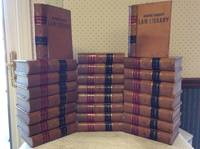
18471233456Georgia 1847. 1st Edition. Leather bound. Fair. A complete run of the first 24 volumes of the State of Georgia's offical law reports. FIRST EDITIONS FIRST PRINTINGS OF THESE RARE PRE-CIVIL WAR GEORGIA IMPRINTS. Vol. I was published in New York but Vol. II was published in Savannah Vols. 3-20 in Athens GA and Vols. 21-24 in Columbus GA. The set is bound in matching leather but some bindings are damaged. Each volume has a law library name stamped on the covers; the front boards of Vols. I and VI are detached; the spines of Vols. I IX and XX are torn; most volumes have a strip of brown cloth tape across the top of the spine. ATTENTION: many bindings are fragile so one can expect other covers to detach. Other than some very minor foxing scattered throughout the set the interior pages are clean tight and unmarked. Offered as-is and no returns accepted. Buyer should understand they may need to rebind these books. These reports on various law cases were standard volumes in Georgia courts but the vast majority were destroyed during the Civil War As with other works from this era antebellum printings from Georgia are today rarely found. unknown