258 résultats
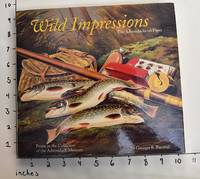
1995UBARWIL00DCAdirondack Museum & David R. Godine 1995. Very Good. Barnhill Georgia B. Wild Impressions: The Adirondacks on Paper. Boston MA: Adirondack Museum & David R. Godine 1995. 99pp. Indexed. Illustrated. Bibliography. Oblong 4to. Paperback. Book condition: Very good with rubbed edges. Adirondack Museum & David R. Godine paperback books
19957607Boston MA: The Adirondack Museum / David R. Godine 1995. Softcover. VG- Label & few marks from previous gallery owner; slight scuffs to back cover. Color illus. wraps. 99 pp. 19 color 104 bw plates. Issued in conjunction with a 1995 exhibition. With a main essay by Georgia Barnhill with a foreword by David Tatham. There are 80 footnotes to accompany the essay providing fertile ground for future research. There are 96 metal engravings 64 artists' etchings 181 lithographs and 233 wood engravings. A superb listinga valuable reference. The Adirondack Museum / David R. Godine unknown books
19957607000001Boston MA: David R. Godine 1995. Hardbound. As New. Green cloth spine and tan boards. 99 pp. 19 color 104 bw plates. Main essay by Georgia Barnhill with a foreword by David Tatham. Published to accompany an exhibition held at the Adirondack Museum May 27 to Oct. 15 1995. There are 80 footnotes to accompany the essay providing fertile ground for future research. There are 96 metal engravings 64 artists' etchings 181 lithographs and 233 wood engravings. Since its opening last century the Adirondack wilderness of upstate New York has captured the nation's imagination. Home to artists and writers philosophers and sportsmen its mountains rivers and valleys have always radiated a special mystique offering its admirers what was and still is among the largest and most spectacular wilderness regions in the East. Nowhere is the topography history or activities of this area more eloquently recorded than in the print collection of the Adirondack Museum in Blue Mountain Lake. And in this fully illustrated book certain to become the standard reference work on the subject the reader is treated to the remarkable variety and quality of graphic work that has flowed from this region. Here are wood engravings by Winslow Homer color lithographs after A.F. Tait hunting scenes from Currier and Ives and etchings by Stephen Parrish and John Henry Hill. Whether intended to attract tourists record the landscape or sway public opinion these prints not only document the history of a singular region but also mirror the broader cultural trends of a vigorous expansive and confident America. David R. Godine unknown books
1975SKU1033468Bobbs-Merrill 1975-01-01. Hardcover. Good/Good. 0672521849 Dust jacket and book are clean with modest wear has a good binding no marks or notations. Bobbs-Merrill hardcover books
197233428Nashville: Abingdon Press 1972. Hardcover. Very good. 237pp index. Small ink name on front free endpaper else a very good hardback in a tanned jacket. <br/><br/> Abingdon Press hardcover books
197246266NY: Abingdon 1972. First Edition. 8vo pp. 240. Notes index. Ex library with pocket and stamps. Edges spotted o/w VG in dj. Abingdon unknown books
2013125059Worcester Massachusetts: American Antiquarian Society 2013. paperback. 8.5 x 10 inches. paperback. 128 pages. À la Mode Française: La Lithographie aux Estats-Unis 1820-1860 from the American Antiquarian Society features five essays from Georgia B. Barnhill Lauren B. Hewes Catherine Wilcox-Titus Marie-Stéphanie Delamaire and Helena E. Wright that explore several topics of interest to scholars of American print publishing. Together the essays examine the impact of French lithographic practice on the American lithographic industry and American visual culture; the circulation of French imagery in the United States with a case study on portraits of Napoleon and Lafayette; Goupil's French lithographs after American genre and history paintings; and the use of French lithographs in didactic displays at the Smithsonian Institution in the late nineteenth century. The book explores the variations in quality among early American lithographs. The first essay by Georgia Barnhill closely looks at this phenomenon and examines the work of several academically-trained French lithographic artists who worked in New Orleans New York Philadelphia and Boston from the mid-1830s to 1860. The essay by Lauren Hewes looks at the circulation of French imagery in the United States. Some lithographs in the American Antiquarian Society collection were published in France for an American market and there is a selection of sentimental prints and portraits that were printed in the United States but were French in derivation. The book provides reasoning for why prints of Napoleon and Lafayette were moved into the American culture. Using the paintings and prints of these two political leaders as a case study Catherine Wilcox-Titus reveals the importance of lithography to the dissemination of fine art to a large mass audience. Next the essay by Marie-Stéphanie Delamaire considers how the American paintings reproduced by Goupil Vibert and Company led to the transatlantic cultural understanding and exchange. Because Goupil published so many lithographs for American and European audiences he is an important part of the link between French and American lithography. The last essay by Helena Wright provides thoughts on the afterlife of French lithographs in American culture and the collecting and use of French lithographs in the United States National Museum. Illustrated with black-and-white and color prints this publication will be an excellent resource for the study of American prints and the French influence on the development of early lithography in the United States. Corners bumped. American Antiquarian Society unknown books
2013118846Worcester Massachusetts: American Antiquarian Society 2013. paperback. 8.5 x 10 inches. paperback. 128 pages. À la Mode Française: La Lithographie aux Estats-Unis 1820-1860 from the American Antiquarian Society features five essays from Georgia B. Barnhill Lauren B. Hewes Catherine Wilcox-Titus Marie-Stéphanie Delamaire and Helena E. Wright that explore several topics of interest to scholars of American print publishing. Together the essays examine the impact of French lithographic practice on the American lithographic industry and American visual culture; the circulation of French imagery in the United States with a case study on portraits of Napoleon and Lafayette; Goupil's French lithographs after American genre and history paintings; and the use of French lithographs in didactic displays at the Smithsonian Institution in the late nineteenth century.<BR><br /> <BR><br /> The book explores the variations in quality among early American lithographs. The first essay by Georgia Barnhill closely looks at this phenomenon and examines the work of several academically-trained French lithographic artists who worked in New Orleans New York Philadelphia and Boston from the mid-1830s to 1860.<BR><br /> <BR><br /> The essay by Lauren Hewes looks at the circulation of French imagery in the United States. Some lithographs in the American Antiquarian Society collection were published in France for an American market and there is a selection of sentimental prints and portraits that were printed in the United States but were French in derivation. The book provides reasoning for why prints of Napoleon and Lafayette were moved into the American culture. Using the paintings and prints of these two political leaders as a case study Catherine Wilcox-Titus reveals the importance of lithography to the dissemination of fine art to a large mass audience. <BR><br /> <BR><br /> Next the essay by Marie-Stéphanie Delamaire considers how the American paintings reproduced by Goupil Vibert and Company led to the transatlantic cultural understanding and exchange. Because Goupil published so many lithographs for American and European audiences he is an important part of the link between French and American lithography. The last essay by Helena Wright provides thoughts on the afterlife of French lithographs in American culture and the collecting and use of French lithographs in the United States National Museum. <BR><br /> <BR><br /> Illustrated with black-and-white and color prints this publication will be an excellent resource for the study of American prints and the French influence on the development of early lithography in the United States. American Antiquarian Society unknown books