RUSSIA EDWARD ORME PublisherBiblio.com

642 résultats
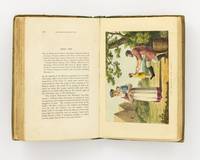
RGW19683Aquatint with original hand-colouring from 'A Picture of St Petersburgh represented in a collection of Twenty interesting Views of the City the Sledges and the People . . .' unknown
RGW19427AAquatint with original hand-colouring from 'A Picture of St Petersburgh represented in a collection of Twenty interesting Views of the City the Sledges and the People . . .' unknown
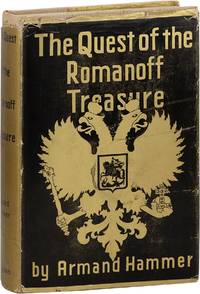
193683612New York: The Paisley Press Inc. Succeeding William Farquhar Payson 1936. Stated Third Edition. Octavo. 21.5cm. Publisher's heavy grain pale grey cloth titled and decorated in gilt to spine and front board. Dustjacket. xi; 241pp. Some wear and discoloration to extremities very light it's a very solidly produced book so wear and tear is represented by darkening of the cloth at the edges and some softening of the spine ends rather than anything more drastic; internally clean ownership to front pastedown author's signature to front flyleaf; in a handsome example of the gold and black dustjacket with some chipping and shallow loss to the spine ends scuffing and rubbing to the gilt paper coating and some marginal creasing and soiling. A very good solid copy. Illustrated throughout with full page plates. <br /> <br /> For a man named by his father after the logo of the American Socialist Labor Party after slipping out of Odessa in the 1870's Armand Hammer's journey to become one of the world's most influential businessmen and "Lenin's Favorite Capitalist" must have been a dramatic one. <br /> His father Julius had spent much of the early 20th century consolidating his role at Allied Drug and Chemical which was essentially at times a smuggling front shipping embargoed goods to Russia during the US trade sanctions. After Julius was sentenced to 3 years in Sing Sing allegedly for a botched abortion that resulted in the death of a Russian woman from subsequent pneumonia although modern research suggests that Armand a medical student might have been the one who performed the abortion and Julius took responsibility as the qualified senior medical professional present Armand took over Allied Drug and Chemical and raised it to new heights of corporate success. <br /> During Prohibition Allied's largest seller was a essentially alcoholic ginger ale sold as a medicinal tonic to great profit. <br /> <br /> Acting under the instructions of his imprisoned father Armand began taking numerous business trips to the Soviet Union. A young J. Edgar Hoover at that point basically an analyst at the Justice Department very strongly believed that the equally youthful Hammer was a COMINTERN courier and essentially placed him under surveillance for the rest of his life. <br /> Hammer's trips to Russia were ostensibly to recoup bad debts but this quickly developed into a number of lucrative business deals not least of which was selling cheap wheat to starving famine hit areas of Russia. Hammer developed a close co-operative no pun intended relationship with Lenin which resulted in a number of very high status business contracts and deals ranging from medical import contracts to 25 year's worth of asbestos mining in the Urals; one of Hammer's greatest coups was arranging payment for various services in furs caviar jewellery and antiquities seized by the Party from its long tail of enemies making him essentially a conduit for looted and otherwise dubious art jewels and antiques. <br /> At the height of Lenin's New Economic Policy Armand Hammer was the sole trade liason between the enormity of Soviet Russia and 38 major US corporations seeking to build trade deals through him. His grasp of the downrange necessities of dealing with the Soviets; graft bribery corruption and palm greasing was legendary and by the 1970's when his methods were starting to be inspected more closely there was no doubt that Hammer's understanding of legitimate business was secondary to his instinctive abilities in the fields of corporate and beaurocratic bribery and manipulation. <br /> This book is one personal perspective on the empire of treasure that Hammer accumulated; there are others and the entangled ephemeral traces of looted artworks forged and unfinished Fabergé eggs specially manufactured jeweller's tools designed to copy Fabergé's style exactly and a wealth of other foggy rumors and suspicions ranging from Armand the KGB stooge to Armand the James Bond Villain bent on Soviet domination through capitalism will continue to follow in his wake whether he be considered a legitimate businessman or a highly successful 20th century robber baron of legendary proportions. The Paisley Press Inc. Succeeding William Farquhar Payson unknown
1962011149New York: St Martins 1962. 889pp/frontis. Important study of the development of the Red Army from the revolution to the eve of World War II. Light wear to dj. Text clean. 1st Edition. Cloth. Very Good/Very Good. 8vo - over 7¾" - 9¾" tall. St Martins Hardcover
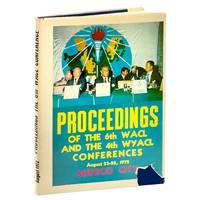
19727342Mexico City Mexico: WACL WYACL & FEMACO 1972. First Edition First Printing. Hardcover. pp. 216 30 unnumbered leaves of photographic plates. Small 4to. measuring 7.5" x 10.5". Bound in illustrated navy-blue cloth over boards with gilt lettering to the front board. Generously illustrated with dozens of chiefly black-and-white some colour photographic plates capturing conference proceedings and participants. Provides a comprehensive record of the conference proceedings organized by the Mexican affiliate of the World Anti-Communist League WACL namely the Federación Mexicana Anticomunista FEMACO comprising a detailed list of delegates from participating nations - including Australia Canada South Korea Hong Kong India Indonesia Japan Malaysia New Zealand the Philippines Thailand South Vietnam Jordan Lebanon Saudi Arabia Turkey Lesotho Liberia France the United Kingdom West Germany Italy Sweden the United States Guatemala El Salvador Costa Rica and Nicaragua - along with representatives holding observer and candidate status. Prefaced with messages of support from key anti-Communist leaders such as Chiang Kai-shek Ferdinand E. Marcos Park Chung-hee Leabua Jonathan and Nguy n V n Thi u. Outlines the detailed programme of events for the week-long milieu as well as printed texts of proposals studies deliberations and resolutions many of which include sharp criticisms of the Soviet Union the Peoples Republic of China their allied states and security apparatuses. A rare extant copy offering valuable insight into the operations and rhetoric of this unusual virulently anti-Communist and far-right Cold War organization later to be implicated in myriad allegations of wrongdoing. Light rubbing to the cloth extremities contents uniformly without blemish; near fine and housed in very good illustrated dustjacket showing small loss to the lower-right margin of the front panel and one short closed tear dustjacket now housed in protective mylar cover. Overall very good. Highly rare. Equally rare amongst institutional holdings. Corresponds to OCLC #123216394 which records only two holdings at time of cataloguing. Rare indeed. <br/><br/>¶ Founded in 1966 in Taipei Taiwan as a global coalition of right-wing groups opposing communism the WACL evolved from the Asian People's Anti-Communist League APACL. Supported and led by staunch anti-Communist figures such as Chiang Kai-shek Taiwan Park Chung-hee South Korea John K. Singlaub USA and Charles A. Willoughby USA the WACL backed authoritarian regimes paramilitary groups and anti-Communist insurgencies including the Nicaraguan Contras. It would subsequently face criticism for its ties to extremists former Nazis and death squads particularly in Latin America. At the close of Cold War in 1990 the organization would rebrand as the the World League for Freedom and Democracy WFLD. WACL, WYACL & FEMACO hardcover
1841306977Dresden und Leipzig: Arnold 1841. First edition. Lithographic title in each volume folding plan of St. Petersburg. xii 324; viii 392 pp. 2 vols. 8vo. Original green printed wrappers ads on back wrappers; uncut and unpressed. Wrappers toned losses to spine with old repairs some marginal chipping. Internally clean. About very good. First edition. Lithographic title in each volume folding plan of St. Petersburg. xii 324; viii 392 pp. 2 vols. 8vo. The standard guide to mid-century St. Petersburg with chapters on the palaces markets street life ice-sleds the Hermitage and the notable collections of the city including a descriptive tour of libraries and archives. Arnold unknown
1860010818Washington D. C: George W.Bowman Printer 1860. xxiv 277pp.with 24 lithographed views incl. additional title most tinted some folding 2 with some hand-colouring & 57 folding maps plans & plates. numerous text illus. original blind-stamped cloth In 1855 Major Delafield of the American Corps of Engineers was appointed to form a commission to visit the Crimea and the theatre of war in Europe for the purpose of gathering information regarding various aspects of their military systems: the organization of armies furnishing and distributing supplies medical and hospital arrangements kinds of arms ammuniition and equipment including the Lancaster gun and rifle cannon the construction of fortifications methods of transportation &c. The plates include numerous lithographed views of Sebastopol and fortifications there the military hospital at St. Petersburg the Turkish Barrack at Scutari used by the English Army as their general depot hospital and as a residence by Florence Nightingale folding plans of fortifcations in Paris Cherbourg Sebastopol Constadt and other cities and plates showing weapons hospitals batteries storehouses military structures. Text plates and maps in excellent condition - no tears foxing. However the binding is in very poor condition. 1st Edition. Cloth. Very Good/No Jacket - Issued. 4to - over 9¾" - 12" tall. George W.Bowman, Printer Hardcover
1833143387London: Seeley & Sons 1833. First Edition. Hardcover. Very Good. London Seeley & Sons 1833 first edition. Large octavo xii 486 2 plate list and errata pages plus 8 hand-coloured lithographs. Original quarter pebble-grained green cloth and plain papered boards with a black paper title-label on the spine; all edges uncut; cloth a little worn and unevenly stained; boards rubbed marked and worn at the extremities; early ownership signature 'Francis Marriage' on the front free endpaper; scattered light foxing; minor signs of age and use; a very good copy. Seeley & Sons hardcover
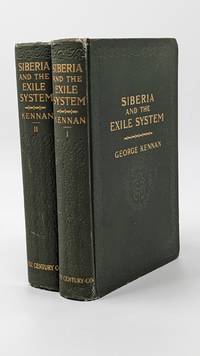
189121073New York: The Century Company. 1891. First Edition. Hardcover. Very Good. Boards with light rubbing to extremities. Bookplate. A few pages unopened. ; "Sponsored by the Century magazine and accompanied by the Boston artist and photographer George Frost Kennan arrived in Russia for his fourth visit in May 1885. He came prepared to give a favourable assessment of the penal system in Siberia but subsequent meetings and events in Siberia radically changed his views and through his subsequent book and lectures those of America. In the course of eight months between June 1885 and March of the following year they covered some 8000 miles within Siberia." Cross Anthony. “REIGN OF ALEXANDER III 1881–1894. ” In the Lands of the Romanovs: An Annotated Bibliography of First-Hand English-Language Accounts of the Russian Empire 1613-1917 1st ed. Open Book Publishers 2014 pp. 273–309. - Green boards with gilt lettering. Blindstamped decorative floral design. Volume 1 with frontispiece 4 maps and 90 illustrations. Volume 2: frontispiece and 104 illustrations as well as 3 maps. ; 8vo - 8" to 9" tall; xv 409; x 575 pages . The Century Company hardcover
22708Nice 13 Fevrier 1916. Card 13 x 10cm text on both sides card with attractive coloured and embossed royal insignia. "Permettez-moi de vous dire combien je suis touchee de votre don genereux d'un tableau par vous-meme qhe vous verrez de m'envoyer pour l'hopital russe. Il est bien joli et nous tacherons de le mettre au lotterie pour augmenter les fonds de l'Hopital dont il a besoin souvent. Avec mes vifs remerciements ." See image of first side. Nice, 13 Fevrier 1916 unknown
dola2480cNew York: cRussian Socialist Federation c1919. First Edition. oblong folio. title on thick red paper & 48 photographic plates on glossy paper covering the period 1917 to 1919 & including portraits of revolutionary leaders & officials & scenes of demonstrations military engagements political meetings &c. title & plate captions in Russian & English. original cloth-backed bds. binding worn but sound spine ends frayed small area of surface damage on lower rear cover resulting in loss of most of the copyright information - last word ‘Federation’ still visible internally very good. dola2480 [cNew York: cRussian Socialist Federation, c1919] hardcover
175016523A large engraved cont. handcoloured map of the Northern part of Russia from Novaja Semlja in the north to the Caspian Meer in the South from Finland to Jakusskkáy measuring 485 x 62 cm. Folded in center. A few tears in margins. <br/><br/><em>This large map is from Vaugondy: Atlas universel Paris 1757. </em> unknown
1866030652London: Chapman And Hall 1866. 1st Edition . Hardcover. Fine. Vi 298 Pp. Modern Blue Cloth Gilt Stamped Black Leather Spine Label. The Modern Binding Is Fine Contents Just Very Good With Wear At Corners And Slight Even Foxing To Title Page. Scarce. Morley Reports That The Observations Were Provided By A Friend Who Brought Them From A Doctor Long Resident In Russia. The Quality And Immediacy Of The Observations Are Remarkable. <br/> <br/> Chapman And Hall hardcover
177536879Moscow: Meisto Pechati first piece 1775. 2; 6 2 blank. 1 vols. Folio. The two pieces loosely stitched together. Some stains not affecting legibility stitchmarks light soiling else very good. 2; 6 2 blank. 1 vols. Folio. Decrees relating to the military issued by Catherine II. These were issued the year following the end of the Russo-Turkish wars and the treaty of Kuchuk Kainarji signed the 21st July 1774 and after the Cossack rebellion lead by Ymelyan Pugachev who claimed to be Peter III and who was finally captured and executed at Moscow the 11th of January 1775. As a result of the wars and the rebellion in 1775 Catherine seriously reformed the provincial and urban administrations giving greater control to the central government. The first decree lists eight numbered points perhaps officers for promotion or commendation it has the Royal titles as a caption title and commences citing the decree of 3 August 1744. The second piece bears no caption title or heading but lists 47 separately numbered points each a short paragraph imprint on final leaf of text. Meisto Pechati [first piece] unknown
1965011354Moscow Russia: Progress Publishers 1965. 3 Volume Set Translated from the third German edition by Samuel Moore and Edward Aveling and edited by Frederick Engels. First English edition published in Moscow. Vol. 1- 1st ed 1st pt- 1965- Very Good book square tight no marks 807 pages in Near Fine jacket. Vol. 2 - 1st ed 4th pt- 1967- Fine book square tight no marks 551 pages in very good white jacket with smalltears/chips. Vol. 3- 1st ed 3rd pt- 1966- Fine book square tight no marks 948 pages in Very Good clean near fine white jacket. All books have previous owner name on ffep. Cloth. Very Good/Very Good. 8vo - over 7¾" - 9¾" tall. Progress Publishers Hardcover
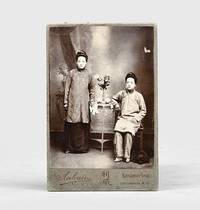
1890154515Vladivostok: Livay Studio No. 11 Svetlanskaya Street c.1890. A scarce late 19th-century record of styles of clothing and foot-binding followed by well-to-do Chinese women in the Russian border city of Vladivostok. The Livay photographic studio catered specifically to Chinese residents and visitors and we have not been able to trace any other surviving examples of its work. Following China's transfer of the Haishenwei region to the Tsar in 1860 Vladivostok became a thriving centre of economic activity and cultural interchange between Russians and Chinese with both of these communities served by the Livay studio based on the city's main boulevard. This photograph is a pleasing corrective to the many surviving photographs of late-imperial Chinese women often produced in cities such as Shanghai which adopt an orientalizing gaze. While photography was introduced into Russia soon after its invention it remained a preserve of the very wealthy until the 1860s when technological changes fuelled an explosion in the number of photographic studios in major cities. "In the hands of commercial studio photographers the medium retained its original social function namely "to solemnize and to immortalize" the portrayed subject. The studio photograph was an index and a means of communicating one's status; it indicated the sitter's place in the social hierarchy both as a commodity object and as information. But more importantly photography dominated the market for portraiture and democratized visual self-representation. It captured people from across the social spectrum and brought about a visual levelling whereby the social benefits and drawbacks of this type of publicity was showered equally on kings nobles lawyers merchants and cobblers. Photography as a mechanized medium of self-representation pulled members of different social class onto the same visual level in the public sphere" Stolarski pp. 4-5. Cabinet card 164 x 108 mm mounted gelatine photograph 140 x 103 mm with glossy finish card lettered in red in Russian and Chinese. Small scuff to upper right corner of photograph image substantially unaffected couple of faint stains to card verso skinned where sometime mounted. A very good example. Christopher Stolarski "The Rise of Photojournalism in Russia and the Soviet Union 1900-1931" PhD Diss. 2013. hardcover
21231'Varsovie 12 Mars 1831.' Warsaw Poland; 12 March 1831. Lower half of a 4to leaf. In good condition lightly aged with stub from mount adhering. Written in old-fashioned and not entirely grammatical French the text reads: '… de la nation Polonoise a la quelle S. M. donneroit le garanties necessaires sous le respect de la stabilité des droits qu'elle réclame et qui sont fondés sur deux besoins absolus: la religion e le sic liberté. A greez M. le M. l'assurance de plus consideration avec la quelle je suis &c Varsovie 12 Mars 1831. Skygnecki Monsieur le Comte Le Genenral Lt. de Tahlen.' On the reverse in the hand of a noted nineteenth-century English autograph collector: 'Leader of the Polish Insurrection'. 'Varsovie 12 Mars 1831.' [Warsaw, Poland; 12 March 1831.] unknown
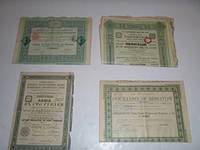
16-4567Moscow and St. Petersburg: 1869 -1918. Includes Société du Chemin de Fer de Tauris; Société Franco-Russe de Produits chimiques & d'explosives; Société . de machines de Briansk; Houilleres de Berestow; Imperial Russian Government; Forges .de la Kama; Gouvernement Imperial de Russie .4% Or de 1889; Various sizes often with coupons. Russian 3% Gold Loan of 1896; Emprunt de l'Etat Russe 5% de 1906; Banque Russo-Asiatique; Emprunt de l'Etat Russe 4-1/2% de 1909; Compagnie du Chemin de Fer du Nord-Donetz; Nicolas Railroad ; Ville de SDt-Petersburg 1908; Ville de Moscou 1908; Banque Fonciere des Paysans 1912; Grand Russian Railroad 1890; Chemin de fer de Moscou-Kief-Voronege 1914.; Manufactures de Lin de de Cotoi de Kostroma; Muliples of most. Moscow and St. Petersburg: 1869 -1918 unknown
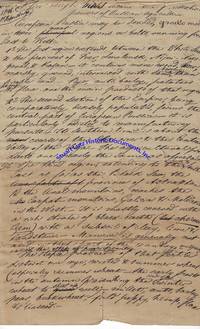
4678JOSEPH SLOCUM 1800-1853. Slocum was a merchant from Syracuse New York who attempted to sell farm equipment to Russia in the nineteenth century. He was unable to turn a profit from his endeavors and his family fell into financial hardship. His daughter Margaret Olivia Scolum Sage became an influential philanthropist and teacher. She endowed a building and a now-defunct agricultural school at Syracuse University both named after him.Archive. 9 pieces. 1830s-40s. An archive related to Joseph Slocum and his business with Russian agriculture. There are nine letters and documents predominately letters written to Slocum from various Americans and Russians. Highlights are listed below and the best piece is the first one the lengthy manuscript detailing Russian agriculture and natural resources:Handwritten document. 4pgs. September 12 1846. St. Petersburg Russia. The four page handwritten manuscript is entitled Some Rough Hints About the Productive Power of Russian Agriculture. It states in part: European Russia it may be divided grosso muto in three great regions or belts running from East to West. 1st - The first region extends between the White Sea and the provinces of Tver Smolensk Nijni-Novogorod & Kazan - it contains more wood low marshy ground intermixed the sand Baron then arable land. Rye oats barley potatoes hemp and flax are the main products of that region. 2nd - the second section of the Empire being comparatively densely populated forms a central part of the European Russia it is particularly addicted to manufacturing pursuits. It's Southern limits is about the course of the Oka River & the Central Valley of the Volga. The agricultural products are nearly the same as aforesaid. 3rd - the third region extending to the south and southeast as far as the Black Sea the provinces of Ashnaklan and the Ural Mountains reaches the Carpathian mountains Galicia & Moldavia in the West. It is mostly covered with a rich strata of black earth with a subsoil of clay lime & sandstone. Minoru is generally not used in this part of the country vulgarly called the step or prairie count the staple products of the fertile district are rye winter and summer wheat especially summer wheat - the summer frosts in the autumn preventing the seeds of the winter week to start up well millet oats barley peas buckwheat field poppy hemp flax & linseed. Cotton & Vine are raised merely in the most remote districts of the South such as Georgia Astrakhan the territory of the Cossacks of the Don Crimea & Bessarabia. Three other very important staples of Steph region are livestock & saltworks & fisheries. The stock consists mainly of horned cattle and horses grazing in large herds on the pastorate of the steps of the Black Sea As well as on both sides a lower Volga. Sheep both Merinos Saxon & form and main object of the agricultural industry of the step and owners. The Russian or common sheep is generally the property of the peasantry. The wool and tallow are usually sent overland in the winter to the manufacturing districts of the central belt of Russia Moscow. Or exported via Odessa Taganrog Riga & Petersburg to England and France. The saltworks are especially remarkable on the left sure the Volga on the verge of the province of Astrakhan as well as near the Ural River not far from the city of Orenburg. The Lake Elton alone of a circumference of nearly 180 miles is a solid mass of salt inexhaustible in its mineral riches. The stone saltworks of Gletznaia.As well as the saltworks a Crimea produce an immense quantity of that precious mineral. Besides that all the basin of the Caspian is full of an infinity of small salt lakes. The main fisheries are at the mouth of the Volga on the Caspian they produce an enormous quantity of fish of all kind. Besides that of the fisheries of the Ural River on the Don. The main fluvial artery of Russia is the Volga it is a Mississippi of our country. Its length is upwards 3000 miles. Unfortunately it is frozen up during nearly 6 months of the year. There are but very few steamboats in it. This year a large steam tow boat has been put into action on the Volga attended with great success. The manuscript continues extolling Russias natural resources. It is uncertain who wrote it and the condition is good with folds and fold separations. A partial typewritten transcript is included.LS. 1pg. August 1843. Russia. A letter signed L. Perovsky by Russian nobleman Lev Perovski 1792-1856 as Russian Minister of the Interior. Perovski thanked Slocum: The Directo fo the AgronomicalSchool having informed me that you presented to the museum of this Institution several agronomical instrument I feel myself much gratified to acknowledge. Agronomy is crop and soil science. The letter is in very good condition with folds and short fold separations.ALS. 4pg. 5 x 8 . November 7 1846. St. Peterburg Russia. An autograph letter signed by an American working for the United States Legation at St. Petersburg. He wrote in part to Slocum: The only reproach I ever heard from the Minister as I told you at that time and which certainly stands on a misunderstanding concerns the establishment of a cast iron fabrication. The Minister is in full belief you had spoken to him about ain the Union that as soon as a new colony any where is establishedThis seemed to His Excellency excellent means to introduce in Russia and toin this way thepossibility to the peasants to have their implements cheap & well one. The letter is in fine condition.ANS. 1pg. 1834. New York. A brief note acknowledging money received from Slocum signed Ja J Roosevelt by Jacobus James Roosevelt III 1760-1847 the New York state businessman and politician who was great-grandfather of FDR. In fine condition.ALS. 1pg. June 6 1834. New York. An autograph letter signed Jab J Roosevelt by Jacobus Roosevelt. Roosevelt wrote to Slocum requesting the return of an item. In very good condition.ALS. 3pgs. October 22 1846. St. Petersburg Russia. A lengthy letter to Slocum signed Chas Cramer to Slocum. Charles Cramer 1799-1879 was an important trader to Russian and his letter concerns finance: he gave you an order for the purchase of Implements for Agricultural purposes & that he assigned you a credit againstof the Government. He fully confirmed the contents of the letter you communicated to me & promised to reply to your letterMr. Clay stated when I asked him on your behalf that he could do nothing in the case to further your interest. Major Whistler whom I called on several time but missed has not yet returned my calls. I rather think he will not be able to serve you better than I can with the Government of this EmpireWe merchants often meet with heavy losses Do consider your Adventure to Russia misfortune & think no more about it for you will not gain anything. The penciled letter is in very good condition with a tear in the address leaf.Letter. 1pg. 5 x 8 . 1846. St. Petersburg. A contemporary copy of an 1846 letter by Rhesa Griffin a Syracuse area merchant: Received St. Petersburg 31 July 1846 of the Russian Imperial Departmentfive hundred thirty six silver rubles and sixteen seven coppers in full satisfaction of all and every claim or Demand on the above Department or if any other Department of the Russian Government and in full satisfaction of all and every agreement or understanding made by me with Joseph Slocum as an agent of the Russian Government. The document is wrinkled and in very good condition. unknown
1996012534<p>New York New York U.S.A.: Doubleday 1996. 769pp/illus. Gorbachev's autobiography Gorbachev has autographed the title page. Signature guaranteed original. Was purchased at Gorbachev's booksigning in Washington DC in 1996. Clean no marks. 1st Printing. Hard Cover. Near Fine/Very Good. 8vo - over 7¾" - 9¾" tall.</p> Doubleday hardcover
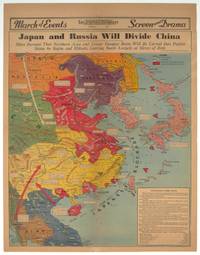
1940209821Los Angeles.: Los Angeles Examiner. 1940. Printed colour pictorial map on a single newspaper leaf 42.3 x 39.9 cms; 54.3 x 42.5 cms sheet archivally laid down on linen slight discoloration to lower centrefold and sheet slightly age-toned but in very good condition. A striking geopolitical map by Los Angeles Examiner artist Howard Burke covering China Japan Southern Russia and the northern part of French Indochina and Siam showing how the "Aggressors Divide China." Areas under Japanese occupation are shown in red and their naval blockade shown by an arc of naval vessels with vivid arrows indicating lines of supply. Text labels including sources of agricultural and raw materials provide a dynamic overview of the geopolitical situation and show the influence of American scientific illustrator and cartographer Richard Edes Harrison who argued for examining geographic issues from multiple perspectives and Los Angeles Times artist Charles Owens. . Los Angeles Examiner. unknown
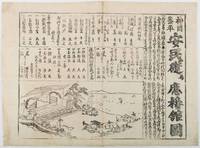
1854177799Japan. Circa1854. Black and white woodblock kawaraban printed on two joined sheets vertical central crease 41 x 63cm a little worming mainly on margins and repaired with paper on the reverse a little light browning but still presents very well. This kawaraban reports on how foreign visitors from the United States and Russia were treated in order to keep the peace and safety of God's country Japan. <br> <br>It reports that foreigners had arrived in Uraga this being the time of the second visit of Perry to Japan in 1854. The kawaraban goes on to list official gifts from the Shogunate to the President and his delegation members from the United States as well as to the Russian delegation. The gifts include lacquer boxes silk textiles as well as rice and chickens for the crew. <br> <br>The attractive black and white image at the foot of the report depicts a meeting in Yokohama at which a high ranking Tokugawa official received foreign visitors. The visitors are shown prostrating themselves in the open outdoor space in front of the building where the official sits. . unknown
19990008049Boulder CO: Westview Press 1999. First English language edition. Hardcover. As New/issued without. 8vos; xxxiv 562; ix 389 pages maroon cloth in original shrinkwrap. Not x-library. Scarce. O.P. <br/><br/>This English translation contains an autobiography by Mironov which was not in the Russian edition. It details his anti-Marxism philosophy while a student in Leningrad. "The author has assimilated a large body of foreign scholarship primarily "new social history" produced by Anglo-American authors along with a sprinkling of more broadly European economic and demographic history from the 1970s and 1980s which is effectively incorporated into his own very deep empirical knowledge. . The reader does not find in this extensively researched account the standard Soviet answers to specific historical questions. Mironov has abandoned most Soviet cliches though he still assumes that laws of Russian history can be identified based on social science theory and quantitative analysis Elise Kimerling Wirtschafter." "This is a massterful work that provides other scholars with a wealth of useful information while confrontimg them with an argument that compels a response - William G. Wagner." Maps. Westview Press hardcover
1769647731769. Early French-Language Edition of Catherine's Nakaz Catherine II 1762-1796 Empress of Russia. Landres J. Rodolphe Frey de Translator. Instructions Adressees par Sa Majeste L'Imperatrice de Toutes les Russies: A la Commission Etablie Pour Travailler a L'Execution du Projet d'un Nouveau Code de Lois. Traduit de l'Allemand. "A Petersbourg" i.e. Yverdon Switzerland: s.n. 1769. 286 pp. 12mo. 6" x 4". Early quarter vellum over marbled boards untrimmed edges a few unopenened signatures. Light soiling corners lightly bumped and worn. Moderate toning to interior somewhat heavier in places some leaves have light foxing a few have light dampstaining to margins internally clean. Ex-library with a small inkstamp to title page. A handsome copy. $1000. Reissue of the first edition in French published by the St. Petersburg Academy of Sciences for private distribution in 1769. This important text also known as the Nakaz or Instruction is a statement of legal principles written by Catherine II from 1764 and 1766. Permeated with the ideas of the French Enlightenment and copied mostly from the work of Voltaire Montesquieu and Beccaria it was compiled as a guide for the All-Russia Legislative Commission convened by the Empress in 1767 to create a new code to replace the 1649 Muscovite Code. Revised in consultation with Beccaria Frederick the Great and Voltaire the Instruction proclaimed the equality of all men before the law and disapproved of death penalty and torture. Unfortunately her proposed code was never completed. Catherine's manuscript was written in French and she later produced a Russian translation. Editions in German and Russian were published in Moscow in 1767. The book was initially banned in France because it was too liberal which is why the first French-language edition was produced in Switzerland with a false imprint. French and Latin editions were eventually published in 1770. OCLC locates 6 copies of this imprint in North American law libraries Columbia George Washington University Harvard Library of Congress UC-Berkeley Yale. Butler The Nakaz of Catherine the Great 531 Entry 40. unknown
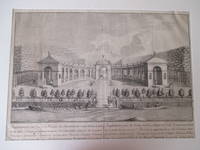
175014523AB1750. Sta. Petersburg Academie Imp. des Scien et des Arts ca. 1750 48 : 69 cm Original engraving with text in Russien and Frenche below the image. Rare engraving of the Amphitheatre near St. Petersburg. unknown