1 366 résultats
Very Good English Paperback. Pbo. 4to. (28 x 20 cm). In French. 17 p. L'Inscription Kirghize de Sûji (Essai d'une nouvelle lecture).
Very Good English In modern cloth bdg. made as saved original covers on cloth faces. Roy. 8vo. (24 x 17 cm). In French. 183, [6] p. Le gouvernement de Moscou et les Republiques Sovietiques. First Edition.
Very Good English Paperback. Pbo. Small 4to. (26 x 19 cm). In French. 12 p. Souvenirs Turcs en Hongrie.
Fine Russian Original cream cloth bdg. Demy 8vo. (22 x 15 cm). In Russian. 394, [2] p., 1 folding Turkey map. Noveyshaya istoriya Turtsii. First Edition.
Fine English Paperback. Cr. 8vo. (20 x 14 cm). In Turkish. 194, [50] p., b/w ills. Anadolu'da Türk damgasi; koç heykel - mezar taslari ve Türkler'de koç - koyun meselesi. TURKOLOGY Turkish culture Symbols Mythology Central Asia Shamanism Folklore.
Fine English Paperback., Fine., 16 x 11 cm., [4], 31 p., "Kafkasya daglilari Halk Partisi periyodikleri.", M.Aydin Turan, Birlesik Kafkasya Dernegi, Ist.,2000. Periodicals of Caucasus Peoples Party.
Fine Russian Paperback. Cr. 8vo. (20 x 14 cm). In Russian. 175, [2] p. Turkmeni Irana v 60-70-e gg. XX b. Turkmens of Iran in the 60-70-ies. XX century.
Very Good English Paperback. Roy. 8vo. (24 x 17 cm). Text in romanized Dagestan Turkic (Kumyk-Karapapak) language with introduction material in Turkish.[xvii], 164 p. Modern Turkish translation and facsimile in Ottoman Turkish. Târihçe-i (Gazavât-i) Dagistan.
Very Good English Paperback. Pbo. 12mo. (17 x 13 cm). In Cyrillic Kazakh Turkic / Turkish. 151, [1] p. Kazak Hanlik muzikasi jene student jastar. A study on Music in the period of Kazakh Khanate. There's no edition in W.Cat library.
Fine English Paperback. Pbo. Cr. 8vo. (20 x 14 cm). In Turkish. 158 p. Dogu Türkistan: Esaretteki ülke. A study on East Turkestan.
Fine English Paperback. Pbo. Cr. 8vo. (20 x 14 cm). 109 p. There is no printed bibliographic details such as publisher, date etc. A reference book on Dagestan and Avarian (Caucasian languages) languages.
Fine Turkish Paperback. iyi durumda, Cr. 8vo. (19 x 13 cm). In Turkish. s/b renkli resimli, 203 p. Lazlar", M. RECAI ÖZGÜN, Ceylan Matbaacilik, 1996. -- Kafkasya Laz kültürü.
Fine English Paperback., Fine., 20 x 14 cm., 205, [3] p., b/w ills., "Dogu Türkistan Vakfi Baskani M. Riza Bekir'in anilari.", M. Riza Bekin, Kastas Yayinlari, Ist., 2005. Kurmay subay ve general olarak yurtdisi görevlerde Türk Ordusunu temsil eden General Riza Bekin, emekli olduktan sonra Dogu Türkistan Vakfi Baskani olarak Birlesmis Milletler adina görev üstlenmistir. Halen, Dogu Türkistan Türk Dünyasi için çalismaya devam etmektedir. Uzun ve çetin görevlerle dolu, yorucu oldugu kadar da basarili bir hayatin hikayesini içeren bu kitap, dönemine damgasini vuran pek çok olaya farkli bir bakis açisi getirmektedir.
Very Good English Paperback. Pbo. Roy. 8vo. (24 x 17 cm). In Turkish transcription and facsimile of Arabic letters. Haydar Baba'ya selâm. Prep. by Dursun Yildirim.
Book is in excellent condition with dark green HB covers, tinted upper page ends, illustrated endpapers, heavily illustrated throughout with color and b&w photos, maps, Binding is solid and square, covers have sharp corners, exterior shows no blemishes, text/interior is clean and free of marking of any kind. Dust jacket shows the slightest signs of shelf wear only, no tears. Contents include: Yermolov and Paskevich, The Irmam Shamyl, Count Vorontsov, Guerilla war, Prisoners of Shamyl, Alexander Baryatinski, Tbilisi, Georgia, Northern Caucasus, Armenia, Azerbaijan, etc.
New Turkish Paperback. Roy. 8vo. (24 x 16 cm). In Turkish. 364 p., color ills. Çerkesler ve gelenekleri. [= Adige khabze]. Translated by Yemuz Bayazit. Customs of Circassians. First Edition in Russian printed in Crimea.
Very Good Turkish, Ottoman (1500-1928) Original quarter black leather. Ottoman title-lettered gilt on the spine with decorative elements in compartments. Demy 8vo. (22 x 14 cm). In Ottoman script (Old Turkish with Arabic letters). 459 p., 32 woodcut plates with tissue papers and a folding color map of Khiva calligraphed by Mehmed Vasfi. AH 1292 = Gregorian: 1875. Extremely rare first Turkish edition of this richly illustrated eye-witness travel account of the 1873 Russo-Khivan war and the fall of the Khivan Khanate, by the American war correspondent MacGahan (1844-1878), which was first published in New York in 1874 as "Campaigning on the Oxus and the fall of Khiva", translated by Ahmed Sükrü (?-1876-77) who was the first Postmaster General. After a daring journey through the Kyzil Kum desert, McGahan joined von Kaufmann's army on the banks of the Amu-Darya, shortly before the fall of Khiva. Interesting and lively report with a description of Kazakh- (systematically called "Kirghiz", following the confusing habit of Russian historians) and Yomud Turkmen nomads, as well as of the settled Uzbek, Sart - and enslaved Persians of the Khanate. Probably one of the most complete and objective descriptions of the fall of the Khivan Khanate to three Russian columns which reach it from North and from East, after difficulties due to the climate and the huge distances. The young American makes many friends with Russian officers and gets a lot of information directly from the horse's mouth. There is also a well-documented report about previous Russian attempts to conquer Khiva, which all turned into disasters. The rather civilized behavior of the Russian army with the vanquished Khivans contrasts very much with their cruel and unfair treatment of the brave Yomud nomads, who offer only serious military opposition despite their heavy losses. The Khivan oasis is described as being very fertile and outstandingly well-cultivated. While Mac Gahan is impressed by the beautiful gardens and orchards of the Khanate, he is disappointed by the city of Khiva, the capital, the main residence of its ruler, and the second largest city of the Khanate. Even the Khan's palace (in which he is allowed to spend a few days by the Russian authorities) is disappointing. He visits the treasury room of the palace, in which the fleeing Khan left most of his possessions. He also left his whole harem behind, in his precipitous escape. The text is illustrated with numerous engravings from original designs and paintings by artists (and Russian officers), like Vereschagin and Feodoroff, and enriched with a great number of anecdotes. MacGahan was an American journalist and war correspondent working for the New York Herald and the London Daily News. His articles describing the massacre of Bulgarian civilians by Turkish soldiers and irregular volunteers in 1876 created public outrage in Europe and were a major factor in preventing Britain from supporting Turkey in the Russo-Turkish War of 1877-78, which led to Bulgaria gaining independence from the Ottoman Empire. He learned in 1873 that Russia was planning to invade the khanate of Khiva, in Central Asia. Defying a Russian ban on foreign correspondents, he crossed the Kyzyl-Kum desert on horseback and witnessed the surrender of the city of Khiva to the Russian Army. There he met a Russian Lieutenant Colonel, Mikhail Skobelev, who later became famous as a Russian commander during the Russian-Turkish War of 1877-78. In 1874 he spent ten months in Spain, covering the Third Carlist War. In 1875, he voyaged with British explorer Sir Allan William Young on his steam yacht HMS Pandora on an expedition to try to find the Northwest Passage from the Atlantic to the Pacific. The expedition got as far as Peel Sound in the Canadian Arctic before it met pack ice and was forced to return. OCLC 1014870496.; Özege 7682.; Atabey 744 (Ed. in English).
In 16. Dim. 16x11 cm. Pp. 88. Edizione Le Monnier del 1855 su Sciamyl, profeta del Caucaso del Maggiore Warner. All'interno: biografia, Il principe Woronzoff, una leggenda del Caucaso I tre proverbi ecc.. In ottime condizioni. Copertina editoriale in ottime condizioni generali con lievi usure ai margini e dorso. Legatura in buone condizioni. All'interno le pagine si presentano in buone condizioni con fioriture. Lievi gore d'umidità.Le Monnier edition of 1855 about Sciamyl, prophet of Caucaso by Maggiore Warner. Inside: biography, the prince Woronzoff, a legend of Caucaso the three proverbs ecc. In very good conditions. Editorial cover in very good general conditions slightly worn in the edges and spine. Binding in good conditions. Inside pages are in good conditions with foxings. Water stains.
New English Paperback. Pbo. Roy. 8vo. (24 x 17 cm). In Turkish. 284 p. Budist Türk çevresi eserlerde metaforlar. Metaphors in the sources of Buddhist Turks. TURKOLOGY Asia Buddhism Metaphor Turkic literature Uighur Uygurs.
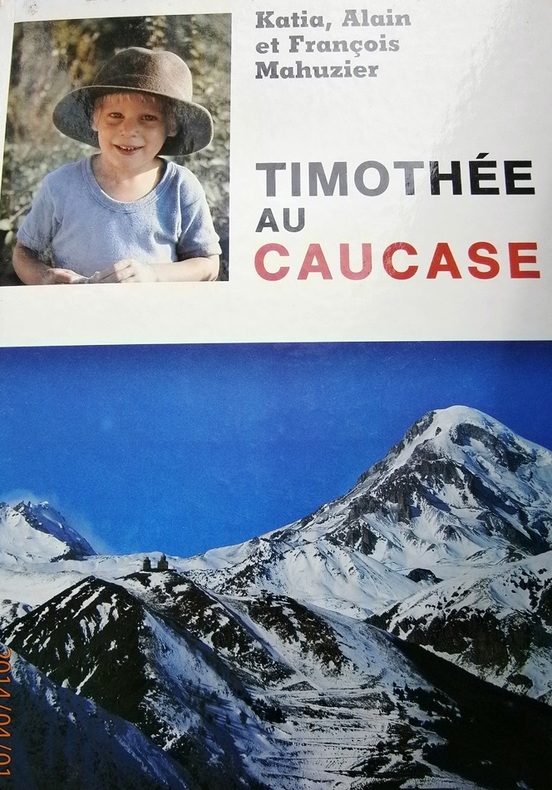
72038P., Presses de la Cité, 1982, grand in 8° broché, 304 pages ; couverture illustrée en couleurs.
16619Paris, Presses de la Cité, 1982. 16 x 24, 304 pp., quelques illustrations en N/B, 1 carte, broché, très bon état.
198693740Couverture rigide. Cartonnage de l'éditeur. 32 pages. 23 x 32 cm.
1986qi2243Expéditions cinématographiques Mahuzier Album cartonné 1986 In-4 (23,5 x 32 cm), album cartonné, 32 pages, photographies en couleurs ; dos légèrement de biais, par ailleurs très bel état. Livraison a domicile (La Poste) ou en Mondial Relay sur simple demande.
Very Good Turkish, Ottoman (1500-1928) Paperback. Pbo. 4to. (28 x 20 cm). In Ottoman script. 64 p. Hejra: 1340 = Gregorian: 1924. Özege 11925. First and only edition of Turkmen poet Mahdumkulu (Mahtumkulu)'s diwan in Ottoman Turkish. Mahdumkulu ve yedi asirlik Türkce bir manzume. Annotations and research by [Hüseyin Kazim Kadri], Seyh Muhsin Fanî. Mahtumkulu was an Iranian-Turkmen spiritual leader and philosophical poet who made great efforts to secure independence and autonomy for his people in the 18th century. Magtymguly is widely believed to have been born in the Hajygowshan village near Gonbad-e Qabus city in what is now the Iranian province of Golestan, the northern steppes of which are known as Turkmen Sahra ("Turkmen steppes"). In his poetry, Magtymguly says "Tell those who enquire about me that I am a Gerkez, I hail from Etrek and my name is Makhtumkuli," identifying his homeland as the banks of the Etrek River and expressing his identity through his tribe. He received his early education in the Persian and Arabic languages from his father Döwletmämmet Azady, a leading scholar at that time. He went on to study in various madrassahs, including the Idris Baba Madrassah in the village of Gyzyl Ayak, the Madrassah of Shir Gazi Khan in Khiva, and may have also studied in Bukhara for some time. Upon his return home, Magtymguly worked as a silversmith while he taught and wrote. He went on to develop a realistic style of writing about 18th century Turkmen that proved very popular and ultimately led to him becoming one of the most cherished Turkmen poets of all time. He was also a devout naqshbandi Sufist who was said to have traveled throughout all the lands comprising modern Turkmenistan, teaching and praying for the salvation of his people. Not much is known about Magtymguly's family life. He was unable to marry Mengli, the woman that he loved, yet it seems he was married to someone else. His elder brothers Abdulla and Mahammetsupa disappeared, and his children died young. Magtymguly was also pained by the loss of his father, with whom he had maintained close scholarly relations throughout his life. Some of Magtymguly's poetry, along with stories collected from Turkmen oral traditions, suggest that the poet was taken prisoner at some point in his lifetime, likely in Mashad, Iran. It is unknown who took him captive, yet such events were common in 18th century Iran and Turkmenistan. A servant of the ruler, who was also a Turkmen, allegedly aided Magtymguly's escape. Magtymguly is buried in Aktokay village in north-eastern Iran. The Iranian government has inaugurated a mausoleum on his grave. Magtymguly was one of the first Turkmen poets to introduce the use of the classical Chagatai, the court language of the Khans of Central Asia, as a literary language, incorporating many Turkmen linguistic features. As such, his poetry exemplifies a trend towards increased usage of Turkic languages (as opposed to Persian), and Magtymguly is revered as the founder of Turkmen poetry, literature, and language. Magtymguly is widely revered as holy among Turkmen communities, and his poems are often quoted as proverbs in Turkmen society. Magtymguly made wide use of the qoshuk form of poetry, which features prominently in Turkmen folk songs and is easily adapted to Turkmen musical forms. The qoshuk form consists of quatrains with lines consisting of eight or eleven syllables, and follows a rhyming scheme of ABCB for the first stanza and CCCB, DDDB, etc. for the following stanzas. The compatibility of Magtymguly's poems with traditional musical forms allowed them to be easily adopted by bakhshis, traditional singers. Magtymguly's first poem, "By night when I was asleep... Revelation", was composed following an incident when Magtymguly was a young boy. His parents were attending a wedding, but Magtymguly was sleeping, and they left him behind. As he slept, he began to foam at the mouth, and his parents were called back to the house. When his father awoke him, Magtymguly recited his fir
New English Paperback. Pbo. 4to. (30 x 21 cm). In Turkish. 112 p., color and b/w ills. Ilk Türk kadin ressam Mihri Rasim (Müsfik) Açba. 1886, Istanbul - 1954, New York.