1 366 résultats
New Turkish Original bdg. HC. 4to. (30 x 22,5 cm). In Turkish. 581 p., ills., maps. Osmanli belgelerinde Dogu Türkistan. East Turkestan in the Ottoman archival documents. Text predominantly Ottoman Turkish, partly Turkish. - Takdim (presentation) and preface (önsöz) also in English. Facsimiles of the documents in Arabic script. - Facsimiles of the cards in Arabic and Latin script. Partly in Arabic script, partly in Latin script. East Turkestan in Ottoman documents (1796-1915) against the background of Chinese-Russian-Ottoman relations. Also includes an introduction to the history of East Turkestan. / Text u?berwiegend osmanischtu?rkisch, teilweise tu?rkisch. - Takdim (presentation) und Vorwort (o?nso?z) auch in englischer Sprache. Faksimiles der Urkunden in arabischer Schrift. - Faksimiles der Karten in arabischer und Lateinschrift. Teilweise in arabischer Schrift, teilweise in Lateinschrift. Ostturkestan in osmanischen Urkunden (1796-1915) vor dem Hintergrund der chinesisch-russisch-osmanischen Beziehungen. Entha?lt auch eine Einfu?hrung in die Geschichte Ostturkestans. East Turkestan is a Turkish-Islamic homeland that hosted multiple civilizations, while leaving important marks in the history. East Turkestan lands that Uyghur Turks live in general have always been strategically important for its location, and underground and ground sources. The presence of Silk Road route in the area, the production of two out of five of Chinese petrol and presence of rich gold and copper deposits make the area different in strategic perspective. In the work "East Turkestan in Ottoman Documents" published by Union of Turkish World Municipalities (TDBB), the original documents of Ottoman Archives of Prime Ministry have been handled and the historical relations between two brother communities have been presented to the attention of the readers. In the book, there are original visual documents that belong to the period between 1796 and 1917, transcripts and summaries, in addition to long Preface on East Turkestan history and Bibliography, summarized biographies of important and remarkable figures of East Turkestan, and a detailed Index. This voluminous Prestige Book of 581 pages printed in A4 size will both serve as a first degree source for local and foreign academicians of East Turkestan and Uyghur History and intellectuals of both countries, and will also help for the perception of Ottoman-East Turkestan relations.
This is a very good hardcover copy in dark black cloth covers with the title and front cover vignette in bright gilt. Title to spine dulled, spine sunned and a scrap of an old paper label remains at the foot of the spine. This copy was de-accessioned from a small state historical society and so bears their plate and withdrawal stamp to the inside front cover. Also a few very small hand-stamped numbers and a short inscription to the front endpaper in the year of publication, but other than that, very clean throughout. illustrated in black & white with photographs and half-tones, and a fold-out map. 10" high X 7" wide, 476 pages. Heavy book, foreign shipping will be extra. This book will be securely wrapped and packed in a sturdy box and shipped with tracking.
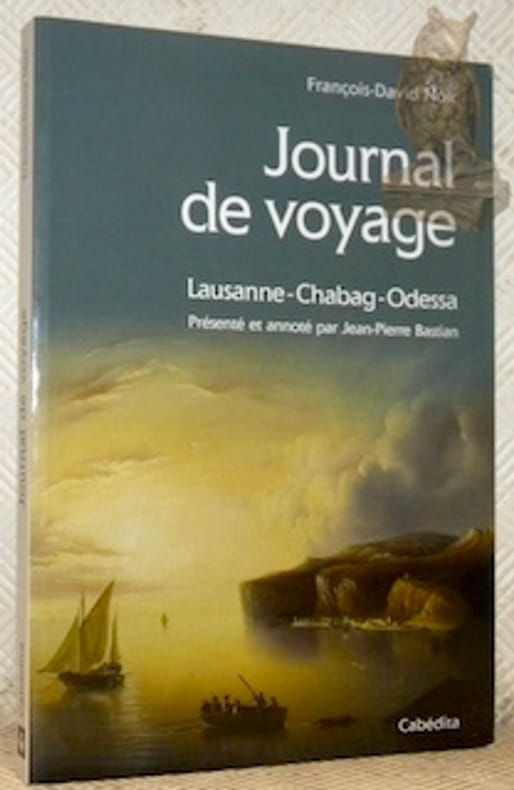
113422Bière, Editions Cabédita 2016, 240x165mm, 206pages, broché. Bel exemplaire.
Fine English Paperback. Pbo. Foolscap 8vo. (18 x 12 cm). In German. 57, [1] p. Lebenskunst in Georgien. Living in Georgia. 500 copies were printed.
1869J114022s.l. [Sanktpeterburg, St-Petersburg], 1869 60pp., 26cm., text in Russian in Cyrillic script, hardcover binding in black cloth with gilt title and decorations, small stamp on title page, some occasional foxing (text always well readable), cfr. OCLC 492349782, J114022
Fine Very Good English Original bdg. Dust wrapper. Roy. 8vo. (24 x 17 cm). In English, French, and Russian. 60 p., 53 color plts. Nizami Gandjavi, whose formal name was Jamal ad-Din Abu Mu?ammad Ilyas ibn-Yusuf ibn-Zakki, was a 12th-century Persian poet. Nezami is considered the greatest romantic epic poet in Persian literature, who brought a colloquial and realistic style to the Persian epic. His heritage is widely appreciated and shared by Afghanistan, Azerbaijan, Iran, Kurdistan region and Tajikistan. Nizami's characters on the carpets.= Nizami obrazlary khalchalarda.= Kovrovye obrazy Nizami.= Motifs de Nizami sur tapis. Prep. by Roya Tagyeva.
Fine English Paperback. Pbo. Roy. 8vo. (24 x 17 cm). In Turkish. [49], 109, 32 p., b/w and color ills. Azerbaycan Karabag tarihi. History of Azerbaijan - Karabakh.
New English Paperback. Pbo. Cr. 8vo. (20 x 14 cm). In Laz [Lazuri]. 320 p., b/w ills. A study on Lazuri (Laz) cultural history. Laz kültür tarihi.
Fine English Paperback. Pbo. Cr. 8vo. (20 x 14 cm). In Azerbaijani (Cyrillic). 40 p. Zefer-name (Azerbaycanin ve komsu ülkelerin tarihine dair iktibaslar). Prep. by Z. M. Bunyadov.
Fine Turkish Paperback. Cr. 8vo. (20 x 14 cm). In Turkish. 502, [18] p., color ills. Kuzey Kafkas mutfak kültürü ve yemekleri. Sapsig-Abhaz-Hatkoy-Kabartay-Besney-Abaza-Ubih-Asetin-Çeçen-Dagistan-Karaçay Malkar.
Fine English Paperback., Fine., 24 x 17 cm., [xii], 160 p., "Kazakistan'in sosyoekonomik analizi ve Türkiye ile iliskileri.", Nihat Batmaz, Beta Kitap, Ist., 2003.
New English Paperback. Pbo. Roy. 8vo. (24 x 17 cm). In Turkish. 240 p. Mogol yazi dilinin grameri. [= Gramer of Written Mongolian]. Translated by Günay Karaagaç. TURKOLOGY Central Asia Asian culture Mongolian Grammer Linguistica Philology.
New Turkish Paperback. 4to. (30 x 21 cm). In Turkish and introduction also in English. 383 p., color and b/w ills., maps, facsimile plates. Ikinci Dünya Savasi ve Türk dünyasi. 2. World War and Turkish / Turkic world.
Fine English Paperback. Pbo. Cr. 8vo. (20 x 14 cm). In Turkish. [8], 106, [8] p., b/w portrait. Azeri ve Ahiska Türklerinin faciasi. Russian imperialism on Azerbaijan and Meskhetian Turks in Georgia.
Fine Azerbaijani Paperback. Pbo. Demy 8vo. (21 x 14 cm). In Azerbaijani (Cyrillic). 77, [3] p. Ucgarlarda inkilabimizin tarihine dair. A study on Azerbaijani revolutions.
Fine Azerbaijani Paperback. Demy 8vo. (21 x 14 cm). In Azerbaijani (Cyrillic script). 77, [3] p. Uçgarlarda inkilabimizin tarihine dair: I. V. Stalin'e mektup. First Edition. Nerimanov was first Azerbaijani SSR president. This is his letter to Stalin which is very important study on Soviet-Azerbaijani relations.
Fine English Paperback. Roy. 8vo. (24 x 17 cm). In Turkish. [viii], 185 p., b/w ills., musical scores. Azerbaycan ve Türkiye müzik kültürleri arasindaki karsilikli iliskiler. Translated by Tura Aliyeva.
Fine English Paperback. Roy. 8vo. (24 x 17 cm). In Turkish. 98 p., b/w ills. Azerbaycan ve Türkiye'nin müzik kültürleri. Translated by Tura Aliyeva. Azerbaijani and Turkish musical cultures.
New English Paperback. Roy. 8vo. (24 x 17 cm). In Turkish. 824 p. Çagdas Türk lehçeleri. Contemporary Turkish / Turkic dialects.
Fine Turkish Paperback. 4to. (29 x 21 cm). In Turkish. [vi], 243 p., 181 numerous b/w plates and b/w ills. Hun sanati. A comprehensive study on art of Hun Turks. First Edition.
New Tatar Paperback. Demy 8vo. (22 x 14 cm). In Crimean Tatar and Turkish. 168 p., b/w ills. Qirim. Prep. by Saim Osman Karahan. 1000 copies were printed.
Very Good Turkish, Ottoman (1500-1928) Contemporary cloth bdg. with red boards. Cr. 8vo. (20 x 14 cm). In Ottoman script (Old Turkish with Arabic letters). 35 p. Rare early edition of this first work on the Old Turkic Script (Orkhon-Yenisey runic script) introducing the alphabet to the Turkish and Islamic world written by the founder of the Turkology Institute in Darülfünûn [i.e. Istanbul University], two years after the article, in which the inscriptions were deciphered by the Danish linguist Vilhelm Thomsen (1842-1927) with the contributions of the Russian Turkologist Vasili Radloff (1837-1918), was announced to the scientific world at the Royal Danish Academy of Sciences on December 15, 1893. The book starts with brief information about the first discovery of the inscriptions, their deciphering, the history of the Göktürks who first used the script, the relations of the Göktürks in Central Asia with the Uighurs and the Chinese Empire. The next chapters include a detailed description of the alphabet with its runic characters. Thanks to his contributions to the Turkish language, Necib Asim was awarded a medal and a diploma at the Chicago Exhibition in 1892 and was elected a member of the Société Asiatique in Paris in 1895. The Old Turkic script (also known as variously Göktürk script, Orkhon script, Orkhon-Yenisey script, and Turkic runes) was the alphabet used by the Göktürks and other early Turkic khanates from the 8th to 10th centuries to record the Old Turkic language. The script is named after the Orkhon Valley in Mongolia where early 8th-century inscriptions were discovered in an 1889 expedition by Nikolai Yadrintsev. These Orkhon inscriptions were published by Vasily Radlov and deciphered by the Danish philologist Vilhelm Thomsen in 1893. This writing system was later used within the Uyghur Khaganate. Additionally, a Yenisei variant is known from 9th-century Yenisei Kirghiz inscriptions, and it has likely cousins in the Talas Valley of Turkestan and the Old Hungarian alphabet of the 10th century. Words were usually written from right to left. Contemporary Chinese sources conflict as to whether the Turks had a written language by the 6th century. The Book of Zhou, dating to the 7th century, mentions that the Turks had a written language similar to that of the Sogdians. Two other sources, the Book of Sui and the History of the Northern Dynasties claim that the Turks did not have a written language. According to István Vásáry, Old Turkic script was invented under the rule of the first khagans and was modeled after the Sogdian fashion. Several variants of the script came into being as early as the first half of the 6th century. (Sources: Osmanlica yazilmis ilk Göktürkçe incelemesi: En eski Türk yazisi. Inceleme - çevriyazi by Burcu Uluç, Wikipedia). Özege 4938.; Thirteen libraries have a copy according to the OCLC: 644318223, 1145174424.
New English Paperback. Pbo. Foolscap 8vo. (18 x 11 cm). In English. 96 p. This is an important work for those who are interested in Sufi history, particulary the Naqshbandiyya order. This work is just for those who are curious about the life and thoughts of Bahauddin Naqshband. This book is like a modest boat that will take you to the source of the Naqshbani river -a river that has now spread all over the world. Have a nice trip.
New Turkish Paperback. Roy. 8vo. (24 x 17 cm). In Turkish. 60 p., color ills. Cengiz Han ve mirasçilari. Büyük Mogol Imparatorlugu. [Exhibition booklet]. Sabanci University, Sakip Sabanci Museum, 7 December 2006 - 8 April 2007. Edited by Samih Rifat.