1 366 résultats
Mm 180x280 Volume cartonato, legatura editoriale in tela rossa con numerosi fregi in oro e in nero, XII-192 pagine. Ordinari segni del tempo, buona copia. Testo in lingua francese - french text. SPEDIZIONE IN 24 ORE DALLA CONFERMA DELL'ORDINE.
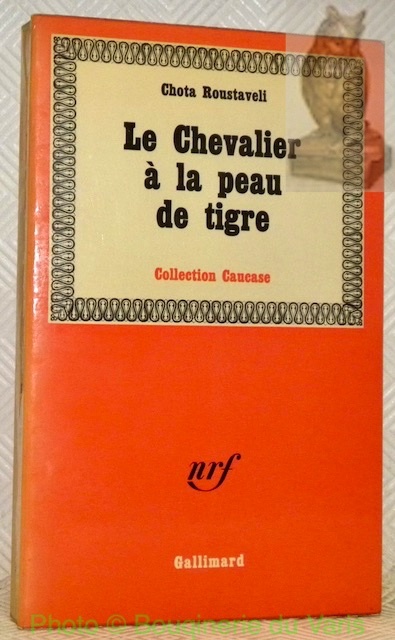
24767Paris, Gallimard 1964, 225x140mm, 270pages, broché.
Very Good Russian Paperback. Demy 8vo. (22 x 14 cm). In Russian. 123, [2] p. Formirovanie i razvitie sotsialno-klassovoi struktury Uzbekistana. Formation and development of social and class structure of Uzbekistan.
Fine English Original bdg. Dust wrapper. Roy. 8vo. (24 x 16 cm). In Turkish. [vii], 151, [24] p., color ills. "Dogudan gelen göç Mogollar. [= Mongols: Storm from the East]. Turkish Edition of 'Mongols: Storm from the East'. CENTRAL ASIA Mongolia Mongol invasions Middle East 12th Century Islamic world Kharezm History of Turks.
New English Paperback. Pbo. Roy. 8vo. (24 x 17 cm). In English. 508 p. Part 1: MIDDLE TURKIC: 1. Qarakhanid Literature and the Beginnings of Turco-Islamic Culture. In: Central Asian Monuments (ed. Hasan B. Paksoy, Istanbul, 1992), 73-80. 2. On Nature in Karakhanid Literature. Journal of Turkish Studies 4 (1980), 7-35. 3.Three Turkic Verse Cycles Relating to Inner Asian Warfare. Harvard Ukrainian Studies 3/4, 1979-80 (= Eucharisterion Omeljan Pritsak, Part 1), 151-65. 4.Inner Asian Wisdom Traditions in the Pre-Mongol Period. Journal of the American Oriental Society 101.1 (1981), 87-95. 5.Kashgari on the Tribal and Kinship Organization of the Turks. Archivum Ottomanicum 4 (1972), 23-43. 6.Kashgari on the Beliefs and Superstitions of the Turks. Journal of the American Oriental Society 95.1 (1975), 68-80. 7.The Alexander Romance in the Diwan Lughat at-Turk. Humaniora Islamica 1 (1973), 233-44. 8.Baraq and Buraq. Central Asiatic Journal 15.2 (1971), 102-17. 9.Middle Turkic Vulgarisms. In: Aspects of Altaic Civilization II (ed. L. V. Clark and P. A. Draghi, Bloomington, Indiana, 1978), 59-64. 10.Introduction to Wisdom of Royal Glory (Chicago, 1983). 11.Textual Problems in Kutadgu Bilig. Journal of Turkish Studies 3 (1979), 89-99.12.Animal Traits in the Army Commander. Journal of Turkish Studies 1 (1977), 95-112. 13.Some Notes on the Middle Turkic Glosses. Journal of Turkish Studies 5 (1981), 41-44. Part 2: OTTOMAN: 14.The Lyric in the Romance: The Use of Ghazals in Persian and Turkish Masnavis. Journal of Near Eastern Studies 43.1 (1984), 9-25. 15.The Romance of Iskender and Gülshah. In: Turkic Culture: continuity and Change (ed. S. M. Akural, 1987 = Indiana University Turkish Studies 6), 95-103. 16.Inner and Outer Oguz in Dede Korkut. Turkish Studies Association Bulletin 6.2 (1982), 21-25. 17.The Seyahatname of Evliya Çelebi as a Literary Monument. Journal of Turkish Literature 2 (2005), 71-83. 18.Turkic Languages and Turkish Dialects according to Evliya Çelebi. Altaica Osloensia: Proceedings from the 32nd Meeting of the Permanent International Altaistic Conference, ed. Bernt Brendemoen, Oslo, 1990, 89-102. 19.The Languages of the World according to Evliya Çelebi. Journal of Turkish Studies 13 (1989 = Gerhard Doerfer Festschrift), 20.Evliya Çelebi on the Armenian Language of Sivas in 1650. Annual of Armenian Linguistics 4 (1983), 47-56. 21. "Mi?disi": An Armenian Source for the Seyahatname. Wiener Zeitschrift für die Kunde des Morgenlandes 76 (1986 = Festschrift Andreas Tietze), 73-79. 22.Marrying a Sultana: The Case of Melek Ahmed Pasha. In: Decision Making and Change in the Ottoman Empire (ed. Caesar E. Farah, Kirksville, Missouri, 1993), 169-182. 23. An Unpublished Account of mum söndürmek in the Seyahatname of Evliya Chelebi. In: Bektachiyya: Études sur l'ordre mystique des Bektachis et les groupes relevant de Hadji Bektach (ed. A. Popovic and G. Veinstein, Istanbul: Isis, 1995), 69-73. 24. Establishing the Text of Evliya Çelebi's Seyahatname: A Critique of Recent Scholarship and Suggestions for the Future. Archivum Ottomanicum 18 (2000), 139-44. 25."Shall We Tear Down That Observatory?" Evliya Çelebi and Philology. [unpublished English original of: "Su Rasadi Yikalim mi" Evliya Çelebi ve Filoloji. In: Evliya Çelebi ve Seyahatname (ed. Nurhan Tezcan & Kadir Atlansoy, Dogu Akdeniz Üniversitesi, 2002), 99-118. 26.Some Reflections on the Editing of Book 9 of the Seyahatname. In: Izzet Gündag Kayaoglu Hatira Kitabi: Makaleler (ed. Oktay Belli, Yücel Dagli, M. Sinan Genim; Istanbul, 2005), 122-32. 27.Some Reflections on the Editing of Book 10 of the Seyahatname. In: Journal of Turkish Studies 30/1 (2007 = In memoriam Sinasi Tekin, I
New English Paperback. Pbo. Roy. 8vo. (23 x 16 cm). In Turkish. [xii], 453 p. A sketch of the Turki Language as spoken in Eastern Turkistan, Kashgar and Yarkand. Kasgar ve Yarkend agzi sözlügü. Translated by Fikret Yildirim.
New English Paperback. Pbo. Roy. 8vo. (24 x 17 cm). In Turkish. 255 p. Türk bilig revüsü. Irân-Tûrân cenkleri. Prep. by Mehmet Sogukömerogullari. Modern Turkish Edition of Sehname special issue of 'Türkbilig Revüsü periodical' by Riza Nur. TURKOLOGY History of Turks Book of wars Iran - Turkish relations Sahnama.
Firenze, 1952, stralcio con copertina posticcia muta, pp. 881/898 - !! ATTENZIONE !!: Con il termine estratto (o stralcio) intendiamo riferirci ad un fascicolo contenente un articolo, completo in se, sia che esso sia stato stampato a parte utilizzando la stessa composizione sia che provenga direttamente da una rivista. Le pagine sono indicate come "da/a", ad esempio: 229/231 significa che il testo è composto da tre pagine. Quando la rivista di provenienza non viene indicata é perché ci è sconosciuta. - !! ATTENTION !!: : NOT A BOOK : “extract” or “excerpt” means simply a few pages, original nonetheless, printed in a magazine. Pages are indicated as in "from” “to", for example: 229/231 means the text comprises three pages (229, 230 and 231). If the magazine that contained the pages is not mentioned, it is because it is unknown to us. - !! ATTENZIONE !!: Con il termine estratto (o stralcio) intendiamo riferirci ad un fascicolo contenente un articolo, completo in se, sia che esso sia stato stampato a parte utilizzando la stessa composizione sia che provenga direttamente da una rivista. Le pagine sono indicate come "da/a", ad esempio: 229/231 significa che il testo è composto da tre pagine. Quando la rivista di provenienza non viene indicata é perché ci è sconosciuta. - !! ATTENTION !!: : NOT A BOOK : “extract” or “excerpt” means simply a few pages, original nonetheless, printed in a magazine. Pages are indicated as in "from” “to", for example: 229/231 means the text comprises three pages (229, 230 and 231). If the magazine that contained the pages is not mentioned, it is because it is unknown to us.
Firenze, 1952, stralcio con copertina posticcia muta, pp. 551/564 - !! ATTENZIONE !!: Con il termine estratto (o stralcio) intendiamo riferirci ad un fascicolo contenente un articolo, completo in se, sia che esso sia stato stampato a parte utilizzando la stessa composizione sia che provenga direttamente da una rivista. Le pagine sono indicate come "da/a", ad esempio: 229/231 significa che il testo è composto da tre pagine. Quando la rivista di provenienza non viene indicata é perché ci è sconosciuta. - !! ATTENTION !!: : NOT A BOOK : “extract” or “excerpt” means simply a few pages, original nonetheless, printed in a magazine. Pages are indicated as in "from” “to", for example: 229/231 means the text comprises three pages (229, 230 and 231). If the magazine that contained the pages is not mentioned, it is because it is unknown to us. - !! ATTENZIONE !!: Con il termine estratto (o stralcio) intendiamo riferirci ad un fascicolo contenente un articolo, completo in se, sia che esso sia stato stampato a parte utilizzando la stessa composizione sia che provenga direttamente da una rivista. Le pagine sono indicate come "da/a", ad esempio: 229/231 significa che il testo è composto da tre pagine. Quando la rivista di provenienza non viene indicata é perché ci è sconosciuta. - !! ATTENTION !!: : NOT A BOOK : “extract” or “excerpt” means simply a few pages, original nonetheless, printed in a magazine. Pages are indicated as in "from” “to", for example: 229/231 means the text comprises three pages (229, 230 and 231). If the magazine that contained the pages is not mentioned, it is because it is unknown to us.
Firenze, 1954, 8vo stralcio con copertina posticcia muta, pp. 443/454. - !! ATTENZIONE !!: Con il termine estratto (o stralcio) intendiamo riferirci ad un fascicolo contenente un articolo, completo in se, sia che esso sia stato stampato a parte utilizzando la stessa composizione sia che provenga direttamente da una rivista. Le pagine sono indicate come "da/a", ad esempio: 229/231 significa che il testo è composto da tre pagine. Quando la rivista di provenienza non viene indicata é perché ci è sconosciuta. - !! ATTENTION !!: : NOT A BOOK : “extract” or “excerpt” means simply a few pages, original nonetheless, printed in a magazine. Pages are indicated as in "from” “to", for example: 229/231 means the text comprises three pages (229, 230 and 231). If the magazine that contained the pages is not mentioned, it is because it is unknown to us.
Fine English Paperback., Fine., 24 x 16 cm., [4], 12 p., "Muhammed Musa Sefik hükümeti Afgan demokrasisinde son perde.", Richard S.Newell, ODTÜ Yayinlari, Ank., 1984. Paperback.Pbo., 24 x 16 cm., [4],12 p., in Turkish, "Muhammed Musa Sefik hükümeti Afgan demokrasisinde son perde.", Richard S.Newell, ODTÜ Yayinlari, Ank., 1984.
Very Good English Original cloth bdg. Cr. 8vo. (20 x 13 cm). In German. 344 p., 1 folding map. A historical novel by Eringers on Enver Pasha. Der Serasker. Envers Ende: Irrfahrt und kampf eines kühnen Türken.
Very Good English Paperback. Pbo. Roy. 8vo. (24 x 17 cm). In Turkish and abstract in English. 160 p., numerous color and b/w ills. The art of yazma.= Türk yazmacilik sanati (Tahta kalipla kumas baskisi).
Very Good Turkish Paperback. Dust wrapper. Roy. 8vo. (24 x 16 cm). In Turkish. 160 p. Türk yazmacilik sanati. First Edition. The art of yazma.
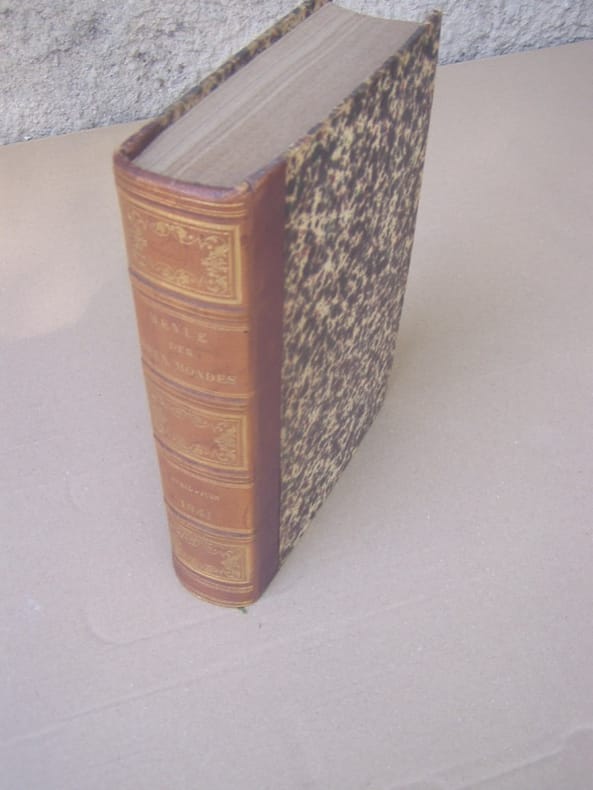
1841220991841 Revue des Deux Mondes 1841,956p.,grand IN8 reliure demi chagrin tabac,dos lisse orné de caissons dorés,bon état.
72897Seconde série de la nouvelle période - Tome deuxième - XXIIIe année - 15 avril 1853 - 2e livraison - Paris. Bureau de La Revue des Deux Mondes - grand in-8 broché - 208 pages
Very Good English Paperback. Pbo. Cr. 8vo. (20 x 14 cm). In Turkish. 125 p. Dogu Avrupa'nin uygarligina ve yerlesmesine Türklerin katkilari. Translated by Nihal Önol.
Very Good English Paperback. Pbo. Roy. 8vo. (24 x 17 cm). In Turkish. [viii], 100, [22] p., b/w ills., bibliography, index. Beglerbegi Gazi Iskender Pasa, (1492-1571).
New English Paperback. Pbo. Roy. 8vo. Mint. [xii], 91, [1] p. In English. Colors in the Turkish beliefs and national customs yellow-red-green. The people and communities originated from the Turkish race were spread from two main streams: Oghuz and Kipchak - The Oghuz group consisted of twenty four tribes who were referred in many national sources started with Mahmud of Kashgar. The Kipchak originated communities who settled in Asia from North East to North West, in Eastern Europe -even in Western Europe-, and in Caucasus were divided also into 24 groups. The Kipchaks like Oghuzs had 24 different seals (damga, tamga, tamka), however we do not have related scientific public opinion unfortunately. Regarding the relations of Turkish communities settled in Anatolia with the other communities coming from the same origin, the historic, sociological and ethnographic sources are necessary to be restudied.
Fine English Paperback. Pbo. Demy 8vo. (21 x 14 cm). In Turkish. [xii], 91, [1] p. Türk inanislari ile millî geleneklerinde renkler ve Sari - kirmizi - yesil. Colors in the Turkish beliefs and national customs yellow-red-green. The people and communities originated from the Turkish race were spread from two main streams: Oghuz and Kipchak - The Oghuz group consisted of twenty four tribes who were referred in many national sources started with Mahmud of Kashgar. The Kipchak originated communities who settled in Asia from North East to North West, in Eastern Europe -even in Western Europe-, and in Caucasus were divided also into 24 groups. The Kipchaks like Oghuzs had 24 different seals (damga, tamga, tamka), however we do not have related scientific public opinion unfortunately. Regarding the relations of Turkish communities settled in Anatolia with the other communities coming from the same origin, the historic, sociological and ethnographic sources are necessary to be restudied.
Very Good French Modern cloth bdg. Demy 8vo. (21 x 14 cm). In French. 341, [8] p., b/w ills. Contribution a l'etude des Kirghiz du Pamir Afghan (Cahiers Turcica 1).
Fine English Paperback., Fine., 24 x 16 cm., [4], 19 p., "Kirgiz mültecileri hakkinda kisa bir bilgi / Hazaristan'in bugünkü durumu.", Remy Dor, B. M., ODTÜ Yayinlari, Ank., 1984.
Fine Russian Paperback. Demy 8vo. (21 x 14 cm). In Russian. 64 p., musical scores. Kalendarnye obriady Krymskikh Tatar.
Hachette 1881, fort In-4 relié demi-chagrin bordeaux, dos à nerfs, caissons et fleurons dorés, gardes de papier marbré, reliure signée en queue E. Jaladieu. 918 pages. Avec 8 cartes en couleurs tirées à part, 182 cartes intercalées dans le texte et 89 vues ou types gravés sur bois. Quelques rousseurs pales sans gravité, bel exemplaire, bien relié