KEFELI IBRAHIM EFENDI.MareMagnum
Kearney W. H - Greatbach G.MareMagnum
The battle of Inkermann
Raffigurazione della battaglia fra gli anglofrancesi e i russi, durante la guerra di Crimea

Libreria Trippini Sergio · Gavirate, IT60,00 €
716 résultats
New English Paperback. Pbo. Roy. 8vo. (24 x 17 cm). In Turkish translation and facsimile in Crimean Turkish with Arabic letters. 184 p. Tevârih-i Tatar Han ve Dagistan ve Moskov ve Dest-i Kipçak ülkelerinindir.= Tatar Hani, Dagistan, Moskof ve Kipçak Ovasi ülkelerinin tarihleridir. Prep. by Ismail Otar. First Edition in 1922 printed in Romania.
Raffigurazione della battaglia fra gli anglofrancesi e i russi, durante la guerra di Crimea
Tratta da “Seat of War in the East”. Paul & Dominic Colnaghi & C.°, London 1855 – 1856. Tonolitografia in recente ma bella coloritura a mano, cm 37 x 55,5 circa (il foglio). Disponiamo di numerose tavole appartenenti alla prima o seconda serie. Le tavole sono tutte delineate da William Simpson e litografate da vari autori, tra cui E. Walker, J. Needham, T. Picken e altri. Due piccolissimi strappetti al margine bianco inferiore, un minimo e lieve foxing, bella coloritura e in buono stato di conservazione. .
Tratta da “Seat of War in the East”. Paul & Dominic Colnaghi & C.°, London 1855 – 1856. Tonolitografia in recente ma bella coloritura a mano, cm 37 x 55,5 circa (il foglio). Disponiamo di numerose tavole appartenenti alla prima o seconda serie. Le tavole sono tutte delineate da William Simpson e litografate da vari autori, tra cui E. Walker, J. Needham, T. Picken e altri. Tranne un minimo e lieve foxing, bella coloritura e in buono stato di conservazione. .
Very Good English Paperback. Pbo. Roy. 8vo. (24 x 17 cm). In English. 17 p. Contents: The cause of independence of Azerbaijan.; Idil-Ural.; The tragedy of the Crimean Turk and his cause of independence.; North Caucasia.; The captive nations in the Soviet Russia.
Carta geografica della penisola, piccole vedute delle città di Sebastopoli, Eupatoria, Balaklava, le secche di Alma e riquadro con topografia del porto di Sebastopoli. Piega centrale editoriale
Ink underlining to three pages and bookshop name to rear end paper. A very clean very tight copy with bright unmarked boards and no bumping to corners. Dust jacket not price clipped or marked or torn with minor creasing to upper edge. 335pp.
New English Paperback. Pbo. Roy. 8vo. (24 x 17 cm). In English. 144 p. The Crimean War, 1853-1856: A bibliography of monographs.
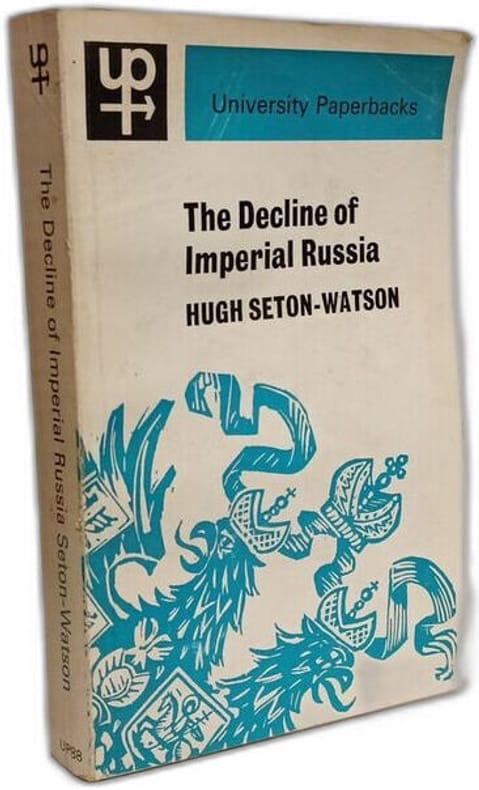
1968100147613University Paperbacks 1968 in8. 1968. Broché.
Very Good English Paperback. Pbo. Roy. 8vo. (24 x 17 cm). In English. 3 volumes: (127, [2] p.; 120, [2] p.; 140, [1] p.), b/w maps. The East Turkic review. Institute for the Study of the USSR. No. 1-2-3. 3 issues, 1958-1960. The East Turkic review is a publication of the Institute for the Study of the USSR (is a body emigre scholars from Soviet Union, whose aim is to furnish reliable information regarding conditions and trends in the Soviet Union, founded in 1950, its activities are centered in Munich, Germany.). Its purpose is to present analyses of contemporary events and detailed studies of the history and culture of the areas of the Soviet Union inhabited by Turkic peoples. The study contains some precious authors and scholars such Poppe, Chabagi etc.
8vo., First Edition, with plates and maps; green cloth, gilt back, a near fine copy in price-clipped dustwrapper.
Tratta da “Seat of War in the East”. Paul & Dominic Colnaghi & C.°, London 1855 – 1856. Tonolitografia in recente ma bella coloritura a mano, cm 37 x 55,5 circa (il foglio). Disponiamo di numerose tavole appartenenti alla prima o seconda serie. Le tavole sono tutte delineate da William Simpson e litografate da vari autori, tra cui E. Walker, J. Needham, T. Picken e altri. Tranne un minimo e lieve foxing, bella coloritura e in buono stato di conservazione.
Raffigurazione della consegna del forte agli alleati. Strappo centrale
Tratta da “Seat of War in the East”. Paul & Dominic Colnaghi & C.°, London 1855 – 1856. Tonolitografia in recente ma bella coloritura a mano, cm 37 x 55,5 circa (il foglio). Disponiamo di numerose tavole appartenenti alla prima o seconda serie. Le tavole sono tutte delineate da William Simpson e litografate da vari autori, tra cui E. Walker, J. Needham, T. Picken e altri. Minuscolo strappetto al margine bianco destro, tranne un minimo e lieve foxing, bella coloritura e in buono stato di conservazione.
Please note: Coloured map not included. Cover portrait of the London Scottish marching past Crimea Memorial on arrival home. Chapter CCCII - Records on the Regiments, II - English 1914-15, with photos. Great centerfold photos. First portion of Chapter CCCIII - Records of the Regiments: III. English, 1916-18. Many great photos. Above-average wear and soiling. Staples disintegrated. A worthy reference copy. Book
Raffigurazione della costruzione di una trincea
Raffigurazione della prima battaglia terrestre della guerra di Crimea
Pages 169-196. Features : Cover photo of Field-Marshal Montgomery with General Crerar of the Canadian First Army and General Dempsey of the British Second Army; The Battle of the Roer Dams - photos of the Urftstausee - a German defense key-point; Twelve great photos at various locations on the Western Front, including the capture of Colmar; Eighteen fantastic photos of the Reichswald Offensive where German towns were smashed by Allied bombing and infantry and armour moved through mud and flood; Article 'Prospects on the Western Front' by Cyril Falls; Two-page illustration of the victory over the Roer Triangle by the British 2nd Army - the crossing of the Vloed Beek; Two-page illustration of the victory of the Roer Triangle by the British Second Army - the gallant fight in Susteren; Two-page illustration of the victory of the Roer Triangle by the British Second Army - the critical Schilberg Cross-Roads; Seven photos of cities in the path of the Russian advance; Three photos of Royal inspection of the "Indefatigable"; Three photos of victory celebration in Colmar; Photos of personalities of the week include Captain J.R.O. Thompson, G.C., Guy Byam, The Northern Sudan Advisory Council, Sir Edward Bridges, Sir Ernest Bird, Lord Fairfield, General McNaughton of Canada, P.N. Loxley, Sir Gordon Nairne, Captain John Henry Brutn, V.C., and Sir Walter Citrine (addressing paratroops in Greece); Six photos of the Crimea conference - which sounded the death knell of Nazism - with FDR, Stalin and Churchill in five photos; Photo of official disbandment of the R.A.F. Balloon Command, with Sir Archibald Sinclair addressing members; Photo of part of 500 Dutch children arriving by boat on their way to Coventry; Photo of Bristol's Colston Hall which has just burned to the ground; Photos of damage to the Compo Santo of Pisa, and protective measures; Two pages of art from Bali - village scenes; nostalgic ads; and more. Unmarked. Average wear. Coverfold taped. A sound vintage copy. Book
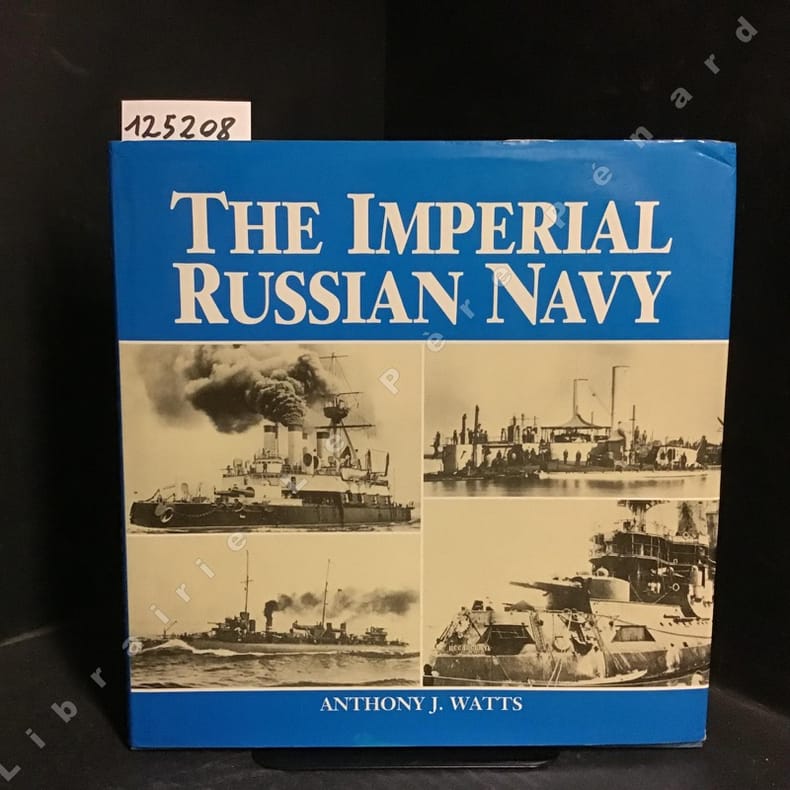
19901252081990 Weidenfeld Military - 1990 - In-4 carré, reliure pleine toile sous jaquette illustrée - 192 pages - Nombreuses illustrations en N&B dans le texte
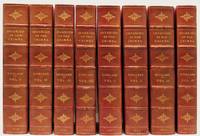
186330083Edinburgh and London: William Blackwood and Sons 1863-1887. 8 volumes. First Edition of each of the eight volumes. With a profusion of maps and plans throughout. 8vo handsomely bound in three-quarter red calf over red cloth covered boards the spines with raised bands central gilt ornamental tooling in the compartments two compartments lettered in gilt gilt rules to the joins marbled endleaves top edges gilt with the signification of the old Bournemouth bookseller of the late 1800's Horace G. Commin. A handsome set well preserved the text-blocks and illustrated portions all in very pleasing condition the bindings with very little evidence of wear hinges all strong and the bindings tight and sound. A COMPLETE SET OF THE FIRST EDITIONS OF THIS HISTORICALLY IMPORTANT AND WELL RESPECTED WORK. PERHAPS THE MOST IMPORTANT OF ALL WRITINGS ON THE CRIMEA. Alexander William Kinglake was an English travel writer and historian. He was educated at Eton College and Trinity College Cambridge. was called to the Bar in 1837 and built up a thriving legal practice which in 1856 he abandoned to devote himself to literature and public life. His magnum opus was this great work--The Invasion of Crimea: Its Origin and an Account of its Progress down to the Death of Lord Raglan in 8 volumes published from 1863 to 1887 by Blackwood Edinburgh one of the most effective works of its class. The History which Geoffrey Bocca describes as a book "by which no intelligent man can fail immediately to be fascinated no matter to what page he might open it" is presented here.<br> Kinglake's subject is the Crimean War of the mid-nineteenth century which was fought from October 1853 to February 1856 in which Russia lost to an alliance of the Ottoman Empire France the United Kingdom and Piedmont-Sardinia. The immediate cause of the war involved the rights of Christian minorities in Palestine then part of the Ottoman Empire with the French promoting the rights of Roman Catholics and Russia promoting those of the Eastern Orthodox Church. Longer-term causes involved the decline of the Ottoman Empire the expansion of the Russian Empire in the preceding Russo-Turkish Wars and the British and French preference to preserve the Ottoman Empire to maintain the balance of power in the Concert of Europe. <br> The churches worked out their differences with the Ottomans and came to an agreement but both the French Emperor Napoleon III and the Russian Tsar Nicholas I refused to back down. Nicholas issued an ultimatum that demanded the Orthodox subjects of the Ottoman Empire be placed under his protection. Britain attempted to mediate and arranged a compromise to which Nicholas agreed. When the Ottomans demanded changes to the agreement Nicholas recanted and prepared for war. <br> The Crimean War was one of the first conflicts in which military forces used modern technologies such as explosive naval shells railways and telegraphs and it was one of the first to be documented extensively in written reports and in photographs. The war quickly became a symbol of logistical medical and tactical failures and of mismanagement. The reaction in Britain led to a demand for the professionalizing of medicine most famously achieved by Florence Nightingale who gained worldwide attention for pioneering modern nursing while she treated the wounded.<br> The war also marked a turning point for the Russian Empire. The war weakened the Imperial Russian Army drained the treasury and undermined Russia's influence in Europe. The empire would take decades to recover. Russia's humiliation forced its educated elites to identify its problems and to recognize the need for fundamental reforms. They saw rapid modernization as the sole way to recover the empire's status as a European power. The war thus became a catalyst for reforms of Russia's social institutions including the abolition of serfdom and overhauls in the justice system local self-government education and military service. <br> As the Ottoman Empire steadily weakened during the 19th century the Russian Empire stood poised to take advantage by expanding southward. In the 1850s the British and the French Empires were allied with the Ottoman Empire and were determined to prevent that expansion. The historian A. J. P. Taylor argued that the war had resulted not from aggression but from the interacting fears of the major players:<br> "In some sense the Crimean war was predestined and had deep-seated causes. Neither Nicholas I nor Napoleon III nor the British government could retreat in the conflict for prestige once it was launched. Nicholas needed a subservient Turkey for the sake of Russian security; Napoleon needed success for the sake of his domestic position; the British government needed an independent Turkey for the security of the Eastern Mediterranean. Mutual fear not mutual aggression caused the Crimean war."<br> Field Marshal FitzRoy James Henry Somerset 1st Baron Raglan known before 1852 as Lord FitzRoy Somerset as a junior officer served in the Peninsular War and the Waterloo campaign latterly as military secretary to the Duke of Wellington. He also took part in politics as Tory Member of Parliament for Truro before becoming Master-General of the Ordnance.<br> He became commander of the British troops sent to the Crimea in 1854: his primary objective was to defend Constantinople and he was also ordered to besiege the Russian port of Sevastopol. After an early success at the Battle of Alma a failure to deliver orders with sufficient clarity caused the fateful Charge of the Light Brigade at the Battle of Balaclava. <br> Dissatisfaction with the conduct of the war was growing with the public in Britain and other countries and was worsened by reports of fiascos especially the devastating losses of the Charge of the Light Brigade at the Battle of Balaclava. On Sunday 21 January 1855 a "snowball riot" occurred in Trafalgar Square near St Martin-in-the-Fields in which 1500 people gathered to protest against the war by pelting buses cabs and pedestrians with snowballs. When the police intervened the snowballs were directed at the constables. The riot was finally put down by troops and police acting with truncheons. In Parliament the Conservatives demanded an accounting of all soldiers cavalry and sailors sent to the Crimea and accurate figures as to the number of casualties sustained by all British armed forces in Crimea especially concerning the Battle of Balaclava. When Parliament passed a bill to investigate by the vote of 305 to 148 Aberdeen said he had lost a vote of no confidence and resigned as prime ministe. The veteran former Foreign Secretary Lord Palmerston became prime minister and took a hard line wishing to expand the war foment unrest inside the Russian Empire and reduce the Russian threat to Europe permanently. Sweden–Norway and Prussia were willing to join Britain and France and Russia was isolated.<br> France which had sent far more soldiers to the war and suffered far more casualties than Britain had wanted the war to end as did Austria. Negotiations began in Paris in February 1856 about seven months after Lord Raglan's death and were surprisingly easy. France under the leadership of Napoleon III had no special interests in the Black Sea and so did not support the harsh British and Austrian proposals.<br> Peace negotiations at the Congress of Paris resulted in the signing of the Treaty of Paris on 30 March 1856. In compliance with Article III Russia restored to the Ottoman Empire the city and the citadel of Kars and "all other parts of the Ottoman territory of which the Russian troop were in possession". Russia returned the Southern Bessarabia to Moldavia. By Article IV Britain France Sardinia and Ottoman Empire restored to Russia "the towns and ports of Sevastopol Balaklava Kamish Eupatoria Kerch Jenikale Kinburn as well as all other territories occupied by the allied troops". In conformity with Articles XI and XIII the Tsar and the Sultan agreed not to establish any naval or military arsenal on the Black Sea coast. The Black Sea clauses weakened Russia which no longer posed a naval threat to the Ottomans. The Principalities of Moldavia and Wallachia were nominally returned to the Ottoman Empire and the Austrian Empire was forced to abandon its annexation and to end its occupation of them. The Treaty of Paris admitted the Ottoman Empire to the Concert of Europe and the great powers pledged to respect its independence and territorial integrity. wiki<br> Tuckwell wrote in 1902 that In 1854 Kinglake "accompanied Lord Raglan to the Crimea.He had hoped to go in an official position as non-combatant but this was refused by the authorities. His friend Lord Raglan whose acquaintance he had made while hunting with the Duke of Beaufort’s hounds took him as his private guest. Arrested for a time at Malta by an attack of fever he joined our army before hostilities began rode with Lord Raglan’s staff at the Alma fight and accompanied the chief in his visit of tenderness to the wounded when the fight was over. Throughout the campaign the two were much together. There are often slight but unmistakable signs of Kinglake’s presence as spectator and auditor of Lord Raglan’s deeds and words; his affection and reverence for the great general animate the whole; in outward composure and latent strength the two men resembled each other closely. The book is in fact a history of Lord Raglan’s share in the campaign; begun in 1856 at the request of Lady Raglan the narrative ends when the Caradoc with the general’s body on board steams out of the bay “Farewell†flying at her masthead the Russian batteries with generous recognition ceasing to fire till the ship was out of sight. “Lord Raglan is dead†said Kinglake as Vol. VIII. was sent to press “and my work is finished.â€<br> Tuckwell wrote that: "In order therefore rightly to appreciate The Invasion of the Crimea we must look upon it as a great prose epic; its argument machinery actors episodes subordinate to a predominant ever present hero. In its fine preamble Lord Raglan sits enthroned high above generals armies spectators conflicts; on the quality of his mind the fate of two great hosts and the fame of two great nations hang. He checks St. Arnaud’s wild ambition; overrules the waverings of the Allies; against his own judgment but in dutiful obedience to home instruction carries out the descent upon the Old Fort coast. The successful achievement of the perilous flank march is ascribed to the undivided command which during forty-eight hours accident had conferred upon him. From his presence in council French and English come away convinced and strengthened; his calm in action imparts itself to anxious generals and panic-stricken aides-de-camp. Through Alma fight from the high knoll to which happy audacity had carried him he rides the whirlwind and directs the storm. In the terrible crisis which sees the Russians breaking over the crest of Inkerman in the ill-fated attack on the Great Redan where Lacy Yea is killed his apparent freedom from anxiety infects all around him and achieves redemption from disaster. William Blackwood and Sons hardcover
Very Good English Original bdg. with new spine. Roy. 8vo. (23 x 15 cm). In English. [xxviii], 507 p., 1 folded engraved color plate of Sebastopol from the sea, 12 numerous folded plans and maps. First Edition. Third volume. The invasion of the Crimea: Its origin, and an account of its progress down to the death of Lord Raglan. Vol. III. Kinglake was an English travel writer and historian. He was born near Taunton, Somerset, and educated at Eton College and Trinity College, Cambridge. He was called to the Bar in 1837, and built up a thriving legal practice, which, in 1856, he abandoned to devote himself to literature and public life. His first literary venture was Eothen; or Traces of travel brought home from the East (London: J. Ollivier, 1844), a very popular work of Eastern travel, apparently first published anonymously, in which he described a journey he made about ten years earlier in Syria, Palestine and Egypt, together with his Eton contemporary Lord Pollington. Elliot Warburton said it evoked "the East itself in vital actual reality" and it was instantly successful. However, his magnum opus was THE INVASION OF THE CRIMEA: Its Origin, and an Account of its Progress down to the Death of Lord Raglan, in 8 volumes, published from 1863 to 1887 by Blackwood, Edinburgh, one of the most effective works of its class. The History, which Geoff Bocca describes as a book "by which no intelligent man can fail immediately to be fascinated, no matter to what page he might open it" has been accused of being too favourable to Lord Raglan and unduly hostile to Napoleon III for whom the author had an extreme aversion. The town of Kinglake in Victoria, Australia, and the adjacent national park are named after him. A Whig, Kinglake was elected at the 1857 general election as one of the two Members of Parliament (MP) for Bridgwater, having unsuccessfully contested the seat in 1852. He was returned at next two general elections, but the result of the 1868 general election in Bridgwater was voided on petition on 26 February 1869. No by-election was held, and after a Royal Commission found that there had been extensive corruption, the town was disenfranchised in 1870.
Very Good English Original bdg. with new spine. Roy. 8vo. (23 x 15 cm). In English. [xviii], 482, [24] p., 1 folded sketch map frontispiece. First Edition. Sixth volume. The invasion of the Crimea: Its origin, and an account of its progress down to the death of Lord Raglan. Vol. VI. Kinglake was an English travel writer and historian. He was born near Taunton, Somerset, and educated at Eton College and Trinity College, Cambridge. He was called to the Bar in 1837, and built up a thriving legal practice, which, in 1856, he abandoned to devote himself to literature and public life. His first literary venture was Eothen; or Traces of travel brought home from the East (London: J. Ollivier, 1844), a very popular work of Eastern travel, apparently first published anonymously, in which he described a journey he made about ten years earlier in Syria, Palestine and Egypt, together with his Eton contemporary Lord Pollington. Elliot Warburton said it evoked "the East itself in vital actual reality" and it was instantly successful. However, his magnum opus was THE INVASION OF THE CRIMEA: Its Origin, and an Account of its Progress down to the Death of Lord Raglan, in 8 volumes, published from 1863 to 1887 by Blackwood, Edinburgh, one of the most effective works of its class. The History, which Geoff Bocca describes as a book "by which no intelligent man can fail immediately to be fascinated, no matter to what page he might open it" has been accused of being too favourable to Lord Raglan and unduly hostile to Napoleon III for whom the author had an extreme aversion. The town of Kinglake in Victoria, Australia, and the adjacent national park are named after him. A Whig, Kinglake was elected at the 1857 general election as one of the two Members of Parliament (MP) for Bridgwater, having unsuccessfully contested the seat in 1852. He was returned at next two general elections, but the result of the 1868 general election in Bridgwater was voided on petition on 26 February 1869. No by-election was held, and after a Royal Commission found that there had been extensive corruption, the town was disenfranchised in 1870.
Tratta da “Seat of War in the East”. Paul & Dominic Colnaghi & C.°, London 1855 – 1856. Tonolitografia in recente ma bella coloritura a mano, cm 37 x 55,5 circa (il foglio). Disponiamo di numerose tavole appartenenti alla prima o seconda serie. Le tavole sono tutte delineate da William Simpson e litografate da vari autori, tra cui E. Walker, J. Needham, T. Picken e altri. Minuscolo strappetto al margine bianco superiore, un minimo e lieve foxing, bella coloritura e in buono stato di conservazione.
Fine Fine English Original bdg. Dust wrapper. Roy. 8vo. (24 x 17 cm). In English. [8], [iii], 400 p., ills. The Karaite Jews of Egypt, 1882-1986. In The Karaite Jews of Egypt, Mourad el-Kodsi offers for the first time a comprehensive and scholarly study of the little-known history of the Karaite Jews. Dealing primarily with the period from 1882-1986, el-Kodsi's text reveals the many dimensions of the Karaites' rich cultural heritage, and is supplemented by numerous photographs and reproductions of authentic Karaite documents of historical import. In a style that is at once uncompromising and sensitive, the author examines the folk traditions, societal patterns, and artistic contributions of this once-flourishing society.
Very Good English Original cloth bdg. Demy 8vo. (22 x 14 cm). In English. [vii], 104 p. The Karaite literary opponents of Saadiah Gaon. The literary campaign that Saadiah, first among the Rabbanites, started against the Karaites, and whose external history I have on a former occasion attempted to trace, found the foe ready to join battle. There arose a complete array of Karaite scholars, who, either in special writings, or incidentally in the course of their works, repelled the attacks of Saadiah with energy. But they were not content to remain on the defensive. They speedily assumed an offensive attitude, and endeavoured, with varying degrees of success, to overthrow the arguments and proofs advanced by Saadiah in support of the Oral Law. A disagreeable element in the campaign is the personal abuse into which the controversy often degenerated: objective treatises are marred by regrettable recrimination. It must, however, be admitted that in this respect both parties sinned, although perhaps the Karaites sinned the more deeply. The controversy initiated by Saadiah's activity did not cease with his death. It was not confined to the Gaon alone, but drew within its range the whole of Rabbinism.