345 résultats
2026x-1032680245Taylor & Francis Ltd 2026. Hardcover. New. 146 pages. 9.18x6.12x9.45 inches. Taylor & Francis Ltd hardcover
201339457Naive Classique, 2013. AM 212 1 CD CD
GF297751 page in12 - bon état -
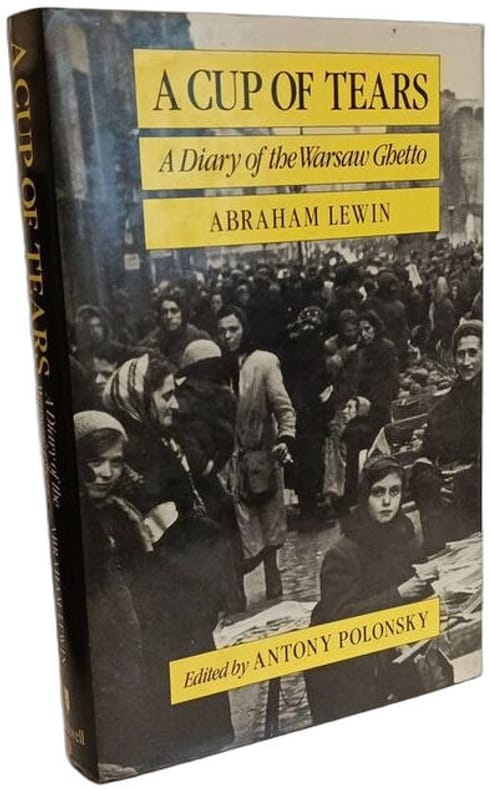
1989100145336Blackwell Publishers 1989 320 pages 15 4x3x22 8cm. 1989. Cartonné jaquette. 320 pages.
198790952Warszawa [Warsaw - Warschau]: Pracownie Sztuk Plastycznych - Plastic Art Studios 1987. 256 Seiten. Kunstdruckpapier. Polnisch-Russisch-Deutscher Paralleltext. Mit zahlreichen schwarz-weißen Portrait-Photographien und farbigen Photographien der Kunstwerke. Gr. 8° (22,5-25 cm). Original-Broschur [Softcover / Paperback]
1929520961929 T. 1 - N°3 - 20 décembre 1929 - revue mensuelle - 35, avenue de la Cour de France. Juvisy (Seine & oise) - in-12 broché
1998Star-9783790811193Springer 1998. Hardcover. New. Springer hardcover
1998Star-9783790811193Springer 1998. Hardcover. New. Springer hardcover
190211582Bourg, Imprimerie du Journal, 1902 ; in-16, broché ; 238, (2) pp., photo (par Sidney Monlun) du Kremlin en frontispice, couverture crème.
1993100147195Da Capo Press 1993 408 pages 14 5x22 1x3 3cm. 1993. Broché. 408 pages.
4to., First Edition, with portrait frontispiece, photographs in the text and endpaper street maps; red cloth, gilt back, a near fine copy in unclipped dustwrapper. Enser, p.236.
19852092902141504274Sangyo tosho 1985. Soft Cover. Fine. Size: B5 size Sangyo tosho paperback
4812in 12 demi cuir vert à nerfs,titre,roulette sur nerfs, dorés.faux-titre,titre,276 pages,Alphonse Lemerre dix novembre 1891.Edition originale,dos insolé
495 pages. Reprint of the 1956 first English edition. "One of the most absorbing, inspiring and ultimately disheartening documents to come out of the last war... The book, which is detailed and written with humor, modesty, and a surprising lack of rancor, makes it quite plain that there is an indominable quality in the Poles that will prevent them from ever giving up their great dream..." - The New Yorker. Above-average wear. Binding intact. Price-clipped dust jacket now preserved in glossy new archival-grade Brodart. Few library markings. Front free endpaper removed. Title page nearly severed by aggresive knife-wielding librarian. A worthy reading copy of this important account. Book
1971SPN-1070Varsovie : PWN / Éditions scientifiques de Pologne, 1971. Reliure éditeur pleine toile lin 23,5x17cm rehaussée en premier plat du blason doré de la Pologne, 839 pages illustrées de clichés héliogravés en noir, 4 planches couleur et 12 cartes géographiques dépliantes, tableau synchronique, notes bibliographiques, index, texte français revu par Jacques Le Goff. [BE. Rousseurs en tranche de tête. La jaquette manque]
74754Coll. "L'indicible", Paris, éd. Ramsay, 2008, EDITION ORIGINALE, in-8, cartonnage souple, couv. photos en noir éditeur, 280 pp., 1 plan et photos en noir, bibliographie, table des matières, L'histoire du ghetto de Varsovie occupé par les allemands durant la Seconde Guerre mondiale. Le témoignage d'un des derniers occupant. Très bon état
2101744 Marylands Road Maida Hill W. London 25 March circa 1913. Malecka was born in England the daughter of a Polish father and English mother. In 1912 she was imprisoned in Warsaw by the Russians 'on a charge of conspiring against the Russian Government'. The matter was raised in the British parliament and reported widely for example in the Spectator and Russian Review. On her release she published 'Saved from Siberia: The True Story of my Treatment at the Hands of the Russian Police' London 1913. 2pp. 12mo. In good condition lightly aged. She would 'indeed very much like to pay her another weekend visit' on her return to England. 'I am afraid I shall hardly have time before I go away. The Bristol lecture went very well & I had a most sympathetic & enthusiastic audience.' She will 'however be very glad to leave off being “the prisoner of Warsawâ€'. 44 Marylands Road, Maida Hill, W. [London] 25 March [circa 1913]. unknown
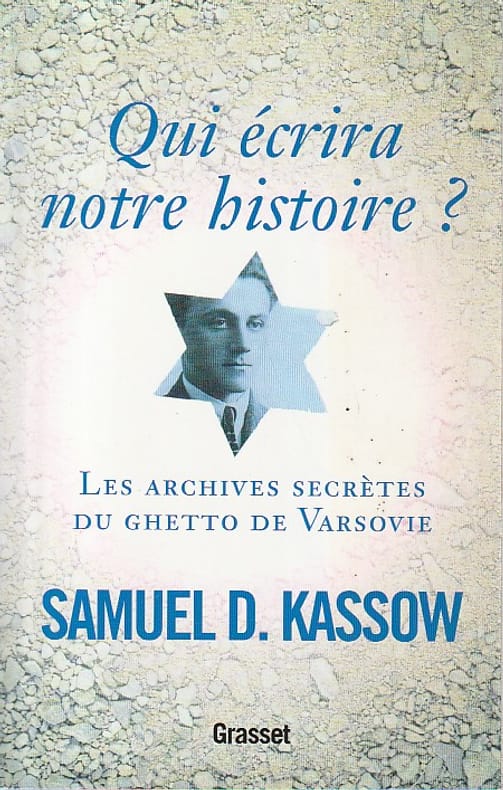
Grasset, 2011. In-8 broché de 593 pages, photos. Rares passages discrètement soulignés au crayon de papier sinon très bon état
66930Grasset, 2011, 593 pp., broché, rousseurs sur la première page, bon état.
2011112193Grasset, 2011, gr. in-8°, 593 pp, 16 pl. de photos et documents hors texte, biblio, index, broché, couv. illustrée, bon état
Signed and inscribed by Jan Karski upon front free endpaper. Karski [1914-2000] recounts his experiences when his homeland of Poland was rent asunder by the joint Nazi and Soviet invasion of 1939, and his harrowing subsequent life as a member of the Polish underground, during which he was captured by the Gestapo and severely tortured. Provides a ghastly eyewitness account of life in the Warsaw ghetto, into which Karski was smuggled so his observations could be reported to the outside world. Firearms advocates will cringe at Karski's account of what happened after he and a large group of Polish soldiers handed over their weapons to their 'comrades' from the Soviet Union. In 2012 Karski was posthumously awarded America's highest civilan honor, the Presidential Medal of Freedom, by President Obama. 391 pages. Moderate wear to publisher's red cloth. Dust jacket now preserved in archival-grade Brodart. Binding intact. A sound copy of this truly unforgettable WWII narrative. Laska 672, Kehr & Langmaid 5407, Weiner Library Catalogue Seven 997, Enser p.343. Book
389 pages. A truly memorable book, particularly for those of Polish extraction lucky enough to have been born after the second world war. The author recounts his painful experiences from the days just prior to the German invasion and for the following few years when he served in the Polish underground. Prior owner's details partially blacked out inside front board. Book review affixed to front free endpaper. Moderate wear. Binding intact. A sound copy. Laska 672, Kehr & Langmaid 5407, Weiner Library Catalogue Seven 997, Enser p.343. Book
8vo., First Edition thus, with frontispiece and endpaper maps; blue cloth, gilt back, a very good, bright, clean copy in dustwrapper. Kaplan's astonishingly detailed diary was found hidden in a paraffin tin more that twenty years after the destruction of the Warsaw Ghetto. It is a unique and harrowing day-by-day account of life in the Ghetto from September 1939 to August 1942 when Kaplan saved his diary even when he knew he could not save himself.
Good Solid condition.; 8vo; 387 pages; In Yiddish. Not in Robinson & Friedman nor Wolff. Jewish partisan's memoirs of resistance against the Nazis in Poland. Illustrated with many photographs throughout. Inscribed by Kaczerginski in year of publication. Kaczerginski (19081954) was a Yiddish writer and cultural activist. Born in Vilna to a poor family and educated at that citys Talmud Torah, Shmerke (Pol., Szmerke) Kaczerginski lost both his parents during World War I. As a youth, he was involved with outlawed Communist groups and was arrested several times, serving a lengthy prison term. In the 1930s, two of his revolutionary poems became popular in Poland. He wrote short stories with a radical bent and was a correspondent and reporter for literary publications, including the semilegal leftist press in Poland and the New York Communist daily Morgn-frayhayt. Kaczerginski played a key role in shaping the writers and artists group Yung-Vilne; he organized its evening events and was the de facto publisher of its three miscellanies between 1934 and 1936. During the period of Soviet control over Lithuania in 19401941, he was even more active in the field of Yiddish culture, but at the same time experienced his first disappointments with the attitude of the Soviet regime toward Jewish culture. During the first period of Nazi occupation, Kaczerginski wandered through villages and towns posing as a deaf mute; after many difficulties, he ended up in the Vilna ghetto. Kaczerginski was very involved in the ghettos cultural activities. As a leader of its youth club, he wrote its Yugnt-himen (Youth Hymn), a song that immediately became popular. In 1943, he wrote the song Shtiler, shtiler in memory of the mass murders committed at Ponar. Set to music that Aleksander Volkoviski (later known as Aleksander Tamir) had submitted to a contest organized by the ghetto, the song was first heard at an evening performance there and over the years became one of the best-known songs of the Holocaust. With Avrom Sutzkever and others, Kaczerginski became part of a group of forced laborers whom the Germans designated to sort Jewish cultural treasures at YIVO and other locations. Known as the Papir-brigade (Paper Brigade), the groups members risked their lives to hide the most significant items, smuggling them back into the ghetto or entrusting them to non-Jewish acquaintances. Kaczerginski was a member of the Fareynikte Partizaner Organizatsye (United Partisans Organization; FPO), and, since YIVOs building was located outside the ghetto walls, he took part in smuggling weapons into the ghetto. In September 1943, Kaczerginski, along with Avrom and Freydke Sutzkever and other members of the FPO, escaped from the Vilna ghetto as part of an organized group of fighters just before its liquidation. They joined a Soviet partisan unit in the Naroch Forests, where Kaczerginski fought as a partisan until liberation in July 1944. Kaczerginskis books describe the destruction of Vilna, the partisan struggle, and his own experiences during the Holocaust period: Khurbn Vilne (The Destruction of Vilna; 1947), Partizaner geyen (Partisans on the Move; 1947), and Ikh bin geven a partizan (I Was a Partisan; 1952) (YIVO, 2010). Wear to cover and edges, very good condition. (HOLO2-87-3A)
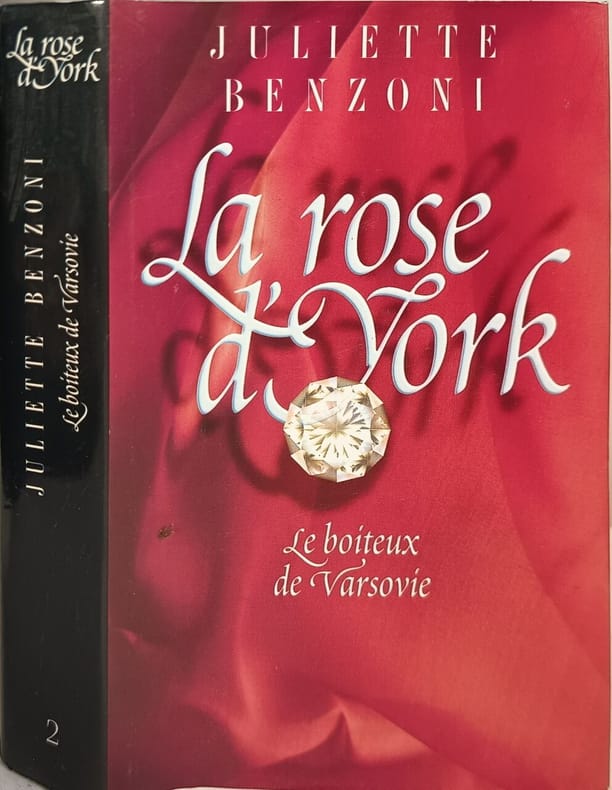
19967158France Loisirs 1996 475 pages in8. 1996. Reliure Editeur avec jaquette. 475 pages. La Rose d'York est le deuxième tome de la saga 'Le Boiteux de Varsovie' de Juliette Benzoni. L'histoire suit le prince Aldo Morosini expert en joyaux dans sa quête pour retrouver le fabuleux diamant 'La Rose d'York' en Angleterre tout en rencontrant une jeune femme forte du même nom qui se bat pour protéger ses proches dans un cadre médiéval