Warsaw, IsidorBiblio.com
The Broken Tablets: A Photograph of Life
1258590883.Gpaperback. Good. Access codes and supplements are not guaranteed with used items. May be an ex-library book. paperback
Bonita · États-Unis56,48 $US≈ 47,79 €
345 résultats
2010136285Warsaw Poland: Wilanow Palace Museum 2010. Hardcover. VG Like New. White & illus. boards 194 pp. many color illus. Text is in Polish. Second vol. of 2-vol. set issued in conjunction with a 2010 exhibition of Polish art. This vol. consists of 11 thematic and illustrated essays by Teresa Grzybkowska Witold Dobrowolski Mariusz Karpowicz Jakuh Z. Lichanski Jacek Kowalski Jaroslaw Dumanowski Mieczyslaw Tomaszewski Przemyslaw Mrozowski Malgorzata Buyko Halina Galera Jaroslaw Krawczyk. Wilanow Palace Museum hardcover
1258590883.Gpaperback. Good. Access codes and supplements are not guaranteed with used items. May be an ex-library book. paperback
2015x-1137560231Palgrave Macmillan 2015. Hardcover. New. 288 pages. 8.50x5.50x1.00 inches. Palgrave Macmillan hardcover
0365462268.Ghardcover. Good. Access codes and supplements are not guaranteed with used items. May be an ex-library book. hardcover
0365462209.Gpaperback. Good. Access codes and supplements are not guaranteed with used items. May be an ex-library book. paperback
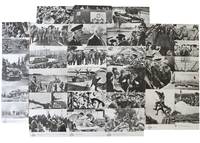
1955187431955. Photograph archive 1955 documenting the political leadership and military forces present at the establishment of the Warsaw Pact in Poland with direct relevance to the study of Cold War alliances Soviet influence in Eastern Europe and the organization of socialist military systems. Formed as a collective defense agreement among the Soviet Union Poland East Germany Czechoslovakia Hungary and Bulgaria the Warsaw Pact functioned as a counterpart to NATO and formalized military coordination within the Eastern Bloc. The photographs depict assembled leaders and officers alongside scenes of organized troops training exercises and public displays of military readiness reflecting the emphasis on unity and preparedness at the outset of the alliance. The archive captures the visual language of state power and coordination during a defining moment in early Cold War geopolitics.<br /> <br /> Archive of 28 black and white photographs each approximately 8 x 10 inches produced as professional press or official images with captions in Czech. The photographs include formal portraits and groupings of political and military leaders as well as images of soldiers in formation training exercises and urban assemblies associated with the founding events. The consistent format and captioning indicate coordinated production for documentation or dissemination within Eastern Bloc media or governmental contexts. Twenty-eight photographs with light wear consistent with handling; overall very good condition. A cohesive visual record of the formation and early presentation of the Warsaw Pact as a military and political alliance during the Cold War. The Warsaw Pact would persist until the end of the Cold War when it fractured as states throughout the Eastern Bloc broke with communism and no longer were programatically aligned. In very good condition overall. unknown
1023897555.Ghardcover. Good. Access codes and supplements are not guaranteed with used items. May be an ex-library book. hardcover
50642065like new. unknown
1946MMRM1658Varsovie:: American Joint Distribution Committee 1946. 1946. 8vo. 264 4 pp. 11 black and white photographic plates 50 tables charts index. Original printed wrappers; scotch tape along spine front and rear covers age-darkened first 3 pages including half title and last three blank end-papers are loose. Main body of work remains bound and in good condition. Loose pages have some slight area of extremities missing. Some fading and foxing to pages. Thus wrappers poor but text good to good plus. First edition. SEMINAL WORK IN MEDICAL CLINICAL RESEARCH & A CRITICAL ARTIFACT OF THE WARSAW GHETTO AND HOLOCAUST. Copies of the book are uncommon in part because of the fragile nature of the paper used to publish the report. In the immediate aftermath of World War II paper ink and binding facilities in Europe were scarce. The published report was done with economy in mind and with a rushed sense of needing to reveal to the world what happened. / Six articles report on the clinical research by 28 Jewish physicians and a student intern the 1946 book only records the names of 21 physicians and the student – subsequent research in the 1960s revealed the additional names who conducted the studies on adults and children at the two Jewish hospitals in the Ghetto. Abbreviated biographies of the physicians can be found in The Uses of Adversity: Studies of Starvation in the Warsaw Ghetto by Leonard Tushnet published in 1966. The physicians hoped to study these patients to somehow benefit humanity perhaps in the spirit of the Jewish concept of tikkun olam - to repair the world. The studies were conducted in secret since any scientific research in the Ghetto was prohibited by the Nazi overseers. It is also quite possible that many if not all the clinical physicians believed that granting children and others the status of being a patient would protect them by preventing their transport out of the ghetto to death camps. Theories also suggest that the physicians wanted to preserve a record of the atrocities being committed as well as advance medical research. The studies remain the most comprehensive research of the effects and progression of starvation in part because any contemporary studies would largely be blunted by existing ethical guidelines for informed consent and subject welfare. Contemporary debates about the ethical wisdom of conducting these studies remains contentious. / The Warsaw Ghetto occupied approximately 1.3 square miles 3.4km2 and its population was as much as 500000 men women and children. The Ghetto was a staging area for transporting Polish and Eastern European Jews to the death camps and a locale for starving to death Jews prior to transport. The average daily caloric intake of a resident of the Ghetto was 600 to 800 calories of low-protein food for adults. This amount was calculated by Adolf Eichmann to starve-to-death most of the residents in approximately nine months. The physicians performing the research were no exception to the plan. All were starving as they performed their studies. Equipment for clinical research was smuggled into the hospitals. / Each article in the book is devoted to specific results of these studies. Chapter V offers autopsy results on 710 patients; 492 died of starvation and 218 died of complications of secondary conditions. Chapter VI offers clinical observations of one-hundred adults who died from starvation. Chapter VII offers clinical observations of 40 children who died of starvation. Chapter VIII examines the effects of starvation on the cardiovascular system in adults and children. Chapter IX discusses changes in peripheral blood and bone marrow. Ophthalmic responses to starvation are discussed in Chapter X. Only one doctor engaged in the research Emil Apfelbaum survived the war. He arranged to have the studies smuggled out of the Ghetto to a Polish professor of medicine who released the reports after the liberation of Warsaw. After the war Apfelbaum edited the report for publication by the Joint Distribution Committee. He died a week before the book was published. / Research was performed at the two hospitals in the Ghetto from late February to July 22 1942. On July 22 the hospitals were closed and any patients unable to be transported were summarily executed regardless of age. The attending and clinical physicians were fully aware of the fate awaiting transported patients and in many instances they performed euthanasia on elderly and child patients who were scheduled for transport. Some of the physicians committed suicide rather than face transport. Other physicians accompanied their patients to the death camps providing whatever aid they could. / The studies were smuggled out of the ghetto in a manner befitting a Ken Follet thriller. A Jewish physician Henryk Fenigstein played a crucial role. "Before the war Henryk was a stamp collector. In fact he had one of the largest collections of Polish stamps in the country. One day two SS members arrived at the hospital and told Henryk to come with them to Gestapo headquarters. Of course he was terrified. Jews taken to Gestapo headquarters did not return. On arrival he was taken to the office of a senior officer who told him that he himself was an avid stamp collector. He took out a list and handed it to Henryk. He wondered if Henryk had these stamps and if not if he knew where to procure them. Henryk told him that he had many of the stamps including some of the very rare ones. He told him that he thought he could procure the rest. In order to do this he would need a pass to get out of the ghetto for a few hours each week. And of course the SS officer was welcome to those that he had. The officer agreed and even gave Henryk his phone number in case he needed any help. Thus Henryk Fenigstein a key member of the study team was able to leave the ghetto" 2005 lecture Myron Winick. During such an outing Fenigstein arranged for the smuggling of the reports. A pregnant woman reportedly was used to hide the documents and transport them out of the ghetto. / The supervising physician of the project Israel Milejkowski wrote in his Introduction to the studies that each author refused to allow the Nazis to destroy their work and that through the research and the publication of that research "Nous avons termine nos Recherches et nous les conserverons bien comme c'etait Ton desir. Les paroles immortelles que Tu a jetees "Non omnius Moriar" doivent etre en premier lieu appliquees a Toi! Gloire eternelle a Ta Memoire !" / The research as well as results from the Minnesota Semi-Starvation studies of 1944-1945 continues to benefit the millions of persons facing starvation each year. The participants in the Minnesota study lost an average of 25% of pre-test body weight and the final phase of the study included recovery techniques and methods. The Warsaw studies measured effects until death. This artifact of scientific integrity individual bravery and resistance to oppression is a rare opportunity to truly own a small piece of history illuminating the courage of physicians determined to use their craft to help the world and advance the memory of atrocities. American Joint Distribution Committee, 1946. unknown books
1391823176.Gpaperback. Good. Access codes and supplements are not guaranteed with used items. May be an ex-library book. paperback
1396761489.Ghardcover. Good. Access codes and supplements are not guaranteed with used items. May be an ex-library book. hardcover
2080202103701642Not Available N.A. Soft Cover. Fine. Size: CD Not Available paperback
117086Campion. Audio CD. Very Good. Campion unknown
Canaletto's views of Warsaw, many of which were used as reference in the rebuilding of Warsaw after the Second World War. 37 pages. 118 black and white plates, 4 colour plates. Heavy browning to pastedowns and free endpapers. Light wear to cover extremities. Dust jacket has small loss at lower edge of front, some tears to edges and light wear to edges
8p. 8vo. Original full printed wraps. Remains of album mountings on rear wrap. Very nice copy. Scarce. WWI 13
In 12° (14x9,5 cm); (4), 474 pp. Brossura marmorizzata. Prima edizione, rarissima, di questa importante opera genealogica. L'autore, Viton de Saint Alais, fu uno dei più grandi studiosi e compilatori di alberi genealogici del XIX° secolo. La sua opera pià famosa è Nobiliaire Universel de France, 1814 (Graesse VI, 220) , e l'opera qui presentata sembra essere uno studio preparatorio. L'opera è assai rara venne stampata in poche copie a spese dell'autore. Nello stesso anno si ebbe poi altre edizioni ma sempre in numero ridotto di copie. Esemplare in barbe ed in buone-ottime condizioni di conservazione. l'oper riporta la cronologia e genealogia dei personaggi delle principali corti europee. Con tavole dedicati ai vari paesi (Francia, Inghilterra, Svezia ecc.) e ducati (Varsavia, Costantinopoli, Baviera, ecc.). First edition, Rare.
1969ZB445382Warsaw: 1969-2000. volumes 10-11 14-15 21 23-26 37-41 complete volumes in original softcovers well illustrated some library markings passim PRICE IS FOR THE LOT. - If you are reading this this item is actually physically in our stock and ready for shipment once ordered. We are not bookjackers. Buyer is responsible for any additional duties taxes or fees required by recipient's country. Photos available upon request. Warsaw: paperback
28 pages. Features: Nice cover photo of a French woman cutting grapes from the vine on her home for British troops; The British Field Force making friends in France; Full-page diagram of the extensive fortifications of Heligoland; Switzerland prepares her defences for all emergencies - Five photos; Photos of Switzerland frontiers - fortified and manned - plus mobilisation scenes; Photo of the daily rations of the German people - less in every respect than those of the British field force; Various photos - churchyard and nursery A.R.P., Polish leaders in Paris; British Submarine Epic - illustrations show how it escaped by tenacity and engineering skill; The Fall of Warsaw - Vivid war photos; Photos of the Nazi "triumphal" parade in Warsaw; Full-page photo of a huge stack of British artillery shells; Photos of British practice with heavy guns; Illustrations show events leading to the end of a U-Boat; Numerous photos show the French bombarding German lines with guns mounted on German soil; Several illustrations show a comprehensive shelter scheme for the people of Bermondsey; Photos of personalities of the week; Interesting photos of British items painted white to improve safety during blackout; The Campaign in the West - article by Cyril Falls; Full-page new map of the Western Front - giving all strategic features; and more. Small name written atop front of outer cover. Missing page 597-98 from back. Some pages loose but present. Magazine
Over 200 pages. Abundantly illustrated in black and white. Includes contributions from: Ruta Sakowska, Marek Edelman, Jan Karski, Franz Blattler, and Maria Kann. Clean and bright with negligible wear. Unmarked but for Warsaw Ghetto ink stamp dated 1998 upon title page. A premium copy. Book
197649668Washington DC: Defense Intelligence Agency 1976. good. Approx. 50 wraps illus. diagrams recommended reading. DDI-1100-128-76. This Intelligence Handbook supersedes Department of the Army Pamphlet No. 20-236 Historical Study Night Combat dated June 1953. The information in this Handbook has been obtained principally from Soviet open-source publications. It was written for the general orientation of members of the United States Armed Forces and for the training of troops both in the field and in the classroom in night combat operations. Defense Intelligence Agency paperback
51-2024Warszawa Poland: 1957. Handcolored woodcut. Signed titled and dated in pencil. 18.5 x 15 cm on sheet size 27 x 22 cm.She specialized in painting and graphic arts - particularly in woodcut linocut lithography etching dry needle zincography. She studied at the Warsaw Academy of Fine Arts under the directions of S.Szczepański M. Bylina Painting and J. Tom E. Czerwiński i J. Pakulski Graphic arts. Her works have been shown at many exhibitions in Poland. Common themes of her works are animal and solar compositions. She also created abstracts and exlibris.In collection of National Museum in Wrocław there is no artwork of this artist.After Trzcińska’s death all the works of her legacy has been transferred to The Museum of History of Kielce Muzeum Historii Kielc Warszawa, Poland: 1957 unknown
Photographs of the heroic and tragic 63-day struggle to liberate World War II Warsaw from Nazi German occupation. Text in Polish. This book is extra heavy, and may involve extra shipping charges to some countries
71800Coll. "La mémoire du siècle - 1953 - 1981" n° 15, Bruxelles, éd. Complexe, 1981, in-12, cartonnage souple, couv. photo en noir éd., 192 pp., notes, listes des "acteurs", chronologie, bibliographie, index Historique des différentes révoltes ouvrières dans l'ancien bloc soviétique : Berlin, Budapest, Varsovie … Très bon état
46697Paris, « Les Belles Lettres »,Collection de l'Institut Français de Varsovie, n° 5 - E.O. - 1938 - 1 vol. in-8° -Préface de Jean Fabre - X-233 pages - comme neuf
B9781166478575New. unknown