Bourbaki, N; Spain, P [Translator]Biblio.com

1 605 résultats
2003Q-3540653406Springer 2003-09-18. Hardcover. New. In shrink wrap. Looks like an interesting title! Springer hardcover
0442078765.Ghardcover. Good. Access codes and supplements are not guaranteed with used items. May be an ex-library book. hardcover
1274990165.Gpaperback. Good. Access codes and supplements are not guaranteed with used items. May be an ex-library book. paperback
1018651306.Ghardcover. Good. Access codes and supplements are not guaranteed with used items. May be an ex-library book. hardcover
JD-01XG-9Q1BHardcover. Good. Jacket is very worn and torn. Book has average external wear bumps and stains. Pages lightly yellowed with occasional foxing crease minor blemish. Binding firm. Bookshop stamp to front endpaper. hardcover
2253412 October no year. Place not stated. 3pp 12mo. Bifolium. In good condition lightly aged with white paper stub from mount still adhering. From the distinguished autograph collection of Richard Monckton Milnes Lord Houghton. The letter begins: 'Mon cher Ministre J'ai lu avec un vif interêt l'écrit que vous avez eu la bonté de me communiquer'. He had told him the other day that it was 'une belle question à traiter' and he was certain that the recipient would deal with it 'supérieurement'. Further to their agreement he is sending him 'la liste des personnes qui composent l'Ambassade' and he will be grateful to him for whatever he can do on their behalf. In a postscript he writes that at the moment of closing the letter he has just received one from the recipient announcing his marriage and he congratulates him on 'cette heureuse nouvelle'. 12 October [no year]. Place not stated. unknown
2000__0080436994Elsevier Science Ltd 2000. Hardcover. New. 263 pages. 9.75x7.00x0.75 inches. Elsevier Science Ltd hardcover
19359910Florence: Typographia Collegii S. Bonaventurae. Good with no dust jacket. 1935. Softcover. LXXVIII 483 pp. Index. Cream paper covers are chipped around the edges quite sunned at spine and top edge with clear plastic tape reinforcing top and bottom of spine. Interior paper toned but otherwise clean and unmarked pages never separated. Gonsalvus Hispanus c. 1255 1313 was a Spanish Franciscan theologian and scholastic philosopher who became Minister General of the Order of Friars Minor. He worked with Duns Scotus and had a major dispute with Meister Eckhart about the will vs. The intellect. Surprisingly scarce. ; Bibliotheca Franciscana scholastica medii aevi; Vol. 9; 8vo 8" - 9" tall; 483 pages . Typographia Collegii S. Bonaventurae paperback
197327221San Francisco: Apex Novelties 1973. Very Good. San Francisco: Apex Novelties 1973. First Edition. Signed by Bill Griffith without inscription on first page below printed name. <br /> <br /> Digest-sized chapbook; 24pp. Illustrated card covers saddle-stapled. Covers are clean and crisp with very faint rubbing at corners. Small sticker shadow inside front cover with a small patch of toning to inside rear cover near gutter. Binding is sound and pages unmarked. Apex Novelties unknown
1938253269London : United Editorial 1938. First Edition. Hardcover. Good copy only in the original gilt-blocked cloth. Spine bands and panel edges somewhat rubbed and dust-toned as with age. Remains quite well-preserved overall: tight bright clean and strong. Physical description; 1 vol. ; 23cm. Notes; Includes index. Subjects; Political history. Spain. Europe. London : United Editorial hardcover
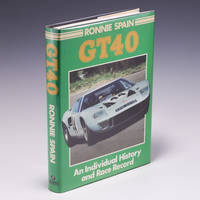
1986SKU-1297AE02611072Osprey Publishing 1986. 1. Hardcover. Good. Good in a Good dust jacket; Hardcover; Dust jacket is moderately shelfworn and edgeworn but is overall clean and intact and has not been price-clipped Now fitted with a new Brodart jacket protector; Minor wear to the boards; Unblemished textblock edges; The endpapers and all text pages are clean and unmarked; The binding is excellent with a straight spine; This book will be shipped in a sturdy cardboard box with foam padding; Large Format Quatro 10.75" - 11.75" tall; Green dust jacket with title in gold and white lettering; 1986 Osprey Publishing; 326 pages; "Ford GT-40" by Ronnie Spain. Osprey Publishing hardcover
0850456371.Ghardcover. Good. Access codes and supplements are not guaranteed with used items. May be an ex-library book. hardcover
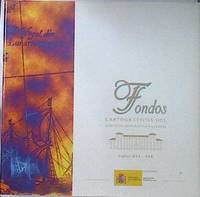
2000119895Centro Nacional de Información Geográfica 2000. Tapa dura. 2ª Mano. . . muy ilustrado. . . Tela con sobrecubierta 600 p. ; 27x26 cm Centro Nacional de Información Geográfica hardcover
19541312240039Madrid : Ediciones cultura Hispanica 1/1/1954. Hardcover. Very Good. Large leather folio. Full leather. Volume 1. Hardcover. Good binding and cover. Clean unmarked pages. Lovely color plates. Limited ed. no. 1709. Blunt 169. Madrid : Ediciones cultura Hispanica hardcover
2000Star-9783540670933Springer 2000. Hardcover. New. Springer hardcover
2000Star-9783540670933Springer 2000. Hardcover. New. Springer hardcover
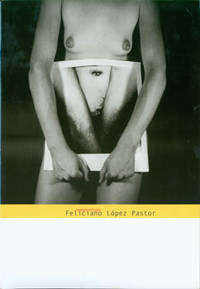
63-7580Vitoria-Gasteiz Spain: Arabako Foru Aldundia 2002. 4to. Soft Covers 16 pp. Very Good. B&W Plates. In Basque.From the Peter Selz collection. Vitoria-Gasteiz, Spain: Arabako Foru Aldundia, 2002. paperback
197518101501Berkeley. CA: Keith Green 1975. 1st Edition 2nd Printing. Soft cover. As New. Comic Book. Digest size 7 x 5 inches. Second Printing. With color illustrated covers and black/white interior art. For sale to adults only. AS NEW but for a light small crease to bottom right corner. All corners pointed. Binding firm without stress creasing and square. Without tears other creases bumps or chips. Not marked in any way and very clean glossy and bright. All items carefully wrapped and sent boxed. <br/> <br/> Keith Green paperback
182459399Paris Cordier 1824. Folio. Contemp. hcalf. Raised bands. Spine a bit rubbed. Stamp on title-page. title-vignette. Lithographed portrait as frontispiece. 82 pp. 2 plates 1 engraved and handcoloured map 40 x 51 cm. "Carte d'Espagne pour servir. par Ch. Picquet". Printed on thick paper. A long dedication-letter in French inserted giving the volume to the Danish King Frederik VI 10 July 1825 probably signed Louis Antoine the editor. With the crowned gilt monogram of King Frederik VI on upper board. hardcover
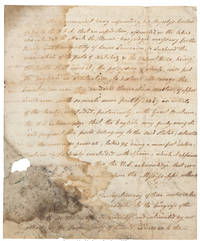
1797List2522New Orleans 1797. Three pages of a bifolium 8 x 9 ½ inches New Orleans; May 31 1797. Fair only with moisture damage and some text illegible. Fair. An interesting document from the period following the Treaty of San Lorenzo and before the eventual surrender of Natchez to the Americans in 1798 in which the governor of Louisiana and West Florida Francisco Luis Hector de Carondelet issues a statement regarding the delayed withdrawal of Spanish troops from the region. Carondelet is concerned with the British presence in the area and notes that it is a violation of “the treaty concluded with Spain†- or Pinckney’s Treaty which opened up navigation rights of the Mississippi to the United States. The letter describes the possibility of escalating hostilities between the United States Great Britain and Spain as a result of an impending American mission against the Illinois the motives of which Carondelet questions as he notes that “These hostile dispositions can naturally only concern these provinces because the U.S. are in peace with all the savages…†He raises the possibility of British invasion of Louisiana and potential danger to the city of New Orleans and states that the Spanish will maintain their presence at Natchez and Walnut Hills unless the American soldiers withdraw. This is a copy of Carondelet’s speech in the hand of Lieutenant Piercy Smith Pope and we find no other record of it. A full transcription follows:<br /> <br /> “The Government being informed by his Majesty’s Ambassador to the U.S. that an expedition assembled on the lakes was intended to attack the Illinois has judged necessary for the surety and tranquility of Lower Louisiana to suspend the evacuation of the posts of Natchez & the Walnut Hills being the posts that cover it; the possession of which will put the English in a situation to disturb and ravage the country in case they rendered themselves masters of upper Louisiana with so much more facility as by an article of the treaty concluded posteriously with Great Britain the U.S. acknowledge that the English may freely navigate and frequent the posts belonging to the said States; situated on the river in general lakes &c being a manifest contradiction to the treaty concluded with Spain which it appears. because by this the U.S. acknowledge that no other nation can navigate upon the Mississippi without the consent of Spain.<br /> <br /> . the legitimacy of these motives the .presented to the Congress of the U.S. with all the necessary veracity and intimated by our orders in the Commissary of Limits as well as to the Commandant of the Detachment of American troops now at Natchez. We are now informed that a detachment of the army of the U.S. cantoned on the Ohio are on their way by Holstein towards Natchez while the Militia of Cumberland are intimated to hold themselves ready to march at the first notice.<br /> <br /> These hostile dispositions can naturally only concern these provinces because the U.S. are in peace with all the savages the anterior menaces of the Commissary of Limits & the Commandant of the detachment of Americans now at Natchez; the immediate rupture & if the American Gazettes are to be believed already effected between France our intimate ally and the U.S. engage us to be on our guard to defend our property with that valor & energy which the inhabitants of these Provinces have manifested on all occasions with the advantage and superiority which a knowledge of our local situation will procure and that confidence which right and justice inspires. If the Congress of the U.S. had no hostile intention against these provinces they will either leave the post of Natchez or Walnut Hills the only bulwarks of Lower Louisiana that can stop the courses of the English or that they give us security against the article of the Treaty with Great Britain which exposes lower Louisiana to be pillaged and destroyed down to the Capitol. We will then deliver up the said posts and lay down our arms which they have forced us to take up by arming their Militia in time of peace and sending a considerable body of troops by round about ways to surprise us.<br /> <br /> New Orleans 31st May 1797 <br /> <br /> A copy of the Baron de Carondelet’s Proclamation. <br /> P. Popeâ€<br /> <br /> Overall a document of significance in United States / Spanish relations in the period following Pinckney’s Treaty worthy of further study for scholars of the diplomatic history of the period. unknown
1794000035bNew Spain Mexico. Fine with no dust jacket. 1794. Full-Leather. Handsome Folio Manuscript in early calf with gilt written by the Attorney of the Real Audiencia see Bibliografia Mexicana 220 and prepared for the Viceroy. Lengthy stipulations of taxes for the freed mestizos mulattoes and negroes as well as exemptions for Indians of the repartimientos even when married to Spanish women. These taxes were the root of the perceived injustice that explains why freed men formed the core of the Revolution when it came. EXTREMELY RARE AND IMPORTANT FIRST HAND TEXT OF MEXICAN HISTORY. see Archivo General de la Nation "Los Precursores Ideologicos della Guerra de Independencia 1929 pgs 137.139." LAID IN NOTE: Arce Y Echeagary J. Yinstruction para que los Administradores de Aduanas del Reyno de Nueva Espana hagan la legitima exaccion de los dros. de Alcabalas y Pulques en los casos que por lo regular se ofrecen en las propias Aduanas. Mexico 1794. ADDITIONAL BACKGROUND: In 1519 the Spaniards conquered Mexico. This led to the formation of a new state called New Spain and later into a new hybrid culture. Several military expeditions were led to extend 'New Spain'. The whole of Central America West Indies Philippines and parts of the current Texas and California were later conquered to become part of New Spain. The Spanish political control over Mexico lasted for three centuries. The entire region was formed into a viceroyalty in 1535. The colony was divided into provinces ruled by governors. These provinces were divided into departments and subdivided into districts. Magistrates controlled the districts and mayors led smaller villages. The parliament court handled all political matters and the Council of Indies controlled the other administrative matters. Off course the supreme authority over the Spanish empire belonged to the king. This system was pretty inefficient as it took several years for directives from the king to be implemented at the lower levels. During the initial administration grants called Encomiendas were given to colonists which controlled Indian labor and produce. This led to the misuse of power and atrocities against the Indians increased. The Indians revolted against the Spaniards in 1541 but were easily subdued. The Spanish emperor Charles V initiated the decline of the Encomienda system in 1542. This decline saw the emmergence of the Roman Catholic Church. The church was successful in carrying out mass conversions. The Spaniards protected the Indians that converted. Missions and monasteries dominated much of the land. The Spaniards thrived by the new found wealth in the colonies. They amassed huge wealth by controlling silver mining large ranches and estates that grew wheat sugarcane and indigo for export. Spanish merchants exported such goods as cotton silk and dye that were produced by the Indians. The prosperity of New Spain began to decline in the 17th century. Disease and natural disasters destroyed most of the Indian population. Most others migrated slowly to remote parts. Mines were abandoned and large areas of farmland were destroyed. The economy of New Spain collapsed. In 1810 a catholic priest named Miguel Hidalgo called upon Mexicans to rise up and fight the Spanish. Although father Hidalgo was killed another priest Jose Morelos continued to lead the fighting. New Spain finally won its independence from Spain in 1810 and came to be called Mexico. ; Spanish Language; 4to - over 9¾" - 12" tall; MEXICO MEXICAN TAXES NEW SPAIN MEXICAN REVOLUTION NAPOLEON BONAPARTE CHARLES V HIDALGO MORELOS HANDWRITTEN HISTORICAL HISTORY HAND WRITTEN HOLOGRAPH MANUSCRIPT MANUSCRIPTOS SPANISH ESPANOL VICEROY mestizos repartimientos antiquité contrat vélin document manuscrit papier Antike Brief Pergament Dokument Manuskript Papier oggetto d'antiquariato atto velina documento manoscritto carta antigüedad hecho vitela documento manuscrito papel. . hardcover
194724345San Sebastián de RÃo de Janeiro: Oficina Cultural de la Embajada de España 1947.- XV 265 p. 1 h.: Laminas facsÃmiles en negro; 4º 231 x 164 cm; Excelente impresión a dos tintas; Cartulina Ed. con solapas e ilustrada.- RARO. Las cubiertas con leves señales del tiempo pero en buen estado general con el interior perfecto. BIBLIOGRAFÃA Y DOCUMENTACIÓN ESPAÑOLAS Libro en español Oficina Cultural de la Embajada de España paperback
1970stela779Madrid: 1970. 1970. 12mo. unpaginated. Spanish & Japanese text. profusely illus. in b/w some colour illus. Pictorial cloth rubbed & scuffed institutional bookplate on front endpaper. Hardcover. [Madrid: 1970]. Hardcover
18081609070023Madrid: La Imprenta Real 1808-01-01. Hardcover. Good. 146 p. 68 plates. Original sheep red spine label royal seal on title page. Wear and rubbing to boards some worming later paper label to tail of spine. Hinges cracking slightly marginal dampstain affecting a few plates. <br> This book was issued by the Bourbon Royal Press. It depicts infantry practice and maneuvers of a Napoleonic era army. The Treaty of Fontainebleau 1807 between Charles IV of Spain and Napoleon I of France concerned the occupation of Portugal. Charles IV hoped it would lead to an alliance between the French Empire as in pre-revolutionary times. However six months later Napoleon turned on his new ally. The Spanish Army was ill-equipped and lacked tactical training and this book was a last-ditch effort to improve the state of the Spanish army's training. Overall it was not a success as Napoleon ridiculed the Spanish army as "the worst in Europe" and the British forces who had to work with it agreed. Madrid: La Imprenta Real hardcover
19920055931992 Special expedition souvenir cover with Nepal R.3 stamp postmarked Kathmandu 18 Oct 1992. Signed by four team members. Leader Pedro Tous Roldan. The mountain was summitted three times on 28 Aug 1 Sept & 3 Sept 1992. A near fine copy. Signed by the Expedition Team. First Edition. unknown