YEO MargaretLivre Rare Book

34 270 résultats
1935015018Paris Payot 1935 Grand In 8 Collection " Bibliothèque Historique " . Imprimé sur bon papier sans rousseur . Traduit de l'anglais par A. et H. Collin Delavaud . Bibliographie en fin d'ouvrage . Livre rare et épuisé . - 316 p. , 650 gr.
Publishers cloth. 8vo. 217; 205; 230 pages. 20 cm. First edition. In Yiddish. Cover illustrated by S. Raskin. From New York to Rehovot and Back, the travel narrative and memoir of Yehoash in three volumes. YEHOASH (pseudonym of Yehoash Solomon Bloomgarden; 18721927) , Yiddish poet and translator. Yehoash was born in Virbalen, Lithuania, and as a boy he read maskilic literature as well as studying Torah with his father, briefly attending the yeshivah of Volozhin, only to begin a career as a Hebrew poet. At the age of 17 he took his first Hebrew poems to Warsaw, where I. L. Peretz encouraged him to continue writing Hebrew and Yiddish lyrics. The following year Yehoash immigrated to the U. S. He made no headway either as a Hebrew poet or in various callings bookkeeping, tailoring, peddling, and Hebrew teaching. For a decade he faced severe privations until he contracted tuberculosis and went to the Denver Sanatorium for Consumptives in 1900 to recuperate. There he remained for almost ten years, maturing as a Yiddish poet, publishing his poems, ballads, fables, and translations in leading dailies, periodicals, and literary almanacs. In his early 30s, he undertook to translate the Bible into a modern Yiddish which would combine scholarly precision with simple idiomatic language, a task to which he devoted the rest of his life. While at work on this translation, he prepared, together with Charles D. Spivak, his physician and the co-founder of the sanatorium, a Yiddish dictionary, first published in 1911, which defined about 4, 000 Hebrew and Aramaic words used in Yiddish and which went through many editions as a basic reference work. Returning to New York in 1909, Yehoash had to struggle to make a living, even though his fame was worldwide and Yiddish periodicals in many lands gladly published his contributions. In January 1914, he left for Erez Israel and settled in Rehovot. He mastered classical Arabic and translated portions of the Koran and Arabian tales into Yiddish. When the Ottoman Empire entered World War I, he returned to New York and published the story of his experiences in three volumes of travel sketches, Fun New York biz Rekhovot un Tsurik (From New York to Rehovot and Back, 191718; Eng. The Feet of the Messenger, 1923) . His sojourn in Erez Israel as well as his knowledge of Arabic proved useful to him in his work on the translation of the Bible. Although he had published a Yiddish rendering of several biblical books including Isaiah and Job in 1910, he realized the inadequacy of this initial attempt and began anew. His more adequate rendering, starting with Genesis, appeared in installments in the New York daily Der Tog from 1922. At the time of his death only the Pentateuch translation had been published, but the rest of the biblical books were printed from his manuscripts. His version was hailed as a contribution of national significance. The translator drew upon idiomatic treasures of various Yiddish dialects, upon the Khumesh-Taytsh (the Old Yiddish, word-for-word translation of Pentateuch) , vocabulary used by melammedim in Ashkenazi schools for many generations, and expressions of the Ze'enah u-Re'enah (Tsene-Rene) , with its archaic patina. Yehoash was thus able to retain the rhythm and flavor of the Hebrew to a larger extent than preceding Bible translators. The two-volume edition, with parallel Hebrew and Yiddish texts, distributed in tens of thousands of copies, became a standard work for Yiddish-speaking homes throughout the world. In 1949, Mordecai Kosover edited Yehoash's notes to the Bible, which afforded an insight into the translator's many years of wrestling with the sacred text. Yehoash, who also translated Longfellow's Hiawatha and the Rubáiyát of Omar Khayyam into Yiddish, was far ahead of his time in terms of his own poetry. When the first edition of his Gezamelte Lider (Collected Poems) appeared in 1907, he was widely hailed as a first-rank artist. His lyrics were reprinted in anthologies and school texts, and were translated into many languages. An English translation, Poems of Yehoash, by Isidore Goldstick, appeared in 1952, and a Hebrew version (1957) was a cooperative venture by a number of significant Hebrew writers, including Jacob Fichmann and Dov Sadan. Yehoash's two later lyric volumes (1919 and 1921) linked him with Inzikhism, the modernist trend of introspection in post-World War I Yiddish poetry, the leaders of which acclaimed him as their forerunner. Yehoash gave expression in his lyrics to his awareness of a divine force permeating the universe. He re-imagined in verse biblical and post-biblical legends, tales from medieval Jewish chronicles, and hasidic lore, versified fables from the Talmud, Aesop, La Fontaine, and Lessing, and created new fables of his own. He wrote romantic, ghostly ballads, but he also felt the spell of Peretz, his lifelong friend, and strove for classical purity and perfection in rhythm and rhyme. Yehoash also influenced American Jewish poetry in English, notably the modernist work of Louis Zukofsky. (EJ 2007) Subjects: Yiddish literature - Palestine. Palestine -Description and travel. Authors, Yiddish - New York (State) - Biography. Authors, Yiddish - Israel - Biography. Light wear to cloth, light soiling to outer edges, endpapers starting on volume 3, otherwise fresh. Good + condition. (YID-16-10)
Publishers cloth. 8vo. 217; 205; 230 pages. 20 cm. First edition. In Yiddish. Cover illustrated by S. Raskin. From New York to Rehovot and Back, the travel narrative and memoir of Yehoash in three volumes. YEHOASH (pseudonym of Yehoash Solomon Bloomgarden; 18721927) , Yiddish poet and translator. Yehoash was born in Virbalen, Lithuania, and as a boy he read maskilic literature as well as studying Torah with his father, briefly attending the yeshivah of Volozhin, only to begin a career as a Hebrew poet. At the age of 17 he took his first Hebrew poems to Warsaw, where I. L. Peretz encouraged him to continue writing Hebrew and Yiddish lyrics. The following year Yehoash immigrated to the U. S. He made no headway either as a Hebrew poet or in various callings bookkeeping, tailoring, peddling, and Hebrew teaching. For a decade he faced severe privations until he contracted tuberculosis and went to the Denver Sanatorium for Consumptives in 1900 to recuperate. There he remained for almost ten years, maturing as a Yiddish poet, publishing his poems, ballads, fables, and translations in leading dailies, periodicals, and literary almanacs. In his early 30s, he undertook to translate the Bible into a modern Yiddish which would combine scholarly precision with simple idiomatic language, a task to which he devoted the rest of his life. While at work on this translation, he prepared, together with Charles D. Spivak, his physician and the co-founder of the sanatorium, a Yiddish dictionary, first published in 1911, which defined about 4, 000 Hebrew and Aramaic words used in Yiddish and which went through many editions as a basic reference work. Returning to New York in 1909, Yehoash had to struggle to make a living, even though his fame was worldwide and Yiddish periodicals in many lands gladly published his contributions. In January 1914, he left for Erez Israel and settled in Rehovot. He mastered classical Arabic and translated portions of the Koran and Arabian tales into Yiddish. When the Ottoman Empire entered World War I, he returned to New York and published the story of his experiences in three volumes of travel sketches, Fun New York biz Rekhovot un Tsurik (From New York to Rehovot and Back, 191718; Eng. The Feet of the Messenger, 1923) . His sojourn in Erez Israel as well as his knowledge of Arabic proved useful to him in his work on the translation of the Bible. Although he had published a Yiddish rendering of several biblical books including Isaiah and Job in 1910, he realized the inadequacy of this initial attempt and began anew. His more adequate rendering, starting with Genesis, appeared in installments in the New York daily Der Tog from 1922. At the time of his death only the Pentateuch translation had been published, but the rest of the biblical books were printed from his manuscripts. His version was hailed as a contribution of national significance. The translator drew upon idiomatic treasures of various Yiddish dialects, upon the Khumesh-Taytsh (the Old Yiddish, word-for-word translation of Pentateuch) , vocabulary used by melammedim in Ashkenazi schools for many generations, and expressions of the Ze'enah u-Re'enah (Tsene-Rene) , with its archaic patina. Yehoash was thus able to retain the rhythm and flavor of the Hebrew to a larger extent than preceding Bible translators. The two-volume edition, with parallel Hebrew and Yiddish texts, distributed in tens of thousands of copies, became a standard work for Yiddish-speaking homes throughout the world. In 1949, Mordecai Kosover edited Yehoash's notes to the Bible, which afforded an insight into the translator's many years of wrestling with the sacred text. Yehoash, who also translated Longfellow's Hiawatha and the Rubáiyát of Omar Khayyam into Yiddish, was far ahead of his time in terms of his own poetry. When the first edition of his Gezamelte Lider (Collected Poems) appeared in 1907, he was widely hailed as a first-rank artist. His lyrics were reprinted in anthologies and school texts, and were translated into many languages. An English translation, Poems of Yehoash, by Isidore Goldstick, appeared in 1952, and a Hebrew version (1957) was a cooperative venture by a number of significant Hebrew writers, including Jacob Fichmann and Dov Sadan. Yehoash's two later lyric volumes (1919 and 1921) linked him with Inzikhism, the modernist trend of introspection in post-World War I Yiddish poetry, the leaders of which acclaimed him as their forerunner. Yehoash gave expression in his lyrics to his awareness of a divine force permeating the universe. He re-imagined in verse biblical and post-biblical legends, tales from medieval Jewish chronicles, and hasidic lore, versified fables from the Talmud, Aesop, La Fontaine, and Lessing, and created new fables of his own. He wrote romantic, ghostly ballads, but he also felt the spell of Peretz, his lifelong friend, and strove for classical purity and perfection in rhythm and rhyme. Yehoash also influenced American Jewish poetry in English, notably the modernist work of Louis Zukofsky. (EJ 2007) Subjects: Yiddish literature - Palestine. Palestine -Description and travel. Authors, Yiddish - New York (State) - Biography. Authors, Yiddish - Israel - Biography. Light wear to cloth, light soiling to outer edges. Very Good Condition. (YID-16-10A)
Shklov [Belarus], No Publisher, 1798. Modern Cloth, large 8vo, 40 leaves. Nice wide-margined copy. OCLC lists 1 copy worldwide (Harvard) . Edgewear to some margins, final 2 leaves detached but present. Hand-made paper has held up very well. Good condition thus. (GH-1-26)
198012569BUCHET/CHASTEL 1980 252 pages in8. 1980. broché. 252 pages. Dans 'Variations sans thème' Yehudi Menuhin musicien et humaniste livre ses réflexions sur la musique l'éducation l'environnement et l'Europe. L'ouvrage rassemble des textes où il exprime sa générosité et sa profondeur avec une préface de Glenn Gould qui le qualifie d'« être sans pareil »
1932044938New York: The Viking Press 1932. First American Edition 1st Printing. Hardcover. Very Good/No Jacket. 312 Pp. Orange Cloth Stamped In Red And Black. First American Printing 1932 Date On Title Page. Signed By Author On The Half Title Page. Lightly Used All Cover Printing Strong No Fraying; Browning To Endpapers Hinge Lightly Cracked In Upper Half Of Gutter Edge Between Half Title And Title Pages. Yeats-Brown After A Military Career Including A Dfc Took Up Journalism And Published A Number Of Books. Per Wikipedia "During The 1930S Yeats-Brown Also Became Involved In Right-Wing Politics. He Was A Member Of The January Club And The Right Club And Wrote Newspaper Articles In Praise Of Francisco Franco And Hitler Asserting That Hitler Had Solved Germany's Unemployment Problem. He Also Wrote Articles For New Pioneer A Far-Right Journal Controlled By Viscount Lymington And Closely Linked To The British People's Party. In 1937 Hitler Told Yeats-Brown In Person In Nuremberg That The Film The Lives Of A Bengal Lancer Was One Of His Favorites And Had Made It Compulsory For All Ss Members. <br/> <br/> The Viking Press hardcover
104.988Paris/Montréal, Bordas, 1971. 17 x 25, 363 pp., très nombreuses illustrations en couleurs et en N/B, reliure d'édition pleine toile + jaquette, très bon état.
Mm 140x210 Nuova edizione con saggio introduttivo dell'autrice. Collana "I Draghi" - Brossura editoriale di 407 pagine. Volume in stato di nuovo. SPEDIZIONE IN 24 ORE DALLA CONFERMA DELL'ORDINE.
15754Paris, Flammarion, 1939. 6e mille. In-12 broché, 269 p. Préface d'André Tardieu. Bon état.
2018THEOLOGIE325581118Paris, Honoré Champion, "Vie des Huguenots" n° 80, 2018, 15,5 x 23,5, 334 pages sous couverture imprimée. Etudes recueillies par Michael Green.
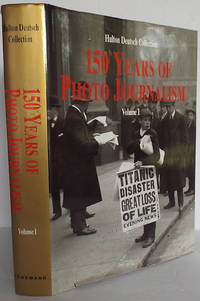
1995009982Cologne: Konemann. Volume 1. Hard cover in dust jacket. Published Cologne: Konemann 1995. Thick 4to. 9 1/2" x 12 1/4" 480pp. illustrated throughout with stunning black and white historical news sports and theater photography. Text in English German and French. Black cloth with gilt spine and cover titles red endpapers. Near fine in near fine dust jacket. . Near Fine. Hard. 1995. Konemann unknown
1995130196Stuttgart , Zürich , Wien : Das Beste, 1995. 160 S. mit zahlreichen Abbildungen; 29 cm, gebunden, Orig.-Halbleinen,
(Codice CW/7839) In 8º (26x22,5 cm) 360 pp. Grande guida con centinaia di illustrazioni a colori e in nero, piantine all'interno delle copertine. Cartone editoriale, sovraccoperta. Ottimo stato. ~~~ SPEDIZIONE IN ITALIA SEMPRE TRACCIATA
Paris, Enseignement et perfectionnement techniques, Librairie du Journal des Notaires et des Avocats, Collection « Comment Faire » - 1965 - In-8, 16 cm X 24 cm - 9 cartes en noir & blanc - 384 pages - envoi manuscrit de l'auteur à Pol Briand - bon exemplaire - envoi rapide et soigné
1965457751965 Paris, Enseignement et perfectionnement techniques, Librairie du Journal des Notaires et des Avocats, Collection « Comment Faire » - 1965 - In-8, 16 cm X 24 cm - 9 cartes en noir & blanc - 384 pages - envoi manuscrit de l'auteur à Pol Briand - bon exemplaire - envoi rapide et soigné
1993LFA-126721238Un ouvrage de 580 pages, format 155 x 240 mm, broché couverture couleurs, publié en 1993, Editions du Rocher, bon état
197721287Paris, Bibliothèque des Arts, (1977). Deux siècles d`échanges artistiques. Ins Französische übersetzt von Diana de Rham. Mit einigen Beiträgen und 307 Abbildungen nach Zeichnungen im Text und z.T. farbigen Fotoabbildungen auf Tafeln. 30,5/30,5 cm. 334 S. OLeinen mit minimal gebrauchtem Schutzumschlag in unbedrucktem, etwas beschädigtem Schuber. Schutzumschlag am Rücken ausgebleicht, sonst schön.
198735002Zürich : Buchclub Ex Libris, 1987. 448 S. 8°. Lizenzausg. OPpbd. mit SU.
19845832München : Droemer Knaur, 1984. 448 S. 8°. OPpbd. mit SU.
<br/>Collana MEDUSA VOLUME CXXXIII<br/>Legatura brossura<br/>Formato Ottavo<br/>Num Pagine 262<br/>Traduttore Alessandra Scalero<br/>Prima Edizione
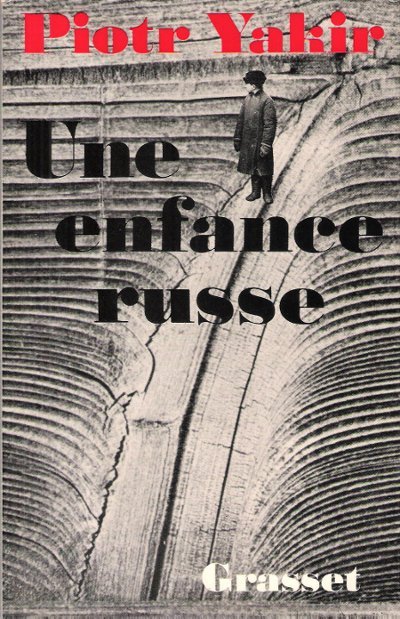
A 14 ans le père de l'auteur , le Général Iona Yakir est éxécuté sur l'ordre de Staline en même temps que le Maréchal Toukhatchevski : c'est ce qu'on a appelé la purge des généraux ( 1937 ) . Il est lui même envoyé en prison et en camp . C'est le récit de ces 5 années qu'il conte ici . - 190 p. , 350 gr.
342pp., dans la série "Studia diplomatica" vol.XLII (1989 nos.4-5-6), br.orig., 21cm., bel état
1972017006Paris Grasset 1972 Grand In 8 A 14 ans le père de l'auteur , le Général Iona Yakir est éxécuté sur l'ordre de Staline en même temps que le Maréchal Toukhatchevski : c'est ce qu'on a appelé la purge des généraux ( 1937 ) . Il est lui même envoyé en prison et en camp . C'est le récit de ces 5 années qu'il conte ici . - 190 p. , 350 gr.
1932212642Lausanne u. London, Anglo-Continental & International Offices, 1932. 4to. (29,5 x 23,5 cm). Mit zahlreichen Abbildungen und Anzeigen. 376 S. Orig.-Leinenband; minimal fleckig. [6 Warenabbildungen]
(Codice PD/2566) In 8° 245 pp. Brossura editoriale, come nuovo. ~~~ SPEDIZIONE IN ITALIA SEMPRE TRACCIATA