8 176 résultats
8vo; . S.-Peterburg: "Proletarskoe dielo", 1906. 1st edition. Paper Wrappers. 12mo, 32 pages. 19cm. In Russian. "Predlagaemyia stati izlagaiut dva takticheskikh vzgliada, namietivshikhsia v sotsialdemokratii po voprosu o vyborakh v Gosudarstvennuiu Dumu." Other Titles: Gosudarstvennai Duma i Sotsialdemokraticheskaia taktika. References: Khronologicheskii ukazatel proizvedenii V.I. Lenina, 2021. SUBJECT(S): Russia. Gosudarstvennaia Duma (1st : 1906); Rossiiskaia sotsial-demokraticheskaia rabochaia partiia. Sezd (4th : 1906 : Stockholm, Sweden), Russia -- Politics and government -- 1894-1917. OCLC lists 2 institutions worldwide with copies (Harvard & Columbia). Very Scarce. Wear & tears & period institutional sticker on cover, no text affected, internal paper & binding Very Good Condition, Good Condition overall. (MX-30-10)
In (20,2x13,5 cm); 6 tomi: 369, (3) pp., 319, (1) pp., 372 pp., 370, (2) pp., 296 [i. e. 304], 366, (2) pp. Legature coeve editoriali in cartoncino editoriale molle, titolo manoscritto da mano coeva al dorso. Un leggerissimo alone al margine basso bianco delle ultime 7 carte del primo volume, ininfluente e nel complesso esemplare in ottime condizioni di conservazione ad ampi margini ed ancora in barbe. Alla prima carta bianca del primo volume antica nota di possesso privata datata 1800 "Di me Niccolé Co: Batti:ala del Co: Niccolè" Prima assai rara edizione italiana, ancor più rara a trovarsi completa di tutti i volumi ed in queste ottime condizioni di conservazione, di una delle più celebri storia della Russia scritte nel settecento. La prima edizione accoluta uscì in Francia nel 1782. Pierre-Charles Levesque (1736-1812) compilò l'opera in numerosi anni basandosi su un imponente apparato documentale rintracciato negli archivi pietroburghesi dove risedette per più di 7 anni chiamato da Caterina II su segnalazione diretta di Diderot per tenere una cattedra Universitaria prima e nella Scuola Cadetti poi. L'opera ebbe subito grande successo ed ebbe grande importanza per far conoscere alle corti dell'Europa occidentale la realtà russa ed il grande potenziale del paese. Ancora oggi questa storia è considerata di grande valore ed attendibilità tanto da venir ancora ristampata. Proprio sulla scorta degli insegnamenti di Diderot e degli enciclopedisti Levesque non si accontenta di citare una fonte ma ne analizza l'attendibilità rintracciando ogni volta la fonte primaria. Opera rarissima.
FT) Original Newspaper. 4to. Most issues are 16 pages each. In Russian. Title translates to English as, Social Democrat: Labor Newspaper. There were, of course, numerous publications titled Rabochaya Gazeta; This incarnation, published in exile in Geneva in the period leading up to the Revolution of 1905, appears to be quite scarce. CONTENTS: Klass Protiv Klassa [Class Against Class] --- Mezhdunarodnyy Sotsialisteskiy Sezd v Amsterdame [International Socialist Congress in Amsterdam] ---Politicheskaya Stachka Italyanskikh Rabochnikh [Politicial Strike of the Italian Workers] --- Posledniy Tsar [Last Tsar] --- Revolyutsionnaya Rabota v Chernomorskom Flot [Revolutionary Work in the Black Sea Float] --- Ofitsery I Soldaty v Revolyutsii [Officers and Soldiers in the Revolution] . No listings on OCLC. Pages tanned with wear along edges. Some closed tears but no loss of text. Good+ Condition. Very Rare. (RUS-11-22A)
1973C1624<p>Oblong photograph 6 3/4" x 11 1/4" Signed by 14 of the 18 contestants Boris Spassky Michal Tal Anatoly Karpov Alexander Beliavsky Efim Geller Paul Keres Victor Korchnoi Nukhim N Rashkovsky Gennadi Kuzmin Vladimir Savon Evgeni Ellinovich Sveshnikov Mark Taimanov Vladimir Borisovich Tukmakov Orest Averkin and one non contestant Viktor Davidovich Kupreichik on the verso. The photograph shows the stage were the contest took place with lined up game tables and the participants during the competition. In the foreground a part of the auditorium with seated spectators.<br /><br />In the aftermath of Robert James Fischer's victory over Boris Spassky in the 1972 World Championship the Soviet Union had been humiliated and humbled by an American and the 35 year rule of the Soviet chess machine over the international chess world had finally been put to an end. The consequences of this result were felt in Soviet chess for months after. Mark Taimanov Tigran Petrosian and Spassky were all reprimanded for their failure to stop Fischer. Consequences continued into the 41st USSR Championship held in the Soviet capital of Moscow from October 2-26 1973. The tournament was organized to be the strongest in a decade. In addition to the four qualifying players who had each won a semi-final Orest Averkin Karen Grigorian Nukhim Rashkovsky and Evgeni Sveshnikov the very strongest grandmasters of the Soviet Union received forced invitations to participate. The list was a collection of former world champions multiple Soviet title winners and the very strongest of the Soviet school including: Spassky Petrosian Mikhail Tal Vasily Smyslov Anatoli Karpov Viktor Korchnoi Efim Geller Paul Keres Lev Polugaevsky Taimanov Leonid Stein Vladimir Tukmakov Vladimir Savon and Gennadi Kuzmin. Victor Davidovich Baturinsky the vice-president of the USSR chess federation and a Colonel of Justice explained clearly to all the participants that their attendance was not only obligatory but their very future as Soviet chess players and the favors imparted therein depended on their performance in the championship. Stein died before the championship took place and he was replaced by junior world champion Alexander Beliavsky. In addition to the composed line up it was made known that draws of thirty moves or less were 'discouraged' by the organizers. Although short draws did occur the schedule of play and the intense combat among the contestants was arduous. It was Spassky after failing in Reykjavik who emerged victorious by a full point. This edition did have the desired effect of revealing future world title candidates as Karpov and Korchnoi tied for second along with two other contestants and would face each other the following year for what ultimately was the de facto world championship.<br /><br /><strong>Condition:</strong><br /><br />Slightly tinted trimmed at the bottom irregularly else a very good copy of an interesting chess historical document.</p> USSR Chess Federation
Original Wrappers. 8vo. 163 pages. 21 cm. Illustrated. First edition. In Ukrainian. Line drawing illustrations depicting prisoners, and camp labor. Written by Daniel Tchaikovsky, under the pseudonym O. Danskyi. Tchaikovsky was a journalist, member of the Organization of Ukrainian Nationalists, and supporter of OUN leader Stepan Bandera. He was imprisoned in Auschwitz from 1942 until the camp was liberated in 1945. (Wikipedia) This account of Auschwitz is the first survivor's account to be published in Ukrainian, and is one of the earliest accounts of the horrors Nazi concentration camps. (Preface to the second edition) Subjects: Concentration camps -- Germany. Auschwitz. Some age toning and edgewear. Repair to spine. Missing page 161. Otherwise fine. (UKR-1-45A)
Original Wrappers. 8vo. 163 pages. 21 cm. Illustrated. First edition. In Ukrainian. Line drawing illustrations depicting prisoners, and camp labor. Written by Daniel Tchaikovsky, under the pseudonym O. Danskyi. Tchaikovsky was a journalist, member of the Organization of Ukrainian Nationalists, and supporter of OUN leader Stepan Bandera. He was imprisoned in Auschwitz from 1942 until the camp was liberated in 1945. (Wikipedia) This account of Auschwitz is the first survivor's account to be published in Ukrainian, and is one of the earliest accounts of the horrors Nazi concentration camps. (Preface to the second edition) Subjects: Concentration camps -- Germany. Auschwitz. Previous owners markings on title and half title pages. Previous institutional markings on cover. Some age toning and edgewear. Back strip has tears and previous repair with non-archival tape. Light staining internally along top edge, not affecting text. Good condition. (UKR-1-45)
1st edition. Original illustrated paper wrappers, 4to. 161 + 23 pages [184 pages total]. 28 cm. ICOR Yearbook 1936. Final Volume Published. In Yiddish and English. Published by the National Executive Committee of the ICOR, Organization for Jewish Colonization in the Soviet Union. Includes photos as well as a 33-page Unzer Flamiger Grus des Land, Vos Hot Befrayt ale Felker: Unzer Flamiger Grus der Ershter Idisher Autonomer Teritorye in der Velt! with approximately 9,000 [Nine Thousand!!!] names listed underneath, organized by city or organization. Other Contents: Rapid Stries of Biro-Bidjan; A Call for a Peoples Delegation to Biro-Bidjan; Declaration of Representatives of Workers Mass Organizations; What is the Race-Theory and Wy does German Fascism Need It; Facts About the U.S.S.R.; A Person Like You Can Get Thousands to Go with You. Subjects: Jews - United States - Periodicals. Jews - Russia (Federation) - Birobidzhan - Periodicals. Jews - Colonization - Russia (Federation) - Birobidzhan - Periodicals. Jewish periodicals - United States. OCLC Number: 27350933. OCLC lists 16 copies. Wear to foot and crown of spine, some light staining, otherwise clean, about Very Good- Condition (YID-16-2D-L'ex)
1st edition. Original illustrated paper wrappers, 4to. 161 + 23 pages [184 pages total]. 28 cm. ICOR Yearbook 1936. Final Volume Published. In Yiddish and English. Published by the National Executive Committee of the ICOR, Organization for Jewish Colonization in the Soviet Union. Includes photos as well as a 33-page Unzer Flamiger Grus des Land, Vos Hot Befrayt ale Felker: Unzer Flamiger Grus der Ershter Idisher Autonomer Teritorye in der Velt! with approximately 9,000 [Nine Thousand!!!] names listed underneath, organized by city or organization. Other Contents: Rapid Stries of Biro-Bidjan; A Call for a Peoples Delegation to Biro-Bidjan; Declaration of Representatives of Workers Mass Organizations; What is the Race-Theory and Wy does German Fascism Need It; Facts About the U.S.S.R.; A Person Like You Can Get Thousands to Go with You. Subjects: Jews - United States - Periodicals. Jews - Russia (Federation) - Birobidzhan - Periodicals. Jews - Colonization - Russia (Federation) - Birobidzhan - Periodicals. Jewish periodicals - United States. OCLC Number: 27350933. OCLC lists 16 copies. Very Good Condition, a beautiful copy (YID-16-2C-L'ex)
1955234761955. Bratskgesstroy photo album depicting construction of the Bratsk Hydroelectric Power Plant on the Angara River between 1955 and 1964 documenting one of the Soviet Union's largest postwar industrial projects during Nikita Khrushchev's campaign to industrialize Siberia. Construction began in 1955 at the Padun narrows north of Irkutsk where the Angara's rapids and elevation drop made the river suitable for massive hydroelectric generation. The first turbine entered service in November 1961 as the Bratsk reservoir began flooding thousands of square kilometers of forest and river settlements to create what Soviet publications called the "Bratsk Sea." By the mid-1960s the station had become the largest hydroelectric plant in the world supplying electricity to aluminum smelters timber combines rail electrification and new industrial cities across eastern Siberia.<br /> <br /> Photo album of approximately 17 large format professional silver gelatin photographs Bratsk and the Angara River region 1955-1964. large format photographs with Russian printed captions identify stages of construction including "Padun narrows" "Blocking the right bank of the Angara March 1957" "Installation of wires on the Irkutsk-Bratsk 220 kV transmission line" "Completion of the main concrete trestle" "Winter 1960-61" and "June 1963." Winter construction scenes show cranes rising above frozen riverbanks trucks dumping fill into rushing water during diversion work and workers fastening electrical insulators high above snow-covered terrain. Later images depict the completed spillway releasing torrents of water beneath rows of gantry cranes along with an interior control room lined with gauges switches meters and telephone communications equipment. Several leaves contain handwritten French tourism slips describing the visitor's experience moving through the region and observing ice electrical infrastructure and the completed dam landscape.<br /> <br /> The Bratsk project formed part of the Soviet Union's postwar eastward industrial expansion which sought to shift energy production and heavy industry deep into Siberia during the Cold War. The first turbine entered service in November 1961 as the Bratsk reservoir began flooding thousands of square kilometers of forest and river settlements to create what Soviet publications called the "Bratsk Sea." By the mid-1960s the station had become the largest hydroelectric plant in the world supplying electricity to aluminum smelters timber combines rail electrification and new industrial cities across eastern Siberia. Soviet newsreels propaganda posters and foreign delegations treated Bratsk as proof that the USSR could transform remote Siberian territory into a modern industrial frontier through centralized planning hydroelectric engineering and mass labor mobilization. Light wear occasional silvering and minor surface abrasions to several photographs; album binding intact. Overall in very good condition. unknown
1922133544Bln., Argonavty, 1922. 160, [3] S., Hln., kl.8°. Erstausgabe der berühmten im Berliner Exilverlag "Argonavty" (=Argonauten) erschienenen Anthologie zur russischen Avantgarde und Moderne mit literaturkritischen Beiträgen über Anna A. Achmatova, Konstantin D. Bal'mont, Jurgis K. Baltrusajtis, Aleksandr A. Blok, Valerij Ja. Brjusov, Andrej Belyj, Maksimilian A. Volosin, Sergej A. Esenin, Vjaceslav I. Ivanov, Osip E. Mandel'stam, Vladimir V. Majakovskij, Boris L. Pasternak, Fedor K. Sologub, Marina I. Cvetaeva, alle jeweils ergänzt mit Gedichten der Autoren. Mit Ausnahme der Beiträge über Bal'mont, Brjusov, Blok und Majakovskij, die davor schon in der sowjetischen Zeitschrift "Slovo" (=Wort) erschienen waren, handelt es sich bei den Texten von Ehrenburg um Erstveröffentlichungen. Von den porträtierten Autoren lebten die meisten (noch) in der Sowjetunion. Die Anthologie, die damals für grosses Aufsehen sorgte, erschien ein Jahr später auch in der Sowjetunion, allerdings erheblich gekürzt und unter einem anderen Titel. Später ist sie in München (1972) und inzwischen, mit ausführlichem wissenschaftlichen Kommentar, auch in Russland (St. Petersburg, 2002) erschienen. Privater Halbleineneinband mit marmoriertem Überzugpapier und einem merfarbigen Kleisterpapier für den vorderen Vorsatz. Ausserst selten. Hardcover Einband berieben, Kanten und Ecken stark bestossen. Titelblatt fehlt. Durchgehend etwas fleckig, die letzte Lage mit Wasserrand.
1939HALL509825Paperback. 1939. 1. BACH A. Planning Science. 2. BORIN K. Socialist farming. 3. GOLENKINA Vera. The Soviet Press. 4. GOLOSSOV I. Soviet Cities New and Renewed. 5. ILIN M. The Little Citizen of a Big Country. 6. KHAZAN D. Light Industries of the U.S.S.R. 7.KOROBOV I. How Soviet Workers Spend their Leisure. 8. KOVARDAK P. New People of the Soviet Countryside. 9. KRENKEL Camping at the Pole. 10. LOBANOV P. The State Farms of the U.S.S.R. 11. MOLYAKOV V. The Countryside Past and Present. 12. OBRAZTSOV V. The Railroads of the U.S.S.R. 13. PAPANIN I. The Soviet Wintering Station on the Drifting Ice. 14. PAPYAN M. Industrial Progress in the Soviet Republics of the Non-Russian Nationalilties. 15. PROPPER-GRASHCHENKOV N. Public Health Protection in the U.S.S.R. 16. SHABUROVA M. How Old Age is Provided For in the U.S.S.R. 17. STAROSTIN A. Sport in the U.S.S.R. 18. VYSHINSKY A. Crime Recedes in the U.S.S.R. 19. ZHEMCHUZHINA P.S. The Food Industry of the U.S.S.R. 28 to 44pp each 11cm x 14cm card covers. All published by Foreign Languages Publishing House Moscow 1939. With the exception of nos. 1 15 & 18 all have pictorial front covers. All contain black & white photograph illustrations except no 18. Nos. 4 12 & 14 have an 8-page English-Russian vocabulary loosely inserted. All very copies . paperback
Album cartonato di cm. 36 x 31 di dieci pagine con applicate 34 foto in nero, mediamente cm. 23 x 14 con didascalie in cirillico. Anni '40/'50, ma forse anche precedenti.
1935137835Moscou, Isogis, 1935. (40) S., mit Foto-Illustrationen in Braun- und Blauton unter anderem von Maks Al'pert, Gestaltung El Lissitzky. Original-Broschur, 2°. Jubiläumsnummer zum fünfzehnjährigen Bestehen der Petrolindustrie in Aserbaidschan. Die Monatsschrift «URSS en construction» erschien in vier Sprachen (deutsch, französisch, englisch, spanisch) von 1930 bis 1941 und noch einmal 1949. Zum Redaktionskollegium der von Maxim Gorkij gegründeten Zeitschrift gehörten unter anderen Georgij Pjatakov und Michail Kol?cov, einzelne Nummern erschienen unter der Leitung von Aleksandr Rod?enko oder El? Lisickij. Viele Nummern wurden von Nikolaj Stepanovi? Tro?in gestaltet. Hauptsächliches Gestaltungsmerkmal war die Fotomontage, mit Beiträgen von Fotografen wie Maks Al?pert, einem der Begründer der Fotoreportage, Arkadij ?ajchet und anderen. Softcover Rücken oben und unten eingerissen, Umschlag angestaubt. URSS en construction; [UdSSR im Bau], No 5 Mai 1935
1968729Metuchen New Jersey: Scarecrow Press 1968. 17 volumes; 13 volumes are 5.5" x 8.5" each in red wrappers with light toning at spines 3 volumes are 6.25" x 9" each in brown paper boards with brown cloth spines and light scuffing at edges 1 volume is 5.75" x 8.75" in red cloth boards with black stamping along spine and light toning. All volumes have ex-library markings. Many have pasted library labels on cover bookplates and embossments. Good to very good. <br /> <br /> This is a complete set of Portraits of Prominent USSR Personalities 4 volumes per year for 1968 1969 1970 and 1971 a total of 16 volumes in all. Includes Party and Government Officials of the Soviet Union 1917-1967. All published by The Scarecrow Press Inc. in Metuchen New Jersey. CONTENTS:<br /> Party and Government Officials of the Soviet Union 1917-1967: <br /> <br /> Compiled by The Institute for the Study of the USSR Munich Germany. Edited by Edward L. Crowley Andrew I. Lebed Dr. Heinrich E. Schulz. Copyright 1969 ISBN: 0810802856.<br /> <br /> Portraits of Prominent USSR Personalities:<br /> <br /> <br /> Vol. 1: January 1968 no. 1<br /> Vol. 1: April 1968 no. 2 bound in brown cover boards<br /> Vol. 1: July 1968 no. 3<br /> Vol. 1: October 1968 no. 4 with a cumulative index for Vol. 1<br /> Vol. 2: January 1969 no. 1<br /> Vol. 2: April 1969 no. 2 small smudge on back cover<br /> Vol. 2: July 1969 no. 3<br /> Vol. 2: October 1969 no. 4 with a cumulative index for Vol. 2 bound in brown cover boards<br /> Vol. 3: January 1970 no. 1<br /> Vol. 3: April 1970 no. 2<br /> Vol. 3: July 1970 no. 3<br /> Vol. 3: October 1970 no. 4<br /> Vol. 4: January 1971 no. 1 <br /> Vol. 4: April 1971 no. 2 bound in brown cover boards<br /> Vol. 4: July 1971 no. 3<br /> Vol. 4: October 1971 no. 4<br /> . Scarecrow Press unknown
1966OS7119Enfield England: Computer Consultants Limited 1966 . Only edition. Limited. Very Good. Bound in faux leather scientific notebook. Gilt spine and boards. Very early if not the first study of the first Russian computers -- with specs. Numbered copy 1335. Due to size or weight this item may require additional postage for international or priority shipping. Computer Consultants Limited hardcover
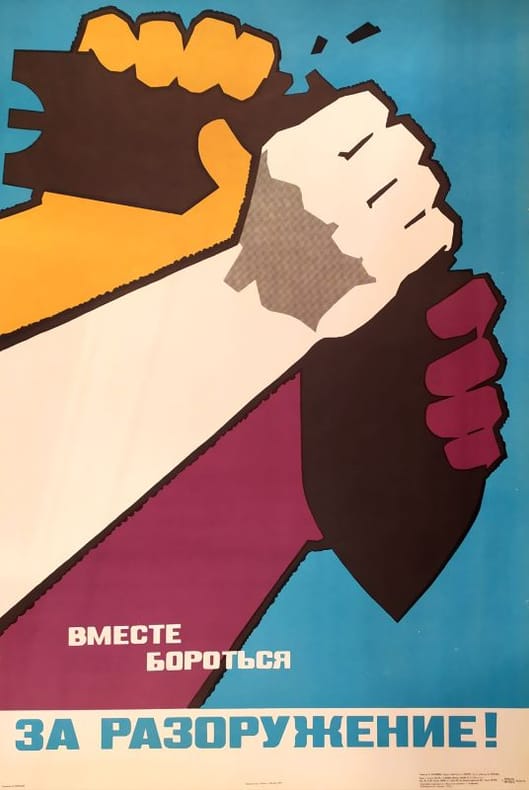
2857Affiche originale Soviétique. Éditions PLAKAT. 1976. Impression en offset. Dim: 845 x 575 mm. Parfait état.
217089Paris, Maradan, Imprimerie de Crapelet, an X - 1802 in-8, VIII-398 pp., un f. n. ch. (table des matières et errata), demi-basane brune, dos lisse (reliure postérieure). Modeste reliure d'amateur, sans pièce de titre. Coiffe abîmée. Petites mouillures marginales sans gravité. Non rogné.
1st edition. Original Illustrated Paper Wrappers. 4to. XVIII, 206 pages. 28 cm. ICOR Yearbook 1932. In Yiddish and English. Published by the National Executive Committee of the ICOR, Organization for Jewish Colonization in the Soviet Union. The ICOR yearbook was published from 1932 to 1936. This issue contains well over 1300 names in Yiddish of Jewish supporters, generally part of part- or full-page ads taken out by IKOR branches or related groups. For example, a two-page Tsvayte Aptaylung: Bronzvil Ikor...Bagrisungen fun Yehidim [sic] (Part Two: Brownsville [Brooklyn] Greetings from the Jews) on pages 70-71, with list of 300 names below, presumably all members of the Brownsville IKOR branch which had each donated money to place the ad to support IKOR efforts. Just a few of the locals heading these lists of names include: the Ikor Druker Komite New York [Printers Committee]; Spring Valley, NY; Duluth MN; Siu Siti [Sioux City] IA; Cincinnati, OH; Oakland, CA; Syracuse, NY: Windsor, Canada; Vineland NJ, Newark, NJ; etc. The 70 pages of ads and paid greetings in the middle of the book also include hundreds of names in English, often as small classified-type ads of half- or one-inch height. English editorial on the history of the ICOR, a poem by Mayakovsky, and essays on Biro-Bidjan in socialist construction, Palestine and Biro-Bidjan, Report of the Expedition to Biro-Bidjan. Yiddish sections includes lengthy reports on the ICORs activities and American support, proposed architectural and agricultural projects in Biro-Bidjan, illustrations of proposed architectural projects as well as completed structures, multiple charts and graphs detailing economic and material aspects to agricultural projects; with sixty pages containing hundreds of advertisements and encouraging words from businesses and individuals all over the United States in support of ICOR. Subjects: Jews - United States - Periodicals. Jews - Russia (Federation) - Birobidzhan - Periodicals. Jews - Colonization - Russia (Federation) - Birobidzhan - Periodicals. Jewish periodicals - United States. OCLC Number: 27350933. OCLC lists 16 copies. Some wear to wrappers at corners and spine, internally Very good condition. (YID-16-1Ax-L'ex)
[Russia]: Publication of P. And N. Kievskie. 4to. 190 pages. In Russian. Official publication of the Russian social-democratic workers' party (Bolsheviks) . The only issue published is Nr 1-2, August 1915. Includes: articles of the future leaders of the Bolshevik Russia: "Failure of the Second International" by Vladimir Lenin, "World Economy and Imperialism" by Nikolai Bukharin, essays by Karl Radek and Georgii Zinoviev. OCLC lists 3 copies worldwide (U of California at Riverside, U of Wisconsin at Madison, Oxford U, England) . SUBJECT(S) : Socialism -- Periodicals. Socialism -- Russia -- Periodicals. Geographic: Russia -- Politics and government -- 1894-1917 -- Periodicals. Brittle and browned acid paper, no back cover page, front cover page detached from the block and has some tear with no loss to the text, incomplete (last page is 190, must be over 195 pages) , overall in fair condition (RUS-7-342).
RO40196302Non précisé. Non daté. In-4. Relié. Etat passable, Tâchée, Dos abîmé, Déchirures. 208 + 190 pages. Illustré de nombreuses photos en noir et blanc sur grandes planches, avec texte sur 2 colonnes en dessous. Pièce de titre rouge et titre doré sur le dos. Ouvrage en mauvais état. Plats fortement tachés. Couverture se détachant. Cahiers se détachant. Pages de titre manquante. 1er et dernier feuillets abîmés et mouillurés. Quelques feuillets déchirés et mouillures en bords de pages.. . . A l'italienne. Classification Dewey : 947-Europe de l'Est, URSS
Non précisé. Non daté. In-4 Carré à l'italienne. Relié. Etat passable. Tâchée. Dos abîmé. Déchirures. 208 + 190 pages. Illustré de nombreuses photos en noir et blanc sur grandes planches, avec texte sur 2 colonnes en dessous. Pièce de titre rouge et titre doré sur le dos. Ouvrage en mauvais état. Plats fortement tachés. Couverture se détachant. Cahiers se détachant. Pages de titre manquante. 1er et dernier feuillets abîmés et mouillurés. Quelques feuillets déchirés et mouillures en bords de pages. Vers 1900 (avant la Révolution). Photographies de Jongh Frères. Saint-Pétersbourg, perspective Newsky. Garde impériale, Palais de Gatchina. Moscou, Enceinte Kitaï-Gorod. La maison des Romanov. Tiflis, Chameliers du Caucase. Chasse aux chiens courants. Paysanne, Grande-Russie. Place du marché à Elisabethpol. Kiev, Hôpital ophtalmique. Kharkov, Raffinerie de sucre. Sébastopol, Equipage de flotte russe. Un Slovaque. Un menuisier. Corps de cadets Nicolas. Pays du Don, Famille d'un Lieutenant-Colonel de Cosaques. Paysage de Finlande. Moujiks du Gouvernement de Mohilev. Moscou, Porte Illinsky.Kiev, 1re Section des Pompiers. Ialta, Nikitsky-Sad. Bakou. Garde impériale à Saint-Pétersbourg...
RO20188143DIRECTION SPIRITUELLE DES MUSULMANS DE L'ASIE CENTRALE ET DU KAZAKHSTAN. NON DATE. In-Folio. Relié toilé. Bon état, Tâchée, Dos satisfaisant, Intérieur frais. environs 20 + 135 pages de nombreuses photos en noir et blanc et en couleurs hors texte accompagnées d'une legende en arabe - 1 signet conservé - 2 taches brunes sur le 1er plat + 1 fascicule de 53 pages traduit en 3 langues, russe, anglais et francais - SENS DE LECTURE INVERSE (DROITE A GAUCHE) - 6 photos disponibles.. . . . Classification Dewey : 947-Europe de l'Est, URSS
Fine English In comtemporary cloth bdg. Roy. 8vo. (24 x 17 cm). In Russian. 174 p. Mirovoe haziyaistva i imperializm. Ekonomiyeskiy ozerk. Yetvertoy izdaniye (Stereotipnoe). From the library of Ismail Hüsrev Tökin and with his notes on some pages with pencil in Ottoman Turkish.
Very Good Serbo-Croatian Original color lithographed print poster. Mounted on cardboard. Slight chip on the left corner, not loose. A good poster. 44x28 cm. In Serbo-Croatian. Artist signature: Kun, [Gleb?]. Red and black theme on the white surface. The peasant Serbian woman with her head and right hand raised to the sky is depicted. Antifastictika Fronta Zena [i.e. The Women's Antifascist Front] was a Yugoslav feminist and anti-fascist mass organization. The predecessor to several feminist front groups in the former Yugoslavia, and present-day organizations in the region, the "AFZ" was heavily involved in organizing and participating in the Partisans, the communist and multi-ethnic resistance to the Nazi occupation of Yugoslavia during World War II. It was formed by volunteers on 6 December 1942 in Bosanski Petrovac at the First National Conference of Women. In its early days, the organization was called the Antifascist Organization of Women (AOZ). In Croatia, the organization was named the Antifascist in front of women of Croatia. In Slovenia, there were a number of titles: Antifascist women association, Antifascist Front Women, Antifascist Front of Women. It was founded under the name of the Slovenian Antifascist Women Association. There was also a Slovenian Anti-Italian Women's Union. In Macedonia, it was called Antifascist front of women of Macedonia (Antifasisticki front na zenite na Makedonija). In Serbia, there was the Antifascist Front of Women of Serbia, including the Antifascist Front of Women of Vojvodina (based in Subotica). Before World War II, many women organizations advocated for peace, fighting against the different totalitarian forces that were growing across Europe. During the war, however, many women organized themselves within the antifascist movement and strengthened their position. This is confirmed by the first document of the Supreme Headquarters and the National Liberation Army volunteer Yugoslavia, which at that time was the supreme authority in the liberated territories. In various documents, it confirmed women's active and passive voting rights, which they already possessed prior to 1941, as outlined in the Constitution, but were not allowed to exercise. [.] Women began to massively involve the NOP as soldiers, medical staff, politicians, and MPs. Different female structures, which were established in 1941 under various names, have been associated in the wider areas, and as of 6 December 1942, held the first National Conference of Women. The conference was attended by 166 delegates from all over Yugoslavia, except for Macedonia, because they did not occur because of both distance and security concerns. Then the Conference founded the Antifascist Front of Women with the aim of mobilizing women for assisting new units, helping partisan government bodies, participation in armed and sabotage actions, and for the development of 'Brotherhood and Unity' among women. AFZ played an influential role in the Second World War, after the Invasion of Yugoslavia. The NLA attracted about two million women. In military units, there were 110 000 women. During the war, 2,000 women became officers. AFZ Committees were also responsible were collecting clothes for the NOV, caring about children, wounded soldiers, working as front-line nurses, and performing agricultural tasks. Of the 305,000 fallen soldiers between 1941-1945, 25000 were women, and of the 405,000 injured 40,000 were women. The issue of legal equality did not arise, because the women through their participation in the national liberation movement had arguably already achieved certain rights. All that after FOCA regulations on the principles of equality enshrined in the later constitutions "new" Yugoslavia, and various laws, the result of the struggle of women themselves in the feminist and anti-fascist women's organizations before the war, as well as their struggle during the war. [.].