24 614 résultats
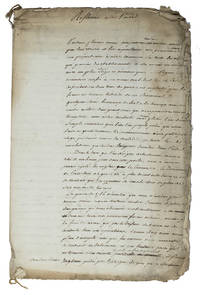
1778ABC_455321778. Sewn with two small chords in the left upper and bottom corner. Folio. First draft of an autograph manuscript in French with erasures and corrections probably written by a diplomat or strategist concerning the causes of Britains defeat of France in India during the Seven Years War 1756-1763 and analysing different ways to restore France to power on Indian soil by an alliance with the sultan Haider Ali Khan 1722-1782 who ruled Mysore and a large part of southern India and was one of the greatest enemies of the British East India Company. According to the unidentified diplomat who wrote this text Haider Ali Khan was the only one who was able to defeat the British or challenge their supremacy in India. In this manuscript he describes the best strategy not only to join Haider Ali Khan but also to negotiate with the British people on profitable Indian trade for both parties.Slightly worn and frayed around the edges first page slightly dust-soiled but still an interesting autograph manuscript in good condition. unknown
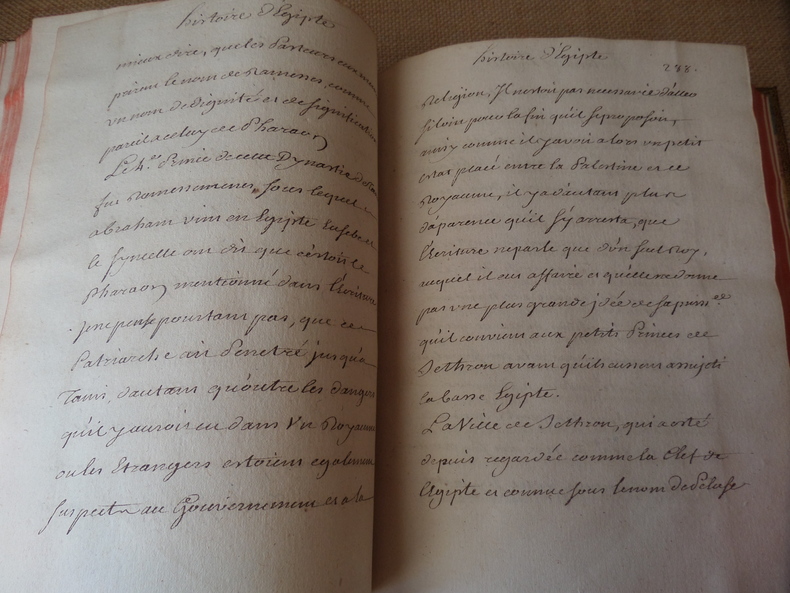
7819manuscrit sans date (début XVIIIe), reliure plein veau d'époque, dos à 5 nerfs, titres et fleurons dorés, roulette dorées sur chasses et champs, tranches rouges, 19,5x24 cm, pagination par feuilles, TOME I, partie 2 (251 à 474) : Histoire d'Egypte, 216 pages( 251 à 358) ; Histoire des Patriarches, 228 pages (359 à 472), table de l'histoire des Patriarches jusqu'à l'exode, 4 pages (473-474). TOME II, partie 1 (1 à 291) : Histoire de l'ancienne Grèce, 70 pages (2 à 36) ; Histoire d'Argos, 76 pages (37 à74) ; Histoire d'Athènes, 274 pages, (75 à 211) ; Histoire de Thèbes, 154 pages (215 à 291). TOME II, partie 2 (293 à 557) : Histoire de Lacedemone, d'Arcadie et de Troye en particulier : Histoire de Lacedemone, 48 pages (293 à 316), Histoire d'Arcadie, 10 pages (317 à 321), Histoire de Troye, 70 pages (323 à 357) ; Histoire de l'ancienne Italie, 154 pages (360 à 436) ; Histoire ancienne de la Sicile, 62 pages (437 à 467) ; Histoire ancienne de l'Affrique, des Isles de la mer méditeranée et des parties de l'Europe qui confinent à l'océan : Histoire ancienne de l'Affrique, 28 pages (469 à 482), Histoire ancienne de l'Espagne, 60 pages (483 à 512), Histoire ancienne de la Sardaigne, 8 pages (513 à 517), Histoire ancienne de la Corse, 3 pages (518 à 519), Histoire ancienne des Isles Baleaires, Majorique, Minorique et Irique, 2 pages (520), Histoire ancienne de l'Isle de Malthe, 3 pages (521 à 522) , Histoire ancienne de l'Europe, 12 pages (523 à 533) ; Histoire ancienne de la gaule, 30 pages (534 à548) ; Histoire ancienne de l'Angleterre, 16 pages (549 à 557).
1827STLD0088London, T. Rickaby 1793 [und Thyer:] London, Joseph Brooker 1827. 4°. Gest. Tit. m. Vign., XXXIX(1), 317(1) S.; Gest. Tit. m. Vignetten, sep. Drucktitel, S. (319)-678, 1 Bl., VIII S. ; 2 gest. Titel m. Vignetten, (Notes tom.I u. II), 495(1), XVIII(2) S. Mit zus. 3 gest. Front. (dav. 2 Porträts), 13 Kupfertafeln, (11 doppelblattgroß od. 3-fach. gef.) und 20 Kopfstücken u. Vignetten in Kupferst. nach Hogarth. [Und Thyer:] Tit. m. mont. Holzst.-Vign., Ss. (I-VII), Ss.(8)-301. Mit 2 gest. Portr. u. 9 mont. Holzst.-Illustr. auf Tafeln. 4 prachtvolle Franzbände aus rotem Maroquinleder auf 5 Doppelbünden mit Goldlinienverzierungen, Deckelrand-, Steh- und Innenkantenverzierungen in Goldprägung, goldgepr. Adelswappen, umseit. Goldschnitt u. marmorierten Vorsatzpapieren. Kapitale leicht berieben, Ecken etw. bestoßen, Einbände mit altersbedingten Gebrauchsspuren, im Text vereinzelt stockfleckig, insgesamt sehr frisch u. gut erhalten. Brunet I, 1428; Graesse I, 584. In nur 200 Exemplaren hergestellte Prachtausgabe der englischen Verssatire, die als "schärfste und derbste Verspottung des Puritanismus jener Zeit" (KLL) gelten kann. Mit seinen Illustrationen zu Butlers Knittelversen machte sich William Hogarth erstmals einen Namen als Kupferstecher. "Hogarth hat zu diesem Gedicht zwei verschiedene Folgen von Illustrationen gestochen: 12 große, sorgfältiger ausgearbeitete Kupferstiche, die er selbständig, unabhängig von einem Verleger geschaffen und im Februar 1726 herausgegeben hat, und 17 kleinere, die mehr Holzschnittcharakter haben und vermutlich früher entstanden, aber erst im darauffolgenden April in einer Gedichtausgabe erschienen sind. Diese folgen dem Verlauf der Handlung, während die großen Blätter nur die entscheidenden Szenen mit einem gekürzten Textauszug als Legende wiedergeben...Epos und Bilder sind eine antiheroische Satire auf Puritanertum und Sektenwesen" (Margrit Bachofen-Moser in Hogarth-Katalog Zürich, 1983, SS. 25 ff.). - Splendid edition of the English verse satire, produced in only 200 copies, which can be considered the "sharpest and crudest mockery of Puritanism of that time" (KLL). Hogarth first made a name for himself as an engraver with his illustrations of Samuel Butler's doggerel verse. "Hogarth engraved two different sets of illustrations to this poem: 12 large, more carefully executed engravings, which he created independently, unaided by a publisher, and published in February 1726, and 17 smaller ones, more woodcut in character, which were probably made earlier but did not appear in an edition of the poem until the following April. These follow the course of the plot, while the larger sheets reproduce only the decisive scenes with an abbreviated text excerpt as legend...Epic and pictures are an anti-heroic satire on Puritanism and sectarianism" (Margrit Bachofen-Moser). "200 copies printed, some with the plates in red, others in black. An elegant edition edited by Dr. Nash, the historian of Worcestershire, who has added a variety of entertaining notes" (Lowndes, The The Bibliographer's Manual of English Literature, S. 313).
1656F96168s.l. [London?], 1656 2 parts in one volume: [8],321,[i] + 152,34,[18] pp., "Editio tertia" (in fact this is the 4th edition ; 1st in Paris 1624, 2nd in London 1633, 3rd enlarged in 1645), contemporary full vellum bit soiled though in very good condition, 14cm., text in good condition but paper is somewhat browned on quite some pages, old inscription on second last blanco endpaper, good condition, rare, [Herbert of Cherbury, 1583-1648, religious philosopher and considered as "the father of English Deism", created with his major work "De Veritate" the first purely metaphysical treatise ever written by an Englishman. In "De Veritate" he states the 5 articles which became the charter of English Deism. "De causis errorum" deals with logical fallacies but was unfinished. Both works are clearly meant to be published together and are commonly so bound], F96168
2 parts in one volume: [8],321,[i] + 152,34,[18] pp., "Editio tertia" (in fact this is the 4th edition ; 1st in Paris 1624, 2nd in London 1633, 3rd enlarged in 1645), contemporary full vellum bit soiled though in very good condition, 14cm., text in good condition but paper is somewhat browned on quite some pages, old inscription on second last blanco endpaper, good condition, rare, [Herbert of Cherbury, 1583-1648, religious philosopher and considered as "the father of English Deism", created with his major work "De Veritate" the first purely metaphysical treatise ever written by an Englishman. In "De Veritate" he states the 5 articles which became the charter of English Deism. "De causis errorum" deals with logical fallacies but was unfinished. Both works are clearly meant to be published together and are commonly so bound], F96168
354 pages. Index. Footnotes. "On very rare occasions a book appears which forever changes the way in which we perceive the world around us. Within a short while it becomes hard to understand how we could have functioned without the knowledge gained from it. This is such a book. Quigley presents certain 'keys' crucial to the understanding of 20th century political, economic and military events - events of the past, present, and future... The fact that Carroll Quigley, a highly respected professor at Georgetown University and an instructor at Princeton and Harvard, could not find a publisher for this work, is in itself significant." - Stephen A. Zarlenga, Publisher. Light wear to book which is clean and unmarked but for prior owner's neat signature atop front free endpaper. Average wear to dust jacket which is now preserved in glossy new archival-grade Brodart cover. A quality copy of this significant work. Book
4394Nouvelle édition augmentée des notes de M.Tindal et de qques autres Remarques mises au bas des Pages; de l'Abrégé Historique; du Recueil des Actes Publics d'Angleterre,de Thomas Rymer, dispersé dans cette Edition à la fin des Volumes auxquels chaque partie en peut appartenir; et de Mémoires pour les vingt premières années du Règne de Georges II. La Haye 1749. 16 vols. de format in-4. Portraits , frontispice et nombreuses gravures et planches, tableaux, très belles cartes dépliantes. Reliure signée Masson-Debonnelle, plein maroquin chocolat aux armes anglaises sur les 2 plats. Dos à nerfs. Tranches dorées. Belle édition.Dos légèrement passés.Qques petits accrocs ou griffures sur les cuirs.
In folio. pp (2), 38, un rame al frontespizio “dominicus muratori inv. et delin. Vincen. Franceschini scul.”, nel testo da indisegni di Muratori e incisi da Rossi, Limpach, Allet, 6 vignette incise su rame come testatine e finalini e un capolettera. Contiene gli elogia a Maria Clementina in diverse lingue: ebraico, graco, arabo, siriaco, armeno, caldaico, copto, polacco, gotico, illirico, ecc ecc. Legatura in piena pelle con cornice dorata ai piatti e decorazioni in oro al dorso.
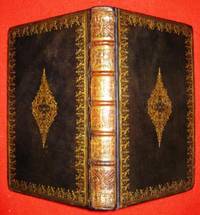
1717757London: John Sturt and John Baskett 1717. First edition first state. Leather Bound. Near Fine. John Sturt. 5 1/2 x 8 inches. 8vo. 22 166 pages. Front hinge and front endpaper expertly reattached by conservator with Japanese tissue. Marbled endpaper and following ffep contain inscription "The gift of Lady Parkyns to her Daughter Anne Parkyns May 7th 1740." Engraved armorial bookplate of Sir William Milman on front endpaper partially obscuring one of the inscriptions. Small area where a name was erased from marbled endpaper interrupting marbling. Each page beautifully engraved by John Sturt on silver plates. More than 130 engraved vignettes ranging in size from 41 mm x 55 mm to 84 mm x 55 mm numerous other smaller in-text vignettes initials head and tailpieces etc. Each page with elaborate engraved border. This edition also double red ruled. Volvelle present in original state on page V thus first state. Pages very clean with small occasional minor smudge. All page edges gilt with small "spot" loss of gilt at top. Griffiths 1717/1. Bound in contemporary dark green crushed calf with elaborate gilt borders and central lozenge. Elaborate gilt decoration to spine. Slight bleaching to spine and small losses to corners. Sturt's rare and beautifully silver-engraved Book of Common Prayer with volvelle in original state. John Sturt and John Baskett unknown
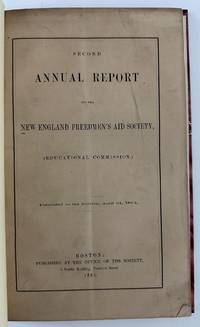
186412679Boston: Published at the Office of the Society 1864. 86pp. Original printed wrappers bound into modern quarter morocco over marbled boards gilt spine titles. Light chipping and soiling to wrappers. Contemporary notation to header of title else internally clean. Very good plus. An account of the second year of the activities of the New England Freedmen's Aid Society NEFAS an activist group formed to assist emancipated Black Americans in may aspects of life especially with gaining academic and practical educations following the Civil War. The present work is especially important for the long section titled "Condition of the Freedmen" which occupies pages 11 to 51 about half of the total work. This section details the population state of education labor and industry opportunities general condition and more of free African Americans in several regions of the country namely the Military Department of the South Key West and the Tortugas Military Department of Virginia and North Carolina the District of Columbia the Mississippi Valley Middle Tennessee Western Arkansas and Louisiana. Interestingly a substantial subsection of the section on the Department of the South is devoted to a discussion of arable lands available to freed slaves around Beaufort and Port Royal known to modern audiences as "Forty Acres and a Mule." Regarding the land in this area the report states that "It was a matter of course that the lands should all be taken for those blacks who did not wish to turn cultivators were perfectly aware that they could sell their 40 acres for many times the government price."<br /> <br /> The organization was also notable for its mission specifically aimed at education and for the critical role women played in its work. "The New England Freedmen's Aid Society was founded in Boston in 1862 in response to an appeal.on behalf of 8000 formerly enslaved people at Port Royal SC. Originally named the Educational Commission its mission was to provide teachers and other aid for 'the industrial social intellectual moral and religious' advantage of freedmen" Massachusetts Historical Society. As was the case with many abolition and aid groups women were in the vanguard of the NEFAS. They recruited trained and even served as educators in the program. For much of the twentieth century if historians wrote about the first teachers among freed people at all they characterized them as foolish even dangerous women.who bore a heavy responsibility for the racial tension after the Civil War and whose work caused Southern educators to avoid Black education" The Freedmen's Teacher Project. Yet scholars in the 1960s and after -- particularly women and Black researchers -- have returned to the documents of the Society to uncover the serious and often intersectional work being done by both white and Black activists in Port Royal reframing "the freedmen's education movement as not primarily a gift of northern largess.but as autonomous actions of hundreds of Black communities across the South demanding access to literacy and numeracy" The Freedmen's Teacher Project. In this sense those "dangerous" women were troubling because they heard the call of Black peoples took their needs seriously and reacted accordingly. The movement was thus "largely Black-inspired abetted by female missionary teachers" whose shared goals were to prepare "former slaves for lives of freedom in a democratic America" The Freedmen's Teacher Project.<br /> <br /> The present Annual Report shows the early efforts of this Society including fundraising allocation of funds educational programs and educational gains and future goals. Included in the list of Officers are eleven white women in leadership roles; indeed women were the majority in the Committee on Teachers and the Committee on Clothing and Supplies. Among them are more well-known activists who appear in American Abolitionists and Antislavery Activists i.e. Ednah Cheney and Sarah Barrett Cabot who had raised her daughter to become a leader in the movement. Most however are lesser or unknown denoted largely by their husbands' names rather than their own. Even less visible but even more important were the unlisted Black women who were members of the group and contributors to the grassroots work. "Nearly one-fifth of the Northern teachers were Black.Black teachers were fifteen times more likely to give a few years of their lives to Southern Black education.the rest of the recruited teachers were native to the South; many had been enslaved while others were Southern free Black women and other men of color" The Freedmen's Teacher Project. The accomplishments in the report -- fundraising equipment educational gains -- can largely be attributed to their efforts.<br /> <br /> The report for the first year of the organization is exceedingly rare with only one example listed in OCLC; twelve copies of the present report appear in OCLC though no copies have appeared in modern auction records and no other copies are currently in trade. An important and scarce historical document preserving the accomplishments of a fairly short-lived intersectional activist group with vital reports on the activities of freed slaves throughout the southern part of the country. Published at the Office of the Society unknown
172755069London: printed by John Baskett. and by the Assigns of Henry Hills decease'd 1727. Later edition. Hardcover. Very good. Three parts folio in fours 38 by 24 cm. 380 23 3 table pp; text in two columns. Additional engraved title page; main title in red and black; woodcut initials and ornaments. Contemporary two-tone paneled calf triple-ruled in gilt; spine with raised bands elaborately tooled in gilt morocco lettering piece; gilt inner dentelles; marbled endleaves; all edges gilt. Covers very lightly scuffed with mild traces of wear at extremities; upper joint just starting at top; occasional touches of mild mostly marginal foxing. A very good or better copy complete and handsomely bound.<br /> <br /> An uncommon and beautifully printed edition of the Book of Common Prayer "the first single manual of worship in a vernacular language directed to be used universally by and common to both priest and people" Carter and Muir. Despite early revisions and some major alterations following the Restoration the original simplicity of the language has been presevered the text remaining substantially unaltered since 1662. References: ESTC N67554 locates only 4 copies. Cf. Carter & Muir Printing and the Mind of Man 75 ed. 1549. Collation: pi1 a-c4 A-Aaa4 Bbb2 = 203 leaves. printed by John Baskett... and by the Assigns of Henry Hills, decease'd hardcover
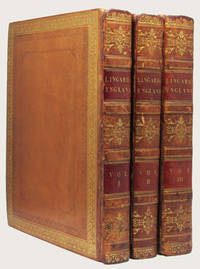
181933323London: Printed for J. Mawman in Ludgate Street; Printed for Baldwin and Cradock Paternoster-Row and Joseph Booker New Bond Street 1819 - 1830. 8 volumes. Rare First Edition Complete. A copy with fine provenance coming from the library of the Duke of Westminster with his coat of arms to the book plates and dating to 1884. Quarto contemporary polished and paneled calf the spines with raised bands gilt ruled separating the compartments two red morocco lettering labels gilt remaining compartments with elaborate gilt tooling the covers with triple gilt fillet rules surrounding inner and elaborate roll tooled borders in gilt and blind central panels of triple gilt fillets and corner pieces in blind marbled endleaves and marbled edges to match. A very handsome set some hinges starting the textblocks clean fresh crisp and unpressed. RARE FIRST EDITION COMPLETE OF THIS IMPORTANT HISTORY OF ENGLAND FROM THE FIRST INVASION OF THE ROMANS PRESENTED IN HANDSOME CONTEMPORARY BINDINGS. John Lingard 5 February 1771 – 17 July 1851 was an English Roman Catholic priest and historian the author of The History of England From the First Invasion by the Romans to the Accession of Henry VIII an eight-volume work published in 1819. Lingard was a teacher at the English College at Douai and at the seminary at Crook Hall and later St. Cuthbert's College. In 1811 he retired to Hornby in Lancashire to continue work on his writing. <br> The principal object of his major work The History of England is to emphasise the disastrous effects of the Reformation. The book was later expanded by the author and the title changed to reflect the period covered. As each additional volume appeared the History's reputation increased while Lingard continued to revise and improve the whole work.<br> Lingard himself argued that one of his chief duties as an historian was: "to weigh with care the value of the authorities on which I rely and to watch with jealousy the secret workings of my own personal feelings and prepossessions. Such vigilance is a matter of necessity to every writer of history . Otherwise he will be continually tempted to make an unfair use of the privilege of the historian; he will sacrifice the interests of truth to the interests of party national or religious or political." J. Lingard "History of England" vol 1 6th edition London: Charles Dolman 1854 p. 6.<br> Lingard adopted a non-controversial and sober approach to history with the emphasis on incontrovertible fact and using primary rather than secondary sources. Lingard's History is also an apt demonstration of the advantages a Catholic historian of the time may have had in terms of impartiality. Lingard's religion had to a large extent isolated him from the mainstream nationalism which surrounded Protestant historians as well as from the growing "providentialist" concept of history. Lingard's strength of argument however continued to be popular and the influence of Protestant animosity for Catholic apologetic also led him to develop a keen critical judgment. He was devoted to absolute accuracy and detail and the History was a groundbreaking work in its use of primary sources. Lingard made extensive use of Vatican archives and French Italian Spanish and English dispatches document collections and state papers – the first British historian to do so. The peripheral nature of English Catholicism put him in a position of "outside observer" to much of English intellectual culture and this is reflected in his historical works. Despite this distancing effect however Lingard maintained an active interest in politics all his life and was a noted pamphleteer. <br> History of England is a substantial scholarly work which gave full treatment to the history of England. From 1811 until his death in 1851 Lingard spent most of his life in the village of Hornby near Lancaster where he devoted himself to his study and writing. A quiet gentle man he was well liked by the residents. Lingard's popularity as an historian had its day but his contribution to historical method came at a critical point in British intellectual history. Printed for J. Mawman in Ludgate Street; Printed for Baldwin and Cradock, Paternoster-Row and Joseph Booker, New Bond Street hardcover
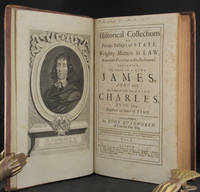
172133322London: Printed for D. Browne J. Walthoe J. Knapton B. Knaplock et. al. 1721. 8 volumes. First Complete and Best Published Edition. With and engraved frontispiece of the author to Vol. I and Dedication to Richard Cromwell Lord Protector of the Common-wealth of England Scotland and Ireland and the Dominions and Territories thereunto belonging. Folio very handsomely bound in contemporary paneled calf the spines with raised bands separating the compartments panels within the compartments fully gilt with elaborate corner tooling and central ornamental devices two compartments with contrasting red and green morocco lettering labels the covers with double fillet rules at the borders surrounding a central panel tooled with fillet lines enclosing a roll tooled framework and a central panel of mottled calf original plain paper endleaves. Vol. I with index and subscribers list. Vol. II The Second Part Containing the Principal Matters Which Happened from the Dissolution of the Parliament.Until the Summoning of Another Parliament which met at Westminster April 13 1640. Vol. III The Second Volume of The Second Part Containing the Principal Matters Which happened From March 26 1639 until.April 13 1640. Vol. IV The Third Part.Containing the Principal Matters Which happened from the Meeting of the Parliament November the 3d 1640 To the End of the Year 1644 Wherein is a particular Account of the Rise and Progress of the Civil War to that Period.Vol. V The Second Volume of The Third.Vol. VI The Fourth and Last Part in Two Volumes. Volume the First. Containing the Principal Matters Which Happen'd From the Beginning of the Year 1645 to the Death of Kng Charles the First 1648. Wherein is a Particular Account of the Progress of the Civil War to that Period. Vol. VII The Fourth and Last Part. Vol. VIII The Tryal of Thomas Earl of Strafford. Lord Lieutenant of Ireland Upon an Impeachment of High Treason by The Commons then Assembled in Parliament in the Name of Themselves and of the All the Commons of Englan: Begun in Westminster-Hall the 22th of March 1640. And Continued.until the 10th May 1641. Shewing the Form of Parliamentary Proceedings in an Impeachment of Treeason To which is Added A shor Account of some other Matters of Fact.With some Special Arguments in Law. A very handsome set in remarkably preserved and original binding some hinges expertly refurbished three covers detached clean internally but for the usual browning to some leaves due to paper stock used in the printing a large wide margined copy of this important work. FIRST COMPLETE AND BEST EDITION. John Rushworth born c. 1612 died May 12 1690 was the English historian whose Historical Collections of Private Passages of State 7 vol. 1659–1701; 8 vol. 1721 covering the period from 1618 to 1649 continues to be a valuable source of information on events leading up to and during the English Civil Wars.<br> Rushworth studied law and in 1638 was made solicitor to the town of Berwick-upon-Tweed. He was enrolled at Lincoln’s Inn in 1640 and called to the bar in 1647. Rushworth was more interested in politics than in law and during the intermission of parliaments 1629–40 he attended and made shorthand notes of all important political and judicial proceedings heard before the Star Chamber the court of honour and the king and council. In 1640–42 he was assistant clerk to the House of Commons and after the outbreak of war he acted as a messenger between Parliament and its committees at Oxford and York. He himself published a number of the newssheets that preceded the establishment of regular newspapers—e.g. the daily London Post 1644–45; 1646–47 the Kingdomes Weekly Post 1643–1644—and also the parliamentary pamphlets opposed to the Royalist Mercurius Aulicus.<br> Following the execution of Charles I in 1649 Rushworth became personal secretary to Oliver Cromwell. He began drafting plans for the abolition of the monarchy and the House of Lords and the establishment of an English Republic under the leadership of Cromwell. As secretary 1645–50 to Sir Thomas Fairfax general of the New Model Army Rushworth had considerable importance and thereafter he was employed by the council of state and Parliament. When Cromwell became Lord Protector in 1653 Rushworth was promoted to Registrar of the Court of Admiralty. In 1657 he was elected Member of Parliament for Berwick in the Second Protectorate Parliament. As a member of the Cromwellian government he enjoyed the friendships of John Milton who served Cromwell as the official State Censor; John Owen; John Bunyan and many other well known people of that period. When Oliver Cromwell died on 3 September 1658 his son Richard Cromwell became Lord Protector.<br> At the Restoration Rushworth made peace with Charles II and although called to give information on the activities of the regicides was not himself implicated. In 1667 he became secretary to the lord keeper and later agent to the colony of Massachusetts. Despite his many emoluments and an inherited estate he fell into poverty and spent his last years in a lodging in the King’s Bench prison Southwark where he died.<br> Rushworth’s Historical Collections was compiled from his own notes and from printed material with the avowed intention of making it possible for a true history to be written of events that in pamphlets and news sheets dating from the period before the control of the press were liable to misrepresentation. It is most useful for its eyewitness accounts of the Earl of Strafford’s trial the Battle of Naseby and the parliamentary campaigns of 1644–45 and for its transmission of contemporary comment.<br> While Rushworth was remembered as a person his writings found favour in America where they served as a source of inspiration for Thomas Jefferson. Jefferson bought a copy of Rushworth's Historical Collections for use in his own library and he often quoted from them. Rushworth was a contemporary of John Lilburne whose writings had a profound impact on the history of the English Civil Wars of the 17th century. Although his senior he also shared much in common with Oliver Cromwell born 1599 because they were evangelical Christians who believed that the Church of England should undergo a total reformation contrary to the wishes of King Charles I. His views of Charles I as a king who had declared war on his own people were later echoed in words by Thomas Jefferson and others when writing about the reign of George III in the Declaration of Independence. Britannica. Wiki Printed for D. Browne, J. Walthoe, J. Knapton, B. Knaplock et. al.... hardcover
1662490London: John Bill and Christopher Barker 1662. First edition. Half leather. Very Good. 7 1/2 x 11 3/8 inches. b3 - b8 c 8 leaf quire d 2 leaf quire B - Gg 6 leaf quires Hh 7 of 8 leaves. Lacks initial 8 leaves G3 R5 and Hh8. Begins with part of the Act of Uniformity. Kalendar in red and black. Soiled and dampstained. Several pages with contemporary ink notes. Several pages with closed tears that have been repaired with no loss. A few pages with marginal losses affecting text mostly minimally and a few other marginal losses not affecting text. ESTCR211954. Griffiths 1662/2. Bound with: Sternhold Thomas and John Hopkins. The Whole Booke of Psalmes Collected into English Meeter. London: Printed by S.G. for the Company of Stationers 1661. 19 153 16 pages lacking pages after 139. ESTCR31616. Bound in modern tan half leather with brown buckram boards and new endpapers. True First Edition of the corrected 1662 edition of the English BCP. Very rare. John Bill and Christopher Barker unknown
1629481London: Printed by Bonham Norton and John Bill 1629. 3/4 leather. Very Good. 7 x 8 3/4 inches. 4to. A2 - A6 B - H 8 leaf quires. Title page lacking. Printed in two column Roman type. Margins of first two signatures a little grubby with closed tears and a few pages with marginal losses affecting a few letters of text. Otherwise pages lightly soiled. G8 with closed tear and old repair with no loss of text. Griffiths 1629/4. ESTCS93878. Bound with: The Holy Bible contayning the Old Testament and the New: newly translated out of the original tongues: and with the former translations diligently compared and reuised by his Maiesties speciall commandement Authorised KJV version. London: Bonham Norton and John Bill 1629. 6 introductory material 32 numbered pages genealogies lacking 1 2 5-8 15-16 21-22. Printed in two column Roman type. Loss to lower quarter of pages 31 and 32. A - Ffff 8 leaf quires. Light soiling and close cropped but otherwise nice. P2 bound after P3. Lacks Cc2 Cc3 Bbb4 Bbb5 Ppp1 NT title Gggg1 and Gggg2. Marginal losses to Qq1 Qq8 Vu1 Ggg4 and Ppp9 affecting notes and minimally text. Loss to lower corner of Ii4 Ii5 Dddd7 and Dddd8 affecting small amount of text. Loss of lower 1/4 to Mm8. Herbert 425. ESTCS124382. Bound with: Sternhold Thomas and John Hopkins. The booke of Psalmes collected into English meeter. London: Imprinted for the Company of Stationers 1628: A - H 8 leaf quires. Lacks A1 and H8. Printed in two column Roman type. ESTCS4530. All page edges rouged. Bound in modern 3/4 brown calf with brown cloth. Five raised bands to spine with red morocco spine label with title and date to lower spine. A very good copy of the original 1552 English BCP bound with a Geneva/Breeches Bible and Psalms. A staple of many American colonists. Printed by B[onham] Norton and J[ohn] Bill unknown
1775000855England 1775. On offer is an original LS by English King George III dated 3 January 1775 a mere six days before Parliament declared Massachusetts in a state of rebellion. On March 23 Patrick Henry gives the "Give me or give me Death" speech and on 19 April came the first shots on Lexington Green. King George III King of England 1760 - 1820 he supported the policy which led to war with and the loss of the American colonies sends his cousin to Princess Abbess at Gardersheim Germany his profuse best wishes for the New Year. Signed "George R" one page both sides 8 x 12.5 which reads in part: "You have our most sincere thanks for the pleasant mark that your dear Love has given us at this time of change to a New Year of your friendly disposition toward us. We reciprocate the same and would express the sincere wish that Your dear Love may have begun the New Year Pleasantly and may pass it in uninterrupted enjoyment of unalloyed prosperity.George R." In fine condition with remnants of previous matting to the lower corners. As King George's III grandfather George I came over directly from Germany George III spoke and wrote German in which this letter is written. Comes with a full translation. VG. Very Good. Folio - over 12" - 15" tall. Manuscript. unknown
181740606Boston: Cummings and Hilliard 1817. 52 pp. b/w plates. <br /><br />A great rarity and the primary document relating to the sea serpent of Cape Ann one of the most widely reported serpent sightings in American maritime history. First seen in Gloucester harbor in 1817 the creature reappeared off the coast in 1818 and 1819. Knowledgeable mariners and shore bound onlookers of all sorts reported sightings. A minister gave a detailed description of the monster which was reported in Boston papers. The Linnaean Society sent three objective observers to the scene and this is their report. In the spirit of strict scientific inquiry it cites about twenty depositions by locals provides information about a Norwegian sea snake to whom the mysterious serpent might be related then gives a detailed description of Scoliophis Atlanticus a baby sea serpent about three feet long killed upon the sea shore by some laboring people of Cape Ann. The account closes with another sighting from Long Island. The folding plate of the baby serpent opens to nearly thirty inches. Pages untrimmed. Handsomely rebound in antique style quarter leather over marbled boards with spine label. Cummings and Hilliard hardcover books
200612954Luzern, Faksimile Verlag, 2006. "4° (30-35 cm). 289 num. Bll., 2 Bll. (Faksimile); 244 S., 1 Bl. (Kommentarband)." "Samteinband mit zwei vergoldeten Schließen und Ganzkopfgoldschnitt (Faksimile); Samteinband mit montiertem Rückenschild und Lesebändchen" [3 Warenabbildungen]
18871172191887. BRITISH ISLES PHOTOGRAPHIC ALBUM. Tourist photographic album of cathedrals in England Scotland and Ireland. No place circa 1887. Folio 11 by 14 inches contemporary full white parchment elaborately gilt-decorated spine and covers patterned endpapers all edges gilt cloth dust jacket; 40 leaves. $2400.Original late 19th-century photographic album containing 116 albumen prints depicting views of notable cathedrals in England Scotland and Ireland mounted on thick blue card in a beautiful parchment-gilt binding by Giulio Giannini of Florence Italy.Presumably compiled by a tourist this album contains prints of such sites as Canterbury St. Paul's Durham Exeter Westminster Abbey Tintern Abbey and others. Most prints measure 5-1/4 by 8 inches placed two on a sheet though one measures 7-1/2 by 11-1/2 inches; each is titled in the print along the lower edge. With Giulio Giannini's publicity card laid in. Owner ink signature dated 1887.Cloth dust wrapper with mild soiling; parchment-gilt album beautiful and fine. hardcover
1st edition. Originally bound into 2 large volumes; Lacks outer bindings, original period internal sewn binding in tact. Folio, 840 pages (8 pages each issue. Complete for 1866 and first half of 1867. English with occasional Hebrew. The Jewish Chronicle, Founded in 1841, it is the oldest continuously published Jewish newspaper in the world. It was initially under the editorship of D. Meldola and M. Angel. On Oct 18, 1844, to the editorship of Joseph Mitchell, it took the title of "The Jewish Chronicle (New Series) and Working Man's Friend"; it appeared only fortnightly till July 9, 1847, when it became a weekly; from Aug. 18, 1854, it was edited by M. H. Bresslau, who changed the title to "The Jewish Chronicle and Hebrew Observer. " From Jan. 12, 1855, A. Benisch assumed the editorship, which he retained till April 2, 1869, when Michael Henry took charge of the paper until his death (JE, 1905) . This run from the final 2 years of the American Civil War, includes numerous ads and announcements from the period, indicating deaths, weddings, and celebrations of all kinds, from across the UK, the British Empire, English Speaking Jewry and, indeed, the entire world. Anniversary dinners and events often list participants, which sometimes read like whos whos of Anglo-jewry of the period, and at other times mention names from the far reaches of the British Empire. Too many various reports, letters, discussions, and ads to describe, SUBJECT(S) : Jews -- Great Britain -- Newspapers. First and final leaves show exposure wear, as expected, with a bit of loss along the outer margin of the first leaf (of issue 472) , and the final leaf (of issue 576) lacking about 1/8 of leaf, with text loss. Issue 550 has mostly come loose, with edgewear just touching the outer letters along the outside margins one one leaf. Mid-19th century paper has held up well, Good solid condition overall. Scarce to come up in the trade. (br-11-3)
1st edition. Later Cloth binding, Folio, 800 pages (8 pages each issue. Nearly complete for 1862 and 1863. English with occasional Hebrew. The Jewish Chronicle, Founded in 1841, it is the oldest continuously published Jewish newspaper in the world. It was initially under the editorship of D. Meldola and M. Angel. On Oct 18, 1844, to the editorship of Joseph Mitchell, it took the title of "The Jewish Chronicle (New Series) and Working Man's Friend"; it appeared only fortnightly till July 9, 1847, when it became a weekly; from Aug. 18, 1854, it was edited by M. H. Bresslau, who changed the title to "The Jewish Chronicle and Hebrew Observer. " From Jan. 12, 1855, A. Benisch assumed the editorship, which he retained till April 2, 1869, when Michael Henry took charge of the paper until his death (JE, 1905) . This run from the era of the American Civil War, includes numerous ads and announcements from the period, indicating deaths, weddings, and celebrations of all kinds, from across the UK, the British Empire, English Speaking Jewry and, indeed, the entire world. Anniversary dinners and events often list participants, which sometimes read like whos whos of Anglo-jewry of the period, and at other times mention names from the far reaches of the British Empire. Too many various reports, letters, discussions, and ads to describe, SUBJECT(S) : Jews -- Great Britain -- Newspapers. Internal hinges of binding broken. 1st issue with heavy edgewear, 2nd issue moderate edgewear, other issues in good solid condition with some old staining as expected. Scarce to come up in the trade. (br-11-5)
180117080Brunswick P. F. Fauche et Cie 1801 -in-8 demi-veau 4 tomes reliés en 2 volumes, reliure demi-veau havane in-octavo à coins (binding half calfskin in-octavo) (13 x 20,2 cm), reliure d'époque, dos long (spine without raised band), décoration or (gilt decoration) à double filets or (gilt lines) , pièce de titre sur fond bordeaux avec double filets or (label of title with double gilt line) et pièce de tomaison sur fond vert foncé avec double filets or (label of volume numbering with double gilt line), papier fantaisie jaune d'époque aux plats (cover with imagination paper), toutes tranches lisses (all smooth edges), EX-LIBRIS aquarellé en couleurs en 2ème de couverture du tome 2 : aux armes des Bougrenet de La Tocnaye portant :"d'or au lion de gueule chargé de mâcles d'or ", orné de 5 gravures hors-texte en noir (dont trois dépliante ) pour "PROMENADE D'UN FRANCAIS DANS L'IRLANDE", les autres récits ne sont pas illustrés, 273 pages pour "PROMENADE D'UN FRANCAIS DANS LA GRANDE-BRETAGNE" , IV-357 pages pour "PROMENADE D'UN FRANCAIS DANS L'IRLANDE", (XIV + 280) + ( II + 310 ) Pages, 1801 Brunswick P. F. Fauche et Cie Editeurs,
46404937Sarah Churchill née Jennings (1660 - 1744), épouse de John Churchill premier duc de Marlborough (1650 - 1722), fut une des personnalités les plus influentes de son temps. Elle fut longtemps la favorite de la reine Anne, puis après une période de disgrâce, retrouva un rôle politique majeur sous le roi George, l’ami et ancien compagnon d’armes de son mari. Le palais de Blenheim fut offert au duc de Marlborough en remerciement de ses victoires lors des guerres de succession d’Espagne, en particulier lors de la bataille de Blenheim en 1704. La construction du château, commencée en 1705, connut quelques retards, les fonds publics ayant été retirés durant la disgrâce des Marlborough. Les travaux engloutirent une part importante de la fortune considérable de la famille. L’essentiel des bâtiments était achevés à la mort du duc en 1722 mais les travaux se poursuivirent jusqu’en 1732. Lettre fort intéressante, écrite à un proche, suite au décès subit de son petit-fils, William Godolphin (1700 - 1731) marquis de Blandford, mort l’avant-veille d’une crise d’aploplexie probablement provoquée par un abus de boisson. Elle demande de l’aide pour organiser les funérailles, elle souhaite une inhumation intime et sans grandes pompes, dans la chapelle du palais de Blenheim alors en cours d’achèvement. Pour y parvenir elle doit faire venir d’urgence l’évêque d’Oxford afin de consacrer la chapelle. La duchesse de Marlborough est elle-même inhumée dans cette chapelle aux côtés de son mari ainsi que de nombreux membres de cette famille. Elle fait part de son souhait de faire venir M. John Evelyn, évoque la difficile situation de la veuve, la maladie du maître d’hôtel et enjoint son correspondant donner toutes les instructions nécessaires auprès du collège. Ce dernier détail pourrait permettre d’identifier son correspondant.“Blenheim, August 26th 1731Sir,You will easily believe how sorry I am for the occasion I have of troubling you upon so melancholy a subject ; as the unfortunate death of my grand-son [William Godolphin (1700 - 1731)]. Before I left Oxford, my Lord Godolphin was acquainted with it ; and he is in so much affliction, that he has left the direction of what is to be done to me, saying no more than that he thinks it is most proper and natural for the body of my Lord Blandford to be buoy'd privately in Blenheim chappel. And in order to have it so, I will write to the Bishop of Oxford to consecrate it as soon as he can. What my Lord Godolphin has said is very suitable to my own inclinations, having directed in my own will not to have that pageantry of feathers or so much as escutcheons, when I am laid in the same place.I have wit to desire that Sr John Evelyn would come to Oxford. [...] Lord Blandford's chief servant Mr Sparrow is sick and I worry much [...] but I hope from all the goodness which you have shown to me, that you will give yourself the trouble to go to the college and give all the directions that you think reasonable. Which, I am sure, will be an obligation laid upon my Lord Godolphin as well as, Sr.Whenever it is easy to you I should be glad to see you. Your most faithful and most humble servant.S. Marlborough”
A spectacular album of somewhat impressionistic color lithographs, dedicated to the artist's (American) mother, which depict the picturesque scenery of the East Coast from Massachusetts to Virginia, c. 1946. 13 original color lithographs, 10 of which are matted, full-page, and hors-texte, each signed and numbered in pencil. EXCEPTIONALLY, LAID INTO THIS COPY IS A STUNNING ORIGINAL WATERCOLOR BY CLAIRIN ON FINE WOVE PAPER, FULLY SIGNED, TITLED ("ENTREE DU PORT DE GLOUCESTER"), DATED ("15 AOUT 46"), AND DEDICATED ("POUR MANET") IN PENCIL. Edition limited to 115 numbered sets. Printed on fine Lana wove paper. Scenes include Madison Avenue, New York at Night, Sunset Lodge, Rockefeller Center, Westport, East River, Charlottesville, Baltimore, Allbany, University of Virginia, Gloucester Port, and others. Large folio (15 1/2" tall). Loose as issued in original wraps. FINE AND BRIGHT, WITH NO DEFECTS. In the original chemise (perfect) and slipcase (lightly worn).
375 pages. Index. "When I began my study I looked upon Woodrow Wilson as the villain of the ensuing drama. As I proceeded to delve into the debris of reminiscences and unwritten history, he gradually assumed some aspects of a martyr and a saint. There was a time when there was no one in the world whom I distrusted more than Edward Mandell House. Today he seems to me a genuine philosopher and a gifted statesman. Even if his good intentions, like Wilson's, have helped to pave mankind's way to hell, they gave us a glimpse of the Promised Land where peace abides and a new sanction governs the fate of nations." - xiv. It is commonly believed that Colonel House was in fact a Rothschild agent, assigned the task of seeing the Federal Reserve Act brought into law, thus privatizing the issuance of American money (again). If so, this book is of major importance to every American. Gift greetings, dated 1932, upon front free endpaper else unmarked. Binding intact. Above-average wear and soiling to tan cloth-covered boards. Narrow openings in cloth between backstrip and back board. Book