23 947 résultats
25462The Clarendon Hotel Bond Street London. The entries all said to date from 1831. The Clarendon Hotel was once - as ‘Routledge’s Popular Guide to London’ stated in 1862 - ‘the most fashionable place in London’ and the present collection of autograph signatures from its guestbook all of them said to date from 1831 bear witness to the fact that - as ‘Gilbert’s Visitor’s Guide to London’ 1851 states - it was ‘frequented by the Nobility and Gentry and Foreigners of rank’. Its reputation had been made during the Regency period and in 1820 ‘Leigh’s New Picture of London’ stated that it ‘and Jaquiers are now one hotel’. The hotel’s fame is indicated by the fact that two years after the date of the present collection in 1833 the its pretensions were ridiculed from Scotland by ‘Blackwood’s Magazine’: ‘“I hope†said M‘Goul “it’s a goot house - no sand crunching upon the floor nor the rafters plack with peat reek.â€â€™ Walter Besant provides information regarding the hotel in his ‘Survey of London’ 1911 ‘At No. 169 on the west side of Bond Street was the Clarendon Hotel formerly the town house of the Dukes of Grafton and afterwards the residence about 1741 of the elder Pitt. The hotel was closed in 1877 and replaced by a row of shops.’ The revised ‘Survey’ 1980 provides more information. The present collection of material consists of a large number of autograph signatures on gilt-edged leaves extracted from the Clarendon Hotel guestbook: a total of seven full leaves dating from between 15 October and 2 November 1831 and nine slips cut from leaves seven of them dating from the April 1831. The material is in good condition with minor signs of age. Accompanying the material are two Typed Letters Signed to Mrs I. McArthur of Croydon from the City of Westminster Public Libraries. The first from the City Engineer and Surveyor W. W. Ratcliff 28 January 1953 refers her to the author of the second written three days later from the Archivist G. F. Osborn which states: ‘The Clarendon Hotel was situated on the west side of New Bond Street. Its number in 1831 was 169 but the building of that date covered the approximate frontage now taken up by Nos. 173-178 New Bond Street. At one time in the 1830s but not I think as early as 1831 it extended backwards and included No. 20 Albemarle Street.’ An autograph postscript reads: ‘Asprey corner of Bond St. & Grafton St. is 165 New Bond St. It must have been between Grafton St & the Bond St. entrance of the Royal Arcade backing on to what is now the Royal Institution 21 Albemarle St.’. Also present is a meticulous collection of manuscript material relating to the autographs presumably the work of Mrs. McArthur or associate including a four-page transcription of the material not entirely accurate dated by the writer to the year 1831 in a neat close hand an alphabetical index of names 2pp 4to and six pages of biographical information 6pp 4to relating to signatories. There are around 180 entries of names and titles with addresses occasionally added in another hand. A small percentage for example Talleyrand and Admiral Sir Thomas Hardy are clearly NOT the signatures of the parties named in these cases apparently entered by the same hotel staff who added the addresses but the range of variation between the different entries coupled with some spot-checking indicates that most are genuine signatures of the parties named although on some occasions the names of women are given in the hand of the ‘head of the family’. A few individuals for example the Count of Montara Sir Brook Taylor and the future prime minister Palmerston sign several times. An entire list of the names is as follows: the first four among the non-signatures Lord Southampton; Lord Godrich; Prince de Talleyrande; ‘Mr Wood 13 <> St.’; Lt. Colonel Henry Webster; Lord Palmerston; Mr Ashley; Sir Robert Chester; Sir George Seymour; Sir Charles <Dalbias> Inspector General of Cavalry; Major Sullivan 3rd Dragoon Guards ‘Aidecamp’; Earl Bathurst; Viscount Villiers; ‘The Lord Chancellor’; ‘Koscheleff’; Sir James Graham; Vice Admiral Sir Edward Codrington; Mr Bradshaw; Earl of Jersey; Mr A Vail; Sir Gore Ouseley; General Viscount Combermere; Sylvain Van De Weyer; ‘Colonel Hill Royal Horse Guards’; the following two not signatures Sir John Elley; Lord Cavendish; the following three marked as ‘not autographs’ Marquis Salisbury; Sir A. W. Clifford; Lord W. Russell; note in French by ‘Le Docteur de <Florn> 93 Strand corner of Beaufort Buildings’ paying compliments to ‘S. E. le Comte d’Orloff’; Major General Sir John Macdonald; Mr George Villiers; Lieut General Sir James Kempt; Earl of Beverley; Le Comte de Rochechouart; Lieut. General Sir Hudson Lowe; ‘Lord Grosvenor 15 Grosvenor Sq’; the following five on a slip headed ‘Clarendon Hotel Friday October 14th.’ ‘Le Baron Hy. de Bode general Major et Commandeur de l’Arsénal de St. Petersbourg’ ‘Major Wernick <> Russian Vice Consul / 44 Great <> Street Hanover Square’ ‘Mrs Stuart 13 Bolton Row Piccadilly’ ‘The Marquess of Winchester 27 Cavendish Square’ ‘Earl of Albemarle North Britain’; Sir Brook Taylor ‘55 Portland Place’; Earl of Erroll; Earl of Munster ‘13 Belgrave Street’; ‘His Royal Highness The Duke of Sussex’ ‘Kensington Palace’; Le Baron de Ralamb Charge d’Affaires de Suede et de Norvege’; ‘Lt Colonel Fox Gren. Guards ‘Kensington Square’; Alexy de Wahl; Count Rechberg; second signature ‘Lt Colonel Fox Gren. Guards Ecuyer de S M’; Baron de <>; Cher. d’A<> L<>; Lord Burghersh; Lord Fitzroy Somerset; second signature Alex sic de Wahl; ‘Miss S. Wyngard Kensington Palace’; Captn Sir Geoarge Seymour RN; Dr Francis Seymour Guards; Earl of Morley; Marshal Lord Beresford; Sir William Fremantle; Lady Mary Taylor; both in same hand ‘Earl of Albemarle / Countess of Albemarle’; Lt. Colonel Webster; ‘Duchess Dowr. of Richmond’; Marchioness of Winchester; Countess Bathurst & Lady Georgiana Bathurst; ‘Le Comte D’Aglie Ministre de Sardaigne’; Captain a Court RN; Cte Dietrichstein; second time Marshal Lord Beresford; Cte Donkoff; Earl of Carnarvon; the following three in the same hand and not that of Sir Thomas Hardy Lady Hardy; The Miss Hardy; Sir Thomas Hardy; ‘Mr C W Chastin’; Earl of Denbigh; Earl and Countess of Carlisle; Lord Hill; all in one hand ‘l’ambassadeur des Pays Bas et Md. Falck / le Baron de <> de Wynvelt / Ambassadeur des Pays bas pres de la Sublime porte / la Barone. de Zuylen’; ‘Le Ministre d’Espagne et Mme. de <> B<ermudez>; The Marchioness of Stafford; following two in same hand Countess Gower; Earl Gower; Countess of Sandwich; following two in the same hand Lord Dover; Lady Dover; ‘Lord & Lady William Russell; ‘Lord & Lady Fitzroy Somerset.’; Lord St Helens; Baron de Bode; Lady Mary Fox; Sir Robert Chester; Countess Mengden; Lord Palmerston; ‘Mr. de Gersdorft Ministre-Resident de S. M. le Roi de Saxe’ Mr Temple; ‘The Bavarian Minister & Baroness de Cetto’; Lod Wharncliffe; Lord Clanwilliam; Lord Dudley; Lord Lothian; Ld Stuart de Rothesay; Lady Wharncliffe; Earl Bathurst; Marquess of Landsdowne; Le Baron de Neumann; Lord Falkland; next two in same hand Lord Frederick FitzClarence; Lady Frederick FitzClarence; Lord Holland; next two in same hand Marquis of Clanricarde; Marchioness of Clanricarde; ‘Colonel Porter Aide de Camp to H R H the Duke of Cumberland’; M de <>; next three in same hand Lord Beverley; Countess of Beverley; Lady Louisa Percy; Count de Mortara; Colonel Trench; Sir Stratford Canning; Countess Cowper; Earl Cowper; Lady Ann Beckett; Lord Arthur Lennox; Le Chevalier du Zea Bermudez; Sir V<> L<ambe>; next two in same hand Viscount Falkland; Viscountess Falkland; next two in same hand Lady Frederick FitzClarence; Lord Augustus FitzClarence; Count Mandelsloh; next two in same hand Countess of Grey; Earl of Grey; ‘L’Ambassadeur de France / La Duchesse de Dino’; next two in same hand Lord Lilford; Lady Lilford; next three in same hand Earl of Beverley; Countess of Beverley; Ladies Percy; Earl of Mulgrave; The Marchioness of Stafford; ‘Le Prince Frederic de Hohenlohe Oehringen’; ‘Le Baron Bockelberg Chamberllan de S M. le Roi de Preuss sic’; Lord Howard of Effingham; Earl of Burnley; second Le Comte de Mortara; Lord Arthur Lennox; second ‘The Chevalier du Zea Bermudez’; ‘Sir F: <Lambe>; P. Esterhazy; second ‘Prince Frederic de Hohenlohe Oehringen’; second ‘Le Baron de Bockelberg Chambellan de S. M. le Roi de Prusse’; third Le Comte de Mortara; second Sir Brook Taylor; ‘the Bavarian Minister’; Le Prince de Leiven; Sir John Brooke Pechel; ‘Lt. Col. Greenwood / 2nd Life Guards’; Count Ruhberg; third Prince Frederic de Hohenlohe Oehringen’; third ‘Le Baron de Bockelberg’; fourth Le Comte de Mortara; ‘le Comte Michele Woronzow’; Mr John Talbot; fifth Le Comte de Mortara; third Sir Brook Taylor; Lady Frederick Bentinck; Mrs. L. Fox; ‘Marquess & Marchss. of Westminster’; ‘Le Baron et la Baronne de Bülow’; ‘Le Baron de Neu<>; second Sir John Brooke Pechel; Lord Marcus Hill; ‘Benkhausen’; ‘Tolstoy’ father of the novelist; second Prince Esterazy; ‘Major Genl. Sir George Quentin Kerr’; second Count Mandelsloh; second le Prince de Lieven; ‘<M:> de Paliansky gentilhomme de la Chambre de S. Mé. L Empereur de toutes les Russies’; ‘Le Comte de Ruhberg’; ‘Le Comte De Morel’; ‘Count Danneskiold-Samosoè’; sixth Le Comte de Mortara. The Clarendon Hotel, Bond Street, London. The entries all said to date from 1831. unknown
26344‘Ivy Cottage Kentish Town / Novr 25 - /28 1828’. See his entry and that of his son in the Oxford DNB. The topic of this letter is referred to in the second volume of Dickens's edition of the son's life 1879. 3pp 12mo. Bifolium. In good condition lightly aged with strip of tape from mount adhering at edge of blank second leaf and two folds for postage. Addressed to ‘Dear Harley’ and signed ‘C Mathews.’ He begins by thanking him for his ‘kind enquiries’ and with regard to his son the actor Charles James Mathews writes that ‘Our dear good Charles thank God! is recovered and writes in excellent spirits from Florence. His disorder has been small pox! So much for vaccination! for of all the victims I have ever witnessed to that system he was the greatest - as his face was covered with frightful blotches for two years after inoculation.’ He claims that the ‘English Physician’ who attended the boy ‘hand no hesitation from the first in pronouncing it to be Small Pox’ but that ‘this was concealed from us’. ‘He accounts rationally for 3 weeks of silence - namely that he was blind. “The first reason will do.â€â€™ He has had ‘irksome work to play comforter to an almost broken hearted mother - and six nights per week to mimic gladness when the heart was sad’. He ends with renewed thanks for the ‘kind note which my wife equally appreciates’. ‘Ivy Cottage [Kentish Town] / Novr 25 - /28 [1828]’. unknown
249075 February 1918; on letterhead of Woodlands Cobham Surrey. See her entry and that of Kegan Paul in the Oxford DNB. 1p 4to. In fair condition lightly aged and worn. The recipient is not named. Reads: ‘Dear Sir. / Mr. Kegan Paul was a great friend of mine & when it came out he gave me a book called “Rabbi Jeshua†1881. published by the firm. I should be so much obliged if you might tell me the name of the writer if I am asking what is never done please forgive me. / Yrs truly / Maria Theresa Earle’. At top right in her hand: ‘Mrs C. W. Earle’. 5 February 1918; on letterhead of Woodlands, Cobham, Surrey. unknown
24141Undated; on letterhead of the Oxford University Press Warehouse and Trade Department London. See Nicolas Barker’s typically-elegant obituary of Williamson in the Independent. 2pp 4to. The obituary of the recipient Andrew Block 1892-1987 in ‘The Private Library’ was subtitled ‘the doyen of booksellers’; his business was established in 1911. On aged and worn paper; folded three times. Signed ‘Hugh Williamson:’ and addressed to ‘Mr Block’. Thirty-one lines in a close calligraphic hand. Having been ‘particularly lucky’ every time he has called on Block and having acquired ‘the 12mo Baskerville the Pickering in Caslon’s types and the plays printed by John Bell’ on his last visit he asks him to ‘keep an eye open for one or two cheap items’. Before giving a list of books he ‘particularly’ needs from the Aldine Press to Baskerville he describes his interest ‘in the development of roman and italic types which means that most of the books I need were printed before the end of the 18th century. On the other hand I can’t really afford even a guinea for a book unless it’s the kind of thing I could sell again for as much as I gave in case of need. The result is that I’m willing to put up with bad condition in the binding missing plates and text pages etc which might put off the “proper†collector.’ Undated; on letterhead of the Oxford University Press Warehouse and Trade Department, London. unknown
24152First TLS: 3 January 1928. Second TLS: 11 December 1928. Both on letterheads of Cassell & co. Ltd. La Belle Sauvage London EC4. ALS: 18 December 1928 on letterhead of Idlehurst Sevenoaks. Publishing history does not get more vivid than this. See Flower’s obituary in The Times and Wells’s in the New York Times. The three items in good condition lightly aged. All three folded once and signed ‘Newman Flower’. First TLS 3 January 1928: 1p 12mo. He writes that although ‘a very apologetic letter from Mr. Wells of Harpers’ has ‘cleared the air entirely’ ‘a reply from Holt’ received at the same time is not very satisfactory’ and ‘in view of the fact that Cassell’s and Harpers will be coming together again it would perhaps be as well not to do anything at present’. Second TLS 11 December 1928: Headed ‘CONFIDENTIAL’. He regrets to inform Marchant that he ‘had a very aggressive interview with Mr. Wells of Harper’s in my Club this afternoon . he as good as called me a liar and was so abominably rude that I have decided that I will have no further dealings whatever with Harper’s’. Deleted sentence follows: ‘I have to-day written and cancelled the arrangement with them over “The Real Hellâ€â€™. There are no books ‘coming along in which Harper’s and ourselves are sharing but if so I want to make it clear that I am not prepared to proceed with them’. He does not think this will ‘hamper’ Marchant but asks him not to bring Cassell’s ‘any books in which we must be associated with Harper’s and that you will not offer Harper’s any book of Cassell’s’. He concludes: ‘It takes a great deal really to put me out of temper but I will not be subjected again to such rudeness as I had to put up with from Mr. Wells this afternoon in my own Club.’ ALS 18 December 1928: Begins: ‘Dear Sir James / Have sent you a brace of birds from the chase. Shot on Saturday.’ He wishes the Marchants ‘better health in 1929’ hoping that it will be one of Marchant’s ‘Years of good fortune’. He ends by stating that he appreciates ‘more than I can say all you have done to help things along this year’. First TLS: 3 January 1928. Second TLS: 11 December 1928. Both on letterheads of Cassell & co. Ltd., La Belle Sauvage, London, EC unknown
2491312 May 1932; on letterhead of the Manchester Guardian London Office 43 Fleet Street EC4 London. See his entry in the Oxford DNB. In good condition lightly aged and folded for postage. Addressed to ‘Dear Burdett’ and signed ‘J Bone’. He will let him know if he hears of anything with regard to Burdett’s ‘young friend’ ‘but one hears so rarely now of newspaper openings as everyone is holding on tight and there are so many experienced men on the street’. He is sending Burdett’s note ‘on to Manchester in case there should ever be an opportunity there’. He concludes by explaining: ‘We never have anything going in this office as Manchester has first claim if any vacancy occurs and they occur at very long intervals.’ 12 May 1932; on letterhead of the Manchester Guardian London Office, 43 Fleet Street, EC4 [London]. unknown
26032‘London Institution / Finsbury Circus. / January 17. 1834’. On paper watermarked ‘GATER / 1815’. See his entry in the Oxford DNB together with A. N. L. Munby’s entertaining ‘The Cult of the Autograph Letter in England’ 1962. 1p 4to. No fold. In good condition on lightly aged paper extracted from a notebook. Signed at foot: ‘William Upcott / a collector and preserver of Autographs. / London Institution / Finsbury Circus. / January 17. 1834’. The four memoranda are neatly written out over fifteen lines in Upcott’s distinctive hand. But compare the other item by him with same watermark offered separately in what is clearly his best hand and more like type. First: ‘An Hour well spent is worth a Life. When we reflect on the Sum of Improvement and delight gained in a single hour how do the multitude of hours already past use and say “What good has marked us†Wouldst thou know the true worth of Time employ one hour.’ The second memorandum concerns happiness the third daily improvement and the last employments. ‘London Institution / Finsbury Circus. / January 17. 1834’. On paper watermarked ‘GATER / 1815’. unknown
25153Town Hall Ealing 8 9 and 10 June 1920. Francis A. Percy Printer West Ealing. A nice piece of Ealing ephemera and scarce: no other copy traced either on WorldCat or JISC. 48pp 12mo. Stapled into grey wraps with heavily-inked cover illustration by Joan Murrell depicting six figures from various nations Japanese geisha in the middle beneath bunting of five flags with Union Flag in centre and with 'BAZAAR OF NATIONS' at head. Title page reads: ‘Book of the Bazaar / held at the / Ealing Town Hall / Tuesday Wednesday Thursday / June 8th 9th 10th / 1920. / Complete Guide to Bazaar containing a Detailed Account of the Stalls Entertainments Side Shows also Names of Stall Holders Helpers &c. / PRICE . ONE SHILLING.’ The 48pp of text have become detached from the wraps as a result of the rusting of the staples; apart from rust staining they are in fair condition lightly discoloured and worn in wraps with slight wear at extremities. On the reverse of the title page is a photograph of the organizer ‘Rev. A. C. BUCKELL M.A.’ Facing this is a ‘List of Patrons’ of the ‘Bazaar of Nations’. On the reverse of the list is a photograph of ‘Rev. L. T. S. BARRETT’ facing which is the ‘Daily Programme’ with a photograph of ‘Rev. J. G. T. FIRTH’ on the reverse. P.7 carries an explanation of ‘The Object of the Bazaar’. This consists of raising money for the payment of a debt for the parish hall and payment for repairs to the hall and to the clergy house. The pamphlet mostly consists of advertisements but among the features are poems including a full-page one by ‘T. P. Cope-Proctor Ealing’. Details of the sixteen stalls are given each of the first fifteen representing a country from England to the U.S.A. no Germany; also details of the opening ceremony and pageant. See Image. Town Hall Ealing, 8, 9 and 10 June 1920. Francis A. Percy, Printer, West Ealing. paperback
199042587Robert Laffont Couverture souple Paris 1990
22174London: George Routledge & Sons Limited Broadway Ludgate Hill Manchester and New York. 1893. Printed by Édouard Guillaume 105 Boulevard Brune Paris. The only copy of this item on OCLC WorldCat is in the Canadian National Archives. An attractive and characteristic piece of late nineteenth-century French printing. The present copy is 14 1 pp 16mo. With frontispiece and eight illustrations and vignettes. Stitched booklet 13 x 7.5 cm. In wraps printed in black and red. In fair condition lightly aged in grubby wraps. Tipped-in before the back cover is a two-page 'Specimen of the text and illustrations on vellum of the paper-mills of Le Marais' on a bifolium with a page of text on the reverse of the first leaf and a full-page illustration on the second. On reverse of title: 'The illustrations in this catalogue are taken from the books that have already appeared in La Petite Collection Guillaume'. Colophon reads: 'THESE BOOKS have been composed engraved printed stitched and bound in cloth at the printing office of Edouard Guillaume 105 boulevard Brune 105 PARIS'. The text begins: 'The highest tribute that could be offered to La Petite Collection Guillaume is the manner in which it has been imitated both in Europe and America.' Later on the announcement is made that 'Messrs. George Routledge & Sons believe that the great Anglo-American public have sufficiently good taste not to support imitations of this kind and therefore intend to issue in English the original Guillaume Collection produced in the same marvellous manner as the French Edition.' Details of forthcoming titles and price are given on a plan of two volumes a month. The illustrators are named as 'Conconi Fournier Grand Prix de Rome Gambard Marold Mittis Rossi and others'. The final two pages carry a list of 'Volumes in Preparation'. London: George Routledge & Sons, Limited, Broadway, Ludgate Hill, Manchester and New York. 1893. Printed by Édouard Guillaume, paperback
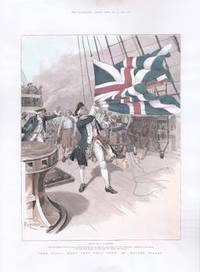
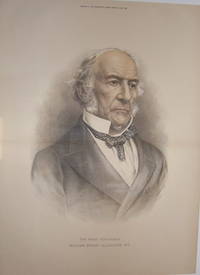
71-7630London: The Illustrated London News November 27 1886. Lithographic illustration. 38 x 28 cm sheet. Very Good light toning along sheet edges.Provenance: From the collection of the late Frederick G. Ruffner Jr. founder of Gale Research Detroit. London: The Illustrated London News, November 27, 1886. unknown
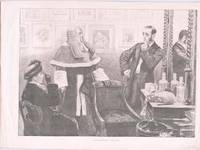
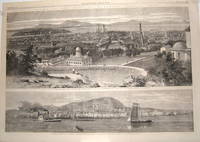
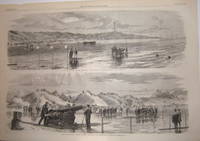
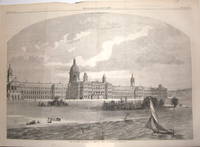
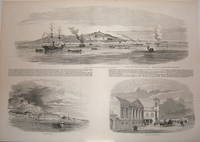
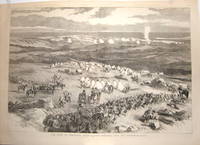
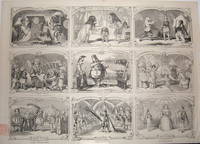
71-7826London: The Illustrated London News August 25 1860. Wood engravings. pp. 185-188. 40 x 54 cm sheet. Very Good center folded light toning along sheet edges short tears at left sheet edge not extending into image London: The Illustrated London News, August 25, 1860. unknown
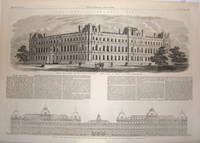
71-7845London: The Illustrated London News Oct. 3 1857. Wood engravings. pp. 347-250. 40 x 54 cm sheet. Very Good center folded light toning along sheet edges. London: The Illustrated London News, Oct. 3, 1857. unknown
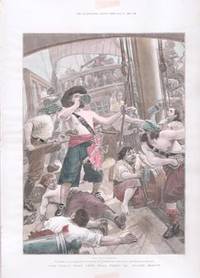
71-7652London: William Little Saturday December 11 1886. Hand-colored wood engraving. pp. 641-642. 40 x 29 cm sheet. Very Good.Provenance: From the collection of the late Frederick G. Ruffner Jr. founder of Gale Research Detroit. London: William Little, Saturday, December 11, 1886. unknown
71-7653London: The Illustrated London News July 31 1886. Hand-colored wood engraving. pp. 129-130. 40 x 28 cm sheet. Very Good light toning along sheet edges.Provenance: From the collection of the late Frederick G. Ruffner Jr. founder of Gale Research Detroit. London: The Illustrated London News, July 31, 1886. unknown
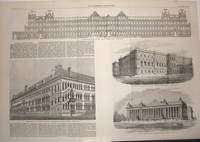
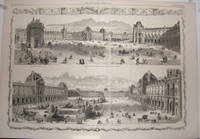
71-7774London: The Illustrated London News March 10 1860. Wood engravings. pp. 231-243. 40 x 54 cm sheet. Very Good center folded short tears along top sheet edge. London: The Illustrated London News, March 10, 1860. unknown
71-7847London: The Illustrated London News Nov. 2 1859. Wood engraving. pp. 473-476. 40 x 54 cm sheet. Very Good center folded light toning along sheet edges short tears along top sheet edge. London: The Illustrated London News, Nov. 2, 1859, unknown
71-7911London: The Illustrated London News June 23 1855. Wood engravings. pp. 635-638. 40 x 54 cm sheet. Very Good center folded light toning along sheet edges. London: The Illustrated London News, June 23, 1855. unknown
71-7805London: The Illustrated London News Dec. 9 1854. Wood engraving. pp. 579-582. 40 x 54 cm sheet. Very Good center folded light toning along sheet edges. London: The Illustrated London News, Dec. 9, 1854. unknown
71-7939London: The Illustrated London News Supplement July 20 1889. Color lithograph. 40 x 55 cm sheet. Very Good center folded light toning along sheet edges. London: The Illustrated London News, Supplement, July 20, 1889. unknown
71-7959London: The Illustrated London News Jan. 1 1853. Wood engraving. pp. 7-10. 40 x 55 cm sheet. Very Good center folded tears along sheet edges vertical tears with missing areas. London: The Illustrated London News, Jan. 1, 1853. unknown
71-7844London: The Illustrated London News August 29 1857. Wood engravings. pp. 227-230. 40 x 54 cm sheet. Very Good center folded light toning along sheet edges. London: The Illustrated London News, August 29, 1857. unknown
71-7908London: The Illustrated London News August 15 1857. Wood engraving. pp. 159-162. 40 x 54 cm sheet. Very Good center folded light toning along sheet edges. London: The Illustrated London News, August 15, 1857. unknown
71-7839London: The Illustrated London News Jan. 10 1857. Wood engravings. pp. 223-226. 40 x 54 cm sheet. Very Good center folded light toning along sheet edges vertical stain along center fold. London: The Illustrated London News, Jan. 10, 1857. unknown
71-7841London: The Illustrated London News Jan. 10 1857. Wood engravings. pp. 23-26. 40 x 54 cm sheet. Very Good center folded light toning along sheet edges small stain in lower right quadrant. London: The Illustrated London News, Jan. 10, 1857. unknown