2 613 résultats
193175038Berlin: Bruno Schultz Verlag 1931-1936. First editions. Quartos. Text in German. Three of the volumes with 160 full page illustrations after photographs by German artists; 1932 with 180 plates. Publisher's uniform light gray cloth with black spine lettering front covers with shorts bars in white and black and with the date below. A former owner has translated a very few of the captions. 1932 with a tidemark to the cover but it does not extend into the book itself. 1931 with a split in the cloth at the top. Some foxing almost entirely to text and margins. Very good. Bruno Schultz Verlag hardcover
45183NP: NP. Hardcover. vg. Quarto 9 1/2 x 9 1/4". 53 leaves with tissue guards. Original three-quarter bolted brown and red cloth photo-album with gilt ruling on spine. Collection of ca. 300 original b/w photographs in variant sizes depicting architectural motives in Nuremberg Munich Stuttgart Berlin Potzdam Warsaw Odessa and France spanning the 1930s 1940s and 1950s. The photographs vary in sizes from 2 1/4 x 2 1/4" to 9 1/4 x 6 3/4" - the striking photographs are taken and captioned by Adolf Emilius. The collection contains three photographs with Adolf Hitler. One with Albert Speer and Franz Struff another with Hitler in the Nuremberg opera house in 1937 and one showing Hitler at the construction site of the Zeppelinwiese.<br /> <br /> Starting with a section depicting buildings in Nuremberg and Stuttgart the album shows the German Garden Show the VW factory the German Toy Fair 1953 various city institutions and businesses from the 1950s. Professional settings like the Settlement Exhibition in Munich Ramersdorf 1934 one and two family homes in Nuremberg and surrounding areas by architects Fritz Mayer and Hans Kern including details like entrance lighting and flower windows. Siemenshaus in Nuremberg a border police station in Vorarlberg the Catholic church in Bludenz City Hall Nuremberg the Cathedral and the Arc de Germanicus of Saints the opera house and the dome in Aachen. <br /> <br /> A section of photographs of Berlin show the Shell headquarters the sculpture of the group of runners at the Olympia Stadion the Ufa Palace in 1938 decorated for the main event Riefenstahl's Olympia film. There is the iron construction of the ship draw works at Niederfinnow the Arcs de Triomphe in Brandenburg and Munich the Berlin Dome and the Charlottenburg Castle the broadcasting center the Haus der Deutschen Kunst and the State Opera in Munich the Sanssoucie castle in Potsdam and the Brandenburg Gate.<br /> <br /> Contains a group of four sepia-toned photographs of wooden buildings designed by the architect Julius Schulte -Frohlinde for the Olympic Games 1936 in Berlin. Some of these buildings Rheinlandhalle Berliner und Hamburger Halle depicted here were transported to Nürnberg after the Olympic Games and reassembled on the Nazi Rally Grounds in the northeast part of the city called the KdF-Stadt Kraft durch Freude City. They were used by the organization to entertain the attendants of the NSDAP Rallies in 1937 and 1938. The center of this city was a bell tower also depicted here playing the key note of the KdF every thirty minutes: "Freut Euch des Lebesn Enjoy Life." <br /> <br /> The second half of the photo-album contains some 120 b/w photographs incl. few photographic postcards depicting exteriors and interiors of buildings associated with Nazi institutions or events e.g. three photographs of models including of the Haus der Kunst München the Soldier Hall and High Command of the Army Dresden design W. Kreis and the Advanced School of the NSDAP at the Chiemsee design Hermann Giesler. It includes photographs of the exhibition "Siedlungsausstellung" in Munich showing the sample settlement Ramersdorf the epitomization of the National Socialist settlement idea. In short order 192 single family homes were built in the Munich district of Ramersdorf under the direction of the architect Guido Harbers. However the propaganda effect the officials had hoped for didn't materialize and the homes were sold after the exhibition. <br /> <br /> In addition there are photographs of the interior of the Nuremberg Congress Hall design by Lauterbach 5 1/2 x 7 1/2" the old Kongreßhalle the Luitpold arena a plaster model of the Kongreßhalle 1937 one of them with Hitler Speer and the architect Ruff the side arcade of the stadium at the Zeppelin Field the entrance of the Palais of the Reich President design Speer the Gau-building in Nuremberg design Ruff the Reich Chancellery various interior and exterior views the office of the Führer a sculpture by Arno Breker the entrance to the Reich Chancellery a series of 12 photographs of showing the construction of the new Reich Chancellery in 1938 the construction of the Zeppelin Field one of them with Adolf Hitler 1936 the grandstand of the Zeppelin Lawn a fatigue duty muster a lighting rehearsal a demonstration of the Wehrmacht various government buildings in Breslau Minsk and Nuremberg 21 photographs showing the construction of the Zeppelin Lawn concluding with eight photographs 4 1/4 x 6 1/2" of the construction of the Zeis Factory in Jena.<br /> <br /> Text in German. Starting after the first leaf with the second leaf loose. Some creasing of tissue guards. Overall in very good condition. NP hardcover
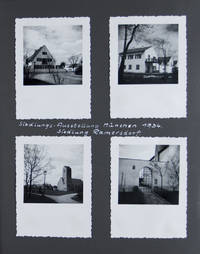
1920z080061920. Hardcover. Very Good. Photo album filled with 2.5 by 3.5 inch photographs with descriptive labels from a trip to Austrian and Germany in the 1920s or 1930s. Hardcover oblong 8vo. 24pp. With four photographs to each page. Very good. Thirteen pictures mostly ones of the travelers have been removed. Wear to spine ends of album extremities of album pages. Photographs are all intact and in clean condition. The majority of the album is architectural and scenic landmarks such as the Munich War Memorial the Menin Gate and the Kessel Falls. Housed in protective mylar. hardcover
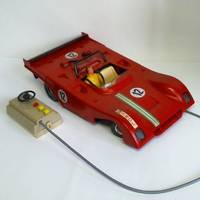
5A1911PIKO Sonneberg ca. 1975. Maße ca.: 36 x 18 cm Kabelfernsteuerung mit einem Rennfahrer aus Kunststoff Startnummern etwas berieben/Fernbedienung defekt. unknown
193034600Berlin: Reuichbahnzentrale 1930. 1 vols. Folio 39 x 24 inches. Linen backed. 1 vols. Folio 39 x 24 inches. Reuichbahnzentrale unknown
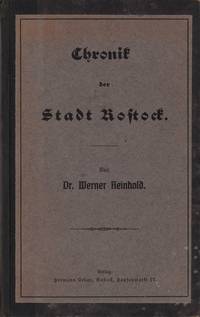
71679Rostock Hermann Urban 1911. . Die Chronik Rostocks von den Anfängen bis Ende 1835 erschien erstmals 1836. Sie enthält: Theil 1. Die Geschichte Rostock's in Bezug auf die Landesgeschichte s. 3-200; Theil 2: Geschichte der Stadt im engeren Sinne eigentliche Stadtgeschichte S. 201-278 sowie Beschreibung der Kirchen der Altstadt St. Nicolai St. Petri St. Marien St. Jacobi u. das Kloster zum heiligen Kreuz. - Carl Werner Reinhold 1806-1863 mecklenburgischer Philologe Schriftsteller u. Chronist vgl. P. Hansen Die plattdt. Autoren. - Leicht bestoßen VDeckel mit einigen weißen Fleckchen Papier gebräunt Rostock, Hermann Urban, 1911. unknown
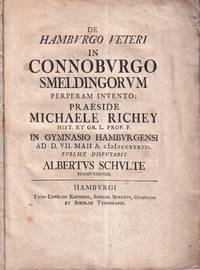
2115Hamburg 1737. . Schroeder VI 3190 33. - Im Fußsteg ganz schwach wasserrand. - Abhandlung über die Geschichte Hamburgs in karolingischer Zeit. Hamburg, ( 1737). unknown
43918Hamburg Hoffmann 1827. . Erste und letzte Bll. in Fotokopie Titel/Vorwort u. S. 215 - 232 zugeschnitten und eingebunden. - Vgl. Rapp S. 2 Aa 19; Schröder 3237 14. - Hamburgs Geschichte Hamburg die Stadt Hamburgs Verfassung Hamburgs Gebiet. - Carl Nicolaus Röding 1780-1839 Pädagoge errichtete in St. Georg eine Erziehungsanstalt für Knaben u. erteilte auch Privat-Unterricht seit 1826 war er auch als Hrsg. von Zeitschriften tätig. - Selten. Hamburg, Hoffmann, 1827. unknown
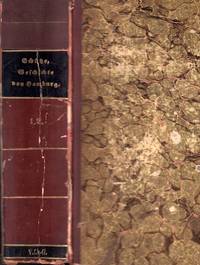
65391Hamburg Johann Georg Fritsch u. Compagnie 1775 /1784. . Schröder 3617 49; Rapp S. 33 B 57; MNE II 25; ADB 33 S. 143. - Zu Franz. Nikolaus. Rolffsen 1719-1801 vgl. Rump S. 111; zu Johann Gottlieb Fridrich 1742-1809 vgl. Thieme/Becker 12 S. 471; zu Johann Christian Gottfried Fritzsch um 1720-1802 od. 1803 vgl. ebda. S. 502. - Aelteste Hamburgische Geschichte. 808-1106 / Mittlere Hamburgische Geschichte bis 1528. Mit chronologischen Verzeichnissen von über 900 Dokumenten sowie Autoren- u. Sachregistern. - Die Titel-Vign. zeigt in 2 Medaillons Stadtpanorama u. Plan Hamburgs 1664 die Text-Stiche zeigen verschiedene Stadtansichten darunter 1 Ansicht des Doms die Porträts zeigen die Hamburger Senatoren bzw. Syndici Broderus Pauli Petrus Lütkens Lucas Bostel Heinrich Dietrich Wiese Garlieb Sillem u. Hans Jakob Faber; die Tafel in Bd. 2 zeigt eine Ansicht der Kirche St. Petri u. Pauli. - Gottfried Schütze 1719-1784 Theologe u. Historiker wurde 1750 Rektor des Altonaer Pädagogiums später als Nachfolger Richeys Professor am Hamburgischen Akademischen Gymnasium 1778 Erster Bibliothekar an der Hamburgischen Stadtbibliothek u. verfaßte zahlr. historische u. theologische Schriften. - Rücken repariert am ob. Kapital mit braunem Textilstreifen; Vorsatzstelle leimschattig Titel m. gelöschtem alten Bibl.-Stempel; Buchblock gut und sauber. Hamburg, Johann Georg Fritsch u. Compagnie, 1775 /1784. unknown
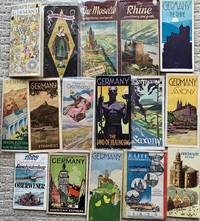
192211396Various Places: Various Publishers. Very Good. c. 1922-1958. Ephemera. Occasional light wear and soil; occasional handstamp of the Oakland Travel Bureau on covers or inside covers. ; Highlights include: Driving Your Own Car in Germany 32pp. c.1936; photographs folding map in rear; handstamp of Oakland Travel Bureau front cover. Dining and Wining in Germany c. 1940's; 48pp. ; color illustrations large color folding map in rear; Brochure: Germany Olympic Games Berlin 1936; Booklet: The Rehingold Express Quickest Route from the North Sea to the Alps black & white photos 2 b&w maps; Four booklets on motoring including: Motoring in Germany booklet with b&w photographs maps folding map in rear. Booklet: Berlin Unfer den Linden y el Hotel Bristol in Spanish. Berlin y sus alrededores 96pp b&w photographs throughout also in Spanish. Traveling in Beautiful Germany a booklet of valuable information from American Express; 148pp. b&w photos maps including folding map in rear this item with some light pencil underlining otherwise clean. Folding Brochure: Germany Land of the Healing Spas with many b&w photos list of diseases at the end. Most of the 25 Brochure/Map guides with folding maps in fine condition. ; 8vo 8" - 9" tall . Various Publishers unknown
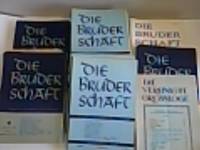
1j9672Selbstverlag Frankfurt 1954-1970. kartoniert. - Gute Exemplare. Enthält: Heft 11/12 aus 1954/ Hefte 5-11 aus 1962/ Hefte 2-3 5-12 aus 1963/ Hefte 1-12 aus 1964/ Hefte 1-2 4-10 12 aus 1965/ Hefte 1-12 Weihnachtsheft aus 1966/ Hefte 1-11 aus 1967/ Hefte 1-10 aus 1968/ Hefte 1-10 aus 1969/ Hefte 1-11 aus 1970/ Heft Mai aus 2004. - unknown
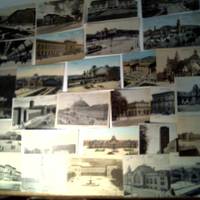
8a9765Sammlung von 28 Ansichtskarten mit verschiedenen Motiven aus ca. 1900 2 AK von 1952 gelaufen/ ungelaufen teils coloriert. - Enthalten u.a. : Maiz Nürnberg Dresden Kiel Würzburg Essen a. Ruhr Mannheim Stuttgart Magdeburg Dessau Dortmund Münster Westfalen Karlsruhe Leipzig Hamburg Dilsberg Darmstadt Bonn - unknown
1687295484.Gpaperback. Good. Access codes and supplements are not guaranteed with used items. May be an ex-library book. paperback
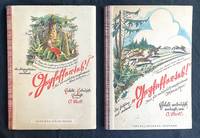
194143392Neudamm & Berlin: Munz & Co Försterbuben; and J. Neumann Frühling 1941. No Date 1940-1941 Both 1st edition. Original color illustrated boards 4to 70 68 pages. Filled with color illustrations over 20 of them stereotyped Antsemitic cartoon images. 25 cm. In German in Sütterlin script. The titles translate loosely as "The Spring and Other 'Spicy' Stories-- Only for People Sensitive to Nature" and "The Forest Boys and Other 'Spicy' Stories-- Only for People Sensitive to Nature." Text printed in red and black.<br> Both volumes were printed in Neudamm by Neumann but interestingly Försterbuben the first volume shows an overlay of the new publisher/distributer "Munz & Co. Verlag Berlin" on the front cover and title page. Complicated issues around distribution of Försterbuben may be reflected in its present scarcity OCLC locates only two copies worldwide. <br> OCLC suggests consecutive dates of 1940 and 1941 for both titles which makes sense given the use of Sütterlin script see below and the presence of the date 1938 or 1939 under the artist's printed signature in several of the drawings.<br> <br> Most scholars of Nazi-era Antisemitic imagery are familiar with the horribly Antisemitic children' s books Der Giftpilz The Poison Mushroom and Trau keinem Fuchs auf grüner Heid und keinem Jud auf seinem Eid! Don't Trust a Fox in a Green Pasture Or a Jew Upon His Oath! published by Julius Streicher's Stürmer Verlag. These Nazi propaganda books were intended for young people and were published in large printing runs in Nazi Germany.<br> Lesser known but at least as offensive are these illustrated Nazi-era book for adults by Otto Stoll. Printed and distributed by a far smaller publisher than the Stürmer Verlag they received smaller press run and appeared in only one edition. Indeed OCLC locates only 2 holdings worldwide for the first volume Die Försterbuben.<br> H. Heyne illustrated both works with colorful comic illustrations which are distributed throughout the text rendered in with what appear to be the highest quality printing techniques of the day. <br> Each book includes eight hunting or outdoors stories in verse two of them in Der Frühling the second volume extremely Antisemitic. Intended as humorous they contain typically ribald German hunting humor with immediately recognizable tropes from German culture. <br> <br> Interestingly these stories were published just in the final two years of official use of period Sütterlin cursive script which was popular during the early Nazi period and was used for example in Der Giftpilz and Trau keinem Fuchs. Indeed "In 1935 the Sütterlin style officially became the only German script taught in schools."<br> Then however "In 1941 the probable year of publication of the second work the Nazi Party banned all 'broken' fraktur 'blackletter' typefaces including Sütterlin and replaced them with Italian-style lettering such as the Antiqua typeface class. From the academic year 1941/42 onwards only the so-called Normalschrift 'normal script' which had hitherto been taught alongside Sütterlin under the name of 'Latin script' was allowed to be used and taught" Wikipedia.<br> Der Frühling. includes first the virulently Antisemitic illustrated tale of Max Isidor Veilchenblau the last name means the color violet in German implying strangeness and perhaps effeminacy a wealthy Jewish businessman who wanted to be a hunter. Max Isidor owns a big house on the edge of a forest where he lives with his wife Rosalinda. <br> <br> Under Heyne's colorful drawing of a synagogue with big flashy sports cars coming and going and stereotyped Jewish men greeting each other we are told that Veilchenblau has told his wife that he has hunting plans but he instead takes a beautiful blond Aryan girl out to dinner. A romantic encounter in a secluded cabin in the forest after dinner does not turn out as Max Isidor had planned and he has to flee stark naked into the woods where is found by his wife and a policeman. <br> According to the moral of the rhyming text Jews can never be hunters with a German hunter's soul a mythical German masculine ideal and no amount of money can make them hunters as their Jewish race just doesn't have "hunters' blood."<br> <br> Then the second illustrated antisemitic story tells of "War-Profiteer Meyer in Crisis" the tale of a Jew who grew wealthy during World War I another well-worn Nazi Antisemitic trope and then has difficulties on a hunting outing with his neighbor a count and the count's lovely blond escort.<br> Both these tales play on an imagined sexual threat of Jewish men to naive but pure Aryan maidens and also reinforce Jewish stereotypes of greed gluttony ugliness and cosmopolitanism.<br> The wider variety of stories in the books have titles such as: Spring; Hunter Latin; Quiet Retreat; and Hunter Hans and his Dog Kosimar. All are are accompanied by cartoon-like color illustrations of animals romantic encounters in the woods hunters in trouble with the tax authorities and of course hunters who are drinking experiencing hunting mishaps encountering misdeeds with chimneys and fireplaces getting in trouble while hunting farting etc. <br> Since these are otherwise low-brow humorous stories they illustrate how ethnic stereotyping and insinuations of racialized moral and physical inferiority-in this case Antisemitic-can be so easily integrated into the standard literature of a culture. The centering of the Jewish characters into two of these stories turns them into the kinds of standard racist jokes that teach and reinforce important racial ideas and hierarchies in the society. <br> At the rear is advertising for other humorous books published by Neumann Publishing company.<br> <br> OCLC listings match the author with an Otto Stoll who was a Swiss ethnographer and Mayanist who died in 1922 20 years before this book was first published which we find unlikely. <br> A copy of Der Frühling by itself sold at auction in 2018 for over $900 with the description noting "The very high production standard of this book belies its vile content." The US Holocaust Memorial Museum keeps their copy in their Rare Book Collection. The much rarer Die Försterbuben has never appeared at any major book auction. <br> SUBJECTS: German wit and humor. Jews -- Germany -- Caricatures and cartoons. Humour allemand. Juifs -- Allemagne -- Caricatures et dessins humoristiques. Anti-Jewish propaganda.<br> <br> Der Frühling. is OCLC: 843226193/72649783/250322204 with OCLC locating only 9 copies worldwide the majority in Germany none at NLI and only 3 in North America UFlorida USHMM UUtah none at any Ivy League institution. <br> Die Försterbuben. is OCLC 700497520 with OCLC locating only 2 copies anywhere worldwide Sachsische Landesbibliothek & LBI. It is extremely rare.<br> <br> Both volumes show only very slight wear an excellent set of this rare and important example of Nazi-era German mass-culture Antisemitism. B holo2-163-26A-XX. Neudamm & Berlin: Munz & Co [Försterbuben]; and J. Neumann [Frühling] unknown
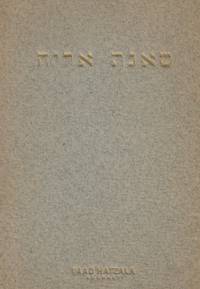
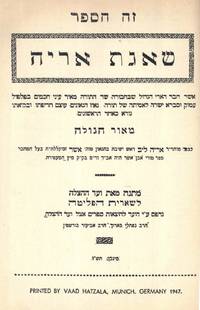
194734140Munich; Ha-Va'ad Le-Hotsa'ot Sefarim Etsel Va'ad Ha-Hatsalah 1947. Hardcover. 1st edition thus. Original Boards. 8vo. 90 Leaves. 25 cm. In Hebrew. The first book printed for Jewish survivors by the Va'ad Hatzalah in Germany after the War.<br> The preface notes: "The lack of books of the Nation of the Book in Germany encouraged us to print works necessary for yeshiva students.this is the first book that we successfully.published this valuable Sha'agas Aryeh."<br> Sha'agat Aryeh published for survivors and refugees in Europe; with prefatory printed dedication from Rabbi Nathan Baruch of Vaad Hatzala. <br> Following the end of the Second World War the Vaad's activities centered in Germany and France consisted of distributing funds and shipments of food and religious books to Displaced Persons camps in Germany and newly established yeshivot. It provided spiritual rehabilitation to remnants of Jewish communities destroyed during the Holocaust. <br> Aryeh Leib ben Asher Gunzberg’s 1695-1785 responsa titled Sha’agat Aryeh The Roar of the Lion; first published 1755 “brought him lasting recognition and has been republished at least 40 times since; it is still considered to be an essential text of rabbinic learning. Sha’agat Aryeh rejected the use of pilpul he had once indulged in and insisted on a direct approach of the Talmudic text with no special attention given to the contributions of the sixteenth–eighteenth-century authors†YIVO Encyclopedia. <br> Subjects: Responsa - 1600-1800. Responsa. 1600 – 1800. Vaad Hatzala. OCLC: 19160226. <br> Spine rebacked as often found. Edgewear paper toning but solid. Good condition. B HOLO2-117-54. Munich; Ha-Va'ad Le-Hotsa'ot Sefarim Etsel Va'ad Ha-Hatsalah hardcover
Mundt, Barbara, Ines HettIn Pristine Condition. unknown
19872090502113709361Not Available 1987. Soft Cover. Fine. The book is in fine condition. Not Available paperback
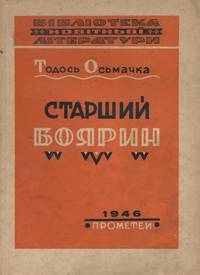
194633697Munich; Prometheus 1946. Paperback. Original Wrappers. 8vo. 166 pages. 21 cm. First Edition. In Ukrainian. <br> "Although his first poems were written in 1916 Osmachka began his literary career while he was a student at the Kyiv Institute of People's Education from 1920 to 1923. He belonged to the literary organizations Aspys and Lanka Later known as 'Maisternia Revoliutsiinoho Slovaâ' Workshop of the Revolutionary Word or MARS and published his first collection of poetry Krucha The Precipice in 1922; it was followed by two more collections Skytski vohni The Scythian Fires 1925 and Klekit Crane's Clacking 1929. <br> Like other members of MARS he was attacked and arrested for his 'unpolitical' literary works but managed to save himself from execution by feigning insanity. During the 1930s he faced constant persecution by the authorities and was unable to publish any works. <br> During the Second World War he fled to Western Ukraine then to displaced persons camps in Germany and finally to the United States. Osmachka's personal ordeal had lasting effects on him and until his death he suffered from a persecution complex. Nonetheless he resumed his literary career in 1943 in Lviv with the publication of his fourth collection of poetry Suchasnykam To My Contemporaries. In the displaced persons camps where he was a member of the MUR literary organization he published his epic poem written in octaves Poet Poet 1946 as well as his first prose work Starshyi Boiaryn The Best Man 1946 this work." Encyclopedia of Ukraine. Subjects: Ukraine; Fiction; Short Stories. OCLC: 8747925. <br> Light age toning and edgewear. Very good contion. Scarce and important BK5 UKR-1-29xx. [Munich?]; Prometheus paperback
194743292Munich; Ha-Va'ad Le-Hotsa'ot Sefarim Etsel Va'ad Ha-Hatsalah 1947. 1st edition thus. Later Boards. 8vo. 90 Leaves. 25 cm. In Hebrew. The first book printed for Jewish survivors by the Va'ad Hatzalah in Germany after the War.<br> The preface notes: "The lack of books of the Nation of the Book in Germany encouraged us to print works necessary for yeshiva students.this is the first book that we successfully.published this valuable Sha'agas Aryeh."<br> Sha'agat Aryeh published for survivors and refugees in Europe; with prefatory printed dedication from Rabbi Nathan Baruch of Vaad Hatzala. <br> Following the end of the Second World War the Vaad's activities centered in Germany and France consisted of distributing funds and shipments of food and religious books to Displaced Persons camps in Germany and newly established yeshivot. It provided spiritual rehabilitation to remnants of Jewish communities destroyed during the Holocaust. <br> Aryeh Leib ben Asher Gunzberg’s 1695-1785 responsa titled Sha’agat Aryeh The Roar of the Lion; first published 1755 “brought him lasting recognition and has been republished at least 40 times since; it is still considered to be an essential text of rabbinic learning. Sha’agat Aryeh rejected the use of pilpul he had once indulged in and insisted on a direct approach of the Talmudic text with no special attention given to the contributions of the sixteenth–eighteenth-century authors†YIVO Encyclopedia. <br> Subjects: Responsa - 1600-1800. Responsa. 1600 – 1800. Vaad Hatzala. OCLC: 19160226. The US Holocaust Museum keeps their copy in their Rare Book Collection. <br> Edgewear paper toning but solid. Good condition. B HOLO2-117-54A-A. Munich; Ha-Va'ad Le-Hotsa'ot Sefarim Etsel Va'ad Ha-Hatsalah unknown
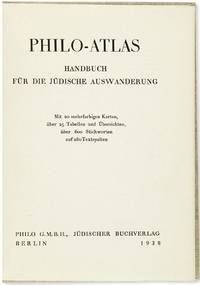
193843457Berlin Philo Verlag 1938. Hardback. 1st edition. Original printed Publisher's linen 8vo 5 283 pages. With 20 colored maps of countries and regions around the world including one world map displaying distances from Berlin. In German. Title translates as "Philo-Atlas: Guide for Jewish Emigration." <br> The Philo Atlas is a remarkable record of its time. Issued barely two weeks prior to the outbreak of Kristallnacht 9/10 November 1938 it appears at first to be nothing but a tourist guide-book. Yet its contents reveal a far more urgent need: An alphabetical survey of countries world-wide with their respective rules for obtaining entry-visas. "These are no tourist formalities for now survival depends on them. Which countries still accept migrants How much money do they demand For which occupations is there a need Which diseases need one be prepared for Where to find local organizations who can assist immigrants" <br> The Jewish-owned Philo Verlag was forcibly closed a month following the publication of this guide by which time the Nazis decided they were no longer willing to permit Jews to leave Germany - even if they could find a country willing to take them in which after the Evian Conference of earlier that summer was even more unlikely. The Jews who remained in Germany were now trapped. <br> Two copies sold at auction in 2018 for $1125 and $1375 each with buyers' premiums. <br> Some wear to boards; backstrip worn internal hinges starting Good Condition overall. An important document of the time. B KH-8-74A. Berlin, Philo Verlag unknown
2002BN141428Bouvier Verlag und Brandt-Verlag Bonn 2002. 2002. I. Treibhaus Rheinland. Der Klimawandel im Rheinland und seine Auswirkungen. II. Treibhaus Deutschland. Der Klimawandel in Deutschland und seine Auswirkungen. III. Rheinische Luft. Unser Bonner Wetter. IV. Die Rhein-Connection. 9783416031929 <br/><br/>I. Treibhaus Rheinland. Der Klimawandel im Rheinland und seine Auswirkungen. II. Treibhaus Deutschland. Der Klimawandel in Deutschland und seine Auswirkungen. III. Rheinische Luft. Unser Bonner Wetter. IV. Die Rhein-Connection. 9783416031929 4 Schriften zum Klimawandel in Deutschland und im Rheinland von Karsten Brandt. - Brandt Karsten Bouvier Verlag und Brandt-Verlag, Bonn unknown
63-1104Leipzig Germany: A.H. Payne 1853. Lithograph. 8.5 x 13.5 cm. Oblong. Very Good with faint creasing minor staining. Text in German. [Leipzig, Germany: A.H. Payne, 1853]. unknown
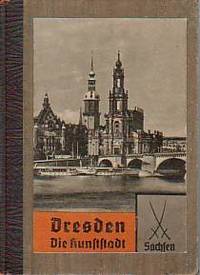
8580Berlin: Universum Verlagsanstalt. Hardcover. Very Good. Boards with light rubbing to extremities; Nd late 1930's. Including a 16 page chapter at front "Eine Stadtrundfahrt mit der Strassenbahn durch Dresden" with small tram map. The rest of the book is fully illustrated with b&w photographs of sights of the city with picture legens in German and English. Including the picture of the "German Museum of Hygiene" with a huge swastica on its facade - described as "the only collection of its kind in the world" ! The references of "Adolf-Hitler Platz" is nicely corrected into "Schlossplatz" what suggests that the previous owner was not exactly a fan of the Third Reich ; 16mo 6" - 7" tall; 16 48 pages . Universum Verlagsanstalt hardcover
158464215Antwerp.: Abraham Ortelius. circa1584. Two engraved maps on laid paper each 30.3 x 19.5 cm printed on the one sheet 48 x 60 cm original fold attractive hand colour with related French text on verso slight toning and spotting to the margins but the maps in very good condition preserved in a modern window mount. Attractive maps of the German coast published in Ortelius' great atlas "Theatrum Orbis.". The left-hand map showing the mouths of the Elbe complete with sea monster and Eider Rivers and the coast of Schleswig-Holstein; the right-hand map of the Baltic coast with the Pomeranian islands of Rugen and Usedom. . (Abraham Ortelius). unknown
1899ABC_46445Budapest Dresden Innsbruck München: Calderoni és társa Verlag von Stengel & Co Fritz Gratl 1899. Half black leather red buckram sides blind-stamped boards gold-stamped spine with the date "1899" marbled endpapers. Oblong album 32 x 41 cm. Album with 43 photographic prints of various sizes 22 x 16.5 to 30 x 24 cm pasted on thick paperboard. From mountains in Austria to city views and interiors of churches in Budapest Vienna Innsbruck and München: all can be found in the 43 photographic prints in the present album. They were taken in at the end of the nineteenth-century probably in 1897 and 1899 according to blind-stamps in the prints. The photographers of most images are unknown except for the 6 photographs of Innsbruck which were made by the Innsbruck photographer and publisher Fritz Gratl. He likely made some of the other photographs of Austrian mountains towns and the city of Salzburg as well since his other known photographs cover similar subjects. Most prints of Vienna and some of Budapest were published by Stengel and Company in Dresden Germany in 1897. They and also Fritz Gratl were famous printers and publishers of postcards with similar picturesque images and the photographs in the present album are possibly the original images used to make the postcards.22 photos bear the blind stamp of the photographic studio. 4 photos have handwritten captions in pencil. The binding shows some minor signs of wear slight foxing or browning of the outer edges of the paperboards not affecting the photographs some photographs slightly faded or rubbed mostly at the edges not affecting the actual image the paper board of the print of "Budapest - Neues Parlament" has a slightly damaged spot in the lower margin not affecting the integrity of the board or the print. Overall in good condition. An album of 43 photos showing the sights of Hungary Austria and Germany. Calderoni és társa, Verlag von Stengel & Co, Fritz Gratl, hardcover