Altdorf (Germany). UniversitatBiblio.com
1 059 résultats
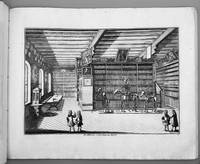
172012572Nürnberg: W. Michahelles for the author 1720. Somewhat later beige paper over stiff boards soiled rubbed short crack at the top of the front hinge edges slightly defective octagonal manuscript-lettered title label on the front cover. <p> Only Edition first issue of these lively views of the renowned Bavarian university town of Altdorf on the cusp of the Enlightenment. Founded in 1526 as a high school raised to an academy in 1578 and a university in 1622 Altdorf was "one of the first if not the first university in Germany dedicated to the serious study of the experimental sciences" Irsay tr. The school's graduates include imperial field marshals Wallenstein and Pappenheim composers Briegel and Pachelbel and the polymath Leibniz. The album has been variously dated from 1681 to about 1720.<br /> Johann Martin Trechsel 1661-1735 wrote the introductory text. He describes sketching the town and its environs over a four-year period and shares characteristic aspects of his subject before expatiating upon each plate's contents - identifying owners of specific houses and gardens explaining local civil and academic customs enumerating the university's buildings dating the addition of specific features recording inscriptions highlighting architectural features and discussing important patrons and professors.<br /> The suite begins with the town's skyline and outer walls as seen from the northwest the road from Nürnberg then the market square the orphanage chancery Church of St. John inside and out and town hall during a festival. The university is the subject of the rest of the etchings starting with the general assembly hall. THE ANATOMICAL THEATER HAS WALL-MOUNTED HUMAN VENATION DIAGRAMS. ANIMAL SKELETONS FILL THE MEZZANINE. THE FULLY FURNISHED CHEMICAL LABORATORY est. 1683 follows. Both rooms are fully treated in the text.<br /> Three plates show THE LIBRARY AND ITS COLLECTION OF NATURAL CURIOSITIES the physic garden and green houses of exotic and medicinal plants and the theology lecture hall. The final three etchings depict student life - their recreation facilities wash basins desks and study carrels the dining hall servers carrying food students raising toasts. and the private fencing academy.<br /> I have located two examples in the U.S. both defective. In good condition the final letterpress leaf with a minor lower blank marginal stain bookplate of Christian Gottlieb Müller 1741-1823 Secretary of the storied Nürnberg literary society Pegnesischer Blumenorden and author of the Verzeichnis von nürnbergischen topographisch-historischen Kupferstichen 1791-1821; see below pencil signature of Dr. A. Enorbi Landgerichts Rath.<br /> ¶Irsay Histoire des universités II: 110; Müller Verzeichnis von nürnbergischen.Kupferstichen I: 54-5; Günther "Die mathematischen- und Naturwissenschaften an der nürnburgischen Universität Altdorf" in Mitteilungen des Vereins für Geschichte der Stadt Nürnberg Hft. III 1881 9-12; Werner & Schmidt-Herrling Die Bibliotheken der Universität Altdorf 48-9 & frontispiece of the library reproducing plate 16; Erman & Horn Bibliographie der deutschen Universitäten II: 29a; VD18 14688239.</p> W. Michahelles for the author unknown
176952694Wien: Johann Thomas Edlen von Trattnern 1769. First Edition. Folio pp. xvi 282 lvi Illustrated with 27 engravings in the text & 3 folding engraved plates included in the pagination. One of the plates was misfolded and is consequently slightly frayed at the lower edge with an old paper repair at the foredge not affecting the print area. Woodcut and typographic ornaments and initials. Text in German black letter with glosses in Latin. Bound in contemporary calf spine gilt little rubbed and recently rebacked red edges. Woodblock printed end papers. Some toning to the text The binding is a little rubbed but still a very good crisp and clean copy. Laid in: MARIA THERESA; EMPRESS. Autograph Note Signed "Maria Theresia" on black rimmed mouring paper to paymaster Mayer in German concerning her son's pension requesting 500 ducats or sovereigns and in a postscript written at lower edge and vertically at upper edge adding that the letters would follow in the evening. 1 page 12mo mourning stationery; some staining affecting signature but still legible folds. Vienna circa 1776. Maria Theresa was the eldest daughter of emperor Charles I and of Elizabeth Christina of Brunswick. At the death of her father in 1740 she became the sole heiress of his dominions of the house of Austria. Upon her accesion to the throne the neighboring countries tried to capture parts of the empire which led to the Wars of Austrian Succession which finally concuded with the treaty of Aix-la-Chapelle in 1748. This is the famous criminal code of Maria Theresa which used torture as a means of "eliciting truth." Her insticts were absolutist and she would allow nothing that limited state power even as she reformed the education system and worked to better the lives of her citizens. And she did not forbid torture. Torture was only to be used in capital and very serious criminal cases. Included in this volume are very graphic illustrattions of instruments of torture thumb-screws stocks racks burning candles leg vices winches the Viennese shoe! with detailed and precise instruction of their use. According to the Britannica this edition was suppressed by Prince Kaunitz chancellor of the state and an advisor to the Empress. Torture was formally abolished in the empire in 1776. Maria Theresa Walburga Amalia Christina was the only female ruler of the Habsburg dominions and the last of the House of Habsburg. Maria Theresa and her husband Francis I Holy Roman Emperor had sixteen children including Queen Marie Antoinette of France. Maria Theresa was the absolute sovereign . She promulgated financial and educational reforms promoted commerce and the development of agriculture and reorganised Austria's ramshackle military all of which strengthened Austria's international standing. Johann Thomas Edlen von Trattnern unknown books
178065196Nürnberg, Christoph Weigel, 1780. 8°. Mit 37 doppelblattgr. kolor. Kupferkarten. 8 Bll., 186 S., 98 Bll., HLdr. d. Zt. a. 5 Bünden m. Rückenverg., goldgepr. Rückenschild u. Rotschnitt.
1769elala199Vienna: Johann Thomas Edlen von Trattnern 1769. 1769. folio. pp. 8 p.l. 282 lvi. 27 engravings in the text & 3 folding engraved plates incl. in pagination. woodcut ornaments & initials. full contemporary dark brown morocco lettered in gilt on upper cover: Constitutio Criminalis Theresiana Spectans Ad Antiquam Civitatem Voitsbergensem 1773 Antonius Josephus Schilcher P.T. Judex Civitatis Voitsberga bit rubbed some browning & foxing marginal dampstain to last section containing engravings folding plates dampstained & repaired -1 with some loss of text. Inscribed on front blank: "Mathias SchuemackerSuperioris Austriae Jo. J. Syndrins Voitsberga 1773". First Edition of the famous criminal code of Maria Theresa which redefined torture as "a subsidiary means of eliciting truth". Torture could be applied to obtain confessions only in cases where condemnation would have involved capital or severe corporal punishment. A remarkable publication including graphic illustrations of instruments and methods of torture thumb-screws stocks racks burning candles leg vices winches the Viennese shoe with detailed and precise instructions on their use. According to the Encyclopaedia Britannica 11th Edn. this illustrated edition was suppressed by Prince Kaunitz chancellor of state and advisor to the Empress a few days after its appearance. Torture was formally abolished in the empire in 1776. Signed by Authors. 1st Edition. Vienna: Johann Thomas Edlen von Trattnern, 1769. hardcover
176957355Wien: Johann Thomas Edlen von Trattnern 1769. First Edition. Folio pp. xvi 282 lvi Illustrated with 27 engravings in the text & 3 folding engraved plates included in the pagination. Some foxed and toned lacks the front flyleaf. Bound in very rubbed contemporary calf still a very good tight copy. Woodcut and typographic ornaments and initials. Text in German black letter with glosses in Latin. Bound in contemporary calf spine gilt little rubbed and recently rebacked red edges. Woodblock printed end papers. Some toning to the text The binding is a little rubbed but still a very good crisp and clean copy. Maria Theresa was the eldest daughter of emperor Charles I and of Elizabeth Christina of Brunswick. At the death of her father in 1740 she became the sole heiress of his dominions of the house of Austria. Upon her accesion to the throne the neighboring countries tried to capture parts of the empire which led to the Wars of Austrian Succession which finally concuded with the treaty of Aix-la-Chapelle in 1748. This is the famous criminal code of Maria Theresa which used torture as a means of "eliciting truth." Her insticts were absolutist and she would allow nothing that limited state power even as she reformed the education system and worked to better the lives of her citizens. And she did not forbid torture. Torture was only to be used only is capital and very serious criminal cases. Included in this volume are very graphic illustrattions of instruments of torture thumb-screws stocks racks burning candles leg vices winches the Viennese shoe! with detailed and precise instruction of their use. According to the Britannica this edition was suppressed by Prince Kaunitz chancellor of the state and an advisor to the Empress. Torture was formally abolished in the empire in 1776. Maria Theresa Walburga Amalia Christina was the only female ruler of the Habsburg dominions and the last of the House of Habsburg. Maria Theresa and her husband Francis I Holy Roman Emperor had sixteen children including Queen Marie Antoinette of France. Maria Theresa was the absolute sovereign . She promulgated financial and educational reforms promoted commerce and the development of agriculture and reorganised Austria's ramshackle military all of which strengthened Austria's international standing. Johann Thomas Edlen von Trattnern unknown books
17630102-12o.O:,Vlg. u. J. [Dresden nach 1763]. Gesamtgröße ca. 221 x 163 cm, vielfach gefaltete, teilkolorierte Kupferstichkarte mit Titelkartusche oben Mitte und reich illustr. Erläuterungskartusche links unten, in 15 Blättern, die einzelnen Kartenblätter unzerschnitten vollständig auf Ln. aufgezogen, Kartenränder jeweils an den anliegenden Rändern zur Nachbarkarte beschnitten (wodurch die Blätter nahtlos aneinandergelegt werden können), nur sehr leicht und vereinzelt stockfleckig, Reißnägelspuren an den Kartenblattecken, sonst ungewöhnlich gut erhalten.
180016103(Wien), Artaria, um 1800. Ca. 41 x 44 cm (Bild); 48 x 76 cm (ganze Blatt).
1725393Augsburg, Seutter, (1725). Altkolorierte Kupferstichkarte bestehend aus 15 Blättern mit je 4 auf Lwd. aufgezogenen Segmenten, zusammen ca. 145 cm x 159 cm. Kl.-4°. Pp.-Schuber der Zeit mit hs. Deckelschild (bestoßen). [3 Warenabbildungen]
1712623586Augsburg, J. Wolff, 1712. Quer-Folio. 12 Kupfertafeln. Marmorierte Kartonage d. Zeit in moderner Halbleder-Kassette (Umschlag etwas fleckig u. beschabt, Rücken erneuert).
175519596Augsburg, Schlüter & Happach, 1727 - 1755. 3 in 2 Bdn. 11 Bll., 834 S., 24; 7 Bll., 1082 S., 38, 7 Bll., 128 S. mit einigen Textkupfern. 2 Kupfertafeln, 2 Kupfer-Porträts und 2 gefalt. Kupferstichkarten. 4°. Ldr. der Zeit mit Rückenschild und Rückenvergoldung (Rücken mit Bibliotheksschildchen, etw. beschabt und bestoßen, kl. hinterlegte Läsuren).
178822071Schwabach, Neustadt an der Aisch und Leipzig, Enderes später Riedel, 1734-1743 (Teile 1-3), 1788. I. Gest. Vortitel, Titel in rot-schwarz-Druck, 4 Bll., 332 SS., 14 Bll. Register, mit gestochener Titelvignette, einer Textvignette 2 Textkupfern und 7 Kupfertafeln von 8 (Nr. III fehlend). II. Titel in rot-schwarz mit Kupfervignette, 3 Bll., 445 (1) SS., 5 Bll. Register, mehrere Stammtafeln, davon 5 doppelseitig, 2 Kupfertafeln - die schöne altkolorierte Kupferkarte (Blattgröße ca. 60 x 53 cm, Abbildungsgröße ca. 55 x 46 cm) in gutem, sauberem Zustand beiliegend. Die beiden Tafeln mit etwas unschönem Plattenschmutz. III. Titel in rot-schwarz, 5 Bll., 10 prächtige Porträt-Tafeln, 668 SS., 1 Bl., 10 tls. doppelseitige Stammtafeln, 10 Bll. Register. IV. 4 Bll. (mit Subskribentenverz.), 814 SS., 5 Bll. Register. Fol., Halbleder der Zeit über 6 Bünden, vergoldete Rückenfileten, je zwei goldgepr. Rückenschildchen, Rotschnitt. Die Einbanddeckel mit hellbraunem Kiebitzpapier bezogen. Einbände berieben, an Ecken und Kanten bestoßen, tls. an den Kapitalen etwas beschädigt.
17605334(Nürnberg), Homann Erben, (ca. 1760). Grenzkolorierte Kupferstichkarte auf 7 gefalteten Blättern. Ca. 165 xm x 168 cm.
1785118031785 toilées, dans deux étuis en papier fort. Carte en 9 feuilles grand-aigle, 183 x 218 cms, 1 carte 64 x 73 cms et 1 petite 30 x 41, 1 carte de 42 x 43 cms. P. Dezauche, (ca. 1785),
171320699Frankfurt, Th. Fritsch, 1713. Gest. Titel, 18 Bll., 1058 SS., 5 Bll. Mit gest. Frontispiz, einer doppelblattgroßen Karte und 71 Bischofsporträts (von Johann Salver). Fol. Blindgeprägtes Pergament der Zeit m. handschriftlichem Rückentitel (nur gering fleckig, ob. Kapital mit kl. Einriss, Einband etwas aufgebogen).
1762001893Paris Lattré 1762
1780LBW-2791Augsbourg, Négoce commun de l'Académie Impériale d'Empire des Arts Libéraux, [circa 1780]. 295 x 395 mm.
1780LBW-2790Augsbourg, Négoce commun de l'Académie Impériale d'Empire des Arts Libéraux, [circa 1780]. 295 x 395 mm.
1787163171787 2 boites cartonnées, avec étiquette. 17 cartes gravées sur cuivre de 15 sections montées sur toile et pliées, chacune formant une carte de 500 x 675 mm. Frankfurt H. L. Brönner 1787-1804
178258914ABLeipzig, Weidmanns Erben und Reich, 1782. VIII, 898 S.; 2 Bl., 875 S. Halblederbände der Zeit mit Rückenschild und -vergoldung.
176921546Amsterdam et Paris, Pierre-François Didot le Jeune, 1769 ; in-12, vélin ivoire postérieur ; [4], XXXIV, [2], 288, [2] pp., 4 planches sur [2] ff. dépliants, gravées sur cuivre. (Sign. [ ]2, a12, b6, A-M12, [ ]1, [2] pl. dépliantes gravées par Melle Fonbonne) ; fleurons au titre, bandeaux dont deux signés PH.
171312383Leipzig, Johann Ludwig Gleditsch & M.G. [Moritz Georg] Weidmann, 1713. Pergamenteinband, 6 durchgezogene Bünde, 8°, Rotschnitt, Titelblatt, 18 Bl., 758 S., 11 Bl., verblasster handschriftlicher Rückentitel; -handschriftlicher Eintrag auf dem Titelblatt zum Autoren, sauberes, festes Exemplar.
173018664Seutter, um 1730. Ca. 50 cm x 58 cm. [2 Warenabbildungen]
1710151Frankfurt, Zunner Erben, 1710. 183 S. Gr.-8°. Pgmt. der Zeit (etw. bestoßen und fleckig, stark verzogen).
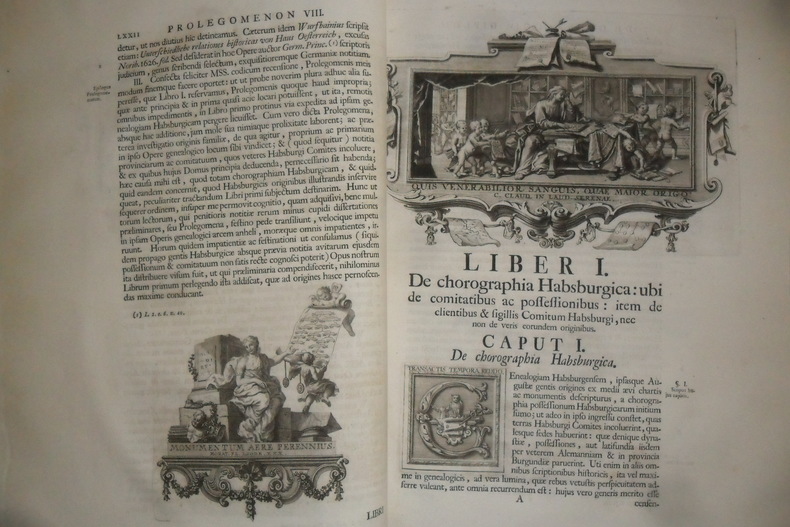
1737219511737 Viennae Austriae, Typ. Leopolsi Joannis Kaliwoda - 1737 - Edition Originale du plus beau livre sur les Habsbourg - 2 tomes sur 3: T. I, T. III & dernier - 2 volumes In-folio - 1/2 Reliure frottée postérieure - Dos lisse à filets dorés - Pages de titre bi-colore rouge et noire avec vignette - Très grands Bandeaux, Lettrines & Culs-de-lampe - I) 2 tableaux dépliants: Fac-similé de documents & 1 Tableau Généalogique, illustrations en texte, 6 planches de sceaux in-fine PP HT - (18), LXXII-338 pages + Index 34 pages & Corrigenda (1) & 6 planches de sceaux.II) (17), Pagination 412 à 851 + Index (56) pages - Les 2 volumes très propres - En langues allemande et latine - Envoi rapide et soigné
1741ALDR0636Berlin, Johann Andreas Rüdiger 1741. 4°. Gest. Frontisp., Titelbl., 18 nn. Bll., 348 S., mit 40 gest. Taf., dav. 1 mehrf. gef. (Taf. 19 u. 22 fehlen), 6 nn. Bll., Titelblatt in Rot- u. Schwarzdruck, mit Initialen u. einigen Kopfleisten u. Schlussvignetten in Holzschnitt. Halblederband d. Zeit, Rücken mit blindgeprägten Zierlinien, etwas bestossen u. abgeschabt. Seiten meist nur wenig vergilbt, zuweilen schwach stockfleckig, teilw. im Schriftspiegel etwas gebräunt. VD18 10358943. Hayn. Bibliotheca germanorum gynaecologica,126. ADB 34,194f. Vgl. Hirsch 5,394 (nicht diese Ausg.). Thieme-B. 4,115 - spätere ergänzte Ausgabe des 1690 erstmals erschienenen deutschen Hebammen-Lehrbuchs. J. Siegemund (1636-1705), die sich ihr geburtshilfliches Wissen autodidaktisch aneignete, wurde 1683 zur 'Chur-Brandenburgischen Hof-Wehemutter' in Berlin ernannt. Das Porträt der Autorin ist eine Arbeit des Berliner Künstlers Samuel Blesendorf d. J. (1633-1699). Nahezu vollständiges Exemplar mit 40, teilw. gezählten Kupfertafeln, Tafel 14 lt. Bericht an den Buchbinder "weggelassen". Interessantes Beispiel zur frühen geburtshilflichen und gynäkologischen Literatur in gutem Zustand. [3 Warenabbildungen]