1 712 résultats
Frommann-9783772810152frommann-holzboog Verlag e.K. German. Hardcover. New. XCI 375 p. 156 x 209 cm. This volume contains the German translation of a work by the famous Amsterdam rabbi Manasseh b. Israel Vindiciae Iudaeorum Rescue of the Jews with a preface as well as other important texts by Mendelssohn. In Jerusalem oder über religiöse Macht und Judentum Jerusalem or On Religious Power and Judaism he presents his concept of Judaism as a religion of reason. There are some works in this volume which were not written by Mendelssohn: the anonymous work Das Forschen nach Licht und Recht The Searching for Light and Right written by August Friedrich Cranz which includes a postscript by D.E. Mörschel which induced Mendelssohn to write Jerusalem and J. D. Michaelis' comments which led to a clarification Über die 39 Artikel der englischen Kirche und deren Beschwörung On the Thirty-Nine Articles of the Church of England and Their Invocation. frommann-holzboog Verlag e.K. hardcover
Frommann-9783772810169frommann-holzboog Verlag e.K. German. Hardcover. New. XLVI 308 p. 156 x 209 cm. The volumes of this set provide a translation of Mendelssohns introduction and the transcription of his Pentateuch translation see JubA volumes 15 to 18 into the German alphabet. The first volume contains Mendelssohns transcription of the First and Second Book of Moses and the second volume has the Third to the Fifth Book of Moses as well as two annexes which list typographical errors in Mendelssohns translation and grammatical peculiarities. frommann-holzboog Verlag e.K. hardcover
Frommann-9783772812057frommann-holzboog Verlag e.K. German. Hardcover. New. IV 277 p. 156 x 209 cm. The volumes of this set provide a translation of Mendelssohns introduction and the transcription of his Pentateuch translation see JubA volumes 15 to 18 into the German alphabet. The first volume contains Mendelssohns transcription of the First and Second Book of Moses and the second volume has the Third to the Fifth Book of Moses as well as two annexes which list typographical errors in Mendelssohns translation and grammatical peculiarities. frommann-holzboog Verlag e.K. hardcover
Frommann-9783772815799frommann-holzboog Verlag e.K. German Hebrew. Hardcover. New. XII 437 p. 156 x 209 cm. The impact of the Pentateuch edition Sefer netivot ha schalom of which Mendelssohn was in charge and which was published 17801782 in Berlin can be traced back primarily to the Hebrew commentary Biur in which Mendelssohns translation is related to Jewish exegetical tradition and thus justified. The selection from the Biur shows the many facets of Mendelssohns exegetical work. In addition to the commentaries which explain the meaning of the biblical text by explaining the grammar provide comprehensive explanations of the subject matter or discuss halakhic problems those texts are also included which are revealing for Mendelssohns philosophy theology and aesthetics reflections on theodicy revelation biblical poetry thus proving the close connection between exegesis Jewish tradition and Enlightenment. frommann-holzboog Verlag e.K. hardcover
Frommann-9783772824951frommann-holzboog Verlag e.K. German. Hardcover. New. CXII 576 p. 154 x 209 cm. The annotations which accompany the German translation of the Biur reveal the close association between this Hebrew commentary and the tradition of Jewish interpretation of the Bible. Proof of the literary sources make Mendelssohns compositional technique transparent and shed light on his exegetical arguments. In addition to quotes from Talmud and Midrash connections are revealed to exegesis in the Middle Ages and the Renaissance to Christian Hebraic studies and historical-critical biblical studies as well as to the knowledge of natural sciences in the 18th century. In the process Yiddish and German translations of the Bible from Luther to the Christian scholars of the 18th century have been incorporated. The commentary also calls attention to links to Mendelssohns philosophical works. frommann-holzboog Verlag e.K. hardcover
17872948München [d.i. Frankfurt a. M., Esslinger], 1787. 8°. Gest. Frontispiz, 116 S. Kartonage d. Zt., Rücken überklebt.
177242123A Paris, chez Saillant et à Bayeux, chez Lepelley, 1772. In-8 de 1 frontispice gravé, (4)-XXIV-342-(2) pp., veau marbré glacé, dos lisse orné, pièce de titre en maroquin rouge (reliure de l'époque).
1p2631_2Reprint bei Olms Hildesheim 1979. Zusammen 5292/291 S. Pappbände. - Neuwertig verlagsfrisch verpackt. Nach der Ausgabe Leipzig 1759-62 - unknown
1h13408_2Georg Olms Verlag Hildesheim 1979. 5252 S. Pappbände. - neuwertig/original verlagsfrisch verpackt/Reprografischer Nachdruck der Ausgabe Leipzig 1757 - 65 - unknown
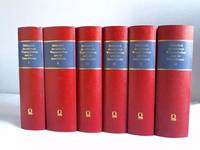
197979015Hildesheim / New York: Olms 1979. Hardcover. Reprint of the 1764-1767 Leipzig edition in 14 volumes here reissued in 12 volumes plus appendix and register bound in 6 books. Text in German. In very good condition. See picture. ISBN 1: 3487066602 2: 3487066610 3: 3487066629 4: 3487066637 5: 3487066645 6: 3487066653 Olms hardcover
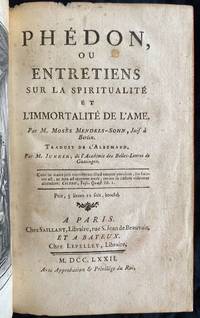
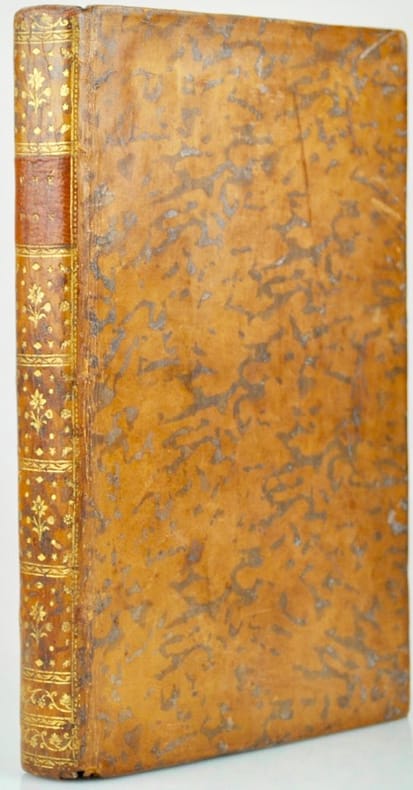
177243257Paris et Bayeux chez Saillant et Lepelley 1772. 1st French-language edition. Period full leather binding with gilt spine and red edges with original marbled endpapers 8vo. Includes frontis copperplate etching. XXIV 342 1 pages. “Traduit de l’Allemand par M. Junker de l’Académie des Belles-Lettres de Goettingen.â€<br> This first French edition appeared 5 years after the first German edition of 1767<br> <br> "Phaedon or On the Immortality of the Soul" Phaedon Oder Ueber Die Unsterblichkeit Der Seele In Drey Gespraechen is one of Mendelssohn's 1729-1786 most famous publications establishing his reputation as the "German Socrates of Berlin." It is a philosophical interpretation of the Platonic dialogue "Phaedo" and is preceded by a biography on "The Life and Character of Socrates." The important German-Jewish philosopher was one of the most important representatives of the Enlightenment in Prussia and throughout Germany.<br> <br> Mendelssohn's Phaedon is a “classic of rational psychology on the immortality of the human soul a defining work by this leading enlightenment philosopher who launched the Jewish thinking of the modern age" with his tribute to Socrates modeled on Plato's dialogue the Phaedo.<br> Mendelssohn used Plato's famous dialogue the Phaedo as a model to publish Phädon oder über die Unsterblichkeit der Seele. With this seminal work "he reached the heights of fame" Wigoder Dictionary of Jewish Biography 342. <br> The work unites Mendelssohn's "paean to Socrates with an elaboration of the dreadful personal moral and political implications if a person's life is her 'highest good'… <br> This 'classic of rational psychology' as Dilthey put it also contains an argument for the simplicity and immortality of the human soul explicitly singled out for criticism by Kant in the 2nd edition of the Critique of Pure Reason. Mendelssohn supports the notion that the soul is simple and thus indestructible by noting that certain features of the soul namely the unifying character of consciousness and the identity of self-consciousness cannot be derived from anything composite whether those composite parts be capable or not of thinking… <br> As for the human soul's fate after death Mendelssohn appeals to divine goodness and providence which perhaps explains why following the publication of the Phaedo he finds himself needing to revisit the proofs for God's existence" Stanford Encyclopedia.<br> According to Mendelssohn’s modern biographer Alexander Altmann “The work that would establish Mendelssohn's world-wide renown and win him the title 'the German Socrates' was the dialogue Phaedon which was published in 1767. In this work he presented Socratic wisdom from the mouth of the ancient philosopher but in the language of the Enlightenment that is in his own words as a modern philosopher. <br> The work drew both praise and criticism but was on the whole popular in intellectual circles. It demonstrates Mendelssohn's unique ability as a Jew to be comfortable in the realm of both classical and enlightened philosophy not to mention languages. David Sorkin remarks ‘What is ironic is that Mendelssohn was known and revered as much for the quality of his prose as for his thought.†<br> Mendelssohn was himself often referred to as the German Plato or the German Socrates. <br> And “As a Jew living in Germany Moses Mendelssohn 1729-1786 stands at a pivotal point in the history of Jewish emancipation in Europe. There were Jews before him who had access to the corridors of power in Germany and elsewhere in Europe but Mendelssohn represents the first to be socially accepted to a significant extent within enlightened German culture without converting. <br> He not only conformed to the culture of the German Enlightenment in many ways but also helped shape the culture through his philosophical contributions. At the same time Mendelssohn refused to turn away from traditional Judaism. He attempted to become a full- fledged member of society during the emergence of modern Europe while remaining a proponent of Judaism as a revealed religion. Moreover he sought to use his place of influence to encourage Jewish acculturation in Germany and to speak on behalf of the emancipation of Jewish people…. <br> The traditional mentality of the European Jews prior to Mendelssohn's time included a kind of resignation to the incompatibility of Jewish learning and 'worldly' philosophy. This resignation contributed to Jewish cultural isolation. Alfred Jospe describes the conundrum in which a Jew found himself if he wished to enter the culture of the non-Jewish world: The Jew could gain access to the culture of the world only by rebelling against the traditional repudiation of all mundane wisdom. <br> It is just at this point that Mendelssohn broke the mold. He not only acquired modern German culture but did so by means of his understanding of and contributions to the philosophy that shaped that culture. In his monumental biographical study Alexander Altmann focuses as much on Mendelssohn's philosophy and his answers to contemporary critics as he does on the details of the events and influences of his life. Altmann states with appropriate admiration that “Considering the state of degradation in which the Jewish population lived in eighteenth-century Germany. Mendelssohn's rise to fame and his acceptance into the republic of letters was an amazing feat of personal achievement.†<br> The amazing feature of Mendelssohn's achievement is that he accomplished it as an avowedly traditional Jew. Mendelssohn has been rightly described as a rabbinic scholar but he made his reputation in non-Jewish intellectual circles as a literary critic and philosopher….with the help of both Gotthold Lessing and the Berlin publisher Friedrich Nicolai he was accepted into the inner circle of the Berlin Aufklärung. <br> His essays reviews and translations earned him tremendous status among German intellectuals. <br> The favorable comparison made by Lessing between the quintessential German poet Goethe and Mendelssohn is a mark of the esteem in which he was held. ‘Lessing told Friedrich Heinrich Jacobi that once Goethe regained his reason he would be hardly more than an ordinary man. At the very same time he said of Mendelssohn that he was the most lucid thinker the most excellent philosopher and the best literary critic of the century’" Clark 2005. P. 57-58. <br> OCLC: 19939219. <br> Very light edgewear to front endpapers touch of spotting a gorgeous copy in the original leather binding with tooled gilt spine with raised bands and leather label. Beautiful and scarce. B KH-10-30-RLB-’e. Paris et Bayeux, chez Saillant et Lepelley unknown
183018718Leipzig Paris: Frédéric Hofmeister Simon Richault PN 1515 1830. Folio. Unbound as issued. 9; 9; 9; 7 pp. Engraved. Title to viola part. <br /> <br /> Some very light wear and soiling; two small binder's holes to inner blank margins. In very good condition overall. First Edition. Catalogue of the Mendelssohn Papers in the Bodleian Library III 604. Hoboken 10 130. Not in Krause. <br /> <br /> "One of the most gifted and versatile prodigies Mendelssohn stood at the forefront of German music during the 1830s and 40s as conductor pianist organist and above all composer. His musical style fully developed before he was 20 drew upon a variety of influences including the complex chromatic counterpoint of Bach the formal clarity and gracefulness of Mozart and the dramatic power of Beethoven and Weber .<br /> <br /> Between 1827 and 1847 he composed six string quartets and had begun work on a seventh at the end of his life. . The first two op. 13 in A minor 1827 and op. 12 in Eb 1829 show a rapprochement with the late quartets of Beethoven. To the Swedish musician Adolf Lindblad Mendelssohn explained his concern for the organic relationship of the various movements to the whole. In op. 12 the opening of the first movement is brought back to conclude the finale." R. Larry Todd in Grove Music Online. Frédéric Hofmeister, Simon Richault [PN] 1515 unknown
176752885Amsterdam 1767. Vermehret mit den zweifeln und dem Orakel über die Bestimmung des Menschen von eben diesem Verfasser Frühe Besitzereinträge auf Vorsatzbl. Neue Ausgabe Kl.-8°. Pbd. d. Zt. Philosophie unknown
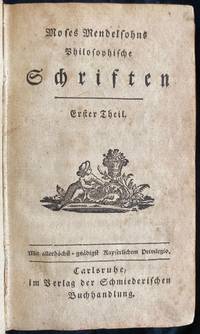
178043258Carlsruhe: im Verlag der Schmiederischen Buchhandlung 1780. No Date 1780s. Period laquered boards with leather spine label. 12mo. XXIV 278; 283 pages. In German. Title translates as “Writings.†Includes 2 different title vignettes 1 on each title page.<br> <br> Goedeke IV 1 488 6. Meyer 108; Dorn 105-107; Holzmann/Bohatta Deutsches Anomymen-Lexikon IV no. 1559. <br> <br> Early printing of Mendelssohn’s second work in which he "began his formulation of a new psychological theory that stressed the autonomy of aesthetics logic and ethics relative to each other." Merriam-Webster's Encyclopedia of World Religions p. 710. <br> <br> Contents:<br> <br> Vol. 1. Vorrede. <br> I. Ueber die Empfindungen.<br> II. Gespräche; <br> <br> Vol. 2. I. Rhapsodie oder Zusätze zu den Briefen über die Empfindungen. <br> II. Ueber die Hauptgrundsätze der schönen Künste und Wissenschaften. <br> III. Ueber das Erhabene und Naive in den schönen Wissenschaften. <br> IV. Ueber die Wahrscheinlichkeit. <br> <br> Also includes bibliographical references.<br> <br> Included within these is a series of writings on aesthetics which influenced Lessing and Schiller with Lessing noting“We have to thank him Mendelssohn for the true theory of mixed sensations.â€<br> <br> Moses Mendelssohn Moses of Dessau; 1729–1786 was a philosopher of the German Enlightenment in the pre-Kantian period early Maskil and a renowned Jewish figure in the 18th century. Mendelssohn was fluent in German and Hebrew and learned Latin Greek English French and Italian. His early teachers were young broadly educated Jews and he met the writer and dramatist G.E. Lessing 1754 and a deep and lifelong friendship developed between them. Throughout his life he worked as a merchant while carrying out his literary activities and widespread correspondence in his free time. In 1754 Mendelssohn began to publish – at first with the assistance of Lessing – philosophical writings and later also literary reviews. <br> He also started a few literary projects for example the short-lived periodical Kohelet Musar in order to enrich and change Jewish culture and took part in the early Haskalah. In 1763 he was awarded the first prize of the Prussian Royal Academy of Sciences for his work Abhandlung über die Evidenz in metaphysischen Wissenschaften "Treatise on Evidence in Metaphysical Knowledge". However when the academy elected him as a member in 1771 King Frederick II refused to ratify its decision. <br> <br> In 1769 he became embroiled in a dispute on the Jewish religion and from then on he confined most of his literary activity to the sphere of Judaism. His most notable and enduring works in this area included the translation into German and commentary on the Pentateuch Sefer Netivot ha-Shalom "Book of the Paths of Peace" 1780–83 and his Jerusalem: oder Ueber religiöse Macht und Judenthum "Jerusalem or On Religious Power and Judaism" 1783 this work the first polemical defense of Judaism in the German language and one of the pioneering works of modern Jewish philosophy. <br> <br> An active intermediary on behalf of his own people in difficult times and a participant in their struggle for equal rights he was at the same time a forceful defender of the Enlightenment against the opposition to it which gained strength toward the end of his life. In the midst of a literary battle against one of the leading figures of the counter-Enlightenment he died in 1786 EJ. <br> <br> SUBJECTS: Philosophy -- Early works to 1800. Philosophie -- Ouvrages avant 1800. Philosophy. OCLC: 1352546328. <br> <br> Light wear to original boards more so at spine but solid and attractive light spotting as expected About Very Good- Condition an attractive 18th Century copy. B KH-10-31. Carlsruhe: im Verlag der Schmiederischen Buchhandlung unknown
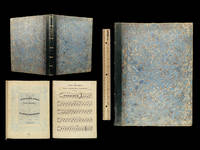
187024169<p><strong>1870 Felix Mendelssohn Songs Without Words Romantic Piano MUSIC German Lieder</strong></p><p>Felix Mendelssohn was a 19th-century Romantic composer known for his symphonies famed oratorios chamber music and incidental music. One of his most recognized works perhaps his most iconic is '<em>Songs Without Words'</em>. In 1829 Mendelssohn began working a series of piano solo works which were similar in style to the German 'lieder' or song; however Mendelssohn instead of including a vocal line had the melody played by the piano itself thus making these songs 'songs without words'. </p><p>This edition of Mendelssohn's famed '<em>Songs'</em> includes the 5 of the books each with six songs along with a number of separate piano works that were not organized with an opus number. Works found in this edition include:</p><p><!-- if !supportLists-->· <!--endif-->Book 2 Op. 30</p><p><!-- if !supportLists-->· <!--endif-->Book 4 Op. 53</p><p><!-- if !supportLists-->· <!--endif-->Book 5 Op. 62</p><p><!-- if !supportLists-->· <!--endif-->Book 6 Op. 67</p><p><!-- if !supportLists-->· <!--endif-->Book 7 Op. 85</p><p><!-- if !supportLists-->· <!--endif-->Likely not by Mendelssohn – these 3 do not appear in complete lists of Mendelssohn works</p><p><!-- if !supportLists-->o <!--endif-->Andante in F-sharp minor Fr. 1.50</p><p><!-- if !supportLists-->o <!--endif-->Allegro Vivace in E major</p><p><!-- if !supportLists-->o <!--endif-->"Barcarola" Allegro non troppo A major</p><p><!-- if !supportLists-->· <!--endif-->Scherzo in B minor WoO 2</p><p>Item number: #24169</p><p>Price: $499</p><p>MENDELSSOHN Felix</p><p><strong><em>Songs Without Words</em></strong></p><p>London: Chez J.A. Novello Bonn bei N. Simrock ca. 1870.</p><p><u>Details</u>: </p><p><!-- if !supportLists-->· <!--endif-->Collation: complete with all pages</p><p><!-- if !supportLists-->o <!--endif-->Each musical piece with separate pagination </p><p><!-- if !supportLists-->· <!--endif-->Language: German </p><p><!-- if !supportLists-->· <!--endif-->Binding: Leather; tight and secure</p><p><!-- if !supportLists-->· <!--endif-->Size: ~13in X 10in 33cm x 25cm</p><p>Our Guarantee:</p><p>Very Fast. Very Safe. Free Shipping Worldwide.</p><p>Customer satisfaction is our priority! Notify us with 7 days of receiving and we will offer a full refund without reservation!</p><p>24169</p><p>Photos available upon request. </p> J.A. Novello Bonn bei N. Simrock hardcover
183018718Leipzig Paris: Frédéric Hofmeister Simon Richault PN 1515 1830. Folio. Unbound as issued. 9; 9; 9; 7 pp. Engraved. Title to viola part. <br/><br/>Some very light wear and soiling; two small binder's holes to inner blank margins. In very good condition overall. First Edition. Not in Krause. Mendelssohn Papers III 604. Hoboken 10 130. <br/><br/>"One of the most gifted and versatile prodigies Mendelssohn stood at the forefront of German music during the 1830s and 40s as conductor pianist organist and above all composer. His musical style fully developed before he was 20 drew upon a variety of influences including the complex chromatic counterpoint of Bach the formal clarity and gracefulness of Mozart and the dramatic power of Beethoven and Weber ." <br/><br/>" . Between 1827 and 1847 he composed six string quartets and had begun work on a seventh at the end of his life . The first two op. 13 in A minor 1827 and op. 12 in Eb 1829 show a rapprochement with the late quartets of Beethoven. To the Swedish musician Adolf Lindblad Mendelssohn explained his concern for the organic relationship of the various movements to the whole. In op. 12 the opening of the first movement is brought back to conclude the finale . " R. Larry Todd in Grove Music Online. Frédéric Hofmeister, Simon Richault [PN] 1515 unknown books
185136203London: Messrs. Robert Cocks. & Co . PNs 9621-9626 1851. Oblong folio. Full 19th century teal blue cloth with publisher's yellow printed rectangular title label to upper. 1f. recto title verso blank 88 pp. Engraved with "Engraved by W. Davidson" printed to foot of final page.<br/><br/>Binding quite worn rubbed bumped and shaken; spine frayed; bookplate removed from front pastedown. Slightly worn browned and soiled; small hole to blank upper margin of title with manuscript date of 1937 and flourish beneath. Re-issue of the first edition published by Coventry & Hollier in 1845. MWV SD31 W56 57 58 59 60 61. Not in Mendelssohn Papers Vol. III. Wehner W56-61. OCLC one copy only in the U.S. at the Eastman School of Music and 3 copies in the U.K. <br/><br/>"Mendelssohn was one of the finest organists of his day . The Six Organ Sonatas op.65 1845 teeming with artful fugues and chorales summarize and epitomize Mendelssohn's rediscovery of Bach and may have inspired Schumann's six fugues on B-A-C-H op.60.<br/><br/>"One of the most gifted and versatile prodigies Mendelssohn stood at the forefront of German music during the 1830s and 40s as conductor pianist organist and above all composer. His musical style fully developed before he was 20 drew upon a variety of influences including the complex chromatic counterpoint of Bach the formal clarity and gracefulness of Mozart and the dramatic power of Beethoven and Weber.<br/><br/>Mendelssohn's emergence into the first rank of 19th-century German composers coincided with efforts by music historiographers to develop the concept of a Classic-Romantic dialectic in 18th and 19th-century music. To a large degree his music reflects a fundamental tension between Classicism and Romanticism in the generation of German composers after Beethoven." R. Larry Todd in Grove Music Online. Messrs. Robert Cocks. & Co ... [PNs 9621-9626] unknown books
183028108Leipsic: Breitkopf & Härtel PN 4980 1830. Folio. Disbound. Violino 1: 1f. title 3 "Thema": song op. 9 no. 1 for voice and piano 4-13 i blank pp.; Violino 2: 9 i blank pp.; Viola: 10 pp.; Violoncello: 8 pp. Title lithographed; music engraved. <br /> <br /> Somewhat soiled and foxed; dampstained and with binder's holes to inner margin; contemporary signature "Lemke" in ink trimmed and "2" in manuscript at upper right corner of title; "F. Mendelssohn" in ink in another hand to upper right corner of first page of each part. First Edition. MWV R22 p. 276. Hoboken 10 132 spelled "Quator" and with publisher's handstamp to title. <br /> <br /> "One of the most gifted and versatile prodigies Mendelssohn stood at the forefront of German music during the 1830s and 40s as conductor pianist organist and above all composer. His musical style fully developed before he was 20 drew upon a variety of influences including the complex chromatic counterpoint of Bach the formal clarity and gracefulness of Mozart and the dramatic power of Beethoven and Weber." <br /> <br /> ". Between 1827 and 1847 he composed six string quartets and had begun work on a seventh at the end of his life. The first two op. 13 in A minor 1827 and op. 12 in Eb 1829 show a rapprochement with the late quartets of Beethoven. To the Swedish musician Adolf Lindblad Mendelssohn explained his concern for the organic relationship of the various movements to the whole. In op. 13 the quintessential thematic material is drawn from the lied Frage op. 9 no. 1 with explicit quotations from the song in the outer and more hidden references in the inner movements of the quartet." R. Larry Todd in Grove Music Online. Breitkopf & Härtel [PN 4980] unknown
183329636Bonn: N. Simrock PN 3045 1833. Folio. Unbound. <br /> <br /> Violino 1mo: 1 title 2-13 i blank<br /> Violino 2do: 11 i blank<br /> Viola 1ma: 11 i blank<br /> Viola 2da: 11 i blank<br /> Violoncello: 11 i blank pp. <br /> <br /> Engraved throughout. <br /> <br /> Slightly worn and browned; binder's hole to upper inner margin; early manuscript initial "A" and the number "5" to first page of music of each part. First Edition. Scarce. Wehner p. 275. Catalogue of the Mendelssohn papers III 634. Hoboken 10 144. <br /> <br /> "One of the most gifted and versatile prodigies Mendelssohn stood at the forefront of German music during the 1830s and 40s as conductor pianist organist and above all composer. His musical style fully developed before he was 20 drew upon a variety of influences including the complex chromatic counterpoint of Bach the formal clarity and gracefulness of Mozart and the dramatic power of Beethoven and Weber." <br /> <br /> "Of the two string quintets the first op. 18 in A begins with a graceful Mozartian theme somewhat reminiscent of the Clarinet Quintet K581. The use of fugal writing and in the original minuet intricate double canons imbued the first version of this work with a severely academic quality; in 1832 Mendelssohn replaced the minuet with the emotionally charged Intermezzo in memory of Eduard Ritez." R. Larry Todd in Grove Music Online. N. Simrock [PN 3045] unknown
1785SZEPEBKS007095IWien: Sebastian Hartl 1785. First . Soft cover. Very Good/No Jacket. 16mo. 17x10.5 cm. - 79 pp. - Near fine in contemporary strong grey wrappers. - Small ownership stamp on title-page. <br/> <br/> Sebastian Hartl paperback