657 résultats
253812 pages of a bifolium; second leaf blank. Small folio 208 x 270 mm. Dated Paris May 7 1841. On stationery with Wagner's monogrammatic blindstamp to upper left corner. In German with translation.<br/><br/>A long densely-written letter regarding Wagner's proposed biography of Beethoven and mentioning his opera Rienzi.<br/><br/>Wagner who was trying to eke out a living in Paris at the time attempts to interest Winkler in his two-volume monograph on Beethoven based on the research of Wagner's friend Gottfried Engelbert Anders 1795-1866 a German-born librarian in Paris. Wagner declares his intention to supersede Anton Schindler's biography of Beethoven published in the previous year which he considers inadequate. He asks Winkler to recommend him to the publisher Christoph Arnold 1763-1847 and names his and Anders's requested fees to be paid in part as advances: <br/><br/>"Herr Anders found Schindler's book to be very poor compared to his own collection of communications on Beethoven . also every thoughtful and sensitive reader has expressed his opinion on Schindler's book that it falls short of meeting the demands of a true biography as it had been expected. Herr Anders was prompted to realize his long-cherished dream. As his position. leaves him hardly any time and he also confesses that an easy fluent realization will not come to him he has offered to leave me all his rich material and to discuss everything with me but to have the book itself written by me. Avoiding any fussy pedantic scholarly philistinism of citation our book shall be more like a great novel on an artist than like a dry enumeration of chronologically ordered dates and anecdotes."<br/><br/>In the final paragraph Wagner expresses his frustration about the long silence of the Dresden court opera regarding a possible production of his opera Rienzi:<br/><br/>"I have to confess to you that my opera Rienzi still means more to me than anything else. I am almost dying of my unruly lack of patience concerning the decision of the general direction. A negative decision.will cost me half a year during which I could have entered negotiations with a different theater."<br/><br/>Provenance<br/>From the noted autograph collection of Louis Koch.<br/><br/>Slightly creased; small professional repairs to edges; professionally guarded at inner edge of final leaf. WBV 169. Richard Wagner: Sämtliche Briefe I no. 149 pp. 481-86. Kinsky: Manuskripte Briefe Dokumente von Scarlatti bis Stravinsky: Katalog der Musikautographensammlung Louis Koch pp. 250-51 with facsimile of first page.<br/><br/>Theodor Winkler 1775-1856 better known under his pseudonym Theodor Hell was the editor-in-chief of the daily Dresdner Abend-Zeitung for which Wagner worked as a Paris correspondent. Enclosed with the present letter was Wagner's third "Pariser Bericht" dated May 5 1841. Winkler was active in many fields; trained as a lawyer he achieved fame as a poet editor arts administrator and stage director.<br/><br/>Wagner's biography of Beethoven did not in fact materialize. After Arnold declined the publishers Brockhaus and Cotta did the same. <br/><br/>Rienzi was first performed at the Dresden court opera on October 20 1842. unknown books
1889272886Berlin: Berlin Kunstdruck - und Verlags-Anstalt 1889. First. unbound. near fine. Carl Emil Doepler. Group of 39 of 40 total large plates showing costume designs for all the characters in Wagner's Ring by Carl Emil Doepler. Beautifully printed chromolithograph plates with excellent details 13-1/2" x 18" loose as issued and protected in a new gray cloth portfolio box with red leather spine label and the original title text mounted on front. Berlin: Berlin Kunstdruck- und Verlags-Anstalt Vormals A. & C. Kaufmann 1889. First edition. The 10 text pages are quite tattered at edges but the plates printed on heavier stock are all in excellent clean condition with only very minor wear at marginal edges or corners of 4 plates. Lacking plate 26: "Wotan als Wanderer" but otherwise a near fine copy of this very scarce and beautifully produced work - OCLC lists only 1 copy in the Netherlands and there is only 1 auction sale record from 1993.<br/><br/> Part I Das Rheingold: 1 Rheintochter. 2 Wotan. 3 Fricka und Freia. 4 Fasolt. 5 Fafner. 6 Donner. 7 Froh. 8 Loge. 9 Alberich. 10 & 11 Die Nibelungen. 12 Erda. Part II Die Walkure: 13 Siegmund. 14 Sieglinde. 15 Hunding. 16 Wotan. 17 Brunnhilde. 18 Waltraute. 19 Die Walkuren Grimgerde & Gerhilde & Siegrune. 20 Ortlinde. 21 Rossweisse. 22 Schwertleite. 23 Helmwige. Part III Siegfried: 24 Mime. 25 Siegfried. 26 Wotan LACKING. 27 Alberich. Part IV Gotterdammerung: 28 Die Nornen. 29 Brunhilde. 30 Siegfried. 31 Gunther. 32-35 Mannen Gunthers. 36 Barde und Kinder. 37 Knechte mit Jagdbeute. 38 Gutrune. 39 Frauen im Gefolge Gutrunes. 40 Hagen.<br/><br/> Berlin Kunstdruck - und Verlags-Anstalt unknown books
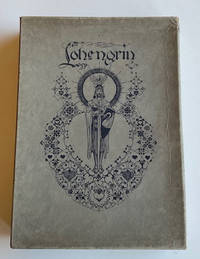
04916London: G.G. Harrap 1913. A Superb Early Bayntun Inlaid Binding<br/>On One of Willy Pogany's Masterpieces<br/><br/>BAYNTUN binder. POGANY Willy illustrator. WAGNER Richard. ROLLESTON T.W. The Tale of Lohengrin Knight of the Swan after the Drama of Richard Wagner by T.W. Rolleston. Presented by Willy Pogany. London: G.G. Harrap n .d. 1913. <br/><br/>First trade edition. Quarto 10 x 7 1/4 inches; 254 x 184 mm. 192 unnumbered pages. Eight tipped-in color plates including frontispiece with original tissue guard numerous full page color illustrations calligraphic text head- tailpieces; an image on every page. Printed on heavy gray stock. Some minor discoloration to first three and last three leaves otherwise fine.<br/><br/>Bound ca. 1930 by Bayntun of Bath stamp-signed in gilt on front turn-in. Full black morocco covers with single gilt rule front cover with multi color morocco inlays reproducing the illustration on page 53. Spine with five raised bands decoratively tooled and lettered in gilt in compartments. Decorative gilt board edges gilt ruled turn-ins blue cockerel endpapers all edges gilt. Housed in the original blue cloth over boards clamshell case.<br/><br/>The design on the front cover is taken from the illustration on p. 53.<br/><br/>"And then aloud spake she-<br/>"O King a champion waits<br/>the hoar<br/>To take my part with godlike power<br/>And my Deliverer be.<br/><br/>"In dreams I saw him; silver-bright<br/>His jewell'd armour shone.<br/>His sword was as a beam of light<br/>His crest a silver swan.<br/><br/>"He is my Lord he is my King.<br/>And his till death am I.<br/>Come Victor Lord the hoar is near-<br/>Oh hear thy poor maid's cry!"<br/><br/>William Andrew "Willy" Pogany born Vilmos Andreas Pogány August 1882 - 30 July 1955 was a prolific Hungarian illustrator of children's and other books. Pogany's best known works consist of illustrations of classic myths and legends done in the Art Nouveau style. He also worked as an art director on several Hollywood films including Fashions of 1934 and Dames.<br/><br/>The publication of Pogány's Lohengrin was the final act in his trilogy of masterworks focused on Wagner's Germanic tales and one of the quintet that is considered his finest work. Pogány clearly approached the commission to illustrate Lohengrin as an opportunity to improve and extend techniques that he had developed through his preceding work particularly The Rubáiyat of Omar Khayyám The Rime of the Ancient Mariner Tannhäuser and Parsifal the other four books that immortalized his career as an illustrator. That commitment to ongoing innovation resulted in an incredible suite of illustrations including color lithographs monotone and marginal illustrations and the delightful tipped-in color plates produced with a four-color process included in Lohengrin. Themes of medieval chivalry erotic love and moral tests are illustrated in a lavish fashion by Pogány with an outstanding use of iconography form and color.'. London: G.G. Harrap, 1913 unknown books
8808Used; Like New/Used; Like New. Large photographic portrait of Richard Wagner with his son Siegfried and added in collage Siegfried's daughter Friedelind inscribed to Arturo Toscanini and signed below the image by Friedelind Wagner "Mausi" and on behalf of her deceased father "Siegfried" and with a clipped facsimile of Wagner's partial signature laid down to the left of Siegfried's signature dated 25 March 1944. The mount with two corners cracked and professionally repaired. Still fragile but well stabilized. <br><br><br />A birthday card from the Wagners to Toscanini born March 25 in exile in New York during the war "To our very dear friend Arturo". It was 13 years since he had appeared at the Bayreuth Festival and they had not forgotten him and the phenomenal impact he made in 1930 and 31. In 1940 he spared no expense or effort in sponsoring Friedelind "Mausi" to seek refuge in the United States.<br><br><br />For the Italian Maestro Wagner always held a special status: he inaugurated his first appointment at La Scala in 1898 with Die Meistersinger and made his final public appearance in 1954 with an all-Wagner program. The anti-fascist conductor's affinity for this music was such that he was even asked by Hitler to the lead the Bayreuth Festival founded by Wagner himself. Toscanini promptly refused and never returned to the Festival. unknown books
192334921Berlin: Drei Masken Verlag 1923. Folio. Original publisher's quarter dark red morocco with marbled boards raised bands on spine in decorative compartments gilt. 462 pp. 1f. colophon.<br/><br/>Binding slightly worn rubbed and bumped. Very minor signs of wear. In very good condition overall. Limited to 530 numbered copies this no. 111.<br/><br/>A "music drama" in three acts by Richard Wagner to his own libretto Die Meistersinger was first performed in Munich at the Königliches Hof- und Nationaltheater on June 21 1868.<br/><br/>"The only comedy among Wagner's mature works Die Meistersinger is a rich perceptive music drama widely admired for its warm humanity but regarded with suspicion by some for its dark underside. Its genial aspect is immensely enhanced by the technical mastery displayed by Wagner at the height of his powers." Barry Millington in Grove Music Online. Drei Masken Verlag unknown books
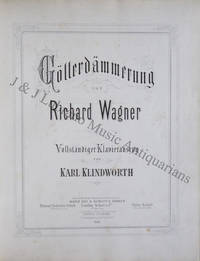
187518437Mainz: B. Schott's Söhne April 1875. Used; Like New/Used; Like New. Götterdämmerung. Vollständiger Klavierauszug von Karl Klindworth. Folio. Lithographed throughout. PN 21500. 1f. general title "Der Ring des Nibelungen" 1f. title 1f. half-title 1 cast list and contents 2-357 i blank pp. Inscribed on the title page by cellist and composer David Popper as follows: "Der unsterblichen / Muse Richard Wagner / kunstbegeisterten / Förderer durch Wort / und Schrift von / seinem ihn herzlich / .David Poper / Wien 6. Mai 1875 / III. Wagnerkonzert in Wien" "The immortal muse of Richard Wagner / his art-loving supporter through written/ and spoken word/ warmly / David Popper / Vienna 6 May 1875 / 3. Wagner concert in Vienna".   Contemporary black cloth boards quarter brown leather. Generally in fine internal condition throughout with a few light pencil markings one leaf p. 11/12 with two significant tears; spine covering largely perished boards separating from the block rear board barely holding on. Fuld p. 465; Deathridge Geck and Voss WWV p. 402; Klein p. 51. <br>The present historic copy was inscribed on the occasion of Wagner's conducting portions of Götterdämmerung in concert in Vienna in advance of the the complete opera's Bayreuth premiere in 1876. The publication of this piano vocal score preceded the full score by over a year and the general title page on which Popper has inscribed as well as the half title are common to the full scores of all four Ring operas. As with Siegfried and Parsifal Schott's first edition of Götterdämmerung was issued in lithographed form with only a few mainly presentation copies being issued directly from the engraved plates. <br>One of the most influential cellists of the late nineteenth and early twentieth century Popper was a student of Julius Goltermann and at age 25 secured the position of principal in the Vienna Hofoper and the Vienna PO the youngest player to hold such a post and later joined the Hellmesberger Quartet. He was in friendly contact with Franz Liszt whose pupil pianist Sophie Menter became Popper's first wife in 1872. This marriage which produced in 1876 a daughter Celeste ended after fourteen years although during that time the couple appeared in countless joint recitals. His acquaintance with Liszt led Popper also to Richard Wagner and in 1873 he became a co-founder of the first ever official Wagner Society the Viennese Wagner-Verband. In 1886 his marriage dissolved Popper was appointed by Liszt as professor at the National Hungarian Royal Acadamy of Music where he established the cello and chamber music divisions. He remained until his death having also served as a member of the Hubay Quartet. A cellist of superior technique and a warm powerful tone Popper was a champion of new music and the composer of more than 75 works mostly for his own instrument. His most important contribution is certainly the Hohe Schule des Violoncello-Spiels a set of 40 studies that examine the positions of the left hand within a highly chromatic Wagner-influenced setting. <br style="">Götterdämmerung is the fourth opera in the Ring cycle. Excerpts were first performed in a concert at the Musikverein in Vienna on March 25 1875; the entire work was first performed as part of the Ring cycle at Bayreuth on August 17 1876. "The final opera of the Ring. provides an appropriately weighty conclusion to the epic cycle. 26 years elapsed from the time Wagner made his first prose draft for the work then called Siegfrieds Tod to the completion of the full score with inevitable consequences in terms of stylistic unity. Retrogressive elements of grand opera exist side by side with motivic integration representative of Wagner's most mature style. And yet the stylistic integrity of Götterdämmerung is scarcely compromised so skillfully are the disparate elements welded together and so intense the dramaturgical conviction. The resources and stamina demanded by the work from both singers and orchestra combined with its sheer length and theatrical potency make it one of the most daunting yet rewarding undertakings in the operatic repertory." Grove Music Online<br style=""><br style=""> B. Schott's Söhne hardcover books
20053223Oxford: University Press 2005. First Edition. COMPLETE SET of all 6 vols. comprising more than 2965 pages sic! printed in two- and three-columes. Original publisher's blue cloth some scuffing to cloth covers ISBN stickers on lower right corner of back covers. Vertical creasing on half title of volume III occasional signs of use / thumbsoiling but overall the contents are clean fresh and unspoiled. NOT ex-library! Complete sets are rare in private ownership; only two complete set have appeared action and this was one of them -- the other one sold at Swann in 2013.<br/><br/>"Bod-Inc" as it is affectionately -- and reverentially -- known is so epic that it scarcely warrants any discussion whatsoever. Suffice it to say that more than 5600 incunables are EXHAUSTIVELY described with detailed listings of the contents of EACH EDITION. Arranged alphabetically the aims of Bod-Inc are summarized in the catalogue's introduction:<br/><br/>"The main aim of the catalogue has been from the outset to combine information about the individual copies in the collections of the Bodleian Library their bindings their provenance manuscript notes and other signs of use with a detailed analysis of the contents of each edition locating all texts in each edition identifying their authors and giving references to modern editions of each text where they exist. It is not the aim of the catalogue to replicate typographical information which is already available in one of the other detailed incunable catalogues such as GW BMC or Polain."<br/><br/>The sixth volume contains an indispensible 102-page "Index of Provenances Owners and Donors" pp. 2833-2935. Printed in 3 columns there must be 4000 names listed herein.<br/><br/>The Bodleian Library Bod-Inc database is NOT condusive to browsing and thus the user cannot experience the luxurious joy of bibliographic discovery namely browsing through the Bodleian's incunabula for months and years.<br/><br/>MUST BE SEEN TO BE FULLY APPRECIATED. University Press unknown books
1923244673Munich: Three Masks 1923. Limited. hardcover. very good. Facsimile edition of the autographed full score of Wagner's Tristan und Isolde. 354pp. folio flexible boards dust wrapper; spine ends chipped some edgewear. Munich: Three Masks 1923. An internally fine copy in a slightly worn binding. Number 368 of 410 copies<br/><br/> Three Masks unknown books
186918200Leipzig: Verlagsbuchhandlung von J.J. Weber 1869. Cloth. Very Good. Following the 1850 original printing of Wagner's virulent attack on the influence of Judaism in music this is the 1869 correct 2nd edition published out of Leipzig and for the first time using Wagner's own name as author. Rebound in the mid-20th century in a light-blue cloth with dark leather title label at the spine. New front and rear endsheets as well. Happily though the complete book is bound-in including the original light-green wrappers which show minor soiling and creasing along the edges. The original text has held us very nicely as well; bright clean and eminently readable. Octavo 57 pgs. plus publisher's ad at the rear. <br/><br/> Verlagsbuchhandlung von J..J. Weber hardcover books
191319898London: G. G. Harrap & Co 1913. Limited edition. Hardcover. Near fine. Illustrated by Williy Pogany. 4to. Illustrated throughout in both black and white and color by Pogany. This copy bound in the somewhat scarce publisher's brown leather spine intricately gilt and with the title and illustration on the upper board as in the more common vellum and morocco bindings. Illustrated endpapers. Top edge gilt. Light wear to the inner hinges else this is a fine copy with only a trace of sunning to the spine. One of 525 copies signed by Pogany of which this is number 272. Lohengrin comes to us courtesy of Wolfram von Eschenbach where is is described as the son of Sir Perceval Parzifal. When Parzifal becomes the Grail King Lohengrin becomes the Grail Knight and his twin inherits Parzifal's secular lands. G. G. Harrap & Co hardcover books
1899208238Akron: Werner Company 1899. First. hardcover. very good-. Handsomely illustrated with 44 full-page color lithographs. 241pp. Oblong folio pictorial cloth; some areas of edges lightly worn back cover and first few page margins lightly soiled last two blank pages lightly dampstained rebacked in modern brown cloth front flyleaf lacking bottom right corner inner hinges strengthened. Akron: Werner Company 1899. First Edition.<br/><br/> Internally the plates and text are bright. Plates depict soldiers on horseback and on foot mostly in battle scenes.<br/><br/> Werner Company unknown books
03378London: G.G. Harrap & Co. 1911. One of Pogany's Quintet of Masterpieces<br/>Limited to 525 Copies<br/><br/>POGANY Willy illustrator. Tannhauser. A Dramatic Poem by Richard Wagner Freely Translated in Poetic Narrative Form by T.W. Rolleston. Presented by Willy Pogany. London: G.G. Harrap & Co. n.d. 1911. <br/><br/>Limited to 525 copies signed and numbered by the artist this being copy no. 241. Quarto. Sixteen mounted color plates including frontispiece many full page two-tone illustrations each page beautifully decorated. <br/><br/>Full vellum pictorially stamped in gilt. Top edge gilt others untrimmed. A fine copy with only a bit of light staining to spine. Housed in a blue cloth slipcase.<br/><br/>William Andrew "Willy" Pogany born Vilmos Andreas Pogány August 1882 - 30 July 1955 was a prolific Hungarian illustrator of children's and other books. Pogany's best known works consist of illustrations of classic myths and legends done in the Art Nouveau style. He also worked as an art director on several Hollywood films including Fashions of 1934 and Dames.<br/><br/>The publication of Pogány's Tannhauser was the first act in his trilogy of masterworks focused on Wagner's Germanic tales and one of the quintet that is considered his finest work. Pogány clearly approached the commission to improve and extend techniques that he had developed through his preceding work particularly The Rubáiyat of Omar Khayyám and The Rime of the Ancient Mariner. Along with Tannhäuser Parsifal and Lohengrin these five books immortalized his career as an llustrator. That commitment to ongoing innovation resulted in an incredible suite of illustrations including color lithographs monotone and marginal illustrations and the delightful tipped-in color plates produced in four-color process included in Tannhauser. Themes of medieval chivalry erotic love and moral tests are illustrated in a lavish fashion by Pogány with an outstanding use of iconography form and colour. London: G.G. Harrap & Co., 1911 unknown books
03376London: G.G. Harrap & Co. 1912. De Luxe Parsifal<br/>Exquisite Pogany<br/>One of 525 Copies<br/><br/>POGANY Willy illustrator. ROLLESTON T.W. Parsifal or the Legend of the Holy Grail. Retold from Ancient Sources with Acknowledgment to the Parsifal of Richard Wagner by T.W. Rolleston. Presented by Willy Pogany London: Harrap 1912. <br/><br/>Edition De Luxe limited to 525 copies signed and numbered by the artist this being copy no. 293. Quarto 10 7/8 x 7 1/8 in; 275 x 181 mm. Unpaginated. Sixteen mounted color plates including frontispiece many full page color and two-tone illustrations each text leaf with elaborate pictorial borders.<br/><br/>Publisher's full vellum pictorially stamped in gilt. Top edge gilt others untrimmed. Top board very slightly bowed. A fine copy. Housed in a blue cloth slipcase.<br/><br/>William Andrew "Willy" Pogany born Vilmos Andreas Pogány August 1882 - 30 July 1955 was a prolific Hungarian illustrator of children's and other books. Pogany's best known works consist of illustrations of classic myths and legends done in the Art Nouveau style. He also worked as an art director on several Hollywood films including Fashions of 1934 and Dames.<br/><br/>The publication of Pogány's Lohengrin was the final act in his trilogy of masterworks focused on Wagner's Germanic tales and one of the quintet that is considered his finest work. Pogány clearly approached the commission to illustrate Lohengrin as an opportunity to improve and extend techniques that he had developed through his preceding work particularly The Rubáiyat of Omar Khayyám The Rime of the Ancient Mariner Tannhäuser and Parsifal. the other four books that immortalized his career as an illustrator. That commitment to ongoing innovation resulted in an incredible suite of illustrations including color lithographs monotone and marginal illustrations and the delightful tipped-in color plates produced with a four-color process included in Parsifal. Themes of medieval chivalry erotic love and moral tests are illustrated in a lavish fashion by Pogány with an outstanding use of iconography form and color. London: G.G. Harrap & Co., 1912 unknown books
03377London: G.G. Harrap 1913. One of Pogany's Masterpieces<br/>Limited to 525 Copies Signed by the Artist<br/><br/>POGANY Willy illustrator. ROLLESTON T.W. WAGNER Richard. The Tale of Lohengrin Knight of the Swan after the Drama of Richard Wagner by T.W. Rolleston. Presented by Willy Pogany. London: G.G. Harrap n .d. 1913. <br/><br/>Limited to 525 copies signed by the artist this being copy no. 90. Quarto. Eight tipped-in color plates numerous full page color illustrations calligraphic text head- tailpieces; an image on every page. Printed on heavy grey stock. <br/><br/>Full vellum pictorially gilt-stamped. Top edge gilt others untrimmed. A fine copy. Housed in a blue cloth slipcase.<br/><br/>William Andrew "Willy" Pogany born Vilmos Andreas Pogány August 1882 - 30 July 1955 was a prolific Hungarian illustrator of children's and other books. Pogany's best known works consist of illustrations of classic myths and legends done in the Art Nouveau style. He also worked as an art director on several Hollywood films including Fashions of 1934 and Dames.<br/><br/>The publication of Pogány's Lohengrin was the final act in his trilogy of masterworks focused on Wagner's Germanic tales and one of the quintet that is considered his finest work. Pogány clearly approached the commission to illustrate Lohengrin as an opportunity to improve and extend techniques that he had developed through his preceding work particularly The Rubáiyat of Omar Khayyám The Rime of the Ancient Mariner Tannhäuser and Parsifal the other four books that immortalized his career as an illustrator. That commitment to ongoing innovation resulted in an incredible suite of illustrations including color lithographs monotone and marginal illustrations and the delightful tipped-in color plates produced with a four-color process included in Lohengrin. Themes of medieval chivalry erotic love and moral tests are illustrated in a lavish fashion by Pogány with an outstanding use of iconography form and color. London: G.G. Harrap, 1913 unknown books
1910215879London: William Heinemann 1910. First edition thus no. 124 of 1150 copies. With 35 mounted color plates and other black and white drawings by Arthur Rackham. 1 vols. 4to. Original full parchment gilt with Rackham devices on spine and upper cover silk ties t.e.g. Spine soiled endpapers foxed toning and light foxing throughout. In green cloth slipcase. Rackham Arthur. First edition thus no. 124 of 1150 copies. With 35 mounted color plates and other black and white drawings by Arthur Rackham. 1 vols. 4to. With 35 Mounted Color Plates. William Heinemann unknown books
187526101Mainz: B. Schott's Söhne PN 21500 1875. Folio. Contemporary dark brown tooled half calf with dark green cloth boards decorative initials "P.R." to upper gilt titling to spine in ruled compartments all edges gilt. 1f. general title "Der Ring des Nibelungen 1f. title 1f. half-title 1 cast list and contents 2-357 i blank pp. Lithographed throughout. <br/><br/>Cloth portion of binding slightly stained worn and frayed at edges light blue watered silk endpapers slightly soiled. Slightly foxed and browned. First Edition. Fuld p. 465. Deathridge Geck and Voss WWV p. 402. Klein p. 51. The general title and half title are common to the full scores of all four Ring operas.<br/><br/>Götterdämmerung is the fourth opera in the Ring cycle. Excerpts were first performed in a concert at the Musikverein in Vienna on March 25 1875; the entire work was first performed as part of the Ring cycle at Bayreuth on August 17 1876. <br/><br/>"The final opera of the Ring. provides an appropriately weighty conclusion to the epic cycle. 26 years elapsed from the time Wagner made his first prose draft for the work then called Siegfrieds Tod to the completion of the full score with inevitable consequences in terms of stylistic unity. Retrogressive elements of grand opera exist side by side with motivic integration representative of Wagner's most mature style. And yet the stylistic integrity of Götterdämmerung is scarcely compromised so skilfully are the disparate elements welded together and so intense the dramaturgical conviction. The resources and stamina demanded by the work from both singers and orchestra combined with its sheer length and theatrical potency make it one of the most daunting yet rewarding undertakings in the operatic repertory." Barry Millington in Grove Music Online. B. Schott's Söhne [PN 21500] unknown books
18863040Paris: Jules Rouam 1886. First edition. First edition. Thick folio. The Deluxe Copy. Three quarter light brown morocco five rasied bands marbled boards gilt spine. Celebrated treatise on Wagner with superb gravure illustrations by Fantin-Latour 120 including a double suite of lithographs printed on both Japan Vellum as well as China Paper. Scenes from operas much more all tissue-guarded. Some light rubbing to corners and spine very good copy. <br/><br/> Jules Rouam hardcover books
1911180219007Paris: Hachette et Cie 1911. Signed Limited Edition. Hardcover. Very Good. Deluxe French limited edition; copy #213 of 340 of 390 total signed by Arthur Rackham on the limitation page. Publisher's full vellum binding stamped in gilt. Near Fine. Boards faintly bowed bump to top of spine vellum lightly soiled bookseller ticket to front paste down. All illustrations and tissue guards present lacking ribbon ties. A lovely copy of the deluxe French limited edition which had a much smaller limitation than its British counterpart. Hachette et Cie hardcover books
1955139429New York: Library Publishers 1955. First American Edition originally published in the UK by Derek Verschoyle the previous year. Photo illustrated throughout with different images than the UK edition. <br/><br/>An early examination of the negative influence of pop culture on the American public with sections on film pin ups pulp novels television and most importantly comic books which Wagner referred to as "the marijuana of the nursery." A companion piece to Fredric Wertham's infamous "Seduction of the Innocent" just as influential in the creation of the Comics Code Authority and far more scarce. <br/><br/>Near Fine in a Very Good example of the rare dust jacket. Front board slightly bowed. Jacket chipped affecting the "P" in "Parade" on the front panel and publisher's name on the heel with a few short closed tears repaired with cello tape on the verso and faint creasing. A presentable copy overall. Library Publishers unknown books
1911221006London: Heinemann 1911. Limited. hardcover. very good. Rackham Arthur. Translated by Margaret Armour. Illustrated by Arthur Rackham with 30 mounted color plates protected with lettered tissue and numerous b/w drawings in the text. 181pp of text. Thick 4to original gilt-stamped pictorial vellum slightly discolored & lacking cloth ties; uncut edges t.e.g. London and New York: Heinemann and Doubleday 1911. A very good copy.<br/><br/> Edition de Luxe. Number 102 of 1150 copies signed by the artist on the limitation page.<br/><br/> Heinemann unknown books
1927600716<p>in black fountain pen ink. Portrait shot from chest up attired in overcoat with raised collar and hamburg hat his eyes looking to the right by Max Schneider Vienna with photographer's blindstamp in the lower right corner. Photo image 12" x 9 1/4" on photographer’s mount 13 1/4" x 9 3/4". A handsome portrait signed in 1927 the year he won the Nobel Prize for Medicine. Professor Julius Wagner Ritter von Jauregg 1857-1940 Austrian Scientist Director of the Psychiatric University Clinic in Vienna between 1893 and 1928. In 1927 he was awarded the Nobel Prize for Medicine for his discovery of Malaria treatment for progressive paralysis. Although he had no direct connection with Freud and psychoanalysis he allowed his assistants for example Otto Potzl Paul Schilder Heinz Hartmann Helene Deutsch to work as psychoanalysts.</p> unknown books
1929151068N.p.: N.p. 1929. Collection of seven vintage oversize double weight reference photographs four of William Dieterle and Lien Deyers two of Dieterle and one of Dieterle and Nikolai Malikoff from the 1929 German silent film. <br/><br/>Viola von Birkenfeld Deyers falls madly in love with the young Friedrich von Bornim Dieterle while he cares for her grandfather after an accident. Upon finding out Friedrich is married her grandfather seeks retribution for breaking his granddaughter's heart. <br/><br/>15.5 x 12 inches. Near Fine. N.p. unknown books
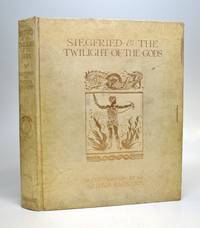
19111286384London: Heinemann 1911. Limited Edition. Hardcover. Quarto; VG-; Vellum binding; Silk ties to front fore edge; Gilt lettering on spine gilt design to front; Some bowing to boards as is typical for this edition; Upper edge gilt all other edges deckle cut; Binding is tight; Text block is toned but free of marking; All images clean; Book has been SIGNED by Rackham and is numbered 944 of an edition of 1150. This volume contains the second and third days of the Ring of the Niblung Trilogy: Siegfried and The Twilight of the Gods. Shelved Case 14 Dupont. 1286384. Shelved Dupont Bookstore. Heinemann hardcover books
191321543London: Harrap 1913. 1st ed. Hardcover. Fine. Pogany Willy. 4to limp brown suede binding "velvet calf yapped" stamped with blind and gilt cover illustration and gilt decorated spine 8 mounted color plates by Willy Pogany and lavishly illustrated in line and gray-scale throughout. Bound in ribbon book mark brittle with age else fine in aged glassine wrapper and original publisher's 2-part illustrated box. Uncommon with the box. <br/><br/> Harrap hardcover books
18712499291871. unbound. 2 pages front and back 8.5 x 5.25 inches no place September 22 1871. Elegant letter signed "Cosima" by the daughter of Franz Liszt second wife of Richard Wagner and director of the Bayreuth Festival for 31 years. This letter thanks a friend for sending her clothing measurements and giving her carte blanche for both color and make of an item of clothing. She also writes that the children's maid has gone away leaving her to do the washing hairdressing clothing playing teaching running up and down stairs like a rat ".je lave je coiffe j'habille je joue j'enseigne je cours comme un rat a travers les escaliers.". She ends with a request for used foreign stamps for her daughter Loulou's collection. Natural folds; very good condition.<br/><br/> unknown books