54 318 résultats
193260836Le Divan, coll. « Le Livre du Divan » 1932 Un des 1800 exemplaires numérotés sur Vergé Lafuma. 3 tomes. In-16 10,5 x 15 cm. Reliures de l’époque plein vélin crème, couvertures et dos d’origine conservées, pièces de titre maroquin marron, têtes dorées, XVII + 358 - 412 - 418 pp. Exemplaires en très bon état. Tome I : école de Florence. - école romaine. - école de Mantoue. - école de Crémone. - Volume II : école de Parme. - école de Venise. - école de Bologne. - Volume III : école de Bologne.
25080Paris N.R.F Gallimard. Collection " L'Univers des Formes " 1972 in 4 (28x22,5) 1 volume reliure toilée rouge de l'éditeur, sous jaquette illustrée en couleurs, 434 pages [3], avec 419 illustrations en noir et blanc et en couleurs. Collection '' l'Univers des formes ''. Edition originale. Bel exemplaire ( Photographies sur demande / We can send pictures of this book on simple request )
1972WOC-2686Nombreuses illustrations en couleurs et en noir et blanc et cartes. Éditions Gallimard nrf, 29 août 1972. In-4 (28x4,5x21,5cm)de percaline rouge éditeur sous jaquette illustrée en couleur. 434pp.+ cartes + table
brossura Tanio Romano con tono anche satirico viviseziona tutti gli errori, orrori e "fake news" sull'Unità d'Italia riportati sui libri antirisorgimentali o borbomonarchici, sul web o sui social. Vengono smontate per la prima volta vecchie e nuove "bufale" come ad esempio altri 60 "primati" del Regno delle Due Sicilie. Sorprende la scoperta del "razzismo antipartenopeo" dei dittatori borbonici, nonché i loro furti e le loro truffe ai danni dei meridionali. Viene anche segnalato che il Reame dei Borboni ebbe casi di schiavismo ancora pochi anni prima del Risorgimento, che non pochi settori economici erano fallimentari o in perdita, che tutti gli ultimi Papi hanno ritenuto "provvidenziale" la Breccia di Porta Pia, che nell'esercito i soldati meridionali erano discriminati economicamente e socialmente rispetto agli svizzeri mercenari, che gli stessi briganti affermavano che il Regime borbonico era caduto per la grande abilità, anche guerriera, dei Mille e che invece nessuno di loro si era appositamente voluto sacrificare per Francesco II. Altra cosa occultata è che lo stesso Crocco confessò testualmente che Vittorio Emanuele II fu "un grande Re perché ci ha liberato dagli stranieri.
18280aafBasel, (Schweighauser für) Benno Schwabe, 1893, in-4°, VIII + 224 S., mit 56 teils ganzseitigen Abbildungen darunter Zinkographien, Holzschnitte, Kupferätzungen, Radierungen, unbeschnitten, Original-Leinenband mit Vergoldung.
500320504Sans date. À la fin de la Seconde Guerre mondiale dans une villa italienne transformée en hôpital la jeune infirmière Hana veille sur un aviateur anglais atrocement brûlé et méconnaissable retrouvé dans le désert africain. Autour d'eux dans une atmosphère de fin du monde d'autres personnages dévoilent leurs secrets tandis que le passé énigmatique du patient et sa relation avec Hana se dévoilent
500331173Sans date.
Rome, École française de Rome, 1948; in-8, 18 pp. + 3 pl. hors-texte, couverture et cahiers agrafés (non coupé). Extrait des Mélanges d'Archéologie et d'Histoire publiés par l'École Française de Rome, année 1947.
In 8, p. 249, br. orig.
br. Senza il Sud, l'Italia sarebbe più ricca, e crescerebbe di più. Le regioni del Sud inghiottono senza frutto un fiume di risorse pubbliche. Sono soldi sprecati, sottratti all'Italia che produce ed è costretta a mantenere i meridionali. Sono soldi che finiscono nelle mani di politici corrotti e organizzazioni criminali. D'altronde i meridionali sono diversi dagli altri italiani: non hanno senso civico, sono familisti, hanno storia e cultura a sé. Questi sono gli argomenti del teorema meridionale. Che ha una sua logica. Ma è falso. Questo libro dimostra perché.
br. Quest'opera racchiude il prezioso contributo di vari studiosi e affronta il complesso tema del mondo dei morti tra preistoria e tarda antichità, un lavoro che poggia una lente d'ingrandimento sulle necropoli e sull'architettura necropolare in Sicilia e Magna Grecia.
1948_201701018Rome, École française de Rome, 1948 ; in-8, 18 pp. + 3 pl. hors-texte, couverture et cahiers agrafés (non coupé). Extrait des Mélanges d'Archéologie et d'Histoire publiés par l'École Française de Rome, année 1947.
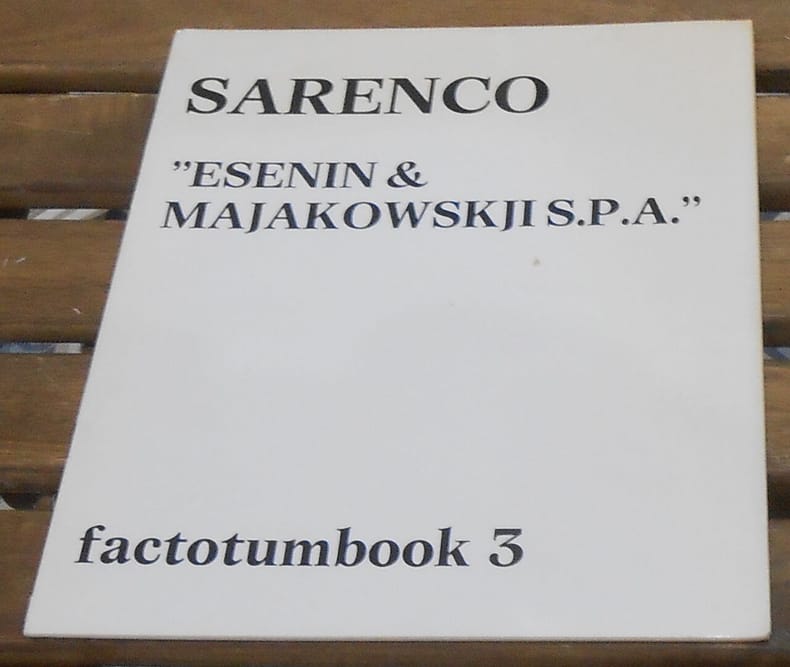
1978100074830Calaone-Baone (Italie). 20 5 cm x 27 cm. 1978. Broché. 15 pages. Calaone-Baone (Italie) factotumbook 3 éditions factotum avril 1978 Agrafé 20 5 cm x 27 cm 15 pages. Poèmes en italien de Sarenco. Très bon état
Barcelona, Daniel Cortezo, 1886 (Biblioteca 'Arte y Letras'). 4to.; X-411 pp., 1 h. Con ilustraciones de F. Gómez Soler. Encuadernación original en tela estampada de Pasco.
Barcelona, Casa Editorial Maucci, 1909 (Biblioteca 'Arte y Letras'). 4to. mayor; VI-364 pp., 1 h. Encuadernación original en tela estampada.
Madrid, Los Contemporaneos, 1922. 4to; 23 pp. sin numerar, impresas a doble columna. Cubiertas originales de Yzquierdo Durán.
21x13. 222p. Sello anterior poseedor. Cubierta rozada. Lám. Enc. 1/2 tela cart. Ed.
Barcelona, Casa Editorial Araluce, 1931. 4to.; VI-222 pp., 1 h. y ocho láminas. Enc. original en cartoné.
Original illustrated paper wrappers. 4to. Pages 471-536; 26 cm. Divided into multiple sections. Hebrew Printing in Naples is by leading Jewish bibliographer, and head of the NYPL Jewish Division, Joshua Bloch. Also includes, Pennsylvania Dutch Folk Art and Architecture, and Kingston to Newson to Blake. Includes facsimile of a beautiful Hebrew book from Naples. The Jews in Italy, Spain and Portugal were the first to make use of the newly-invented art of Gutenberg for the production of Hebrew books. Hebrew printing presses were set up in various parts of those countries, and produced virtually all known Hebrew books printed during the fifteenth century. Naples, the largest and most beautiful city of Lower Italy, became an early and quite important center of Hebrew printing, second only to Soncino, even as it had become a large center of Jewish life. Though of short duration, the Neapolitan was perhaps the most cosmopolitan Jewish community in the fifteenth century. With the exception of Soncino, none of the cities in Spain, Portugal or Italy can claim the production of as many Hebrew incunabula as were printed in Naples in less than a decade. The periodical was published monthly from 1897-1977. SUBJECT (S) : Bibliography, Periodicals. OCLC lists 22 holdings worldwide. Toning to pages. Minimal staining and rubbing. Very dusty. Very good condition. (AMR-53-13)
Original illustrated paper wrappers. 4to. Pages 471-536; 26 cm. Divided into multiple sections. Hebrew Printing in Naples is by leading Jewish bibliographer, and head of the NYPL Jewish Division, Joshua Bloch. Also includes, Pennsylvania Dutch Folk Art and Architecture, and Kingston to Newson to Blake. Includes facsimile of a beautiful Hebrew book from Naples. The Jews in Italy, Spain and Portugal were the first to make use of the newly-invented art of Gutenberg for the production of Hebrew books. Hebrew printing presses were set up in various parts of those countries, and produced virtually all known Hebrew books printed during the fifteenth century. Naples, the largest and most beautiful city of Lower Italy, became an early and quite important center of Hebrew printing, second only to Soncino, even as it had become a large center of Jewish life. Though of short duration, the Neapolitan was perhaps the most cosmopolitan Jewish community in the fifteenth century. With the exception of Soncino, none of the cities in Spain, Portugal or Italy can claim the production of as many Hebrew incunabula as were printed in Naples in less than a decade. The periodical was published monthly from 1897-1977. SUBJECT (S) : Bibliography, Periodicals. OCLC lists 22 holdings worldwide. Minimal edgewear. Minimal dampstaining. Toning to pages. Minimal staining and rubbing. Very dusty. Good condition. (AMR-53-13A)
1st Edition. Original Illustrated Wrappers. 8vo. 13, [32] pages ; 23 cm. In Italian. Inscribed by the author on the title page. Catalog from Longarettis One-Man-Show at the Museo Del Duomo Di Milano (The Museum at the Milan Cathedral) . Longaretti: From October 21st to November 12th, 1989. A scarce exhibition catalog from the internationally acclaimed 20th century Italian artist. The exhibit was held by the City of Venice at the Centro Communal di Cultura. Trento Longaretti (1916 Present) is an Italian painter from Treviglio, in the Province of Bergamo in Lombardy. He studied at the Brera Academy in the 1930s, where he was taught by renowned artists including painters Aldo Carpi and Pompeo Borra, and sculptors Francesco Messina and Marino Marini. He says that painting is an elixir for long life, and continues to paint and exhibit as a centenarian (Wikipedia, 2017) OCLC lists 3 copies worldwide (Zentralinstitut Fur Kunstgeschichte, Biblio Hertziana Institut Fur Kunstgesch, Kunsthistorisches Institut In Florenz) , with none in the United States. Some wear to wrappers but overall very good condition. (ITART-1-48)
196911959DBHamburg., Kunstverein in Hamburg., 1969. 18 x 17 cm. 16 unpaginierte S. Text./ 32 S. Abbildungen. Illustrierter OKarton., 11959D Erste Auflage. Einbandkanten mit kleinen Bereibungen, Rückendeckel mit kleiner Knickspur. Sonst gutes bis sehr gutes Exemplar.
Carta intelata della misura 65,5 x 43 Divisa in riquadri e ripiegata con brossura originale a chiusura e riportante i titoli e la legenda dei simboli. Carta acquarellata a mano e comprende oltre al territorio svizzero, la parte italiana con i laghi 'Maggiore e di Como'.