Venice Laws, StatutesBiblio.com
2 076 résultats
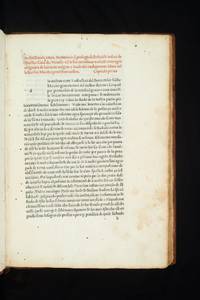
147712052Venice: Filippo di Pietro 1477. CONTEMPORARY WOODEN BOARDS backed with more recent leather no endleaves spine lined with a fragment of a 14th-century vellum manuscript evidence of clasp and catch. <p> FIRST EDITION OF THE LAWS GOVERNING VENICE AND ITS EMPIRE. Not dependent on Roman precedents these laws set the civil and criminal procedures of Europe's longest lived overseas empire - the island republic its mainland holdings immediately to the west and its colonial possessions: the stato da mar.<br /> Reflecting the preeminently commercial character of the Venetian state the majority of these statutes concern real and moveable property contracts pledges debts loans inheritance interest obligations counterfeit merchandise and trading partnerships. The nearly complete overlap in the 15th century of private Venetian seagoing business ventures and state military operations means THE RIGHTS OF WOMEN FIGURE PROMINENTLY IN THE CODE as their male family members were long abroad. Multiple and complex jurisdictions and appellate avenues developed in response to the variety of local statutes customary laws special privileges and feudal jurisdictions of the maritime and mainland states. "The judicial system played a significant role in tying the disparate parts of the maritime state together" O'Connell.<br /> THE VENETIAN MARITIME CODE CONCERNS COMMERCIAL PROJECTS AND MILITARY EXPEDITIONS. These fifty-two articles and their nine supplementary "corrections" deal with towing disabled vessels cargo luggage allowance victualing entering and leaving port arming sailors damage liability manifests transport of pilgrims and cavalry deserters daily rations of water and wine Black Sea voyages and so on. According to Cicogna these statutes were not reprinted.<br /> THIS FOLIO IS THE FIRST NON-LITERARY WORK TO BE PRINTED IN THE VENETIAN DIALECT and the fifth overall. In good condition pale stains worm holes seventeen leaves with neatly repaired worm trail not affecting legibility contemporary manuscript headlines and foliation.<br /> ¶O'Connell Men of Empire: Power and Negotiation in Venice's Maritime State 75 78 80-1 84-90 & 96; Cicogna Saggio di bibliografia veneziana 1206 "Prima e rara edizione" 1241 criminal code & 1263 maritime code; Doumerc "An Exemplary Maritime Republic: Venice at the End of the Middle Ages" in War at Sea in the Middle Ages and the Renaissance edd. Hattendorf & Unger 151-65; Bibliografia delle edizioni giuridiche antiche in lingua italiana I: 5; Manzoni Bibliografia degli statuti.dei municipii italiani I: 529-30; IGI 10143; Gamba Serie degli scritti impressi in dialetto veneziano ed. Vianello 454; ISTC is00724000; Goff S-724.</p> Filippo di Pietro unknown
In-4° oblungo, occhietto inciso, titolo a stampa, legatura in pergamena, nervi al dorso, 1 carta di spiegazioni, 60 tavole (di cui 9 ripiegate), titolo inciso (Navigli del Giappone), 12 tavole, titolo inciso (Barche di Venezia), 2 carte di spiegazioni, 11 tavole (di cui 2 ripiegate). In totale 83 tavole di navi (di cui 11 ripiegate). Edizione originale estremamente rara. L’unico esemplare conosciuto nelle biblioteche pubbliche è quello della Marciana a Venezia. L’altro esemplare citato da Armao (Correr) non esiste più in questa biblioteca. Quello della Marciana ha solo 74 tavole. Armao, pp 171-72 conta 86 tavole (oltre al testo e il titolo). Crediamo che si tratti d’un errore: anche il numero di tavole ripiegate dato da Armao è inferiore a quello dell’esemplare in questione. Presente qualche piccolo restauro a due o tre tavole, altrimenti esemplare fresco proveniente dal Dipartimento Idrografico di Russia, di cui porta il timbro al verso del titolo: si ricorderà come quest’opera venne composta dal Coronelli per la Nazione Moscovitica, come è indicato nel titolo, v. Armao p.171.: “Vivissimo era a Venezia l’interesse per la costruzione di navi e quando il Governo veneto affidò al suo cosmografo e lettore di geografia l’istruzione di un gruppo di ‘cavalieri moscoviti’ inviati a venezia da Pietro il Grande nel 1697, Coronelli curò il disegno di tutta una serie di navigli che fece poi incidere su rame”. V. “Il P. Vincenzo Coronelli nel III centenario della nascita” p. 357 n.41, che dà la seguente collazione: tav. 71+15 e pp 2+4 In-4 ° oblong, engraved half title, printed title, vellum binding, bands on spine, 1 explanation leaf, 60 plates (9 of which folded), engraved title (Navigli of Japan), 12 plates, engraved title (Boats of Venice), 2 explanatory leaves, 11 plates (2 of which folded). In total 83 plates of ships (11 of which folded). Extremely rare original edition. The only copy known in public libraries is that of the Marciana in Venice. The other copy cited by Armao (Correr) no longer exists in this library. The Marciana one has only 74 plates. Armao, pp 171-72 has 86 plates (in addition to the text and title). We believe this is an error: even the number of folded tables given by Armao is less than that of the specimen in question. There are some small restoration with two or three plates, otherwise a fresh copy from the Hydrographic Department of Russia, whose stamp is on the back of the title: this work was composed by Coronelli for the “Nazione Moscovitica”, as indicated in the title , v. Armao p.171 .: “The interest in the construction of ships was very high in Venice and when the Venetian government entitled its cosmographer and geographer to the instruction of a group of 'Muscovite knights' sent to Venice by Pietro the Great in 1697, Coronelli oversaw the design of a whole series of ships that he then engraved on copper ". V. "Father Vincenzo Coronelli on the third centenary of his birth" p. 357 n.41, which gives the following collation: tav. 71 + 15 and pp 2 + 4
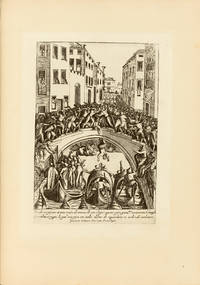
NY24<p>Venice Giacomo Franco Forma in Frezzaria al Insegna del Sole con privilegio s.d. 1610.</p><p>Small folio volume.</p><p>"<i>1 . title engraved with same view of Venice than the one for "Habiti delle Donne" 1 l. not numbered dedication to Vincent de Gonzague de Mantoue dated 1st January 1610 and printed in roman characters 25 plates out of pagination and not numbered.</i></p><p><i>Those plates represent 34 figures of men and women in very rich Venitian costumes life scenes </i></p><p><i>festivities.</i>" Colas n° 1108.</p><p>360 x 260 mm. Dimensions of the engravings: 258 x 190 mm.</p><p><b>Very rare first edition of one of the most famous books on Venice its festivities costumes and activities around 1600.</b></p><p>Colas <i>Bibliographie Générale du Costume</i> n°1108 col. 384-5; <i>Katalog Der Freiherrlich Von Lipperheide'schen Kostümbibliothek</i> repr. 1963 n°1324 p. 527.</p><p>"This collection offers great interest in the costumes of Venice during its greatness. It is sought after today especially as it has become extremely rare ". Vinet Bibliographie méthodique des Beaux-Arts.<br /><br /><b>This collection is so rare that Brunet never found a complete copy and only described an incomplete one</b> Brunet II 1378. As for Vinet he doubts the number of plates following the number 24 with a "" Vinet col 283 n° 2291.<br /></p><p>The copy of the <i>British Museum </i>only contains 20 plates out of 25 and one title leaf is missing. <br /></p><p><b>Title engraved with a birds 'eye view of Venice on an architectural frame with a view of the Rialto bridge and 24 extremely fine engravings.</b><br /><br /><b>The book shows in an extraordinary detailed way the various festivities processions and past times of the city as well as great moments in its history.</b><br /><br />"Assimilated to the genre of the costume book the work by Giacomo Franco 1556 - 1620 drawer and engraver born in Venice also shows engravings of a strong interest for the history of manners and customs of the Serenissima in the 16th and 17th centuries: festivals entertainment maritime games regattas… and carnival. The 1610 edition is probably the first. The number and order of the engravings vary greatly from one edition to another and between copies of the same edition.<br /></p><p>The copy is composed of 26 copper plates including one double plate all except one signed by Giacomo Franco. The engraving named Feste che si sogliono fare per la città della caccia del toro amazzar la Gata col capo raso pigliar l'anadre pigliar l'occa nell'acqua et altro features games with animals: a bear fighting with dogs a tied up cat a goose being plunged into water a duck hanging from a mast and a chased bull. Attested since the Middle Ages bull hunting is a traditional carnival game in the Renaissance particularly in Rome and Venice". Virtual exhibition organized by the Mazarine Library<i> Libri italiani lecteurs français</i> "Balls festivals and banquets".</p><p>"This book of engravings depicts the costumes festivals and social life of early seventeenth-century Venetians. There is no text other than a short descriptive sentence at the bottom of each engraving. Major Venetian landmarks are easily recognizable <b>and the small ovoid map on the title-page is regarded by some scholars as an important example of early Venetian cartography.</b></p><p>Very little is known about the Venetian engraver Giacomo Franco. The son of painter Giovanni-Battista Franco 1510-1561 with whom he began his artistic training at the age of eleven he worked as a painter engraver woodcutter and dealer in graphics and books. For a while he studied in Bologna with Agostino Carracci 1557-1602. In the early 1580s they opened a private teaching academy that soon became a center for progressive art. In their teaching they laid special emphasis on drawing from life and clear draughtsmanship became a quality particularly associated with their school. </p><p>In 1595 Franco took over his father's workshop and eventually became a well-known publisher. Although he was not documented as belonging to the booksellers' or printers' guilds he is recorded in 1606 and again in 1619 as belonging to the painters' guild. Franco's determination to be recognized as an artist is reflected in his will in which he refers to himself as a "designer."</p><p>The <i>Habiti d'huomini</i> is a potpourri of depictions of Venetian costumes processions and celebrations. Citizens are seen watching regattas fighting on bridges conversing in the Piazza San Marco and on the Rialto Bridge and marching in ceremonial procession into the Doge's Palace with flags flying and horns and flutes playing. Even the ubiquitous laundry is seen hanging on the line in the background. Men with rifles hunt ducks in the lagoon. The Doge's mighty Bucintoro warship returns from battle escorted by gondolas and saluted by cannon explosions. Carnival of course has a page of its own which depicts citizens in masks some of whom seem to be making best use of the cover of darkness to contact a prospective lover. The appropriately dressed widow is pictured heavily veiled and a married gentlewoman has two outfits from which to choose one for inside the house another for outside. The men are almost as ornately dressed as the women. The Doge in his palace wearing fine brocade and a crown moves his hand in a sort of blessing as – through a window behind him – life in the Piazza San Marco goes on". The Boston Athenaeum Museum</p><p><i>"From the middle of the 15th century the Venetian institutions came to maturity which allows Venice to parade every week in the fullness of its myth under the eyes of the Venetians and the whole world Urbi et orbi - including the Turks and the Chinese. Venice then shows itself united eternal strong and indestructible</i>. "<br /><br />One of the great moments of this frenzied proclamation of the political perfection of Venice is the rite of the <i>trionfo </i>- or ducal procession - where hierarchy order harmony and collective respect are the characteristics of this state liturgy.<br /><br />This urban rite we could even say ritual is a great moment in the political life - and in the life itself - of Venice. Indeed the ducal procession is intended to be a proclamation of the cohesion of the State and its strong structure in the eyes of the Venetians as in the eyes of foreigners who will necessarily receive echoes. The Milanese Pietro Casolo passing through Venice at the end of the 16th century was impressed by the unchanging - and disciplined - ordering of these Venetian processions:<br /><br /><i>In my opinion one man seemed to rule all things and he was obeyed by all without resistance. It filled me with admiration as I have never seen such a discipline at similar shows.</i><br /><i>They walk two by two behind the doge in a completely different order from what I have seen in many religious or secular courts where as soon as the prince has passed everything goes in all directions and in disorder. Here in front and behind everything is as in a perfect order as possible.</i><br /><br />The ordering and place of each are not the result of chance but the result of a rigorously thought out and unchanging ceremony. This immutability is demonstrated by the existence of commented engravings that is to say that the artists note the order of the succession of the characters as an element as perennial as the architectures that frame this ceremony. An example the engraving of Giacomo Franco which shows us the beginning of the procession which enters the basilica. The frieze arrangement evokes the Roman triumphs of the Ara Pacis or Trajan's Column." Marie-Viallon The Ducal procession in Venice.<br /></p><b>Precious and beautiful copy coming from the library of the 19th century </b><i><b>A. Brölemann</b></i><b> with ex-libris.</b><p><b><br /></b></p><p><u>Français :</u><br /></p><p>Venice Giacomo Franco Forma in Frezzaria al Insegna del Sole con privilegio s.d. 1610.</p><p>Petit in-folio.</p><p>" <i>1 f. titre gravé avec la même vue de Venise que pour " Habiti delle Donne " 1 f. non chiffr. dédicace à Vincent de Gonzague de Mantoue datée du 1er janvier 1610 et imprimée en caractères romains 25 planches h. t. gr. non chiffr.</i></p><p><i>Ces planches portent 34 figures d'hommes et de dames dans de très riches costumes vénitiens des scènes de mœurs des réjouissances.</i> " Colas n° 1108.</p><p>Le présent exemplaire compte 1 titre gravé avec vue de Venise et 24 planches portant 30 figures d'hommes et de dames ; manquent le feuillet de dédicace et une planche portant 4 figures mais le nombre et l'ordonnancement des gravures sont très variables entre les exemplaires d'une même édition " this fine collection of detailed views and scenes of Venetian life and costume was issued with varying numbers of plates ". Qq. rousseurs en marge du frontispice. Le tout monté sur grand papier et relié vers 1850 par <i>Duru</i> en demi-maroquin rouge à coins. </p><p>360 x 260 mm. Dimensions des gravures : 258 x 190 mm.</p><p><b>Edition originale rarissime de l'un des livres les plus célèbres sur Venise ses fêtes costumes et activités vers l'année 1600.</b></p><p>Colas <i>Bibliographie Générale du Costume</i> n°1108 col. 384-5; <i>Katalog Der Freiherrlich Von Lipperheide'schen Kostümbibliothek</i> repr. 1963 n°1324 p. 527.</p><p>" <i>Ce recueil offre un grand intérêt pour les costumes de Venise pendant sa grandeur. On le recherche aujourd'hui d'autant plus qu'il est devenu d'une extrême rareté</i> ". Vinet <i>Bibliographie méthodique des Beaux-Arts</i>.</p><p><b>Ce recueil est si rare que Brunet n'a jamais rencontré d'exemplaire complet et ne décrit qu'un exemplaire incomplet</b> Brunet II 1378. Quant à Vinet il doute du nombre de planches faisant suivre le chiffre 24 d'un " " Vinet col 283 n° 2291.</p><p>L'exemplaire du <i>British Museum</i> ne contient que 20 planches sur 25 et il manque le feuillet de titre. </p><p><b>Titre gravé avec vue à vol d'oiseau de Venise dans un cartouche architectural surmonté d'une vue sur le pont du Rialto et 24 gravures extrêmement fines. </b></p><p><b>Le livre montre avec un détail extraordinaire les différentes festivités processions et temps passés de la ville ainsi que de grands moments de son histoire.</b></p><p>" Assimilé au genre du livre de costumes l'ouvrage de Giacomo Franco 1556 - 1620 dessinateur et graveur né à Venise montre également des gravures d'un fort intérêt pour l'histoire des mœurs et coutumes de la Sérénissime aux XVIe et XVIIe siècles : fêtes divertissements joutes maritimes régates… et carnaval. L'édition de 1610 est probablement la première. Le nombre et l'ordonnancement des gravures sont très variables d'une édition à l'autre et entre les exemplaires d'une même édition.</p><p>L'exemplaire exposé comporte 26 planches gravées sur cuivre dont une double planche toutes sauf une signées de Giacomo Franco. La gravure intitulée Feste che si sogliono fare per la città della caccia del toro amazzar la Gata col capo raso pigliar l'anadre pigliar l'occa nell'acqua et altro met en scène des jeux avec des animaux : un ours se battant avec des chiens un chat ligoté une oie que l'on plonge dans l'eau un canard accroché à un mât et un taureau pourchassé. Attestée depuis le Moyen Âge la chasse au taureau est un jeu traditionnel du carnaval à la Renaissance en particulier à Rome et à Venise ". Exposition virtuelle organisée par la Bibliothèque Mazarine <i>Libri italiani lecteurs français</i> " Bals fêtes et banquets ".</p><p>"This book of engravings depicts the costumes festivals and social life of early seventeenth-century Venetians. There is no text other than a short descriptive sentence at the bottom of each engraving. Major Venetian landmarks are easily recognizable and <b>the small ovoid map on the title-page is regarded by some scholars as an important example of early Venetian cartography</b>.</p><p>Very little is known about the Venetian engraver Giacomo Franco. The son of painter Giovanni-Battista Franco 1510-1561 with whom he began his artistic training at the age of eleven he worked as a painter engraver woodcutter and dealer in graphics and books. For a while he studied in Bologna with Agostino Carracci 1557-1602. In the early 1580s they opened a private teaching academy that soon became a center for progressive art. In their teaching they laid special emphasis on drawing from life and clear draughtsmanship became a quality particularly associated with their school. </p><p>In 1595 Franco took over his father's workshop and eventually became a well-known publisher. Although he was not documented as belonging to the booksellers' or printers' guilds he is recorded in 1606 and again in 1619 as belonging to the painters' guild. Franco's determination to be recognized as an artist is reflected in his will in which he refers to himself as a "designer."</p><p>The <i>Habiti d'huomini</i> is a potpourri of depictions of Venetian costumes processions and celebrations. Citizens are seen watching regattas fighting on bridges conversing in the Piazza San Marco and on the Rialto Bridge and marching in ceremonial procession into the Doge's Palace with flags flying and horns and flutes playing. Even the ubiquitous laundry is seen hanging on the line in the background. Men with rifles hunt ducks in the lagoon. The Doge's mighty Bucintoro warship returns from battle escorted by gondolas and saluted by cannon explosions. Carnival of course has a page of its own which depicts citizens in masks some of whom seem to be making best use of the cover of darkness to contact a prospective lover. The appropriately dressed widow is pictured heavily veiled and a married gentlewoman has two outfits from which to choose one for inside the house another for outside. The men are almost as ornately dressed as the women. The Doge in his palace wearing fine brocade and a crown moves his hand in a sort of blessing as – through a window behind him – life in the Piazza San Marco goes on". The Boston Athenaeum Museum</p><p><i>" Dès le milieu du XVe siècle les institutions vénitiennes sont parvenues à maturité ce qui permet à Venise de parader chaque semaine dans la plénitude de son mythe sous les yeux des Vénitiens et du monde entier </i><i>Urbi et orbi</i><i> - y compris les Turcs et les Chinois. Venise se montre alors unie forte éternelle et indestructible.</i>"</p><p>Un des grands moments de cette proclamation forcenée de la perfection politique de Venise est le rite du<i> trionfo</i> - ou procession ducale - où hiérarchie ordre harmonie et respect collectif se veulent les caractéristiques de cette liturgie d'État.</p><p>Ce rite voire rituel urbain est un grand moment de la vie politique - et de la vie tout court - de Venise. En effet la procession ducale se veut une proclamation de la cohésion de l'État et de sa forte structuration aux yeux des Vénitiens comme aux yeux des étrangers qui en recevront nécessairement des échos. Le milanais Pietro Casolo de passage à Venise à la fin du XVIe siècle a été impressionné par l'ordonnancement immuable - et discipliné - de ces processions vénitiennes : </p><p><i>Selon moi un seul homme semblait ordonner toutes choses et il était obéi de tous sans résistance. Cela m'a rempli d'admiration car je n'ai jamais assisté à une telle discipline lors de spectacles similaires. Ils marchent deux par deux derrière le doge dans un ordre tout différent de ce que j'ai vu dans de nombreuses cours religieuses ou profanes où dès que le prince est passé tout part dans tous les sens et en désordre. Ici devant et derrière tout est aussi parfaitement en ordre que possible.</i></p><p>L'ordonnancement et la place de chacun ne sont pas le fruit du hasard mais le résultat d'un cérémonial rigoureusement pensé et immuable. Cette immuabilité est démontrée par l'existence de gravures commentées c'est-à-dire que les artistes notent l'ordre de la succession des personnages comme un élément aussi pérenne que les architectures qui encadrent cette cérémonie. Un exemple la gravure de Giacomo Franco qui nous montre le début de la procession qui entre dans la basilique. L'ordonnancement en frise évoque les triomphes romains de <i>l'Ara pacis</i> ou de la colonne Trajane. " Marie-Viallon La procession ducale à Venise.</p><p><b>Précieux et bel exemplaire provenant de la bibliothèque du </b><b>XIXe siècle </b><i><b>A. Brölemann</b></i><b> avec ex-libris. </b></p> hardcover
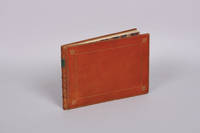
18254504048Probably Venice 1825. A few spots but generally in fine condition the watercolours well preserved and bright. Oblong small quarto album 185 x 275mm containing forty-six watercolours of various sizes and shapes ranging from delicate circular vignettes to larger scenes of urban and theatrical life elegantly bound in nineteenth-century ochre morocco with ornate gilt decoration. <p><p>A beautiful suite of watercolours including a superb series of scenes of a contemporary Venetian commedia dell'arte troupe by the Venetian painter and engraver Novelli. Featuring images from both the stage and street-performance including acrobatics and conjuring each of the 46 deftly drawn images of which 11 are signed is of considerable quality. </p> <p>Francesco Novelli 1764-1836 vividly and imaginatively illustrated Algarotti's Opere 1791-94 assisting his father Don Quixote 1819 and Gil Blas 1820. He is also known for illustrating works such as the Fasti Veneziani 1794 hinting at his abiding interest in the theatre and the performing arts. </p> <p>One of Novelli's most important teachers was the French artist Vivant Denon who visited Venice in the 1790s. Denon seems to have had a formative influence on Novelli's career not least because he introduced his pupil to the engravings of Rembrandt. This rare and exceptional collection provides a wonderful insight into Italian theatre in its golden age. The album includes an incomparable collection of Novelli's watercolours with the greatest number being piquant images of a Venetian troupe of the commedia dell'arte with especially fine depictions of Pierrot himself as well as other key figures such as Columbine and Harlequin. It includes a remarkable series of scenes from a stage play as well as studies of the individual performers. Indeed many of these images are so precisely rendered that it is likely that Novelli depicts a well-known troupe perhaps one with which he was personally connected.</p> <p>The remaining images cover all aspects of contemporary life including several military vignettes perhaps scenes from the diorama as well as charming rural scenes. Several show Novelli's work at its most sympathetic especially in his animated studies of street vendors and town squares. It is also likely that many of these scenes derive from a period when the troupe was on the road especially as some of the liveliest show street performers conjurors and Punch and Judy shows. These scenes reveal Novelli at the height of his powers especially his skill in capturing the energy and fascination of the crowds that gathered to watch the impromptu performances.</p> <p>Unpublished although the compilation of the album suggests that publication might originally have been Novelli's intention. This is a superb collection of images by one of the pre-eminent artists of his generation providing an insight into Novelli's involvement with the Venetian theatre as well as giving a unique opportunity to study the daily life of a travelling group of European artists and musicians at the turn of the nineteenth century.</p> <p>Make-up of the album:-</p> <p>• three portraits of peasants:</p> <p>• a fishmonger with his left sleeve hanging loose</p> <p>• a peasant women with a cob of corn</p> <p>• a profile of a woman in an elaborate scarf</p> <p>• a uniformed cuirassier rejects the entreaty of a woman</p> <p>• a lively scene at the market with a grenadier a Pierrot and a harlequin</p> <p>• a crowd gathers around a conjuror in the town square</p> <p>• children animatedly watch a Punch and Judy show</p> <p>• a street performer shows a dancing bear while an urchin shows a monkey</p> <p>• two small round scenes:</p> <p>• the first of a cavalry charge</p> <p>• the second a peaceful domestic scene around the hearth</p> <p>• an infantry charge perhaps a real scene or a diorama</p> <p>• three generations of women interior</p> <p>• a lively outdoors scene of the stables</p> <p>• two women work inside a darkened barn</p> <p>• four liveried horses with a cart full of hay</p> <p>• two small round scenes:</p> <p>• a scene in the yard of a hostelry</p> <p>• cooking in a well-provisioned kitchen</p> <p>• two small square scenes:</p> <p>• infants and burghers at a Punch and Judy show</p> <p>• small children crowd around an itinerant projectionist</p> <p>• two small square scenes:</p> <p>• dancing a lively jig</p> <p>• the children of the house at lessons</p> <p>• two small square scenes:</p> <p>• a muzzled bear is made to dance</p> <p>• masked members of a commedia dell'arte troupe enjoy a repast</p> <p>• two small square scenes:</p> <p>• a corpulent gent mounts his horse</p> <p>• a befrocked gentleman loses his hat in an impromptu swing</p> <p>• two small square scenes:</p> <p>• a mother with swaddled child and infant greets some friends</p> <p>• a game of cards</p> <p>• two small square scenes:</p> <p>• Pierrot chased by a 'dog'</p> <p>• Pierrot discovers Harlequin and Columbine with stylized cartouche but no caption</p> <p>• three medium square scenes:</p> <p>• the 'dog' seems to have caught Pierrot</p> <p>• Pierrot greets Columbine</p> <p>• Pierrot astride the 'dog'</p> <p>• two small square scenes:</p> <p>• a strongman lifts four children on a table by his teeth</p> <p>• Columbine's lover hides by pretending to be a sofa</p> <p>• two small square scenes:</p> <p>• Pierrot performs a balancing act</p> <p>• Pierrot discovers Harelquin and Columbine asleep</p> <p>• two small square scenes:</p> <p>• Pierrot accosted by a Satyr</p> <p>• Pierrot offers his hat to the 'dog'</p> <p>• two small square scenes:</p> <p>• an acrobat assumes a pose</p> <p>• a different acrobat stands on his hands</p> <p>• two small square scenes:</p> <p>• a female contortionist performs a trick with four glasses and a hoop</p> <p>• a female acrobat balances on the low-wire</p> <p>• two small square scenes:</p> <p>• one of the troupe strikes a pose</p> <p>• Pierrot discovers a skeleton in his closet</p> <p>• two small square scenes:</p> <p>• the skeleton torments Pierrot at table</p> <p>• Pierrot poses</p> </p> . unknown
50710Leide.Chez C.Haak.1762.In-folio en veau raciné.115 figures en taille-douce dont 2 planches de Venise,rempliées et gravées..Doubles pages.Sous-titre en français,latin,italien.Edition originale avec des plans et des figures précises.Légère restauration invisible.Tranches rouges.Dos à 5 nerfs avec caissons ornés de fleurons dorés.Pièce de titre en maroquin.Très bel exemplaire.
1840030-I1840. Aquarell über Bleistift, auf cremefarbenem Aquarellkatron, links signiert, datiert und bezeichnet ?C. Werner f. 1840. Rom.? 24,3:33,1 cm. Provenienz: Galerie Arnoldi Livie, München. Wunderbar farbfrisches, charakteristisches Aquarell von herausragender künstlerischer Qualität! Vergleichsliteratur: Galerie Joseph Fach, Frankfurt am Main, Kat. 75 mit Farbabb. S. 71; Ausst. Katalog: Venedig Bilder in der deutschen Kunst des 19. Jahrhunderts. Karlsruhe/Paderborn, 2011, Seite 208, Farbtaf. 72.
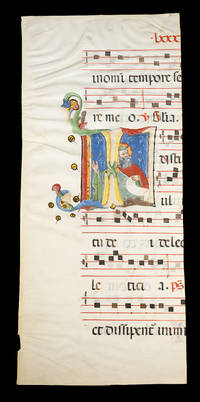
14200123<p>This exquisite miniature is by Cristoforo Cortese the most accomplished Venetian illuminator of the early fifteenth century. Executed during the formative stage of his career it once formed part of a sumptuous Camaldolese Gradual. The bearded prophet set within an initial I is rendered with Cortese's hallmark precision: expressive features painted with delicate strokes highlighted with red-rimmed haloes and radiant yellow tones. These qualities firmly align the work with Cortese's early output before 1420.</p><p>The stylistic vocabulary recalls both Florentine models and Venetian innovations. Cortese clearly drew upon the influence of Don Silvestro dei Gherarducci whose Choir Books for San Michele in Murano 1392–1399 provided prototypes for half-length prophet figures. Yet Cortese's interpretation more vibrant and emotive shows the confident individuality that would earn him recognition as the pioneer of Venetian Renaissance illumination.</p><p>The palette dominated by blues reds and yellows closely parallels related cuttings: a Bust Portrait of a Bearded Man in the Getty's Compendium moralium notabilium MS Ludwig XIV 8 f. 34v; a Saint John the Evangelist in the Victoria and Albert Museum inv. D.637B-1894; and the Entry into Jerusalem at the Fitzwilliam Museum Cambridge Marlay Cutting It. 20. The square notation on the verso written on four-line red staves rastrum 25 mm confirms its liturgical function as part of a choirbook used in monastic chant.</p><p>Provenance:<br />1. USA private collection early 20th Century framing tag S.Schwartz picture frames 128 W 42nd Street New York with a note pasted in the back of the frame "This fragment is old German. The miniature is a perfect work of art. Age no less 500 years.".</p><p>Sister Leaves Known To Exist In:<br />Victoria and Albert Museum Saint Peter initial "C";<br />Free Library of Philadelphia Saints with initials "G" and "S";<br />Additional leaves include the Apostle initial "T" and Standing Saint initial "E" formerly F. G. Zeileis collection sold at Sotheby's;<br />Cambridge Fitzwilliam Museum Entry into Jerusalem initial "D";<br />Museo Civico Medievale Bologna a prophet initial "C";<br />Softer sales—e.g. Prophet initial "V" Sotheby"s; Robert Lehman Collection;<br />Les Enluminures Paris Bearded Bishop initial "S"; Prophet and St. Paul.</p><p>Literature:<br />F. Todini in Una collezione di miniature Italiane vol. II 1994 no. VII;<br />M. Bollati Dalla Bibbia di Corradino a Jacopo della Quercia in Duecento 1997 pp. 128-29;<br />G. Freuler Tendencies of Gothic in Florence: Don Silvestro dei Gherarducci Corpus of Florentine Painting IV.7.2 1997;<br />G. Zeileis Più ridon le carte 2009 no. 11;<br />S. Panayotova "Cristoforo Cortese in Cambridge" in Miniatura. Lo sguardo e la parola 2012 pp. 186-89.</p> Illuminated Gradual on parchment
19594Venezia, dalla tipografia Andreola [et] dalla tipografia di commercio, 1828 [et] 1831. Deux volumes reliés en un, pleine percaline verte. 12 pages de texte, 48 pl. et [4]-33-[3] pages, 16 pl.
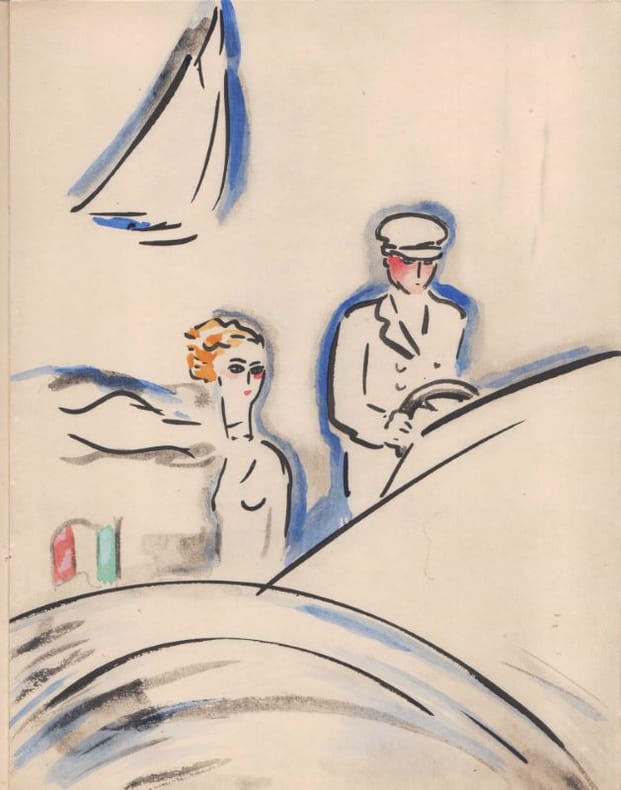
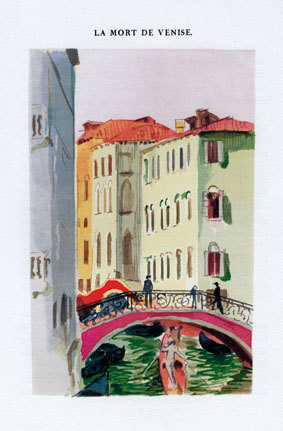
192521947Cité des Livres 1925 1 Aquarelles de Van Dongen. Paris, A La Cité des Livres, Maître coloriste Jean Saudé, 1925, grand in-4, broché, couverture illustrée d'un voilier, sous étui cartonné gris-bleu, titre en long sur le dos.
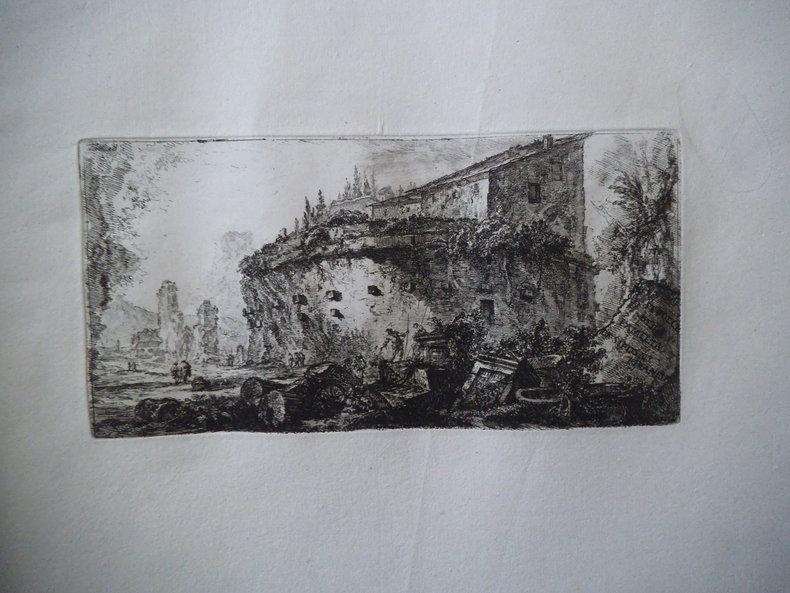
10603Suite de 28 gravures, plus les quatre pages de titre, elles aussi gravées, sur vélin fort, à grandes marges, en un volume In folio à l’italienne plein cuir fauve, 550x435mm, double filet à froid sur les plats. Titre gravé, 355x245mm à la cuvette, deuxième titre 295 x 165mm à la cuvette 3 titre 495x165mm à la cuvette.. Ponte di Rimino Indice dellie Tavole conetenute in quest’Opera (avec des erreurs dans la présentation et la numérotation des planches) planche 5 : Veduta delle’ Arco fabricato in onore d’Augusto Cav. Piranesi inc.en marge inférieure le numéro dans la planche angle supérieur droit.397x257 à l cuvette. Planche 6 : Parto del Foro di Nerva , numéro dans la planche angle supérieur droit. 270x136mm à la cuvette. Planche 7 : Arco di Tito in Roma 265x130mm à la cuvette, numéro dans la planche partie supérieure droite. Planche 9 : Arco Di Constatino in Roma. Piranesi F au bas à gauche dans la gravure. Le numéro 9 est à peine visible, noyé dans les hachures. Planche11: Tempo di Giano et Arco degli Argentieri eretto a settimio Severo in Roma. Piranes Fecit , numéro dans la gravure angla supérieur droit. 266x135mm à la cuvette Planche 12 : Anfiteatro Flavius dessto il colosseo in Roma. Piranese fecit dans la marge inférieure gauche ainsi que le numéro. 273x135mm à la cuvette. Planche 13 : Arco di Settimio. 1) Tempo della concordia 2) Salta di camidoglio. Piranesi s. en marge inférieure droite Israël Silvestre del en marge inférieure gauche.. Planche 14 Ponte Senatorio aggi deto ponte Rotto 1)Tempio di Vesta-2) Tempio della Fortuna virile-3) Porte dell’antico Palation. Piraneses sc. En marge inférieure droite, Israël Silvestre del, .en marge inférieure gauche 259x122mm à la cuvette.Numéro gravé dan la planche angle supérieur droit. Planche 15 : Foro di Augusto Piranese fecit dans la gravure angle inférieur droit. Numéro dans la gravure angle supérieur droit. 265x135mm à la cuvette. Planche16 : Ponte di Rimino fabricato da Augusto e da Tiberio Imperatori. Piransesi fécit en marge inférieure gauche. Numérotation en marge inférieure gauche. 264x136mm. Planche 17 : Antichi A Roma Fuori di Roma Designate ed incise da Gaimbatistta Piranesi Architetto Veneziano Partie seconda. Piranesi fécit en marge inférieure gauche Roma Si vende d’alla auttore dirimpetto l’Academia di Franzia. Arco di Romano erroto ad Augusto. Numérotation dans la gravure angle supérieur droit. 264x130mm. Planche 18 :Sepolcro degliseipioni sull’ant via Appia. Piranese dans la gravure. Numérotation dans la gravure angle supérieur gauche. 272x136m à la cuvette. Planche 20 : Arco di Rimino fabricatada da Augusto. Piranese dans la planche, sous le titre à droite. Numérotation dans la gravure angle supérieur droit 271x137mm à la cuvette. Planche 21 : Tempio di Pola in Istria. Piranes fecit dans la petite marge inférieure gauche. Numérotation dan la marge inférieure droite. 258x126mm, à la cuvette .Planche 22 Rovesio del tempio di Pola in Istria 1) Rovescio di un altro tempio. Piranesi fecit en marge inférieure gauche. Numérotation dans la gravure angle supérieur droit. 255x130mm à la cuvette. Planche 23 : Antféteado di Pola in Istria Vicino al mare. Piranesi fecit en marge inférieure gauche ; Numérotation en marge inférieure gauche. 264x13mm à la cuvette. Planche 24 : Arci di Pola in Istria Vicino alla Porta. Piranesi fecit en marge inférieure gauche. Numérotation (tav) en marge inférieure droit. Planche 25 : Anfiteato di Verona detto l’Arena. Titre gravé dans la planche dans la partie inférieure gauche. Numérotation angle supérieur gauche. 264x130mm à la cuvette. Planche 26 : Tempo di ditunno all Venet ra fuligno e spolette Allevene. Titre et signature Piranese, gravés à la pointe au bas à droite. Numérotation angle supérieur droit. 269x135mm à la cuvette. Planche 27 : Sepolcro delle tres Fratelle curiati in Atrano Titre et signature, Piranese, gravés dans la planche, angle inférieur droit. 262x133mm à la cuvette. Planche 28 : Arco di traiano in Ancona Piranese fécit gravé au dessus du titre. 272x135mm à la cuvette. Planche 29 : Sepolco di Metella deto Capo di Bove. Piranese fecit , double signature La première gravée en majuscules, la seconde au dessous en minuscules. Il s’agit de la planche 20 dont le chiffre 0 a été recouvert du chiffre 9 à la plume. 270x136mm à la cuvette. Planche 30 : Parte dell’antica Via Appia fuoris di Porta Sebastiano circa tre miglia. Piranes fecit au bas à gauche en marge inférieure. Numérotation dans la planche angle supérieur droit. 270x135mm à la cuvette. Planche 31 Arco di Galieno 1) Facciata della chiesa di S. Vito. Piranesi fecit en marge inérieure droite. Numérotation dans la planche angle supérieur droit. 270x136mm à la cuvette. Planche 32 Tempio di Minerva Madica Franc. Piranesi fecit en marge inférieure droite Numérotation en marge supérieure droite. Belles épreuves après 1760. Une déchirure en marge extérieure d’une planche réparée, sans atteinte à la gravure. Traces de tampons effacés, avec habiles recouvrements pour certaines. Fort rare.
17175670<p>4to manuscript on vellum 23.5 x 17.1 cm 7 ff. 4 ff. vellum blanks including a full-page frontispiece illumination of Venetian Lion of St. Mark each text page with foliate borders in gold ink headings and initials in gold ink. Bound in contemporary Venetian morocco elaborately gold tooled gold block-printed foliate pastedowns. Edge wear and minor rubbing to spine and boards manuscript loose in binding oxidizing to edges of pastedowns. Marginal flaws to frontispiece illumination just touching border in places a few small wormholes elsewhere minor handsoiling.<br /></p><p>Finely illuminated early 18th-century Venetian manuscript issued by the city's Magistrato alla Sanità Health Department as a license to certify the physician Antonio Damugliano d. 1747 to practice medicine in the Venetian Republic using his propriety formula for topical salves <i>balsami</i> to treat "wounds and ulcers" f. 3v-3r. The manuscript ornately written out and decorated in gold and colored ink opens with a full-page image of the winged Lion of San Marco in the Venetian landscape which serves as an official seal of the document's authenticity and is inscribed by five <i>Provveditori</i> of the Magistrato and one notary who witnessed the certification.</p><p>This pharmaceutical license represents a rare material survival of how Venice's Magistrato alla Sanità regulated the practice of medicine in its territories even down to the level of controlling how individual practitioners could work with specific drugs. Damugliano presumably was required to keep the document on his person while plying his trade and to present it to the relevant authorities or even to his patients should his practice be called into question. The text of the document is written out twice – first in Italian and then in Latin – to suit the linguistic preferences of both the common Venetian citizen and the professional medical class.</p><p>Damugliano also known as Antimo Damulianos is noted in the document dated April 1717 as being a native of the Ionian island of Zante or Zakynthos at the time a Venetian colony and having recently returned from Moscow "where with good success and for a long time he practiced medicine with full official permission of many noteworthy people" f. 2v. Damugliano is said to have studied medicine in Europe likely in Italy specializing in contagious diseases and eventually practicing in Asia Minor Persia India China Egypt Constantinople and Trieste and to have been ordered by Emperor Charles VI 1685-1740 to treat the sick of a plague outbreak in Corinth see L. Zoes passim. Damugliano's name is also associated with a 1725 treatise entitled 'Medicina' which circulated in manuscript form in Venice and dealt with the use of salves pills and stones to treat hydrophobia see L. Zoes; we have been unable to locate a copy of this treatise. Damugliano is also recorded as having worked in Vienna where an April 1746 news magazine comments that the "very famous" Damugliano having traveled through numerous kingdoms has arrived to demonstrate the curative powers of "the wondrous Chinese stone called Bezoar" which is effective against fevers snake bites fatigue colic etc. <i>Nachtrag</i> p. 64. The bezoar stone an indigestible mass formed in the digestive tract of ruminants was lauded from the middle ages as a universal antidote to poison.</p><p> R. Palmer "Pharmacy in the Republic of Venice in the Sixteenth Century" in A. Wear et al. eds. <i>The Medical Renaissance of the Sixteenth Century</i> pp. 100-17; <i>Epeteris: Hetaireia Byzantinon Spoudon</i> vol. 43-44 1977 p. 417; H. Schmuck <i>Grieschischer Biographischer Index</i> vol. 1 p. 247; L. Zoes <i>Lexikon historikon kai laographikon Zakynthou</i> vol. 1; S. Carbone <i>Provveditori e sopraprovveditori alla Santità della Repubblica di Venezia</i>; P. Selmi "Il Magistrato all Sanità" in <i>Difesa della Sanità a Venezia Secoli XIII-XIX</i> pp. 28-50; <i>Nachtrag zu denen wöchentlich-kurtzgefaßter historischer Nachrichten Der neuern Europäischen Begebenheiten auf das Jahr 1746</i> p. 64.</p>
149325186Nuremberg: Anton Koberger for Sebald Screyer and Sebastian Kammermeister 1493. First Edition with the Latin text the bifolium with fine hand-colouring to the Venice view. This is one of the large double-page city-view woodcuts from the workshop of Mighael Wolgemut and Wilhelm Pleydenwurff beneith 24 lines of text. The view of Venice was adapted from the 1486 woodcut by Erhard Reuwich in the Sanctae Perigrinationes. It is handsomely and finely handcoloured in blues greens yellows reds grays etc. Double-page folio ca. 540 x 364 mm handsomely mounted framed and glazed. Leaves XLIII and XLIIII. In fine condition and very well preserved and presented. FROM THE FIRST EDITION OF THE NUREMBERG CHRONICLE ARGUABLY THE GREATEST ILLUSTRATED BOOK OF THE 15TH CENTURY. The artists Michael Wolgemut the well-known teacher of Albrecht Dürer and his stepson Wilhelm Pleydenwurff have been praised and admired for over five-hundred years for their contributions to one of the monuments of early printing. David Bland calls it "a marvelous book and a landmark in the history of illustration" and through the ages it has more than fulfilled Koberger's prophecy that it would be "the delight of the men of learning and of everyone who had any education at all."<br> HIGHLY IMPORTANT INCUNABLE the “Nuremberg Chronicle†is the most extensively illustrated book of the fifteenth century and after the Gutenberg Bible the most celebrated book printed in the fifteenth century. Its 1809 woodcut illustrations 1164 excluding repeats depict popes saints and other religious figures kings and emperors historical and biblical genealogies mythological and fanciful creatures natural phenomena and views of all the major cities of the known world as well as a brilliant creation sequence. In addition to the full-sheet maps of the world and of Europe twenty-nine city views such as this one span two pages and eight other cuts excluding the xylographic title page are full-page. The colophon explicitly acknowledges the contributions of the artists Michael Wolgemut and Wilhelm Pleydenwurff. Albrecht Dürer was at that time a pupil in Wolgemut's workshop and there is good evidence that he did many of the preliminary drawings for woodcuts and may even have cut some of them see Adrian Wilson THE MAKING OF THE NUREMBERG CHRONICLE. Anton Koberger, for Sebald Screyer and Sebastian Kammermeister unknown
THE UNIQUE PUBLISHER'S COPY OF BAUDIER'S MASTERPIECE, WITH ALL OF THE ORIGINAL DRAWINGS AND OVER 150 ORIGINAL ETCHINGS, SOME OF WHICH ARE UNIQUE. A SPECTACULAR LIVRE D'ARTISTE FOCUSING LARGELY ON VERSAILLES, with 31 original etchings by Paul Baudier, one of the great book artists of the 20th century. From a total edition of 163 copies, this is THE UNIQUE COPY ON JAPANESE PAPER, PRINTED FOR GUIDO COLUCCI, THE PUBLISHER. *****This copy includes: *****(1) The book itself, printed on Japanese paper (no other copies were printed on Japanese paper). It is justified "Exemplaire unique imprimÈ pour M. Guido Colucci". The 31 etchings are in final state (on Japan, of course, and unique as such), and first and the last are signed in pencil by the artist (the first etching is also warmly inscribed by the artist to Colucci). *****(2) FOUR ADDITIONAL SUITES OF THE 31 ETCHINGS: the first (remarque) state in black on Japan (UNIQUE); the first state in black on Auvergne laid paper; the second state (with many of the remarques still partially visible) in black on Auvergne (UNIQUE); the final state in bistre on Auvergne. *****(3) ALL OF THE ORIGINAL DRAWINGS FOR THE ETCHINGS USED IN THE BOOK. Most of these are executed in pencil, but several employ ink, contÈ crayon, white heightening, etc. ALL OF THESE WONDERFUL DRAWINGS ARE SIGNED BY THE ARTIST. *****(4) The four planches refusÈes in two states: first state on Japan (UNIQUE) and in first state on Auvergne (there was no second state of any of these, of course.) *****(5) The three original SIGNED drawings for the four planches refusÈes (the other planche refusÈe is based on a drawing, in the group described above, from which one of the plates used in the book was adapted.) *****(6) Six original drawings similar to those used in the book, four of which are signed by Baudier and one of which is initialed. *****(7) The original watercolor design by Baudier for the cover of the book (ultimately not used). Folio. Loose as issued in original wraps. Housed in publisher's board chemises and slipcases (this copy, for obvious reasons, is housed in two slipcases rather than one). FINE AND BRIGHT, WITH NO DEFECTS. In all, 161 original etchings, of which 97 are UNIQUE, and 39 ORIGINAL DRAWINGS. AN ASTONISHING AND IMPORTANT COPY OF AN OUTSTANDING LIVRE D'ARTISTE, IN PERFECT CONDITION.
Bibbia di Venezia (Venice bible). Scripta Maneant, 2013. Ultima traduzione completa della Sacra Bibbia a cura della CEI, con coordinamento di Mons. Giuseppe Betori. Fotografo Sandro Vannini. Opera in due volumi (ormato 29x47 cm.) : Antico Testamento (pagine 600), Nuovo Testamento (pagine 416). All’interno il testo si alterna ai capolavori dei mosaici policromi della straordinaria Basilica veneziana. Legatura in piena pelle di vitello conciata al naturale, dorsi con sei nervi e titoli stampati in oro, piatti con al centro, incassato, mosaico in vertoceramica e oro. I volumi sono custoditi in appositi cofanetti. Tiratura di 1999 esemplari. Condizione di nuovo.
192919791Paris, Société Nouvelles des Editions d’Art Devambez, 1929 ; in folio, veau bleu nuit décoré d’une gondole dorée sur les deux plats et le dos, un gondolier en action et une paline décorée, sous un ciel étoilé, titre à la japonaise en lettres fantaisie, contreplats de même, avec quatre coins carrés fauve mosaïqués et reliés par deux filets dorés gras et maigre, entourant une pièce de soie bleu-roi, garde identique, tête dorée sur témoins, couverture et dos conservés, non rogné, étui bordé (Bayard. Lyon).
1830D7073Venice: Eugenio Testolini n.d. c. 1830. Hardcover. Very Good. Publisher's half brown cloth and printed boards; oblong folio 240 x 343 mm; contains lithographed title-page with inset view of a gondolier and 11 beautifully hand-colored lithographed plates many with the embossed stamp of the publisher in the lower margin. Boards soiled and scuffed; spine tips corners and edge of boards lightly bumped. Nice and bright on the inside! Aside from some faint marginal foxing plates are simply lovely. <br/><br/> Eugenio Testolini hardcover
184736278Venedig, Giuseppe Kier, 1847. Aus zwei Teilen zusammengesetztes Panorama von Giovanni Pividor (Ansicht 18,8 x 173 cm; Blattgröße 30 x 188,5 cm) in getönter Lithographie, gerollt in bedruckter lithogr. OPp.-Rolle.
In-4°, 2 voll. parte prima (20), 780 (i.e. 782), (62p), pag 167 e 168 erroneamente ripetute; parte seconda (5), 732pp, (40), 1 di errata. Legatura in piena pelle coeva con decorazione su entrambi i piatti dei due volumi, nervature e titolo in oro al dorso, tagli in rosso, frontespizi illustrati, ritratto calcografico del doge Alvise Contarini alla carta 3v del primo volume e del doge Marc’Antonio Giustiniani alla carta 3v del secondo volume, numerosi ritratti calcografici nel testo con stemma nobiliare, finalini. Alessandro Maria Vianoli fu uno storico e avvocato veneziano. La sua opera principale è Historia veneta, in cui a partire dalla leggendaria storia antica di Venezia nel primo libro, vengono trattati tutti i dogi fino ad Alvise Contarini. Solo Marin Faliero, giustiziato nel 1355 ha la targa vuota (p.435 primo volume) In-4 °, 2 vols. part one (20), 780 (i.e. 782), (62p), pages 167 and 168 erroneously repeated; second part (5), 732pp, (40), 1 of errata. Contemporary full calf binding with decoration on both plates of the two volumes, ribbed back and gilt title on the spine, red edges, illustrated title pages, chalcographic portrait of doge Alvise Contarini on paper 3v of the first volume and of Doge Marc'Antonio Giustiniani on paper 3v of the second volume, numerous chalcographic portraits in the text with coat of arms, tail ornaments. Alessandro Maria Vianoli was a Venetian historian and lawyer. His main work is Historia veneta, in which starting from the legendary ancient history of Venice in the first book, all the doges are examined up to Alvise Contarini. Only Marin Faliero, beheaded in 1355, has no portrait (p.435 first volume)
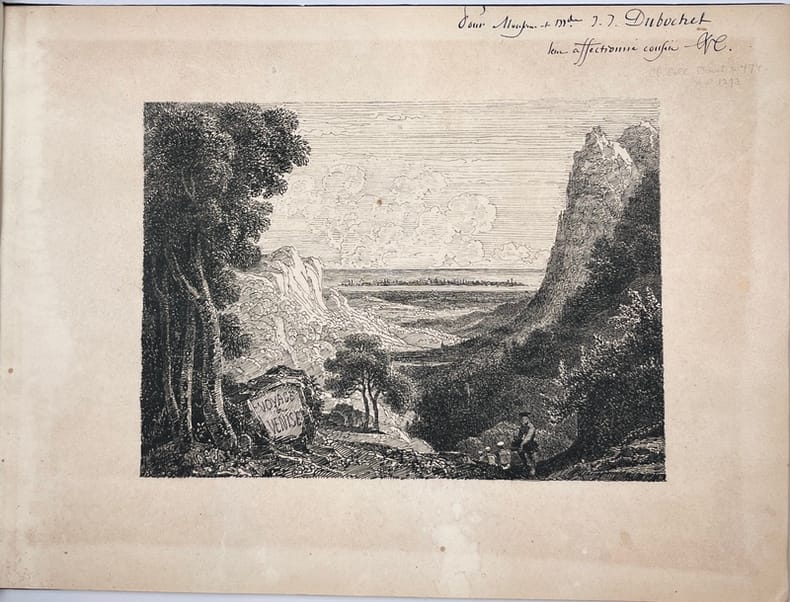
21157Genève, Autographié chez Schmid, 1841. In-4 oblong de 109 pages, demi-chagrin vert, dos orné de fers romantiques dorés, plats de percaline, titre doré au premier plat : "Voyage de Venise". Couvertures crème illustrées conservées.
185022619Venedig, Testolino, ca. 1850). 12 altkolorierte lithographiete Tafeln (ohne das lithograph. Titelblatt). Quer-Fol. Lwd. der Zeit mit Deckeltitel (bestoßen und beschabt). [5 Warenabbildungen]
19301180Paris, Editions EOS, 1930 ; in-4 en feuillets, couverture rempliée rouge-brique, sous chemise cartonnée à larges rabats et lacets de soie de même couleur et illustrée d’un grand bois gravé bistre, dos en percaline bistre ; (4) feuillets, 88 pages, (4) feuillets ; 20 bois gravés en couleurs dont dix hors-texte, six vignettes et culs-de-lampe et un grand bois illustrant l’étui et la couverture.
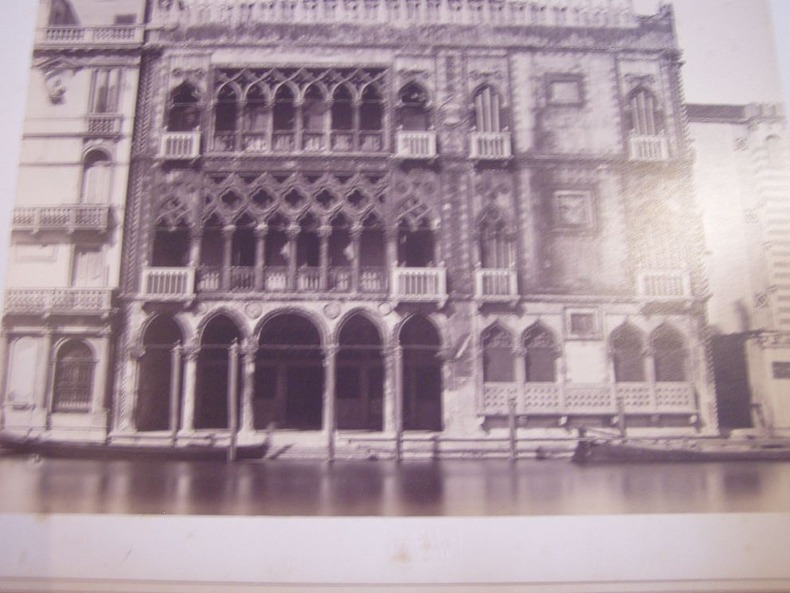
16808VENISE,NAYA C,IN FOLIO reliure demi toile a coins (posterieure) 44,5x 32 cm,composé de 17 photographies originales colles sur carton fort avec texte au dos en 4 langues; a l’adresse :Piazza ST.MARCO 77/78 bis, sans date vers 1870;avec timbre sec sur 16 planches;bon etat
64620Venice: Gio. Brizeghel c.1855. Oblong folio 27 x 40 cm. 19 leaves. Original half cloth over printed boards. Vignette title and 18 lithographed plates with hand-colouring some heightened with gum arabic. Front free endpaper creased and slightly torn some light foxing and browning boards a bit soiled and worn generally a very good example. The plates include: Place St. Marc Petite Place de St. Marc Basilique de St. Marc Intérieur de l'Église de S. Marc Pont des Soupires Porte Principalle du Palais Ducal Cour du Palais Ducal l'Arsenal Quai des Esclavons Pont de Rialto Palais Foscari Eglise de Notre Dame la Laitiere de Venise Porteuse d'Eau à Venise Porteur d'Eau à Venise Gondolier de Venise Môle de la Place St. Marc à Venise Eglise de N.D. de la Salute sur le Grand Canal. Venice: Gio. Brizeghel, [c.1855]. hardcover
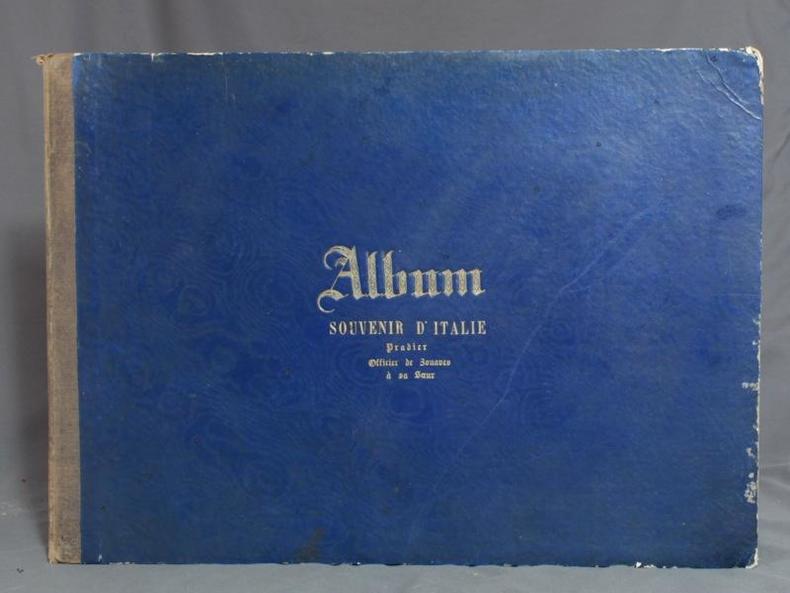
4550[vers 1840]. In-folio à l'italienne, dos en toile, plats de papier moiré bleu nuit, titre doré au premier plat (coins légèrement frottés).
45x32cm., [26p.] Album de 26 photographies (tirages albuminés) de paysages vénitiens de Carlo Naya, de dimensions 34x26 cm, dont 4 photos en couleurs présentant une forte tonalité bleue, donnant un "effet nuit", et retouchées à l'aquarelle. Tampon de l'atelier sur certaines pages, mais pas sur toutes. Quelque traces d'usure sur la reliure, sinon très bon état.