2 122 résultats
202501898Bruxelles, Editions complexe , 1981 ; in-8, 308 pp., br.
1922143571922 P., Impr. Lapina, 1922, 1 plaquette petit in folio (320 x 210 mm) agrafée et cordon tressé gris, couverture illustrée en couleurs, de (32) pp. Nombreuses illustrations en couleurs.Superbe et en parfait état.
200701348Milano, Co. Graf editore, 1984 ; in-4, broché, couverture illustr. En italien.
201207315Paris, Éditions Mengès, 1979 ; in-4 oblong, cartonnage de l'éditeur. TRÈS BON ÉTAT sous boitage.
201907638Paris, Mille et une nuit, 2008 ; grand in-12, 246 pp.. Broché en très bon état essai subjectif sur l'âme de Venise.
202501891Paris, Perrin, 1994 ; in-8, 461 pp., br.
1977102145Venezia, Edito dal Centro d’Arte S. Vidal 1977 In-8 22,5 x 22,5 cm. Broché, couverture à rabats, jaquette illustrée en couleurs, 98 pp., 42 figures en noir & blanc, 10 planches en couleurs, biographies des artistes. Exemplaire en bon état.
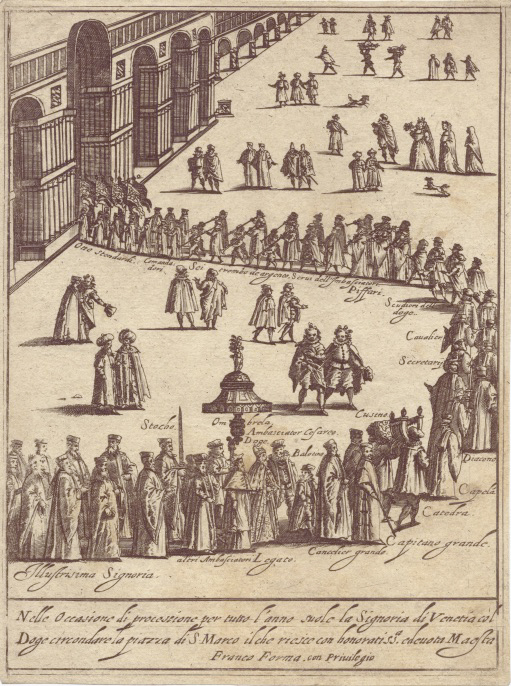
46405415[Venise, 1610], 23 x 17 cm., Estampe vénitienne montrant le couple ducal se rendant en procession à un office à S. Marco. La fonction de chaque personnalité de la procession est indiquée. Cette image est tirée d’une suite que G. Franco avait donnée en 1610 sur les fastes et les fêtes de Venise Habiti d'huomeni et donne venetiane con la processione della Ser.ma signoria et altri particolari... ; La citta' di Venetia con l'origine e governo di quella... ; Habiti che gia' tempo usavano le donne vinetiane. G. Franco (1550 - 1610) est le fils du peintre et graveur vénitien Battista Franco, il a exercé toute sa vie à Venise comme graveur, peintre, éditeur et dessinateur.
194228720venise 1942 une photographie originale en noir, format : 12,6 x 17,8 cm , avec une étiquette d'explication de la photo tapée à la machine en noir, collée en bas de la photo, prise le 14-12- 1941 , avec cachet violet au dos "autorisé par la censure allemande le 14-12-1941 " et cachet de l'agence "FULGUR" photo presse du gouvernement de vichy,
19093Photographies d'André Martin . 1964 . Edit. Delpirre ,"Le génie du Lieu" , Grand in 8° cartonné 167 pp.Illustrations en noir .
351691 page 2/3 in4 - bon état - ratures et corrections -
351703 pages 1/2 in4 - bon état - ratures et corrections - pli longitudinal -
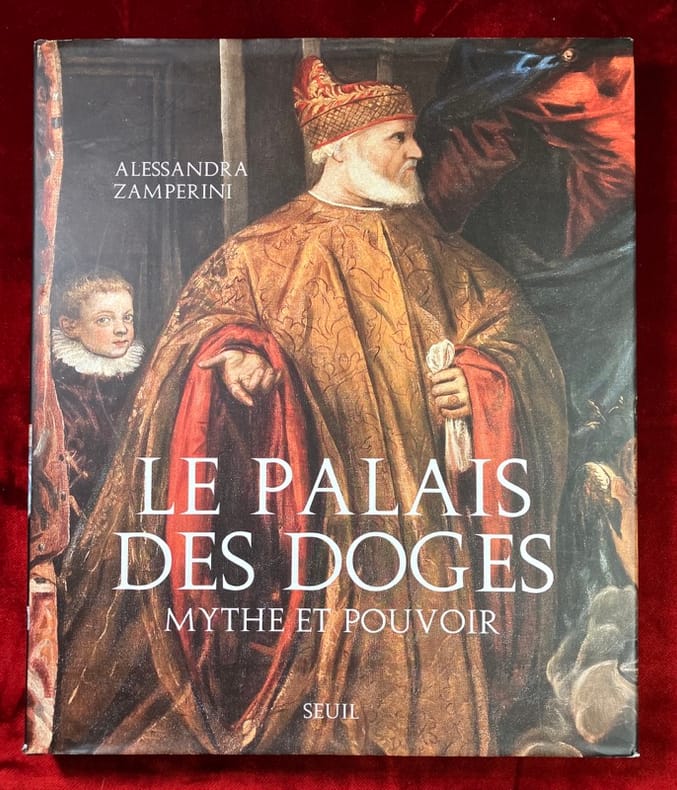
20145001Paris Seuil 2014 In-4 (h. 33 cm.) 253 pp; reliure cartonnée, jaquette.
19699579P., Klincksieck, 1969, in-8°, xxiv-384 pp, traduction de Jean Chuzeville, 4 pl. de gravures hors texte, index, broché, couv. illustrée, bon état
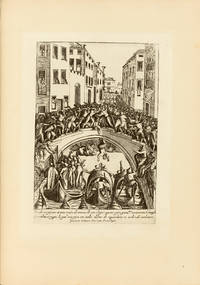
NY24<p>Venice Giacomo Franco Forma in Frezzaria al Insegna del Sole con privilegio s.d. 1610.</p><p>Small folio volume.</p><p>"<i>1 . title engraved with same view of Venice than the one for "Habiti delle Donne" 1 l. not numbered dedication to Vincent de Gonzague de Mantoue dated 1st January 1610 and printed in roman characters 25 plates out of pagination and not numbered.</i></p><p><i>Those plates represent 34 figures of men and women in very rich Venitian costumes life scenes </i></p><p><i>festivities.</i>" Colas n° 1108.</p><p>360 x 260 mm. Dimensions of the engravings: 258 x 190 mm.</p><p><b>Very rare first edition of one of the most famous books on Venice its festivities costumes and activities around 1600.</b></p><p>Colas <i>Bibliographie Générale du Costume</i> n°1108 col. 384-5; <i>Katalog Der Freiherrlich Von Lipperheide'schen Kostümbibliothek</i> repr. 1963 n°1324 p. 527.</p><p>"This collection offers great interest in the costumes of Venice during its greatness. It is sought after today especially as it has become extremely rare ". Vinet Bibliographie méthodique des Beaux-Arts.<br /><br /><b>This collection is so rare that Brunet never found a complete copy and only described an incomplete one</b> Brunet II 1378. As for Vinet he doubts the number of plates following the number 24 with a "" Vinet col 283 n° 2291.<br /></p><p>The copy of the <i>British Museum </i>only contains 20 plates out of 25 and one title leaf is missing. <br /></p><p><b>Title engraved with a birds 'eye view of Venice on an architectural frame with a view of the Rialto bridge and 24 extremely fine engravings.</b><br /><br /><b>The book shows in an extraordinary detailed way the various festivities processions and past times of the city as well as great moments in its history.</b><br /><br />"Assimilated to the genre of the costume book the work by Giacomo Franco 1556 - 1620 drawer and engraver born in Venice also shows engravings of a strong interest for the history of manners and customs of the Serenissima in the 16th and 17th centuries: festivals entertainment maritime games regattas… and carnival. The 1610 edition is probably the first. The number and order of the engravings vary greatly from one edition to another and between copies of the same edition.<br /></p><p>The copy is composed of 26 copper plates including one double plate all except one signed by Giacomo Franco. The engraving named Feste che si sogliono fare per la città della caccia del toro amazzar la Gata col capo raso pigliar l'anadre pigliar l'occa nell'acqua et altro features games with animals: a bear fighting with dogs a tied up cat a goose being plunged into water a duck hanging from a mast and a chased bull. Attested since the Middle Ages bull hunting is a traditional carnival game in the Renaissance particularly in Rome and Venice". Virtual exhibition organized by the Mazarine Library<i> Libri italiani lecteurs français</i> "Balls festivals and banquets".</p><p>"This book of engravings depicts the costumes festivals and social life of early seventeenth-century Venetians. There is no text other than a short descriptive sentence at the bottom of each engraving. Major Venetian landmarks are easily recognizable <b>and the small ovoid map on the title-page is regarded by some scholars as an important example of early Venetian cartography.</b></p><p>Very little is known about the Venetian engraver Giacomo Franco. The son of painter Giovanni-Battista Franco 1510-1561 with whom he began his artistic training at the age of eleven he worked as a painter engraver woodcutter and dealer in graphics and books. For a while he studied in Bologna with Agostino Carracci 1557-1602. In the early 1580s they opened a private teaching academy that soon became a center for progressive art. In their teaching they laid special emphasis on drawing from life and clear draughtsmanship became a quality particularly associated with their school. </p><p>In 1595 Franco took over his father's workshop and eventually became a well-known publisher. Although he was not documented as belonging to the booksellers' or printers' guilds he is recorded in 1606 and again in 1619 as belonging to the painters' guild. Franco's determination to be recognized as an artist is reflected in his will in which he refers to himself as a "designer."</p><p>The <i>Habiti d'huomini</i> is a potpourri of depictions of Venetian costumes processions and celebrations. Citizens are seen watching regattas fighting on bridges conversing in the Piazza San Marco and on the Rialto Bridge and marching in ceremonial procession into the Doge's Palace with flags flying and horns and flutes playing. Even the ubiquitous laundry is seen hanging on the line in the background. Men with rifles hunt ducks in the lagoon. The Doge's mighty Bucintoro warship returns from battle escorted by gondolas and saluted by cannon explosions. Carnival of course has a page of its own which depicts citizens in masks some of whom seem to be making best use of the cover of darkness to contact a prospective lover. The appropriately dressed widow is pictured heavily veiled and a married gentlewoman has two outfits from which to choose one for inside the house another for outside. The men are almost as ornately dressed as the women. The Doge in his palace wearing fine brocade and a crown moves his hand in a sort of blessing as – through a window behind him – life in the Piazza San Marco goes on". The Boston Athenaeum Museum</p><p><i>"From the middle of the 15th century the Venetian institutions came to maturity which allows Venice to parade every week in the fullness of its myth under the eyes of the Venetians and the whole world Urbi et orbi - including the Turks and the Chinese. Venice then shows itself united eternal strong and indestructible</i>. "<br /><br />One of the great moments of this frenzied proclamation of the political perfection of Venice is the rite of the <i>trionfo </i>- or ducal procession - where hierarchy order harmony and collective respect are the characteristics of this state liturgy.<br /><br />This urban rite we could even say ritual is a great moment in the political life - and in the life itself - of Venice. Indeed the ducal procession is intended to be a proclamation of the cohesion of the State and its strong structure in the eyes of the Venetians as in the eyes of foreigners who will necessarily receive echoes. The Milanese Pietro Casolo passing through Venice at the end of the 16th century was impressed by the unchanging - and disciplined - ordering of these Venetian processions:<br /><br /><i>In my opinion one man seemed to rule all things and he was obeyed by all without resistance. It filled me with admiration as I have never seen such a discipline at similar shows.</i><br /><i>They walk two by two behind the doge in a completely different order from what I have seen in many religious or secular courts where as soon as the prince has passed everything goes in all directions and in disorder. Here in front and behind everything is as in a perfect order as possible.</i><br /><br />The ordering and place of each are not the result of chance but the result of a rigorously thought out and unchanging ceremony. This immutability is demonstrated by the existence of commented engravings that is to say that the artists note the order of the succession of the characters as an element as perennial as the architectures that frame this ceremony. An example the engraving of Giacomo Franco which shows us the beginning of the procession which enters the basilica. The frieze arrangement evokes the Roman triumphs of the Ara Pacis or Trajan's Column." Marie-Viallon The Ducal procession in Venice.<br /></p><b>Precious and beautiful copy coming from the library of the 19th century </b><i><b>A. Brölemann</b></i><b> with ex-libris.</b><p><b><br /></b></p><p><u>Français :</u><br /></p><p>Venice Giacomo Franco Forma in Frezzaria al Insegna del Sole con privilegio s.d. 1610.</p><p>Petit in-folio.</p><p>" <i>1 f. titre gravé avec la même vue de Venise que pour " Habiti delle Donne " 1 f. non chiffr. dédicace à Vincent de Gonzague de Mantoue datée du 1er janvier 1610 et imprimée en caractères romains 25 planches h. t. gr. non chiffr.</i></p><p><i>Ces planches portent 34 figures d'hommes et de dames dans de très riches costumes vénitiens des scènes de mœurs des réjouissances.</i> " Colas n° 1108.</p><p>Le présent exemplaire compte 1 titre gravé avec vue de Venise et 24 planches portant 30 figures d'hommes et de dames ; manquent le feuillet de dédicace et une planche portant 4 figures mais le nombre et l'ordonnancement des gravures sont très variables entre les exemplaires d'une même édition " this fine collection of detailed views and scenes of Venetian life and costume was issued with varying numbers of plates ". Qq. rousseurs en marge du frontispice. Le tout monté sur grand papier et relié vers 1850 par <i>Duru</i> en demi-maroquin rouge à coins. </p><p>360 x 260 mm. Dimensions des gravures : 258 x 190 mm.</p><p><b>Edition originale rarissime de l'un des livres les plus célèbres sur Venise ses fêtes costumes et activités vers l'année 1600.</b></p><p>Colas <i>Bibliographie Générale du Costume</i> n°1108 col. 384-5; <i>Katalog Der Freiherrlich Von Lipperheide'schen Kostümbibliothek</i> repr. 1963 n°1324 p. 527.</p><p>" <i>Ce recueil offre un grand intérêt pour les costumes de Venise pendant sa grandeur. On le recherche aujourd'hui d'autant plus qu'il est devenu d'une extrême rareté</i> ". Vinet <i>Bibliographie méthodique des Beaux-Arts</i>.</p><p><b>Ce recueil est si rare que Brunet n'a jamais rencontré d'exemplaire complet et ne décrit qu'un exemplaire incomplet</b> Brunet II 1378. Quant à Vinet il doute du nombre de planches faisant suivre le chiffre 24 d'un " " Vinet col 283 n° 2291.</p><p>L'exemplaire du <i>British Museum</i> ne contient que 20 planches sur 25 et il manque le feuillet de titre. </p><p><b>Titre gravé avec vue à vol d'oiseau de Venise dans un cartouche architectural surmonté d'une vue sur le pont du Rialto et 24 gravures extrêmement fines. </b></p><p><b>Le livre montre avec un détail extraordinaire les différentes festivités processions et temps passés de la ville ainsi que de grands moments de son histoire.</b></p><p>" Assimilé au genre du livre de costumes l'ouvrage de Giacomo Franco 1556 - 1620 dessinateur et graveur né à Venise montre également des gravures d'un fort intérêt pour l'histoire des mœurs et coutumes de la Sérénissime aux XVIe et XVIIe siècles : fêtes divertissements joutes maritimes régates… et carnaval. L'édition de 1610 est probablement la première. Le nombre et l'ordonnancement des gravures sont très variables d'une édition à l'autre et entre les exemplaires d'une même édition.</p><p>L'exemplaire exposé comporte 26 planches gravées sur cuivre dont une double planche toutes sauf une signées de Giacomo Franco. La gravure intitulée Feste che si sogliono fare per la città della caccia del toro amazzar la Gata col capo raso pigliar l'anadre pigliar l'occa nell'acqua et altro met en scène des jeux avec des animaux : un ours se battant avec des chiens un chat ligoté une oie que l'on plonge dans l'eau un canard accroché à un mât et un taureau pourchassé. Attestée depuis le Moyen Âge la chasse au taureau est un jeu traditionnel du carnaval à la Renaissance en particulier à Rome et à Venise ". Exposition virtuelle organisée par la Bibliothèque Mazarine <i>Libri italiani lecteurs français</i> " Bals fêtes et banquets ".</p><p>"This book of engravings depicts the costumes festivals and social life of early seventeenth-century Venetians. There is no text other than a short descriptive sentence at the bottom of each engraving. Major Venetian landmarks are easily recognizable and <b>the small ovoid map on the title-page is regarded by some scholars as an important example of early Venetian cartography</b>.</p><p>Very little is known about the Venetian engraver Giacomo Franco. The son of painter Giovanni-Battista Franco 1510-1561 with whom he began his artistic training at the age of eleven he worked as a painter engraver woodcutter and dealer in graphics and books. For a while he studied in Bologna with Agostino Carracci 1557-1602. In the early 1580s they opened a private teaching academy that soon became a center for progressive art. In their teaching they laid special emphasis on drawing from life and clear draughtsmanship became a quality particularly associated with their school. </p><p>In 1595 Franco took over his father's workshop and eventually became a well-known publisher. Although he was not documented as belonging to the booksellers' or printers' guilds he is recorded in 1606 and again in 1619 as belonging to the painters' guild. Franco's determination to be recognized as an artist is reflected in his will in which he refers to himself as a "designer."</p><p>The <i>Habiti d'huomini</i> is a potpourri of depictions of Venetian costumes processions and celebrations. Citizens are seen watching regattas fighting on bridges conversing in the Piazza San Marco and on the Rialto Bridge and marching in ceremonial procession into the Doge's Palace with flags flying and horns and flutes playing. Even the ubiquitous laundry is seen hanging on the line in the background. Men with rifles hunt ducks in the lagoon. The Doge's mighty Bucintoro warship returns from battle escorted by gondolas and saluted by cannon explosions. Carnival of course has a page of its own which depicts citizens in masks some of whom seem to be making best use of the cover of darkness to contact a prospective lover. The appropriately dressed widow is pictured heavily veiled and a married gentlewoman has two outfits from which to choose one for inside the house another for outside. The men are almost as ornately dressed as the women. The Doge in his palace wearing fine brocade and a crown moves his hand in a sort of blessing as – through a window behind him – life in the Piazza San Marco goes on". The Boston Athenaeum Museum</p><p><i>" Dès le milieu du XVe siècle les institutions vénitiennes sont parvenues à maturité ce qui permet à Venise de parader chaque semaine dans la plénitude de son mythe sous les yeux des Vénitiens et du monde entier </i><i>Urbi et orbi</i><i> - y compris les Turcs et les Chinois. Venise se montre alors unie forte éternelle et indestructible.</i>"</p><p>Un des grands moments de cette proclamation forcenée de la perfection politique de Venise est le rite du<i> trionfo</i> - ou procession ducale - où hiérarchie ordre harmonie et respect collectif se veulent les caractéristiques de cette liturgie d'État.</p><p>Ce rite voire rituel urbain est un grand moment de la vie politique - et de la vie tout court - de Venise. En effet la procession ducale se veut une proclamation de la cohésion de l'État et de sa forte structuration aux yeux des Vénitiens comme aux yeux des étrangers qui en recevront nécessairement des échos. Le milanais Pietro Casolo de passage à Venise à la fin du XVIe siècle a été impressionné par l'ordonnancement immuable - et discipliné - de ces processions vénitiennes : </p><p><i>Selon moi un seul homme semblait ordonner toutes choses et il était obéi de tous sans résistance. Cela m'a rempli d'admiration car je n'ai jamais assisté à une telle discipline lors de spectacles similaires. Ils marchent deux par deux derrière le doge dans un ordre tout différent de ce que j'ai vu dans de nombreuses cours religieuses ou profanes où dès que le prince est passé tout part dans tous les sens et en désordre. Ici devant et derrière tout est aussi parfaitement en ordre que possible.</i></p><p>L'ordonnancement et la place de chacun ne sont pas le fruit du hasard mais le résultat d'un cérémonial rigoureusement pensé et immuable. Cette immuabilité est démontrée par l'existence de gravures commentées c'est-à-dire que les artistes notent l'ordre de la succession des personnages comme un élément aussi pérenne que les architectures qui encadrent cette cérémonie. Un exemple la gravure de Giacomo Franco qui nous montre le début de la procession qui entre dans la basilique. L'ordonnancement en frise évoque les triomphes romains de <i>l'Ara pacis</i> ou de la colonne Trajane. " Marie-Viallon La procession ducale à Venise.</p><p><b>Précieux et bel exemplaire provenant de la bibliothèque du </b><b>XIXe siècle </b><i><b>A. Brölemann</b></i><b> avec ex-libris. </b></p> hardcover
ORD-10680Dessins de Grasset-Saint-Sauveur, texte de J.-F.Cornu. Chez les principaux libraires du Royaume. s.d. (début 19°?) 9pp. in-4 sans couverture tirées d'un recueil, accompagnées de 3 étonnantes planches gravées en coloris d'époque. Planches un peu tachées..
ORD-10681Nouveau Guide Illustré. Milan. Cesar Capello. 1936. In-12 (104 x 159mm) broché, couverture verte illustrée, 174 pages, qq. vues photographiques dans le texte et grand plan dépliant couleurs hors texte (435 x 289mm). Bon exemplaire.
1978101818Venezia, Alfieri 1978 In-8 24,5 x 22,5 cm. Reliure éditeur noire, jaquette noire, 337 pp., plus de 400 illustrations en noir & blanc, notes, bibliographie, table des matières. Exemplaire en bon état.
31328, brepols, 2011 Hardback. 470 pages ., 3 b/w ill. 16 colour ill., 210 x 270 mm, Languages: English, Terraum orbis 8 ISBN 9782503523781.
30985Turnhout, Brepols, 2011 Hardback, 470 p., 3 b/w ill. 16 colour ill., 210 x 270 mm. ISBN 9782503523781.
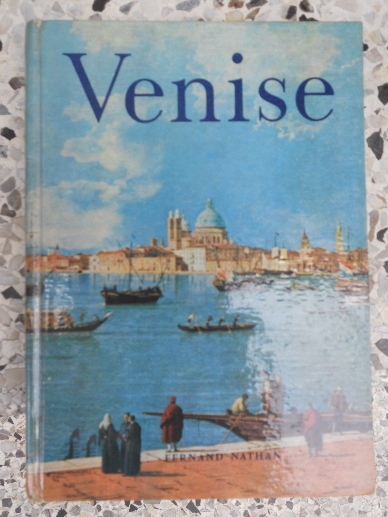
9213Fernand Nathan, sans date. Reliure illustree de l'editeur, 156 pages.Bon etat.
LFA-126738702Un ouvrage de 96 pages, format 120 x 185 mm, illustré de 86 photographies de Cas Oorthuys, broché, s.d., Editions Flammarion, collection "Contacts avec le Monde", bon état
Une seule affiche de dimensions 54 x 68 cm; belle impression lithographique de Mourlot. traces d'adhésif à deux angles; sinon belle état. Voir photo.
195815893Paris à la Galerie 1958 1 Une seule affiche de dimensions 54 x 68 cm; belle impression lithographique de Mourlot.
32939, Brepols, 2010 Hardback, VIII 273 p., 234 b/w ill. 44 colour ill., 220 x 275 mm, Languages: English. ISBN 9781905375455.