[La Croix, Jean-François de]Livre Rare Book
40 résultats
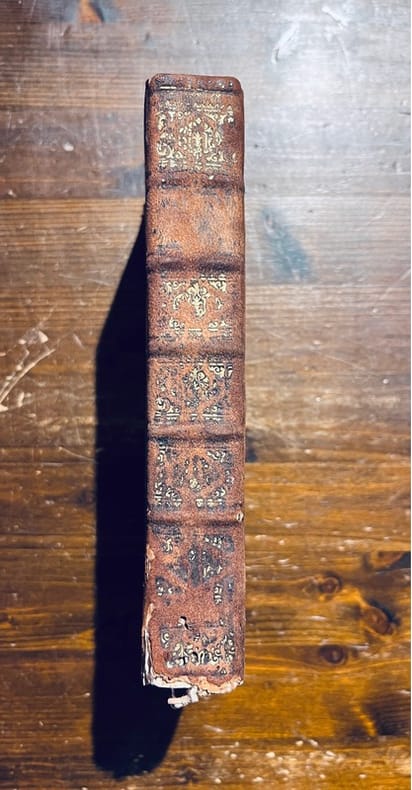
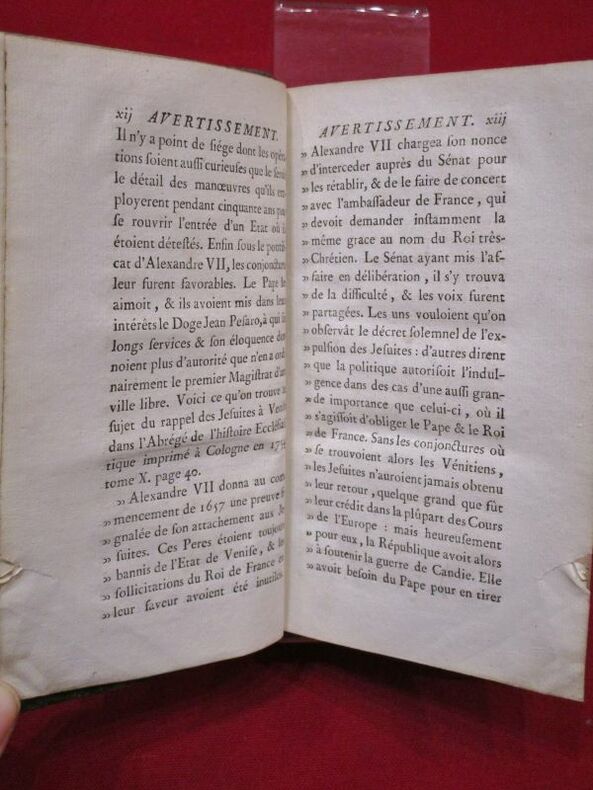
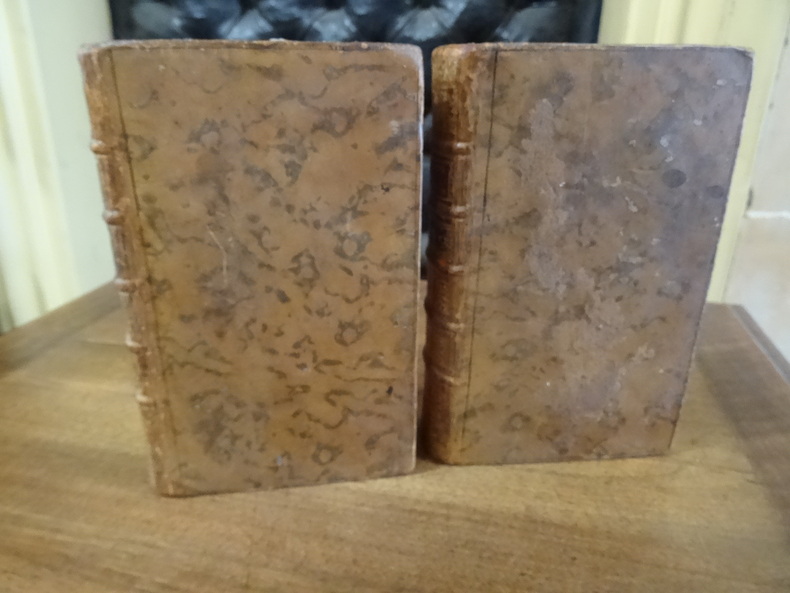
1771DEZ-8104Paris, Vincent, 1771. 2 volumes in-12, plein veau, dos à nerfs ornés, titre doré, toutes tranches rouges, coupes filetées. VIII, 288 pp, 298 pp, 218 pp; titre, 322 pp, 116 pp, 154 pp, 208 pp. Edition originale. Plats du tome II un peu frottés, 2 petits trous de ver au mors inférieur du tome II (sans gravité), quelques feuillets roussis.
17402185A Londres, Aux dépens de la compagnie, 1740. Deux tomes reliés en 1 volume in-8 de [12]-218; 216 pages, plein veau marron, dos à nerfs orné.
1772Tir441772 Planche seule - dimensions 38 x 29 cm - planche aquarellée - Échelle en lieux - petit manque de papier en bordure inférieure - Le pli du milieu existant déjà sera donc envoyée pliée en deux .
1772Tir441772 Planche seule - dimensions 38 x 29 cm - planche aquarellée - Échelle en lieux - petit manque de papier en bordure inférieure - Le pli du milieu existant déjà sera donc envoyée pliée en deux .
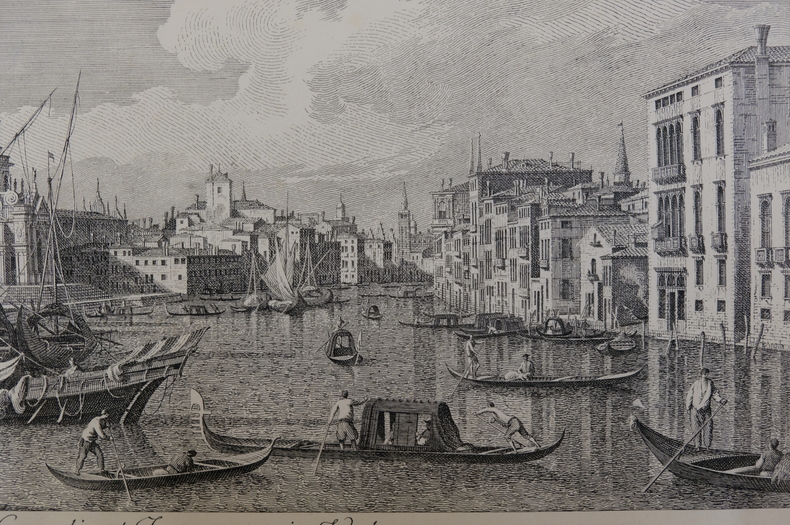
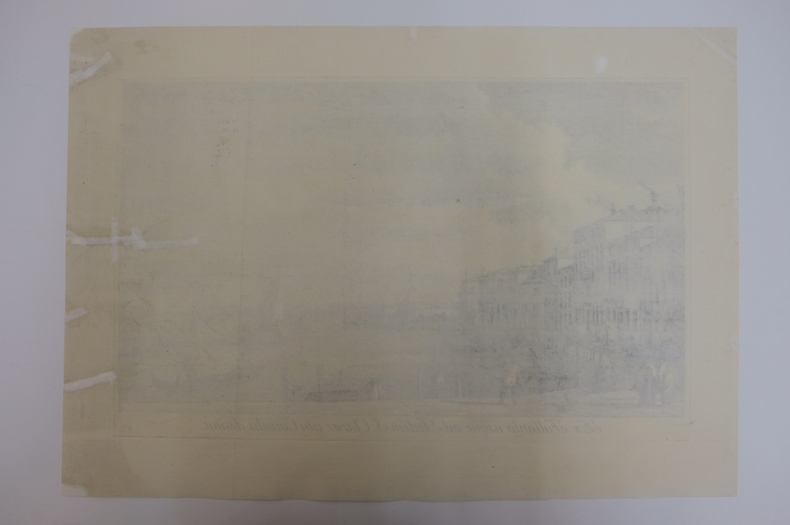
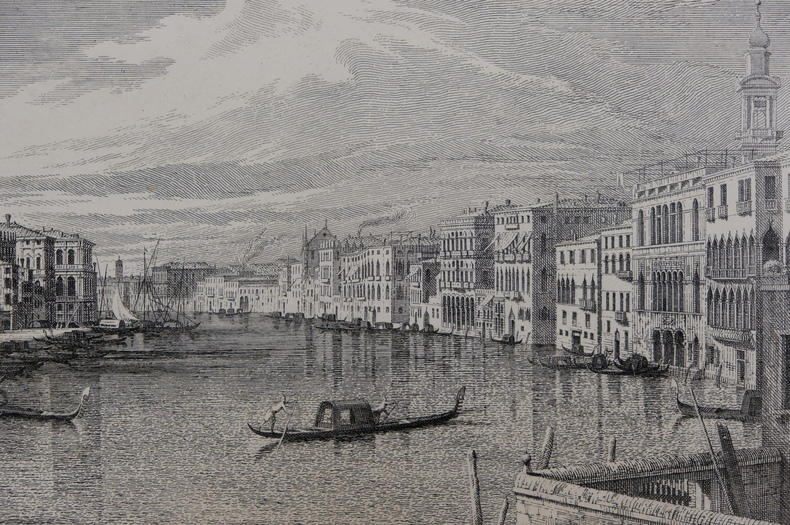
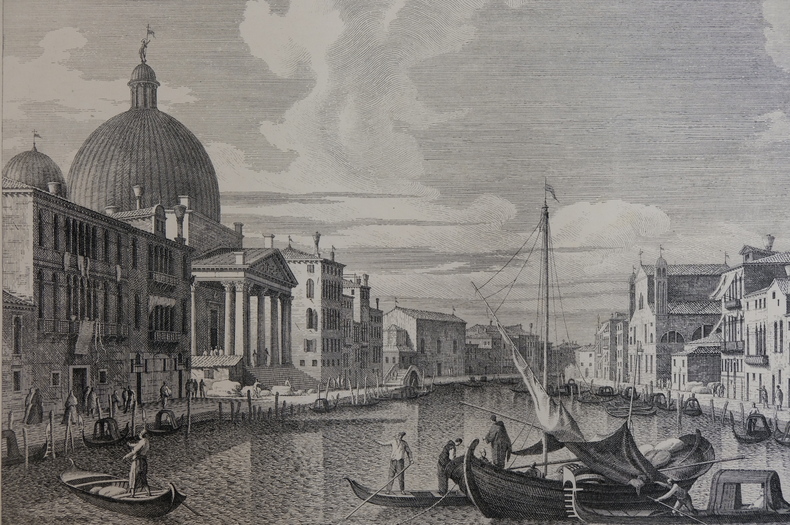
1735est214t4Dimension extérieure 35,9 x 50,5 cm, cuvette 27 x 43. Magnifique eau-forte de Venise, réalisée par Antonio Visentini, d’après Canaletto (1697-1768). Numéro 6. Gravure en excellent état, déchirures comblées. Dimensioni esterne 35,9 x 50,5 cm, ciotola 27 x 43. Bella acquaforte di Venezia di Antonio Visentini, da Canaletto (1697-1768). Incisione in ottime condizioni, lacrime riempite. External dimension 35,9 x 50,5 cm, bowl 27 x 43. Beautiful etching of Venice by Antonio Visentini, after Canaletto (1697-1768). Engraving in excellent condition, tears filled.
1723012974AMSTERDAM CHEZ J. F. BERNARD 1723 Un volume grand in-folio de XLII + 153 pages + 206 pages , bien complet des 13 PLANCHES GRAVEES dont une dépliante pour les cérémonies des Juifs et des 22 PLANCHES GRAVEES dont 4 dépliantes pour les cérémonies catholiques , dans une reliure d'époque plein veau marbré , dos à 6 nerfs avec titrage doré , la reliure est dans un état moyen , les mors fendus , les coins rognés , l'intérieur est en bon état . Assez bon Couverture rigide
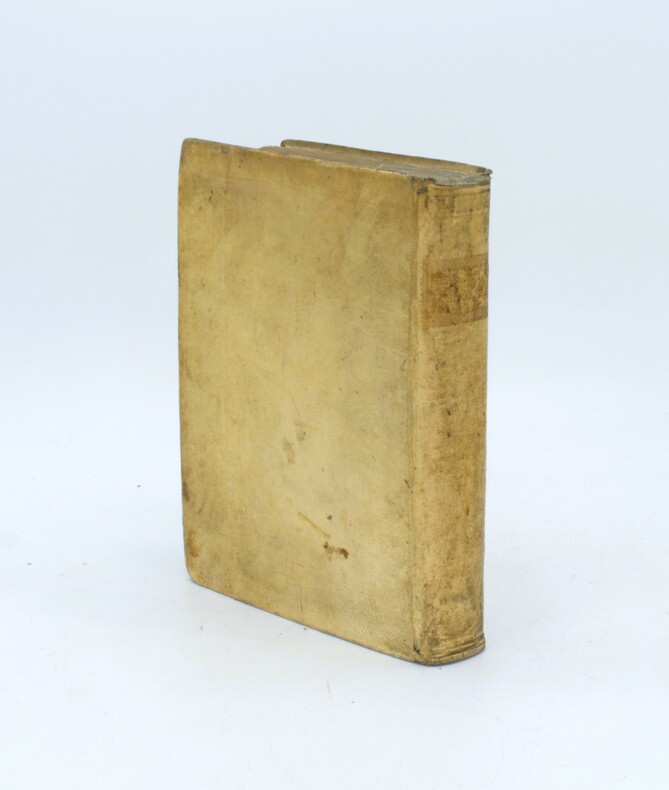
1737OUVRAGXVIIIE0521Venezia, Niccolo Pezzana, 1737, 18 x 24,5, VI-506-114 pages sous reliure parchemin avec dos titré (illisible).
17971504061797. ZANETTI Anton Maria and Marco BOSCHINI. Della pittura veneziana trattato in cui osservasi l'ordine del Busching e si conserva la dottrina e le definizioni del Zanetti. Two volumes. viii 145 i.e. 245 3 including final blank pp.; 256 i.e. 272 pp. each volume illustrated with an engraved frontispiece. 8vo 165 x 110 mm. bound alike in contemporary paste paper decorated with red flowers against a striped ground later glassine wrappers. Venice: Presso Francesco Tosi 1797. First edition based on Boschini's Le Minere della pittura 1664 and Zanetti's Della Pittura Veneziana 1771 with additions by the publisher Tosi. Both Boschini and Zanetti were of fundamental importance to the history of art in Venice. Schlosser-Magnino calls Boschini's guide "the first true artistic guide to Venice" and Zanetti's inventory of Venetian painting "one of the best in its genre" p. 548. This handy set combines their work into a comprehensive practical guide to monuments of Venetian art and architecture including a final section Istoria della Pittura Veniziana sic with biographies of artists; and an addition made in 1797 identifying paintings that were transported out of Venice by military force the same year. Marco Boschini 1613-1678 was a Venetian painter engraver and art dealer whose most important client Cardinal Leopoldo de' Medici commissioned him to purchase Venetian paintings for the Medici collection. Zanetti 1706-1778 was the librarian to the famed Marciana Library in Venice for forty years and his familiarity with the art and artists of his city and his access to library records helped to produce his remarkable books. On Zanetti's guide Cicognara adds: "This is the best of the works which deal with Venetian painting and if every principal city possessed a book so arranged and executed we should have gathered together the materials for the best general history of art". Fossati-Bellani 2339. Cicogna 4661. Schlosser-Magnino pp. 548-549. Cicognara 2412 Zanetti & 4350 Boschini. unknown
17971504061797. ZANETTI Anton Maria and Marco BOSCHINI. Della pittura veneziana trattato in cui osservasi l'ordine del Busching e si conserva la dottrina e le definizioni del Zanetti. Two volumes. viii 145 i.e. 245 3 including final blank pp.; 256 i.e. 272 pp. Each volume illustrated with an engraved frontispiece. 8vo. 165 x 110 mm bound alike in contemporary paste paper decorated with red flowers against a striped ground later glassine wrappers. Venice: Presso Francesco Tosi 1797. First Edition based on Boschini's Le Minere della pittura 1664 and Zanetti's Della Pittura Veneziana 1771 with additions by the publisher Tosi. Both Boschini and Zanetti were of fundamental importance to the history of art in Venice. Schlosser-Magnino calls Boschini's guide "the first true artistic guide to Venice" and Zanetti's inventory of Venetian painting "one of the best in its genre" p. 548. This handy set combines their work into a comprehensive practical guide to monuments of Venetian art and architecture including a final section Istoria della Pittura Veniziana sic with biographies of artists; and an addition made in 1797 identifying paintings that were transported out of Venice by military force the same year. Marco Boschini 1613-1678 was a Venetian painter engraver and art dealer whose most important client Cardinal Leopoldo de' Medici commissioned him to purchase Venetian paintings for the Medici collection. Zanetti 1706-1778 was the librarian to the famed Marciana Library in Venice for forty years and his familiarity with the art and artists of his city and his access to library records helped to produce his remarkable books. On Zanetti's guide Cicognara adds: "This is the best of the works which deal with Venetian painting and if every principal city possessed a book so arranged and executed we should have gathered together the materials for the best general history of art". Fossati-Bellani 2339. Cicogna 4661. Schlosser-Magnino pp. 548-549. Cicognara 2412 Zanetti & 4350 Boschini. unknown books
1735est218t4Dimension extérieure 35,9 x 50,5 cm, cuvette 27 x 43. Magnifique eau-forte de Venise, réalisée par Antonio Visentini, d’après Canaletto (1697-1768). Gravure en excellent état, déchirures comblées. Planche 12. Dimensioni esterne 35,9 x 50,5 cm, ciotola 27 x 43. Bella acquaforte di Venezia di Antonio Visentini, da Canaletto (1697-1768). Incisione in ottime condizioni, lacrime riempite. External dimension 35,9 x 50,5 cm, bowl 27 x 43. Beautiful etching of Venice by Antonio Visentini, after Canaletto (1697-1768). Engraving in excellent condition, tears filled.
1788245501788 1788 Gravure a l'aquatinte du 18e siecle (1788) par Labrousse, d'apres le dessin de Grasset St Sauveur,Coloriee a la main a l'époque.Encyclopédie des voyages,Kolorierte Aquatinta, Darstellung: 11 x 17 cm
1735est215t4Dimension extérieure 35,9 x 50,5 cm, cuvette 27 x 43. Magnifique eau-forte de Venise, réalisée par Antonio Visentini, d’après Canaletto (1697-1768). Gravure en excellent état, déchirures comblées. Planche numéro 8. Dimensioni esterne 35,9 x 50,5 cm, ciotola 27 x 43. Bella acquaforte di Venezia di Antonio Visentini, da Canaletto (1697-1768). Incisione in ottime condizioni, lacrime riempite. External dimension 35,9 x 50,5 cm, bowl 27 x 43. Beautiful etching of Venice by Antonio Visentini, after Canaletto (1697-1768). Engraving in excellent condition, tears filled.
1735est217t4Dimension extérieure 35,9 x 50,5 cm, cuvette 27 x 43. Magnifique eau-forte de Venise, réalisée par Antonio Visentini, d’après Canaletto (1697-1768). Gravure en excellent état, déchirures comblées. Planche 11. Dimensioni esterne 35,9 x 50,5 cm, ciotola 27 x 43. Bella acquaforte di Venezia di Antonio Visentini, da Canaletto (1697-1768). Incisione in ottime condizioni, lacrime riempite. External dimension 35,9 x 50,5 cm, bowl 27 x 43. Beautiful etching of Venice by Antonio Visentini, after Canaletto (1697-1768). Engraving in excellent condition, tears filled.
17281030551728 Paris, Chaubert, 1728 (quatrième édition), lxxiv-4-436 p. et 4-522-[5] p., plein veau d'époque, environ 17x10cm, des manques de cuir sur les coiffes et sur un plat, page de garde du tome 1 trouée, bon état pour le reste et intérieurs propres malgré quelques rares rousseurs.
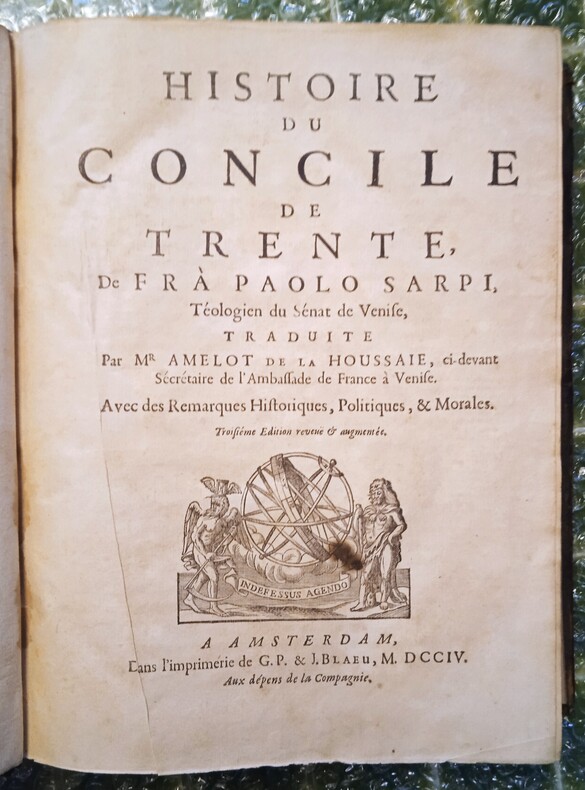
1704R56Amsterdam, Dans l’Imprimerie de G. P. & J. Blaeu, 1704. Un fort volume in-4° (21 x 26,5 cm), reliure de l’époque pleine basane marron, dos à 5 nerfs, coiffe supérieure arasée, petit manque à la coiffe inférieure, dorures un peu estompées, plats légèrement frottés mais reliure solide et bon état général. [23] ff. + 800 pp. + [23] ff. Papier avec des rousseurs uniformes de manière inégale au long de l’ouvrage, présence de quelques rares petites taches, notamment une en page de titre (de brûlures ?). Aucune page manquante ni déchirée. Belles lettrines.
17591117011759 Avignon, [s.l.], 1759, 1 volume in-12 de 95x160 mm environ, xvj p. (page de titre, avertissement), 520 p., (1) f. blanc. Pleine reliure d'époque, dos à 5 nerfs portant titre doré sur tomaison de cuir bordeaux, caissons orné de liserés et fleurons dorés, coupes filetées. Coins frottés, discrètes craquelures, une déchirure marginale (sans manque) sur 2 feuillets, une ligne de chiffres manuscrits au dos de la garde de couleurs, bon état.
1786fy665Moutard, imprimeur libraire de la Reine Reliure d'éditeur 1786 In-8 (20,5 x 13,5 cm), demi-basane, paginé vj-xxiv et 2-571, tranches rouges ; tome cinquante-unième contenant la fin de l'Histoire de Venise, & le commencement de celle de Florence, jusqu'en l'année 1334 ; mors supérieur frotté, petit manque sur la coiffe inférieure, quelques rousseurs à l'intérieur, bon état général. Livraison a domicile (La Poste) ou en Mondial Relay sur simple demande.
1780145731Augsburg, - o. J., um 1780. Altkolorierter Kupferstich ca. 28,5 x 38,0 cm. hinter Passepartout, gerahmt
177113273Venezia Giovambattista Albrizzi 1771 fort vol in 12 de 16 ff.n.ch. et 490 pages et 1 ff de privilège demi basane contemporaine avec étiquette et plats papier dominoté .(manque pages de texte 259 à 270)
1729ST16379-042Venezia Venice: Appresso Carlo Buonarrigo 1729. FIRST EDITION. 155 x 105 mm. 6 1/8 x 4 1/8. 1 p.l. extra engraved title 122 pp. <br/> Original cream-colored wrapper of heavy paper silk ribbon stitching remnants of old shelf label at foot of spine. Extra engraved title page depicting the Bucinotoro in all its glory surmounted by the Lion of St. Mark emblem of Venice. Front pastedown with bookplate of the duke of Arenberg Castle Nordkirchen. Cicognara 4369. Binding lightly soiled front pastedown lifting occasional faint yellowing to margins other trivial imperfections but still A VERY FINE COPY--clean bright and especially fresh in its remarkably well-preserved fragile binding.<br/> <br/> This is a detailed account of the magnificent Bucintoro—a ceremonial ship used in the annual ritual in which the Doge of Venice was symbolically wedded to the sea— unveiled in 1729. The city known as La Serenissima had long been a major port for trade between Europe and points East and the people honored the role played by the Mediterranean Sea in the Republic's prosperity. Beginning in 1311 the head of state sailed forth each year on Ascension Day to be "married" to the sea aboard a boat called the Bucintoro. The wooden ship was restored or rebuilt from time to time through the centuries and in 1719 the Venetian Senate commissioned a brand new vessel to be richly ornamented and even bedecked with gold. <br /> <br /> Our volume describes the process by which the finest artists and artisans of the day--from shipbuilders to sculptors and painters--created the largest and most lavish Bucintoro in history. The engraved title page shows the stately craft in full rig banners flying as Doge Alvise Mocenigo is rowed out to meet his marine bride. Cicognara notes the volume's value in preserving for posteriority these memories of Italian greatness--and that greatness lasted only a relatively short time because after the fall of the Venetian Republic in 1797 Napoleon had the Bucintoro stripped of its finery. The denuded and humiliated ship was then used by the Austrian navy until 1824 sailing under the name "Hydra."<br /> <br /> The presence of a binding identical to ours on several copies in sales records suggests that these may have been the publisher's original wrappers which have weathered the years surprisingly well. The text here is deeply impressed on thick paper upholding the fine tradition of Venetian printing. Appresso Carlo Buonarrigo unknown
1784H108157Avignon, Antoine Aubanel & Durand 1784 xiv + 389 + [1] pp. + frontispice gravé (portrait), 17cm., reliure plein-veau d'époque (coins abimés, qqs. manques au plat inférieur), feuilles de garde décorées, texte et intérieur sont frais sauf quelques rares rousseurs, R108157
172635102 col. in-12 (15 X 8,5 cm.), XVIII, 426 pp., 6, 3 (table) - 451 pp., 8 (table). reliure veau d'époque, dos à cinq nerfs orné, pièces de titre et tomaison rouges et noires, tranches rouges. Pages de titre imprimées en rouge et noir, ornements de texte : vignettes, bandeaux, lettres ornées, culs de lampe. Ex-Libris "La Rochefoucauld, Duc de Bisaccia" et "Anne-Jacques de Bullion de Fervaques" 18jh FORTIS SUPERENATATUNDAS
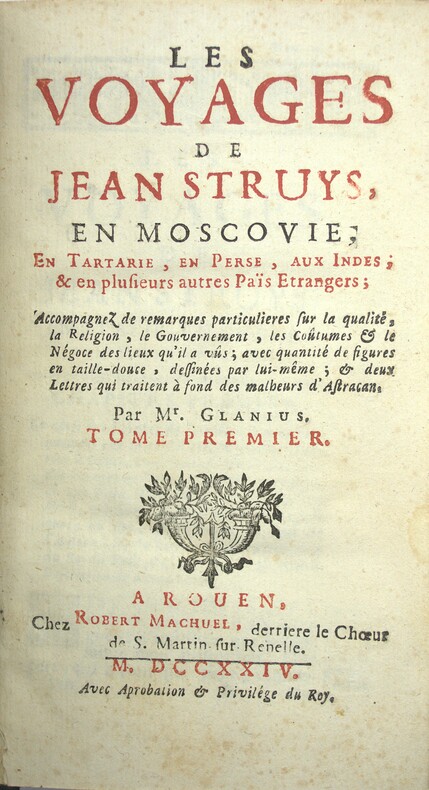
1718PHO-2042Rouen & Amsterdam, chez Machuel & au dépend de la compagnie, 1718-1724, 3 volumes in-12 (165x95mm), 258pp.-3ff., titre-278pp.-5ff., titre-276pp.-2ff., illustré de 29 planches dont plusieurs dépliantes dont une carte, manque le frontispice (tome 1), reliure d’époque, dos à nerfs ornés avec titre et tomaison, frottements, coiffes arasées tome 2 & 3, début de fentes tome 2 & 3, reliure tome 1 avec différences.
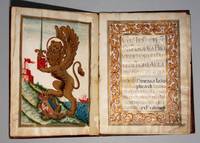
17175670<p>4to manuscript on vellum 23.5 x 17.1 cm 7 ff. 4 ff. vellum blanks including a full-page frontispiece illumination of Venetian Lion of St. Mark each text page with foliate borders in gold ink headings and initials in gold ink. Bound in contemporary Venetian morocco elaborately gold tooled gold block-printed foliate pastedowns. Edge wear and minor rubbing to spine and boards manuscript loose in binding oxidizing to edges of pastedowns. Marginal flaws to frontispiece illumination just touching border in places a few small wormholes elsewhere minor handsoiling.<br /></p><p>Finely illuminated early 18th-century Venetian manuscript issued by the city's Magistrato alla Sanità Health Department as a license to certify the physician Antonio Damugliano d. 1747 to practice medicine in the Venetian Republic using his propriety formula for topical salves <i>balsami</i> to treat "wounds and ulcers" f. 3v-3r. The manuscript ornately written out and decorated in gold and colored ink opens with a full-page image of the winged Lion of San Marco in the Venetian landscape which serves as an official seal of the document's authenticity and is inscribed by five <i>Provveditori</i> of the Magistrato and one notary who witnessed the certification.</p><p>This pharmaceutical license represents a rare material survival of how Venice's Magistrato alla Sanità regulated the practice of medicine in its territories even down to the level of controlling how individual practitioners could work with specific drugs. Damugliano presumably was required to keep the document on his person while plying his trade and to present it to the relevant authorities or even to his patients should his practice be called into question. The text of the document is written out twice – first in Italian and then in Latin – to suit the linguistic preferences of both the common Venetian citizen and the professional medical class.</p><p>Damugliano also known as Antimo Damulianos is noted in the document dated April 1717 as being a native of the Ionian island of Zante or Zakynthos at the time a Venetian colony and having recently returned from Moscow "where with good success and for a long time he practiced medicine with full official permission of many noteworthy people" f. 2v. Damugliano is said to have studied medicine in Europe likely in Italy specializing in contagious diseases and eventually practicing in Asia Minor Persia India China Egypt Constantinople and Trieste and to have been ordered by Emperor Charles VI 1685-1740 to treat the sick of a plague outbreak in Corinth see L. Zoes passim. Damugliano's name is also associated with a 1725 treatise entitled 'Medicina' which circulated in manuscript form in Venice and dealt with the use of salves pills and stones to treat hydrophobia see L. Zoes; we have been unable to locate a copy of this treatise. Damugliano is also recorded as having worked in Vienna where an April 1746 news magazine comments that the "very famous" Damugliano having traveled through numerous kingdoms has arrived to demonstrate the curative powers of "the wondrous Chinese stone called Bezoar" which is effective against fevers snake bites fatigue colic etc. <i>Nachtrag</i> p. 64. The bezoar stone an indigestible mass formed in the digestive tract of ruminants was lauded from the middle ages as a universal antidote to poison.</p><p> R. Palmer "Pharmacy in the Republic of Venice in the Sixteenth Century" in A. Wear et al. eds. <i>The Medical Renaissance of the Sixteenth Century</i> pp. 100-17; <i>Epeteris: Hetaireia Byzantinon Spoudon</i> vol. 43-44 1977 p. 417; H. Schmuck <i>Grieschischer Biographischer Index</i> vol. 1 p. 247; L. Zoes <i>Lexikon historikon kai laographikon Zakynthou</i> vol. 1; S. Carbone <i>Provveditori e sopraprovveditori alla Santità della Repubblica di Venezia</i>; P. Selmi "Il Magistrato all Sanità" in <i>Difesa della Sanità a Venezia Secoli XIII-XIX</i> pp. 28-50; <i>Nachtrag zu denen wöchentlich-kurtzgefaßter historischer Nachrichten Der neuern Europäischen Begebenheiten auf das Jahr 1746</i> p. 64.</p>
1735PHO-1495Venetiis (Venise), Ex Typographia Balleoniana, 1735, in-4, relié parchemin époque , dos lisse avec auteur et titre, 12ff.-692pp., titre en rouge et noir, illustrations in-texte, rousseurs.