[PAYS-BAS - IMAGERIE]Livre Rare Book

13 038 résultats
46405062s. l. n. d. (Pays-Bas première moitié du XIXe siècle), 19 x 30 cm., épreuve sur vergé, Rare planche de voeux offerte par les éboueurs pour solliciter des étrennes. L'image montre une ville portuaire flamande, au premier plan, l'éboueur et sa charrette à cheval nettoie les détritus tandis qu'une bourgeoise, un verre dans une main, un pichet dans l'autre, lui offre à boire. L'image est accompagnée d'un poème à la gloire des éboueurs pour souhaiter la bonne année au destinataire. Belle épreuve, non rognée de cette rare estampe.
201012110Paris, Calmann Lévy, 1964 ; in-8, 290 pp., broché, couverture illustr. Bon état - pts usures.
206229Paris, Impr. de la République, Messidor an III in-8, 8 pp., en feuilles, non coupées.
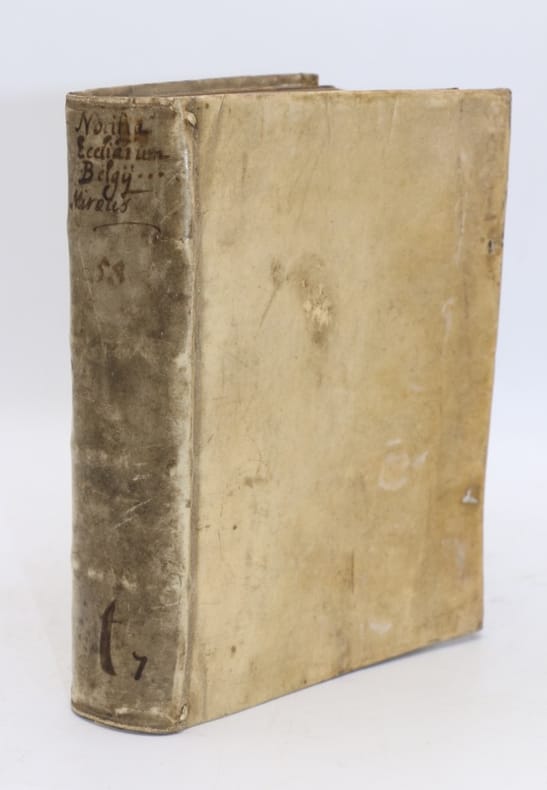
579098Antverpiae, apud Ioannem Cnobbarum, 1629. In-8, rel. pl. vélin ancien à recouvrements, initiales HSL typographiées sur le plat sup., belle vignette de titre, titre-[15]ff.-572 pp. [RELIE A LA SUITE] : Index principum Belgii procerumque olim apud Belgas illustrium, in his libris memoratorum, [A LA SUITE] : Brill auff den evangelischen Augapfel Das ist: Wichtige / Beständige Ablehnung und in Gottes .... [A LA SUITE]: Der Augspurgischen Concession verwandte Prediger oder aber die Jesuiten… durch ein kursses Sendschreiben D. Martini Lutheri.
579099Antverpiae, apud Ionnem Cnobbarum, 1630. Petit in-4, rel. pl. vélin de l'époque à recouvrements, [3]ff.-708 pp., plusieurs tabl. généal. dans le texte.
015602[Pays-Bas] Jean-Antoine d'Avaux (1650-1709), Copie de la Lettre de Monsr d'Avaux au Roy Très-Chrestein, à la Haye le 9 jan; 1684. comme elle a esté envoyée aux Membres de l'Estat. [La Haye, J. Scheltus], 1684. In-4, 7p. Lettre rendant compte à Louis XIV des tractations avec les Pays-Bas qui amenèrent à la trêve de Ratisbonne (15 août 1684). Elle fut publiée aussi en néerlandais. Un des deux doubles feuillets fendu en partie au pli. Peu commun. [144]
200504453Grenoble, Editions Arthaud collection beaux pays, 1925 ; in-8, 146 pp., demi-chagrin.
200701740Berne, Kümmerly & Frey Editions Géographiques, 1970 ; in-4, 188 pp., cartonnage d'éditeur avec jaquette.
1976107409Leyden - Brussels, A. W. Sijthoff, éditions de la Connaissance 1976 In-4 28 x 21 cm. Reliure éditeur gris-bleu sous jaquette à l’identique, 56 pp., 62 planches en noir & blanc, sommaire, catalogues, notes bibliographiques, index des lieux.
175597La Haye, Isaac Scheltus, 1795 placard petit in-folio (41 x 32 cm), Texte bilingue sur deux colonnes (néerlandais et français), en feuille.
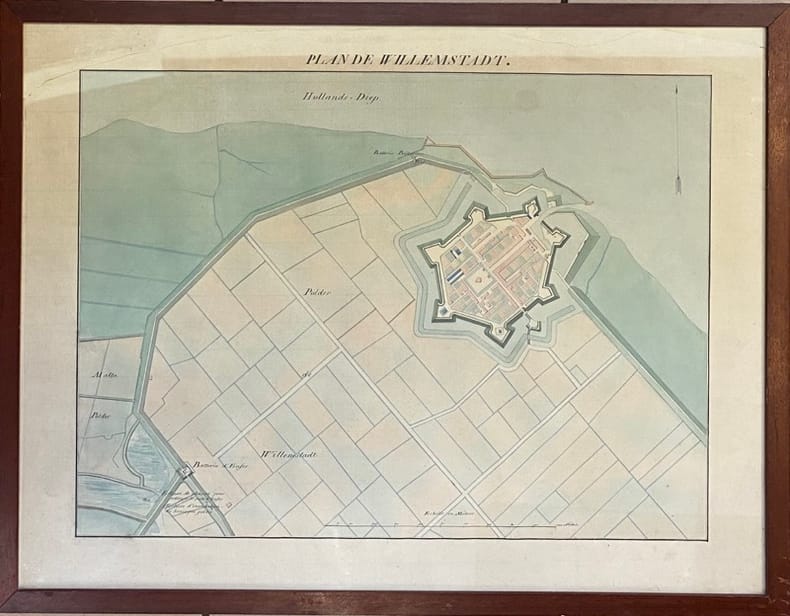
232205(XVIIIème siècle) 48.5 x 63.5 cm (à vue) - 52.5 x 68 cm ( cadre) , cadre en bois verni. Déchirures dans la partie supérieure n'atteignant pas la composition. Insolé.
in-4° 123 pp., broche, couverture illustree.- Tres bel ouvrage illustre de nombreux documents in- et hors texte (pages de titre anciennes, portraits, lettrines, ornements, ...). Bel exemplaire. [PLG-5/6]
121437London Printed by Adam Islip 1601. . First edition in English first issue with the Islip imprint; 2 vols folio 30.5 x 20.7 cm; 2 title pages each with woodcut allegorical device woodcut head- and tailpieces decorative initials last leaf with errata on recto and colophon on verso one or two instances of early marginalia; lacking first blank leaf in each volume scattered light foxing and staining a few marginal open and closed tears scattered small rust holes costing a few letters faint dampstaining to a few gatherings; late 18th-century half calf over marbled paper-covered boards edges speckled red sometime rebacked with original spines laid down gilt tooling to spines red morocco title labels to spines lettered in gilt; a handsome copy.<br /> 'Over and over again it will be found that the source of some ancient piece of wisdom is Pliny.' PMM 5<br /><br />A handsome first edition first issue of Philemon Holland's renowned English translation of Pliny's Natural History. The most popular of Holland's translations it had never before been printed in English and would not be attempted again for another 250 years.<br /><br />One of the greatest translators of the Elizabethan age Holland's Pliny was an important source for Shakespeare. 'In Othello's allusion to the Pontic Sea Shakespeare was clearly drawing upon Pliny's Historie as translated by Holland Similarly Pliny has also been cited as a source for Othello's reference to the "medicinal gum" of "the Arabian trees"' Payne Search for Meaning 63 and many trace Caliban in The Tempest to Holland's Pliny.<br /><br />'The importance of Pliny lay not so much that he was an inexhaustible source for monsters eclipses and the stranger habits of all created things but that in the pages of Philemon Holland's translation Shakespeare found that emphasis on Nature which he employed and re-interpreted in the tragedy' Evans The Language of Shakespeare's Plays.<br /> STC 20029.5; Pforzheimer 496; ESTC S115918; Brueggemann 670; Lowndes 1885; cf. PMM 5. London, Printed by Adam Islip, 1601. hardcover
163434275London: Printed by Adam Islip and to be sold by John Grismond in Ivy-lane and to be sold at the Signe of the Gun 1635 1634 1634. The first Tome. The second Tome. The second printing with numerous corrections of the first English translation. Printed by Adam Islip in 1634 the first volume contains the title-page dated 1635 which was offered for sale by John Grismond the second volume retains the 1634 title-page. Elaborate woodcut printer's device to title engraved floriated initials and fine head and tail pieces throughout. Folio in 6s 2 vols. bound in one an excellent copy bound in full contemporary polished calf in original state the back with raised bands over cords covers with double fillet rules in blind. 56 614 42; 12 632 86. Advertisement leaf at end of vol. II pp. Collated complete. An especially desirable copy of this highly important book. In its rare original state this book is seldom encountered. The textblock is crisp and unpressed and remains in a very pleasing state of preservation some minor evidence of damp in a few places as to be expected the spine with expert restoration at the head and tail of the panel a beautiful copy. IMPORTANT EARLY ISSUE OF THE GREAT TRANSLATION OF PLINY INTO ENGLISH BY PHILEMON HOLLAND. The second printing of the first full English translation of this important book. First published in Venice in 1469 “The ‘Natural History†of Pliny the Elder is more than a natural history: it is an encyclopaedia of all the knowledge of the ancient world. .He was a compiler rather than an original thinker and the importance of this book depends more on his exhaustive reading he quotes over four hundred authorities Greek and Latin than on his original work. All the spare time allowed him by a busy administrative career was devoted to reading; he began long before daybreak his nephew the younger Pliny recorded and grudged every minute not spent in study; no book was so bad he used to say as not to contain something of value. When he died the 'Natural History' the sole extant work out of one hundred and two volumes from his pen was still incomplete. It comprises thirty-seven books dealing with mathematics and physics geography and astronomy medicine and zoology anthropology and physiology philosophy and history agriculture and mineralogy the arts and letters. He is scrupulous in his acknowledgment of his sources you must he wrote with honest humility declare those from whom you have profited and the whole of the first book is devoted to the tables of contents and authorities which bear witness to his method.<br> The HISTORIE soon became a standard book of reference: abstracts and abridgments appeared by the third century. Bede owned a copy Alcuin sent the early books to Charlemagne and Dicuil the Irish geographer quotes him in the ninth century. It was the basis of Isidorets Etymologiae and such medieval encyclopedias as the Speculum Majus of Vincent of Beauvais and the Catholicon of Balbus. One of the earliest books to be printed at Venice the center from which so much of classical literature was first dispensed it was later translated into English by Philemon Holland in 1601 and twice reprinted a notable achievement for so vast a text. .<br> More recently scholars as various as Humboldt and Grimm have praised and acknowledged their debt to it. Over and over again it will be found that the source of some ancient piece of knowledge is Pliny. PMM<br> The standard of reference for scholars since the 15th century Holland’s translation made it available to the English speaking world for the first time. Although not strictly scientific itself mingling a good deal of the author's fancy with fact Pliny's NATURALL HISTORIE was important in stimulating scientific thought in succeeding generations. "It is an encyclopedia of all the knowledge of the ancient world set out in an orderly fashion. It was the source of much medieval knowldege--and legend--and the model for such works as the SPECULUM MAJUS of Vincent of Beauvais. The high regard in which it was held in the world of the Renaissance can be seen by its early appearance in print 1472" PMM.<br> The HISTORIE divided into 37 libri or "books" was completed except for finishing touches in 77 CE. In the preface dedicated to Titus who became emperor shortly before Pliny's death Pliny justified the title and explained his purpose on utilitarian grounds as the study of "the nature of things that is life" "Preface" 13. Heretofore he continued no one had attempted to bring together the older scattered material that belonged to "encyclic culture" <br>egkyklios paideia the origin of the word encyclopaedia. Disdaining high literary style and political mythology Pliny adopted a plain style--but one with an unusually rich vocabulary--as best suited to his purpose. A novel feature of the NATURALL HISTORIE is the care taken by Pliny in naming his sources more than 100 of which ae authors and sometimes the titles of the books many of which are now lost from which Pliny derived his material.<br> The HISTORIE properly begins with Book II which is devoted to cosmology and astronomy. Here as elsewhere Pliny demonstrated the extent of his reading especially of Greek texts.<br> Books VII through XI treat zoology beginning with humans VII then mammals and reptiles VIII fishes and other marine aninmals IX birds X and insects XI. In Books XII throuogh XIX on botany Pliny came closest to making great contributions to science. He drew heavily upon Theophrastus and still made important independent observations particularly those made during his travels in Germany. Pliny is one of the chief sources of modern lknowledge of Roman gardens early botanical writings and the introduction into Italy of new horticultural and agricultural discoveries.<br> Born at Como in 23 Pliny died while observing the eruption of Vesuvius in 79 A.D. His NATURALIS HISTORIA is a scientific encyclopedia often uncritical but very elaborate and of great value. Pliny attached to each book the list of his authorities 146 Roman and 327 Greek being quoted. He explained that people may be living at the antipodes and stated that the speed of light is greater than that of sound. His work includes the oldest account of ancient art. In addition it contains a remarkable amount of early information on Asia and Africa. Its influence throughout the Middle Ages was very great.<br> This is an especially nice copy of the second offering of the work in English. This issue corrected the many errors of the first English edition. As with the copy listed in the British Museum the first tome has a new title page dated 1635. Further this is a variant issue with “and are to be sold by John Grismond†after Adam Islip on the imprint. Dedicated to Sir Robert Cecil. Printed by Adam Islip and to be sold by John Grismond, in Ivy-lane and to be sold at the Signe of the Gun hardcover
201117576Paris, Editions privat , 2011 ; in-8, 286 pp., br.
GF20545Gravure originale à l'eau forte et aquatinte - format 13,5 x 13,5 cm sur une feuille de 29,5 x 21 cm - Vers 1820 - bon état malgré quelques petites piqures marginales sans gravité -
GF13115Photographie 7,5x4 cm - collée sur carton - vers 1900 -
GF13114Photographie 7,5x4 cm - collée sur carton - vers 1900 -
GF13113Photographie 7,5x4 cm - collée sur carton - vers 1900 -
1880284821880 une photographie originale argentique en noir, DE L'ANCIEN MARCHE COUVERT DE LA PETITE HOLLANDE A NANTES , VUE DU QUAI DE LA FOSSE (1930), format : 9 x 12,7 cm , photographe inconnu,
1971107405Leyden - Brussels, A. W. Sijthoff, éditions de la Connaissance 1971 In-4 28 x 21 cm. Reliure éditeur gris-bleu sous jaquette à l’identique, 106 pp., 135 planches en noir & blanc, sommaire, catalogues, notes bibliographiques, index des lieux.
1954164787Utrecht, Stichting "De Roos", 1954. 38, [7] S., Original-Halbleder, 8°. Nummeriertes Exemplar, Nr. 56 von 175 Exemplaren für die Mitglieder der Stiftung De Roos. Typografie und Illustrationen von Willem Jacob Rozendaal. Hardcover Gutes Exemplar.
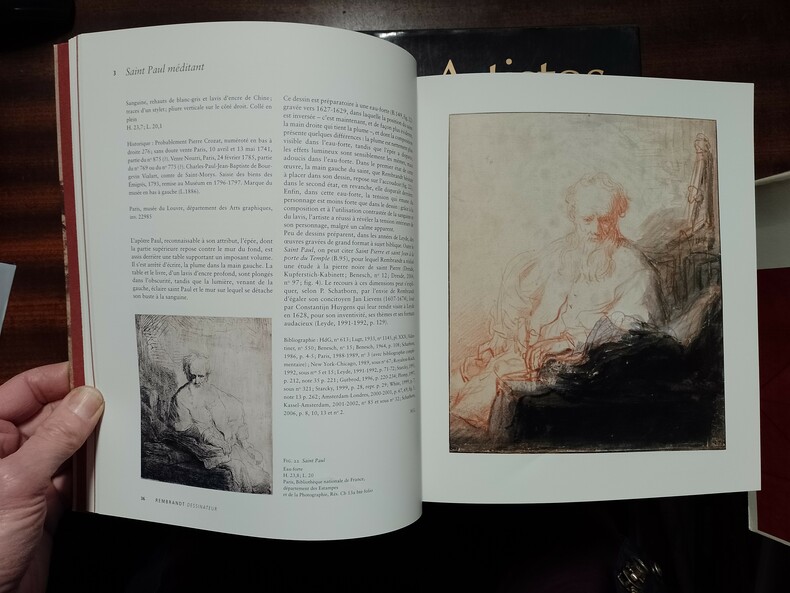
2006ARTTT919191121001224Paris, Somogy Editions d'Art / Musée du Louvre Editions, 2006, 24,5 x 28, 192 pages cousues sous couverture rempliée illustrée. Abondamment illustré. Cet ouvrage accompagne l'exposition présentée au musée du Louvre du 20 octobre 2006 au 8 janvier 2007.
189055272Amsterdam, A. Jager, o. J. (um 1890). 12°. 12 Orig.-Fotografien auf Untersatzkarton im ?Carte de visite-Format? (6,2 x 10,3 cm). Gold- u. blindgepr. OLwd.
201228706Paris, Gallimard, 1955 ; in-12, 248 pp., cartonnage de l'éditeur. N°270.