1 917 résultats
1996x-0415133718Routledge 1996. Hardcover. New. 1st edition. 281 pages. 10.00x6.25x1.00 inches. Routledge hardcover
2012Manohar-9780415523127Routledge 2012. Hardcover. New. Routledge hardcover
2012Manohar-9780415523127Routledge 2012. Hardcover. New. Routledge hardcover
17617777London: Published by R. H. Laurie; 53 Fleet Street and Bowles & Carver 1761. Mezzotint. New state ii/ii with the publication line altered. Inscription reads as follows: " J. Reynolds pinx.Cha Corbutt fecit./ Strive not TRAGEDY nor COMEDY to Engross a GARRICK who to your NOBLEST CHARACTER does EQUAL HONOUR./ Reddere Personae scit convenientia cuique./ Published by R.H.LAURIE; 53 Fleet Street and BOWLES & CARVER St. Pauls Church Yard London Price 6s.". In good condition apart from a small section of paper loss in the upper margin not extending into the image and two small skillfully mended tears on the bottom margin. Images size: 13 1/8 x 16 inches. One of the most famous portraits of the actor David Garrick by Sir Joshua Reynolds.<br/> <br/> David Garrick 1717-1779 was perhaps the most influential actor in the English theater. He successfully took on all aspects of theatrical production including actor manager playwright publicist and theatre advocate. He displayed an amazing range by convincingly playing parts in every genre from comedy to tragedy history to farce. From 1747 until his retirement in 1776 he was the manager of Drury Lane where he initiated many improvements: he introduced concealed stage lighting removed spectators from the stage and cultivated a naturalistic style of acting. Garrick was acutely conscious of the value of pictures as advertisements. He sat for every painter of note many of whom are now little more than names. He was painted in oils and in watercolours drawn in pencil and in pastels modelled in wax and in terracotta; his likeness even appeared on medals Wedgewood china and playing-cards. This portrait by his friend Reynolds demonstrates in a mildly humorous way the actor's talents and character; posed between Tragedy and Comedy Garrick is depicted the master of both. Garrick's broad smile and Tragedy's melodramatic stance note the dagger at her waist favor Comedy. Reynolds' painting was a huge public success and inspired many prints and paintings pirated prints of the image even made their way to the streets of Paris. The popularity of this image is a testimony to Garrick's fame and to Reynolds' talent. University of Florida website Penny An interesting derivative of this scene is Shakespeare Nursed by Tragedy and Comedy a beautiful stipple engraving based on a painting by Romney.<br/> <br/> Penny Reynolds 42; Chaloner Smith British Mezzotinto Portraits 31 this state not recorded; Russell English Mezzotint Portraits and their States 31 this state not recorded; Hamilton Catalogue Raisonné of the Engraved Works of Sir Joshua Renolds p.29; Lennox-Boyd Theatre: the Age of Garrick p.108; O'Donoghue Catalogue of Engraved British Portraits. in the British Museum 52. Published by R. H. Laurie; 53 Fleet Street, and Bowles & Carver unknown
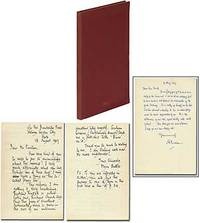
1957276957Welwyn Garden City Herts: The Broadwater Press Limited 1957. Hardcover. Near Fine. First edition preceding the Sagamore trade edition. Octavo. Red cloth gilt without dustwrapper as issued. The gilt lettering is a bit faded a faint dampstain on the boards a very good copy. Complimentary slip from Myra Buttle laid in. A satire of T.S. Eliot printed for private circulation. Laid in is a one page Autograph Letter Signed to Buttle from English author and drama critic Charles Purdom in the year of publication whose arch tone sounds like he was in on the joke: "Dear Miss Buttle You were a very good girl to send me a copy of The Sweeniad & not at all an ordinary girl to have made so well deserved an examination of the great Sweeney. It is writing of himself at his best. Similar personal attention to his so-called plays would be much appreciated by me. He is the nothingness of our age great ability with waste of soul. Your book gave me great pleaseure. I hope you are sleeping well. Yours sincerely C.B. Purdom." Also laid in is a similarly arch two page Autograph Letter Signed from "Myra Buttle": in part "How very kind of you to write to me so encouragingly about The Sweeniad!. Perhaps one of these days I may have a bang at the so-called plays too. The Response I am getting is very heartening Bertrand Russell is enthusiastic. Graham Greene surprisingly enough sends me a post-card with 'Bravo' on it." Buttle goes on to reveal the answer to a riddle in the text. The Broadwater Press, Limited hardcover
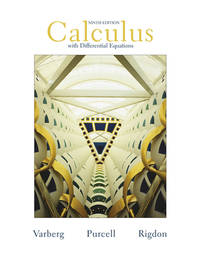
20061-0132306336Prentice Hall 2006. Hardcover. New. 9th edition. 880 pages. 11.25x9.00x1.50 inches. Prentice Hall hardcover
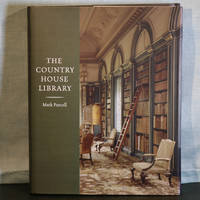
2017FB1132 /attc<p>In the original dust sheet. Green board with gilt title on the spine.</p><p>In many country houses the Library is the most spectacular room in the house. At Blickling in Norfolk the Long Gallery 123 feet long and lined end-to-end with books is unforgettable. At Alnwick Castle in Northumberland the double-height Library shelved from floor to ceiling is enormous and at Calke in Derbyshire it is the second largest room in the house. Elsewhere interiors impress less for their size than for their opulence. At Traquair south of Edinburgh each bay of shelving has a classical author painted on the cornice above just as in the seventeenth-century Library of the antiquarian Sir Robert Cotton 1570/1–1631 at Westminster where the bust of a Roman emperor once sat atop each bookcase. At Abbotsford many of Sir Walter Scott's books remain on the shelves of the great room he created for them while the library of another bestselling novelist survives at Hughenden the Buckinghamshire retreat of Queen Victoria's favourite Prime Minister Benjamin Disraeli. But the history of libraries in country houses is a history of lost libraries as well as extant collections. Quite apart from books sold by the descendants of their original owners libraries have always been subject to dissolution in more dramatic fashion. The library of the 3rd Duke of Argyll was described in a lavishly produced catalogue published by the Foulis Press in Glasgow in 1758 and subsequently sold to George III's Prime Minister the 3rd Earl of Bute 1713–92. It was then destroyed in a fire at Bute's English home Luton Hoo in 1771. Nearly two hundred years later the library of the aesthete Ralph Dutton 1898–1985 was destroyed in 1960 in a great fire at Hinton Ampner near Winchester. So intense were the flames that the books were left 'almost petrified as if engulfed by a volcanic eruption'. In Ireland many libraries perished in the house burnings which marked the end of the old order during the War of Independence and ensuing Civil War. It was not a new phenomenon. In a leaflet in circulation during the Land War in the 1880s beleaguered Irish gentry were already being advised to use heavy ancestral books to barricade windows against attack. In fact by the revolutionary era many Irish libraries had already been sold following state-sponsored land reforms begun in the dying decades of British rule in Ireland. In both Britain and Ireland there are many instances where a house survives but its library does not. It comes as a surprise that there was a major library at Castletown in County Kildare as recently as the 1960s. At Sudbury Hall in Derbyshire probably not one National Trust visitor in a thousand realises that the seventeenth-century Long Gallery was once shelved end to end . At Ettington Park in Warwickshire now a hotel the spectacular Gothic Library built by the gentleman-scholar E. P. Shirley 1812–82 remains. Guests can decide whether they believe in the Library poltergeist but Shirley's books like those from his Irish house at Lough Fea County Monaghan are gone. In both cases the loss of a remarkable library is a pointer to an important fact. The more magnificent the books and the more quickly the shelves had been filled by an enthusiastic nineteenth-century collector the more likely it was that they would eventually be removed and sold. Then there are the many country houses which are today open to the public but where visitors see little or nothing of books. At Chatsworth visitors are only able to look through the Library door though even that is spectacular. At Longleat most of one of the finest private libraries in the world is not seen by ordinary tourists at all. To varying extents the same is true of houses like Holkham Houghton Goodwood Petworth and Knole where libraries are not in show rooms long open to tourists but in historically private apartments in rooms which frequently remain off-limits to casual sightseers. The reasons are not difficult to guess at but the logic is that there are more grand libraries in private hands than many people realise. But there are also many libraries which are if less spectacular in many ways just as remarkable. Sometimes in show houses and sometimes in houses very much in private occupation these smaller libraries may be accommodated in modest and unpretentious rooms. Their books may have been in place for centuries and be of considerable interest. At Gunby Hall the library assembled by the Massingberds a family of east Lincolnshire squires goes back to the late seventeenth century. Though battered and now only a partial survival the books provide a fascinating flavour of gentry life in an often-forgotten corner of England. Elsewhere quite ordinary eighteenth- or nineteenth-century books may be housed in apartments of some magnificence. At Flintham Hall in Nottinghamshire a double-height Library provides the link between a comfortable Victorian family home and a vast conservatory clearly inspired by the Crystal Palace. At Sheringham Park the books of the Upcher family high-minded Norfolk squires remain in the room designed for them by Humphry Repton 1752–1818 a space in every sense the precursor of the modern living room. There is an almost equally elegant Regency Library at Wassand Hall in East Yorkshire a Catholic house and like Gunby still with its original books while similarly interesting books are found in houses like Farnborough Hall in Warwickshire or Dudmaston in Shropshire. Other libraries survive but not in situ nor in the hands of their original aristocratic owners. The most spectacular is the vast library of the bibliomaniac 2nd Earl Spencer 1758–1834 from Althorp Northamptonshire sold en bloc in 1892 to the Cuban-born Enriqueta Rylands as the foundation collection of the new research library she founded in memory of her husband the Manchester cotton magnate John Rylands 1801–88. There was nothing new in the institutionalisation of aristocratic libraries. The 5th Duke of Norfolk had at the suggestion of John Evelyn given his personal library to the Royal Society in 1667 while Frances Duchess of Somerset gave about 1000 books from her late husband's library to the Dean and Chapter of Lichfield in 1674. The magnificent library from Stoneleigh Abbey Warwickshire was bequeathed to Oriel College Oxford in 1786. The college showed its gratitude by commissioning an exquisite new building from James Wyatt to house the books and by quietly selling Lord Leigh's Shakespeare First Folio to Sir Paul Getty in 2002. Deplorable though this seemed to many Oriel was not doing anything new in selling to a private collector. As far back as 1811 T. F. Dibdin 1776–1847 had procured three Caxtons from Lincoln Cathedral for the library of his patron Earl Spencer. Other country house libraries were subject to what amounted to a rather subtle nationalisation in the years following the Second World War. A large number of manuscripts from the library of the Earls of Leicester at Holkham went to the Bodleian Library in Oxford in the 1950s. Other Holkham books ended up in the British Library as did books from Chatsworth including incunabula and the tenth-century Benedictional of St Æthelwold. The transfer of these and other treasures to public ownership was the consequence not only of the enormous death duties of the post-war period but also of new regulations on export stops. But for some books it was already too late. Had export stops been in place in the early 1930s it seems inconceivable that two more great Anglo-Saxon manuscripts the eighth-century Blickling Psalter and the Blickling Homilies would have been allowed to leave the United Kingdom. This dovetails neatly into another form of nationalisation. The National Trust was founded in 1895 and its first books were at Coleridge's Cottage Nether Stowey Somerset acquired in 1907. However its first serious library at Blickling was bequeathed along with the house by the 11th Marquess of Lothian in 1940. It has sometimes been said that Lothian's involvement in the Trust's Country Houses Scheme 1934 was the result of his distress at the sale of books from Blickling and his principal Scottish seat Newbattle Abbey in 1932. If this was the case there is no reference to it in Lothian's papers and no mention of libraries in his correspondence with the National Trust. The crucial point is that Lothian lent his name to the Country Houses Scheme and subsequently left Blickling and its remaining 12561 books to the Trust. It was the beginning of a process which would subsequently see the gradual transfer of about 300000 books to the Trust whether by gift bequest Treasury transfer in lieu of death duties or later by purchase. A similar process was repeated on a smaller scale north of the border where the National Trust for Scotland was founded in 1931. If there are now far fewer libraries in country houses than there were in the nineteenth century the number of survivors in both private and institutional hands is far from negligible. How many exactly is unclear but at the most conservative estimate we must be dealing with hundreds of thousands of books in hundreds of locations. So it remains surprising that so many libraries have been so consistently overlooked in modern times. When he died in 1682 the probate inventory of the 1st Duke of Lauderdale reckoned that his books at Ham House made up half the value of all the chattels in the house. One would scarcely guess this when reading the many publications on furniture pictures and upholstery at Ham the problem has recently been redressed with the publication in 2013 of a full-scale scholarly study of Ham which does includes a chapter on the lost library. Many similar books on other houses resolutely ignore libraries as do most of the enormous number of general books on country houses as well as many guidebooks.</p> Yale University Press. hardcover
2006CBS-9781846282676Sp Springer 2006. New. Sp Springer unknown
2006CBS-9781846282676Sp Springer 2006. New. Sp Springer unknown
2021SKU0203904Oxford University Press 2021-02-23. Hardcover. Good. Textbook May Have Highlights Notes and/or Underlining BOOK ONLY-NO ACCESS CODE NO CD Ships with Tracking Oxford University Press hardcover
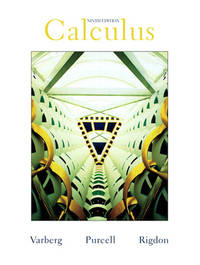
20061-0131429248Prentice Hall 2006. Hardcover. New. 9th edition. 774 pages. 11.50x9.00x1.50 inches. Prentice Hall hardcover
1992DADAX0195073290Oxford University Press 1992-12-31. 1. hardcover. New. 9.32x6.14x1.29. Buy with confidence. Excellent Customer Service & Return policy. Oxford University Press hardcover
2022x-1350309877Bloomsbury Academic 2022. Hardcover. New. 5th edition. 411 pages. 9.75x6.75x1.00 inches. Bloomsbury Academic hardcover
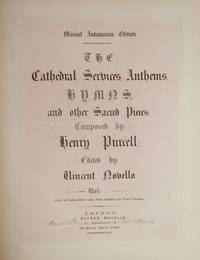
184441320London: J. Alfred Novello Music Seller by Appointment to Her Majesty 69 Dean Street Soho. R. & E. Willliamson Sculpt. Lambeth 1844. 4 volumes. Tall folio. Half black leather with dark teal pebbled cloth boards with gilt rules to spine and edges spine in decorative compartments gilt with titling gilt marbled endpapers all edges gilt. Text letterpress titles and music engraved. <br /> <br /> Vol. I: Verse anthems in major keys<br /> 1f. recto title verso blank 1f. recto bust-length portrait of Purcell verso blank 1f. recto publisher's note verso blank i-xii "Life of Purcell" by Edward Holmes 1f. recto facsimile excerpt of Purcell's autograph manuscript of the anthem "My beloved spake" verso blank 1f. index 1 blank 2-160 147-158 161-312 pp. Portrait "Engraved by W. Humphreys from a drawing by Edw. Novello after the original picture by Sir Godfrey Kneller in the possession of Edwd. Bates Esqr." <br /> <br /> Vol. II: Verse anthems in minor keys<br /> 1f. recto title verso blank 1f. index 313-618 pp. <br /> <br /> Vol. III: Full anthems hymns sacred songs and Latin pieces<br /> 1f. recto title verso blank 1f. index 619-850 pp. <br /> <br /> Vol. IV: Services and chants<br /> 1f. recto title verso blank 1f. recto publisher's note verso blank i blank 852-954 955 blank 956-1067 i blank pp. <br /> <br /> Ex-library with bookplates of Robert Buchanan Stewart and The Episcopal Theological School Cambridge Mass. to front pastedowns of each volume occasional small blindstamps call numbers to verso of title to Vol. I and foot of spines. Bindings quite worn; uppers of Vols. II and III and both uppers and lowers of Vols. I and IV detached; spines defective with some loss. Minor internal wear; several leaves detached. <br /> <br /> In very good internal condition overall. "One of the most important 17th century composers and one of the greatest of all English composers. . Purcell began his musical career as a choirboy and remained a church musician throughout his life holding positions at Westminster Abbey as well as the Chapel Royal. Like John Blow he wrote four types of church music: services; anthems for full choir and organ or with short ensemble verse passages often called full with verse anthems; verse anthems for solo voices choir and organ; and 'symphony anthems' for solo voices choir strings and continuo which at first were performed exclusively in the royal presence though several later circulated more widely in versions with organ accompaniment only." Peter Holman and Robert Thompson in Grove Music Online<br /> <br /> An English organist composer collector antiquarian and founder of the Novello publishing house Vincent Novello 1781-1861 did much to promote the study and performance of music in 19th century England. J. Alfred Novello Music Seller by Appointment to Her Majesty, 69, Dean Street, Soho. R. & E. Willliamson, Sculpt. Lambeth unknown
2008x-0415427797Routledge 2008. Hardcover. New. 1st edition. 228 pages. 9.25x6.25x0.25 inches. Routledge hardcover
2020Atlantic-9780198743644Oxford UP 2020. Hardcover. New. Oxford UP hardcover
2020Atlantic-9780198743644Oxford UP 2020. Hardcover. New. Oxford UP hardcover
19363099Sacramento: California State Printing Office 1936-1938. Near Fine. 1936. Softcover. 4 vols.; 4to; original printed illustrated gray wrappers; black & white photographs throughout; folding architectural plans charts throughout; tables. Volume II on Construction Development; Vol. III Construction Progress; Vol. IV describes completion of construction; the start of construction of the Bridge Railway; operation & maintenance. Volume V with t.l.s bound in from Charles Derleth to C.H. Purcell Chief Engineer acknowledging with thanks this copy of the reports etc. and with Purcell's business card pasted down on lower left margin of letter. Minor wear at edges. Also: with the ownership signature "C. Derleth Jr." in pen on top edge of front cover. Charles Derleth Jr. who was a member of the Board of Consulting Engineers for both the Golden Gate Bridge and the San Francisco-Oakland Bay Bridge. He was the Chief Engineer for the Carquinez Strait Highway Bridge built in 1927. . [California State Printing Office [1936-1938] paperback
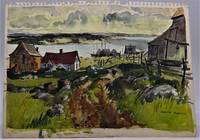
009478Canada: The Artist Book. Near Fine. Single Sheet. SIGNED BY ARTIST. 8 7/8" x 11 7/8". Noted Canadian artist Joseph Purcell was born in Halifax Nova Scotia in 1927. He studied at the Nova Scotia College of Art becoming a professional artist around 1947. In 1953 he moved to Lunenberg and painted there the rest of his life. He is known for his landscapes and seascapes of the Nova Scotia coast. 8 7/8" by 11 7/8" paper size 8" x 11 1/4" image size on watercolor paper torn from a sketch pad signed lower right H16 in pencil lower left. A lovely bright scene of a small fishing village. The Artist unknown
20121-0195380673Oxford Univ Pr 2012. Hardcover. New. 3rd edition. 736 pages. 9.45x7.64x1.34 inches. Oxford Univ Pr hardcover
DADAX0070048592McGraw-Hill Education 1965-01-01. 1st. hardcover. New. 2.00x14.00x10.00. Buy with confidence. Excellent Customer Service & Return policy. McGraw-Hill Education hardcover
2019Adhya-9780198743644OXFORD UNIVERSITY PRESS 2019. Hardcover. New. OXFORD UNIVERSITY PRESS hardcover
2019Adhya-9780198743644OXFORD UNIVERSITY PRESS 2019. Hardcover. New. OXFORD UNIVERSITY PRESS hardcover
1954491Lancaster: American Physical Society 1954. 1st Edition. FIRST EDITION IN ORIGINAL WRAPS OF A PIONEERING PAPER IN MAGNETIC RESONANCE IMAGING. Carr and Purcell "showed that a simple modification of Hahn's spin-echo method reduces drastically the effect of diffusion" in magnetic resonance thus increasing its reliability Aligizaki 213. <br /> <br /> Otto Hahn recognized "the sensitivity of the spin echo MR signal on molecular diffusion. While he proposed that one could measure the diffusion coefficient of a solution containing spin-labeled molecules he did not propose a direct method for doing so. In 1954 in this paper Carr and Purcell proposed a complete mathematical and physical framework for such a measurement using Hahn's NMR spin echo sequence. They realized that the echo magnitude could be sensitized solely to the effects of random molecular spreading caused by diffusion in a way that permits a direct measurement. <br /> <br /> "Carr and Purcell's proposed MR sequences sensitized the MR spin echo to the effects of diffusion" Johansen-Berg Diffusion MRI 6. As a result they were able to develop "a rigorous mathematical framework to measure the diffusion coefficient from such sequences. This elevated NMR to being a ‘gold standard' for measuring molecular diffusion" ibid. CONDITION & DETAILS: First edition in original wraps. Lancaster: American Physical Society. Very very slight wear at the foot of the spine and at the edges of the wraps. Very good condition. American Physical Society paperback
2002548G1299USA: Phaidon 2002. Book. Illus. by Alexey Brodovitch. Fine. Hardcover. First Edition. 4to - over 9¾" - 12" tall. 272 pages. Bibliography. Index. Footnotes. Subject was the long-time art director of Harper's Bazaar. "This work narrates his life and work documenting with extensive research and rare archival images his contributions to photography design and the visual arts." - from dust jacket. Clean bright and unmarked with negligible wear. Tiny faint erasure atop front free endpaper. Dust jacket preserved in glossy new archival-grade Brodart cover. A beautiful copy. Gift quality. Please note: Heavy book. Special shipping considerations may apply. Phaidon Hardcover