Margaret Ruth PurcellBiblio.com

2 116 résultats
1391546075.Ghardcover. Good. Access codes and supplements are not guaranteed with used items. May be an ex-library book. hardcover
19100008097LOS ANGELES CALIFORNIA. Fair. 1910. On offer is a pair of leather bound diaries written by Marian I Purcell. The diaries cover parts of 1910 1913 1914 and 1915. This first diary is a small leather-bound notebook measuring 6 inches by 3 1/2 inches. It is in fair condition. It covers the period Sept 16 1913 to Sept 14 1915. The bulk of the entries are in the last half of 1914. Marian Purcell was born Sept 16 1892 in Fort Wayne IN where she lived until she was 17. The first book covers the period July 19 1910 to Jan 6 1911 but there are many gaps in entries. They are typical of a teenage girl of the time. They note essentially social interactions with friends and family. "Slept till quite late . fooled around all day" July 19 1910. "Delight A and her mother were over in A.M. and P.M. just fooled around in eve went over to Tad Werner and Charlie called over We went to " July 28 1910. Just laid around all day in eve ma and pa and I all went walking in late" Aug 21 1910 She notes on Oct 1 1910 that her family is moving to Los Angeles CA. She makes it very clear that she does not want to move: "Left . for California hated to come" Oct 1. The second book is a 5-year diary. However the entries do not cover all of the time period. Entries begin in Sept 1913. In the Memoranda section she notes: "Went to Business College to learn shorthand from April-14-13 - June 14-1913". Although here are frequent gaps there is enough information to know when she was married her husband's name some addresses where they lived and what type of work she did. She married William L Harris June 18th 1914. They note that she worked in an office likely the Los Angeles Herald Examiner which was a major Los Angeles daily newspaper of the time. There are numerous references in 1913 about . at the office . On May 2nd 1914 she notes: "Quit work at Examiner to get ready to be married" May 2 1914. There are no further references to her working. Subsequent entries focus on interactions with friends and social events. It appears she never worked again outside of her home. There are no references to children or other family members although some of the named individuals may well be related There are no references to outside events and she seems very focused on her own life and experiences. "At office all day. In eve went to see "The Quaker Girl". It was fine". Sept 14 1913. "To the office. Did not come back for afternoon. In eve stayed home" Nov 18 1913 "Payday Gribbeu's were over Velma Billy and I went to picture show & Porters" Nov 26 1913. "My wedding day. The day of my life. Married at 8:00 in evening by Deacon Mac Cormack on roof gardens of the Pickwick Left that night stayed at the left the next A.M. for Catalina" June 18 1914. The last entry was made in August 1915: "Stayed home all day - in eve was home ." Aug 9 1915. Additionally there are newspaper clippings mostly referring to her wedding several photographs that appear to be of her and her new husband and several post cards. There is also a copy of her formal wedding invitation. These two diaries give a look into the life of a young woman in the early years of the 20th century. A historian especially on studying daily life in pre-WWI Los Angeles would find this to be an interesting description of social life at that time.; Manuscript; 16mo - over 5¾" - 6¾" tall; KEYWORDS: HISTORY OF MARIAN PURCELL WILLIAM L HARRIS LOS ANGELES HERALD EXAMINER SOCIAL HISTORY LOS ANGELES CALIFORNIA FORT WAYNE INDIANA UNITED STATES EARLY 20TH CENTURY 1910s PROGRESSIVE ERA BUSINESS COLLEGE STUDENTS PRE-WW1 LOS ANGELES PROGRESSIVE ERA WOMEN IN 1910s AMERICA YOUTH LIFESTYLE IN THE EARLY 20th CENTURY ENTERTAINMENT THE EARLY 19th CENTURY WOMEN'S OCCUPATIONS IN 1910s WORKING WOMEN IN 1910s AMERICANA HANDWRITTEN MANUSCRIPT DOCUMENT LETTER AUTOGRAPH WRITER HAND WRITTEN DOCUMENTS SIGNED LETTERS MANUSCRIPTS DIARY DIARIES JOURNALS PERSONAL HISTORY SOCIAL HISTORY HISTORICAL HOLOGRAPH WRITERS AUTOGRAPHS PERSONAL MEMOIR MEMORIAL ANTIQUITÉ CONTRAT VÉLIN DOCUMENT MANUSCRIT PAPIER ANTIKE BRIEF PERGAMENT DOKUMENT MANUSKRIPT PAPIER OGGETTO D'ANTIQUARIATO ATTO VELINA DOCUMENTO MANOSCRITTO CARTA ANTIGÜEDAD HECHO VITELA DOCUMENTO MANUSCRITO PAPEL . hardcover
ria9783639125054_inpPaperback. New. New Book; Fast Shipping from UK; Not signed; Not First Edition; Where a person is situated in time and space determines the way an artwork is perceived. The result of this experience implies a relationship between the viewer and the artwork thereby creating a liminal space. This threshold or in-bet paperback
6122996-nnew. unknown
6122996like new. unknown
B9783639125054Paperback / softback. New. paperback
6128755295VDM Verlag Dr. Mueller Aktiengesellschaft & Co. KG pp. 88 . Papeback. New. VDM Verlag Dr. Mueller Aktiengesellschaft & Co. KG unknown
ria9780300248685_inpPaperback / softback. New. New Book; Fast Shipping from UK; Not signed; Not First Edition; N/A paperback
A9781041192886Paperback / softback. New. <p>This book offers a creative re-reading of Frantz Fanon as an affirmative proponent of radical democracy. </p> paperback
51356405-nnew. unknown
51356405like new. unknown
ria9780415954358_inpPaperback. New. New Book; Fast Shipping from UK; Not signed; Not First Edition; Recapturing Democracy is a short yet synoptic introduction to urban democracy in our era of political neoliberalism and economic globalization. Combining an original argument with a number of case studies Mark Purcell explores the paperback
ria9780415954341_inpHardcover. New. New Book; Fast Shipping from UK; Not signed; Not First Edition; Recapturing Democracy is a short yet synoptic introduction to urban democracy in our era of political neoliberalism and economic globalization. Combining an original argument with a number of case studies Mark Purcell explores the hardcover
A9780415954358Paperback / softback. New. Offers a synoptic introduction to urban democracy in the era of political neoliberalism and economic globalization. This book assesses 'substantive democracy'. It looks at case studies where this has occurred and at others that show how neoliberalism can be resisted in the name of substantive democracy. paperback
A9780415954341Hardback. New. Offers a synoptic introduction to urban democracy in the era of political neoliberalism and economic globalization. This book assesses 'substantive democracy'. It looks at case studies where this has occurred and at others that show how neoliberalism can be resisted in the name of substantive democracy. hardcover
6339270Taylor & Francis Group pp. 224 . Hardback. New. Taylor & Francis Group hardcover
6339273Taylor & Francis Group pp. 224 . Papeback. New. Taylor & Francis Group unknown
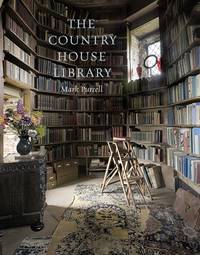
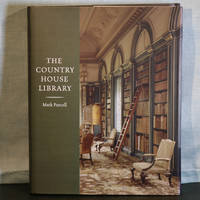
2017FB1132 /attc<p>In the original dust sheet. Green board with gilt title on the spine.</p><p>In many country houses the Library is the most spectacular room in the house. At Blickling in Norfolk the Long Gallery 123 feet long and lined end-to-end with books is unforgettable. At Alnwick Castle in Northumberland the double-height Library shelved from floor to ceiling is enormous and at Calke in Derbyshire it is the second largest room in the house. Elsewhere interiors impress less for their size than for their opulence. At Traquair south of Edinburgh each bay of shelving has a classical author painted on the cornice above just as in the seventeenth-century Library of the antiquarian Sir Robert Cotton 1570/1–1631 at Westminster where the bust of a Roman emperor once sat atop each bookcase. At Abbotsford many of Sir Walter Scott's books remain on the shelves of the great room he created for them while the library of another bestselling novelist survives at Hughenden the Buckinghamshire retreat of Queen Victoria's favourite Prime Minister Benjamin Disraeli. But the history of libraries in country houses is a history of lost libraries as well as extant collections. Quite apart from books sold by the descendants of their original owners libraries have always been subject to dissolution in more dramatic fashion. The library of the 3rd Duke of Argyll was described in a lavishly produced catalogue published by the Foulis Press in Glasgow in 1758 and subsequently sold to George III's Prime Minister the 3rd Earl of Bute 1713–92. It was then destroyed in a fire at Bute's English home Luton Hoo in 1771. Nearly two hundred years later the library of the aesthete Ralph Dutton 1898–1985 was destroyed in 1960 in a great fire at Hinton Ampner near Winchester. So intense were the flames that the books were left 'almost petrified as if engulfed by a volcanic eruption'. In Ireland many libraries perished in the house burnings which marked the end of the old order during the War of Independence and ensuing Civil War. It was not a new phenomenon. In a leaflet in circulation during the Land War in the 1880s beleaguered Irish gentry were already being advised to use heavy ancestral books to barricade windows against attack. In fact by the revolutionary era many Irish libraries had already been sold following state-sponsored land reforms begun in the dying decades of British rule in Ireland. In both Britain and Ireland there are many instances where a house survives but its library does not. It comes as a surprise that there was a major library at Castletown in County Kildare as recently as the 1960s. At Sudbury Hall in Derbyshire probably not one National Trust visitor in a thousand realises that the seventeenth-century Long Gallery was once shelved end to end . At Ettington Park in Warwickshire now a hotel the spectacular Gothic Library built by the gentleman-scholar E. P. Shirley 1812–82 remains. Guests can decide whether they believe in the Library poltergeist but Shirley's books like those from his Irish house at Lough Fea County Monaghan are gone. In both cases the loss of a remarkable library is a pointer to an important fact. The more magnificent the books and the more quickly the shelves had been filled by an enthusiastic nineteenth-century collector the more likely it was that they would eventually be removed and sold. Then there are the many country houses which are today open to the public but where visitors see little or nothing of books. At Chatsworth visitors are only able to look through the Library door though even that is spectacular. At Longleat most of one of the finest private libraries in the world is not seen by ordinary tourists at all. To varying extents the same is true of houses like Holkham Houghton Goodwood Petworth and Knole where libraries are not in show rooms long open to tourists but in historically private apartments in rooms which frequently remain off-limits to casual sightseers. The reasons are not difficult to guess at but the logic is that there are more grand libraries in private hands than many people realise. But there are also many libraries which are if less spectacular in many ways just as remarkable. Sometimes in show houses and sometimes in houses very much in private occupation these smaller libraries may be accommodated in modest and unpretentious rooms. Their books may have been in place for centuries and be of considerable interest. At Gunby Hall the library assembled by the Massingberds a family of east Lincolnshire squires goes back to the late seventeenth century. Though battered and now only a partial survival the books provide a fascinating flavour of gentry life in an often-forgotten corner of England. Elsewhere quite ordinary eighteenth- or nineteenth-century books may be housed in apartments of some magnificence. At Flintham Hall in Nottinghamshire a double-height Library provides the link between a comfortable Victorian family home and a vast conservatory clearly inspired by the Crystal Palace. At Sheringham Park the books of the Upcher family high-minded Norfolk squires remain in the room designed for them by Humphry Repton 1752–1818 a space in every sense the precursor of the modern living room. There is an almost equally elegant Regency Library at Wassand Hall in East Yorkshire a Catholic house and like Gunby still with its original books while similarly interesting books are found in houses like Farnborough Hall in Warwickshire or Dudmaston in Shropshire. Other libraries survive but not in situ nor in the hands of their original aristocratic owners. The most spectacular is the vast library of the bibliomaniac 2nd Earl Spencer 1758–1834 from Althorp Northamptonshire sold en bloc in 1892 to the Cuban-born Enriqueta Rylands as the foundation collection of the new research library she founded in memory of her husband the Manchester cotton magnate John Rylands 1801–88. There was nothing new in the institutionalisation of aristocratic libraries. The 5th Duke of Norfolk had at the suggestion of John Evelyn given his personal library to the Royal Society in 1667 while Frances Duchess of Somerset gave about 1000 books from her late husband's library to the Dean and Chapter of Lichfield in 1674. The magnificent library from Stoneleigh Abbey Warwickshire was bequeathed to Oriel College Oxford in 1786. The college showed its gratitude by commissioning an exquisite new building from James Wyatt to house the books and by quietly selling Lord Leigh's Shakespeare First Folio to Sir Paul Getty in 2002. Deplorable though this seemed to many Oriel was not doing anything new in selling to a private collector. As far back as 1811 T. F. Dibdin 1776–1847 had procured three Caxtons from Lincoln Cathedral for the library of his patron Earl Spencer. Other country house libraries were subject to what amounted to a rather subtle nationalisation in the years following the Second World War. A large number of manuscripts from the library of the Earls of Leicester at Holkham went to the Bodleian Library in Oxford in the 1950s. Other Holkham books ended up in the British Library as did books from Chatsworth including incunabula and the tenth-century Benedictional of St Æthelwold. The transfer of these and other treasures to public ownership was the consequence not only of the enormous death duties of the post-war period but also of new regulations on export stops. But for some books it was already too late. Had export stops been in place in the early 1930s it seems inconceivable that two more great Anglo-Saxon manuscripts the eighth-century Blickling Psalter and the Blickling Homilies would have been allowed to leave the United Kingdom. This dovetails neatly into another form of nationalisation. The National Trust was founded in 1895 and its first books were at Coleridge's Cottage Nether Stowey Somerset acquired in 1907. However its first serious library at Blickling was bequeathed along with the house by the 11th Marquess of Lothian in 1940. It has sometimes been said that Lothian's involvement in the Trust's Country Houses Scheme 1934 was the result of his distress at the sale of books from Blickling and his principal Scottish seat Newbattle Abbey in 1932. If this was the case there is no reference to it in Lothian's papers and no mention of libraries in his correspondence with the National Trust. The crucial point is that Lothian lent his name to the Country Houses Scheme and subsequently left Blickling and its remaining 12561 books to the Trust. It was the beginning of a process which would subsequently see the gradual transfer of about 300000 books to the Trust whether by gift bequest Treasury transfer in lieu of death duties or later by purchase. A similar process was repeated on a smaller scale north of the border where the National Trust for Scotland was founded in 1931. If there are now far fewer libraries in country houses than there were in the nineteenth century the number of survivors in both private and institutional hands is far from negligible. How many exactly is unclear but at the most conservative estimate we must be dealing with hundreds of thousands of books in hundreds of locations. So it remains surprising that so many libraries have been so consistently overlooked in modern times. When he died in 1682 the probate inventory of the 1st Duke of Lauderdale reckoned that his books at Ham House made up half the value of all the chattels in the house. One would scarcely guess this when reading the many publications on furniture pictures and upholstery at Ham the problem has recently been redressed with the publication in 2013 of a full-scale scholarly study of Ham which does includes a chapter on the lost library. Many similar books on other houses resolutely ignore libraries as do most of the enormous number of general books on country houses as well as many guidebooks.</p> Yale University Press. hardcover
THWL-64047Hardcover. NEW. US Standard Edition. We will ship same day or next day with trackable delivery method. Expedited Shipping Available. We don't entertain INTERNATIONAL orders ATM. 30-day money-back guarantee. hardcover
650467833John Wiley & Sons pp. 184 Index. Hardback. New. John Wiley & Sons hardcover
A9781631177286Hardback. New. hardcover
2014AME_9781631177286Nova Science Publishers 2014. 1ST. Hardcover. New/New. Nova Science Publishers hardcover
21070827-nnew. unknown
21070827like new. unknown
6142306065Nova Science Publishers Incorporated pp. 106 . Hardback. Used. Nova Science Publishers, Incorporated hardcover