Corte Suprema de Justicia de PeruBiblio.com
433 résultats
0364625589.Ghardcover. Good. Access codes and supplements are not guaranteed with used items. May be an ex-library book. hardcover
193117960Lima 1931. Hardcover. Good. 93p. index later cloth. Product of the Kemmerer Mission forced on Perú by the world bank interests and their governments. Lima hardcover
139077872X.Gpaperback. Good. Access codes and supplements are not guaranteed with used items. May be an ex-library book. paperback
1391147510.Ghardcover. Good. Access codes and supplements are not guaranteed with used items. May be an ex-library book. hardcover
033263888X.Ghardcover. Good. Access codes and supplements are not guaranteed with used items. May be an ex-library book. hardcover
1331792177.Gpaperback. Good. Access codes and supplements are not guaranteed with used items. May be an ex-library book. paperback
184718614Lima Imprenta del Comercio 1847. Paperback. Good. 12p. wrps 4to disbound but clean and tight; wrps chipped. Lima, Imprenta del Comercio paperback
SB13P-00996Republic of Peru. Used - Acceptable. Acceptable condition. No Dust Jacket Spanish edition. Cover faded and shelfworn. Split hinge. Pages foxed. History Finance Peru NOT AVAILABLE FOR SHIPMENT OUTSIDE OF THE UNITED STATES. Republic of Peru unknown
1970526339Earthquake Engineering research Institute. Good. 1970. stapled/soft Cover. U221 . Earthquake Engineering research Institute paperback
2025__1394227221Wiley–Blackwell 2025. Hardcover. New. 432 pages. 11.02x8.66x2.76 inches. Wiley–Blackwell hardcover
1982SKU1026197J.M. Peru 1982. unknown_binding. Very Good. 0x0x0. PORTUGUESE CUISINE HAWAII. Recipes by John M. Peru This copy is signed by the Author Soft spiral bound in very good condition 197 pages includes ABOUT THE AUTHOR TABLE OF CONTENTS and an INDEX measures approximately 6” x 9”.This book lacks specific copyright or printing information thus in light of the absence of a printing date we are inclined to think it to be one of the 1st printings. The front cover is clean and strong the back cover has light marks. Pages are all clean tight and bright. Filled with a multitude of cooking ideas that embrace the Portuguese culture in Hawaii this book sets itself apart in that the they are tested and utilized recipes presented by an established chef. J.M. Peru unknown
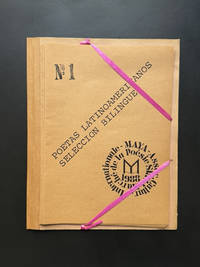
19881866<p>Nine folded leaves with texts in Spanish and French some are illustrated. 4to 21 x 29.5 cm. Very good. Numbered series with fascicles loose inside a lavender folder front cover is faded to tan with pink ribbon ties. 1866</p><p><em>Issued on the occasion of the 1988 Marché de la Poésie a major international poetry festival held every year in Saint Sulpice Square in Paris this series of bilingual broadsides showcase the talents of Latin American participants. Poets in the sequence include Orlando Jimeno-Grendi Chile José Rosas-Ribeyro Peru Elena Galván United States Jorge Nájar Peru Rubén Bareiro-Saguier Paraguay Carlos Sahakian Uruguay Luisa Futoransky Argentina Gustavo Mujica Chile and Robert Armijo El Salvador. Unrecorded.</em></p> Internationale - MAYA - Assoc. Cultur. / Marché de la Poésie
192074922Lima: Lithografia Tip. Carlos Fabbri 1920. Original hand-colored lithograph map of the city of Lima. 24 x 26 1/2 inches. Key printed on left side and title on right. No copies located by OCLC. Very good."The Italian engraver and printer Carlos Fabbri studied art & design in Italy. In 1887 he moved to Peru and commenced his career as artist & designer for the journal El Peru Ilustrado in Lima. By 1888 Litografia y Tipografia Carlos Fabbri Lima Peru was set up in Calle Mercaderes 140. Having acquired the most up-to-date printing machinery from Italy they soon became leading book publishers and printers of postage stamps maps colour labels posters cheques share certificates and amongst other things cigarette insert cards for tobacco companies during the period 1890-1920 approx. Fabbri's artistic and industrial work was awarded gold medals at exhibitions in Paris Milan Madrid London 1906 and Lima 1910" World of Playing Cards. Lithografia Tip. Carlos Fabbri unknown
1770280241770. Very good condition. A copper engraving of the city layout of Lima and the Port of Callao below. At lower margin are numbered images describing the Llama Vicogn Huanaco Calash used at Lima Mestizo woman on horseback Lady of Lima Spaniard in Peruvian dress Lady of Lima in riding dress Mulatto woman and a Negro servant.<br /> Plate VI page 30 from an unknown book. 8 x 10 5/8" original folds slt offsetting marks otherwise very clean. unknown
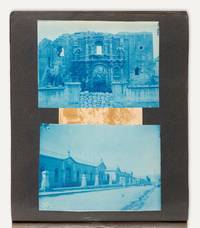
1918List2982Peru and Panama 1918. Approximately 364 photos; album and unmounted photos silver prints cyanotypes and printing-out-paper prints. Photos measure 3 x 4 to 8 x 10 inches with about half measuring 3 x 5 ½ inches. Some with photographer’s hand-stamp or credit in pencil; others with manuscript notations verso or recto; some captions to album pages. Offered in partnership with Daniel / Oliver.<br /> <br /> Rich and extensive photographic archive of Walton T. Burres of Stockton California showing his time in Peru c. 1904 as an amateur explorer and doctor for the Inca Mining and Rubber Company and his later work in Panama c. 1918 with the Rockefeller Foundation’s International Health Division.The collection consists of a large number of loose photos acquired by the gallery in 2021 and a recently discovered photo album showing some of the same subjects and containing a few duplicate images some printed in different sizes or formats as well as hundreds of previously unseen prints. Together this material makes up the largest extant archive of Burres’s photographic work. Though his work was published at the time both in Peruvian and American publications much of it was lost when he dropped it in a river that he was attempting to ford.<br /> <br /> Burres was educated at California’s Cooper Medical College the first school of medicine on the West Coast and was a prominent member of the Stockton community before sojourning to Peru around 1900 to help the Inca Mining and Rubber Company address the deadly diseases endemic to the region such as malaria and yellow fever. To encourage economic infrastructure in remote areas the Peruvian government began granting land concessions to any company that would build roads bridges or river ports. As a result the Inca Mining Company an American outfit based in Tirapata purchased the rights to mine gold along the upper Inambari River in 1896 and soon became the richest gold producer in Peru.<br /> <br /> A large portion of Burres’s Peruvian images document his 1903–1904 excursion from Arequipa 150 miles into “rubber country.†The journeys were well-recounted in U.S. papers and a number of the anecdotes described in print are seen in the present images.<br /> <br /> There are many dynamic views of Burres and his party trekking through the dense jungle and summiting the high mountains as well as shots of flora fauna and native Peruvians. Burres’s travel companions for this trip included the famed adventurer Harriet Chalmers Adams later dubbed “America’s greatest woman explorer†by the New York Times. Adams and her husband Frank both fellow Stocktonians joined up with Burres during their own multi-year expedition through South America. There are a number of portraits of a woman who bears a striking resemblance to Adams though it is possibly another person.<br /> <br /> Other Peruvian material includes numerous views of Cusco Arequipa and the surrounding environs including a beautiful interior of a chapel a Martin Chambi-esque detail shot of a stone wall and portraits of local townspeople some identified as Quechua people. There are a number of lush large-format cyanotypes rich printing-out-paper views and many handsome small-format panoramas. These were printed on Inca Mining Company surplus stationary which speaks to the makeshift nature of photo-development under the circumstances. One particularly striking image shows the top of Misti volcano barely visible above the clouds. This image was reproduced in Burres's account of his travels published in 1909 in Outing magazine.<br /> <br /> The photographs from Burres’s time in Panama document his more serious work as a virologist and health administrator in the area. One interesting photo shows a pair of recently-shot iguanas with a caption noting that “blood of these reptiles was found infected with Haemogregarina.†Another image is that of a new style of privy built from concrete and wire-mesh designed to better keep out rain water. There are also keenly-shot views of main streets and local culture in Los Santos Chiriquà and elsewhere including a number of humanistic group portraits taken at a girl’s school. unknown
0366903365.Gpaperback. Good. Access codes and supplements are not guaranteed with used items. May be an ex-library book. paperback
0366903624.Ghardcover. Good. Access codes and supplements are not guaranteed with used items. May be an ex-library book. hardcover
2091502133540219Kyodotsushinsha N.A. Soft Cover. Fine. Number of books: 1 Kyodotsushinsha paperback
19972092902137703177Kyodotsushinsha 1997. Soft Cover. Fine. The book is in fine condition. Kyodotsushinsha paperback
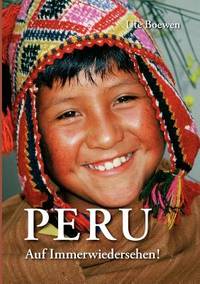
BN67690Peru: Auf Immerwiedersehen ! Erweiterte Neuauflage Boewen Ute <br/><br/> unknown
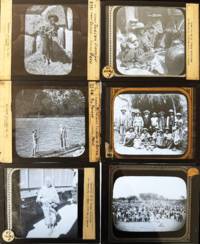
1900232171900. Peru glass lantern slide archive documenting Indigenous and rural life in the Perené and Cuzco during a period where the political economy shaped was by export agriculture regional extraction and foreign institutional interest. In this period Peru was governed by a coastal elite tied to export markets and to the expansion of state and commercial control into the interior and images of carriers river craft family groups and gathered communities register how Indigenous people were affected by that process through incorporation into frontier economies while also being recast for North American educational audiences as ethnographic subjects.<br /> <br /> Photo archive of 6 black and white glass lantern slide photographs each 3.25" x 4" Peru early 1900s. Issued as lecture materials for the Philadelphia Museum. The group includes a family or community portrait posed before a thatched structure with adults and children wearing brimmed hats layered garments shawls and patterned skirts; a closer seated group of women and children gathered around large ceramic vessels; also includes a large outdoor crowd scene showing a densely gathered public space filled with adults and children; a posed family and community portrait before a rustic structure with men women and children wearing layered garments shawls and broad-brimmed hats; a closer domestic scene centered on seated women and children gathered around large ceramic vessels; a river crossing in the Rio Perené region showing an adult and child standing on a balsa or log raft using poles to navigate the current; an "Indian Carrier" posed beside a railroad car linking Indigenous labor and movement to expanding transportation networks; and a closer portrait of an Indigenous man framed by a larger crowd gathered behind him. Several slides retain typed or manuscript labels including references to "Rio Perene" and "Hutchins Indian in Balsa" while institutional labels read "The Philadelphia Museums" and "Negative by E. Tyson Hutchins / Use restricted to school lectures in museum" establishing the archive as part of a formal educational and interpretive program rather than private travel photography alone.<br /> <br /> The archive is particularly effective because it balances portraiture with broader communal documentation. The large crowd scene family grouping and market or gathering views shift the photographs away from isolated ethnographic "types" and toward visible social environments populated by children laborers families and community members. The railroad image and river crossing additionally place Indigenous Peruvians within the transportation and frontier systems increasingly tied to trade extraction regional movement and outside institutional observation in the early twentieth century. During the late nineteenth and early twentieth centuries regions such as the central selva and Perené valley were increasingly bound to colonization schemes plantation agriculture and extractive enterprise while Indigenous communities faced land pressure labor demands and outside scrutiny from state agents missionaries traders and foreign observers. No cracks or chipping; crowd image lacking its original frame with glass and matte border loose; otherwise very good condition. A concise record of how Indigenous and local Peruvians were photographed within overlapping systems of frontier incorporation and museum interpretation. unknown
0656481757.Ghardcover. Good. Access codes and supplements are not guaranteed with used items. May be an ex-library book. hardcover
0656769777.Ghardcover. Good. Access codes and supplements are not guaranteed with used items. May be an ex-library book. hardcover