[Alaska]. Sharp, Maurice LBiblio.com

469 résultats
19412368Various locations in south-central Alaska 1941. Very good plus. Eighteen photographs each 6 x 8 inches most signed and titled in manuscript by the photographer. Minor wear. A collection of eighteen beautiful photographs taken by noted Alaskan photographer Maurice L. Sharp featuring various subjects and scenes around south-central Alaska in the late-1930s. The photographs were published in various issues of the Alaska Sportsman between 1938 and 1941. Most of the images are signed and titled by Sharp in the bottom margins or on the verso. The photographs feature subjects and scenes such as "Yukon Boys - Alaska" "Mt. McKinley from Wonder Lake" three images "Harbor Anchorage" "Colonist's Home Alaska" two images "Pioneer's Cabin" "Palmer Alaska" "Gulls" "Northern Lights - Anchorage" "'Leader' Alaskan sled dog" "Sunset Tide" "The Old Cache" two images an uncaptioned image of sled dogs and more. A few of the present photographs were printed by Sharp on textured paper to achieve a different more artistic result to his printed images. unknown
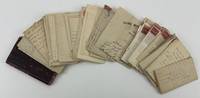
19224725Alcova Wy.; Gulham and Achorage Ak 1922. Very good. Eight autograph letters signed totaling approximately 32pp. All in original transmittal envelopes. Old mailing folds minor wear. A small archive of letters documenting brief bouts of time in the life of a young Massachusetts man working in Wyoming and Alaska in the years during and just after World War I. William Sherman Platt 1896-1969 was born in Troy New York. Throughout his life he worked as a shipper at a lumber yard and eventually as the manager and then proprietor of a coal company by 1950. He served in the military during the latter portion of the First World War but apparently did not serve in Europe. Later at the age of 46 he filled out a draft card for World War II but it is unclear whether he served during the war likely not. The present collection of his letters document two brief snapshots of Platt's life as a young man from about ages eighteen to twenty-six.<br /> <br /> Platt wrote his earliest five letters from Gate Ranch in Wyoming to his parents back in Leominster Massachusetts. Platt's earliest letter from Wyoming dated July 4 1914 includes his initial reaction to the place and a stark appraisal of the locals: "I think I will enjoy things here very much indeed when I get accustomed to the place & the people. They are for the most part ignorant animals but they all mean well." In his second letter Platt complains about the slowness of the mail then offers an appraisal of the food in Wyoming: "The food is plain but well cooked and palatable and there is always plenty of it." In his third letter Platt describes the road work he was performing in and around Alcova: "Last week myself and two other fellows went down toward Alcova fixing the road. We were fixing up an old wood road for Mr. Schoolmaker to use as an auto road We camped out cooking out or meals and sleeping in our tents. It was very interesting." He describes some of his other work in his penultimate letter from Wyoming on July 30: "You want to know what I am doing. Well I am working. So far I have worked at carpentering surveying irragating sic road building and fence repairing beside hoeing weeds and helping a little with the chores once in a while. I don't know what I may strike yet. I am very busy but it is not what you would call distinctively Western work. I might do it anywhere. Still it is all right." He then provides another impression of the locals in Wyoming: "I have more fun than a little listening to these fellows around here talk. They are mostly old American stock who think that they are as good as anybody and a little better. They have views on all conceivable subjects which they are glad to air on all occasions aided with a copious flow of profanity. They sure are some fun." Platt writes his last letter from Wyoming on August 2 and reports further on his activities reading helping the cook the food again and also discusses his prospects for college which he apparently meant to start soon. He prefers to attend Clark University in Worcester but also mentions staying on the ranch in Wyoming "to learn something about ranch work" until December and then heading home to Massachusetts after going to see San Francisco.<br /> <br /> Apparently Platt enlisted in the Marines sometime in 1917 as one of his letters is dated September 16 from that year while at Paris Island South Carolina. Platt details his training and "hard labor" in the military. He had apparently left the military for the timber industry in Alaska by 1920 as his final two letters emanate from Chitina Alaska in the Fall of 1920. Platt's first letter is dated October 5 1920 and describes his work in Alaska: "Since I wrote last I have been working in the woods steadily.so long as I stay here. Really the logging here is a joke. The timber is small scattered and almost all rotten at the butt. Today there were 7 of us in the woods and we only got 70 logs short ones at that 12 to 16 ft. I have been climbing the trees all the time and I guess that will be my regular job from now on. It is easy. Most of the limbs are dead and break off." He also describes the short working day his camping rituals his like for malamute dogs and their work eating caribou and more. The present collection also includes two letters from Platt's mother sent to him in Alaska reacting to his activities but largely reporting on events from home. Platt's second and last letter from Alaska dates from January 11 1922 from Anchorage when he writes a friend also named Bill. Platt spends about half of this letter detailing the opportunities for mining in Alaska and describes a trip into the Alaskan interior: "But there is all kinds of mining on all sides of it. For quartz why the Willow Creek District is about the best. There is probably a dozen outfits operating. There is also a few coal mines in operation some at Kenana Healey & Eska Creek and a few other smaller layouts in different places. Summer before last I took a trip in through the Interior but I found it very unsatisfactory. Very expensive to move and the wages wasn't over 5 or 6 dollars a day and board for labor." In addition to his own letters the present group includes a 1917 letter from Platt's grandmother asking him to stay away from the current "awful war" as well as four family letters from the late-19th century. A small but informative group of letters surrounding a young Massachusetts man adventuring in the American West and Alaska in his younger years. unknown
190170819New York:: Doubleday Page & Company 1901. First edition. publisher's gilt green ribbed cloth t.e.g. in publisher's flexible cloth gilt-lettered wrappers. Engraved bookplates on each pastedown; a beautiful set. 4to. Illustrated throughout from photographs and engravings. Doubleday, Page & Company, hardcover
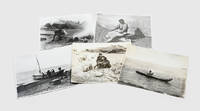
1900177155Early 1900s or slightly later. An evocative group of photographs depicting daily life and seasonal migration among the Iñupiat people. The images are taken around time of the Nome Gold Rush 1899 to 1908 a period that brought a massive influx of prospectors and drastically altered the region's demographics. Nome gained worldwide attention during the gold rush and in its aftermath the Iñupiat people underwent profound cultural and environmental shifts. Increased contact with outsiders the rise of wage labour and the introduction of Western goods by miners missionaries and teachers led to a transition from a semi-nomadic lifestyle to life in permanent villages. After the boom ended Nome's population sharply declined falling from an estimated 20000 in the early 1900s to fewer than 1500 by the 1930s. The photographer George R. King 1866-1951 was widely published with his work appearing in Sierra Club publications and in National Geographic including the 1919 feature Eskimo Life. Despite his visibility little is known about his career. Mautz lists him simply as a photographer from Boston who recorded claims on the Seward Peninsula in 1907 p. 47. King's photographs together with those of Frank H. Nowell the Lomen Brothers and others provide an important visual record during a period of rapid change. One of the images was published in The New America and the Far East 1907-10 with the photographer unidentified. Five gelatin silver prints from 182 x 234 to 197 x 248 mm all with pencillings on verso three with photographer's ink stamp on verso. Two a little yellowed a few small marginal chips tears or creasing minor surface abrasions: a very good collection. Carl Mautz Biographies of Western Photographers 2018. unknown
194463533Hutchinson KS & Kodiak Alaska Territory: Carrie B. Mitchell Woman’s American Baptist Home Mission Society Alaska Steamship Co. 1944-1969. Oblong folio. 11.5 x 17 in. 36 pp unpaginated. on brown sack paper. With over 100 pieces of ephemera neatly affixed with tape including 6 silver gelatin photographs & RPPC’s clippings numerous ALS & TLS on letterhead some preserved in the original envelopes postcards missals programmes and more. Wooden spruce plywood post-binder sewn at gutter margin w/ cord decoupaged front cover w/ pictograms and “Story of Alaska†w/ totem pole motifs leather strap hinges held by brass brads some scuffing edgewear occasional toning scuffing to a few pieces still a VG exemplar. This intriguing scrapbook carefully documents the aspiration of Carrie Mitchell 1890-1979 to travel as a missionary to Kodiak Alaska Territory during World War II where she served as housemother to McWhinnie cottage at the Kodiak Baptist Mission School & Orphanage from 1944-1946. In classical Alutiiq Athabascan and Inupiaq societies orphans were typically adopted into wealthy Indigenous Peoples families as laborers working in return for food clothing and shelter. Often mistreated this would occasionally result in violent revenge against the tribes by the orphans. After 1893 the Kodiak Baptist Mission established their school and cottage system to educate clothe and prepare the orphans or abandoned Alutiiq children for society. Unfortunately the Baptist Mission forbade the Indigenous Peoples spiritual rituals or Russian Orthodoxy -- the predominant religious beliefs of the Kodiak area peoples and forced them to convert to Baptist beliefs. In some cases the children were forcibly removed against the will of their parents and were not orphans to receive vocational instruction and religious training at the Mission. Jan. 25 1944 Alice Crimson Executive Secretary to the W.A.B.H.M.S. wrote to Carrie how she and her staff were wondering if she would be interested “in going to Alaska as Assistant to the missionary in one of our children’s homes. It is not a managing position. It is a position of helping to make a home by assuming a share of the cooking cleaning even the washing as well as the mending of clothes. . . .†Several letters included here pass back and forth discussing Carrie’s interview her need to stay available and not travel to Texas to visit her daughter application for applying for a pass with the Headquarters Alaskan Dept. Base Echelon including fingerprint card and travel instructions. Due to wartime shortages after approval Carrie Mitchell’s travel was delayed after April 1944 because sailing times to Kodiak were curtailed but she would finally reach Kodiak AK in mid-May 1944. The grueling position had been opened because Cecile Tucker who had been housemother to McWhinnie beginning in June 1941 had decided to leave. M. Tucker regularly took care of 12-17 Alutiiq children and before being assigned to Alaska had spent 17 years working the the Mono Indigenous Peoples in the Auberry CA Baptist Mission School. Two original letters from one of Carrie Mitchell’s Indigenous charges George Yosheda 1928-2003 at McWhinnie House writes to her after leaving McWhinnie to attend school in Wrangell AK and she notes on the outside of the envelope that he was “a little homesick I think.†In his second letter from 1945 he writes about how he “can play basketball. . . if I don’t have anything to do I usually go for a walk or play the guitar.†She writes on an ALS from Enid Myers that Enid “gave up the work in Sept. 1944. That left me alone with a houseful of children until the Chandlers came. The other staff members helped me as much as they could.†By March 1946 the workload had worn her down and she wanted to retire from the position. Alice crimson writes her again that “I am very happy that you are staying in Alaska until I can find someone who will go in your place. I realize that it is difficult work physically and I think you would be wise to come out when we can replace you.†Thank you cards notices theatre programmes and several clippings concerning the 1964 Earthquake and Tsunami which struck Alaska appear within the scrapbook. See: Timothy Smith The Evangel Returns to Kodiak for the First 4th of July since Statehood July 1959 Tanignak 2020. Orphan -- Liliya’aq Alutiiq Museum Archaeological Repository 2025. Carrie B. Mitchell, Woman’s American Baptist Home Mission Society, Alaska Steamship Co., hardcover
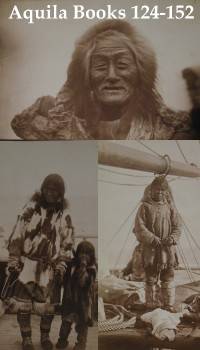
1890124152Alaska c 1890. Undetermined. near fine. Three card mouted 19th century albumen photorgraphs of eskimo from the Kotzebue Sound area of Northwestern Alaska. The images are mounted on black bevel mounts with grey backs 17.5 X 25 CM with the images being 11 X 19.5 cm. The condititon of the photos is excellent with good rich tones and little fading. All are captioned as above in an old hand. Two of the images were taken on the deck of a ship with the third undetermined. near fine Three very attractive images. We were unable to determine who the photographer is but the quality is so good that further research may yet results. 1890 unknown
18942889Sitka Ak: August 1 1894. Very good plus. 5pp. Original mailing folds. A historically-illuminating eyewitness account of the burning of Baranof Castle the famous fort built in the New Archangel Sitka by the first governor of Russian America Alexander Baranov. During Russian rule the castle was the administrative center of Russian America. Baranof Castle was the site for both the formal ceremony of the sale of Alaska to the United States and the hoisting of the first American flag in Alaska. The building was continually reconstructed throughout its tenure and fully renovated in 1893. On the night of March 17 1894 the castle caught fire and burned to the ground apparently due to the ignition of oily rags stored there. At the time of the fire the building was used as the office and residence of the U.S. Court Commissioner Robert C. Rogers. Much later in 1962 the site where the castle once stood was declared a National Historic Landmark.<br /> <br /> The author of the present letter Julia E. Haley was the only daughter of Nicholas Haley a Sitka pioneer notable miner and important early landowner with several claims close to Sitka Bay. Born raised and ultimately buried in Sitka Julia Haley owned and operated the well-known curiosity shop the "Old Indian Trading Post" on Lincoln Street in Sitka in the first two decades of the 20th century. Her store offered a variety of local products and artifacts some of which purportedly came from the ashes of Baranof Castle though Haley's account of the fire seems to refute any possibility of relics being found in the ashes. Here Haley writes to a friend identified only as "Miss Young" a schoolteacher in San Francisco. In her letter Haley provides a detailed account of the Baranof Castle fire notes the troubles people have in getting to Sitka due to "much trouble on the railroads" and briefly describes a ball given by local ladies in honor of the Bering Sea Fleet "That is the U.S. Navy ships in harbour - Yorktown Mohican Albatross Ranger Hassler Corwin Adams Bear Rush Pinta and H.M. Ship Pheasant & Areal".<br /> <br /> Haley's description of the fire reads as follows: "I suppose you have heard about the Baranof Castle. It was burnt to the ground. Not even could we have a chip in remembrance. Of it nothing could be saved. It was impossible. Judge Rogers was in the building at the time & it took all they could do to get him out. He was at the windows for 8 hours crying for help. But no one heard him. Every one was asleep. He lost everything. Nothing saved only a long coat he had on. And his poor little dog was in the attic & no one could get near him. It was a beautiful building after it as nearly repaired. So you may tell your friends that the Baranof Castle at Sitka is no more. The ground it stood on is all there. The building after being repaired was going to be occupied by the officials & we miss the view so much. It was a very pretty fire. I wished you could have seen it. The flag pole was the very last to burn. They took several views of it which looks so much like it. Every one felth sic so sorry. All the ladies watched it from one in the morning until four."<br /> <br /> A unique account of one woman's experiences in far-flung Alaska in the last decade of the 19th century with a particularly noteworthy eyewitness account of the last moments of Baranof Castle. August 1 unknown
19104010Various locations including Sprague Wa.; Vancouver British Columbia; and Nome Ak 1910. Very good. Thirteen autograph letters signed totaling thirty-nine pages and a few original transmittal envelopes. Original mailing folds occasional short fold separations otherwise minor wear. Overall a well-preserved group stored in an antique wooden box from the St. Paul Rubber Company. An interesting collection of manuscript letters written to Fred Lindberg of Hallock Minnesota by his brother and other individuals participating in the Alaskan and Yukon gold rushes between 1897 and 1910. The preponderance of the correspondence relates to the ill-fated experiences of Fred's brother Albert William Lindberg who writes four letters while on his way to the Alaskan gold fields before apparently committing suicide in Nome in 1909. Albert William "Willie" Lindberg was a Swedish-American gold prospector from Minnesota who spent significant time in Washington State before trying his luck albeit unsuccessfully in Alaska.<br /> <br /> The four letters from Willie begin with his February 20 1897 letter to his brother Fred in Hallock Minnesota. With unbridled enthusiasm Willie writes from Sprague Washington that he has "heard so much about Alaska that I made up my mind to go." Willie encourages Fred to join him to work in the mines where he expects to "pick gold nuggets." Willie informs Fred that he has sold his horses and saddle and has collected about $400 with which he intends to "make a raise or go broke" in Alaska. He extolls Fred to raise his own money and come to Alaska where he intends to "make a fortchen sic fortune." Willie concludes: "And when we get there you will see one of the luckiest Swedes that ever struck Alaska." Lindberg next writes from Vancouver on March 20 1898 again to his brother Fred informing him that he is on the way to Alaska. He promises to "stake out a clame" for Fred once he gets there though he now believes that going to Alaska might be "a foolish trip." Still he intends to stay "as long as I can" in the Alaskan gold fields in the company of "an old miner he has mined for the last 35 years."<br /> <br /> Willie writes another letter on March 20 after he arrives in Juneau which he describes as "quite a town and everything is just as cheap here as in Seattle or Vancouver and food and lodging is $1.00 a day." Here Willie informs Fred that he intends to go further north to Dyea north of Skagway because "I want to go where the big strikes is made." Willie's last letter emanates from Seattle where he has apparently returned perhaps for the winter from the previous year but now informs Fred that he intends to start on his "wild goose chase again." Instead of "Cape Nome" Willie intends to go to Skagway then "down the Youkon River it is mining camps all along the Youkon River and I think it will be better up there than down at Cape Nome it is bound to be over down at Cape Nome this summer when all these people get there."<br /> <br /> Willie's letters are accompanied by a pocket-sized notebook in which he recorded a small amount of financial information for the Nome Bank in 1908-09 as well as listings of food and other goods he purchases there and a five-page diary-style entry dated February 15 1907. In the latter Willie writes introspectively about his state of mind and habits at one point noting that "at times you are liable to become blue and depressed really there is no cause to be that way." <br /> <br /> Lindberg's single diary entry in the notebook is especially intriguing considering he apparently committed suicide in Nome in 1909 according to five letters present here dated in the summer and fall of 1909. This includes two letters sent from Wentworth Brothers the undertakers in charge of Willie's remains. The first of these letters dated May 24 1909 begins: "On May 11th 1909 Mr. Lindberg W. was found in cabin on Belmount Point dead. Cause gun shot wound and the Coroners Jury brought in verdict of suicide. Two of his friends Mr. Godfry Johnson and John Olson furnished the funeral arrangements - as he was without money." In each of the two letters the undertakers ask that Fred Lindberg respond to them whether he wishes Willie to be buried in Alaska or have the body shipped to Minnesota. The other three letters were written from two of the men who found Willie's body; the authors were responding to Fred Lindberg's wife who sent letters to Nome inquiring about Willie's death. Two of the letters were written by Phillip Corrigan of the Nome Mine Workers Union in August and the third by Gotfred Johnson in September. Corrigan details finding the body wondering if "may be he was fooling with the gun and accidentally shot himself." He then writes that he has known of Willie prospecting in the area since 1907 but that he "did not find pay at any time" and had no money at the time of his death" though "he may have some claims here."<br /> <br /> In the next letter Corrigan details both a quartz and placer claim in which Willie had an interest then provides further detail on the claims and what must be done to maintain them. Johnson writes a highly-detailed five-page letter conveying his background and experiences with Willie providing important biographical material and informing Fred that Willie seemed in "good spirits" when he last saw him "3 or 4 days" before his suicide. Another letter from Nome in August 1909 is present here written on the same Nome Mine Workers Union stationery as Corrigan's letters by Carl de la Motte; the two-page letter seems to relate information on Willie but is written in Swedish.<br /> <br /> The present archive also includes four letters written to Fred Lindberg from his friend Edward A. Johnson in Circle City Alaska. Written between July 5 1905 and June 10 1906 Johnson's letters indicate he was tasked by Fred to find his brother Willie. In his first letter Johnson writes from Mastodon Creek that he has been unable to find anything "about Will." In his subsequent three letters Johnson details his search for Willie often mentioning that he expects to locate him in Fairbanks or Nome but never does. In the process Johnson relates other interesting details about Alaska and his experiences there including a report on weather patterns as they relate to the seasonal nature of the mining industry informative descriptions of the Alaskan country he visits in "the Tanana districts at Fairbanks" his decision to acquire claims near Mastodon Creek and the unreliable nature of the Alaskan postal schedule. The archive also includes several unrelated Lindberg family letters mostly written to Willard Lindberg of Hamline University in St. Paul Minnesota in the mid-1920s but these are not included in the letter and page counts above.<br /> <br /> An unusual collection of manuscript letters of particular interest to the study of suicide in American history documenting both the optimism of a young Minnesota man on his way to find fortune in the Alaskan gold fields and his tragic end by his own hand in Nome a little over a decade later. unknown
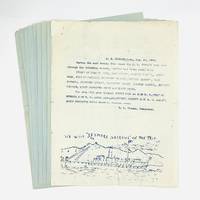
1908770201908. Significant collection of bulletins clarifying the route of the S.S. Spokane in the summer of 1908. Each is naively illustrated with views from the ship - Sitka Seymour Narrows Taku Glacier Patterson Glacier and Devil's Thumb - as well as Alaska Natives and even baseball.<br /> <br /> An elegant passenger liner the S.S. Spokane was constructed by the Pacific Coast Steamship Company. The vessel was launch in San Francisco in 1901 and made her first voyage to Seattle in 1902. A year later she had the distinction of transporting President Theodore Roosevelt and his party to Seattle. The Spokane was able to carry nearly 300 passengers at a time including 171 in first class.<br /> <br /> From these broadsides we learn the S.S. Spokane sailed from the Strait of Juan de Fuca and on to Kasaan Discovery Passage Queen Charlotte Sound and Juneau in August 1908. Three years later the ship was wrecked on an uncharted rock in Seymour Narrows with the loss of two lives. The Spokane was later raised and repaired returning to service in early 1912.<br /> <br /> Nine broadsides 8 1/2" x 11" or 280 x 215 mm printed on the recto only of the blue or white paper. Old folds with evidence of stapling to the upper left corner and some minor edgewear. unknown
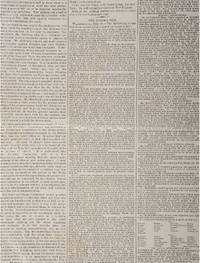
186825042<p>This copy is stamped "THE PRESIDENT" at the top of the front page indicating it belonged to President Andrew Johnson. The President would have read this copy of the act before Congress submitted it to him with some amendments on July 25. The report uses the early variant spelling of "Aliaska" for the territory and peninsula.</p> <b>ALASKA.</b>Newspaper. <i>New-York Tribune</i> July 17 1868. Featuring the terms of the "Aliaska" Bill as passed by the Senate. Copy belonging to President Andrew Johnson. New York: Horace Greeley. 8 pp. 18 x 23¾ in.<p><b><br /></b></p><p><b>Excerpts:</b></p><p>"<i>Be it enacted &c. That the laws of the United States relating to customs commerce and navigation be and the same are hereby extended to and over all the mainland islands and waters of the territory ceded to the United States by the Emperor of Russia.</i>" p1/c2</p><p>"<i>And be it further enacted that all the said territory with its ports harbors bays rivers and waters shall constitute a customs collection district to be called 'The District of Aliaska' for which said district a port of entry shall be established at some convenient point to be designated by the President at or near the town of Sitka or New-Archangel and a Collector of Customs shall be appointed by the President by and with the advice and consent of the Senate who shall reside at said port of entry and who shall receive an annual salary of $2500.</i>" p1/c2</p><p>"<i>That the President shall have the power to restrict and regulate or to prohibit the importation or use of firearms ammunition and distilled spirits into and within said territory.</i>" p1/c2</p><p>"<i>That until otherwise provided by law the Secretary of the Treasury with the approval of the President shall have power to prescribe such rules and regulations as he may deem proper for the preservation of fur-bearing animals from indiscriminate destruction provided that no special permits shall be granted under this act.</i>" p1/c2</p><p><b>Historical Background</b></p><p>After suffering defeat at the hands of the British and the French in the Crimean War of 1853-1856 Russia feared losing the Alaskan territory in some future conflict. In an effort to protect Russian interests Tsar Alexander II 1818-1881 determined to sell Alaska. After offering it in 1859 to the United Kingdom Russia negotiated a sale to the United States finalized in 1867. At the time the territory primarily offered fur trading and some natural resources. Americans generally supported the purchase and believed it enhanced American interests in the Pacific though some critics labeled it "Seward's Folly" after Secretary of State William H. Seward who had negotiated the purchase for the United States. Most newspaper editors especially those in California were enthusiastic about the purchase. Notable among the critics was Horace Greeley the editor of this newspaper and a long-time opponent of Seward. The value of the new territory increased dramatically with the discovery of gold fields in 1896.</p><p>The Senate ratified the Treaty with Russia on April 9 1867 by a vote of 37 to 2. On July 14 1868 the House of Representatives passed a resolution appropriating the $7.2 million necessary to purchase Alaska less than two cents per acre and the Senate approved the resolution with amendments. The House refused the amendments and the resolution went to a committee. The House passed the resolution as revised by the conference committee on July 23 and the Senate passed it the following day.</p><p>Meanwhile on July 15 Senator Zachariah Chandler of Michigan introduced "An Act to extend the Laws of the United States relating to the Customs Commerce and Navigation over the Territory ceded to the United States by Russia to establish a Collection District therein and for other Purposes" and the Senate passed it on July 16. In the House Representative Elihu B. Washburne of Illinois proposed amendments on July 25 and the House agreed to them. The Senate disagreed with the amendments and this bill went also to a conference committee where the Senate receded from its opposition and the bill passed. President Johnson approved and signed both the joint resolution and the act on July 27 1868.</p><p>In 1870 Congress followed up its concerns about preserving fur-bearing animals expressed in this law with "An Act to prevent the Extermination of Fur-bearing Animals in Alaska" aimed directly at regulating the killing of fur-bearing seals on Saint Paul and Saint George Islands off the western coast of Alaska north of the Aleutian Islands.</p><p><b>Additional Content</b></p><p>This issue also includes the Senate confirmation of William M. Evarts 1818-1901 as Attorney General p1/c2 p5/c4; proceedings of Congress including Senate discussion of this bill p1/c3-4; a letter from a special correspondent describing Sitka Alaska p2/c2-3; an editorial nomination of Thomas A. R. Nelson of Tennessee as Secretary of State to succeed William H. Seward "<i>now that Mr. Seward has succeeded in buying Aliaska</i>" p4/c5-6; "base ball" and cricket scores p5/c5; and a report on dozens of deaths from sunstroke during two-week heat wave especially among children p8/c1-3.</p><p><b><i>New-York Tribune</i></b> 1841-1924 was established as a daily newspaper in 1841 by Horace Greeley 1811-1872. By the 1850s it reached a circulation of 200000 copies making it the largest daily newspaper in New York City at the time. Greeley also published weekly and semi-weekly issues of the <i>Tribune</i> through much of his tenure. The <i>New-York Tribune</i>became the dominant Whig and then Republican newspaper in the United States helping to shape public opinion especially as other newspapers often copied its articles and editorials. It was one of the first newspapers in the Union to send reporters and correspondents to cover the military campaigns of the Civil War. Greeley used his newspaper to support many reforms including abolitionism pacifism socialism for a time and feminism. After Greeley's failed campaign as the Liberal Republican candidate for President Whitelaw Reid 1837-1912 assumed control of the <i>Tribune</i> until his death. His son Ogden Mills Reid 1882-1947 acquired the <i>New York Herald</i> and merged the newspapers in 1924.</p><p><b>Condition</b></p><p>Typical folds and light foxing few slight tears at some of the outer margins and appears to have been bound in a book at one point or someone reinforced the outer fold.</p>
19004544Various locations in British Columbia and Alaska 1900. Very good. 14 leaves illustrated with 111 vernacular sepia-toned photographs between 2.5 x 4.5 inches and 3.5 x 5.5 inches. Mostly mounted four per page. Oblong folio. Contemporary black cloth gilt string tied. Minor edge wear and rubbing. Some edge chipping to a handful of album leaves occasional dust-soiling. With 5pp. typed and numbered list laid in keyed to manuscript numbering beneath each photograph. A phenomenal collection of vernacular photographs taken by an unidentified traveler on a voyage to British Columbia and Alaska around the turn of the 20th century. Most of the photographs were taken from aboard a steamship or from a railroad car when they venture inland but occasionally the compiler includes shots from the ground. The photographs begin with numerous scenic landscapes in and around Nelson Rossland and Victoria British Columbia picturing landmarks such as Kootenay Lake Bonnington Falls the Cascade Mountains and a "Government House" in Victoria. The scene then shifts to Alaska picturing Devil's Thumb various glaciers a wonderful totem in Simpson distant shots of Juneau and Skagway and much more. Once inland the compiler takes pictures of the White Pass Lake Bennet White Horse and more before getting back on a steamship. One particularly interesting image from White Horse shows a pair of businesses set up in tents - Cap. P. Martin's Cigar Store and the Vancouver Hotel. Once back on the steamship the compiler shoots Five Finger Rapids before reaching the "town" of Yukon really just a loose handful of wooden huts. The intrepid traveler lands next in Dawson City where they include at least half a dozen fantastic shots of the settlement and its downtown area. The next series of images in Grand Forks show exterior shots of gold mines called Gold Hill and Eldorado #26 and a sweeping "View of Klondike Valley." The traveler then apparently turned south as the next series of images picture Taku Alert Bay with images of five Totems and the local cemetery and eight views of Fraser Canon. The album concludes with a few shots of the Illecillewaet Glacier Lakes Agnes and Louise and several views in and around Banff. The latter images include one of a bear and two featuring grazing buffalo. An interesting and wide-ranging collection of photographs featuring the untouched majesty of the landscapes of Alaska and the Canadian Northwest mixed with areas already being developed and exploited by human prospectors and travelers. The images are accompanied by an invaluable list of captions which are vital to identifying the locations of the images which appear to emanate from slightly earlier than usual in photographic groups from these areas. unknown
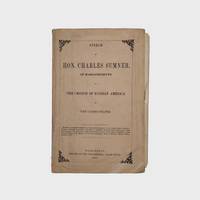
1867376097Washington: Printed at the Congressional Globe Office 1867. First edition. With the large 24 x 35 in. folding map of Northwest America "second edition May 1867" by A. Lindenkohl not found in all copies. 48 pp. text in double columns. 8vo. Publisher's pink wrappers minor soiling small repaired split at lower front joint. Minor foxing. First edition. With the large 24 x 35 in. folding map of Northwest America "second edition May 1867" by A. Lindenkohl not found in all copies. 48 pp. text in double columns. 8vo. Sumner gives an account of the history of the Alaskan Territory just recently purchased by Secretary of State William Seward from Russia for $7.2 million. Sumner was a strong exponent of the purchase and Seward praised his speech. <br /> <br /> This example with the large folding map not always present and not issued with all copies of the speech according to Lada-Mocarski - the first map to represent the Alaska Purchase and the first to use the name "Alaska". Howes S1134; Lada-Mocarski 159; Tourville 4391; Wickersham 4128 Printed at the Congressional Globe Office unknown
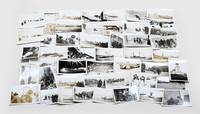
1932177173Alaska: 1932-3. The first Hollywood film to be shot in a Native American language A collection of behind-the-scenes photographs documenting the production of Eskimo 1933. With a mostly Native American cast it was the first feature film shot entirely on location in Alaska and the first to incorporate the Iñupiat language. Produced over a 17-month period it captured scenes of hunting and daily life with documentary realism. The photographs include images of the cast and crew among them the Iñupiaq lead Ray Mala Lotus Long Peter Freuchen and director W. S. Van Dyke as well as indigenous actors in traditional parkas and mukluks. Also shown are scenes of walrus and moose hunts extras posed in igloos animal processing and film equipment in use. Mala accompanied the Danish Arctic explorer Knud Rasmussen on an expedition from 1921 to 1924 collecting and describing Inuit songs and legends. The following year Mala commenced his career in Hollywood where he worked for almost 30 years. Eskimo later re-released as Mala the Magnificent was directed by Van Dyke and adapted from Freuchen's writings. Depicting encounters between Inuit communities and Western traders the film was not a commercial success. Still it was praised for its realism and awarded the inaugural Academy Award for Best Film Editing. Van Dyke known as "One Take Woody" for his efficient work made several other early sound films including Tarzan the Ape Man 1932 The Thin Man 1934 and San Francisco 1936. 48 silver gelatin prints from 64 x 88 to 87 x 105 mm. portrait and landscape format some stamped "Velox" on the verso others with pencilled numbers. A small number are copy prints. Some a little yellowed or with silver mirroring a few minor surface abrasions: a very good collection. Frank Javier Garcia Berumen American Indian Image Makers of Hollywood 2020; R. Bruce Macdonald Sisters of the Ice 2021. unknown
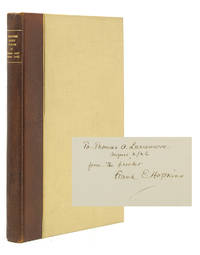
1924313772Flushing Long Island: Marion Press 1924. Copy #X of 50 copies. Printed at the Marion Press. Inscribed on the colophon page to Thomas A. Larremore April 2/26 from the printer Frank E. Hopkins. Larremore was the bibliographer of the Marion Press. Illustrated with folding map folding view numerous photographic plates and inserted sketch maps. Pp. 103 1 colophon. 1 vols. 8vo. Original quarter brown morocco and cloth titled in gilt. Stamp of Robert Pierce on the front pastedown. Copy #X of 50 copies. Printed at the Marion Press. Inscribed on the colophon page to Thomas A. Larremore April 2/26 from the printer Frank E. Hopkins. Larremore was the bibliographer of the Marion Press. Illustrated with folding map folding view numerous photographic plates and inserted sketch maps. Pp. 103 1 colophon. 1 vols. 8vo. "A very interesting journal with sketch maps and drawings and photographs. Touches much country not before described and goats are discovered near Frances Lake ." - Phillips<br /> <br /> Streeter: Hunter's narration of his journey "to the Yukon in quest of Frances Lake" is taken from his diary. "Many things that I wrote in the field last summer read queerly today but that may be accounted for by the fact that here on Long Island I am neither tired hungry nor wet. These three things strangely influence the amateur explorer."<br /> <br /> The author thanks Charles Sheldon of Washington D.C. in the Apologia for giving him the idea to search for sheep at Frances Lake. Hunter retraced some of the 1887 explorations of George M.Dawson published in The Yukon Territory 1898 which collected acounts by Dall Dawson and Ogilvie. Streeter 3627; Phillips p. 190. Larremore The Marion Press no. 183 & pp. 150 & 160; Not in Heller [Marion Press] unknown
19053538Copper River Valley Ak 1905. Very good. Forty-five printing-out paper photographs between 3.25 x 3.25 and 4 x 6 inches plus three real photo postcards. Minor wear a few creases occasional light soiling. A unique collection of almost fifty images capturing scenes in and around Copper Center in the Copper River Valley of Alaska in the years after gold was first found there in 1898. The images document pioneers panning for gold running dog sled teams posed in front of early wooden buildings in a bleak snow-covered landscape and more as well as capturing shots of a riverside mill a wooden bridge scenery on the Copper River and the majesty of the surrounding forests. A handful of the images capture pioneer women and children posed for the camera in winter clothing worn to combat the bitter Alaskan winters. One image pictures three men and two dogs standing outside the Hotel Holman an early Copper Center roadhouse that began in a tent but was opened in a wooden structure in 1899; the present image captures the post-1899 wooden structure. The Holman Hotel was established in July 1898 by Copper Center's first resident Andrew Holman in order to provide shelter for prospectors on their way to the Klondike gold fields. Copper Center is located northeast of Anchorage and served as a brief but important way station for gold prospectors in southeastern Alaska; one image here apparently pictures the early riverside settlement or is perhaps an early view of Anchorage. A rare view of Alaskan life in an uncommonly-seen settlement during the first decade of the 20th century. unknown
1901List2108Alaska 1901. Oblong folio 12 ½ x 9 inches. Twelve leaves with 89 photographs rebound in modern cloth. Binding in fine condition photographs generally excellent some leaves with clear tape repairs. A well preserved album of photographs showing mining operations in the Golovin Bay region about fifty to seventy-five miles northwest of Nome during the tail end of the Klondike Gold Rush period in 1900-1901. The album shows the operations of the Pioneer Company in Alaska in great detail including the travel by boat and the camps along Opher Creek as well as many photographs of the mining operation itself. According to a caption in one of the photographs $12000 worth of gold was taken out of the “Discovery Claim†on Ophir Creek. The album also includes several photographs of the indigenous population. The compiler of the book appears to have been a student at a mining college at some point as some of the photographs show a “Class of ‘04’†sign. The photographs are dated from 1897 to 1901. Interior scenes and a particularly broad portrayal of mining life and operations make this an uncommonly informative photographic document of Alaskan mining operations during this period. <br /> <br /> Lowny J.D. The Golovin Bay Region of Northwestern Alaska. In: The Engineering and Mining Journal Vol. 71 pp. 781-782. June 15 1901. Accessed online 6/23. unknown
1934320413Aboard the Hussar Washington Alaska etc. 1934. 97 pp. profusely illustrated with dozens of snapshots newspaper clippings and a map of coastal Alaska. 1 vols. 4to. Full light brown morocco gilt upper board with yachting pennant of the Yacht Hussar onlays in red blue and gold within gilt fillet border with floral corner ornaments board edges and dentelles gilt a.e.g. by James MacDonald Co. A few scuffmarks at extremities else fine. 97 pp. profusely illustrated with dozens of snapshots newspaper clippings and a map of coastal Alaska. 1 vols. 4to. Manuscript diary in a secretarial hand or perhaps by Hutton's wife Marjorie Merriwether Post but signed by each of the member of the travelling party of a 1934 cruise of Edward F. Hutton's 320-foot yacht Hussar along Alaskan coastal waters to hunt bear largely around the islands near Juneau. The party included Hutton his wife and daughter movie producer Hal Roach and wife Marguerite Ernest H. Rice and wife Miriam 'war ace' Dave McCullough and others. Roach had lived in Valdez and Fairbanks for 2 years early in his career. <br /> <br /> In all besides good eating and drinking deck games and other fun on board the group saw 76 black bear and 59 brown bear on the excursion even bringing a cub on board. The trip was cut short however when McCullough was seriously wounded by one of the guides in a shooting accident. unknown
161959078Anchorage & Seward A.T.: Alaska Engineering Commission AEC Phinney S. Hunt ca. 1916-1917. 4to. 86 silver print photographs sized 6.25 x 8.25 in. nearly all w/ photographer’s imprint w/in negative at lower fore-edge as well as caption negative number and AEC some w/ occasional pencil annotations on verso all preserved in mylar sleeves occasional creasing at corners a couple w/ slight loss at corners in the small blank margin. Recent 3-ring clamshell binder an excellent set of photos with all retaining bright strong contrast. This outstanding photo archive provides not only some of the earliest photographs of Anchorage Alaska Territory but also this immense railroad project first authorized by the US Congress in 1912. The few existing privately-run railroads operating in Alaska at the time including the Alaska Northern Railway and the Tanana Valley Railroad primarily fulfilled the needs of the mining companies carrying resources to sea ports and very little allowance was made for passenger traffic and it was impossible to travel by rail from Ship’s Creek at the Cook Inlet north to Fairbanks. Through an April 1915 executive order President Wilson directed that the newly created Alaska Engineering Commission construct a railroad along the surveyed “Western Route†from Seward or Portage Bay along the Turnagain & Knik Arms of Cook Inlet North through the Suitna Valley and then follow the Nenana River until it joined the Tanana with the intent it would connect eventually to Fairbanks. Employing discarded surplus railroad equipment from the Panama Canal Railroad project and under the direction of engineer Mears who had worked on both the Panama Canal and Great Northern Railroads the tiny tent city of Ship’s Creek swelled to 5500 people within two years and was officially labeled by the Post Office as “Anchorage.†Photos included here reveal the barren original landscape of Ship’s Creek with one of the photos showing the steam launches “Alaska†& “Seagull†who carried cargo and passengers from ships offshore. In addition there are views of the construction of the immense AEC Railway machine shop by Sept. 1916 as well as the newly completed first Railroad Depot in Anchorage with the progression of buildings erected beyond. These early views of the fast developing project portray the Commissary Hospital Bunkhouses finished machine shop interiors of the powder house for blasting along with a view of the AEC’s photo studio and the completed electrical power house. Early street views of the nascent city are quite scarce and one of particular interest shows Fourth Ave. looking East with newly built stores and homes built along both sides of the roadway stretching into the distance. Brutal working conditions continually interfered with the pace of the project with one of the images showing the AEC’s “Electric Thawing Machine†on a sled whie others depict piles of snow work camps in snow and even sternwheeler and docks trapped in an ice flow in March 1917. A couple of the photographs feature the sternwheeler SS Omineca underway which had been originally constructed in 1909 for the Grand Trunk Railway running the Skeena River from 1909-1912 and powered by the original SS Caledonia’s engines. By the end of 1916 60 miles of track had been laid 100 miles were graded and right-of-way cleared for 230 miles with photos in this archive showing AEC Construction camps at various mile markers blasting activity and track laying. At the same time they rehabilitated the bankrupt Alaska Northern Railroad tracks and by Oct. 24 1917 the first AEC Railway train reached the Chickaloon coal mines 74 miles North of Anchorage. The railroad would actually not be finished until 1923 when the Tanana River Bridge was completed and last 57 miles of track to Fairbank converted to standard gauge. Photos also show the Anchorage Baseball Field which featured games for the Cook Inlet Baseball League composed at the time of Matanuska Anchorage and Turnagain Arm teams. There’s also a very fine series of the Decoration Day parade held May 30 1917 depicting many of the main streets and businesses in the background. In addition several photographs show the ocean docks completed which allowed ships to directly dock at Anchorage rather than lightering passengers and cargo to shore prior to 1917. Hunt 1866-1917 originally worked as a California optician before trekking to Valdez Alaska as a gold rush prospector but quickly established himself as a photographer opening his studio and documenting Valdez and development of the region. He would bring his wife and children to Alaska by 1907. He later secured work as one of the AEC’s official photographers shooting some of the early survey work by 1914 and through the project until suffering a heart attack Oct. 14 1917 in Seward AK. Hunt’s son A.O. Hunt also worked as an assistant photographer for the AEC. A few of these images appear as negatives in the Alaska State Library Historical Collections with a couple shown in their Digital Archives and some appear in the Alaska Engineering Commission archive at the U of W Collect. No. PH0495 but the bulk of that collection features photographs by James McPherson H.G. Kaiser and A.J. Johnson who were the other official photographers on the project; See: Phinney S. Hunt Photographs of Alaska 1902-1909 Photographs in and around Valdez and Sitka Alaska University of Washington Special Collections; Phinney S. Hunt Obituary Alaska Railroad Record Vol. I No. 49 Oct. 16 1917 p. 389. Alaska Engineering Commission, AEC, Phinney S. Hunt, unknown
1803ST15927London: Cadell and Davies 1803. ONE OF 60 LARGE PAPER COPIES of the "considerably enlarged" Fourth Edition ours a variant retaining the date of 1803 on the title-page rather than 1804. 330 x 252 mm. 13 x 9 7/8". xviii 4 xix 1 380 pp. Two leaves usually bound at the end and containing the "List of Principle Books Referred to in this Work" and "Works by the same Author" bound between pp. xvii and xix here. <br/> VERY FINE CONTEMPORARY SPRINKLED CALF raised bands flanked by plain and decorative gilt rules and chain roll spine panels with star centerpiece red morocco label marbled endpapers. With six engravings: five maps two folding and one view. A Large Paper Copy. Front pastedown with engraved armorial bookplate of Marcus Gage; title page with ink inscription at head: "M. Gage's Book got from Mr. Asperne London April 15th 1805." Lada-Mocarski 29 note; Howes C-834; Sabin 17309; Streeter VI 3501; Cordier Bibliotheca Sinica pp. 2447-48. ◆Small chip to tail of spine corners a bit rubbed flyleaves somewhat foxed the usual minor foxing to plates and a bit of offsetting to adjacent pages otherwise A VERY FINE COPY OF AN ESPECIALLY DESIRABLE EDITION clean and fresh internally with vast margins and the binding firm lustrous and with only very minor wear to the joints.<br/> <br/> This is an extremely well-preserved copy in an elegant contemporary binding of the most sought-after edition of a key source on Russian exploration and that country's efforts to expand trade with China and Alaska. Eminent historian William Coxe 1747-1828 studied the voyages and exploration by Bering and others to the regions of Kamchatka the Aleutian Islands and Siberia to prepare this overview of the geography and cultures of the lands between Russia and North America and to analyze the economic potential of trade--particularly in furs--with the region. According to Sabin "Mr. Coxe's book contains many curious and important facts with respect to the various attempts of the Russians to open a communication to the New World." The 1780 first edition of this work covered Russian voyages of discovery between 1740 and 1769; the 1787 third edition added a supplement comparing these explorations to those of Captains Cook and Clerke. Our much-expanded fourth edition gives in the words of the Preface "a complete series of voyages from 1711 to 1792 comprising all that is known on the subject." Some of this supplementary information was gleaned from earlier accounts by German historians G. F. Muller and P. S. Pallas and some from Coxe's own travels in Russia. According to Lada-Mocarski Coxe "also succeeded in securing additional material: for instance the narrative and maps of Krenitzin and Levashev's 'secret' expedition the first official Russian government expedition since Bering's 2nd expedition of 1741. He was able to secure this particular information not widely known at the time even in Russia from Dr. Wm. Robertson who in turn obtained it through his friend Dr. Rogerson first physician to the Empress Catherine II. . . . In view of the above additions one should consider the fourth edition of 1803 as the most desirable." He concludes: "Coxe's work particularly the fourth edition is a result of contemporary and authoritative sources translated into English not to be overlooked by scholars and collectors alike." There are also distinct aesthetic advantages to the present Large Paper version over the octavo printing. Not only is the type beautifully re-set and laid out as well as surrounded by vast margins but as Streeter notes there are two charts here that are not included in the octavo issue of 1803. The original owner of this volume Marcus Gage is known to have assembled a substantial library of beautifully cared-for books on travel and discovery see for example "Exploration & Discovery 1576-1939 Books from the Library of Franklin Brooke-Hitching" passim. Gage notes that he got the book from "Mr. Asperne"—no doubt the London publisher and bookseller James Asperne 1757-1820. ABPC and RBH find just four other Large Paper copies at auction in the past 45 years two of which had condition issues. One could wait a considerable time to find a copy as attractive and desirable as the present one. Cadell and Davies unknown