(BURKE, John)Biblio.com
15 026 résultats
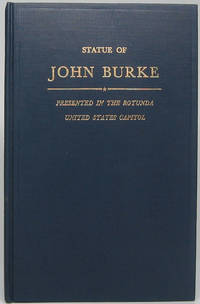
19631521Washington: Government Printing Office 1963. Hardcover. Small 4to. Blue cloth with gilt lettering. xi 50pp. Frontispiece illustrations. Near fine. "Compliments of." inkstamped on front flyleaf. First edition tight and sharp. Tribute to North Dakota's tenth governor 1859-1937. Famed Lincoln sculptor Avard Fairbanks created this superb full-length figure and speechifying from all the expected North Dakota and other politicos is present. Tipped to front pastedown is a Typed Letter Signed from Mark Andrews born 1926 a freshly-minted North Dakota congressman 1963-81 and future U.S. Senator 1981-87. 1p 8½" X 11" Washington DC 29 April 1964. Addressed to Mr. and Mrs. Dan O'Day. Near fine. On "Congress of the United States" letterhead Andrews thanks these constituents for "your deep interest in the History of North Dakota" and transmits this book noting: "Although each state is permitted to place two statues in Statuary Hall this is the first to represent North Dakota. This was accomplished through the hard work of many North Dakotans and is a tribute to our state." Signed simply "Mark" in blue ink. An outstanding copy. Government Printing Office hardcover
0656516704.Ghardcover. Good. Access codes and supplements are not guaranteed with used items. May be an ex-library book. hardcover
0656352124.Ghardcover. Good. Access codes and supplements are not guaranteed with used items. May be an ex-library book. hardcover
1332247911.Gpaperback. Good. Access codes and supplements are not guaranteed with used items. May be an ex-library book. paperback
1330300947.Gpaperback. Good. Access codes and supplements are not guaranteed with used items. May be an ex-library book. paperback
048396784X.Ghardcover. Good. Access codes and supplements are not guaranteed with used items. May be an ex-library book. hardcover
133118536X.Gpaperback. Good. Access codes and supplements are not guaranteed with used items. May be an ex-library book. paperback
0260810622.Ghardcover. Good. Access codes and supplements are not guaranteed with used items. May be an ex-library book. hardcover
1332247881.Gpaperback. Good. Access codes and supplements are not guaranteed with used items. May be an ex-library book. paperback
0267865724.Ghardcover. Good. Access codes and supplements are not guaranteed with used items. May be an ex-library book. hardcover
197239626Barre MA: Imprint Society. Fine with no dust jacket; Slipcase rubbed. 1972. Reprint. Hardcover. One of 1950 numbered copies of this abridged reprint of this 1832 title. Green cloth in illustrated cardboard slipcase. Illustrated endpapers. xxxvi 547pp index. 12 color plates by Samuel Seymour. "From the Notes of Major Long Mr. T. Say and Other Gentlemen of the Exploring Party Compiled by Edwin James Botanist and Geologist of the Expedition." Introduction by Howard R. Lamar. A narrative of the 1819-20 travels of the scientific wing of the larger Yellowstone Expedition exploring the Platte River and Great Plains. ; 8vo 8" - 9" tall . Imprint Society hardcover
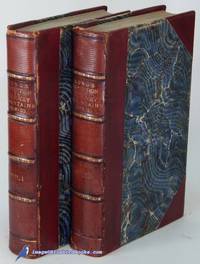
182382468Philadelphia: H. C. Carey and I. Lea. Very Good. 1823. Hardcover. A two-volume first edition of an account of the Long Expedition to the Rocky Mountains by expedition botanist and geologist Edwin James. Compiled from the notes of Major Stephen H. Long Mr. T. Say and other gentlemen of the party by Mr. James. This rather scarce set presents the account of the experiences of the Stephen H. Long expedition of 1819-1820 in which Long was sent to find the source of the Platte River in the Rocky Mountains. Lacks the separate accompanying oversize atlas which was issued in 1822 per Howes J.41 who remarks the expedition was notable in that it supplemented ". . .earlier discoveries of Pike and of Lewis and Clark and pronouncing the plains region as nothing but a desert incapable of cultivation!". --- In maroon half leather and marbled paper-covered boards with gilt-stamped spine titling four raised bands to spines and marbled endpapers. --- A very nice set with bright mostly unrubbed marbling. Hinges just starting vol's retain their tightness. What appear to be inked stampings on leaf near front and p.361 of vol. II proclaims "H.L. Scott/7Cavalry". The U.S. Army Seventh Cavalry Regiment was charged with protecting settlers on the plains and was commanded by Col. George Custer. Prior owner's signatures to versos of ffep's and with a few inkings small tears and rubbed spots to cover leather.; Octavo 8 to 9 in. tall; 11 503 6 442 xcciii pages . H. C. Carey and I. Lea hardcover
197288501Barre Massachusetts: Imprint Society. Near Fine. 1972. First Edition. Hardcover. 0876360274 . An abridged modern reprint of the account of Major Stephen H. Long's famous 1819-1820 exploratory expedition in which he crossed the Great Plains to the Colorado Rockies. Long's Peak a prominent mountain inside Rocky Mountain National Park is named for Major Long. From the notes of Major Long Mr. T. Say and others; as compiled by expedition botanist & geologist Edwin James. With 12 previously unpublished watercolors by Samuel Seymour and an introduction by Howard R. Lamar. Per publisher's notation the abridgements include geological description and hearsay. Attractive different endpaper maps show the eastern and western areas explored. Unnumbered copy of a limited edition of 1950 copies. --- Volume in full green cloth-covered boards with gilt-stamped spine titling on dark red block with gilt ornamentation. In map-decorated slipcase. --- With prior owner's bookplate affixed to verso of half title page otherwise a tightly-bound bright and unmarked copy. Slipcase with tears to paper covering along one joint else structurally sound and intact. NOTE: Due to the weight of this item extra shipping charges may be requested for shipments beyond the U.S. ; Tall Octavo - 9 to 10 in. tall; xxxvi 547 2 pages . Imprint Society hardcover
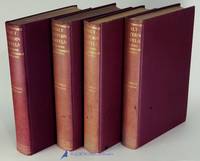
190582428Cleveland Ohio: The Arthur H. Clark Company. Very Good. 1905. Hardcover. A four volume reprinted portion of Reuben Gold Thwaites's massive 31-volume series on travel in the American West in the 18th and 19th centuries Howes T.255. Compiled from the notes of Major Stephen H. Long Mr. T. Say and other gentlemen of the party by Edwin James botanist and geologist to the expedition.Edited with notes introductions and index by Mr. Thwaites. This rather scarce set presents the account of the experiences of the Stephen H. Long expedition of 1819-1820 in which Long was sent to find the source of the Platte River in the Rocky Mountains. With a large fold-out map in vol. I depicting the drainage of the Mississippi River along with several plates bearing black & white images of people and sights seen during the expedition. --- In full rust cloth-covered boards with gilt-stamped spine titling; top edges gilt remaining edges deckled. --- Many pages are unopened and with some light sunning to spines. A prior owner has made discreet notations or check marks in a handful of locations in the books and with prior owner's signature to front free endpapers of each volume. Due to the considerable weight of this item extra shipping charges may be requested.; Tall Octavo 9 to 10 in. tall; 321 356 291 308 pages . The Arthur H. Clark Company hardcover
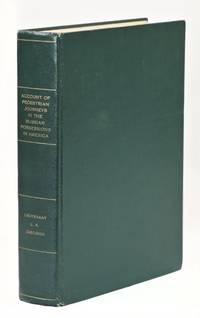
22894Hardcover. Very good. Bound typescript with no publication information given but identified in OCLC as "a translation made by Antionette Hotovitzky in 1935 of the original Russian ed. St. Petersburg 1847 omitting the Indian vocabularies in the originals." vii 422 pp with text on rectos only bound in green cloth. Numerous ink stamps of the Alaska Indian Service in Juneau on endpapers and edges otherwise clean and sound. "Contains an introductory outline of Russian trade administration and exploratory work in Alaska before Zagoskin's visit and of the latter's mission in 1842-44 to survey the Kvokhpak Yukon and Kuskokwin River regions with a view to developing trade establishing posts and routes.Zagoskin describes in detail the Russian trading posts; his arrangements for travel and food; topography of the Norton Sound region; and Eskimo inhabitants their customs trade with Russians etc." Arctic Bibliography 19779 19781. hardcover
1986w211030809Golden Age Arms Company 1986. 199pp. Over sized blue cloth hardback DJ VG c.1986 index b&w photos smaoll descriptions with photos Accouterments II : Kentucky Rifles and Pistols Tomahawks Axes and Knives Powder Horns and Hunting Bags from 1750-1850 . Hard Cover. Very Good/Very Good. Illus. by Hutslar Donald photos by; Welker Rex photos by; Bingham Dick photos by. Golden Age Arms Company Hardcover
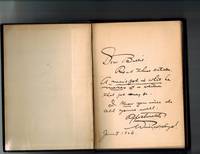
1926004616New York: American Educational Press 1926. Book. Very Good. Flexible Leather. SIGNED AND INSCRIBED BY AUTHOR OF INTRODUCTION. First Edition. SIGNED AND INSCRIBED BY AUTHOR OF INTRODUCTION Will H. Hays on front endpage -"Dear Billie: Read these articles. "A Man's Job Is What He Makes It"- whatever that job may be. I know you will do all yours well. Affectionately Will H. Hays June 5 1926". His then 11 year old son did indeed go on to do his jobs well becoming an author and Mayor of Crawfordsville Indiana. Will H. Hays jobs included U.S. Postmaster General Chairman of the Republican National Committee and most notedly President of the Motion Pictures Association of America from 1922-1945. Wonderful Hollywood Association Copy ! Book is Very Good titles at spine worn yet legible light rubbing at the tips. American Educational Press Hardcover
1528366212.Gpaperback. Good. Access codes and supplements are not guaranteed with used items. May be an ex-library book. paperback
197277592Washington DC: United States Department of the Navy Maury Center for Ocean Science 1972. Presumed First Edition First printing. Spiral bound. Good. 4 210 pages. Consists of data graphically displayed. Arrival Angle. DB Loss Noise DB and Depth in meters. This is part of the Long Range Acoustic Propagation Project. There is a distribution limitation statement at the bottom of the front cover "This document may be further distributed by the holder only with the specific prior approval of the Director Long Range Acoustic Propagation Project ONR Code 102-OS" However it is understood that this limitation no longer applies due to the passage of time and advances in technology. Passive Sonar is a device that detects the source of acoustic vibrations or noise and determines the direction or bearing to the source. It is used as a hydroacoustic direction finder. Passive sonars operate in the range of sonic ultrasonic and infrasonic frequencies. They are used on submarines on surface vessels in containers lowered from helicopters and on buoys Passive sonars consist of sonic detector compensator filter amplifier and display device. Anti-submarine warfare ASW or in older form A/S is a branch of underwater warfare that uses surface warships aircraft or other submarines to find track and deter damage or destroy enemy submarines. Successful anti-submarine warfare depends on a mix of sensor and weapon technology training and experience. Sophisticated sonar equipment for first detecting then classifying locating and tracking the target submarine is a key element of ASW. To destroy submarines both torpedoes and naval mines are used launched from air surface and underwater platforms. ASW also involves protecting friendly ships. United States, Department of the Navy, Maury Center for Ocean Science unknown
197277594Washington DC: United States Department of the Navy Maury Center for Ocean Science 1972. Presumed First Edition First printing. Spiral bound. Good. 4 180 pages. Consists of data graphically displayed. Arrival Angle. DB Loss Noise DB and Depth in meters. This is part of the Long Range Acoustic Propagation Project. There is a distribution limitation statement at the bottom of the front cover "This document may be further distributed by the holder only with the specific prior approval of the Director Long Range Acoustic Propagation Project ONR Code 102-OS" However it is understood that this limitation no longer applies due to the passage of time and advances in technology. Passive Sonar is a device that detects the source of acoustic vibrations or noise and determines the direction or bearing to the source. It is used as a hydroacoustic direction finder. Passive sonars operate in the range of sonic ultrasonic and infrasonic frequencies. They are used on submarines on surface vessels in containers lowered from helicopters and on buoys Passive sonars consist of sonic detector compensator filter amplifier and display device. Anti-submarine warfare ASW or in older form A/S is a branch of underwater warfare that uses surface warships aircraft or other submarines to find track and deter damage or destroy enemy submarines. Successful anti-submarine warfare depends on a mix of sensor and weapon technology training and experience. Sophisticated sonar equipment for first detecting then classifying locating and tracking the target submarine is a key element of ASW. To destroy submarines both torpedoes and naval mines are used launched from air surface and underwater platforms. ASW also involves protecting friendly ships. United States, Department of the Navy, Maury Center for Ocean Science unknown
197277591Washington DC: United States Department of the Navy Maury Center for Ocean Science 1972. Presumed First Edition First printing. Spiral bound. Good. 4 240 pages. Consists of data graphically displayed. Arrival Angle. DB Loss Noise DB and Depth in meters. This is part of the Long Range Acoustic Propagation Project. There is a distribution limitation statement at the bottom of the front cover "This document may be further distributed by the holder only with the specific prior approval of the Director Long Range Acoustic Propagation Project ONR Code 102-OS" However it is understood that this limitation no longer applies due to the passage of time and advances in technology. Passive Sonar is a device that detects the source of acoustic vibrations or noise and determines the direction or bearing to the source. It is used as a hydroacoustic direction finder. Passive sonars operate in the range of sonic ultrasonic and infrasonic frequencies. They are used on submarines on surface vessels in containers lowered from helicopters and on buoys Passive sonars consist of sonic detector compensator filter amplifier and display device. Anti-submarine warfare ASW or in older form A/S is a branch of underwater warfare that uses surface warships aircraft or other submarines to find track and deter damage or destroy enemy submarines. Successful anti-submarine warfare depends on a mix of sensor and weapon technology training and experience. Sophisticated sonar equipment for first detecting then classifying locating and tracking the target submarine is a key element of ASW. To destroy submarines both torpedoes and naval mines are used launched from air surface and underwater platforms. ASW also involves protecting friendly ships. United States, Department of the Navy, Maury Center for Ocean Science unknown
197277593Washington DC: United States Department of the Navy Maury Center for Ocean Science 1972. Presumed First Edition First printing. Spiral bound. Good. 4 240 pages. Consists of data graphically displayed. Arrival Angle. DB Loss Noise DB and Depth in meters. This is part of the Long Range Acoustic Propagation Project. There is a distribution limitation statement at the bottom of the front cover "This document may be further distributed by the holder only with the specific prior approval of the Director Long Range Acoustic Propagation Project ONR Code 102-OS" However it is understood that this limitation no longer applies due to the passage of time and advances in technology. Passive Sonar is a device that detects the source of acoustic vibrations or noise and determines the direction or bearing to the source. It is used as a hydroacoustic direction finder. Passive sonars operate in the range of sonic ultrasonic and infrasonic frequencies. They are used on submarines on surface vessels in containers lowered from helicopters and on buoys Passive sonars consist of sonic detector compensator filter amplifier and display device. Anti-submarine warfare ASW or in older form A/S is a branch of underwater warfare that uses surface warships aircraft or other submarines to find track and deter damage or destroy enemy submarines. Successful anti-submarine warfare depends on a mix of sensor and weapon technology training and experience. Sophisticated sonar equipment for first detecting then classifying locating and tracking the target submarine is a key element of ASW. To destroy submarines both torpedoes and naval mines are used launched from air surface and underwater platforms. ASW also involves protecting friendly ships. United States, Department of the Navy, Maury Center for Ocean Science unknown
197277590Washington DC: United States Department of the Navy Maury Center for Ocean Science 1972. Presumed First Edition First printing. Spiral bound. Good. 4 240 pages. Consists of data graphically displayed. Arrival Angle. DB Loss Noise DB and Depth in meters. This is part of the Long Range Acoustic Propagation Project. There is a distribution limitation statement at the bottom of the front cover "This document may be further distributed by the holder only with the specific prior approval of the Director Long Range Acoustic Propagation Project ONR Code 102-OS" However it is understood that this limitation no longer applies due to the passage of time and advances in technology. Passive Sonar is a device that detects the source of acoustic vibrations or noise and determines the direction or bearing to the source. It is used as a hydroacoustic direction finder. Passive sonars operate in the range of sonic ultrasonic and infrasonic frequencies. They are used on submarines on surface vessels in containers lowered from helicopters and on buoys Passive sonars consist of sonic detector compensator filter amplifier and display device. Anti-submarine warfare ASW or in older form A/S is a branch of underwater warfare that uses surface warships aircraft or other submarines to find track and deter damage or destroy enemy submarines. Successful anti-submarine warfare depends on a mix of sensor and weapon technology training and experience. Sophisticated sonar equipment for first detecting then classifying locating and tracking the target submarine is a key element of ASW. To destroy submarines both torpedoes and naval mines are used launched from air surface and underwater platforms. ASW also involves protecting friendly ships. United States, Department of the Navy, Maury Center for Ocean Science unknown
197277589Washington DC: United States Department of the Navy Maury Center for Ocean Science 1972. Presumed First Edition First printing. Spiral bound. Good. 4 189 1 pages. Consists of data graphically displayed. Arrival Angle. DB Loss Noise DB and Depth in meters This is part of the Long Range Acoustic Propagation Project. There is a distribution limitation statement at the bottom of the front cover "This document may be further distributed by the holder only with the specific prior approval of the Director Long Range Acoustic Propagation Project ONR Code 102-OS" However it is understood that this limitation no longer applies due to the passage of time and advances in technology. Passive Sonar is a device that detects the source of acoustic vibrations or noise and determines the direction or bearing to the source. It is used as a hydroacoustic direction finder. Passive sonars operate in the range of sonic ultrasonic and infrasonic frequencies. They are used on submarines on surface vessels in containers lowered from helicopters and on buoys Passive sonars consist of sonic detector compensator filter amplifier and display device. Anti-submarine warfare ASW or in older form A/S is a branch of underwater warfare that uses surface warships aircraft or other submarines to find track and deter damage or destroy enemy submarines. Successful anti-submarine warfare depends on a mix of sensor and weapon technology training and experience. Sophisticated sonar equipment for first detecting then classifying locating and tracking the target submarine is a key element of ASW. To destroy submarines both torpedoes and naval mines are used launched from air surface and underwater platforms. ASW also involves protecting friendly ships. United States, Department of the Navy, Maury Center for Ocean Science unknown
197277595Washington DC: United States Department of the Navy Maury Center for Ocean Science 1972. Presumed First Edition First printing. Spiral bound. Good. 4 150 pages. Consists of data graphically displayed. Arrival Angle. DB Loss Noise DB and Depth in meters. This is part of the Long Range Acoustic Propagation Project. There is a distribution limitation statement at the bottom of the front cover "This document may be further distributed by the holder only with the specific prior approval of the Director Long Range Acoustic Propagation Project ONR Code 102-OS" However it is understood that this limitation no longer applies due to the passage of time and advances in technology. Passive Sonar is a device that detects the source of acoustic vibrations or noise and determines the direction or bearing to the source. It is used as a hydroacoustic direction finder. Passive sonars operate in the range of sonic ultrasonic and infrasonic frequencies. They are used on submarines on surface vessels in containers lowered from helicopters and on buoys Passive sonars consist of sonic detector compensator filter amplifier and display device. Anti-submarine warfare ASW or in older form A/S is a branch of underwater warfare that uses surface warships aircraft or other submarines to find track and deter damage or destroy enemy submarines. Successful anti-submarine warfare depends on a mix of sensor and weapon technology training and experience. Sophisticated sonar equipment for first detecting then classifying locating and tracking the target submarine is a key element of ASW. To destroy submarines both torpedoes and naval mines are used launched from air surface and underwater platforms. ASW also involves protecting friendly ships. United States, Department of the Navy, Maury Center for Ocean Science unknown