Harris University of Florida, MarvinBiblio.com
403 résultats
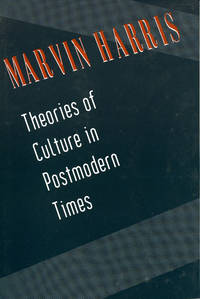
1998Q-0761990208AltaMira Press 1998-10-16. Hardcover. New. In shrink wrap. Looks like an interesting title! AltaMira Press hardcover
1961vas957New York: McGraw-Hill Book Company 1961. Octavo red cloth hardcover gilt letters xvo. 279 pp. Near Fine in a Good mylar protected dust jacket with wear that includes a tear along the upper joint. From dust jacket: McGraw-Hill Book Company, 1961. hardcover
1935Embry 179568The Grabhorn Press 1935. Number 48 of the author's edition. Some offsetting to front endpapers from previously laid in article slight bowing to front board else fine in very good publisher's plain brown dust jacket with a small chip to head of spine and 3/4 inch chip to front panel in mylar cover. Olive cloth backed orange boards. Inscribed by the author to legendary bookseller John Howell. Includes perspectus. The Grabhorn Press, 1935. Number 48 of the author's edition. hardcover books
1988ZB394189Florida International University. 1988-1994. volumes 1-2; 6. 1988-1994. partly bound library markings textually clean & tight PRICE IS FOR THE LOT. - If you are reading this this item is actually physically in our stock and ready for shipment once ordered. We are not bookjackers. Buyer is responsible for any additional duties taxes or fees required by recipient's country. Photos available upon request. Florida International University. unknown
1972ZB394051Florida State University 1972-1999. volumes 6-7; 14; 20-22; 24-29; 32-33. 1972-1999 complete volumes partly bound library markings textually clean & tight price is for the lot. - If you are reading this this item is actually physically in our stock and ready for shipment once ordered. We are not bookjackers. Buyer is responsible for any additional duties taxes or fees required by recipient's country. Photos available upon request. Florida State University unknown
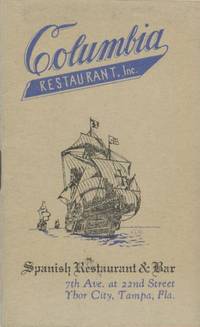
19355862Ybor City Tampa Florida: the restaurant 1935. Small stapled booklet 10 x 6 cm. 30 2 pages. Advertisements. Index. Illustrated. Evident FIRST & ONLY EDITION. A promotional cocktail book with recipes as well from the oldest restaurant in Florida and one of the oldest and largest Spanish/Cuban restaurants in America. A tip of the hat is given to the bartender "Genial" Tony who is indicated as the compiler. A single illustration of a woman raising a glass is signed by the illustrator in the print "Com Cut". The cocktail recipes include a Napoleon "Columbia" Jack Rose Caribe Orange Blossom Conchita "Columbia" Abbey Cocktail Gin Ricky Absinthe Frappe Bull-Dog Daiquiri Cocktail Real Presidente Cocktail Dry Martine Cocktail Oriente Seventh Heaven and others. Culinary recipes include Black Beans Yellow Rice and Chicken and Spanish Bean Soup. Opened in 1903 and owned by the same family since 1905 the Columbia Restaurant is the oldest restaurant in Florida. The original name "Columbia Saloon" was dropped with the onset of Prohibition in favor of the more neutral Columbia Restaurant. After Repeal the Columbia reinvigorated its bar business and added entertainment becoming a regular stop for Latin American entertainers and touring musicians. The archives of the restaurant and of its owners the Gonzmart family are held at Florida State University. The interior and back panels of the wrappers include advertisements for Mr. Old Boston Fine Liquors Tropical Ice Cream and Sherbert Company of Tampa and wines from Spain's Castel del Remey. The front wrapper panel printed in black and blue features a Spanish galleon. Stapled in wrappers with a small smudge to rear panel otherwise near fine. Unrecorded. OCLC locates no copies; not in Noling Beverage Literature; not referenced in any way online. [the restaurant] unknown books
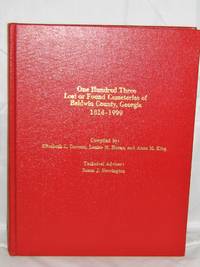
19980022516Milledgeville Ga.: Boyd Publishing Company Inc. 1998. First Edition. . Hardcover. Near Fine/None Issued. NF/0/1st ed. Clean and tight--just the thing if you like to buy your research material by the pound!This hefty volume is in excellent shape; it has some shallow abrasions on the front cover-you have to hold the book up to the light to see them. Gold gilt lettering to front and spine all present. There's a short inscription on the front pastedown"To June and Burl- Merry Christmas '98-- Eugenia and "Sis". Two of the three editors signed the front free endpapers--names only. No writing or marking to this mamoth collection of cemetery records. 759pp. Records broken down into three section according to location in cemetery. Location Maps Cross Reference Listings to Former Lot Owners in the Andrews Directory Index to Military Veterans Revolutiornary to Vietnam Government Official Index Glossary and Abbreviations Index to Every Known Grave. A wonderful example of polished and exact research. I own this book and can have it in the mail tomorrow. <br/> <br/> Boyd Publishing Company, Inc. hardcover
1989x-1850003807Falmer Pr 1989. Hardcover. New. 1st edition. 275 pages. 9.75x6.50x0.75 inches. Falmer Pr hardcover
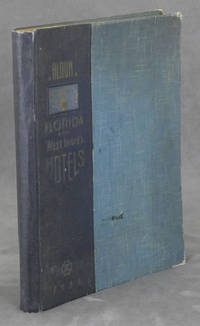
19380086079Miami Beach FL: Davis and Campbell 1938. Hardcover. Very Good. 1938. Hardcover folio spiral-bound in cloth-backed boards. 196 pp. profusely illustrated with b&w photos. Very Good. Rubbing and light soil to the boards; corners worn; faint dampstain to upper corner of the first 10 pages only; otherwise clean and unmarked. A rare book -- OCLC locates only 10 copies. A showcase of the area at its peak includes The Hollywood Beach Hotel Stetson University the Gulfstream Apartments Whitman Kenmore Hotel El Comodoro Miramar as well as sections on Cuba Key West Palm Beach Tampa Winter Haven and many many more. Davis and Campbell hardcover
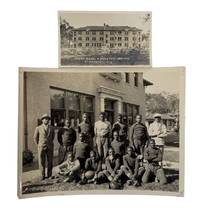
1940208161940. African American Education Now known as Florida Memorial University Florida Normal & Industrial Institute is a product of two all Black Baptist institutes eventually becoming an accredited University offering 41 undergraduate degree programs. This set of two black and white photographs showcases the university during one of their renaissance periods in the 1940s. One is an 8" x 10" silver gelatin photograph featuring a football team of 13 boys alongside their coach who dons a fedora and pinstriped suit. The second photograph is a 3.5" x 5.5" real photo post card and shows one of the main class buildings at their location in St. Augustine which was formerly a plantation built by enslaved Black persons. In 1918 the junior college controversially moved onto the "Old Hanson Plantation". This act of reclaiming buildings once meant to oppress African Americans was now being turned into the four year institution it is today. The advent of civil rights movement in the 1950s and 1960s brought about a whirlwind of challenges and change to St. Augustine. When local African Americans decided to protest and resist segregation in the city students from Florida Memorial joined the effort participating in sit-ins wade-ins and swim-ins orchestrated by the Southern Christian Leadership Conference and the Rev. Dr. Martin Luther King Jr. The events in St. Augustine significantly influenced federal legislation resulting in the passage of the Civil Rights Act of 1964. Some minor edge wear and corner creasing a few pin holes to the corners of the larger photo. Overall in very good condition. This set of photographs is a testament to the success of Black Americans given the proper resources and opportunities for higher education. unknown
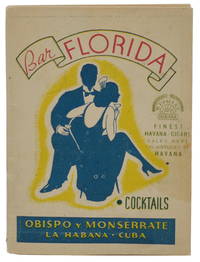
1937140938458Havana: United Press 1937. Softcover. Very Good. 72 pp. Cocktail recipes printed in Spanish and English. Very Good. Light stain to front cover general wear and some creasing throughout and short tear at base of spine. A promotional cocktail recipe guide from La Florida in Havana Cuba. Beginning in 1934 La Florida began issuing a yearly promotional cocktail guide to lure in visitors from around the globe. The renowned cafe and bar was a favorite haunt of Ernest Hemingway and is also recognized as the birthplace of the frozen daiquiri. United Press unknown books
1990x-1850007594Falmer Pr 1990. Hardcover. New. 2nd sub edition. 242 pages. 9.75x6.50x0.50 inches. Falmer Pr hardcover
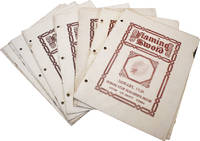
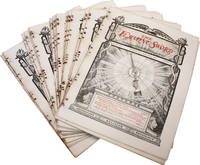
192846058Estero FL: Guiding Star Publishing House 1928. First Edition. Twelve quarto issues 31.5cm; illustrated wrappers stapled; 16pp per issue. Seven of the twelve issues with brass eyelets along left edge one with eyelets removed; all issues show modest wear oxidation to staples some scattered soil light biopredation and occasional staining to wrappers; several with vertical folds smoothed-out; small loss to lower corner of Dec.1928 issue; contents fairly clean and complete with some occasional notes in the margins; Good to Very Good. Complete year of this periodical formerly edited and written by Dr. Cyrus R. Teed a Utica NY native and founder of the Koreshan Unity. "Koreshanity" as it was also known was born in the wake of two related movements: the millenial fervor that swept early-to-mid-19th century central and western New York State and the utopian communalism that began attracting increasing numbers of adherents during the same period and into the later 19th century." A graduate of Eclectic Medical College of the City of New York Teed's interests went beyond medicine to encompass alchemy botany physics and metaphysics and he would regularly conduct experiments in these areas inside his medical laboratory. It was in this laboratory in 1869 that "Teed conceived what would become known as Koreshanity after experiencing a late-night religious vision. During what he called his "illumination" he saw a beautiful woman who revealed to him a series of universal truths which formed the fundamental principles of Koreshan belief." Among Teed's most interesting beliefs was cellular cosmogony or the hollow earth - the notion that the earth was not a convex sphere but instead a hollow concave cell containing the entire universe with the sun at its center. <br/><br/>After failed attempts at founding communal settlements in Moravia Syracuse and New York City Teed moved to Chicago IL where his persuasive oratory enabled him to assemble a firm core of followers in the late 1880's and form the commune called Beth-Ophra. Teed incorporated his organization there as the College of Life in 1886 and established a printing house that began producing three major publications: The Guiding Star The Flaming Sword and The Plowshare and Pruning Hook. "These publciations began a long legacy of Koreshan publishing aimed at the public as well as their own members intended to explain and promote their beliefs relate and preserve their story and discuss political social scientific and religious ideas and issues." <br/><br/>Believing himself to be a messiah who would lead his people in establishing a New Jerusalem Teed assumed the name Koresh in 1891 after Cyrus the Great King of Persia. As with his previous locations Teed's beliefs did not endear him or his followers to the general public forcing him to relocate from Chicago to the quiet beach town of Estero FL in 1894 the final home of the Koreshan Unity where Teed would establish his New Jerusalem. It was here that the Koreshan Unity established a growing self-sustaining community though at the height of the movement their membership numbered no more than 250. Though Teed died in December 1908 The Flaming Sword continued to be published from Estero through the 1960's with the Koreshan publishing tradition continuing well into the 1980's. Guiding Star Publishing House unknown books
191015233St. Augustness: The Record Company 1910. First Edition. Pamphlet. Near fine. Promotional booklet for Orlando located in Orange County Florida published by The Record Company circa 1910. Oblong octavo 32pp. Publisher's maroon wrappers title printed in gold on cover bound at spine with staples. Sunning to covers staples beginning to rust. A scarce pamphlet showing the local infrastructure farming operations municipal buildings and churches all in half tone illustrations. Illustrations likely by Clarence E. Howard who worked as a photographer and newspaper editor. A reference to the first Automobile Carnival dates this pamphlet prior to 1912. OCLC 882242309 A scarce work. Orlando Florida traces its roots back to the 1830s during a period marked by the Seminole Wars where the U.S. Army built Fort Gatlin south of the present-day Orlando city limits to protect settlers from attacks by Native Americans. By 1840 the area around Fort Gatlin was settled leading to the growth of a small community that by 1856 was known as Jernigan named after the Jernigan family who established the first permanent settlement. The name Orlando was adopted in 1857 though the origin of the name is subject to various legends one of the most popular claims it was named after Orlando Reeves a soldier who allegedly died in the area during the Second Seminole War. The city was officially incorporated in 1875 and by the late 19th century Orlando became a significant hub for Florida's citrus industry. The Record Company unknown
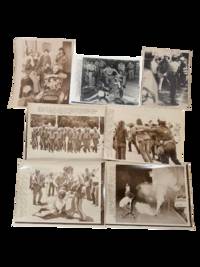
1972234431972. Florida antiwar protest press archive documenting demonstrations in Miami Beach during the 1972 Republican National Convention when activists targeted President Richard Nixon's renomination after years of bombing troop deployments and stalled peace negotiations in Vietnam. Protesters gathered outside convention sites government buildings and public streets to oppose the war challenge Nixon's reelection campaign and confront the heavy police and military security presence surrounding the convention.<br /> <br /> Photo archive of 7 Large silver gelatin press photographs each approx 8 x 10" Miami Beach Florida 1972. Military police march toward convention stations carrying riot clubs and wearing helmets and flak suits; demonstrators are pushed back by uniformed personnel; a seated protester is restrained on the grass by police; and tear gas fills a street as a demonstrator crouches near a smoking canister. Additional scenes show antiwar organizers seated indoors with signs reading "Stop the War Now" helmeted police standing over demonstrators in the street and a protester being taken away during a confrontation. Captions identify Miami Beach the Republican National Convention police preparations arrests and disruption threats tied to convention proceedings.<br /> <br /> The archive records the 1972 convention as a flashpoint in the late Vietnam War when Nixon campaigned on strength abroad while antiwar activists challenged the bombing of North Vietnam the mining of Haiphong Harbor and the continuation of U.S. military policy despite troop withdrawals. Miami Beach became a controlled political theater where nomination ceremonies unfolded behind lines of police National Guard and military personnel while demonstrators used sit-ins marches and street actions to force the war into public view. Press stamps caption slips editorial envelopes and agency markings preserve the photographs as working news files from the confrontation. Light handling wear caption attachments editorial markings toning and minor edge wear. Overall in good condition. unknown
196215390Windermere FL 1962-1964. First Edition. Hardcover. Very good. 4to. Screw-bound commercial album. Gilt decorated vinyl covered boards. Rubbing edgewear. Front board beginning to split from binding mild discolor handling wear to exterior. Good. Containing 220 black and white photographs with various scrap elements recto and verso mounted to 29 brown paper leaves. Most photos square snapshot with a few larger format. Contents well preserved clean. Very good overall. <br/><br/>Rich visual record documenting the Windemere Squares Dancing Club of Windemere Florida. Carefully assembled the album contains hundreds of B&W images of club social events dancing costume and yes square dancing. Shots are clear and well-composed arranged largely chronologically and further adorned with related scrap newspaper clippings about club correspondence and like. Generally dated and well-annotated an engaging primary document of Southern society and culture. hardcover books
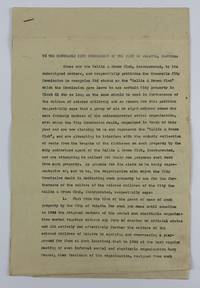
19473905Palatka Fl 1947. Very good. 5pp. typed on folio sheets stapled. Old folds minor wear and creasing light dust-soiling. An unsigned petition from the Hallie Q. Brown Club asking "The Honourable City Commission of the City of Palatka Florida.to recognise its status as the 'Hattie Q Brown Club which the Commission gave leave to use certain City property in Block 81.in furtherance of the welfare of colored children." Apparently a splinter group of the club was also claiming to be the Hallie Q. Brown Club and was illegally collecting rents on the groups club house. In asking for official recognition the group details their history of helping African-American youth in the area "by equiping and over-seeing a playground for them." The authors then detail the internal conflicts which occurred amongst the club members the procession of club leadership including several named individuals and the circumstances which led to the club's incorporation ending with the filing of a charter with a Putnam County judge. The fourth section of the club's petition enumerates their activities and plans in "furtherance of the welfare of the colored children of Palatka." The first two points detail the land clearance and construction of the park and their further plans for same; the third point relates to a study the club has undertaken "of the problem of juvenile delinquency among the colored children." Part of their plan is to work with law enforcement "to work out a parole system for first offenders of tender age" as well as "provide a method and place for the incarceration of colored children accused of or guilty of infractions of the law who are less than 12 years of age so that such children may be kept safely in custody and yet not exposed to the bad example and toughening influence of imprisonment in the County jail." Hattie Quinn Brown was a pioneering African-American educator who actively sought the formation of African-American women's clubs throughout the country. unknown
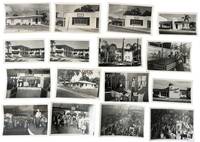
1950233651950. Clearwater Florida real estate photo archive documenting the early postwar building boom on the Gulf Coast when brokers insurers apartment operators and developers sold a rapidly changing city through new office fronts freshly finished rental courts and sharply modern commercial facades. George Fulmer worked in the middle of that expansion producing assignment photographs for the businesses and properties that turned population growth into visible street level change. The strongest material here fixes Clearwater at the point where land promotion rental housing and mid century design converged: curved corner offices lettered for real estate and insurance palm lined apartment blocks arranged around trimmed courtyards and low modern buildings meant to signal newness efficiency and Florida ease. Rather than treating real estate as an abstraction the archive shows exactly how property was marketed in these years through named firms finished exteriors and staged views ready for display advertising or client use.<br /> Photo archive of 45 items including 24 large format negatives many unique and others duplicate of 11 silver gelatin photos measuring 4" x 5" archive contained in 11 photo studio & some annotated envelopes Clearwater Florida c. 1950 to 1955. Named commissions anchor the file throughout including Al Hungerford Realty Alexander & Gauslin Real Estate Sales Rentals Insurance at 511 Park St. Bob Morrison Realtor and Southwind Apartments. Bob Morrison's office appears as a clean low commercial building with bold lettering across the facade; Alexander & Gauslin occupies a streamlined corner block beside The Owl Diner its window and signs announcing sales rentals and insurance; Al Hungerford Realty stands in a compact modern office with a tiled vertical sign tower and a curved entrance bay marked "Insurance." Southwind appears in repeated exterior views as a two story apartment court with flat rooflines metal balcony rails landscaped beds and residents seated outdoors beneath palms and a striped umbrella while another low residential property sits under large shade trees and Spanish moss suggesting the quieter rental and lodging side of the same market. The sleeves preserve the working identity of the commissions in Fulmer's filing system with handwritten entries including "Hungerford" "Bob Morrison Real Estate Office" "Southwind Apt" and "Alexander & Gauslin Realtor." Supporting material from a local Home Show remains tied to the same sales environment with merchants' booths crowds and display spaces for household goods and services aimed at the buyers renters and homeowners moving into the expanding city. Other home show images depict the culture of events- mixing consumer cuture and rapid expansion with public displays of a theatrical nature including live music and performance and auction styled sales.<br /> <br /> Across Florida's west coast the years after World War II brought surging in migration rising land values and an aggressive local market in homes apartments offices and investment property especially in towns that could sell both sunshine and modern convenience. Clearwater's brokers and builders were part of that larger remaking of the state and this archive holds onto the ordinary but highly perishable evidence of the boom: the offices where property changed hands the apartment courts offered to newcomers and the polished exteriors used to advertise stability and growth. Light wear minor surface handling and expected age toning to prints and negatives with some sleeves creased rubbed or soiled from studio use; overall in very good condition. A focused documentary record of how Clearwater's real estate economy looked branded itself and entered the local visual record during the first great postwar surge. unknown
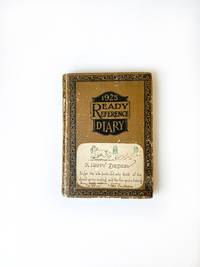
19690010041Madison Georgia. Good with no dust jacket. 1969. Hardcover. On offer is a 1969-1970 American diary from 71-year-old Florida Lamar Poullain Campbell Prior of Madison Georgia. Prior was the descendant of the Poullain and Lamar families who have called Georgia home since the early 1700s. Prior was born in Madison in 1898 and lived her life in that community. She married Walter Truman Prior and had a daughter named Florida C. Prior Jr. Prior passed away in 1991 at the age of 93. Although her name is not inscribed on the book context and the individuals named in her entries point to Priors identity. This diary was printed in 1925 but entries were sporadically made between 1969 and 1970. Prior's writing paints a detailed picture of life in the American South at this time. Personal relationships were very important to Prior and her entries are replete with references to family and friends. She also describes the social events that she participates in and the simple pleasures she experiences in her daily life. "Roy M. Prior passed away around 6: 00 AM. Today. He was my sweet and true friend. We will miss him. Ruth has stayed with us some during his illness and Flo & I have enjoyed being with her" April 11. "Today Florida C Prior Jr & Myself watched astronauts Neil Armstrong & Edwin Aldrin Jr. Walk on the moon & heard Pres. Nixon talk to them from Washington and heard their reply to him. UNBELIEVABLE" July 20. "Claire Stovall Inez W. Kroger Georgia Mallory Marguerite Little Helen de Beaugrine Fanny Harris & Ruth Attaway had lunch with me at Ye Olde Colonial Restaurant. We missed Martha Rhoades & Sara Knight who could not be with us. I enjoyed these sweet friends" July 25. "Mell Burgess Paine invited Flo & I to come to Decater for the day & to go to new S. DeKalb Richs. We took morning train for Atlanta -- first time I have been on this train in over 45 years. It was a great experience" August 20. "Elizabeth Cochran Prior & Roy Prior were married this afternoon at the Apalachee Baptist Church. Martha & Paul Rhoades went with Flo & me. It was very sweet" November 8. The diary measures 7 inches by 5 inches contains 183 pages and is approximately 20 percent complete. The cover binding and pages are all in good condition and the handwriting is quite legible. This small diary offers an interesting grouping of family and friendship links that can flesh out genealogical lines in this historic community and county in Georgia. It also offers insight into life in the South at a time when Americans were landing on the moon and experiencing major social upheaval. ; Manuscripts; 7" x 5"; 183 pages; Keywords: Florida Campbell Prior; Lamar; Lamer; Madison Oaks Inn; 766 East Avenue; Poullain Heights; Morgan County; American South; Georgia; Madison; Historic; The South; Scull Shoals; Antoinne Poullain; Rebecca Lamar; Sarah Poullain Campbell; Thomas Poullain; Ye Olde Colonial Restaurant; Apalachee Baptist Church; Moon Landing; Moon Walk; Neil Armstrong; Edwin Aldrin Jr; Buzz Aldrin; AMERICANA; HANDWRITTEN; MANUSCRIPT; DOCUMENT; LETTER; AUTOGRAPH; WRITER; HAND WRITTEN; DOCUMENTS; SIGNED; LETTERS; MANUSCRIPTS; DIARY; DIARIES; JOURNALS; PERSONAL HISTORY; SOCIAL HISTORY; HISTORICAL; HOLOGRAPH; WRITERS; AUTOGRAPHS; PERSONAL; MEMOIR; MEMORIAL; ANTIQUITÉ CONTRAT; VÉLIN; DOCUMENT; MANUSCRIT; PAPIER ANTIKE; BRIEF; PERGAMENT; DOKUMENT; MANUSKRIPT; PAPIER OGGETTO D'ANTIQUARIATO; ATTO; VELINA; DOCUMENTO; MANOSCRITTO; CARTA ANTIGÜEDAD; HECHO; VITELA; DOCUMENTO; MANUSCRITO; PAPEL . hardcover
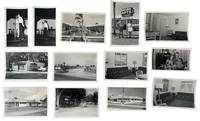
1953233181953. Clearwater Beach tourism photo archive photographed by George Fulmer documenting midcentury Gulf Coast visitor commerce through motel courts apartment lodgings seasonal rate signs furnished rental interiors restaurant frontage retail display and weekend entertainment in 1953 and 1955. Fulmer's assignments record Clearwater during the postwar automobile travel boom when Florida beach towns competed for motorists through inexpensive overnight lodging visible roadside pricing furnished efficiency rooms seafood restaurants and short-stay leisure promotion. The archive preserves the commercial visual language used to attract travelers to Florida's Gulf Coast at the height of early Sunbelt expansion before high-rise redevelopment transformed much of Clearwater Beach. The named studio envelopes and coordinated commercial assignments give the group unusual specificity tying Clearwater's resort economy to identifiable businesses dated jobs and seasonal advertising practices by notable city photographer George Fulmer.<br /> <br /> Photo archive of 40 items including 19 silver gelatin prints with 21 accompanying original and duplicate large format negatives ranging from 3 x 4 to 4 x 5 inches Clearwater Beach and Clearwater Florida 1953-1955. The archive is comprised of some original and some duplicate images between the negatives and photographs. Nine original George Fulmer studio envelopes identify assignments including "Pelican Restaurant" "City Beach Pump House" "Signs Beach Apts." "Wallace Apts. Beach" "Our Bay Restaurant" "Weekend in Clearwater" "Hickey" and "Broadmore Motel" with the Broadmore envelope dated January 14 1955. A low motel court opens onto a central lawn and walkway occupied by seated adults and children; a man and woman stand beside a parked car under a sign reading "WALLACE APTS. / VACANCY / OVERNIGHT"; interiors contain sofas lamps dining sets venetian blinds and compact kitchen areas prepared for seasonal renters. Exterior signs advertise "20 ROOMS $4.00 DOUBLE Apr. 1 to Dec. 1" "15 UNITS $5.00 DOUBLE APRIL 15 NOV. 15" and "SUMMER RATES $5.00 PER COUPLE FROM APRIL 15 TO NOV. 15." Bay Restaurant frontage carries lettering for "SEA FOOD" "PACKAGE GOODS" "STEAKS CHOPS" and "CHICKEN" while performers stand at microphones in the "Weekend in Clearwater" assignment with a pianist visible behind one stage setup. A Hickey-Freeman Customized Clothes storefront adds a downtown retail component to the commercial landscape documented here.<br /> <br /> By the early 1950s Clearwater's economy depended heavily on seasonal tourism tied to automobile travel and winter migration into Florida. Motels apartment lodgings restaurants package stores entertainment venues and retail storefronts competed for travelers arriving along expanding Gulf Coast highway routes often advertising directly through roadside signage visible from passing cars. Fulmer's archive is strongest where it preserves those everyday commercial mechanics in named businesses rather than generalized resort imagery. Light curling corner wear and handling marks to prints and negatives; studio envelopes toned and worn with manuscript annotations. Overall good condition. A tightly focused record of Clearwater Beach tourism at the scale of the motel room roadside vacancy sign restaurant entrance retail storefront and weekend entertainment stage. unknown
191640686Washington D.C.: Published by the United States Coast and Geodetic Survey 1916. Nautical chart printed on heavy paper stock. Colored. A rare coastal survey of the St. Johns River near Orlando with an inset map of the river continuation in the bottom left corner.<br/> <br/> Established by President Thomas Jefferson in 1807 as the Survey of the Coast the U.S. Coast and Geodetic Survey was the United States' first civilian scientific agency. This agency has followed its mission to survey the U.S. coastline create nautical charts of the coast and help increase maritime safety since its founding and has often played fascinating roles in significant chapters of U.S. history. It served in all theaters of the Civil War in the service of the Union Army and Navy pioneered acoustic exploration in the wake of the sinking of the Titanic and during WWI it worked to detect enemy submarines. In addition this agency worked to survey and produce detailed maps and renderings of the U.S. coast. These nautical survey maps commonly referred to as "T-sheets" provide fascinating insights into the history of the United States coastline which has and will continue to shift. These maps are the most important data source for understanding the physical and ecological characteristics of the U.S. shoreline. The present map is a highly detailed and accurate sea chart of the St Johns River and an important historical view of a developing Florida. Published by the United States Coast and Geodetic Survey unknown
190646061Estero FL: Guiding Star Publishing House 1906. First Edition. 22 quarto issues 31cm; original illustrated wrappers disbound; 16pp per issue. Holes with corresponding oxidation from saddle staples some offsetting to spine-folds from fabric tape binding with some light wear and dust-soil to wrappers; No.52 with several tears and toning to rear wrapper; a handful of issues with some light scattered underlining else quite clean; Very Good or better. Early run of this periodical edited and written by Dr. Cyrus R. Teed a Utica NY native and founder of the Koreshan Unity. "Koreshanity" as it was also known was born in the wake of two related movements: the millenial fervor that swept early-to-mid-19th century central and western New York State and the utopian communalism that began attracting increasing numbers of adherents during the same period and into the later 19th century." A graduate of Eclectic Medical College of the City of New York Teed's interests went beyond medicine to encompass alchemy botany physics and metaphysics and he would regularly conduct experiments in these areas inside his medical laboratory. It was in this laboratory in 1869 that "Teed conceived what would become known as Koreshanity after experiencing a late-night religious vision. During what he called his "illumination" he saw a beautiful woman who revealed to him a series of universal truths which formed the fundamental principles of Koreshan belief." Among Teed's most interesting beliefs was cellular cosmogony or the hollow earth - the notion that the earth was not a convex sphere but instead a hollow concave cell containing the entire universe with the sun at its center. <br/><br/>After failed attempts at founding communal settlements in Moravia Syracuse and New York City Teed moved to Chicago IL where his persuasive oratory enabled him to assemble a firm core of followers in the late 1880's and form the commune called Beth-Ophra. Teed incorporated his organization there as the College of Life in 1886 and established a printing house that began producing three major publications: The Guiding Star The Flaming Sword and The Plowshare and Pruning Hook. "These publciations began a long legacy of Koreshan publishing aimed at the public as well as their own members intended to explain and promote their beliefs relate and preserve their story and discuss political social scientific and religious ideas and issues." <br/><br/>Believing himself to be a messiah who would lead his people in establishing a New Jerusalem Teed assumed the name Koresh in 1891 after Cyrus the Great King of Persia. As with his previous locations Teed's beliefs did not endear him or his followers to the general public forcing him to relocate from Chicago to the quiet beach town of Estero FL in 1894 the final home of the Koreshan Unity where Teed would establish his New Jerusalem. It was here that the Koreshan Unity established a growing self-sustaining community though at the height of the movement their membership numbered no more than 250. Though Teed died in December 1908 The Flaming Sword continued to be published from Estero through the 1960's with the Koreshan publishing tradition continuing well into the 1980's. Guiding Star Publishing House unknown books
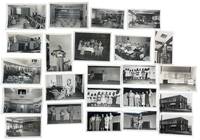
1951233191951. George Fulmer photographs of Clearwater residents businesses club spaces and service interiors recording how the residential economy of postwar Clearwater Florida functioned during early Sunbelt expansion in the 1950s. Fulmer a WWII U.S. Navy enlisted photographer and Clearwater city photographer for more than six decades worked from a studio beside the courthouse and produced a continuous visual record of the city's built environment commercial life and civic spaces; this group preserves that local documentary practice in a concentrated run of early postwar assignments tied to dining rooms lounges staged programs domestic instruction storefront promotion and everyday services. The material shows the interlocking spaces that supported residential growth in Pinellas County: hospitality rooms utility demonstrations cleaners and tailoring shops club events leisure scenes and communal interiors built for a city expanding through retirement migration consumer services and year-round settlement.<br /> <br /> Photo archive of 75 items including 36 silver gelatin photographs and 39 large format duplicate and original negatives ranging from 3 x 4 inches to 5 x 4 inches all contained in 12 original studio envelopes with some annotations by George Fulmer. Clearwater Florida and nearby Pinellas County circa 1951-1953. The most vivid images center on stage performance and organized social programming: women posed onstage around a table with boxed goods and a large lamp presenting household furnishings in a display that links entertainment to domestic consumption; girls lined across a stage in dresses for a group performance; a young female solo performer standing at microphone or center stage; a mixed adult group assembled under stage lighting in what appears to be a presentation or awards moment; and a trio of female performers in matching dance poses. These theatrical scenes are matched by audience and setting views that show older men dining together in booths and at tables large lounge interiors arranged for conversation and gathering office and reception spaces a broad institutional kitchen a man on a ladder opening a ceiling hatch in a decorated hall a child holding a large fish outdoors and exterior views of a corner cleaners and tailoring shop with painted signage reading "EST. 1909 CLEANERS" and "TAILORING." Original studio envelopes retain Fulmer job numbers dates and handwritten identifications including "Hart Cleaners" "BPW Club" "Weekend in Clearwater" "Court Crest Room" "Bank Central Pinellas Largo" and "Pinellas Utility Co. Cooking School" placing the images within the working files of a commercial city photographer covering Clearwater's residential service and promotional life.<br /> <br /> In the years after World War II Florida's Gulf Coast cities grew through in-migration small-business development utility expansion hospitality design and new forms of residential settlement aimed at permanent and seasonal residents alike. Fulmer's photographs place Clearwater within that broader transformation at street level through the rooms services labor and public-facing businesses that made postwar residential growth workable as daily life rather than as abstract development. Some negatives with light damage; photographs very good negatives largely good overall. A coherent single-photographer group of original studio material from George Fulmer's Clearwater practice with negatives prints and job-envelope evidence intact. unknown
1986x-0471826456Wiley-Interscience 1986. Hardcover. New. 1st edition. 594 pages. 10.00x7.00x1.50 inches. Wiley-Interscience hardcover
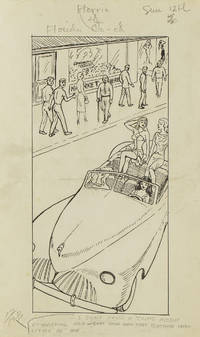
1949313357Gainesville Fla 1949. Aprox 77 pen and ink drawings with the newspaper cliping done generally for Wednesdays and Sundays. 8vo & 4to. In spiral rink notebook. Aprox 77 pen and ink drawings with the newspaper cliping done generally for Wednesdays and Sundays. 8vo & 4to. unknown