[Florida]Biblio.com

2 245 résultats
187231647Tallahassee: Charles H. Walton State Printer 1872. Stitched untrimmed and uncut. 350 2 blanks 76 pp. Except for a spotted title page which is chipped at the blank corners a clean Very Good copy.<br /> <br /> An informative Journal recounting Floridians' resistance to Radical Reconstruction. Governor Harrison Reed's Message addresses ongoing disturbances and "fatal and disgraceful violence. Nine-tenths of the suffering induced has fallen upon Republicans and mainly upon colored citizens-- giving unerring evidence that these excesses have been strongly tinctured by if they have not entirely originated in political prejudice." Many murders and disruptions had occurred in Calhoun and Jackson Counties forcing citizens to flee their homes and seek shelter in other parts of the State. A Committee of Five was appointed "to examine into the cause of said murders and to ascertain why the perpetrators have not been brought to justice." <br /> The Committee concluded that "there exists an organized band whose object is to resist the laws and who are the supposed authors of the many murders and outrages committed in the county." Threats of violence and a "reign of terror" had deterred witnesses from coming forward. In Jackson County "no less than one hundred and eighty -four murders fifteen of the number being women and children and almost the entire number being colored people brutally assassinated by this band of outlaws for daring to think for themselves." Similar outrages occurred in Lafayette and other counties. <br /> Governor Reed Florida's governor from 1868-73 faced impeachment charges from this Assembly as he had in 1868 and 1870. He was later charged in sixteen Articles with illegally issuing state bonds embezzlement and bribery. The charges were dismissed. The Assembly treated other matters of government including special elections marred by violence; "an act to incorporate Brown's Theological Institute" now Edward Waters College founded in 1866 to educate former slaves and considered the oldest historically black college in Florida. Senate Bill No 82 "to be entitled an act to incorporate the Buckingham Smith Asylum for the colored people of St. Augustine" was passed. Charles H. Walton, State Printer unknown
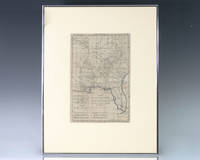
1797139014Paris: Rigobert Bonne 1797. Rare 18th century map of North America by Royal Hydrographer Rigobert Bonne. One page the engraved map extends from Illinois to Florida with one of the earliest insets of Kansas City. Born in the Lorraine region of France French cartographer Rigobert Bonne 1727-1794 was a skilled cartographer and hydrographer and succeeded Jacques Nicolas Bellin as Royal Hydrographer at the Depot de la Marine in 1773. He published many charts for the Depot including some of those for the Atlas Maritimeof 1762. In near fine condition. Matted and framed. The entire piece measures 17 inches by 16 inches. La Louisiane named after Louis XIV of France became a colony of the Kingdom of France in 1682 before passing to Spain in 1763. Louisiana was formed in part of the became part of the Louisiana Purchase from France in 1803. The U.S. would divide that area into two territories the Territory of Orleans which formed what would become the boundaries of Louisiana and the District of Louisiana. Louisiana was admitted as the 18th state of the United States on April 30 1812. Appointed hydrographer of the French Navy at the age of eighteen Jacques-Nicolas Bellin was appointed Hydrographer to the King in 1741. He published numerous sea atlases and charts which would be reprinted into the nineteenth century as well as many maps depicting French colonial territories in the New World. His craftsmanship and commitment to accuracy earned him a distinguished reputation as one of the world's leading cartographers and many other European mapmakers turned to him for source material. Rigobert Bonne unknown
191640686Washington D.C.: Published by the United States Coast and Geodetic Survey 1916. Nautical chart printed on heavy paper stock. Colored. A rare coastal survey of the St. Johns River near Orlando with an inset map of the river continuation in the bottom left corner.<br/> <br/> Established by President Thomas Jefferson in 1807 as the Survey of the Coast the U.S. Coast and Geodetic Survey was the United States' first civilian scientific agency. This agency has followed its mission to survey the U.S. coastline create nautical charts of the coast and help increase maritime safety since its founding and has often played fascinating roles in significant chapters of U.S. history. It served in all theaters of the Civil War in the service of the Union Army and Navy pioneered acoustic exploration in the wake of the sinking of the Titanic and during WWI it worked to detect enemy submarines. In addition this agency worked to survey and produce detailed maps and renderings of the U.S. coast. These nautical survey maps commonly referred to as "T-sheets" provide fascinating insights into the history of the United States coastline which has and will continue to shift. These maps are the most important data source for understanding the physical and ecological characteristics of the U.S. shoreline. The present map is a highly detailed and accurate sea chart of the St Johns River and an important historical view of a developing Florida. Published by the United States Coast and Geodetic Survey unknown
187231647Tallahassee: Charles H. Walton State Printer 1872. Stitched untrimmed and uncut. 350 2 blanks 76 pp. Except for a spotted title page which is chipped at the blank corners a clean Very Good copy.<br/><br/> An informative Journal recounting Floridians' resistance to Radical Reconstruction. Governor Harrison Reed's Message addresses ongoing disturbances and "fatal and disgraceful violence. Nine-tenths of the suffering induced has fallen upon Republicans and mainly upon colored citizens-- giving unerring evidence that these excesses have been strongly tinctured by if they have not entirely originated in political prejudice." Many murders and disruptions had occurred in Calhoun and Jackson Counties forcing citizens to flee their homes and seek shelter in other parts of the State. A Committee of Five was appointed "to examine into the cause of said murders and to ascertain why the perpetrators have not been brought to justice." The Committee concluded that "there exists an organized band whose object is to resist the laws and who are the supposed authors of the many murders and outrages committed in the county." Threats of violence and a "reign of terror" had deterred witnesses from coming forward. In Jackson County "no less than one hundred and eight -four murders fifteen of the number being women and children and almost the entire number being colored people brutally assassinated by this band of outlaws for daring to think for themselves." Similar outrages occurred in Lafayette and other counties. <br/> Governor Reed Florida's governor from 1868-73 faced impeachment charges from this Assembly as he had in 1868 and 1870. He was later charged in sixteen Articles with illegally issuing state bonds embezzlement and bribery. The charges were dismissed. The Assembly treated other matters of government including special elections marred by violence; "an act to incorporate Brown's Theological Institute" now Edward Waters College founded in 1866 to educate former slaves and considered the oldest historically black college in Florida. Senate Bill No 82 "to be entitled an act to incorporate the Buckingham Smith Asylum for the colored people of St. Augustine" was passed. Charles H. Walton, State Printer unknown books
1861WRCAM19664Tallahassee 1861. 33338pp. Modern cloth leather label. Very good. Floridian Confederate imprint recording the House proceedings at the start of the Civil War. PARRISH & WILLINGHAM 2745. SERVIES 4586. hardcover books
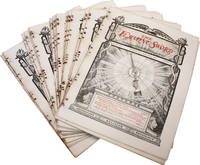
190646061Estero FL: Guiding Star Publishing House 1906. First Edition. 22 quarto issues 31cm; original illustrated wrappers disbound; 16pp per issue. Holes with corresponding oxidation from saddle staples some offsetting to spine-folds from fabric tape binding with some light wear and dust-soil to wrappers; No.52 with several tears and toning to rear wrapper; a handful of issues with some light scattered underlining else quite clean; Very Good or better. Early run of this periodical edited and written by Dr. Cyrus R. Teed a Utica NY native and founder of the Koreshan Unity. "Koreshanity" as it was also known was born in the wake of two related movements: the millenial fervor that swept early-to-mid-19th century central and western New York State and the utopian communalism that began attracting increasing numbers of adherents during the same period and into the later 19th century." A graduate of Eclectic Medical College of the City of New York Teed's interests went beyond medicine to encompass alchemy botany physics and metaphysics and he would regularly conduct experiments in these areas inside his medical laboratory. It was in this laboratory in 1869 that "Teed conceived what would become known as Koreshanity after experiencing a late-night religious vision. During what he called his "illumination" he saw a beautiful woman who revealed to him a series of universal truths which formed the fundamental principles of Koreshan belief." Among Teed's most interesting beliefs was cellular cosmogony or the hollow earth - the notion that the earth was not a convex sphere but instead a hollow concave cell containing the entire universe with the sun at its center. <br/><br/>After failed attempts at founding communal settlements in Moravia Syracuse and New York City Teed moved to Chicago IL where his persuasive oratory enabled him to assemble a firm core of followers in the late 1880's and form the commune called Beth-Ophra. Teed incorporated his organization there as the College of Life in 1886 and established a printing house that began producing three major publications: The Guiding Star The Flaming Sword and The Plowshare and Pruning Hook. "These publciations began a long legacy of Koreshan publishing aimed at the public as well as their own members intended to explain and promote their beliefs relate and preserve their story and discuss political social scientific and religious ideas and issues." <br/><br/>Believing himself to be a messiah who would lead his people in establishing a New Jerusalem Teed assumed the name Koresh in 1891 after Cyrus the Great King of Persia. As with his previous locations Teed's beliefs did not endear him or his followers to the general public forcing him to relocate from Chicago to the quiet beach town of Estero FL in 1894 the final home of the Koreshan Unity where Teed would establish his New Jerusalem. It was here that the Koreshan Unity established a growing self-sustaining community though at the height of the movement their membership numbered no more than 250. Though Teed died in December 1908 The Flaming Sword continued to be published from Estero through the 1960's with the Koreshan publishing tradition continuing well into the 1980's. Guiding Star Publishing House unknown books
Interessante raffigurazione di buona parte orientale degli Stati Uniti. Si trovano raffigurati i territori di New Jersey, Delaware, Maryland, Virginie, Caroline, Georgie, Floride e Louisiane.Il titolo è iscritto in decorativo cartiglio nell'angolo in basso a destra.Coloritura confinale coeva all'acquerello. Alcuni segni del tempo che non compromettono l'ottimale stato di conservazione generale della carta.
92 pages. Text in French. Features: Le Chapitre Des Chapeaux; Ensemble a Cape Pour Le Printemps; Le Mouvement Projete En Avant; L'Ecole De Ski; Sous Le Soleil De Sestrieres; Les Nouvelles Collections; A La Decouvert; Le Massage Facial; Idees Nouvelles Dans Les Bikoux; Accessoires; Fraicheir Du taffetas Quadrille; S.A.R. La Princesse Marina De grece; Mue De L'Homme, par Jean-Richard Bloch; Matins de Printemps; Sur La Cote De Floride; A Burlington House; Sur La Scene; Many gorgeous vintage ads. Above-average wear. Soiling to front cover. Binding intact. Missing pages 71-72. A worthy reference copy of this marvelous vintage issue. Book
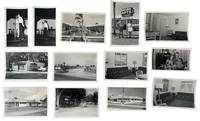
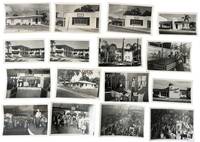
1953233181953. Clearwater Beach tourism photo archive photographed by George Fulmer documenting midcentury Gulf Coast visitor commerce through motel courts apartment lodgings seasonal rate signs furnished rental interiors restaurant frontage retail display and weekend entertainment in 1953 and 1955. Fulmer's assignments record Clearwater during the postwar automobile travel boom when Florida beach towns competed for motorists through inexpensive overnight lodging visible roadside pricing furnished efficiency rooms seafood restaurants and short-stay leisure promotion. The archive preserves the commercial visual language used to attract travelers to Florida's Gulf Coast at the height of early Sunbelt expansion before high-rise redevelopment transformed much of Clearwater Beach. The named studio envelopes and coordinated commercial assignments give the group unusual specificity tying Clearwater's resort economy to identifiable businesses dated jobs and seasonal advertising practices by notable city photographer George Fulmer.<br /> <br /> Photo archive of 40 items including 19 silver gelatin prints with 21 accompanying original and duplicate large format negatives ranging from 3 x 4 to 4 x 5 inches Clearwater Beach and Clearwater Florida 1953-1955. The archive is comprised of some original and some duplicate images between the negatives and photographs. Nine original George Fulmer studio envelopes identify assignments including "Pelican Restaurant" "City Beach Pump House" "Signs Beach Apts." "Wallace Apts. Beach" "Our Bay Restaurant" "Weekend in Clearwater" "Hickey" and "Broadmore Motel" with the Broadmore envelope dated January 14 1955. A low motel court opens onto a central lawn and walkway occupied by seated adults and children; a man and woman stand beside a parked car under a sign reading "WALLACE APTS. / VACANCY / OVERNIGHT"; interiors contain sofas lamps dining sets venetian blinds and compact kitchen areas prepared for seasonal renters. Exterior signs advertise "20 ROOMS $4.00 DOUBLE Apr. 1 to Dec. 1" "15 UNITS $5.00 DOUBLE APRIL 15 NOV. 15" and "SUMMER RATES $5.00 PER COUPLE FROM APRIL 15 TO NOV. 15." Bay Restaurant frontage carries lettering for "SEA FOOD" "PACKAGE GOODS" "STEAKS CHOPS" and "CHICKEN" while performers stand at microphones in the "Weekend in Clearwater" assignment with a pianist visible behind one stage setup. A Hickey-Freeman Customized Clothes storefront adds a downtown retail component to the commercial landscape documented here.<br /> <br /> By the early 1950s Clearwater's economy depended heavily on seasonal tourism tied to automobile travel and winter migration into Florida. Motels apartment lodgings restaurants package stores entertainment venues and retail storefronts competed for travelers arriving along expanding Gulf Coast highway routes often advertising directly through roadside signage visible from passing cars. Fulmer's archive is strongest where it preserves those everyday commercial mechanics in named businesses rather than generalized resort imagery. Light curling corner wear and handling marks to prints and negatives; studio envelopes toned and worn with manuscript annotations. Overall good condition. A tightly focused record of Clearwater Beach tourism at the scale of the motel room roadside vacancy sign restaurant entrance retail storefront and weekend entertainment stage. unknown
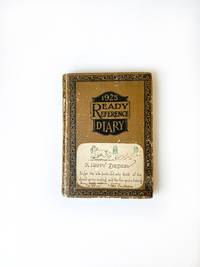
19690010041Madison Georgia. Good with no dust jacket. 1969. Hardcover. On offer is a 1969-1970 American diary from 71-year-old Florida Lamar Poullain Campbell Prior of Madison Georgia. Prior was the descendant of the Poullain and Lamar families who have called Georgia home since the early 1700s. Prior was born in Madison in 1898 and lived her life in that community. She married Walter Truman Prior and had a daughter named Florida C. Prior Jr. Prior passed away in 1991 at the age of 93. Although her name is not inscribed on the book context and the individuals named in her entries point to Priors identity. This diary was printed in 1925 but entries were sporadically made between 1969 and 1970. Prior's writing paints a detailed picture of life in the American South at this time. Personal relationships were very important to Prior and her entries are replete with references to family and friends. She also describes the social events that she participates in and the simple pleasures she experiences in her daily life. "Roy M. Prior passed away around 6: 00 AM. Today. He was my sweet and true friend. We will miss him. Ruth has stayed with us some during his illness and Flo & I have enjoyed being with her" April 11. "Today Florida C Prior Jr & Myself watched astronauts Neil Armstrong & Edwin Aldrin Jr. Walk on the moon & heard Pres. Nixon talk to them from Washington and heard their reply to him. UNBELIEVABLE" July 20. "Claire Stovall Inez W. Kroger Georgia Mallory Marguerite Little Helen de Beaugrine Fanny Harris & Ruth Attaway had lunch with me at Ye Olde Colonial Restaurant. We missed Martha Rhoades & Sara Knight who could not be with us. I enjoyed these sweet friends" July 25. "Mell Burgess Paine invited Flo & I to come to Decater for the day & to go to new S. DeKalb Richs. We took morning train for Atlanta -- first time I have been on this train in over 45 years. It was a great experience" August 20. "Elizabeth Cochran Prior & Roy Prior were married this afternoon at the Apalachee Baptist Church. Martha & Paul Rhoades went with Flo & me. It was very sweet" November 8. The diary measures 7 inches by 5 inches contains 183 pages and is approximately 20 percent complete. The cover binding and pages are all in good condition and the handwriting is quite legible. This small diary offers an interesting grouping of family and friendship links that can flesh out genealogical lines in this historic community and county in Georgia. It also offers insight into life in the South at a time when Americans were landing on the moon and experiencing major social upheaval. ; Manuscripts; 7" x 5"; 183 pages; Keywords: Florida Campbell Prior; Lamar; Lamer; Madison Oaks Inn; 766 East Avenue; Poullain Heights; Morgan County; American South; Georgia; Madison; Historic; The South; Scull Shoals; Antoinne Poullain; Rebecca Lamar; Sarah Poullain Campbell; Thomas Poullain; Ye Olde Colonial Restaurant; Apalachee Baptist Church; Moon Landing; Moon Walk; Neil Armstrong; Edwin Aldrin Jr; Buzz Aldrin; AMERICANA; HANDWRITTEN; MANUSCRIPT; DOCUMENT; LETTER; AUTOGRAPH; WRITER; HAND WRITTEN; DOCUMENTS; SIGNED; LETTERS; MANUSCRIPTS; DIARY; DIARIES; JOURNALS; PERSONAL HISTORY; SOCIAL HISTORY; HISTORICAL; HOLOGRAPH; WRITERS; AUTOGRAPHS; PERSONAL; MEMOIR; MEMORIAL; ANTIQUITÉ CONTRAT; VÉLIN; DOCUMENT; MANUSCRIT; PAPIER ANTIKE; BRIEF; PERGAMENT; DOKUMENT; MANUSKRIPT; PAPIER OGGETTO D'ANTIQUARIATO; ATTO; VELINA; DOCUMENTO; MANOSCRITTO; CARTA ANTIGÜEDAD; HECHO; VITELA; DOCUMENTO; MANUSCRITO; PAPEL . hardcover
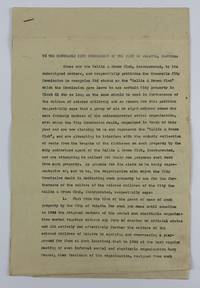
19473905Palatka Fl 1947. Very good. 5pp. typed on folio sheets stapled. Old folds minor wear and creasing light dust-soiling. An unsigned petition from the Hallie Q. Brown Club asking "The Honourable City Commission of the City of Palatka Florida.to recognise its status as the 'Hattie Q Brown Club which the Commission gave leave to use certain City property in Block 81.in furtherance of the welfare of colored children." Apparently a splinter group of the club was also claiming to be the Hallie Q. Brown Club and was illegally collecting rents on the groups club house. In asking for official recognition the group details their history of helping African-American youth in the area "by equiping and over-seeing a playground for them." The authors then detail the internal conflicts which occurred amongst the club members the procession of club leadership including several named individuals and the circumstances which led to the club's incorporation ending with the filing of a charter with a Putnam County judge. The fourth section of the club's petition enumerates their activities and plans in "furtherance of the welfare of the colored children of Palatka." The first two points detail the land clearance and construction of the park and their further plans for same; the third point relates to a study the club has undertaken "of the problem of juvenile delinquency among the colored children." Part of their plan is to work with law enforcement "to work out a parole system for first offenders of tender age" as well as "provide a method and place for the incarceration of colored children accused of or guilty of infractions of the law who are less than 12 years of age so that such children may be kept safely in custody and yet not exposed to the bad example and toughening influence of imprisonment in the County jail." Hattie Quinn Brown was a pioneering African-American educator who actively sought the formation of African-American women's clubs throughout the country. unknown
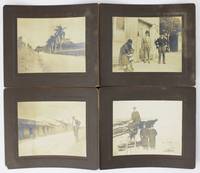
18905287Various locations in Cuba and Florida 1890. Very good. Twelve cabinet card photographs each measuring 3.5 x 4.5 inches on matching mounts measuring 5.25 x 6.5 inches all with manuscript captions on verso. Moderate dust-soiling minor overall wear a few small unobtrusive chips to corners. A dozen original photographs picturing a group of men traveling in Florida and Cuba around the turn of the 20th century. The men seem relatively well-to-do and visit several different locations in each place. Four of the photos emanate from Florida while the remainder picture scenes in Cuba. The photographs are all captioned on the verso which read as follows:<br /> <br /> 1 "In the Court of Ponce De Leon Hotel St. Augustine"<br /> 2 "A frozen fountain in St. Augustine Florida - the white is ice"<br /> 3 "Fishing in St. Augustine"<br /> 4 "A Tree in Tampa Florida where one tree runs up on another takes root up in tree then runs down & takes root in the ground again"<br /> 5 "A Street in Nevaelas Cuba"<br /> 6 "A Country Road in Cuba"<br /> 7 "Natives in Havana"<br /> 8 "In Morro Castle Havana Cuba. Prisoners braking sic rocks"<br /> 9 "On top of Morro Castle Havana Cuba"<br /> 10 "Country Scene in Cuba"<br /> 11 "Country Scene in Cuba" different image<br /> 12 "Plaza at south of the Prado Havana unknown
1950233651950. Clearwater Florida real estate photo archive documenting the early postwar building boom on the Gulf Coast when brokers insurers apartment operators and developers sold a rapidly changing city through new office fronts freshly finished rental courts and sharply modern commercial facades. George Fulmer worked in the middle of that expansion producing assignment photographs for the businesses and properties that turned population growth into visible street level change. The strongest material here fixes Clearwater at the point where land promotion rental housing and mid century design converged: curved corner offices lettered for real estate and insurance palm lined apartment blocks arranged around trimmed courtyards and low modern buildings meant to signal newness efficiency and Florida ease. Rather than treating real estate as an abstraction the archive shows exactly how property was marketed in these years through named firms finished exteriors and staged views ready for display advertising or client use.<br /> Photo archive of 45 items including 24 large format negatives many unique and others duplicate of 11 silver gelatin photos measuring 4" x 5" archive contained in 11 photo studio & some annotated envelopes Clearwater Florida c. 1950 to 1955. Named commissions anchor the file throughout including Al Hungerford Realty Alexander & Gauslin Real Estate Sales Rentals Insurance at 511 Park St. Bob Morrison Realtor and Southwind Apartments. Bob Morrison's office appears as a clean low commercial building with bold lettering across the facade; Alexander & Gauslin occupies a streamlined corner block beside The Owl Diner its window and signs announcing sales rentals and insurance; Al Hungerford Realty stands in a compact modern office with a tiled vertical sign tower and a curved entrance bay marked "Insurance." Southwind appears in repeated exterior views as a two story apartment court with flat rooflines metal balcony rails landscaped beds and residents seated outdoors beneath palms and a striped umbrella while another low residential property sits under large shade trees and Spanish moss suggesting the quieter rental and lodging side of the same market. The sleeves preserve the working identity of the commissions in Fulmer's filing system with handwritten entries including "Hungerford" "Bob Morrison Real Estate Office" "Southwind Apt" and "Alexander & Gauslin Realtor." Supporting material from a local Home Show remains tied to the same sales environment with merchants' booths crowds and display spaces for household goods and services aimed at the buyers renters and homeowners moving into the expanding city. Other home show images depict the culture of events- mixing consumer cuture and rapid expansion with public displays of a theatrical nature including live music and performance and auction styled sales.<br /> <br /> Across Florida's west coast the years after World War II brought surging in migration rising land values and an aggressive local market in homes apartments offices and investment property especially in towns that could sell both sunshine and modern convenience. Clearwater's brokers and builders were part of that larger remaking of the state and this archive holds onto the ordinary but highly perishable evidence of the boom: the offices where property changed hands the apartment courts offered to newcomers and the polished exteriors used to advertise stability and growth. Light wear minor surface handling and expected age toning to prints and negatives with some sleeves creased rubbed or soiled from studio use; overall in very good condition. A focused documentary record of how Clearwater's real estate economy looked branded itself and entered the local visual record during the first great postwar surge. unknown
Paris, Didot, 1768, 21 x 31,5 cm, contornos coloreados de época, reverso en blanco. (Este raro mapa fue grabado para la "Descripción de Débouquements Qui Sont au Nord de l'île de Saint Domingue", 1768, una pequeña guía de navegación con 152 páginas y 34 cartas náuticas del Norte del Mar Caribe. Como se indica en la cartela, está claramente influenciado por los recientes esfuerzos cartográficos británicos de su nueva posesión [en el primer tratado de París de 1763, al concluir la guerra de los franceses e indios, Inglaterra recibió Florida de España a cambio de la retrocesión de La Habana y El norte de Cuba para los españoles]. En particular, el mapa de John Gibson para la revista Caballeros de 1763, famoso por su descripción de la península de Florida como un archipiélago, parece haber sido una fuente importante para este trabajo. Excepcionalmente, el norte está en el lado derecho del mapa]).
18116624AWien, Bauer, 1810/1811. 8°. Bde. 1 und 2 von 3 Bdn. 336, 360 Seiten. Mit 2 gestochenen Frontispizen. Pappbände der Zeit mit Rückenschildern. Rücken etwas angestaubt, sonst tadellos.
Piacevolissima opera.<BR>Volume in-folio; legatura moderna in mezza pelle (mantenuti i piatti originali applicati sul nuovo cartonato); pp. 16 + 16 tavole incise all'acquaforte su carta pesante.<BR>Ogni foglio cm. 46 x 33 (alla battuta cm. 28 x 22).<BR>Consueto ingiallimento della carta; mende alle cuffie (in particolare la parte superiore del dorso staccata dal piatto anteriore per cm. 4); il margine delle prime due pagine è stato sottoposto a restauro professionale; un piccolo alone segna, senza disturbare, l'angolo interno inferiore delle 16 pagine iniziali e della prima tavola; ottime le condizioni delle altre tavole.<BR>La prima edizione di questa bella opera è del 1888.<BR>Questo il testo completo del frontispizio:<BR>"Frescos de Goya en la Iglesia de San Antonio de la Florida. Grabados al agua fuerte por D. José M. Galvan y Candela grabador del Deposito Hidrografico. Obra premiada con medalla de segunda clase en la Exposicion National de Bellas Artes de 1878. Texto por D. Juan De Dios De La Rada y Delgado precedido del informe dado acerca de esta obra por la Real Academia de San Fernando. Escrito por el Excmo. Sr. D. Pedro de Madrazo directo de la misma. Segunda Edicion.
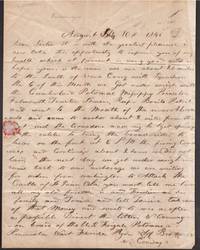
184635410Pensacola 1846. Letter. Very good. Letter. Folded to make 4 pages. 1 page of content 2 blank pages 1 page with address and postal mark from Pensacola Florida dated August 20 1846. Letter addressed to "Dear Sister" and signed "W Conway". Multiple folds and some creasing and toning to the paper. Red wax seal left edge page 1. Small paper tear from opening the letter. Good condition. Letter content summarized:<br /> <br /> US Frigate Potomac. W. Conway Pensacola Florida writes to sister Camden Goose River Maine while involved in the Blockade of Vera Cruz. USS Potomac sailed w/ships Cumberland Missippy sic Princeton Falmouth Truxton Somers Reefer Bonito and Petrel to mouth of river Alvarado off of Veracruz. Describes bombardment: “…the Commodore made rig to get spring word the cable to bring the broadsides to bear on the fort at 6 PM the firing Commenced and Continued about 2 hours we didi not land the next day we got under weigh and came back to our anchorage. we are waiting for orders from Washington to Attack the Castle of St. Juan Ola Fort San Juan de Ulúa offshore opposite Veracruz. unknown
1862WRCAM24895Tallahassee: Office of the Floridian & Journal Printed by Dyke & Carlisle 1862. 791vi pp. Dbd. Tanned. Some light foxing on preliminary leaves. Good. Scarce Confederate Florida laws. PARRISH & WILLINGHAM 2733. SERVIES 4679. AII FLORIDA 253. Office of the Floridian & Journal, Printed by Dyke & Carlisle unknown books
1886LIST112Cincinnati: St. Andrews Bay Railroad and Land Company 1886. Various Formats. Near Fine. An unusual collection of ephemera relating to the early development of the area of the Florida Panhandle east of Pensacola and an interesting ephemeral window into the type of land schemes that led to the population of Florida by northerners. In the late nineteenth century the area of Port Panama City in the Florida Panhandle was largely undeveloped though the town had strategic interest as a supplier of salt for the confederacy. In the 1880s the St. Andrews Bay Railroad and Land and Company was the second of two companies to sell land in the St. Andrews Bay region to unsuspecting northerners only to go bankrupt. The company promised to build a railroad from Alabama down to Southport crossing North Bay and eventually terminating in St. Andrews. Though the railway project was abandoned many people settled in the area as a result of the land sales. The company became known locally as the "Cincinnati Company."<br /> <br /> <br /> Includes: <br /> <br /> Warranty deeds for land sold to Lizzie Kegema Hosley of Somerville MA. 1886-1887.<br /> <br /> Letter from the St. Andrews Bay Railroad & Land Co to L.K. Hosley of Somerville Mass. explaining why the offer of 40 acres for $1 was contingent on her purchasing 299 building lots. On color lithographed letterhead featuring oranges and fishing.<br /> <br /> Notice on taxes to be paid by owners of property at St. Andrews Bay.<br /> <br /> Two envelopes with printed notices "This sealed envelope contains one Free Land Warrant" no contents.<br /> <br /> Envelope addressed to Lizzie Kegema Hosley of Somerville Mass. from the St. Andrews Bay R.R. and Land Co. Northern Office Cincinnati Oh.<br /> <br /> An interesting and early collection of Floridian real estate detritus. Generally well preserved in very good to near fine condition. St. Andrews Bay Railroad and Land Company unknown books
196215390Windermere FL 1962-1964. First Edition. Hardcover. Very good. 4to. Screw-bound commercial album. Gilt decorated vinyl covered boards. Rubbing edgewear. Front board beginning to split from binding mild discolor handling wear to exterior. Good. Containing 220 black and white photographs with various scrap elements recto and verso mounted to 29 brown paper leaves. Most photos square snapshot with a few larger format. Contents well preserved clean. Very good overall. <br/><br/>Rich visual record documenting the Windemere Squares Dancing Club of Windemere Florida. Carefully assembled the album contains hundreds of B&W images of club social events dancing costume and yes square dancing. Shots are clear and well-composed arranged largely chronologically and further adorned with related scrap newspaper clippings about club correspondence and like. Generally dated and well-annotated an engaging primary document of Southern society and culture. hardcover books
1816WRCAM5200Washington 1816. 23pp. Dbd. Very good. Prints two letters from Onìs and Monroe's reply in which he complains of expeditions being arranged by Robinson and Toledo against Spanish claims. Onìs also continues his objections to the American seizure of West Florida. Monroe replies that these activities are beyond the jurisdiction of the U.S. and asserts that the cession of Louisiana includes the territory as far west as the Rio Grande. HOWES L502. STREETER TEXAS 1060. SERVIES 887. unknown books
18103213311810. unbound. very good. Three newspapers with pieces on the declaration of independence of West Florida.<BR> <BR> I: The Boston Patriot. Volume IV No. 19. 4 pages measuring 19 x 13-1/2 inches; minor horizontal fold bisecting all pages. Boston: Isaac Munroe November 3 1810. Lightly rubbed with some fading to the masthead but otherwise a clean clear and easily readable -- a very good copy.<BR> <BR> II: New-England Palladium. Volume 36 No. 48. Friday December 14 1810. 4 pages measuring 21 x 13 inches; minor horizontal fold bisecting all pages lightly toned and foxed but in very good condition. <BR> <BR> III: Portsmouth Oracle. Volume XXII No. 5. Saturday November 3 1810. Four pages measuring 19 x 13.5 inches. Usual folds with light toning and foxing contemporary ink notation upper margin. A very good copy.<br/> <br/> The Boston Patriot contains the declaration of independence of West Florida issued issued by John Rea president of the West Florida convention on September 26 1810. The New-England Palladium has public statements from President James Madison Secretary of State Robert Smith John Rhea etc. on the independence of West Florida. The Portsmouth Oracle has two pieces: an account of the seizure of the fort at Baton Rouge signed by Philemon Thomas and John Rhea and the official statement of independence issued and signed by John Rhea and the members of the Convention. West Florida made up of the Florida Parishes of Louisiana declared independence from Spain in September 1810 and was absorbed into the United States by mid December becoming part of the state of Louisiana.<br/> <br/> unknown
39839London.1907.In-8 en percaline éditeur avec caractères blancs et arbustes dorés.272 pages avec Index.47 illustrations.(photos sur papier glacé).En langue anglaise. BE.Tête dorée.Quelques rousseurs sans gravité.
187937868Savannah: Morning News Steam Printing House 1879. 1879. FLORIDA GEORGIA. Sixth edition. 7 1/2" x 5" pictorial wrappers 80 pp. illustrated maps advertisements. A small green slip has been affixed to the title page advising the the Savannah Florida & Western Railway has purchased the Atlantic and Gulf Railroad Company and is now the successor. Folding map is of the Atlantic & Gulf Railroad and shows the lines from Savannah to Bainbridge spur to Albany and connections in Florida from Tallahassee to Baldwin and Jacksonville and to Cedar Key. The booklet describes stations and points of interest in southern Georgia and Florida as well as other railroads towns and points of interest in Florida and southern Georgia. Moderate wear to the spine rear cover becoming loose but still intact covers lightly soiled interior clean else a very good copy. Morning News Steam Printing House, 1879. unknown
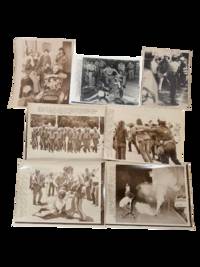
1972234431972. Florida antiwar protest press archive documenting demonstrations in Miami Beach during the 1972 Republican National Convention when activists targeted President Richard Nixon's renomination after years of bombing troop deployments and stalled peace negotiations in Vietnam. Protesters gathered outside convention sites government buildings and public streets to oppose the war challenge Nixon's reelection campaign and confront the heavy police and military security presence surrounding the convention.<br /> <br /> Photo archive of 7 Large silver gelatin press photographs each approx 8 x 10" Miami Beach Florida 1972. Military police march toward convention stations carrying riot clubs and wearing helmets and flak suits; demonstrators are pushed back by uniformed personnel; a seated protester is restrained on the grass by police; and tear gas fills a street as a demonstrator crouches near a smoking canister. Additional scenes show antiwar organizers seated indoors with signs reading "Stop the War Now" helmeted police standing over demonstrators in the street and a protester being taken away during a confrontation. Captions identify Miami Beach the Republican National Convention police preparations arrests and disruption threats tied to convention proceedings.<br /> <br /> The archive records the 1972 convention as a flashpoint in the late Vietnam War when Nixon campaigned on strength abroad while antiwar activists challenged the bombing of North Vietnam the mining of Haiphong Harbor and the continuation of U.S. military policy despite troop withdrawals. Miami Beach became a controlled political theater where nomination ceremonies unfolded behind lines of police National Guard and military personnel while demonstrators used sit-ins marches and street actions to force the war into public view. Press stamps caption slips editorial envelopes and agency markings preserve the photographs as working news files from the confrontation. Light handling wear caption attachments editorial markings toning and minor edge wear. Overall in good condition. unknown