2 245 résultats
197059605Gainesville Florida U. S. A.: University Gallery University of Florida. As New. 1970. Paperback. FREE UPGRADE to Courier/Priority Shipping Upon Request IN STOCK AND IMMEDIATELY AVAILABLE FOR SHIPMENT - AS NEW THE TEXT BLOCK IS PRISTINE CLEAN UNMARKED AND IN EXCELLENT CONDITION - - 22 pp. With 16 ills. 23 x 19 cm. -- with a bonus offer-- . University Gallery, University of Florida paperback
198126725Tallahassee FL: University. As New. 1981. Paperback. FREE UPGRADE to Courier/Priority Shipping Upon Request - IN STOCK AND IMMEDIATELY AVAILABLE FOR SHIPMENT - -- with a bonus offer-- . University paperback
17237416AMadrid, Oficina Real für N. R. Franco, 1723. 4°. 16 Bll., 268 S., 6 Bll. Flexibler Pergamentband der Zeit mit 2 Schließschlaufen. Vord. Innengelenk aufgeplatzt. 1 Bl. mit Einriß. [2 Warenabbildungen] 2. Auflage.
191840712Washington D.C.: Published by the United States Coast and Geodetic Survey 1918. Large folding nautical chart printed on heavy paper stock. Colored. A rare original coastal survey of Florida from Jupiter to Tampa including West Palm Beach Miami Boca Raton Fort Lauderdale Miami the Keys and Fort Meyers as well as the Bahamas and a partial mapping of the northern Cuban coastline including Havana.<br/> <br/> Established by President Thomas Jefferson in 1807 as the Survey of the Coast the U.S. Coast and Geodetic Survey was the United States' first civilian scientific agency. This agency has followed its mission to survey the U.S. coastline create nautical charts of the coast and help increase maritime safety since its founding and has often played fascinating roles in significant chapters of U.S. history. It served in all theaters of the Civil War in the service of the Union Army and Navy pioneered acoustic exploration in the wake of the sinking of the Titanic and during WWI it worked to detect enemy submarines. In addition this agency worked to survey and produce detailed maps and renderings of the U.S. coast. These nautical survey maps commonly referred to as "T-sheets" provide fascinating insights into the history of the United States coastline which has and will continue to shift. These maps are the most important data source for understanding the physical and ecological characteristics of the U.S. shoreline. The present map is a highly detailed and accurate sea chart of Southern Florida and the Northern Caribbean region and an important historical view of a developing Florida. Published by the United States Coast and Geodetic Survey unknown
191740734Washington D.C.: Published by the United States Coast and Geodetic Survey 1917. Large folding nautical chart printed on heavy paper stock. Colored. A rare original coastal survey of Florida from Vero Beach to Jupiter including Fort Pierce Port St. Lucie Stuart and the Hobe Sound with an inset map of the Narrows in the upper left corner.<br/> <br/> Established by President Thomas Jefferson in 1807 as the Survey of the Coast the U.S. Coast and Geodetic Survey was the United States' first civilian scientific agency. This agency has followed its mission to survey the U.S. coastline create nautical charts of the coast and help increase maritime safety since its founding and has often played fascinating roles in significant chapters of U.S. history. It served in all theaters of the Civil War in the service of the Union Army and Navy pioneered acoustic exploration in the wake of the sinking of the Titanic and during WWI it worked to detect enemy submarines. In addition this agency worked to survey and produce detailed maps and renderings of the U.S. coast. These nautical survey maps commonly referred to as "T-sheets" provide fascinating insights into the history of the United States coastline which has and will continue to shift. These maps are the most important data source for understanding the physical and ecological characteristics of the U.S. shoreline. The present map of the Florida coastline was issued before the incorporation of Jupiter Township in 1925 and predates the development of Route 1. A railroad is marked as following the approximate route of the highway. This map is a highly detailed and accurate sea chart of the Jupiter region and an important historical view of a developing Florida. Published by the United States Coast and Geodetic Survey unknown
191740733Washington D.C.: Published by the United States Coast and Geodetic Survey 1917. Large folding nautical chart printed on heavy paper stock. Colored. A rare original coastal survey of the south eastern Florida coastline from Boca Raton to Jupiter encompassing Lake Worth West Palm Beach and Delray Beach.<br/> <br/> Established by President Thomas Jefferson in 1807 as the Survey of the Coast the U.S. Coast and Geodetic Survey was the United States' first civilian scientific agency. This agency has followed its mission to survey the U.S. coastline create nautical charts of the coast and help increase maritime safety since its founding and has often played fascinating roles in significant chapters of U.S. history. It served in all theaters of the Civil War in the service of the Union Army and Navy pioneered acoustic exploration in the wake of the sinking of the Titanic and during WWI it worked to detect enemy submarines. In addition this agency worked to survey and produce detailed maps and renderings of the U.S. coast. These nautical survey maps commonly referred to as "T-sheets" provide fascinating insights into the history of the United States coastline which has and will continue to shift. These maps are the most important data source for understanding the physical and ecological characteristics of the U.S. shoreline. The present map is a highly detailed and accurate sea chart of the coast of southeast Florida and an important historical view of the developing state. Published by the United States Coast and Geodetic Survey unknown
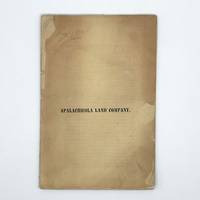
1837370450New York 1837. First edition. 16pp. 8vo. Original printed yellow wrappers repairs to small chips and separation at fold. Provenance: Thomas W. Streeter booklabel on inner rear wrapper pencil notes on front wrapper and first page of text. First edition. 16pp. 8vo. Comprising 1.4 million acres of land on the Gulf of Mexico between the Apalachicola and Wakulla Rivers in West Florida the Forbes land grant was ceded by the Seminoles and Lower Creeks to John Forbes & Company in payment for debts. With trade with Native Americans unprofitable during the War of 1812 Forbes sold the claim. The treaty transferring Florida to the United States did not go into effect until 1821 and private title under Spanish land grants with the territory was questionable. Decades of lawsuits ensued going as high as the Supreme Court. After the resolution of claims the title was reorganized as the Apalachiocola Land Company in 1835. The present report by the President of the Board of Directors of the New York-based company describes the geography of the region and outlines the plan for its division into lots for dwellings and businesses. The report summarizes the surveys of the region and describes the land and its resources and flora. Sabin calls for a map in this report although Servies does not note one. However the text references a map on page 7 which was likely not issued with all copies. <br /> <br /> The development of the land was not successful and the company eventually folded. "As an object of speculation the Forbes Purchase not only originated in a chaotic era but was hampered for many years by uncertain title to the land. Its development was also hindered by a lack of good agricultural land as well as by competition from the United States itself which was selling new lands in the American West at the same time the Apalachicola Land Company was getting started" Upchurch.<br /> <br /> This Streeter copy is the only example appearing in auction records and the only one we can trace in the market. Streeter purchased it from Rosenbach in 1936 for $50 and it was acquired at the Streeter sale for $65 by dealer and former Rosenbach employee John Fleming. It was eventually acquired by the collector Jay Kislak. Servies 2010; Streeter sale 1240 this copy; Sabin 5878; American Imprints 43274. See John C. Upchurch "Aspects of the Development and Exploration of the Forbes Purchase" Florida Historical Quarterly Vol. XLVIII No. 2 October 1969 unknown
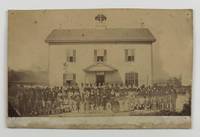
18804993N.p. but likely Live Oak FL 1880. Very good. Albumen photograph 4.5 x 7.75 inches mounted on card. Card trimmed with pinholes at corners remnants of printed caption in bottom margin slight surface soiling and spotting. Penciled annotation on verso. A stunning original photograph featuring Rev. Joseph Leroy Atwell Fish 1828-1890 and his wife and children posed amongst their African-American students at an unnamed "colored school" which was very likely the Florida Baptist Institute. The images captures Fish his wife and probably his daughters in the middle of the frame standing in front of a large two-story schoolhouse surrounded by about eighty young Black men and women in suits and dresses. Revered Fish was a graduate of Amherst College and the Newton Theological Seminary who was ordained a Baptist minister in 1856. Fish was also a teacher who helped found Florida Memorial University Florida Baptist Institute in Live Oak in 1880 where he served as first president of the institution until his death there on March 26 1890. Florida Memorial University is the only HBCU in the southern part of the state. The penciled annotation on the present photograph provides some information on the photograph but is probably ultimately misleading in one regard: "Rev. J.L.A. Fish & wife In Virginia teaching a colored school -- He married my Father & Mother Mr. & Mrs. Milan Hills Lucy M. Williams Dec. 21 1875."<br /> <br /> The latter part of this inscription is indeed true. Reverend Fish married Milan Hills and Lucy Williams on December 21 1875 in Hebron New York where he was serving as a church pastor. But the historical record does not indicate that Reverend Fish ever taught at an African-American school in Virginia if he did it was so brief that it is now lost to history. Fish's first known foray into teaching African American students was a brief six-month stint in Natchez Mississippi in 1879. Immediately thereafter Fish was appointed to the Florida Baptist Institute where he served the last decade of his life. As such it is far more likely that the inscriber here meant to say that Reverend Fish and his wife were "In FLORIDA teaching a colored school."<br /> <br /> Reverend Fish's work at the Florida Institute is covered in the Obituary Record of Graduates of Amherst College for the Academical Year ending June 27 1883: "His chief work was with the Freedmen as he brought Florida Institute out of all its troubles financial and social changed the feeling of the whites from hatred to sympathy with his work and put the school on a permanent foundation. His aim was to educate leaders for the race and the principal effort of his school was to train teachers and preachers to go out through the state and by their example to lift up and educate both intellectually and morally the colored people. His influence was felt throughout the state both through his training of teachers and preachers and through his counsels given at conventions associations and other gatherings of the colored men and in private. He is mourned by both white and black. By the whites because they knew his teachings would help the colored people without causing trouble to them. By the latter because they miss their leader teacher and friend. unknown
192140730Washington D.C.: Published by the United States Coast and Geodetic Survey 1921. Large folding nautical chart printed on heavy paper stock. Colored with minor wear. A rare original coastal survey of the south east Florida coastline from Biscayne Bay south of Miami to the northern tip of Islamorada including Key Largo Tavernier and Everglades National Park.<br/> <br/> Established by President Thomas Jefferson in 1807 as the Survey of the Coast the U.S. Coast and Geodetic Survey was the United States' first civilian scientific agency. This agency has followed its mission to survey the U.S. coastline create nautical charts of the coast and help increase maritime safety since its founding and has often played fascinating roles in significant chapters of U.S. history. It served in all theaters of the Civil War in the service of the Union Army and Navy pioneered acoustic exploration in the wake of the sinking of the Titanic and during WWI it worked to detect enemy submarines. In addition this agency worked to survey and produce detailed maps and renderings of the U.S. coast. These nautical survey maps commonly referred to as "T-sheets" provide fascinating insights into the history of the United States coastline which has and will continue to shift. These maps are the most important data source for understanding the physical and ecological characteristics of the U.S. shoreline. The present map of the Florida coastline shows part of the Overseas Railroad prior to its partial destruction and abandonment after a Hurricane in 1935. This map is a highly detailed and accurate sea chart of the Keys region and an important historical view of a developing Florida. Published by the United States Coast and Geodetic Survey unknown
191640724Washington D.C.: Published by the United States Coast and Geodetic Survey 1916. Large folding nautical chart printed on heavy paper stock. Colored. A rare original coastal survey of Florida from Tampa Bay to the Keys including Tampa St. Petersburg Sarasota Fort Myers Naples and of Northern Cuba including Havana.<br/> <br/> Established by President Thomas Jefferson in 1807 as the Survey of the Coast the U.S. Coast and Geodetic Survey was the United States' first civilian scientific agency. This agency has followed its mission to survey the U.S. coastline create nautical charts of the coast and help increase maritime safety since its founding and has often played fascinating roles in significant chapters of U.S. history. It served in all theaters of the Civil War in the service of the Union Army and Navy pioneered acoustic exploration in the wake of the sinking of the Titanic and during WWI it worked to detect enemy submarines. In addition this agency worked to survey and produce detailed maps and renderings of the U.S. coast. These nautical survey maps commonly referred to as "T-sheets" provide fascinating insights into the history of the United States coastline which has and will continue to shift. These maps are the most important data source for understanding the physical and ecological characteristics of the U.S. shoreline. The present map is a highly detailed and accurate sea chart of the Greater Florida Gulf region and an important historical view of a developing Florida. Published by the United States Coast and Geodetic Survey unknown
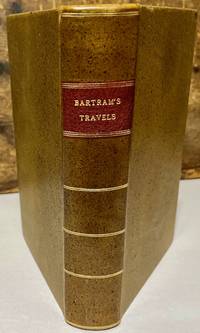
179330176Dublin: For J. Moore W. Jones R. McAllister and J. Rice 1793. Later printing. Leather bound. Very good. Octavo. xxiv 520 pages 11 page index directions to the binder. Frontispiece engraving of Mico Chlucco. Illustrated with 7 plates one folding and one folding map. Later speckled calf leather binding with red leather title label on spine. Newer front and rear end sheets added. Newer head bands top and bottom of text block. Light foxing to frontispiece engraving and title page. Light scattered occasional foxing to the contents. This edition follows the Philadelphia 1791 first edition and the first English edition of 1792. Bartram's classic account of southern natural history native Americans and exploration in the southeastern states during the American Revolution period. <br /> <br /> Howes B 223; Field 94; Sabin 3870; Clark I 197; De Renne Vol. 1 p.257; See Field 96. For J. Moore, W. Jones, R. McAllister, and J. Rice unknown
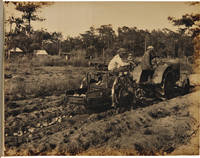
1920WRCAM54681Hastings Fl 1920. Two volumes. Eighteen sepia-toned photographs each approximately 7 1/2 x 9 1/2 inches. Oblong quarto. Contemporary black leatherette all photographs linen-backed and bound in on stubs. Mild shelf wear. Photographs in excellent condition. A very interesting pair of photo albums with large-format images featuring African- American field workers and other manual laborers working for Superior Brand New Potatoes in Florida in the early 20th century. The photographs were professionally produced by the Higginbotham Photo Company of Dallas Texas with their paper label affixed to the inside front cover of each album. Ten of the eighteen photographs feature African- American laborers in the fields on tractors posed outside the processing area or on trucks loading freight trains. Of the ten photographs four are unique examples and three are present in duplicate. In addition to the African-American workers several shots feature poor white laborers processing potatoes including one shot of workers using a Boggs Potato Grader. <br> <br> Hastings became the "Potato capital of Florida" in the early 1900s after Thomas Horace Hastings established a 1569-acre plantation to grow winter vegetables. Soon he switched to potatoes and by 1917 he enjoyed great success. Hastings remains an important agricultural center today serving as the packing and shipping center for a tri- county consortium of potato farmers with farms that also produce cabbage onions eggplant and other vegetables. hardcover books
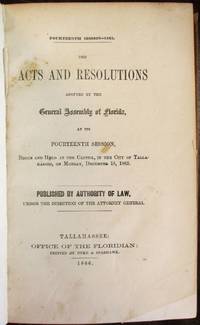
184731802Tallahassee: Office of the Floridian: Printed by Samuel S. Sibley. 1847. Nine bound volumes containing twelve legislative sessions bound in later cloth except as otherwise noted. Some institutional marks overall Very Good.<br/><br/> We offer the following:<br/> a SECOND SESSION. THE ACTS AND RESOLUTIONS OF THE GENERAL ASSEMBLY OF THE STATE OF FLORIDA PASSED AT ITS SECOND SESSION. Tallahassee: 1846 i.e. 1847. 99 V pp. Prominent perforation stamp on title leaf a couple of other institutional marks lacking the free endpapers. Florida joined the Union in 1845; this was its second meeting as a State. Servies 3243.<br/> b SIXTH SESSION. THE ACTS AND RESOLUTIONS. Tallahassee: 1853. 193 X pp.<br/> c SEVENTH SESSION. Tallahassee: 1855. 101 X pp. bound with <br/> d SEVENTH SESSION. ADJOURNED SESSION. Tallahassee: 1855. 66 VI pp.<br/> e EIGHTH SESSION. Tallahassee: 1857. 85 V pp.<br/> f NINTH SESSION. Tallahassee: 1859. 167 XIII pp. bound with<br/> g ADJOURNED SESSION. 1859. Tallahassee: 1859. 103 VIII pp.<br/> h FIRST SESSION 10TH GEN. ASS. 1860. Tallahassee: 1860. 242 XIV pp. Title page in facsimile.<br/> i ELEVENTH SESSION 1861. Tallahassee: 1862. 79 VI pp. Parrish & Willingham 2733.<br/> j 1ST SESS. 13TH GENERAL ASSEMBLY 1864. Tallahassee: 1865. 46 IV pp. Parrish & Willingham 2736.<br/> k FOURTEENTH SESSION. DECEMBER 18 1865. Tallahassee: 1866. 156 IX XXXII pp. bound with <br/> l 2D SESSION- 14TH GEN. ASSEMBLY- 1866. Tallahassee: 1867. 95 VIII pp. <br/><br/> An illuminating picture of Florida's development from the beginning of statehood through the Civil War its resulting devastation and early Reconstruction with the Constitution of 1865 abolishing slavery but establishing special Black Codes for the regulation of the life of the former slaves. Office of the Floridian: Printed by Samuel S. Sibley. unknown books
192140685Washington D.C.: Published by the United States Coast and Geodetic Survey 1921. Nautical chart printed on heavy paper stock. Colored. A rare coastal survey of Florida from Fernandina to Jacksonville including Amelia Island Atlantic Beach Neptune Beach and the St. Johns River.<br/> <br/> Established by President Thomas Jefferson in 1807 as the Survey of the Coast the U.S. Coast and Geodetic Survey was the United States' first civilian scientific agency. This agency has followed its mission to survey the U.S. coastline create nautical charts of the coast and help increase maritime safety since its founding and has often played fascinating roles in significant chapters of U.S. history. It served in all theaters of the Civil War in the service of the Union Army and Navy pioneered acoustic exploration in the wake of the sinking of the Titanic and during WWI it worked to detect enemy submarines. In addition this agency worked to survey and produce detailed maps and renderings of the U.S. coast. These nautical survey maps commonly referred to as "T-sheets" provide fascinating insights into the history of the United States coastline which has and will continue to shift. These maps are the most important data source for understanding the physical and ecological characteristics of the U.S. shoreline. The present map is a highly detailed and accurate sea chart of the Florida coast from Fernandina to Jacksonville and is an important historical view of the state. Published by the United States Coast and Geodetic Survey unknown
192140696Washington D.C.: Published by the United States Coast and Geodetic Survey 1921. Large folding nautical chart printed on heavy paper stock. Colored. A rare coastal survey of Florida from Fernandina to Jacksonville including Amelia Island Atlantic Beach Neptune Beach and the St. Johns River.<br/> <br/> Established by President Thomas Jefferson in 1807 as the Survey of the Coast the U.S. Coast and Geodetic Survey was the United States' first civilian scientific agency. This agency has followed its mission to survey the U.S. coastline create nautical charts of the coast and help increase maritime safety since its founding and has often played fascinating roles in significant chapters of U.S. history. It served in all theaters of the Civil War in the service of the Union Army and Navy pioneered acoustic exploration in the wake of the sinking of the Titanic and during WWI it worked to detect enemy submarines. In addition this agency worked to survey and produce detailed maps and renderings of the U.S. coast. These nautical survey maps commonly referred to as "T-sheets" provide fascinating insights into the history of the United States coastline which has and will continue to shift. These maps are the most important data source for understanding the physical and ecological characteristics of the U.S. shoreline. The present map is a highly detailed and accurate sea chart of Florida from Fernandina to Jacksonville and an important historical view of the developing state. Published by the United States Coast and Geodetic Survey unknown
192140700Washington D.C.: Published by the United States Coast and Geodetic Survey 1921. Large folding nautical chart printed on heavy paper stock. Colored. A rare coastal survey of Pensacola Bay including Perdido Key Pensacola and Pensacola Beach.<br/> <br/> Established by President Thomas Jefferson in 1807 as the Survey of the Coast the U.S. Coast and Geodetic Survey was the United States' first civilian scientific agency. This agency has followed its mission to survey the U.S. coastline create nautical charts of the coast and help increase maritime safety since its founding and has often played fascinating roles in significant chapters of U.S. history. It served in all theaters of the Civil War in the service of the Union Army and Navy pioneered acoustic exploration in the wake of the sinking of the Titanic and during WWI it worked to detect enemy submarines. In addition this agency worked to survey and produce detailed maps and renderings of the U.S. coast. These nautical survey maps commonly referred to as "T-sheets" provide fascinating insights into the history of the United States coastline which has and will continue to shift. These maps are the most important data source for understanding the physical and ecological characteristics of the U.S. shoreline. The present map is a highly detailed and accurate sea chart of Pensacola Bay and an important historical view of a developing Florida. Published by the United States Coast and Geodetic Survey unknown
192240699Washington D.C.: Published by the United States Coast and Geodetic Survey 1922. Large folding nautical chart printed on heavy paper stock. Colored. A rare coastal survey of Florida and Alabama around Pensacola Bay including Orange Beach Perdido Key Pensacola Pensacola Beach and Santa Rosa Island.<br/> <br/> Established by President Thomas Jefferson in 1807 as the Survey of the Coast the U.S. Coast and Geodetic Survey was the United States' first civilian scientific agency. This agency has followed its mission to survey the U.S. coastline create nautical charts of the coast and help increase maritime safety since its founding and has often played fascinating roles in significant chapters of U.S. history. It served in all theaters of the Civil War in the service of the Union Army and Navy pioneered acoustic exploration in the wake of the sinking of the Titanic and during WWI it worked to detect enemy submarines. In addition this agency worked to survey and produce detailed maps and renderings of the U.S. coast. These nautical survey maps commonly referred to as "T-sheets" provide fascinating insights into the history of the United States coastline which has and will continue to shift. These maps are the most important data source for understanding the physical and ecological characteristics of the U.S. shoreline. The present map is a highly detailed and accurate sea chart of the Pensacola area and an important historical view of a developing Florida. Published by the United States Coast and Geodetic Survey unknown
191640695Washington D.C.: Published by the United States Coast and Geodetic Survey 1916. Large folding nautical chart printed on heavy paper stock. Uncolored. A rare coastal survey of the Fort Myers area including the San Carlos Bay Caloosahatchee River Cape Coral Sanibel Island and Fort Myers Beach.<br/> <br/> Established by President Thomas Jefferson in 1807 as the Survey of the Coast the U.S. Coast and Geodetic Survey was the United States' first civilian scientific agency. This agency has followed its mission to survey the U.S. coastline create nautical charts of the coast and help increase maritime safety since its founding and has often played fascinating roles in significant chapters of U.S. history. It served in all theaters of the Civil War in the service of the Union Army and Navy pioneered acoustic exploration in the wake of the sinking of the Titanic and during WWI it worked to detect enemy submarines. In addition this agency worked to survey and produce detailed maps and renderings of the U.S. coast. These nautical survey maps commonly referred to as "T-sheets" provide fascinating insights into the history of the United States coastline which has and will continue to shift. These maps are the most important data source for understanding the physical and ecological characteristics of the U.S. shoreline. The present map is a highly detailed and accurate sea chart of Fort Myers area and an important historical view of a developing Florida. Published by the United States Coast and Geodetic Survey unknown
191740715Washington D.C.: Published by the United States Coast and Geodetic Survey 1917. Large folding nautical chart printed on heavy paper stock. Colored. Rare original coastal survey of the entrance to Tampa Bay including Anna Maria Island Bradenton and Fort De Soto Park.<br/> <br/> Established by President Thomas Jefferson in 1807 as the Survey of the Coast the U.S. Coast and Geodetic Survey was the United States' first civilian scientific agency. This agency has followed its mission to survey the U.S. coastline create nautical charts of the coast and help increase maritime safety since its founding and has often played fascinating roles in significant chapters of U.S. history. It served in all theaters of the Civil War in the service of the Union Army and Navy pioneered acoustic exploration in the wake of the sinking of the Titanic and during WWI it worked to detect enemy submarines. In addition this agency worked to survey and produce detailed maps and renderings of the U.S. coast. These nautical survey maps commonly referred to as "T-sheets" provide fascinating insights into the history of the United States coastline which has and will continue to shift. These maps are the most important data source for understanding the physical and ecological characteristics of the U.S. shoreline. The present map is a highly detailed and accurate sea chart of the Tampa region and an important historical view of a developing Florida. Published by the United States Coast and Geodetic Survey unknown
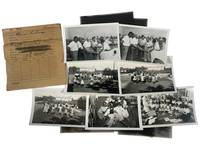
1951229201951. Jim Crow Florida Segregated public facility photograph archive from Clearwater Florida by George Fulmer 1951. Collection consists of 14 photographs including 7 black-and-white photographs and 7 associated film negatives documenting African American children in a newly opened library and schoolyard as well as a segregated swimming-pool planning meeting attended by city officials. Produced by George Fulmer Clearwater's longtime municipal photographer and WWII U.S. Navy enlisted photographer these images survive in their original studio proof envelopes from the George Fulmer Estate recovered after the 2014-2015 demolition of the Fulmer Studio which had stood beside the Clearwater Courthouse for over 65 years. The photographs measure 3.5" x 5" and the negatives are on Kodak safety film measuring 4" x 5" each. <br /> <br /> This archive captures two deeply revealing moments in the segregated civic history of mid-century Florida. The first packet labeled and dated to summer 1951 presents five photographs of Black schoolchildren reading playing circle games outdoors and participating in early library programming clear evidence of segregated educational resources but also of Black childhood joy and community-building within constrained circumstances. A white librarian or teacher is visible at the front of the classroom underscoring the racialized hierarchy embedded in Florida's school system prior to Brown v. Board of Education in 1954. The second packet likely taken only weeks apart based on Fulmer's original numbering system documents a group of white and Black men gathered around architectural plans for a segregated municipal swimming pool. The interracial nature of the planning body illuminates the complex often unequal negotiations around public development in Jim Crow Florida where recreational segregation remained legal until at least 1954-1955. These photographs represent an unusual visual record of the bureaucratic process behind segregated facilities.<br /> <br /> As part of the vast body of more than 100000 photographs preserved from Fulmer's studio much of which was claimed by the local historical society this small group represents a scarce surviving fragment of Clearwater's visual civic record with Fulmer's estate retaining a curated exhibition core and only limited dispersal of individual images. Fulmer documented weddings police activities construction projects civic events and wartime subjects but photographs relating to segregated facilities especially of Black children and community spaces are extremely limited in the archive. These images therefore constitute an important resource for researchers of Jim Crow Florida Black educational history municipal segregation and postwar Southern urban development. Photographs and negatives are crisp and clean only expressing minimal edge wear. Original Fulmer Studio proof envelopes present annotated in pencil with job numbers and subjects. Comes with two certificates of authenticity from the Fulmer estate. Overall very good condition. unknown
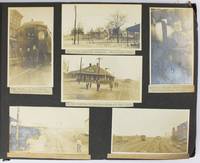
19095288Various locations mostly in Cuba and Florida: March 5 to April 1 1909. About very good. 21 leaves illustrated with 235 photographs all with typed captions. Oblong folio. Contemporary full dark brown cloth brad bound. Moderate staining and coiling to covers some edge wear. Bottom corners of all leaves chipped not costing content. Occasional minor wear to photos or captions. A well-organized and meticulously-captioned vernacular photograph album with significant content on Florida and Cuba in the first decade of the 20th century. The album is organized chronologically and features a family from Ohio traveling from home by train to Florida and thence to Cuba then returning home in the spring of 1909. The first seven and the last twenty-five photographs emanate from Ohio where the journey started Tennessee and Georgia but otherwise the album features Florida and Cuba in over 200 pictures. The scenes in Florida range from Jacksonville to Key West and other points in-between featuring the state in almost 120 photos both before and after the traveling party went to Cuba. The images capture portraits of the travelers numerous homes hotels businesses and other buildings including an ostrich farm in Jacksonville numerous scenes in Ocala including one image featuring "Mary and her old colored Mammy" various churches and other scenes in Tampa residences in Key West beach scenes at Long Key various hotels and agricultural fields in Miami and various buildings in Palm Beach Ormand and St. Augustine concluding with a front view of the "Old Slave Market" in the latter city.<br /> <br /> Most notably the album includes eighty-six photographs of Cuba the nexus point for the present trip where the party arrived on March 20. The Cuba scenes mostly feature Havana with several views of "Beautiful Residences" and other buildings plus some street views and other scenes in the city. Other interesting Havana scenes picture the railroad station "The Bone Yard -- Old destroyed Catacombs" scenes in the Malecon and more. Some of the street scenes in Havana picture local residents one of "Children on the street corner" and another showing "Children scrambling for pennies" in the middle of the street. The album also contains views of the wreck of the Maine Morro Castle the interior of Fort Cabanas and more. The travelers managed to wander outside Havana for a day when they ventured to the countryside and the town of Guines on March 23. While there the compiler took photographs of countryside outside Guines a railroad car full of sugar cane thatched houses a group photograph of the students at a "Spanish School in Guines" a "Child crying in the street" a group of locals outside a cafe captioned "Strangers in a strange land.Where we tried to get something to eat" other street scenes in the town and the local jail. The last photograph of Cuba here features a "Large Sugar Mill in Providencia." The group then returned through Florida Georgia and Tennessee where they spent a day at Lookout Mountain and Orchard Knob before their final stop in Dayton Ohio. A wonderful early-20th century travel album with significant views in Florida and Cuba. March 5 to April 1 unknown
192140729Washington D.C.: Published by the United States Coast and Geodetic Survey 1921. Large folding nautical chart printed on heavy paper stock. Colored. A rare original coastal survey of the Northern Gulf coast from Florida to Louisiana encompassing Panama City Rosemary Beach Seaside Grayton Destin Pensacola Gulf Shores Mobile Gulfport and the Mississippi Delta.<br/> <br/> Established by President Thomas Jefferson in 1807 as the Survey of the Coast the U.S. Coast and Geodetic Survey was the United States' first civilian scientific agency. This agency has followed its mission to survey the U.S. coastline create nautical charts of the coast and help increase maritime safety since its founding and has often played fascinating roles in significant chapters of U.S. history. It served in all theaters of the Civil War in the service of the Union Army and Navy pioneered acoustic exploration in the wake of the sinking of the Titanic and during WWI it worked to detect enemy submarines. In addition this agency worked to survey and produce detailed maps and renderings of the U.S. coast. These nautical survey maps commonly referred to as "T-sheets" provide fascinating insights into the history of the United States coastline which has and will continue to shift. These maps are the most important data source for understanding the physical and ecological characteristics of the U.S. shoreline. The present map is a highly detailed and accurate sea chart of the Gulf coasts of Florida Alabama Mississippi and Louisiana and an important historical view of the developing states. Published by the United States Coast and Geodetic Survey unknown
192240698Washington D.C.: Published by the United States Coast and Geodetic Survey 1922. Large folding nautical chart printed on heavy paper stock. Colored with minor wear. A rare coastal survey of the Florida coast from Fort Walton Beach to Panama City Beach including Destin Grayton Beach Seaside Alys Beach Rosemary Beach and Laguna Beach.<br/> <br/> Established by President Thomas Jefferson in 1807 as the Survey of the Coast the U.S. Coast and Geodetic Survey was the United States' first civilian scientific agency. This agency has followed its mission to survey the U.S. coastline create nautical charts of the coast and help increase maritime safety since its founding and has often played fascinating roles in significant chapters of U.S. history. It served in all theaters of the Civil War in the service of the Union Army and Navy pioneered acoustic exploration in the wake of the sinking of the Titanic and during WWI it worked to detect enemy submarines. In addition this agency worked to survey and produce detailed maps and renderings of the U.S. coast. These nautical survey maps commonly referred to as "T-sheets" provide fascinating insights into the history of the United States coastline which has and will continue to shift. These maps are the most important data source for understanding the physical and ecological characteristics of the U.S. shoreline. The present map is a highly detailed and accurate sea chart of 30A area in Florida and an important historical view of the developing state. Published by the United States Coast and Geodetic Survey unknown
191640706Washington D.C.: Published by the United States Coast and Geodetic Survey 1916. Large folding nautical chart printed on heavy paper stock. Colored. A rare coastal survey of Tampa Bay including Tampa St. Petersburg Clearwater Anna Maria Island and Bradenton.<br/> <br/> Established by President Thomas Jefferson in 1807 as the Survey of the Coast the U.S. Coast and Geodetic Survey was the United States' first civilian scientific agency. This agency has followed its mission to survey the U.S. coastline create nautical charts of the coast and help increase maritime safety since its founding and has often played fascinating roles in significant chapters of U.S. history. It served in all theaters of the Civil War in the service of the Union Army and Navy pioneered acoustic exploration in the wake of the sinking of the Titanic and during WWI it worked to detect enemy submarines. In addition this agency worked to survey and produce detailed maps and renderings of the U.S. coast. These nautical survey maps commonly referred to as "T-sheets" provide fascinating insights into the history of the United States coastline which has and will continue to shift. These maps are the most important data source for understanding the physical and ecological characteristics of the U.S. shoreline. The present map is a highly detailed and accurate sea chart of Tampa Bay and an important historical view of a developing Florida. Published by the United States Coast and Geodetic Survey unknown
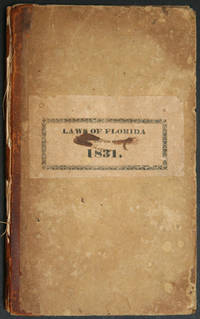
1831WRCAM31652Tallahassee 1831. 123pp. Original half calf and boards printed label. Spine heavily chipped front board detached boards spotted and edgeworn. Front free endpaper excised pencil notation on p.3 contemporary ink signature illegible on p.5. Light scattered foxing. A good copy. Prints a list of the officers of the Territory of Florida acts and resolutions of the legislative council laws of the United States relative to the Territory and the text of the Treaty of Washington. Includes important early laws relating to Indian affairs transportation commercial development etc. Servies locates only one copy in Florida. SERVIES 1541. AII FLORIDA 132. GILCREASE p.335. hardcover books