8 986 résultats
190572364Los Angeles: M. Rieder 1905. Early pictorial souvenir of Venice. Small lanscape octavo. 18 pp. with each page bearing a different photographic illustration o early Venice. They are as follows: Moonlight at Venice; Pier Ave Ocean Park; Windward Ave.; The Midway showing gondolas in a canal; The Midway street scene; Windward Ave. near Lagoon; Pier Ave.; Night Scene on the Midway; Moonlight at Venice dup; Windward Ave.'; Cabrillo Ship Hotel; Inerior Bath House Ocean Park; Camel Riding on the Midway; The Auditorium showing what was later the carousel building. Wallet-style green wrappers with addressee left blank. Very good. M. Rieder unknown
In-24 gr. (mm. 143x80), p. pelle bazana coeva, dorso a cordoni (picc. manc.) con decoraz. e titolo oro, pp. (8),110, ornato da delicate testatine e capilettera xilografati. Dedica al Re Luigi XIV, noto per il suo interesse per il Nord America. Il volume raccoglie due lunghe lettere del Padre gesuita Verbiest in cui descrive il suo viaggio nella Tartaria (Orientale e Occidentale, 1682-83) al seguito dell’Imperatore cinese Kang-hi, unitamente alla "Nouvelle descente des Espagnols dans l’isle de Californie, l’an 1683", primo resoconto del mancato tentativo da parte dell’Ammiraglio Isidro de Atondo y Antillòn e del missionario Padre Eusebio Francisco Kino, di stabilire una colonia spagnola in California, nella baia di La Paz. "Seconda edizione" di questa rara opera (la prima è del 1685). Cfr. The Hill Collection of Pacific Voyages,1771: “’La Nouvelle descente des Espagnols..’ is a faithful translation of the rare ‘Relaciòn puntual de la entrada del Almirante Isidro de Atondo y Antillòn a la grande Isla de la California, este ano de 1683’.” “Ferdinand Verbiest, missionario gesuita, matematico e sinologo (Fiandre 1632 - Pechino 1688). Inviato in Cina vi lavorò per più di 30 anni rendendosi benemerito non solo nelle scienze esatte ma anche nel sostenere e propagare la fede cristiana. Onoratissimo dall’imperatore Kang-hi, pubblicò vari scritti scientifici, soprattutto astronomici”. Così Diz. Treccani,XII, p. 699. Esemplare ben conservato.
Napoli, 1929,agosto 5, copertina illustrata a colori in fascicolo originale completo di pp. 16 de “Il Mattino illustrato”
Torino, 1951, 14 giugno, copertina fotografica a colori in fascicolo originale completo di pp. 24 de “Illustrazione del Popolo" - Supplemento della ”Nuova Gazzetta del Popolo" .
189977918Partitions sur les Animaux,Partitions sur les États-Unis 1899
194329838Partitions sur les États-Unis Chappell 1943
189826921Partitions sur les États-Unis Salabert Edouard 1898
192329399Partitions sur l'Amérique du Nord,Partitions sur les États-Unis Salabert 1923
191872388Partitions sur la Première guerre Mondiale,Partitions sur les États-Unis Sherman 1918
B9781418129552Hardback. New. hardcover
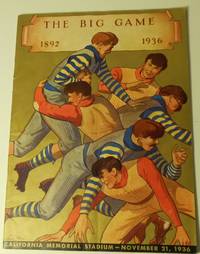
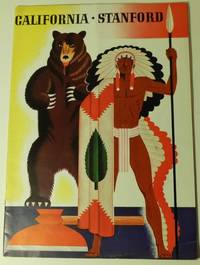
193623637Berkeley CA: University of California. Near Fine with no dust jacket. 1936. First Edition; First Printing. Softcover. 4to 11" - 13" tall; 32 pages; November 21 1936 football program for Stanford vs California. Measures about 8 X 11 inches. Near fine condition with a very light crease in center of front cover. Hard to see just looking at it. . University of California paperback
193923638Stanford University CA: Stanford University Press. Near Fine with no dust jacket. 1939. First Edition; First Printing. Softcover. 4to 11" - 13" tall; 45th Annual California vs. Stanford football game program. Measures about 8 X 11 inches. Near fine condition with very minor wear. . Stanford University Press paperback
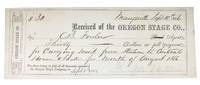
186647975Marysville CA 1866. Printed both sides now housed in an archival mylar sleeve. Age-toning. Modest wear. A VG copy of a rare survivor. Printed receipt: "Recieved of the Oregon Stage Co." Oblong format: 3-1/16" x 8-3/8" <br/><br/>Per the OSU website we find "The Oregon Stage Coach Company owned by Henry W. Corbett ran a major stagecoach route between California and Oregon during the mid-1800s." Here offered a Company pay receipt to one "C. B. Fowler" Agent "Thirty" Dollars in full payment "for Carrying mail from Station to Central House & back for Month of August 1866." unknown books
51-1295Late 19th Century-Early 20th Century. Silver print. Panorama. 8 x 42 inches. Provenance: Peter Howard Berkeley. "The well known 'Raymond' granite quarries near Raymond in Madera County not only are and have been for a number of years the most important mineral industry of the county but they are also an important factor in the state's production. As has already been noted… these deposits of workable building stone are located in the western edge of the Sierra foothills. There are two quarries about 1 mile apart circa 1914 on the east side of a small valley about 2 miles east of Raymond which is the terminus of the Berenda-Raymond branch of the Southern Pacific Railroad. Both quarries are served by spur tracks from this branch line. It is now recognized that this stone is not excelled by any other building granite found either in this state or elsewhere. It is noted for its beautiful white color the fineness and uniformity of its texture its weathering qualities and its freeness in working. As to this last named feature it lends itself readily to all classes of fine structural carving."1998 Observer:"Raymond is an interesting little place. It used to be a large bustling town in the late 1800s because a railroad spur was built to it and stage coaches were used to carry passengers to Yosemite. Later another railroad track was built in from Merced in 1907 and Raymond lost all of the tourist business to Yosemite. Of all the buildings built then only a few are left; and everything built for the railroad is gone except for a monument across the street from the store about the Wild Cat Station Raymond CA. There is another monument in front of Hills Pride Inn about the town of Knowles. Luckily for Raymond someone had discovered the granite nearby in 1886 so the granite business helped keep Raymond alive - only the town didn’t flourish as much as during the Yosemite times." Late 19th Century-Early 20th Century. unknown
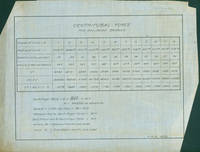
15-4194California: N.P. 1915. 4to. Single Sheet Of Wax Treated Paper Very Good with creasing wrinkled edges minor staining. California: N.P., 1915. unknown
Large quarto in color photo illus (back and front) cloth-backed boards; 302p; chiefly b& w (some color) photos This is the original, not a reprint. Great photos of a mostly bygone era. Includes a 5" x 7" b&w class photo of the 1972 City of Berkeley Cazadero Music Camp laid in.
199314439San Francisco: Book Club of California 1993 One of 500 copies printed by Mastercraft Press of San Francisco. Quarter natural linen over floral decorated boards printed paper spine label. Folio. Full-page title-page facsimiles one full-color plate. Printed in black and red. A fine copy. Book Club of California, hardcover
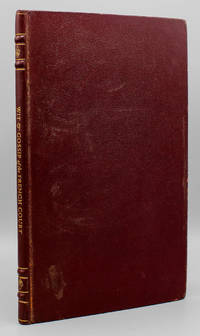
193317547<p>Hollywood: Press of Hollycrofters 1933 One of 125 copies of this collection of aphorisms and anecdotes by Nicolas Chamfort 1741 – 1794 author and secretary to the sister of Louis XVI. Publisher's reddish-brown leather titled in gilt on spine. . Octavo. Set in Poliphilus and Blado and printed on handmade paper at the Press of Hollycrofters. Some edgewear and smudging. Toning to edges. A very good copy. We could not find much information on the Hollycrofters. Their publications date from 1929 to 1958 with most dating from the 1930s. Their other titles include Lucile Phillips Morrison's Doll Dreams 1932 which compiled short fiction by children with illustrations by California artists like Paul Landacre and Millard Sheets. They also published books with a Western Americana interest including Indians of Death Valley by Lydia Clements 1953 and Orphans of the Desert by Leo Papiano 1929 which was one of their earliest publications.</p> Press of Hollycrofters, hardcover
Red-cloth quarto; 454 p, b&w illus; 27 cm. **Volume III (of three total) only. ** California; History; Biography.
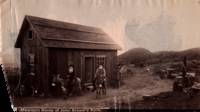
1880List2900Los Angeles California 1880. Two photographs measuring approximately 4 ½ x 7 ½ inches. Pasadena Historical Society stamps verso. One with manuscript caption verso including “Mtn Home of John Brown’s Sons Located just south of Brown’s Peak between Millards Cañon arroyo secoâ€. Wrinkling and marginal tearing with some missing corners. One photograph with tape residue. Very good. Owen Brown 1824–1889 and Jason Brown 1823–1912 were two of abolitionist John Brown’s twenty children. Owen Brown participated in both the Pottawatomie massacre and the Harpers Ferry raid. Following the unsuccessful raid he led the party of escapees to Pennsylvania. He lived in Put-in-Bay Ohio until 1885 when he joined his brother Jason—who was not involved in his father’s activities—in Pasadena. The two lived in poverty in mountain cabins several miles outside the city; offered here are two photographs of the brothers standing outside their cabins. In their time in Pasadena they were described as eccentric and hermetic but were liked and respected by those in town. Several obituaries of Owen Brown describe how witnessing the growing anti-Chinese sentiment in the region the brothers hired two Chinese men from the area to work for them “for the sake of the principle although they had no need†of the workers.1 One of these laborers may be the third man standing behind Jason Brown in the photograph where the brothers are astride donkeys.<br /> <br /> Of interest to scholars of the Brown family and their legacy.<br /> <br /> 1 “The Late Owen Brown. The Peculiar Life of the Son of the Abolitionist Ends in California.†Indianapolis Journal January 13 1889 8. unknown
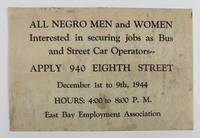
19443081N.p. but perhaps Oakland or Berkeley 1944. Very good. Printed broadside 5.25 x 8 inches. Minor foxing and staining light edge wear penciled note covering most of verso. A small and apparently unrecorded broadside calling for African Americans interested in working as bus drivers and street car operators in the San Francisco Bay Area during the latter portion of World War II. The notice calls for interested parties to apply at the offices of the East Bay Employment Association between 4:00 and 8:00 PM between December 1 and 9 1944. We could locate no information on the East Bay Employment Association but it was almost certainly located in either Oakland or Berkeley. This employment advertisement was perhaps the result of a wartime shortage of bus drivers and street car operators in the Bay Area. We could locate no other copies of this interesting and somewhat mysterious broadside. unknown
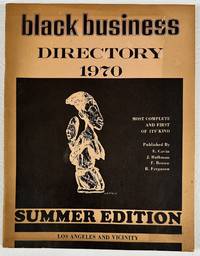
197012882Los Angeles: Black Business Directory Inc 1970. ii66pp. Square quarto. Original illustrated peach wrappers printed in black stapled. Minor edge wear and rubbing uneven toning to wrappers. Text toned but clean. Very good. A rare business directory intended for use by the African-American community of Los Angeles at the outset of the 1970s. The cover touts the directory's series motto: "Most Complete & First of Its Kind." The directory itself contains listings for a wide variety of businesses presented alphabetically by business type ranging from "Accountants" to "Youth Organizations & Centers." As with most other directories the listings are interspersed with advertisements for a plethora of local Black-owned or managed businesses including First City Savings Clarke's Furniture Vermont Volkswagen Friendly Chrysler-Plymouth Lewis Bakery and Soul Deli Triple AAA Building Maintenance Service Foreman Driving School Magnificent Bros. Hair Styling Salon Kelsey's Termite and Pest Control Leo's Plastic Slip Covers Willie Greene's Travel Service Medallion Printers & Lithographers and numerous others. The advertisements are often illustrated with portraits of the managers or proprietors of the businesses. The penultimate page of the directory is reserved for a listing of "Supporting White Business." There is also a full-page ad for the publication itself which touts its advantages and purpose: "Black Business Directory -- Contains over 5000 competitive Black Businesses in over 250 categories. Purpose -- to stimulate minority employment by exposing minority businesses services and products."<br /> <br /> All four of the directories that we know of in this series are rare. OCLC reports just three copies of the first volume published for the summer of 1969 at the New York Public Library the Bancroft Library and the University of Southern California; and just two copies of the second volume published in the Winter of 1969-70 at NYPL and the Bancroft. The present work is only the second copy of the Summer 1970 edition that we have ever seen or of which we are aware with no institutional copies reported in OCLC. No copies of the Winter 1970-71 or Summer 1971 editions exist as far as we know though they were likely produced as the Winter of 1971 edition is reported at three institutions -- the University of Southern California the Bancroft and Yale. Black Business Directory, Inc unknown
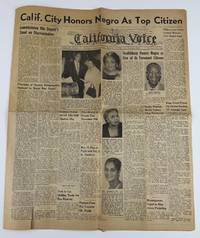
19602981Oakland: Voice Publishing Company November 11 1960. About very good. 8pp. Large folio. Gathered signatures. Uniformly tanned moderate edge wear old folds with minor wear at fold ends. A representative issue of a scarce Bay Area African-American weekly newspaper. Established in 1919 the California Voice later touted itself as "The oldest Black paper West of the Rockies." The present issue includes a mixture of race-related stories and straightforward news articles. The former are represented by pieces on the front page focusing on police discrimination housing desegregation civil rights voter suppression and other issues. The banner headline relates to the honoring of Smith Robinson as "one of its foremost citizens" by the city of Healdsburg. Other articles in the newspaper relate to African-American society sports and editorials interspersed with numerous advertisements for local businesses including Safeway. This issue was produced under the editorship of Louis H. Campbell by longtime publisher and World War I veteran Elbert Allen Daly. A smattering of issues in OCLC mostly dating after the present issue.<br /> <br /> Danky African American Newspapers and Periodicals 1343. Voice Publishing Company, November 11 unknown
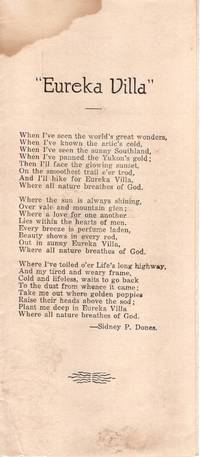
192612988Los Angeles or Chicago 1926. Single sheet 9.25 x 16 inches folded three times vertically to form a slim 8pp. pamphlet. Dampstain to top margin throughout moderate soiling throughout especially along bottom margin slight biopredation to one panel. About very good. A rare pamphlet touting the advantages of Eureka Villa a 1920s real estate development near Los Angeles intended for African American home buyers. Sydney Dones was the developer and head of the Eureka Villa Improvement Association with offices in Los Angeles and Chicago. Eureka Villa was founded on about a thousand acres purchased by Dones and his fellow investors in 1924 near the long-abandoned Mexican mining town of Val Verde. The planned community was envisioned as an affordable and welcoming home and vacation destination for Black folks in southern California who were otherwise excluded from most public amenities and priced well out of home ownership anywhere near the city. The present pamphlet or flyer includes a poem about the community by Dones himself information on how to buy a lot a short introduction by Dones but is mostly comprised of a long series of detailed questions and answers about the development. An example of the latter: "Q. What work can we get near Eureka A. Eureka is just one and a half hours' ride from Hollywood where a large number of our people are employed and too there will be a number of people needed to build Eureka Villa." Just four copies reported in OCLC at the Huntington Bancroft UC-San Diego and Princeton. unknown
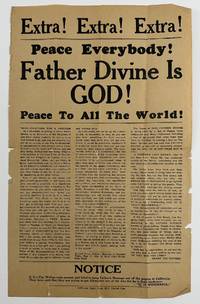
19345724Los Angeles: California Eagle 1934. Good. Broadside 14.5 x 9 inches. Moderate toning old folds very minor loss at two crossfolds a few short splits along fold lines some small marginal chipping. A highly ephemeral broadside touting the message of Father Divine and denouncing a recent fraud by "a Set of People from Hollywood" who attempted to use Father Divine's name to purchase the Hotel Dunbar. Father Major Jealous Divine 1882-1965 known earlier in his life as George Baker was the most prominent Black religious cult leader of the 1930s believed to be a divine messenger the messiah or God himself by tens of thousands of African Americans and middle-class whites during the Great Depression. In November 1931 Divine and seventy-eight of his followers were arrested for disturbing the peace at the Reverend's property in Sayville New York on the south shore of Long Island. Father Divine was tried and found guilty in June 1932. The judge -- who interestingly died of a heart attack just days later speaking to Divine's followers of heavenly retribution -- called him a fraud and a "menace to society" handing down the maximum sentence of a year in prison. He actually spent only a few weeks in jail before his lawyers secured his release on appeal. When freed Father Divine moved to Harlem where his "Peace Mission" of social and economic betterment acquired international acclaim. <br /> <br /> One unintended consequence of Father Divine's success is encapsulated in the present broadside. The first portion of the work quotes from an address by Father Divine delivered in New York on May 17 1934. In this message Father Divine discusses housing as an extension of evangelical work the world of commercialism as a good provided it is "magnified and made honorable" and then lambasts "the racketeers the speculators and grafters and the money-changers for they made merchandise of the Spirit of God's Presence." These various aspects dovetail into the issue at hand. Apparently a group of nefarious individuals in Los Angeles were attempting to "close a deal on the Hotel Dunbar" in the name of Father Divine. Not so says the broadside for this "set of people in 51st Street Los Angeles Calif. Santa Cruz included are endeavoring to use Father Divine's name to make believe." The broadside was printed on the press of the California Eagle an African-American newspaper published in Los Angeles between its founding in 1879 and its last issue in 1964.<br /> <br /> This is the only Father Divine item we've encountered that was published in California and as far we know the only copy of this ephemeral broadside in existence. California Eagle unknown