[Civil War]. [Mississippi]Biblio.com
171 résultats
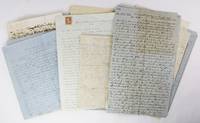
18656242Various locations 1865. About very good. Forty letters approximately 96pp. Many with original envelopes. Light wear and soiling old folds. In a legible hand. Together with twelve additional family letters and two military commissions. A wonderful archive of correspondence written home from the Confederate lines by William Henry Tabb of the 14th Mississippi Infantry. William Henry Tabb 1837-1864 was the son of a minister at the Choctaw Agency in Oktibbeha County Mississippi. In April 1861 he was commissioned as a lieutenant in the Agency Guards which were soon absorbed as a company in the 14th Mississippi Infantry. He was captured at Fort Donelson exchanged reached the rank of captain and was with his regiment when he suffered a fatal wound in the defense of Atlanta on August 5 1864. <br /> <br /> Tabb begins his letters with optimism. On August 1861 after training in Corinth Mississippi the regiment met with a parade in Huntsville en route to eastern Tennessee: "The women men and children were down to see us and a regiment turned out to do us honor. Such cheering from beautiful young ladies all along our way is enough to make men brave." On October 22 1861 he recounts the recent death by disease of his brother Thomas Tabb in Marion Alabama also of the 14th Mississippi calling him "my dearest friend on earth."<br /> <br /> Tabb was captured at Fort Donelson in February of 1862. Two of these letters were written from the Union prison at Johnson's Island near Sandusky Ohio. In May 1862 he writes: "We are not allowed to write what nor as much as we please. I have no friends to work for me see no indications of a general exchange or parole and it is almost impossible to escape from this island. It is amusing to see men one day Confederate officers and the next day cooking or around the wash tub. We have no servants. I am well treated have a plenty not a variety of food and clothing that we need issued to us." By September 24th he was back with his regiment in Mississippi: "The Yankees stole my shoes and I am wearing an old pr of boots. It appears that my conduct at Donelson has been very highly spoken of. Well I.tried to do my duty but I am sure I did nothing extra. Indeed our regt in my opinion fell little short of disgracing itself." He adds a word on the troubled home front situation: "Am sorry to hear that the Negroes have commenced stealing. I would very much like to see all that have behaved themselves and wd thrash those who have been stealing."<br /> <br /> On April 11 1863 he describes the recent Battle of Ponchatoula which other companies in his regiment participated in: "Rollins was sent out with ten of the company on our right wing to try to flank them. As soon as he commenced firing on them we attacked their center and they broke to run. They were zouaves red pants we never could catch them." He lamented the loss of his enslaved servant on June 7th near Yazoo City: "I expected John to come to me. I have become attached to John and don't know how to get along without him. I look for him every day now." Tabb had some great stories about Grant's efforts to take Jackson the Mississippi capital from which Johnston's Confederates performed a stealth evacuation. On the 19th and 20th of July 1863 he wrote: "All of the boys wanted to stay and fight but Grant had 80000 men and we had only 30000. It is true we were behind breastworks but they were not good and the place could be easily flanked. Johnson prepared to evacuate the place from the time we got there. The Yankees knew it. Not a word was spoken not a command given. The Yankees knew nothing of our leaving. Some of our men did not know we had left and were left behind but overtook us. I hear that the Yankees commenced shelling the town the other morning after we left and kept it up til 9 o'clock when some of the citizens hoisted the white flag and surrendered the place. They were vexed to know that we had left them without their knowing anything about it."<br /> <br /> Tabb had been away from the regiment for the start of the Atlanta campaign and on July 9 1864 he wrote: "I reached the command the evening of the 5th and found my company.8 miles from Atlanta. I found the men dirty and many of them with worn out clothes and not very good rations but all in good spirits and glad to see me. The people of Atlanta are leaving rapidly. They think the place will be evacuated. Do not be surprised if you hear it. We will not be whipped if we do leave it." This is Tabb's final letter in the collection. He was shot a month later. The group concludes with nine condolence letters and memorials. An October 1864 memoriam copied in 1894 recounted his death: "At the time he received the fatal shot he was commanding the brigade skirmishers & was just forming the line to proceed to the front. Though terribly mangled & in great pain he was calm & collected." He survived long enough to send farewell thoughts to his family and to regret "that I was not spared to see my country through her troubles." Also included are two of Tabb's military commissions in the Agency Rifles from the State of Mississippi: as Second Lieutenant on 24 April 1861 and as First Lieutenant on 25 December 1861. Both are signed by Governor John J. Pettus. In all a wonderful archive from a Confederate soldier who saw significant action and imprisonment during the war. unknown
1871WRCAM52816Jackson Ms 1871. Twenty-six volumes publication details and pagination provided in the listing below. Mostly uniform 20th-century buckram gilt leather labels. A few labels chipped minor shelf wear. Small ink library stamp to titlepages some with embossed blindstamp some with contemporary ink ownership inscription. Minor foxing some tanning. Good. An interesting collection of mid-19th-century Mississippi state laws from the period between 1831 and 1870. These session laws deal with issues relevant to a growing state in the American south including slavery Mississippi River development and later legal matters related to Reconstruction among a multitude of other concerns. A complete list of the imprints is as follows: <br> <br> 1 LAWS OF THE STATE OF MISSISSIPPI PASSED AT THE FIFTEENTH SESSION OF THE GENERAL ASSEMBLY. Jackson: Peter Isler 1831. 172xviii pp. <br> <br> 2 LAWS OF THE STATE OF MISSISSIPPI PASSED AT THE SIXTEENTH SESSION OF THE GENERAL ASSEMBLY. Jackson: Peter Isler 1833. 252xxv pp. First two leaves chipped with minor loss of text. <br> <br> 3 LAWS OF THE STATE OF MISSISSIPPI PASSED AT THE SEVENTEENTH SESSION OF THE GENERAL ASSEMBLY. Jackson: George R. Fall 1834. 200pp. <br> <br> 4 LAWS OF THE STATE OF MISSISSIPPI; PASSED AT A REGULAR BIENNIAL SESSION OF THE LEGISLATURE. Jackson: G.R. & J.S. Fall 1836. 440pp. <br> <br> 5 LAWS OF THE STATE OF MISSISSIPPI PASSED AT AN ADJOURNED SESSION OF THE LEGISLATURE. Jackson: G.R. & J.S. Fall 1837. 67pp. A photographic facsmile of the original work. <br> <br> 6 LAWS OF THE STATE OF MISSISSIPPI; PASSED AT A REGULAR BIENNIAL SESSION OF THE LEGISLATURE. Jackson: B.D. Howard 1838. 4ii-viii9-368pp. <br> <br> 7 LAWS OF THE STATE OF MISSISSIPPI PASSED AT AN ADJOURNED SESSION OF THE LEGISLATURE. Jackson: B.D. Howard 1839. 491pp. Includes the text of the CONSTITUTION OF THE STATE OF MISSISSIPPI. <br> <br> 8 THE STATUTES OF THE STATE OF MISSISSIPPI OF A PUBLIC AND GENERAL NATURE WITH THE CONSTITUTIONS OF THE UNITED STATES AND OF THIS STATE. New Orleans: E. Johns & Co. 1840. xii885pp. <br> <br> 9 LAWS OF THE STATE OF MISSISSIPPI PASSED AT A REGULAR SESSION OF THE LEGISLATURE. Jackson: C.M. Price 1840. 2xii213- 366pp. <br> <br> 10 LAWS OF THE STATE OF MISSISSIPPI PASSED AT AN ADJOURNED SESSION OF THE LEGISLATURE. Jackson: C.M. Price 1841. 1417-302pp. <br> <br> 11 LAWS OF THE STATE OF MISSISSIPPI PASSED AT A REGULAR BIENNIAL SESSION OF THE LEGISLATURE. Jackson: C.M. Price & G.R. Fall 1842. iii-xvi17-271275-285pp. as printed. <br> <br> 12 LAWS OF THE STATE OF MISSISSIPPI PASSED AT A CALLED SESSION OF THE LEGISLATURE. Jackson: C.M. Price & G.R. Fall 1843. vii9-135pp. <br> <br> 13 LAWS OF THE STATE OF MISSISSIPPI PASSED AT A REGULAR BIENNIAL SESSION OF THE LEGISLATURE. Jackson: C.M. Price & S. Rohrer 1844. xxi25-395pp. <br> <br> 14 LAWS OF THE STATE OF MISSISSIPPI PASSED AT A REGULAR BIENNIAL SESSION OF THE LEGISLATURE. Jackson: C.M. Price & G.R. Fall 1846. 3-2833-6131pp. <br> <br> 15 LAWS OF THE STATE OF MISSISSIPPI PASSED AT A REGULAR SESSION OF THE MISSISSIPPI LEGISLATURE. Jackson: Price & Fall 1848. 584pp. <br> <br> 16 LAWS OF THE STATE OF MISSISSIPPI PASSED AT A REGULAR SESSION OF THE MISSISSIPPI LEGISLATURE. Jackson: Fall & Marshall 1850. 544pp. bound with: LAWS OF THE STATE OF MISSISSIPPI PASSED AT A CALLED SESSION OF THE MISSISSIPPI LEGISLATURE. Jackson: Fall & Marshall 1850. 425-48pp. Lacks the CONSTITUTION pp.5-24. <br> <br> 17 LAWS OF THE STATE OF MISSISSIPPI PASSED AT A CALLED SESSION OF THE MISSISSIPPI LEGISLATURE. Jackson: Fall & Marshall 1850. 48pp. A complete copy of the latter work from the previous listing above. <br> <br> 18 LAWS OF THE STATE OF MISSISSIPPI PASSED AT A CALLED SESSION OF THE MISSISSIPPI LEGISLATURE. Jackson: Palmer & Pickett 1852. iii-xvi21-219pp. <br> <br> 19 LAWS OF THE STATE OF MISSISSIPPI PASSED AT A REGULAR SESSION OF THE MISSISSIPPI LEGISLATURE. Jackson: Palmer & Pickett 1852. xxviii537pp. <br> <br> 20 LAWS OF THE STATE OF MISSISSIPPI PASSED AT A REGULAR SESSION OF THE MISSISSIPPI LEGISLATURE. Jackson: Barksdale & Jones 1854. iii-xxvi229-613pp. Bottom portion of titlepage chipped costing most of the imprint. <br> <br> 21 LAWS OF THE STATE OF MISSISSIPPI PASSED AT A REGULAR SESSION OF THE MISSISSIPPI LEGISLATURE. Jackson: E. Barksdale 1856. xvi455pp. <br> <br> 22 LAWS OF THE STATE OF MISSISSIPPI PASSED AT AN ADJOURNED SESSION OF THE MISSISSIPPI LEGISLATURE. Jackson: E. Barksdale 1857. 125pp. <br> <br> 23 LAWS OF THE STATE OF MISSISSIPPI PASSED AT A REGULAR SESSION OF THE MISSISSIPPI LEGISLATURE. Jackson: E. Barksdale 1858. 197pp. <br> <br> 24 LAWS OF THE STATE OF MISSISSIPPI PASSED AT A REGULAR SESSION OF THE MISSISSIPPI LEGISLATURE. Jackson: J.J. Shannon 1867. xliv800pp. <br> <br> 25 LAWS OF THE STATE OF MISSISSIPPI PASSED AT A REGULAR SESSION OF THE MISSISSIPPI LEGISLATURE. Jackson: Kimball Raymond & Co. 1870. lxiii704689-720i.e. 736pp. <br> <br> 26 JOURNAL OF THE PROCEEDINGS OF THE CONSTITUTIONAL CONVENTION OF THE STATE OF MISSISSIPPI. 1868. Jackson: E. Stafford 1871. 776pp. OWEN MISSISSIPPI pp.742-745. hardcover books
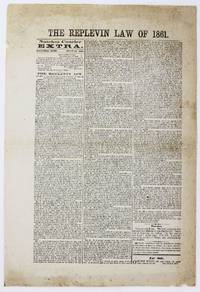
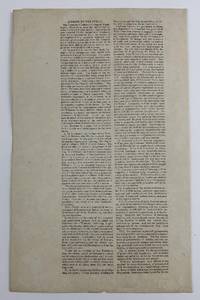
18654629Natchez Ms: July 22 1865. Very good. Broadside 13.75 x 9.5 inches. Printed in three columns. Moderate toning and foxing old folds couple of small tears expertly repaired on verso two tape remnants at top edge likely from previous matting. A very rare newspaper extra printing the first civilian law in Occupied Mississippi following the conclusion of the Civil War. After the war only military justice was in force in Mississippi. According to an 1866 Mississippi court case: "civil government of the State having been subverted and all power having passed into the hands of the authorities of the United States the question whether any and what civil government should be permitted was a matter in the discretion of those authorities. During this military occupation the laws of the State could only operate so far as they chose to allow and could only be administered by such agents as they pleased to appoint." On June 13 1865 President Andrew Johnson appointed William Lewis Sharkey 1789-1873 -- a Mississippi judge and staunch Unionist who opposed secession -- as the state's provisional governor. His first public act was to appoint judges and clerks to probate courts as well as appoint police justices of the peace and other country officers and authorized them to immediately begin to discharge their duties but excluded any orders regarding circuit and chancery courts.<br /> <br /> Two days later on July 3 Sharkey ordered the first civilian law to be operative which is published in the present broadside newspaper extra by the Natchez Courier. Sharkey's transmittal at the top begins: "Ordered. That the act in regard to the action of replevin and the amendments thereto passed by the legislature of Mississippi since the 9th day of January 1861 be and the same is hereby declared to be in full force from this date." The text of the act in twenty-six sections is then printed beginning: "The Replevin Act. An Act to provide for the speedy recovery of personal property wrongfully taken or detained." Somewhat oddly at the time this was the only civilian law in effect in Mississippi in the summer of 1865. According to the same 1866 court case excerpted above which explains the issues inherent in the issuance of the Replevin Law and Sharkey's organization of county probate courts "in all cases of the wrongful taking or detention of personal property a summary remedy by action of replevin before two justices of the peace was given to the party injured to recover the property and damages for the wrongful taking or detention. This was the only court created by the governor for the adjudication of legal rights; and these are the only cases committed to its jurisdiction; leaving all the rest of the immense mass of legal rights wholly without any redress." OCLC and other newspaper sources reveal just a single mutilated copy of the present broadside at the American Antiquarian Society. A fantastic broadside dealing with Mississippi law at the outset of Reconstruction.<br /> Scott v. Bilgerry April Term 1866 in Reports of Cases Argued and Determined in the High Court of Errors and Appeals for the State of Mississippi. Vol. XL. New York: Bank Brothers 1867 pp. 119-157. July 22 unknown
182263107Columbia MS 1822. Oblong folio 7 5/8 x 12 3/8 inches. Partly printed broadside document headlined "The State of Mississippi / To all who shall see these presents greeting / followed by 14 printed lines with spaces left for appropriate material to be entered by manuscript in this case appointees name and position place of execution date and officials' signatures. Leake a native of Virginia served in the Revolutionary War and in the state legislature moving to the Mississippi Territory in 1807 when appointed judge by Thomas Jefferson; following Mississippi's admission to statehood he was appointed one of its first two senators taking a seat of the state's supreme court following his resignation from the senate in 1820 and was elected governor in 1821 assuming office in January 1822. During his two terms Leake oversaw the beginning of a major road system arranged for the transfer of land to support a state university and signed a law abolishing imprisonment for debt among other achievements. Grimball was the second Secretary of State for Mississippi serving 1821-1833. Columbia served as capital of Mississippi for a about 18 months 1821-1822 before Jackson became its permanent site. Somewhat browned but very good. Previously folded. A scarce early Mississippi state document. 9863. <br/><br/> unknown books
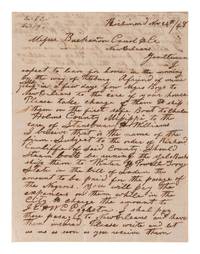
1848215241848. J.E. Eggleston correspondence dated 24 November 1848 documents the commercial shipment and sale of enslaved boys from Virginia to Mississippi within the interstate slave trade that expanded across the American South during the nineteenth century. The letter records logistical arrangements for transporting enslaved individuals through New Orleans before forwarding them by steamboat into the Mississippi interior. Written during a period when enslaved people were regularly moved from the Upper South to expanding plantation regions in the Deep South the document illustrates the economic and geographic structure of the domestic slave trade and reveals how enslaved children were treated as movable property within commercial networks linking Virginia Louisiana and Mississippi. The letter also directly references the relationship between the cotton market and the price of enslaved labor demonstrating how fluctuations in the agricultural economy shaped the buying and selling of enslaved people.<br /> <br /> Eggleston J.E. Autograph Letter Signed to "Messrs. Buckannon Carrol & Co." New Orleans. Richmond Virginia: 24 November 1848. One and one quarter pages written on a bifolium with address panel and postal markings. Eggleston informs the New Orleans firm that "a friend of mine will ship in a few days four Negro Boys to New Orleans to the care of your house" instructing them to receive the boys upon arrival and arrange onward shipment by steamboat to Mississippi. He directs the firm to "take charge of them & ship them on the first safe Boat to Chula Holms County Mississippi to the care of Stansbuary & Williams" with alternate instructions if river traffic permits delivery through another route. The letter treats the boys as financial cargo noting that the shipping record should state "the amount to be paid for the passage of the Negroes" and instructing the firm to cover any temporary expenses and charge them to the Eggleston account. Eggleston further notes that he will insure the enslaved individuals during the journey indicating the practice of protecting enslaved property through commercial insurance policies during transport.<br /> <br /> The letter also connects the purchase of enslaved labor directly to the speculative cotton economy of the nineteenth century South. Eggleston explains that falling cotton prices influenced his purchasing decisions writing that "owing to the low price of cotton I determined to purchase no more negroes at present. They are selling too high for the prospect of the price of cotton." Such remarks demonstrate the close relationship between commodity markets and the valuation of enslaved people within the plantation economy. Correspondence documenting the logistics of the interstate slave trade provides direct evidence of how enslaved individuals were transported through commercial networks linking coastal ports and inland plantations. Bifolium measuring approximately 6.5 x 8.75 inches with address panel postmark and "Paid 10" postal marking. Light creasing and toning with minor ink bleed through; folded for mailing. Overall very good condition. The letter preserves firsthand documentation of the commercial mechanisms that sustained the nineteenth century domestic slave trade. unknown
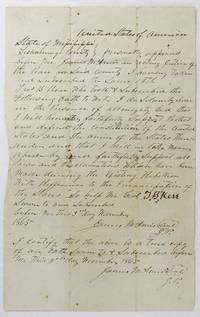
18655112Tishomingo County Ms: November 3 1865. Very good. 1p. of manuscript on a folio sheet. Old folds minor wear and soiling. A manuscript true copy of a loyalty oath taken by Thomas B. Kerr of Tishomingo County Mississippi following the end of the Civil War. The oath itself reads: "I do solemnly swear in the presence of almighty God that I will hereafter faithfully support protect and defend the Constitution of the United States and the Union of the states thereunder and that I will in like manner abide by and faithfully support all laws and proclamations which have been made during the Existing Rebellion with reference to the Emancipation of the Slaves. So help me God." The document is signed by Kerr as well as the Justice of the Peace James M. Amis and docketed on the verso "Thos. B. Kerr amnesty oath." Amnesty oaths from Mississippi are increasingly more rare in the market especially those directly referencing the Emancipation Proclamation and the end of slavery. November 3 unknown
18041502190017City of Washington : A. & G. Way 1804-01-01. Hardcover. Very Good. Ocatvo. 7 109 p. ; 22 cm. Bound in publisher's paper wraps. In custom made box. Small stain to front wrap. Wear to extremities. Library stamp to second page from NYPL dated 1902. Contemporary owners name to head of title page of Thomas Dwight Massachusetts representative during the 8th Congress. Dwight's notations to some pages. Shaw & Shoemaker 7540. Sabin 52708 OCLC 1484388 <br> An extremely important Yazoo document. The Yazoo land scandal was a massive fraud perpetrated from in the mid-1790s by Georgia governor George Mathews and the state legislature. They sold large tracts of land in the Yazoo lands in what are now portions of Alabama and Mississippi to political insiders at very low prices in 1794. <br>With the end of the American Revolutionary War most of the states of the new Union attempted to extend their territorial claims from the Proclamation line of 1763 to the lands towards the Mississippi River. <Br> The Yazoo scandal began after the Bourbon County Act was dissolved in 1788 under pressure by the federal government a secret society was formed called the Combined Society formed with purpose money by land speculation. The group gained power in the state legislature and in the following year three companies The South Carolina Yazoo Company The Virginia Yazoo Company which was headed by Patrick Henry and the Tennessee Company built by the society's interests formed to buy land from Georgia. These venture were exposed and the deal for the land fell through in 1792 though the members of the Society still wished to develop Georgia lands. <br>In 1794 four companies were formed with several principal being from the original members of 1789 purchases and high ranking Georgian politicians to purchase 40 million acres of land for $500000. On January 7 1795 Governor Mathews signed into law a bill authorizing the sale of the 40000000 acres known as the Yazoo Act. When the details of the sale were revealed public outrage was widespread and people protested to federal officials and Congressmen. Jared Irwin and U.S. Senator James Jackson led the reform efforts: Irwin was elected Governor of Georgia and less than two months after taking office signed The Rescinding Act on February 13 1796 nullifying the Yazoo Act. <br> On the same day of The Rescinding Act 11 million acres of the Yazoo land was sold to the New England Mississippi Land Company who felt the repel was illegal for $1138000 a 650% profit in 13 months' time. The lands west of Georgia would be ceded to the United States government in the Compact of 1802 for 1.25 million. This last act threw land holders into a limbo and claims by third-party owners who had innocently purchased land from the original companies would not be resolved till 1816. <br> With the last private sale prior to the Compact of 1802 coupled with the 11th amendment the landmark case of Fletcher v. Peck would occur. John Peck of Massachusetts bought land from someone who could trace his title to the state of Georgia from 1795 when the Act was legal. He then sold 15000 acres to Robert Fletcher of New Hampshire based on a warranty deed warranting good title. The two were obviously citizens of different New England states and in June 1803 Fletcher sued Peck in federal circuit court in Massachusetts on diversity grounds alleging that the title was bad and requesting the return of his money. This landmark Yazoo document attempts to serve the land holders affected by the 1802 Compact the fledgling court case as well as an attempt to repel the sale by the State of Georgia. City of Washington : A. & G. Way hardcover
1801WRCAM35410Washington 1801. 16pp. Modern half calf and marbled boards spine gilt. Very light foxing. Near fine. A very early work on Mississippi territorial law printed in Washington in 1801 and containing ten laws that were eventually published "by order of the House of Representatives" after some local controversy over their content. The laws from the second half of 1799 range in subject matter from distempered cattle to divorce. These were added to the twenty-five laws already passed by the territorial legislature. The House of Representatives published this volume to assist in the "enquiry into the official conduct of Winthrop Sargent governor of the Mississippi territory" p.1. Thomas Jefferson removed Sargent from office later that year. SABIN 49519. SHAW & SHOEMAKER 1515. LC MISSISSIPPI. A SESQUICENTENNIAL OF STATEHOOD 1967 60. GOODSPEED 141:351 161:683. hardcover books
184032117New Orleans: E. Johns & Co. Stationers' Hall verso of title page: Printed by T.K. and P.G. Collins Philadelphia 1840. xii 885 pp with the half title. A very clean text with minor exceptions. Bound in worn contemporary sheep hinges starting spine chipped institutional bookplate on front pastedown institutional rubberstamp on title page. Else Very Good.<br /> <br /> The origins of the State of Mississippi are recounted in the printing of the Cession from Georgia the Act admitting Mississippi into the Union and the Act establishing its northern boundary. The complete set of laws organized by subject and the constitutions of the United States and the State of Mississippi with a detailed Slave Code and other subjects are printed. <br /> Jumonville 1156 noting that it is "not a New Orleans imprint". Sabin 33282. OCLC records mostly Kirtas Technologies reprints. E. Johns & Co. Stationers' Hall [verso of title page: Printed by T.K. and P.G. Collins, Philadelphia] unknown
184032117New Orleans: E. Johns & Co. Stationers' Hall verso of title page: Printed by T.K. and P.G. Collins Philadelphia 1840. xii 885 pp with the half title. A very clean text with minor exceptions. Bound in worn contemporary sheep hinges starting spine chipped institutional bookplate on front pastedown institutional rubberstamp on title page. Else Very Good.<br/><br/> The origins of the State of Mississippi are recounted in the printing of the Cession from Georgia the Act admitting Mississippi into the Union and the Act establishing its northern boundary. The complete set of laws organized by subject and the constitutions of the United States and the State of Mississippi with a detailed Slave Code and other subjects are printed. <br/>Jumonville 1156 noting that it is "not a New Orleans imprint". Sabin 33282. OCLC records mostly Kirtas Technologies reprints. E. Johns & Co. Stationers' Hall [verso of title page: Printed by T.K. and P.G. Collins, Philadelphia] unknown books
189840873N.P.: Sentinel and Gazette Steam Press 1851. 1898. 8 1/2" x 5 1/2" in light peach wrappers though missing the front wrapper. 15 pp. Illustrations. Map. Although it eventually became a transcontinental railroad the railroad that became the Milwaukee Road began as the Milwaukee and Waukesha Railroad whose goal was to link the developing Lake Michigan port city of Milwaukee Wisconsin with the Mississippi River. The company incorporated in 1847 but changed its name to the Milwaukee and Mississippi Railroad in 1850 before construction began. A report to the Board of Directors explaining that the railroad is not completed to Waukesha as was expected and offering reasons for the delay in its completion. "Considering our small beginning only a little over one year ago - that we have relied solely on the resources of the people of Wisconsin for the means of prosecuting this enterprise - without seeking foreign aid - with only the small contributions of each of our thousand Stockholders and the credits based on the securities of our city and citizens we have in that time completed the grade of our Road for twenty and a half miles laid the Track and brought into actual use the half of that distance - and will have the whole completed and in successful operation by the middle of February next." Information on estimated and actual costs of the First Division extending the road from Milwaukee to Waukesha. It appears that actual costs far exceeded estimates "but that has been the result of peculiar circumstances under which the work has been performed and by the adoption of a rail of greater weight than that estimated." It was determined that the contractors to whom jobs had been given at lower costs were inexperienced and inefficient resulting in their work having to be re-done. Furthermore the delay was caused by some stockholders not promptly paying the small installment of only 5% every three months thus leaving a deficit. Also a bank in a marsh sunk and had to be built back up. Th cost of constructing the first twenty and 1/2 miles is only $9495 per mile. Report ends with the reassurance that the Road will be complete by February and if weather permits perhaps even earlier. 8 1/4" x 21 1/2" map of the Milwaukee and Mississippi Rail-Road. Map is neatly torn in half at one fold and has 1 1/2 - 2" closed tears to tops of a couple folds. Front wrapper missing along with 3" split to toe of spine and with light wear to the extremities. Sentinel and Gazette Steam Press, 1851]. unknown
187140107Jackson Miss.: Kimball Raymond & Co. State Printers 1871. Original printed pale green wrappers lightly spotted. Stitched. 67 1 blank pp. Clean text. Very Good plus. Contemporary ownership inscription in pencil "W.H. Bullard." <br /> <br /> Alcorn 1816-1894 born in Illinois Territory was Governor of Mississippi from March 1870 through November 1871. He was active in Mississippi politics from about 1845. During the Civil War he served as a Confederate. After the War as a "Scalawag" he supported the 14th Amendment and votes for freedmen. Nevertheless he clashed with his new Republican friends by opposing federal intervention against the Klan and federal laws abolishing segregation in public facilities. <br /> Alcorn addresses "what remains to be done of the work of reconstruction" thus focusing on "the restoration of our social and material ruin." With tables and data he demonstrates the disastrous economic effects of the War. But his data also give "encouragement to the practicability of educating the great body of our labor to the moral level of freedom." Marriage licenses are up; extreme "sexual license" is down. Preachers teachers schools property ownership and trades for the freedmen are all on the increase.<br /> Denouncing vigilantism he says that "A class of lawless violence the most cruel and cowardly proceeds in a few quarters in the person of the masked assassin; and so far has succeeded in evading punishment if not detection."<br /> OCLC 28758840 3- Columbia Yale LSU as of June 2024. Not at online AAS. Kimball, Raymond & Co., State Printers unknown
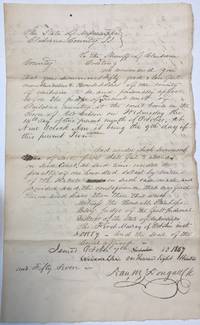
185737204Claiborne County MS 1857. 4to. 4 pp entirely in ink manuscript. Signed with a flourish by the Clerk Dan McDougall and the Deputy Sheriff G.R. Girault.<br /> <br /> Daniel McDougall 1813-1863 born in Schenectady migrated to Port Gibson Claiborne County. He was appointed Clerk of the Claiborne County Circuit Court in 1853 and served as such until his death. Colonel George Rogers Girault c.1815-1857 also of Port Gibson was a farmer owning 11 slaves as of 1850 and was also a County Deputy Sheriff. He died two months after this writ was issued. <br /> Stanhope Posey c.1813-1859 full name John Stanhope Posey a Wilkinson County lawyer owned 38 slaves as of the 1850 census. He was elected District Attorney of the Third District of Mississippi in 1839 and a Judge of the First Judicial District Circuit Court in 1845. We don't know who "Everett a Slave" was or what happened to him. We can guess that a jury of slaveholders was not sympathetic to him. unknown
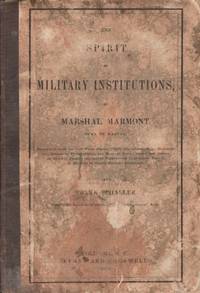
186432582Columbia: Evans and Cogswell 1864. Stiff wraps. Good. 12mo. 278 pages. Stiff paper boards with title on the front cover. Black cloth spine. Covers are worn and discolored. It appears the covers are facsimiles. Light to moderate foxing to the contents. Pencil inscription on the right front flyleaf reads "Col. Samuel W Milton from the publishers." <br /> <br /> The author wrote this book during his recovery from wounds in battle. He dedicates this work to Jefferson Davis. Jefferson Davis thanks the author and calls him "a master of the art of war" on page 12. Confederate imprint.<br /> <br /> Parrish & Willingham 4953; Confederate Hundred 60; Sabin 44651. The previous owner served as an Assistant Adjutant General under Samuel Cooper from 1863 to the end of the war. From Find A grave dot com taken from the Biography of Eminent Men of the Carolinas: <br /> <br /> Samuel Wickiff how it is spelled in the obit Melton was born in Yorkville S. C. February 7 183 hard to read. Receiving his early education in Yorkville he graduated from the South Carolina college in the class of 1852. He edited the Chester Standard published in Chester in 1852 and 1854. Then he returned to Yorkville and established the Yorkville Examiner on January 1 1855 running it until 1858 when he sold out to Lewis M. Grist. In the meantime in 1857 he was admitted to the bar and commenced the practice of law with his brother C. D. Melton at Chester continuing until the war broke out. He enlisted in the Confederate army in 1861 on the staff of Gen. M L. Bonham as aid-de-camp accompanying him to Virginia remaining with him until after the first battle of Bull Run. Subsequently he went on the staff of Maj. Gen. Gustavius W. Smith commanding the Second corps he having the rank of major. He remained with Gen. Smith until February 1863 and was then assigned to duty in the office of the adjutant and inspector general of the Confederate army at Richmond where he remained until the close of the war. He was in the first battle of Bull Run in the Peninsular campaign in the battles around Richmond at Seven Pines the campaign in 1863 in North Carolina and temporarily on the staff of Gen. Beauregard at the battle of Drury's Bluff. The chief duties however from early in 1862 to the close of the war were in the adjutant general's office in Richmond. Evans and Cogswell unknown
185737204Claiborne County MS 1857. 4to. 4 pp entirely in ink manuscript. Signed with a flourish by the Clerk Dan McDougall and the Deputy Sheriff G.R. Girault.<br/><br/> Daniel McDougall 1813-1863 born in Schenectady migrated to Port Gibson Claiborne County. He was appointed Clerk of the Claiborne County Circuit Court in 1853 and served as such until his death. Colonel George Rogers Girault c.1815-1857 also of Port Gibson was a farmer owning 11 slaves as of 1850 and was also a County Deputy Sheriff. He died two months after this writ was issued. <br/> Stanhope Posey c.1813-1859 full name John Stanhope Posey a Wilkinson County lawyer owned 38 slaves as of the 1850 census. He was elected District Attorney of the Third District of Mississippi in 1839 and a Judge of the First Judicial District Circuit Court in 1845. We don't know who "Everett a Slave" was or what happened to him. We can guess that a jury of slaveholders was not sympathetic to him. unknown books
185964413Chicago IL: Press and Tribune Print 1859. First edition. 8vo. 203 51 pp. Folding plate tables. "On the question of whether the railroad bridge from Rock Island Illinois to Davenport Iowa was a hazard to the navigation of the Mississippi River" OCLC. "James Ward a St. Louis steamboat owner filed a bill praying that the bridge be declared a nuisance and ordered removed; in 1866 Congress finally passed an act requiring that the bridge be replaced by another half the cost to be paid by the United States" "The Mississippi River: St. Louis' Friend or Foe" by James Lemly Cambridge U. Press online. Drop-title: "District Court United States. Southern District of Iowa. James Ward vs. Mississippi & Missouri Railroad Company." Chicago Ante-Fire Imprints 413: "Not located title from Heartman Cat. No. 187 June 1926 No. 300." OCLC locates eight copies New York Public Yale Chicago History Museum Harvard-Baker Missouri-St. Louis Cincinnati/Hamilton County Public Library of Congress Newberry. Very good. Original printed olive wrappers some soiling lacking rear wrapper rebacked with archival paper. 10747. <br/><br/> Press and Tribune Print unknown books
181426463Mississippi Territory 1814. Broadside injunction oblong 11.5" x 7.25". Printed with names dates and details in manuscript. The signature 'Theodore Stark' appears in the left margin. Theodore Stark was a notary in the Mississippi Territory. Tanned light wear Very Good.<br /> <br /> This is a rare legal writ from the Superior Court in the early Mississippi Territory. The writ prohibits Morgan from proceeding with a suit to recover possession of a house and lot from Terrell and Isler. Judge Walter Leake from whose court the writ issued became Mississippi's U.S. Senator from 1817-20 and Governor from 1822-1825. The first settler of Mt. Salus he owned at least two dozen slaves according to census reports. <br /> Brigadier General Morgan whom the court enjoined from prosecuting the suit would command the 'Brigade of Louisiana and Mississippi Drafted Militia' during the Battle of New Orleans. His co-defendant Edward Turner a lawyer was Aide-de-Camp and private secretary to Governor Claiborne of the Mississippi Territory. <br /> Peter Isler who was in possession of the house and lot was a printer to the Mississippi Territory and later to the State. He established the Mississippi Republican newspaper in 1810. Richard Terrell of Adams County is listed in the Mississippi and Territory Census of 1816 as owning twelve slaves. unknown
181426463Mississippi Territory 1814. Broadside injunction oblong 11.5" x 7.25". Printed with names dates and details in manuscript. The signature 'Theodore Stark' appears in the left margin. Theodore Stark was a notary in the Mississippi Territory. Tanned light wear Very Good.<br/><br/> This is a rare legal writ from the Superior Court in the early Mississippi Territory. The writ prohibits Morgan from proceeding with a suit to recover possession of a house and lot from Terrell and Isler. Judge Walter Leake from whose court the writ issued became Mississippi's U.S. Senator from 1817-20 and Governor from 1822-1825. The first settler of Mt. Salus he owned at least two dozen slaves according to census reports. <br/> Brigadier General Morgan whom the court enjoined from prosecuting the suit would command the 'Brigade of Louisiana and Mississippi Drafted Militia' during the Battle of New Orleans. His co-defendant Edward Turner a lawyer was Aide-de-Camp and private secretary to Governor Claiborne of the Mississippi Territory. <br/> Peter Isler who was in possession of the house and lot was a printer to the Mississippi Territory and later to the State. He established the Mississippi Republican newspaper in 1810. Richard Terrell of Adams County is listed in the Mississippi and Territory Census of 1816 as owning twelve slaves. unknown books
183231197Franklin County MS 1832. Folio 7.75" x 12.25". 4 pp folded entirely in manuscript. The writing on either side of the first leaf is visible from the other side but everything is legible. Oneal's Complaint appears on the first two pages and on five lines of page three where it is signed by his lawyer. <br /> A nine-line summary of the case in different handwriting is also on page 3. <br /> Page 4 contains defendant's scribbled answer by his attorney R.W. Webber; an accounting of the costs incurred in the case; a notation of defendant's verdict; attorneys' signatures; and docketing information. Age toned old folds several small holes along top fold loss of a few words. Signatures of attorneys appear on final page on panel with defendant's answer. Good.<br /> <br /> John Cade 1788-1839 lived in Franklin County. The parties were probably local farmers. Richard W. Webber c.1798-1843 Cade's lawyer was born in Virginia and settled in Franklin County. A Whig and State representative he ran unsuccessfully for Congress in 1830. He was for a time the editor of the Jackson Independent Journal. JOURNAL OF MISSISSIPPI HISTORY Vol. 7 Page 148; and Volume 21-22 Page 34. unknown
18393269Natchez Ms. 1839. Very good. Broadside 13 x 15.75 inches. Printed in four columns; central vertical fold. Light wear and toning. In the present broadside the trustees of Jefferson College announce that they are once again prepared to admit students in 1839 following a reorganization and give their mission statement courses of study faculty list tuition fees and more. The school located in Washington Mississippi just north of Natchez opened in 1811 and was the first college in the Mississippi Territory. In the text of this broadside one can clearly see sentiments and dispositions that would bring the Civil War to fruition. The first two columns are chiefly dedicated to a description fo the new faculty and their skills but also new measures put in place during the reorganization of the school. In place of gymnastics a daily military drill was substituted and a military police was to be established "for the preservation of good order and regularity."<br /> <br /> The remainder of the broadside descends into sectional paranoia arguing that students must be kept close to home in order for them to maintain allegiance to Mississippi and the South: "At this very moment a formidable content has commenced between the North and the South from the possible results of which the eye of the patriot instantly revolts. It surely becomes us to preserve our children from any influence that might mislead their judgment or weaken their patriotism. To do this effectually we must keep them at home!. Send your sons to other States where they are relased from social bonds you not only cut off these powerful incentives to emulation but you do more and worse you weaken or detach the growing virtues of the heart. and you estrange them from their native land."<br /> <br /> OCLC locates only a small handful of examples. unknown
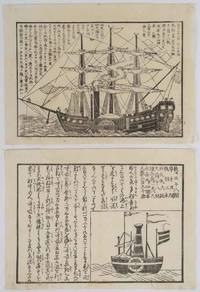
1853218388Japan. Circa1853. Two black and white woodblock kawarabans 18 x 24cm some light staining at margins but overall very good. A black-and-white kawaraban popular broadsheet woodblock print showing Commodore Matthew Perry's flagship the Mississippi at the time of his visit to Japan in 1853. The text accompanying the carefully depicted ship gives the dimensions of the vessel and other details including the number of crew. It then goes on to give an interesting summary of world geography explaining to readers that the world has four great oceans and six continents and that Japan is situated in the east of Asia. They are also told that America lies 5000 ri about 10500 miles to the east of Japan and that its capital is Washington. On the second sheet with an illustration of a steam ship it gives the sizes of the boat and its crew. It also refers to the speed and the distance a steam ship is able to cover and amazes with the vast distance the ship can travel. <br> <br>The kawaraban is a vivid illustration of the astonishment with which Japanese people responded to the coming of Perry and his "Black Ships" and of the curiosity about the outside world which this event generated. The Mississippi was particularly impressive because it was a steam-powered paddle ship. In this image we see not only the ship and its rigging and paddle-wheel but also the small figures of crew members including one starting to climb the mast and another apparently sounding the depth of the water. . unknown
1882JC111661882. Hardcover. Very Good. Mottled black cloth backed in ornately gilt-ruled black calf; oblong 184 x 132 mm; contains 25 pencil drawings most of them titled and dated. It includes Fort Snelling; Minnehaha Falls; Oak Drive in White Bear Lake; a boat on White Bear Lake; St. Anthony's Falls in Minneapolis; Lake Minnetonka; Wabasha St. Bridge; an Old Brewery in St. Paul; Shanty-ville; Shelter Island New York; Goat Island; plus 3 portraits a bonfire scene and other views of the upper Mississippi River Niagara Falls and St. Paul Minnesota. Boards detached and spine perished; a few leaves loose and laid-in. Skilled work most of it on one side of the leaf therefore removable and suitable for display. <br/><br/>Harley DeWitt Nichols 1859-1939 was born in Barton Wisconsin. He began his education in art as early as 11 years of age. His first job putting his talent and training to use came in the form of an apprenticeship with the Milwaukee firm Marr & Richards where he stayed for 3 years drawing and engraving on wood. The subsequent years included many moves from Milwaukee to Chicago and later to New York where he studied at ASL and was encouraged by Professor Packard to pursue a career as an illustrator at a European school. Nichols left for Munich in October 1885 to attend the Royal Academy where he studied under Heckel became a member of the American Club and socialized with Carl von Marr the clubs president. He went to London for a little while and worked as an illustrator. By 1893 hed returned to New York working mostly in advertising and illustrating for Harpers Weekly and Century magazines. He helped organize the New York Water Color Club. Nichols didnt curb his parapatetic lifestyle until he moved to Laguna Beach California in 1894. The art community in Los Angeles was in its infancy but he got a teaching job at the Echo Mountain summer school and he was inspired by the scenery of Yosemite Monterey San Juan Capistrano and other locations in southern California. He stayed in Laguna Beach until his death in 1939. hardcover
1817WRCAM49718Washington 1817. 267pp. Antique-style half calf and marbled boards. Minor toning. Very good. Three government documents concerning the admission of Mississippi as a state. It includes a census of the population of the territory enumerating both white and black free and slave residents. It also recommends that the territory be split into two regions - "The geographical position of this Territory may render it necessary that its military defences should be more combined than would at all times be practicable in two distinct sovereignties." The result would be the state of Mississippi in 1817 and the separated Alabama Territory. hardcover books
1864WRCAM53487Selma Al 1864. 256pp. 20th-century buckram spine gilt lettered. Light wear to cloth. Foxing and tanning. Good. Civil War-era state laws passed by the Mississippi legislature. The two parts of the session were held before and after the Vicksburg campaign during which Jackson fell to the Union and necessitated a change in venue. The ongoing war in the state also suggests a likely cause for these acts to have been printed in Alabama. PARRISH & WILLINGHAM 3294. hardcover books
1882JC111661882. Hardcover. Very Good. Mottled black cloth backed in ornately gilt-ruled black calf; oblong 184 x 132 mm; contains 25 pencil drawings most of them titled and dated. It includes Fort Snelling; Minnehaha Falls; Oak Drive in White Bear Lake; a boat on White Bear Lake; St. Anthony's Falls in Minneapolis; Lake Minnetonka; Wabasha St. Bridge; an Old Brewery in St. Paul; Shanty-ville; Shelter Island New York; Goat Island; plus 3 portraits a bonfire scene and other views of the upper Mississippi River Niagara Falls and St. Paul Minnesota. Boards detached and spine perished; a few leaves loose and laid-in. Skilled work most of it on one side of the leaf therefore removable and suitable for display. <br/><br/>Harley DeWitt Nichols 1859-1939 was born in Barton Wisconsin. He began his education in art as early as 11 years of age. His first job putting his talent and training to use came in the form of an apprenticeship with the Milwaukee firm Marr & Richards where he stayed for 3 years drawing and engraving on wood. The subsequent years included many moves from Milwaukee to Chicago and later to New York where he studied at ASL and was encouraged by Professor Packard to pursue a career as an illustrator at a European school. Nichols left for Munich in October 1885 to attend the Royal Academy where he studied under Heckel became a member of the American Club and socialized with Carl von Marr the clubs president. He went to London for a little while and worked as an illustrator. By 1893 hed returned to New York working mostly in advertising and illustrating for Harpers Weekly and Century magazines. He helped organize the New York Water Color Club. Nichols didnt curb his parapatetic lifestyle until he moved to Laguna Beach California in 1894. The art community in Los Angeles was in its infancy but he got a teaching job at the Echo Mountain summer school and he was inspired by the scenery of Yosemite Monterey San Juan Capistrano and other locations in southern California. He stayed in Laguna Beach until his death in 1939. hardcover books