Mississippi Blind InstituteBiblio.com

1 249 résultats
0366921835.Ghardcover. Good. Access codes and supplements are not guaranteed with used items. May be an ex-library book. hardcover
0260707171.Ghardcover. Good. Access codes and supplements are not guaranteed with used items. May be an ex-library book. hardcover
1390929825.Gpaperback. Good. Access codes and supplements are not guaranteed with used items. May be an ex-library book. paperback
1396358412.Ghardcover. Good. Access codes and supplements are not guaranteed with used items. May be an ex-library book. hardcover
0265535492.Ghardcover. Good. Access codes and supplements are not guaranteed with used items. May be an ex-library book. hardcover
A9781346309736Hardback. New. hardcover
B9781346309736Hardback. New. hardcover
A9781344903769Hardback. New. hardcover
1989794350PN. New. 1989. Soft Cover. Date is original print. This is a reprint edition. . PN paperback
1988780971PN. New. 1988. Soft Cover. Date is original print. This is a reprint edition. . PN paperback
20001321784PN. New. 2000. Soft Cover. Date is original print. This is a reprint edition . PN paperback
19991319559PN. New. 1999. Soft Cover. Date is original print. This is a reprint edition . PN paperback
19991313386PN. New. 1999. Soft Cover. Date is original print. This is a reprint edition . PN paperback
182263107Columbia MS 1822. Oblong folio 7 5/8 x 12 3/8 inches. Partly printed broadside document headlined "The State of Mississippi / To all who shall see these presents greeting / followed by 14 printed lines with spaces left for appropriate material to be entered by manuscript in this case appointees name and position place of execution date and officials' signatures. Leake a native of Virginia served in the Revolutionary War and in the state legislature moving to the Mississippi Territory in 1807 when appointed judge by Thomas Jefferson; following Mississippi's admission to statehood he was appointed one of its first two senators taking a seat of the state's supreme court following his resignation from the senate in 1820 and was elected governor in 1821 assuming office in January 1822. During his two terms Leake oversaw the beginning of a major road system arranged for the transfer of land to support a state university and signed a law abolishing imprisonment for debt among other achievements. Grimball was the second Secretary of State for Mississippi serving 1821-1833. Columbia served as capital of Mississippi for a about 18 months 1821-1822 before Jackson became its permanent site. Somewhat browned but very good. Previously folded. A scarce early Mississippi state document. 9863. <br/><br/> unknown books
258 pages. Features: American Country Houses; Colorado Craftsmen; American Pastoral; A Rural Michigan Property Extended with a Modernist Eye; On Martha's Vineyard; Into the Woods - an art-filled guesthouse on Long Island; Mississippi with a Twist - putting a contemporary spin on a Greek revival planters' cottage near Natchez; Aspen Stone Work. Clean and unmarked with light wear. A nice copy. Magazine
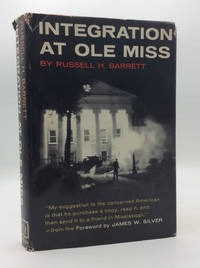
1282914A small group of material relating to the October 1962 riots at the University of Mississippi following the enrollment of the school's first Black student James H. Meredith.<br /> The highlight of this collection is a copy of the book INTEGRATION AT OLE MISS by Russell Barrett which is annotated by Ole Miss professor William B. Keith. Included is a xerox copy of an unpublished two-page typed letter by Keith detailing his experiences during the riot.<br /> The letter is addressed to his close friend Don Davis a high school history teacher and principal in Ohio. In the letter Keith recalls the trepidation of not knowing how Gov. Barnett would respond the the Federal government forcing the issue of desegregation at Ole Miss; his recollection of the Sept. 30 Ole Miss football game; and the subsequent beginning of the riots the following day.<br /> Keith and a friend then graduate students at Ole Miss went over the Lyceum where students were gathering. He notes there are actually pictures of him in the crowd included in the Barrett book and that he has marked them. He was still in the crowd when the first volley of tear gas was fired into the crowd. A State Patrol officer next to him was struck in the head and Keith and a Miss. patrolman carried the officer to safety. It then occurred to Keith to go over to the biology building to lock up the dangerous acids kept there a smart move as rioters did break into the building to search for flammable acids. His account then ends as he watched the rest of the action on television.<br /> The letter is included in a copy of Russell Barrett's Integration at Ole Miss Chicago: 1965 1st ed which is inscribed from the author to Don Davis the recipient of Keith's letter. Also included is a two-page ALS from Keith to Davis discussing hopes they can visit soon. Keith became a long-time Professor of Biology at Ole Miss until his death in 2007. The whereabouts of the original of the letter if it still exists are unknown.<br /> Also included:<br /> James W. Silver. Mississippi: The Closed Society NY: Harcourt Brace 1964. Inscribed to Davis by Bill Keith along with an original one-page typed letter signed from Keith to Davis.<br /> <br /> James W. Silver. Running Scared: Silver in Mississippi. Inscribed from Keith to Davis.<br /> <br /> A four-page typed document which was distributed on the Ole Miss campus in late Sept. 1962 by the school's Board of Trustees. The first page is a statement from the Trustees that they are complying with the Federal Court order to enroll James Meredith. The remaining three pages are a copy of the official court order. The document is is signed by Wm. B. Keith on the first page. unknown
18656242Various locations 1865. About very good. Forty letters approximately 96pp. Many with original envelopes. Light wear and soiling old folds. In a legible hand. Together with twelve additional family letters and two military commissions. A wonderful archive of correspondence written home from the Confederate lines by William Henry Tabb of the 14th Mississippi Infantry. William Henry Tabb 1837-1864 was the son of a minister at the Choctaw Agency in Oktibbeha County Mississippi. In April 1861 he was commissioned as a lieutenant in the Agency Guards which were soon absorbed as a company in the 14th Mississippi Infantry. He was captured at Fort Donelson exchanged reached the rank of captain and was with his regiment when he suffered a fatal wound in the defense of Atlanta on August 5 1864. <br /> <br /> Tabb begins his letters with optimism. On August 1861 after training in Corinth Mississippi the regiment met with a parade in Huntsville en route to eastern Tennessee: "The women men and children were down to see us and a regiment turned out to do us honor. Such cheering from beautiful young ladies all along our way is enough to make men brave." On October 22 1861 he recounts the recent death by disease of his brother Thomas Tabb in Marion Alabama also of the 14th Mississippi calling him "my dearest friend on earth."<br /> <br /> Tabb was captured at Fort Donelson in February of 1862. Two of these letters were written from the Union prison at Johnson's Island near Sandusky Ohio. In May 1862 he writes: "We are not allowed to write what nor as much as we please. I have no friends to work for me see no indications of a general exchange or parole and it is almost impossible to escape from this island. It is amusing to see men one day Confederate officers and the next day cooking or around the wash tub. We have no servants. I am well treated have a plenty not a variety of food and clothing that we need issued to us." By September 24th he was back with his regiment in Mississippi: "The Yankees stole my shoes and I am wearing an old pr of boots. It appears that my conduct at Donelson has been very highly spoken of. Well I.tried to do my duty but I am sure I did nothing extra. Indeed our regt in my opinion fell little short of disgracing itself." He adds a word on the troubled home front situation: "Am sorry to hear that the Negroes have commenced stealing. I would very much like to see all that have behaved themselves and wd thrash those who have been stealing."<br /> <br /> On April 11 1863 he describes the recent Battle of Ponchatoula which other companies in his regiment participated in: "Rollins was sent out with ten of the company on our right wing to try to flank them. As soon as he commenced firing on them we attacked their center and they broke to run. They were zouaves red pants we never could catch them." He lamented the loss of his enslaved servant on June 7th near Yazoo City: "I expected John to come to me. I have become attached to John and don't know how to get along without him. I look for him every day now." Tabb had some great stories about Grant's efforts to take Jackson the Mississippi capital from which Johnston's Confederates performed a stealth evacuation. On the 19th and 20th of July 1863 he wrote: "All of the boys wanted to stay and fight but Grant had 80000 men and we had only 30000. It is true we were behind breastworks but they were not good and the place could be easily flanked. Johnson prepared to evacuate the place from the time we got there. The Yankees knew it. Not a word was spoken not a command given. The Yankees knew nothing of our leaving. Some of our men did not know we had left and were left behind but overtook us. I hear that the Yankees commenced shelling the town the other morning after we left and kept it up til 9 o'clock when some of the citizens hoisted the white flag and surrendered the place. They were vexed to know that we had left them without their knowing anything about it."<br /> <br /> Tabb had been away from the regiment for the start of the Atlanta campaign and on July 9 1864 he wrote: "I reached the command the evening of the 5th and found my company.8 miles from Atlanta. I found the men dirty and many of them with worn out clothes and not very good rations but all in good spirits and glad to see me. The people of Atlanta are leaving rapidly. They think the place will be evacuated. Do not be surprised if you hear it. We will not be whipped if we do leave it." This is Tabb's final letter in the collection. He was shot a month later. The group concludes with nine condolence letters and memorials. An October 1864 memoriam copied in 1894 recounted his death: "At the time he received the fatal shot he was commanding the brigade skirmishers & was just forming the line to proceed to the front. Though terribly mangled & in great pain he was calm & collected." He survived long enough to send farewell thoughts to his family and to regret "that I was not spared to see my country through her troubles." Also included are two of Tabb's military commissions in the Agency Rifles from the State of Mississippi: as Second Lieutenant on 24 April 1861 and as First Lieutenant on 25 December 1861. Both are signed by Governor John J. Pettus. In all a wonderful archive from a Confederate soldier who saw significant action and imprisonment during the war. unknown
1887108433Century Company. Very Good with no dust jacket. 1887. Magazine. Battles & Leaders of the Civil War; 9 x 11; 40 pages; Very nice condition with illustrations . Century Company unknown
1882JC111661882. Hardcover. Very Good. Mottled black cloth backed in ornately gilt-ruled black calf; oblong 184 x 132 mm; contains 25 pencil drawings most of them titled and dated. It includes Fort Snelling; Minnehaha Falls; Oak Drive in White Bear Lake; a boat on White Bear Lake; St. Anthony's Falls in Minneapolis; Lake Minnetonka; Wabasha St. Bridge; an Old Brewery in St. Paul; Shanty-ville; Shelter Island New York; Goat Island; plus 3 portraits a bonfire scene and other views of the upper Mississippi River Niagara Falls and St. Paul Minnesota. Boards detached and spine perished; a few leaves loose and laid-in. Skilled work most of it on one side of the leaf therefore removable and suitable for display. <br/><br/>Harley DeWitt Nichols 1859-1939 was born in Barton Wisconsin. He began his education in art as early as 11 years of age. His first job putting his talent and training to use came in the form of an apprenticeship with the Milwaukee firm Marr & Richards where he stayed for 3 years drawing and engraving on wood. The subsequent years included many moves from Milwaukee to Chicago and later to New York where he studied at ASL and was encouraged by Professor Packard to pursue a career as an illustrator at a European school. Nichols left for Munich in October 1885 to attend the Royal Academy where he studied under Heckel became a member of the American Club and socialized with Carl von Marr the clubs president. He went to London for a little while and worked as an illustrator. By 1893 hed returned to New York working mostly in advertising and illustrating for Harpers Weekly and Century magazines. He helped organize the New York Water Color Club. Nichols didnt curb his parapatetic lifestyle until he moved to Laguna Beach California in 1894. The art community in Los Angeles was in its infancy but he got a teaching job at the Echo Mountain summer school and he was inspired by the scenery of Yosemite Monterey San Juan Capistrano and other locations in southern California. He stayed in Laguna Beach until his death in 1939. hardcover
1882JC111661882. Hardcover. Very Good. Mottled black cloth backed in ornately gilt-ruled black calf; oblong 184 x 132 mm; contains 25 pencil drawings most of them titled and dated. It includes Fort Snelling; Minnehaha Falls; Oak Drive in White Bear Lake; a boat on White Bear Lake; St. Anthony's Falls in Minneapolis; Lake Minnetonka; Wabasha St. Bridge; an Old Brewery in St. Paul; Shanty-ville; Shelter Island New York; Goat Island; plus 3 portraits a bonfire scene and other views of the upper Mississippi River Niagara Falls and St. Paul Minnesota. Boards detached and spine perished; a few leaves loose and laid-in. Skilled work most of it on one side of the leaf therefore removable and suitable for display. <br/><br/>Harley DeWitt Nichols 1859-1939 was born in Barton Wisconsin. He began his education in art as early as 11 years of age. His first job putting his talent and training to use came in the form of an apprenticeship with the Milwaukee firm Marr & Richards where he stayed for 3 years drawing and engraving on wood. The subsequent years included many moves from Milwaukee to Chicago and later to New York where he studied at ASL and was encouraged by Professor Packard to pursue a career as an illustrator at a European school. Nichols left for Munich in October 1885 to attend the Royal Academy where he studied under Heckel became a member of the American Club and socialized with Carl von Marr the clubs president. He went to London for a little while and worked as an illustrator. By 1893 hed returned to New York working mostly in advertising and illustrating for Harpers Weekly and Century magazines. He helped organize the New York Water Color Club. Nichols didnt curb his parapatetic lifestyle until he moved to Laguna Beach California in 1894. The art community in Los Angeles was in its infancy but he got a teaching job at the Echo Mountain summer school and he was inspired by the scenery of Yosemite Monterey San Juan Capistrano and other locations in southern California. He stayed in Laguna Beach until his death in 1939. hardcover books
1837250311Augusta Mississippi 1837. 1 pp. 4to. Toned old folds else fine. 1 pp. 4to. Reads in part: "According to a promisee made to Mr. George Holley of Biloxi I have written to give you some information in relation to the claim to Cat Island in Consequence of Mr. Holley not being able to give me the name of the claimant." <br/><br/> unknown
171846350Crockett Houston Co. Texas Feb. 17th 1866. The writer laments "the wreck of his affairs" loss of his crops and library "and even the negroes" and hopes for news of a mutual friend; with the recipient's notation on the envelope "ratifying sale of land because I wrote him the facts & he orders a sale of the articles reserved from sale." . unknown
1391011171.Gpaperback. Good. Access codes and supplements are not guaranteed with used items. May be an ex-library book. paperback
1396463127.Ghardcover. Good. Access codes and supplements are not guaranteed with used items. May be an ex-library book. hardcover
1963105230Kiel 1963. 287 S. mit zahlreichen Abbildungen, Groß 8°, Original-Karton (Softcover), Rücken leicht verblichen, gutes Exemplar mit Verfasserwidmung,