34 résultats
1524V1078Frankfurt/Leipzig (Insel) 1993 (= it 1524). 8°, illustrierte Originalbroschur, 205 S., Abbildungen
15919629Basel: Leonhardi Ostenii Leonard Ostein 1591. Cloth. Very good. Sm. 4to. 12pp. Title and verso printed within an ornamental border. Heand and tail piece woodcuts and the large woodcut printer's device of 3 lions and an hour glass on the verso of the final leaf. Twentieth century green silk with printed title label on front cover. A dissertation at the Collegii Medici in Basel by one Simon Grynaeus of Prague. A summary of the contemporary knowledge concerning pleurisy. Leonhardi Ostenii (Leonard Ostein) hardcover books
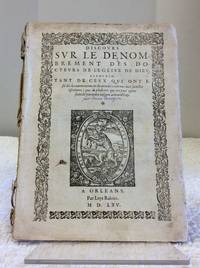
1565141348Orleans: Loys Rabier 1565. Disbound. 5 1/2" x 7 1/2". Book in acceptable condition. No page numbers. First signature is loose. Remaining signatures bound with thread but uncovered. Some page edges chipped. Otherwise a clean book in acceptable condition. Title translates as: Discourse on the enumeration of the doctors of the Church of God namely those who have been from the beginning of the world contained in the Holy Scriptures and from many who afterwards succeeded by order until today. Text in French. Loys Rabier unknown
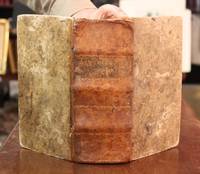
15946251Geneva: Jacobus Stoer 1594. First edition. 8vo. 1249125pp. Double column text. Indices. Title within an elaborate woodcut border and with a woodcut publisher's device. Early 17th c. vellum hand lettered spine. In recent times a second work as indicated on spine and which was of similar length was removed from this binding but to maintain its integrity blank leaves now fill in the space at back. Goulart's 1543-1628 collection of excerpts from classical and contemporary writers which he uses to elucidate alphabetically arranged Latin terms. Adams G909. Jacobus Stoer hardcover books
1580979Z7Anvers Antwerp: De L'Imprimerie de Jean Remy 1580. First edition. Leather. Very Good. 6.5" by 4.5". None. The first edition of an important and very scarce sixteenth century ecclesiastical history being the second volume in Theodore Beze's history of the reformed churches bound in full contemporary calf. The first edition.Volume two only complete in three. Illustrated with an engraving to the title page. Theodore Beza's Theodore Beze important ecclesiastical history being one of the most prominent works on the history of the Protestant Church from this era and a valuable resource on the reformed church in the sixteenth century. The work while attributed to Beza is believed by many to actually be the work of Simon Goulart who worked alongside Beza and took over his role after his death. Written in the original French. The register runs as; A- Aviii A-Zviii AA-HHviiiblanks IIii-ZZviii AAA- FFFviii GGG-GGGii HHHi-HHHviii III. Collated lacking IIi. Bound in full contemporary calf. Endpapers and blanks renewed. Externally staining to the spine and extremities with marks to the boards and light wear to the extremities with a small label to the rear of the spine and a small hole to the head. Front hinge weak bookplate to rear pastedown. Front free endpaper and blanks disbound but present. Internally pp 81-96 tender but generally firm with generally bright and clean pages with age toning and marks to the title and the odd page and tidemarks. closely cropped to the head of the pages. Very Good De L'Imprimerie de Jean Remy hardcover
159813112<p><b>1598 Wars Religion French Holy League Catholic Church Duke of Parma Henry IV</b></p><p>Simon Goulart was a 16th-century French reformed theologian who wrote a number of books on history and theology. His most important work was a description of the most memorable and important events that occurred during the French Catholic League or Holy League of the French Wars of Religion.</p><p>This book covers the French holy wars in 1592-1593 focusing on the Dukes of Parma Alessandro and Ranuccio.</p><p>Item number: #13112</p><p>Price: $750</p><p>GOULART Simon</p><p><b><i>Le cinquiesme recueil contenant les choses plus memorables avenues sous la Ligue depuis le deuxiesme et dernier voyage du duc de Parme en France au commencement de l'an M.D. XCII. jusques aÌ€ la fin de l'an M.D. XCIII.</i></b></p><p>Geneva: ImprimeÌ l'an de nostre Salut M.D.XCIX. 1598.</p><p><br /></p><p><u>Details</u>: </p><p>· Collation: Complete with all pages</p><p>o 16 835 1</p><p>· References: not in Adams</p><p>· Language: French</p><p>· Binding: Vellum; tight & secure</p><p>· Size: ~7in X 4.5in 18cm x 12cm</p><p>Our Guarantee:</p><p>Very Fast. Very Safe. Free Shipping Worldwide.</p><p>Customer satisfaction is our priority! Notify us with 7 days of receiving and we will offer a full refund without reservation!</p><p>13112</p><p>Photos available upon request. </p> ImprimeÌ l'an de nostre Salut hardcover
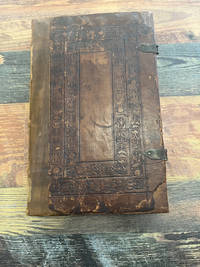
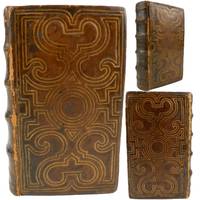
1556340<p>Quarto 12.75" x 8" x 2" blind tooled leather over wood boards.</p><p>This volume of Simon Schardius' collection of four medieval chronicles was published in Frankfurt in 1566. The chronicles contained in the volume had previously not been published. The texts included are:</p><p>Iohannes Turpinus de vita Carlo Magni et Rolandi.</p><p>Rhegino Abbas Prumiensis Diocesis Treviren.</p><p>Sigebertus Gemblacensis eiusque continuator Robertus de Monte.</p><p>Lambertus Schaffnaburgensis alias Hirsfeldensis dictus.</p><p>Simon Schard Lat. Schardus 1535-1573 was a German jurist historian and philologist.</p><p>The first work is identified as being authored by Johannes Turpin which refers to Tilpin archbishop of Reims c. 748-794. He was long believed to be the author of this History of Charlemagne and Roland which is now believed to have been authored much later likely in the thirteenth century. Thus the text is now often identified as being by Pseudo-Turpin.</p><p>The second text is the Chronicle of Regino of Prum c. 842-915. Regino was a chronicler and taught at the monastery of Prum where he ultimately became a monk. He became abbot there but was removed in 899 when he went to Treves where be became the abbot of Saint-Martin. His famous chronicle contained in this book relates the history of the world beginning with the advent of Christianity up to the year 906.</p><p>The third text is the Chronographia of Sigebert of Gembloux c. 1030-1132 director of the monastic school at the abbey of Saint-Vincent de Metz. The Chronographia is a universal chronicle of the most important events from 379 or 381 to 111.</p><p>The final text is the Annales of Lambert of Hersfeld c. 1025-c.1085. Little is known about his biography but his Annales traces the history of the world beginning from its creation until 1077. This work is a particularly good source for the life of Henry IV of Germany.</p><p>Also contained in the text are an introductory letter composed by Schard dedicating the work to to one Johannes Albertus identified in the title of the letter as "prince and lord D. Iohannes Albertus Megalopolan duke prince of the Henetes Suerinus Rostochius and Stargardia." There is printing error at the top of one page of the introductory letter. The heading at the top of each page identifies it as the "epistola nuncupatoria" save for one page where "historia nuncupatoria" has been printed presumably in error.</p><p>There is an index at the end and a brief biography of each author following the work of Johannes Trithemius abbot of Sponheim and the Bibliotheca of Conrad Gessner his attempt at a universal library following the introductory letter.</p><p>This copy is in Fair condition. The title page and the first three folios have been completely separated from the binding and while present are loose. The title page also appears to have been printed on a different kind of paper from the rest of the folios. The fourth folio has also largely detached. The front hinge is badly cracked and the back hinge is also cracked though less so. The back pastedown has partially worn away exposing some of the old folios used in binding beneath. The leather covering the boards has significant loss in places but the lovely repeated blind tooled pattern is still able to be appreciated. There were originally metal clasps remnants of which are left on the front but which have disappeared completely from the back. As a result large sections of leather to which they were attached have been removed. Towards the end the folios have increasingly dark water stains primarily at the bottom but also at the top corner however none of these impact any of the text.</p> hardcover
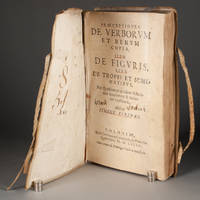
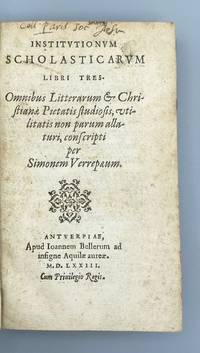
158200370<p>BOOK FOR PEOPLE WHO CAN'T WRITE GOOD --- 16 319 1 p. 8vo a8 A-V8 164 x 103 mm --- First edition of the Dutch Catholic teacher's last work a students' guide to Latin composition. By <em>copia</em> Verepaeus here means not <em>abundance</em> but <em>ability</em> what he calls the <em>facultas</em> to properly use words and figures of speech p. 17-18. In subsequent years <em>Praeceptiones de verborum et rerum copia</em> and <em>Praeceptiones de figuris</em> would often appear separately. Editions stretch into the 18th century demonstrating an enduring utility. Includes a verse encomium by Aegidius Vlieger. ¶ Written in a catechetical question-and-answer format the author covers all the elements of good composition. He does address some grammar and the parts of speech but generally ventures beyond these in pursuit of more advanced rhetorical topics. "What is the use of metaphor" p. 166-168 for example and "What is synecdoche" p. 173-174. He discusses irony too providing classical examples and addressing its uses p. 192: "vituperation is always more agreeable"; <em>vituperatio semper venustior est</em>. He briefly touches on sarcasm not that we care p. 193. Allegory onomatopoeia hyperbole—all your favorite rhetorical devices find treatment here. Like many such manuals of the day Verepaeus underscores the value of good composition in the critical endless task of correspondence p. 3 but also in verse composition p. 4 and speaking p. 5. It's difficult to overstate the importance of rhetoric in humanistic early modern Europe—"the art of arts and science of sciences" according to Anthony Grafton. And there seems to have been no shortage of teachers willing to sell their secrets to unleashing rhetorical power. ¶ Scarce in the trade this the only copy we find in auction records. --- PROVENANCE: Early ownership signature of one Carmelus Lentinus on title page. ¶ A little underlining and a handful of early <em>nota bene</em> marginalia both confined to the first thirty pages. --- CONDITION: Early limp parchment preserving the original upper pair of tawed ties but only remnants of the lower. Title and date in early ink on the front cover. ¶ Scattered light foxing; final leaf twice torn nearly across the width through the text and a couple square inches of loss at its foot no textual loss. Parchment soiled and torn at the head of the spine. ¶ A nice solid copy. --- REFERENCES: VD16 V 613 ¶ Peter Mack <em>A History of Renaissance Rhetoric 1380-1620</em> Oxford University 2011 p. 224 "Verepaeus is extremely thorough in his treatment of the tropes making many subdivisions particularly in metaphor metonymy and synecdoche"; Anthony Grafton <em>Bring Out Your Dead </em>Harvard University 2001 p. 168</p> Gerwin Calenius and the Heirs of Johann Quentel
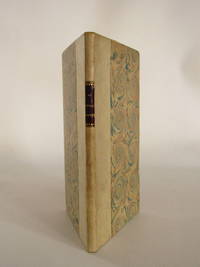
1539B668Basle: J. Walder c. 1539. A few stains and some light thumbstaining at the beginning otherwise a very good copy. Binding: 18th-century brown ¼ calf with marbled boards spine in four compartments of raised bands and gilt tooling gilt text on two. Notes: This is a rare edition of the Greek dictionary by Simon Grynaeus 1493-1541 distinguished Protestant theologian and friend of Melanchthon and Erasmus. He was professor of Greek at Heidelberg and later in 1536 moved to Basle where the dictionary was published. Size: 4to Illustration: Fine woodcut title-border with central woodcut printer’s device. References: Cordell STC 77. Pages: P. 1148 pp. Category: Book Classics; Book Early Printed 1500; J. Walder hardcover
157066372Lugduni Leiden: Apud Benedictum rigaudum Rigaud 1570. Fine. Apud Benedictum rigaudum Rigaud Lugduni Leiden 1570 10.50 x 17 cm relié New edition. The earliest edition is found at the British Library 1498; this is likely the first edition as Charles VIII died that same year. The work was reprinted several times during the 16th century. Bound in rigid half vellum late 19th century. Smooth Jansenist spine. Red shagreen title-label. Some light rubbing. Handsome copy with wide margins. Some pale marginal dampstains. The De Lubrico is a poem on human misery and deception composed in the manner of numerous works of the period with first the poem itself followed by its explanation and the circumstances that produced it scholia. Modern bookplate of the library of F. Renard pasted on front pastedown. Apud Benedictum rigaudum (Rigaud) hardcover
158453385En Anvers:: Par Heudrik Connix 1584. 19th century quarter calf over boards. Old ink annotations and light dampstaining to title page; marginal light dampstains to a few other leaves; spine and boards lightly scuffed but tight and sound. 8vo. Nouvellement tourne en Francois par S. G. S. Par Heudrik Connix, hardcover
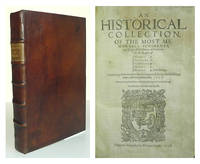
1598001041London: Thomas Creede 1598. First English language edition. . Hardcover. See Description. Small folio. Lacking preliminary blank leaf thus pp. 10 310 292 4. Page numbering is erratic. Leaf Ee3 is mis-signed as F3 but all leaves are present and in order. The title page contains a woodcut vignette/device. Each chapter begins with a woodcut decorative head piece and an initial. Bound in full dark brown modern calf with blind tooled borders and stamps after an early period style. The upper part of the title page is age-toned / tanned; a professionally sealed 7 cm. tear runs from the gutter part way across the upper portion of the title and is difficult to detect on first sight; a couple of tiny chips on the top edge are restored. Interior pages are generally attractive but with occasional mild age-toning and periodic faint marginal damp staining. A small repair patch is present on the inner margins of leaves A6 and V6. A tear on leaf V6 also carefully sealed extends vertically about 8.5 cm from the lower gutter and part way into the text but causing almost no obscuration. Printed by Thomas Creede who is best known for issuing dramatic works including some of Shakespeares plays. The book is divided into two parts. The first part is a translation of "Recueil des choses mémorables avenues en France sous le règne de Henri II François II Charles IX Henri III et Henri IV." This work is generally attributed to either Simon Goulart or Jean de Serres and was first printed in French no place or publisher in 1595 and again in 1598 expanded to include the reign of Henri IV up to the year 1597. See Brunet IV 1161-1162. The second part with new pagination provides translated selections from Pierre Matthieus 4 part "Histoire des derniers troubles de France" first published in Lyons 1594-95. A section at the end is titled "a brief recitall of the most memorable things which came to passé in Fraunce under the raigne of Henry the fourth until the middle of the Yeare 1598" which if written by Matthieu may possibly represent the first printing of some amendments which Matthieu later added to the second edition of his "Histoire" printed in 1600. This collection provides interesting testaments to the wars of religion in France during the 16th century. A separate 4 page tract at the end is titled: "A true discourse concerning the deliverie of Brittaine in the yeare 1598." ESTC S121331; USTC 513796; Lowndes p. 831; Hazlitt Biblio. Collections 2nd Series p. 231. <br/> <br/> Thomas Creede hardcover
1547802Lyon: Sebastien Gryphe 1547. Hardcover. Good. Two 1547 works bound into one Lyonese contemporary binding ruled in red throughout. This copy was used to describe 16th-century Lyon bindings with this stamp design applied in the 1972 Le Seicle d'or de l'imprimerie Lyonnaise Toulet page 151; a matching plaque was illustrated on a binding example in the BNF. Two works are found within the first being Pandecta Legis Evangelicae a work on the Gospel's laws and their place in the legal process by the 16th-century monk Simon Du Corroy of the Celestine order. The second work is Dionysius Carthusianus' Monopanton a digest of St. Paul's epistles. Together they provide a topical reference guide to much of the New Testament. Provenance - The 1972 publication noted the book was in the possession of Paul Jammes the French bibliophile and bookseller. A catalog snippet is loose within from E.K. Schreiber 1996. The book was sold in 2025 Sotheby's Paris at the Bibliotheca Brookeriana VIII sale the collection of T. Kimball Brooker. Bibliographic Details - Pandecta - Universal Short Title Catalogue USTC number 149850 6 copies recorded in the world's libraries. Monopanton - Universal Short Title Catalogue USTC number 149839; 5 copies recorded in the world's libraries. Baudrier VIII 215 Pettegree Walsby and Wilkinson French Vernacular Books. reference 65743 and 65282 Physical Attributes - Measures approx. 13 x 7 x 2.5 cm. USTC calls it a 12mo but it is signed in eight octavo. Contemporary leather binding. Panel stamp applied to both boards in gilt a known Lyon design. Spine with four raised bands each band with a gilt fillet and the base of the spine with a crossing gilt pattern of gilt fillet. All edges gilt; gauffered edges. Printer's devices on both title pages. Ruled in red. There seems to be some faded highlighting of initials too but it's faded mostly away. Pandecta Pages - 303 51 - verso of t7 t8 and three additional gatherings of eight Collation - a-y8 collates complete. Dionysius Pages - 220 4 - 2 leaves Collation - a-o8 collates complete. Condition - See pictures. Wear at edges and joints; joints with a little crazing. Some dulling to gilt along edges. Slight darkening to spine. Evidence of skilled restorations to corners. Turn-ins ghosted facing pages. FEP with graphite name. Text toned and thumbed throughout with occasional fox spots. Thumbing more towards front. Gilt process left some wash along edges into text block. Fore-edge of title page with small tear mostly repaired except 1 cm along fore-edge and ink mark in bottom corner. Occasional errant ink mark or smudge. Red ruling faded. Bottom b8 leaf bumped. Occasional dog-eared page. Initial on 2nd title page. 2nd book has a few candle ember marks. d3-7 second book with moisture mark. k1 second book with 1.5"" tear along fore-edge retained to marginal runs up/down. k4 with moisture mark. Last leaf partly stuck to endpage at gutter. ""G383"" in graphite on rear pastedown. Sebastien Gryphe
152566040Paris:: Simon de Colines 1525. old full calf; gilt spine. A few old ink notes to the title page; rubbed at corners and extremities. 16mo. Trad. S. Hieronymus. Renouard ICP III 770. Simon de Colines, unknown
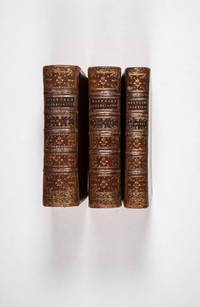
158049122Geneva: Jean de Laon 1580. First edition. Hardcover. Nearly Fine. Three volumes octavo.Vol. I: Ï€2 3 4 Ï€3-4 blank Ï€4 6 a-3k8 3l4 blank 3l4 3m8 3n4 = 476 leaves. 24 901 27pp. Vol. II: A8 2A-3F8 3G2 3H8 3I3 blank 3I2 and 3I3 = 437 leaves. 16 836 22 indexpp. Vol. III: Ï€1 B2 3 B4 A1 C2 Au lecteur Ï€2 blank 2A-3G8 3H4 2A4 2B2 258 leaves 16 480 8 index 12 erratapp. N.B.: while the text is complete and continuous collations of preliminary leaves in volumes 1 and 3 are irregular.; printer’s device at each title; 6 errata leaves for the entire work at the end of the third volume. Complete with all four blanks noted in Adams and one additional vol. 2: 3I3. Later polished calf; richly gilt spine with gilt-stamped lettering piece; triple gilt filets at covers; board edges ruled; edges stained red; inner dentelles; marbled endleaves. Occasional mild foxing. Tiny worm hole sometimes obscuring a letter in early leaves of the first volume. A nearly fine handsomely bound set.<br /> <br /> First edition of the celebrated ‘Livre d’Or du Protestantisme français’. It is of primordial importance for the period 1521-1563 and among of the chief source books for the history of French- and Swiss Protestantism during the sixteenth century. Long attributed to the Calvinist theologian Théodore de Bèze 1519-1605 it is now generally assumed to have been written by his fellow Calvinist theologian humanist translator and writer Simon Goulart 1543-1628 based on materials gathered by de Bèze since 1565. <br /> <br /> Provenance: With a wonderful bookseller’s handwritten bill Mr. Scherff libraire Ave de l’Oratoire S. Honoré No. 6 dated 1 Décembre 1821 offering the set for fr. 39. Full title and imprint: Histoire ecclesiastique des eglises reformees au royaume de France en laquelle est descrite au vray la renaissance & accroissement d'icelles depuis l'an M.D.XXI. iusques en l'annee M.D.LXIII. leur reiglement ou discipline Synodes persecutions tant generales que particulieres noms & labeurs de ceux qui ont heureusement trauaillé villes & lieux où elles ont esté dressees auec le discours des premiers troubles ou guerres ciuiles desquelles la vraye cause est aussi declaree. Divisee en trois tomes ayans chasque Tome leurs tables. De l'Imprimerie de Iean Remy. A Anvers 1580.<br /> <br /> References: Adams B 917 under Beza. Index Aureliensis 118.737 under Bèze De. BM STC Dutch p. 77 under: France - Refored Churches “ascribed to T. de Bèze and N. des Gallarsâ€. Belgica Typographica 1457 under: Histoire “Toegeschreven aan S. Goulart ook wel aan Th. De Bèzeâ€. Chaix-Dufour-Moeckli 98: “Ouvrage collectif faussement attribué à Th. de Bèze et mis en oeuvre par Simon Goulart. Mlle Droz a démontré que l’imprimeur était en réalité J. de Laonâ€. Gardy De Bèze 222: “Ainsi que l’a établi Geisendorf cette histoire a été compilée en partie avec des matériaux que Bèze prenait soin de réunir dès 1565 et le travail de compilation semble s’être déroulé à Genève sous sa haute direction; mais Bèze n’a jamais cessé d’en parler dans sa correspondance comme d’une oeuvre anonymeâ€. Jean de Laon hardcover
1517V67174Basel: Adam Petri de Langendorff. Second Latin edition 1517. Hardcover. Good. Fine border of cherubs riding dragons nudes men in armour foliage columns etc. signed Urs Graf U.G. and with date 1516. Folio bevelled wooden covers with wide rolled pigskin spine handsomely blind stamped with rampant lions in lozenges between parallel strands of vines & flowers. TP is printed in red & black. Spines with three raised bands and diamond shaped alternating with stylized flower tools lacks clasps/some worm holes to wood and vellum Fore-edge lettered Simon de Cassea 14469 leaves colophon with large printer's mark for Alantsee of 2 griffons suporting a shield with cipher ALT and supporting an oak tree above total fatness of book just under 11cm TP with three ownerships 2 on top margin one with a single line through it the 3rd to side of text Fore-edge of TP slightly rough & tanned. Some large foliated initial capitals and fine double column typography of this near incunabulum. Some worm holes usually isolated not affecting integrity of the paper nor readability of the print as they are mostly confined to the margins mainly at the beginning & end of the book. There are a few old scholarly comments or marginal marks affects about 6 or 7 pages Two clean marginal tears without loss and one corner lost but affecting less than half the width of the margin at the corner STC302 Adam C857 collations a-HH6JJ8. A duplicate copy from the Royal Bavarian Court Library old provenance/shelf mark on pastedown and a really beautiful copy. Adam Petri de Langendorff. Second Latin edition hardcover
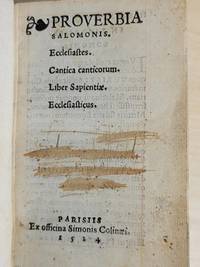
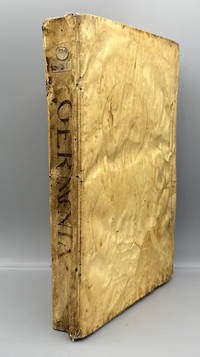
1524Biblio187<p><b><i>Colinis Simon de c. 1480– c. 1546. Proverbia Salomonis. Ecclesiastes Cantica canticorum Liber Sapientiat Ecclesiasticus.</i></b> Parisiis Ex Officina Simonis Colinaeis. 8vo; New Blank a8-i8; k8-t8; v8-x8; New Blank. 168 numbered leaves ; 12 cm. Monsieur Nocolaus Dieu with filigree emblem and OVOD DEI DEO God on back board plus gilt spine and cover. 1524. First edition. OCLC Number: 82770805; "Hieronymi praefatio in libros Salomonis."--Verso of the title page and following leaf. CribleÌ and outline initials. Reprinted by Colines in 1526 1527 1535 1539 and 1542. Red lined with type perfectly placed. Some cropping on rebind close to words but no loss of words. Fresh clean interior. Excellent condition. Early use of page numbers and chapter headings.</p><p>Simon de Colines c. 1480 – c. 1546 a Parisian printer one of the first printer type of the French Renaissance. He was active in Paris between 1520 and 1546. Colines used elegant roman and italic types and a Greek type with accents that was superior to its predecessors. His books usually were small in format and superbly crafted.</p><p>Colines was associated with the elder Henri Estienne and continued his work after his death in 1520. Colines married widow of Estienne and was in charge of the press until Estienne's son Robert I entered the business in 1526 by which time Colines had set up his own shop nearby. In 1528 he began to use italic type. Colines published many Greek and Latin classics. Although he was not a scholar himself he extended the range of the Estienne firm's learned and scientific works to include the natural sciences cosmology and astrology. He is credited with the design of italic and Greek fonts and of a roman face for St. Augustine's Sylvius 1531 from which the Garamond types were derived. In 1525 he published the notable Grandes Heures de Simon de Colines with decorations by Geoffroy Tory. Jerome Solomon aforementioned books. IVNGAR letter which joins facea gifts; Indeed the charter does not divide Christ's love ties. coa metarios the first by Hosea Amos & Zaharias Malachi also wrote that if allowed to ask for good health. Put comforts costs; notarÃa librarians sustain our mouth it is preferable that you nostru oozes character. And behold the people are different the answers to the frequent at the side of; just as if what is just to you in answer to the hungry but the residue of the given and the nature of labor or in the ACCP cuiq in addition to you to be exposed to. So long illness not completely silent about this year and I was speechless with you for your cosecraui three op intepretatione the three misle Solomon's book that the Jews Parables if the common statement that Greek proverb called Coletha Eclesiasten Latin preacher can say Sir that they are in the forbidden tongue of our Hasirim Song of Songs. panaeretos reported silij Jesus Sirach and other pseudeepigraphus who inferibitur Wisdom of Solomon. The Book of Proverbs which the Hebrews misle appeliatur.</p><p>Colines focused his publishing efforts on Greek and Latin classics – works by Aristotle Cicero Sophocles Hesiod Horace Ovid Virgil Terence Euclid Hippocrates and others – works then considered the literary backbone of the civilized world. He added to the classics publications of anti-Lutheran theological writings and works by the faculty of the University of Paris. In all Colines' press produced at least seven hundred and fifty publications. Although not a scholar himself he used his considerable familiarity with the Estienne publications and extended his own press to include writings on the natural sciences cosmology and astrology. </p><p>Colines was an important part of the development of book and reading structure in Renaissance printing. It was during this time that chapter headings subheadings running heads page numbers tables of content indices and source notes became elemental fixtures in the publication of texts.</p> Simon de Colinis hardcover
1566cmd10<p><strong> SPAIN - BASQUE COUNTRY- UNIVERSAL CHRONICLE</strong></p><p><strong> PRECIOUS 16TH-CENTURY COPY OWNED & ANNOTATED</strong><strong>BY THE BASQUE CHRONICLER MARTÃN DE COSCOJALES</strong></p><p><strong>SCHARD Simon</strong></p><p><strong> <em>Germanicarum rerum quatuor celebriores vetustioresque chronographi.</em></strong></p><p><strong> Frankfurt Georg Corvin Sigismund Feyerabend. 1566.</strong></p><p>Folio 10 ff. 224 =222 pp. 10 ff. Contemporary vellum.</p><p><strong> Important compilation of four medieval chronicles edited by the German jurist Simon Schard 1535–1573 assessor at the Imperial Chamber Court. </strong>Montaigne himself owned a copy of this edition now preserved at the Municipal Library of Bordeaux. <strong>The principal work included is the <em>Chronicon sive Chronographia</em> by Sigebert of Gembloux a "universal chronicle" </strong>continued by Robert of Torigni Norman chronicler and sixteenth abbot of Mont Saint-Michel.</p><p><strong>Important Copy annotated by the Basque chronicler MartÃn de Coscojales 1542–after 1603. </strong>He was a prominent Basque historiographer best known for his manuscript chronicle of the Antiquities of Biscay a foundational work in Biscayan historiography begun around 1590 see Auñamendi Eusko Entziklopedia.</p><p><strong>This copy contains approximately 320 marginal notes by Coscojales in Sigebert's <em>Chronicon sive Chronographia</em>. </strong>He highlights significant passages with a pointing hand symbol sometimes double and shows a particular interest in marvels and prodigies<strong>. </strong></p><p><strong>A precious copy of a universal chronicle personally annotated in the 16th century by an early historian of the Basque Country.</strong></p> Georg Corvin
157311244Antwerp: G. Smits for J. I Bellerus 1573. 18th-century marbled calf repaired spine and red morocco label gilt red edges. <p>Only Edition of his treatise aimed at instructors: his schoolbooks had over two hundred printings. The first part enunciates the general principles goal and utility of teaching. The second and third parts lay out detailed templates for secular and religious education including remarks on games recreation punishments which Greek and Latin authors to read and how to explain them which manuals to use exercises in translation imitation and recitation how to draft and administer exams competitions and learned disputes and how to mount dramatic performances. It discourages discussion of current events the Turks the French beggars ball playing dice archery gambling fighting lying swearing and drinking the teachers…. It schematically frames the year’s syllabus for each of the seven grades. I have located one copy in the U.S. In good condition slightly browned.<br /> ¶Nauwelaerts “Bijdrage tot de Bibliographie van Simon Verepaeus†in De Gulden Passer 25 1947 54 & 80 reprod. & VI.1 & reprod.; Buisson Répertoire des ouvrages pédagogiques du XVIe siècle 663.</p> G. Smits for J. I Bellerus unknown
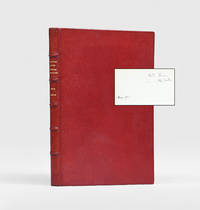
1519187464London: The Zionist 1915-1916. Presented by the drafter of the Balfour Declaration Ten Zionist pamphlets finely bound for presentation by the leading British Zionist Leon Simon inscribed by him to a family member "Nellie Simon from one of the Editors 1 Aug. 1916" - the recipient was probably his wife Ellen. Simon has also handwritten a contents page. Simon 1881-1965 was one of the most prominent voices in the Zionist movement in the early decades of the 20th century and edited the publications of The Zionist which published these pamphlets three of which are authored by him. He is best remembered for his role in drafting the Balfour Declaration - his original draft sold for $884000 in 2005. Comprising all first editions: i SIMON Leon. Zionism and the Jewish Problem. 1916; ii BRENTWICH Norman. Zionism and Jewish Culture. 1915; iii LANDMAN Samuel. History of Zionism. 1915; iv SACHER Harry. A Hebrew University for Jerusalem. 1915; v SACHER Harry. Zionism and the State. 1915; vi SPIERS Frederick Solomon. Zionism and the Jewish Religion. 1915; vii MILLER E. Palestine and the Hebrew Revival. 1915; viii SIMON Leon. Hebrew Education in Palestine. 1916; ix SIMON Leon. Jewish Colonisation and Enterprise in Palestine. 1916; x LANDMAN Samuel. Zionism: Its Organisation and Institutions. 1916. 10 works bound in 1 vol. octavo 202 x 132 mm. Contemporary red morocco by Sangorski & Sutcliffe spine lettered in gilt pink endpapers gilt edges. In fine condition. unknown
155574799Basel 1555. Folio. 1500-talls mykt helpergamentbind med nyere snorer i brunt skinn. 38 2 blanke 12 677 egentlig 577 2 blanke 1 2 blanke s. Med to treskårne illustrasjoner og tallrike detaljerte treskårne initialer. Io. Hervagium Latin. <br/><br/><em>Klipp i tittelbladet. Notater i eldre hånd. Flere feilpagineringer men teksten er komplettt. Fuktskjolder på enkelte sider. Viktig bok om reiser til Amerika. SJEKK BRUNET OG SABIN. </em> unknown
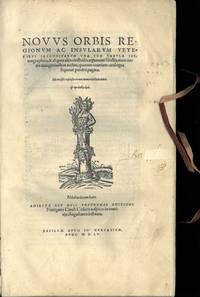
153739475Basel: Johannes Hervagen 1537. Folio. 12 1/2 x 8 inches. Augmented edition. a-d4 a-z6 A-Z6 Aa-Dd6 Ee2. 24 1-599 1. 624 pp. Lacking the woodcut world map attributed to Hans Holbein the Younger and Sebastian Münster. Woodcut printer's devices on title and verso of last leaf historiated initials head and tail pieces woodcut illustrations on pp. 127-29. Title Contents Dedication Grynaeus's Text Index Texts. Contemporary ink manuscript annotations in margins. Contemporary full limp vellum with brown ink manuscript title on spine and remanants of two pairs of leather ties with pill-shaped watermark on laid paper a blue cloth clamshell box with gilt-lettered leather titling-piece on spine<br/> <br/> A fine example of the most influential collection of early sixteenth-century travel literature.<br/> <br/> Besides the three voyages of Columbus the present work includes descriptions of those of Petrus Alonzo and Pinzo three of Vespucci's four voyages and Peter Martyr's De Insulis Nuper Inventis. According to Borba the present edition is the first to contain the letter of Maximilian of Transylvania reporting the news of Magellan's voyage p. 585. This augmented edition holds the second and third letters of Cortes and selected letters of Juan Zumarraga the first Archbishop of Mexico. Though the account of Magellan's voyage was originally published in 1522 in a 16-leaf ephemeral edition of a letter addressed to Charles V its appearance in Grynaeus's collection of voyages marks the first time his landmark discoveries appear in an historical context side-by-side with those of Columbus Vespucci and the Portuguese navigators.<br/> <br/> Adams G1337. Alden 537/14. Borba I. Burmeister 62. Church 123. Harrisse 223. Sabin 34103. European Americana 537/14. Johannes Hervagen unknown
15335782Contemporary blind ruled yapped vellum. Armorial bookplate of Rufus King; note to title in ink catalogue entry pasted to recto of front fly; capital eta & sigma faintly to fore edge. Heavy foxing to front pastedown and fly otherwise remarkably clean and bright. Turnebum hardcover books
15876397Alcalá de Henares: Juan Gracián 1587. First Edition — Primera edición. Alcalá de Henares Juan Gracián 1587. En 4º. 10 105 i.e.103 hojas incluyendo 2 hojas de errata licencia y tasa impresas aparte. Portada con grabado en madera. Encuadernación de principios del siglo XIX en pasta lomera cuajada de dorados y tejuelo en marroquén. Contiene las 2 hojas de errata licencia y tasa no descritas por Palau Catalina GarcÃa MartÃn Abad ni ninguna otra bibliografÃa consultada. Tampoco aparecen registradas estas dos hojas en el Catálogo Colectivo del Patromonio Bibliográfico Español. Primera edición de una de las obras más importantes dedicadas a la lógica que tenemos en español; obra pionera no en vano dice de ella Palau: "Este libro es un caudal de doctrina profunda y un modelo de claridad". A pesar de que en el tÃtulo se indica "Primera parte" es todo lo publicado. Su segunda parte que trataba sobre la fisiologÃa o filosofÃa natural asà como una tercera parte dedicada a la filosofÃa moral que ya se anunciaban en esta primera quedó sin imprimir. En la Biblioteca Real se conserva un manuscrito Ms. II/1158 que Mathiela Morreale supone autógrafo y contiene de hecho algunas correcciones y sugerencias sobre diagramas y tablas propias del autor. A partir de la segunda mitad del siglo XVI surge un interés por el estudio y discusión de temas de filosofÃa y lógica en lengua vernácula. Fue quizá Alessandro Piccolomini uno de los primeros autores en escribir un tratado de lógica publicado en italiano en 1551 con el tÃtulo "L'instrumento della filosofia". Este comienzo de discutir y transmitir la filosofÃa en lengua vulgar no fue fácil. Al igual que Piccolomini Simón Abril se tuvo que enfrentar a quienes despreciaban y tenÃan en poco las ciencias si se hacÃan en lenguas comunes. No dudó en exigir nuestro autor a las autoridades competentes que llevasen a cabo las reformas necesarias para la difusión de la filosofÃa en España propuesta que incluÃa la difusión del conocimiento filosófico más allá de las aulas universitarias. Donde mejor se recogen sus teorÃas educativas es en "Apuntamentos de cómo se deben reformar las doctrinas y la manera de enseñarlas" 1589 que dirigió a Felipe II. "Lo que procuramos es la propiedad y claridad del lenguaje. especialmente siendo esto lo primero que acerca de esta materia 'la lógica' nace en esta lengua" Simón Abril p.251 Pedro Simón Abril manchego nacido en Alcaraz de La Sierra Albacete 1530-1595 fue procesado por la Universidad de Huesca por enseñar allà las disciplinas de Artes y FilosofÃa lo que era entonces privilegio único de esa institución académica. Como el maestro se negó a suspender sus enseñanzas fue excomulgado desde los púlpitos y tuvo que ceder finalmente y reducir el estudio a la disciplina de Gramática. Este ejemplo muestra la oposición a su labor que desgraciadamente no tuvo continuidad inmediata ya que sus textos no consiguieron modificar el modo en que se enseñaba y difundÃa la filosofÃa cientÃfica. Para muchos se trata de un personaje imprescindible del Renacimiento y del humanismo español considerado como el primer divulgador y traductor de diversas obras clásicas además de un gran renovador del teatro de su época. Juan Antonio Pellicer a finales del siglo XVIII lo tenÃa como el mejor traductor español antiguo. Entre sus traducciones más importantes nos encontramos con textos de Platón Terencio Esopo Cicerón y Aristóteles entre otros. Fue también profesor de griego y latÃn en la Universidad de Zaragoza donde alcanzó la cátedra y posteriormente de poesÃa en Tudela. La tercera y última parte del libro acaso la más interesante versa sobre la lógica dedicada a la analÃtica donde se dan ciertas pautas tocantes a los negocios. El autor escribió además alguna obra de economÃa: Manuel Colmeiro en su célebre <em>Biblioteca de los Economistas Españoles</em> recoge la cita de Nicolás Antonio en su <em>Biblioteca Hispana</em> de un manuscrito con el tÃtulo <em>Libro de la tasa del pan y del modo que se debe tener en hacella</em>. Sus estudios e investigaciones relativos a la lógica quedan muy bien expuestos al ver como se plantea su actitud hacia dos visiones enfrentadas del mundo los sistemas ptolemaico y copernicano: "Ponen todos los astrólogos la tierra en el centro del mundo y el sol en el cuarto cielo y los demás cielos por su orden y hacen sus juicios de conjunciones oposiciones eclipses y otras cosas semejantes y salvan las apariencias y salen los juicios verdaderos. Viene Nicolao Copérnico y trueca la suerte y hace el sol centro del mundo y la tierra súbela al cuarto cielo y hácela movible y salva las apariencias y conforme a este presupuesto hace los mismos juicios y sálenle bien". Como vemos Pedro Simón no rechaza la teorÃa heliocéntrica de Copérnico por motivos religiosos ni filosóficos le parece tan válida como la teorÃa ptolemaica porque ambas comparten "condiciones esenciales de estar en conformidad con los sentidos y observar las exigencias del razonamiento legÃtimo". Autor prolijo este enorme humanista español merecerÃa un plan de publicación de su obras completas especialmente aquellos tÃtulos que aun no han sido publicados. Simón Abril nos ha dejado según he podido recopilar 12 obras impresas y más de 30 manuscritos repartidos por las bibliotecas públicas españolas. Posiblemente haya sido Luis de Cañigral Cortés quien más y mejor ha estudiado la obra del autor junto a su predecesora Margherita Morreale de Castro. En el siglo XIX se publicó una "muy correcta segunda edición" de esta obra en la colección "La verdadera ciencia Española. Biblioteca Económica" Vol. LXVIII Barcelona 1886. Muy buen ejemplar en perfecta condición. Nuestro ejemplar contiene 2 hojas de erratas licencia y tasa no descritas en ninguna bibliografÃa. Curiosamente el Catálogo Colectivo del Patrimonio Bibliográfico Español tampoco menciona la existencia de estas dos hojas. Hace unos años revisé un ejemplar defectuoso de varias hojas ofrecido en Christie's el 20 de marzo de 2013 lote 37 que sin embargo también contenÃa estas dos hojas. El ejemplar digitalizado por la Biblioteca Virtual del Patrimonio Bibliográfico no las contiene ni los ejemplares minuciosamente descritos por Catalina GarcÃa y MartÃn Abad. Por tanto estas hojas sin signatura debieron imprimirse aparte algo más tarde y fueron añadidas sólo en unos pocos ejemplares. En nuestro ejemplar que está intonso se encuentran encuadrenadas entre los dos pliegos de preliminares. Juan Gracián unknown
153281628Basel: Basileae Apud Io. Hervagium Mense Martio 1532. First Edition. Leather-bound Vellum. Good Plus. Folio.IN LATIN. No Map. Vellum.Text 30.5 x 20 cm. Manuscript title to spine. Vellum stained as per usual and apart from a very small tear near top of spine is in lovely and solid condition. Lacks the rarely seen woodcut map of the world "Typus Cosmographicus Universalis" and lacks Jehan Petit's printer's device to title page but this device bust on a pedestal is present on verso of last leaf. Very light toning throughout and darkening and tidelines to first 170 or so pages but restricted to very wide margins not text. Additional tidelines at bottom to final 30 pages and again with no effect upon the clarity of the text. Pages are supple with a nice easy-to-read typeface.<br /> <br /> Simon Grynaeus wrote the preface "Declaratio" but John Huttich alone compiled this massive and invaluable historical work. Later editions dropped this preface because it contained text critical of The Inquisition.<br /> <br /> One title page variant noted in WorldCat. Index complete. Collates complete but as usual skips 578- 581 and 584 585 584. Final leaf "Index Ternionum" and on the verso Jehan Petit's printer's device of a bust on a pedestal. In-text woodcuts DropCaps.<br /> <br /> FIRST EDITION of one of the earliest accounts of exploration in the Americas -- a very early compendium of travels and explorations. The most complete edition of this important and rare collection of 15th and 16th century voyages. The work contains accounts of the voyages of Cadamosto the three voyages of Columbus Nino Pinzon Vespucius Cabral Marco Polo and part of the Fourth Decade i.s. Chapter of Peter Martyr d'Anghiera an Italian historian in the employ of Spain who wrote the first accounts of explorations in Central and South America. <br /> <br /> Sabin 34100. As for the absence of the map in this copy Harrisse in his Bibliotheca Americana Vetustissima wrote: ".Notwithstanding the statement in Mr. Grenville's Catalogue respecting the frequent absence of the map "there is no doubt but that a map does belong to the work.Mr. Muller has reproduced ten copies in exact facsimile" Harrisse remarks: "Whether they were the maps really belonging to the work and described by Munster we are unable to say as no two copies of this edition had the same. Basileae Apud Io. Hervagium, Mense Martio unknown