11 815 résultats
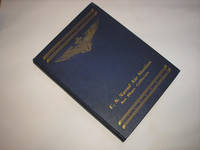
100-04578Navy Department Bureau of Navigation. Hardcover. Good. Good condition with wear and markings. Navy Department Bureau of Navigation hardcover
1977753608PN. New. 1977. Soft Cover. Date is original print. This is a reprint edition. . PN paperback
1994271689PN. New. 1994. Soft Cover. Date is original print. This is a reprint edition . PN paperback
1304186075.Gpaperback. Good. Access codes and supplements are not guaranteed with used items. May be an ex-library book. paperback
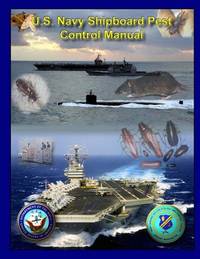
1304228932.Gpaperback. Good. Access codes and supplements are not guaranteed with used items. May be an ex-library book. paperback
2012DADAX1907521437Military Bookshop 2012-06-15. paperback. New. 8.50x1.96x11.00. Buy with confidence. Excellent Customer Service & Return policy. Military Bookshop paperback
18447842-nnew. unknown
18447842like new. unknown
ria9781907521430_inpPaperback. New. New Book; Fast Shipping from UK; Not signed; Not First Edition; Since the 1950s the U.S. Navy Diving Manual has served as the internationally recognized standard for allowable exposure while breathing compressed air at varying depths. For many years the 1956/1957 Diving Manual "air tables" also pr paperback
194386280Kansas City MO: United States Navy 1943. Second printing stated. Wraps. Fair. 108 20 pages. Illustrations. Front and back cover and spine missing. This Flight Training Manual has been prepared specifically for use with the CAA-WTS Navy Elementary Flight Training Program. It has been approved by the Bureau of Aeronautics a d the Naval Air Primary Training Command for the Navy and by the Flight Standards Division of the War Training Service for the Civil Aeronautics Administration. Actual preparation of the manual was carried out by representatives of the Training Division of the Bureau of Aeronautics the Aviation Psychology Section of the Bureau of Medicine and Surgery and the Staff of the Naval Air Primary Training Command. Liberal use has been made of materials from "Fundamentals of Elementary Flight Maneuvers" Civil Aeronautics Bulletin No. 32 which was originally prepared as a project of the National Research Council Committee on the Selection an Training of Aircraft Pilots. Contents have the following sections: Navy CAA-WTS Flight Training The Airplane and Its Care Handling the Airplane on the Ground Preliminary Air Work Take-offs and Landings Getting Ready for Solo Flight More Air Work and Precision Landings. After the attack on Pearl Harbor and the U.S. entrance into World War II the CPTP changed including the name. The Civilian Pilot Training Program became the War Training Service WTS or Civil Aeronautics Authority CAA War Training Service and from 1942 to 1944 served as the screening program for potential pilot candidate all WTS graduates were required to sign a contract agreeing to enter the military following graduation. The Civilian Pilot Training Program CPTP was a flight training program 1938–1944 sponsored by the United States government with the stated purpose of increasing the number of civilian pilots though having a clear impact on military preparedness. In the years immediately preceding World War II several European countries particularly Italy and Nazi Germany began training thousands of young people to become pilots. Purportedly civilian in nature these European government-sponsored programs were in fact nothing more than clandestine military flight training academies. In October 1938 General Henry H. "Hap" Arnold brought in the top three aviation school representatives to request they establish an unfunded startup of CPTP schools at their own risk. These were Oliver Parks of Parks Air College C. C. Moseley of the Curtiss-Wright Technical Institute and Theophilus Lee Jr. of the Boeing School of Aeronautics; all agreed to start work. The Civil Aeronautics Authority Act of 1938 formed the Civil Aeronautics Authority headed by Robert H. Hinckley. The act contained language authorizing and funding a trial program for what would evolve into the Civilian Pilot Training Program CPTP as run by the CAA. President Franklin D. Roosevelt unveiled the program on December 27 1938 announcing at a White House press conference that he had signed off on a proposal to provide a needed boost to general aviation by providing pilot training to 20000 college students a year. Following the precedent established in Europe the CPTP was established as a civilian program but its potential for national defense was undisguised. The program started in 1939 with two laws passed by Congress in April and June with the government paying for a 72-hour ground school course followed by 35 to 50 hours of flight instruction at facilities located near eleven colleges and universities. It was an unqualified success and provided a grand vision for its supporters – to greatly expand the nation's civilian pilot population by training thousands of college students to fly. It began in 1939 with 13 colleges and 330 students and by the summer of 1944 had grown to incorporate 1132 educational institutions and 435165 qualified trainees – including several hundred women all of whom had been qualified by 1460 contractors. Members of the CPTP became an impetus of innovation which transformed United States history long after World War II. Their efforts proved the necessity for a radical departure from conventional thinking when required to preserve failing sectors of industry and become a vital adjunct to national defense. United States Navy paperback
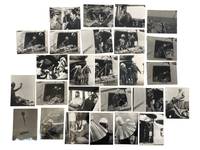
1970233711970. NavyWomen and Military Rescue Operations U.S. Navy helicopter rescue training photo archive circa 1970s-1980s documenting over-water emergency recovery drills during the early period when women were beginning to participate more visibly in naval rescue support shipboard emergency work and aviation-adjacent training. The archive documents women as active participants in the handling of a rescued person: preparing the litter assisting with stretcher movement working around the helicopter rescue opening and participating in the shipboard transfer of a restrained casualty. Women participation in rescue missions had just started at the time. The sequence records coordinated marine rescue between aircraft crews rescue swimmers and shipboard medical personnel during a period when helicopters had become central to recovering downed pilots injured crewmen and personnel lost overboard from aircraft carriers amphibious ships and support vessels. In a rescue environment still largely associated with male rescue swimmers aircrew and deck personnel the presence of women within the operational rescue sequence gives the archive added importance as a record of gender integration into the practical physical and technical emergency work that supported Cold War naval operations.<br /> Photo archive of 26 silver gelatin photographs each about 4 x 5 inches San Diego area circa 1970s-1980s. Flight-helmeted personnel prepare a litter secure a body with straps guide hoist lines and move a stretcher through a helicopter side opening marked with a large "RESCUE" arrow. Several scenes show rescue swimmers and crewmen working at the aircraft door with oxygen cylinders harnesses flotation gear helmets communications equipment and stretcher rigging visible. A rescue basket hangs above open water from a crane or hoist line; another basket carries a helmeted crewman inside a rope net. Interior views show uniformed personnel at communications stations and personnel inspecting chute-like equipment marked "PULL DOWN" while deck scenes record hands-on medical handling and lift coordination. Women visible within the sequence participate directly in the rescue environment itself appearing alongside male personnel during casualty stabilization stretcher handling and aircraft-door transfer procedures.<br /> <br /> The archive preserves the practical choreography of naval rescue: equipment inspection hoist transfer aircraft-door loading casualty stabilization and movement on deck. It is a close procedural record of Cold War naval rescue training with a focus on litter rigging rescue hatch access and the physical labor of moving a restrained casualty between aircraft and ship. The archive documents naval emergency procedure and women's visible participation at the beginning of their broader integration into rescue-support and technical military work in the 1970s making the archive relevant to collections on women in the military naval aviation support operations emergency medicine military labor and gender integration within technical service roles. Provenance from the estate of a Navy flight surgeon living in the San Diego area. Complete with all 26 photographs present; light handling wear only. Overall in very good condition. unknown
2011Q-1616082232Skyhorse 2011-06-01. Paperback. New. In shrink wrap. Looks like an interesting title! Skyhorse paperback
2011DADAX1616082232Skyhorse 2011-06-01. First Edition. paperback. New. 8.50x0.60x11.00. Buy with confidence. Excellent Customer Service & Return policy. Skyhorse paperback
196824-08-19-gw-35710-lczGPO 1968 1968-01-01. hardcover. Fair. 0x0x0. some wear. edgewear. tears to spine. very readable copy. GPO, 1968 hardcover
036756c.1969. very nice copy; larger-format; oblong . Near Fine. Hardcover. c.1969 hardcover
11353Army and navy Publishing Company of Louisiana. Circa 1945. hardback. Good. All four corners are bumped. Has light shelf wear and soiling. No dust wrapper. This 9 x 12 inch hardback has many b&w photos. Truman is pictured as president but the war isn't over yet. Naval Aviation Army and navy Publishing Company of Louisiana hardcover
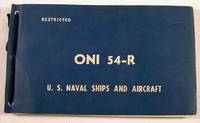
1942020831Washington DC: Navy Department Office of the Chief of Naval Operations 1942. Published June 1942. Guide to US naval ships and aircraft during World War II with major vessels identified by name others by class. Includes photos of each as well as profiles specifications and descriptions. Index tabs included at rear but never put in their proper place. Softcover secured with black shoelace about a hundred or more pages. Minor external wear pages mainly very clean with several pages exposed to moisture at some time which has caused ripples near the bottom edge. Soft Cover. Good. Oblong 4to. Navy Department Office of the Chief of Naval Operations Paperback
1986Q-0870217240Naval Institute Press 1986-03-01. Hardcover. New. In shrink wrap. Looks like an interesting title! Naval Institute Press hardcover
196826198Washington DC: GPO 1968. fair. 26 cm 871 illus. index front board weak edges soiled ink notation ins fr board underlining to text pencil erasure on fr endpaper. GPO unknown
DADAX0870217240Brand: Naval Institute Press 0000-00-00. hardcover. New. 10.50x0.75x6.75. Buy with confidence. Excellent Customer Service & Return policy. Brand: Naval Institute Press hardcover
2009Q-1599214873Globe Pequot Press 2009-07-01. Paperback. New. New. In shrink wrap. Looks like an interesting title! Globe Pequot Press paperback
2014056199QUANTICO VA.: U.S. GOVERNMENT PRINTING OFFICE. OVERSEAS & PRIORITY ORDERS WILL REQUIRE SUBSTANTIAL ADDITIONAL POSTAGE. . Very Good. Hardcover. 1st Edition. 2014. U.S. GOVERNMENT PRINTING OFFICE hardcover
1946411221.Gpaperback. Good. Access codes and supplements are not guaranteed with used items. May be an ex-library book. paperback
1499538855.Gpaperback. Good. Access codes and supplements are not guaranteed with used items. May be an ex-library book. paperback
1508469172.Gpaperback. Good. Access codes and supplements are not guaranteed with used items. May be an ex-library book. paperback