368 résultats
198731565Grenoble Glénat / Madison Press 1987 GRAND In-8 En collaboration avec Rick Archbold - Introduction par Walter Lord - Ilustrations du Titanic par Ken Marschall - Traduit de l'anglais par Pierre Reyss - 230 pp avec de nombreuses photographies inédites, de rares dessins d'archives, de cartes et de plans
198223533Paris France Empire 1982 In-8 317 pp, illustrations N&B in et hors-texte ; 1er plat illustré en couleur
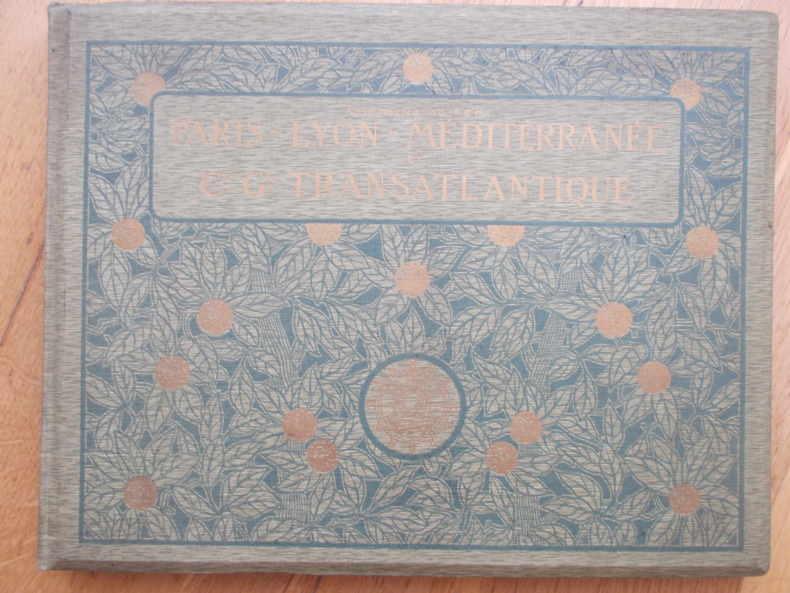
12J.Barreau-Paris-Format à l'italienne-33x25cm-Très bon état. 4 photos dans le texte-5 pages de texte-21 photos hors texte collées sur carton représentant :Vichy,Ruoms,La Bérarde,Hautecombe,Chamonix,Nimes,Monaco,Nice,Marseille,Alger,Oran,Tozeur,Tebessa,Constantine,Biskra,Timgad,Hammam Meskoutine,Tunis,Gafsa,
8vo., First Edition, with numerous plates; blue cloth, gilt back, blue top, a very good, bright, clean copy in unclipped dustwrapper. Sold from an institution with its neat stamps on front free endpaper and title verso;, and tape scars on free endpapers.
Mm 300x405 Fascicolo in folio di pp. 8 con prima carta illustrate in bianco e nero, illustrazioni in nero nel testo. In buono stato. SPEDIZIONE IN 24 ORE DALLA CONFERMA DELL'ORDINE.
1859173091859 un album, reliure demi-toile rouge in-octavo (half cloth-bound in-8) (14x 21 cm), dos long (spine without raised band), décoration à filets à froid (blind-stamping decoration), titre frappé or (gilt title) , sans illustrations (no illustration), de la page 337 à la page 665 (228 pages), 42ème LIVRAISON - Décembre 1859 Paris Revue des Races Latines Editeur,
97101875. Gibson & Sons Penzance & Scilly Isles. Three striking unfamiliar photographs the last two in particular excellent compositions of a significant historical event. The three slides are bound in 8 cm glass squares with none of the glass shattered and the images themselves in good condition clear and unfaded. Each mount carries the stamp of the photographers Gibson & Sons. With numbered labels carrying a shelfmark. Each mount titled in manuscript. ONE: ' Schiller" wreck. Lifeboat in which Survivors came ashore'. Shows the white lifeboat with 'SCHILLER' and 'HAMBURG' on the bow on a beach with the background showing sailing ships in the bay. TWO: ' "Schiller" wreck - Digging the last graves. <> Scilly'. Striking composition showing five workmen toiling among stones before a country wall in front of which appears to be a long row of wooden markers. Stone building and horse in background. THREE: 'Schiller wreck at Scilly. A Funeral.' Strking composition show a large group of people one lady with an umbrella gathered around a country grave with metal railings with a stone building behind. The Schiller has been dubbed in the title of a 2001 book by Keith Austin 'The Victorian Titanic'. It is said that the German army in both world wars were instructed to spare the Scilly Isles in recognition of the inhabitants' assistance to the survivors of the wreck. [1875.] Gibson & Sons, Penzance & Scilly Isles. unknown
187424679Nantes imprimerie de Vincent Forest et Emile Grimaud 1874 -in-4 broché un volume, broché in-quarto (paperback in-4)(24 x 18,2 cm), toutes tranches lisses, gouttière en couleur bleue marine , sans illustrations (no illustration), 128 pages, 1874 NANTES Imprimerie de Vincent Forest et Emile Grimaud Editeurs,
187524680Nantes imprimerie de Vincent Forest et Emile Grimaud 1875 -in-4 broché un volume, broché in-quarto (paperback in-4)(24 x 18,2 cm), toutes tranches lisses, gouttière en couleur rouge , sans illustrations (no illustration), 122 pages, 1875 NANTES Imprimerie de Vincent Forest et Emile Grimaud Editeurs,
187624681Nantes imprimerie de Vincent Forest et Emile Grimaud 1876 -in-4 broché un volume, broché in-quarto (paperback in-4)(24 x 18,2 cm), toutes tranches lisses, gouttière jaspée, orné d'une planche dépliante hors-texte en couleurs : "Itinéraires des Lignes Postales des Etats-Unis, des Antilles et du Mexique de la Compagnie Générale Transatlantique"(page 16), 156 pages, 1876 NANTES Imprimerie de Vincent Forest et Emile Grimaud Editeurs,
196227891PARIS 1962 broché PHOTOCOMPOSITION EN COULEURS D'UNE PEINTURE DE MARIN-MARIE DU PAQUEBOT "FRANCE" de la Compagnie Générale Transatlantique, format : 19 x 27 cm , avec au dos une presentation du Paquebot "FRANCE", 1962 PARIS IMPRIMERIE TRANSATLANTIQUE Editeur,
196228074ROUEN EDITIONS " La Cigogne" 1962 broché une carte postale en couleurs, format : 21 x 15 cm, 1962 ROUEN EDITIONS " La Cigogne" Editeur,
1962272931962 broché une photographie argentique en noir, format : 24 x 18,3 cm, SANS NOM DE PHOTOGRAPHE 1962,
1962280571962 broché une trés grande photographie EN COULEUR, format : 44,58 x 29,5 cm, 1962, Compagnie Générale Transatlantique Editeur,
18521338Original manuscript. 1852-1854. Folio 38 x 27cm. Full contemporary reverse calf with gilt morocco titles labels to the spine "Rough Sales Book / S & L / B". Marbling to page edges. Marbled endpapers with engraved label for "Baily Brothers Booksellers Stationers Account Book Manufacturers" London to the front pastedown. 172pp. of manuscript text in ink on red-ruled laid paper watermarked "W. King / 1850" followed by c.160pp. blank with a handful of pages torn out following the conclusion of the manuscript text section and another within the text. The majority of entries are in English with some in Spanish mostly written in the same hand. Condition is very good the binding firm with marking to the boards chipping to the head of the spine and a little wear to the extremities. The contents with a 3cm tear to the head of the first text page and two pages partially cut/torn away at the bottom are otherwise in good order. The ledger of a British sales agents operating in Panama during the mid-nineteenth century detailing the importation and sale of a wide variety European and South American goods into the country.</p><p>The manuscript meticulously records the origin city/country importer ship the goods received and sold and the charges entailed for each shipment. A typical entry for example records the arrival of "gunpowder received per "Alexander" and sold on behalf of the Kames Gunpowder Company Glasgow" followed by details of the subsequent purchasers "J. D. Cordova" etc. and the charges/commissions taken by the agent including fees for landing expenses and "carriage to arsenal". </p><p>Many of the entries describe large diverse cargoes combining both essential and luxury goods including: alpacas; chocolate pots; "41 cases of pickles and mustard"; lavender water; rocking chairs; a "copying machine"; cinnamon; scissors razors; bone buttons; horse brushes; compasses; gin; hatchets; bedsteads; looking glasses; children's toys; cloves; muslins; kegs of shot; cups and saucers; tobacco; machetes; claret; playing cards rat traps; "Aqua de Colonia" cologne; silk gloves; saddles; blunderbusses; padlocks; lace; pantaloons; "Jamaica rum"; almonds; vinegar; bonnets; sausages; gold frames; water closets; wash stands; champagne; mosquito nets; and much else besides.</p><p>The origin ports include major European trade centres such as Liverpool and Glasgow but also include many South American ports such as Guayaquil Equador carrying beans cocoa coffee sugar and quinoa amongst other things; Buenaventura Colombia; Callao Peru carrying candlesticks coffee mills and bayonets; Lima Peru "bottled fruits" and cherry cordial; and Valparaiso Chile; as well as San Francisco and New York to the north. The importers themselves are also a mixture of British and Panamanian companies.</p><p>A fascinating detailed insight into Panama's transatlantic and South American trade during the mid-nineteenth century. [Original manuscript]. hardcover
193496700Paris, éditions de l’Atlantique 1934 7 numéros. In-4 31 x 23,5 cm. Agrafés, 8 pp. par numéro, première page en bichromie, photographies en noir & blanc, illustrations et cartes hors texte, textes de G. la Roërie, Firmin Roz, Constantin-Weyer, Montpetit, de la Roncière, Maurice Guierre, Valéry Larbaud, etc, illustrations de Chancel, V. Le Champion, ..., publicités. Ensemble en excellent état.
191625989C.G.T. 1916 un menu, constitué d'une grande feuille pliée en deux, format : 16,4 x 11,2 cm, 1ère page illustrée d'une composition de paquebot en couleurs par le peintre de marine Albert Sébille, compagnie générale transatlantique titrée en bleu, sur les 2 pages intérieures : le menu en français imprimé en violet, sur la 4ème page : carte illustrée en couleurs des lignes de la C.G.T.
191622673C.G.T. 1916 un menu, constitué d'une grande feuille pliée en deux, format : 16,4 x 11,1 cm, 1ère page illustrée d'une composition de paquebot en couleurs par le peintre de marine Albert Sébille, compagnie générale transatlantique titrée en bleu, sur les 2 pages intérieures : le menu en français et en anglais imprimé en rouge et noir, sur la 4ème page : carte illustrée en couleurs des lignes de la C.G.T.
1899869071899 Paris, Dupont, 1899, in 8° étroit broché, 132 pages de différentes couleurs ; nombreuses cartes, figures et publicités ; couverture illustrée en couleurs (effrangée).
196122017Nantes Imprimerie Moderne - Beuchet Vanden Brugge pour la Compagnie Générale Transatlantique 1961 un porte-menu, cartonné blanc in-quarto editeur (24 x 35 cm), dos blanc muet (withe spine without title), 1ère de couverture illustrée en couleurs "A LA MONGOLFIERE" par Jean-Adrien Mercier (first cover ilustrated in colours) avec imprimé en bas à l'encre grise : Compagnie Générale Transatlantique French Line, en 4ème de couverture : le Paquebot "France" vu par Jean Adrien Mercier en Nouvelle Arche de Nöé en haut de page en couleur avec l'histoire de la nouvelle arche de Nöé imprimée en noir (histoire peinte par Jean-Adrien Mercier sur les murs de la salle de Jeux pour les enfants du Paquebot "France", 1961 à Nantes Imprimerie Moderne - Beuchet Vanden Brugge pour la Compagnie Générale Transatlantique Editeur ,
25434Letter from 'S. S. Transylvania' en route from Glasgow to New York 24 26 and 29 November 1928. Postcard undated but contemporaneous. TSS Transylvania the prefix stands for ‘Twin Screw Steamship’ was built in Glasgow for the Anchor Line and launched in 1925. She had three funnels but two were redundant only serving to render the ship more attractive to prospective passengers. In 1940 she requisitioned by the Royal Navy and the following year she was torpedoed by the Germans sinking with the loss of 36 lives. The letter is 13pp 12mo; with neat single-space typing on thirteen leaves. It contains three line diagrams and on a separate 12mo leaf is an ink drawing with captions titled ‘As the Herrewich sic appeared when we last saw her’. Also present is a sepia postcard of ‘T.S.S. TRANSYLVANIA’. The letter and diagram are in fair condition aged and worn but with text clear and entire. The postcard is good with light aging. Signed in type ‘Alex.’ With manuscript diagrams and salutation to ‘Dear Mother and Father’. A well written missive the use of catch-words implies a good education beginning: ‘It is surprising that now more than five days after leaving Glasgow we should be only about 1000 miles from home. The explanation is probably well known to you all: but although you will have had newspaper accounts of the great storm and of the wreck we stood by I’m quite sure that some amplifications in the form of our personal experiences will be both welcome and of interest. In the first place let me hasten to assure you that none of us came to any harm. In the main we are all well. Mary has not been able to be out of bed much so far but on the other hand she has been free from sickness - which is a very remarkable thing considering our experiences.’ After news of ‘Anne’ and ‘Virginia’ ‘Mary’ and ‘Aunt Mima’ are also referred to he reports that they ‘arrived at Moville about midnight on Monday and spent a great night in Lough Foyle. At 10.00 o’clock next morning the Londonderry tender came alongside and we took 350 passengers and their baggage on board - making the total passenger compliment about 1100. There are about 25 in the first class.’ He finds the Transylvania ‘a splendid ship for watching the sea from. The forward extension of B. deck in front of the bridge is very clear of truck and there are no boats on it as there are on the others’. The account of the journey continues followed by a seven-page account of the storm and rescue beginning: ‘In the evening of Tuesday it was apparent that the sea was rising higher and higher as was the wind: and through the night it was obvious that something unusual in the way of weather was blowing up. / Now I’ve thought previously that we have been in Atlantic storms before. Two years ago on the “Cameronia†was a bad time: and one day last year the “Caledonia†was thrown about considerably: but our in pencil ‘my’ farthest stretch of imagination - even my wildest fears - have never pictured anyting so in pencil ‘as’ tremendous as we awoke in pencil ‘the situation’ to on Wednesday morning.’ He gives a vivid description of the ship ‘riding out the storm magnificently’ as he is caught by ‘plants flowerpots chairs and so on’: ‘The second and third class passengers were locked in and battened down for about two days. The stern of the ship was almost completely under water and the hatchways to the steward’s quarters were stove in during the night and all the stewards woke up to find themselves invaded by a foot or two of water.’ The storm subsides and she comes across the wreck of a ‘large German tramp’ he calls the ‘Herrenwich’ ‘a poignant and pathetic spectacle; and more so was the view we had of the hapless crew clinging to what was left on the bare decks. We gradually got the story bit by bit as it filtered through the bridge where it was picked up I suppose by signals. A great wave had landed on the “Herrenwich†and had stove in the hatch of No. 3 hold on the forward well deck. This hold was full of water and the restraining bulkheads were bulging. The captain sent out his S. O. S. and immediately there - after another sea came on board and carried off bodily the bridge the wireless the wireless room and all the boats save one which was stove in. The captain and a quartermaster were swept overboard with the bidge and were lost immediately.’ He describes ‘a masterly exposition magnificently executed of the tactics of sea rescue. It was obviously impossible to go right up to the ship but sometimes we were not more than 100 yards away and communication by megaphone was possible. It was equally impossible for us simply to take up a position on the nether side and so act as a breakwater. The manoeuvre which was carried out time after time therefore was to circle the wreck as quickly as possible and to drift past her on the weather side and so give her a certain degree of intermittent protection. This meant that twice in every circuit the captain had to bring the “Transylvania†broadside on to the seas and every time this happened there came the sickening sense of going over on our beam ends - as I believe many less seaworthy and splendid ships would have done. And each time of course until everything was secured anything movable was thrown about in the wildest way. Oil was poured on the water with each circuit and the difference it made was wonderful.’ The seven-page account of the storm and rescue ends with the information that ‘the bridge is 62 feet from the waterline and when we were in the trough 19 out of every 20 waves were seen to be on a level with or higher than the bridge’. It reflects: ‘I’ve often told myself that I wanted to experience a real Atlantic storm. Now I have experienced it. I’d like it again but never again would I like to take Mary and the children into it.’ The letter finishes with two two-page updates from 26 and 29 November the last beginning with the information that the ship has ‘passed Nantucket light ship and may therefore expect to reach quarantine to-night’. See Image. Letter from 'S. S. Transylvania' (en route from Glasgow to New York), 24, 26 and 29 November 1928. Postcard undated, but contemp unknown
1869316802Boston: Alfred Mudge and Sons 34 School Street 1869. First Edition. With 6 original mounted photographs. 57 pp. 1 vols. 8vo. Original burgundy cloth. Very good small nick and loss to upper spine. First Edition. With 6 original mounted photographs. 57 pp. 1 vols. 8vo. Celebration of the arrival of first transatlantic telegraphic cable on American shores with speeches of the dignitaries of Duxbury and Boston and a patriotic summary of the history of telegraphy; n appendix gives material on the cable fleet and press accounts. Alfred Mudge and Sons, 34 School Street unknown
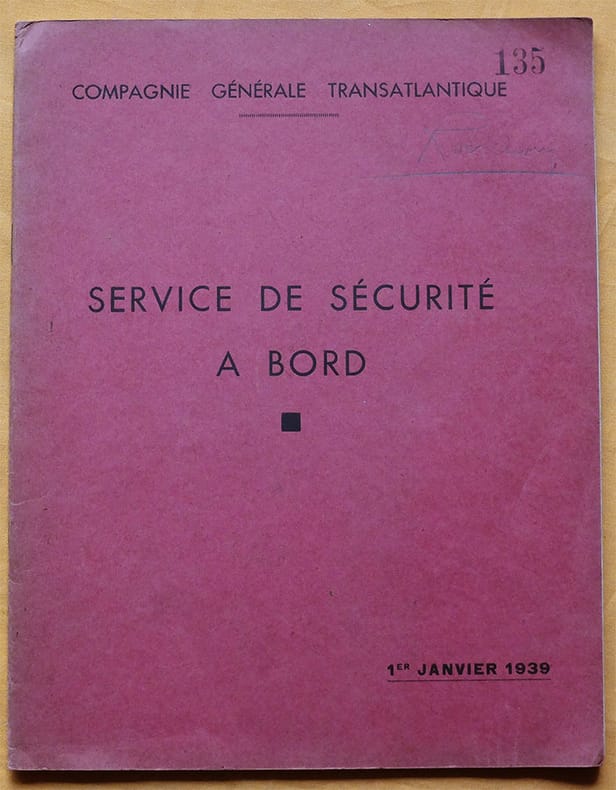
1047S.l., s.n., 1er janvier 1939. 1 plaquette in-4, (27 x 21 cm) ; 54 pp. Couverture rouge imprimée.
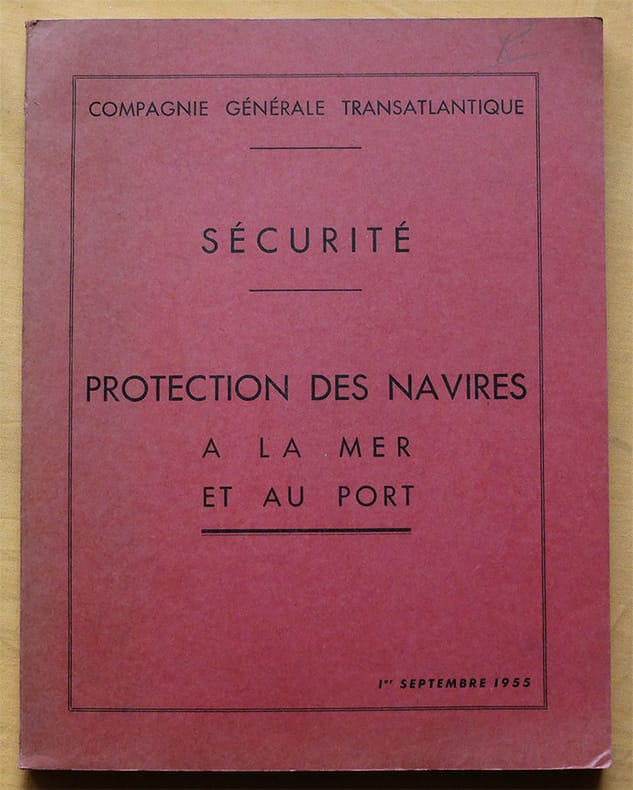
1048S.l., s.n., 1er septembre 1955. 1 vol in-4, (27 x 21 cm) ; [1] f., 153 pp. Couverture rouge imprimée.
16 pages. "Not to be Published - the information given in this publication is not to be communicated, either directly, to the Press or to any person not holding an official position in His Majesty's Forces." - from front cover. Reprinted in Canada, October, 1943. Contents:Talking of Americans; America Thinks Again; Is America United?; The American Way in Wartime; The Question We're Always Asking; How Can We Reach Each Other?; Index to issues 27-52 of this publication. Unmarked with moderate wear. A sound copy. Book