368 résultats
c4196Imprimerie Transatlantique, sans date (vers 1957) ; plaquette in-4°, agrafée, couverture illustrée en couleurs par Edmond Collin ; 16 feuillets non chiffrés; couverture très légèrement jaunie, les agrafes sont légèrement rouillées.
c4195Imprimerie Transatlantique, sans date (1962) ; livret in-4°, couverture illustrée en couleurs par J. Jacquelin renfermant 1 très grande planche dépliante en couleurs.La grande planche représente le paquebot France en coupe en couleurs, par Michel Lezla et Pierre Parreton et est détée 1961 . Elle mesure , une fois dépliée , 39 X 116 cm. Bon état.
1935191331935 Gouache, titrée, 1935, 22.3 x 19 cm, encadrée.
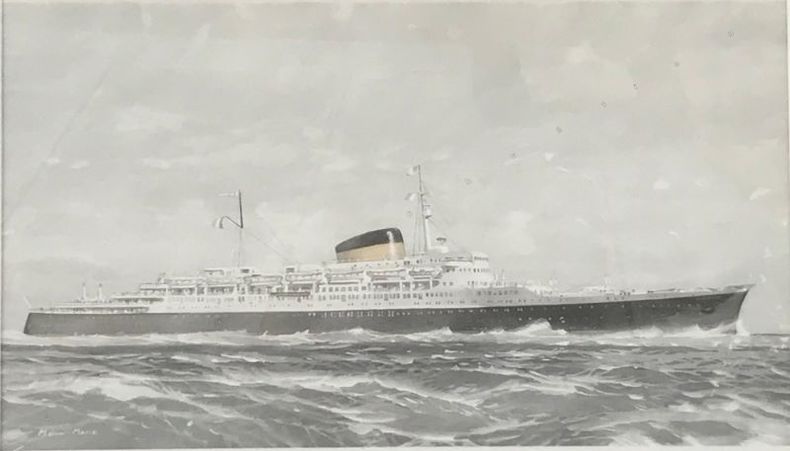
1960231601960 Affiche tirage offset signée en bas à droite dans la planche, (1960), 50 X 65 cm., encadrée.
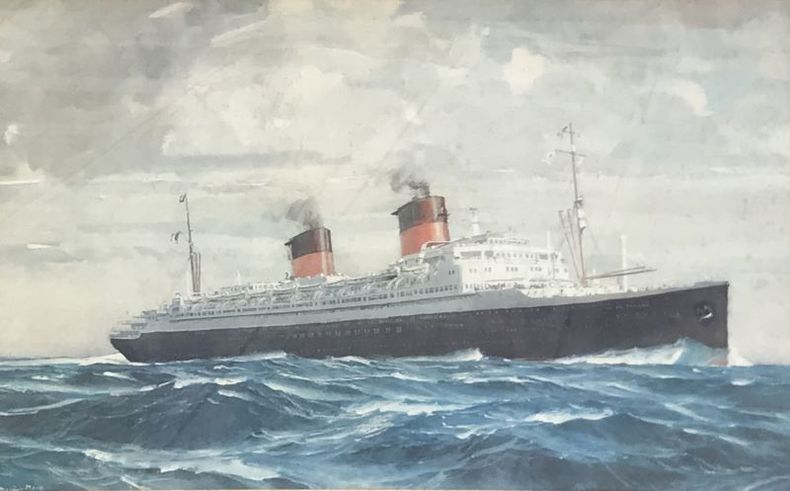
1950231371950 Estampe signée en bas à gauche dans la planche, (1950), 61 x 81 cm, encadrée
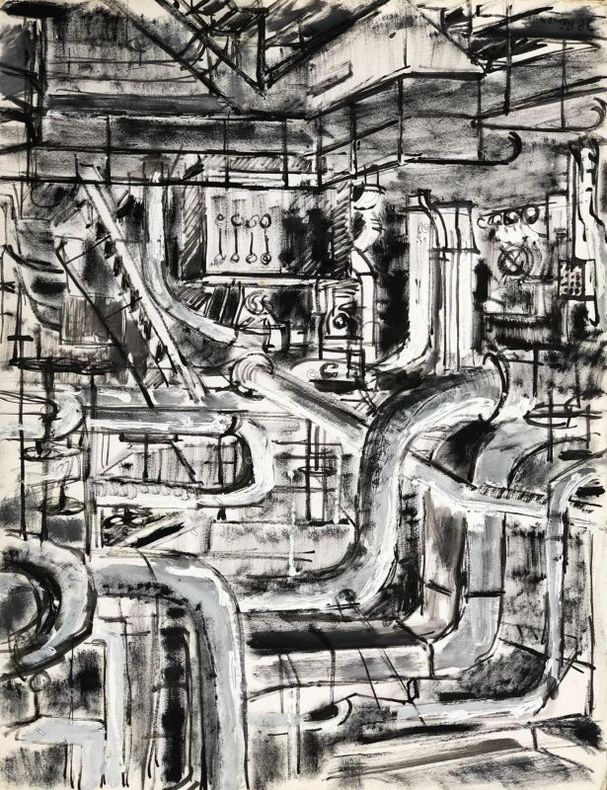
1965235911965 1 Gouache, aquarelle et crayon gras signé en bas à gauche, 1965, 65 x 50 cm.
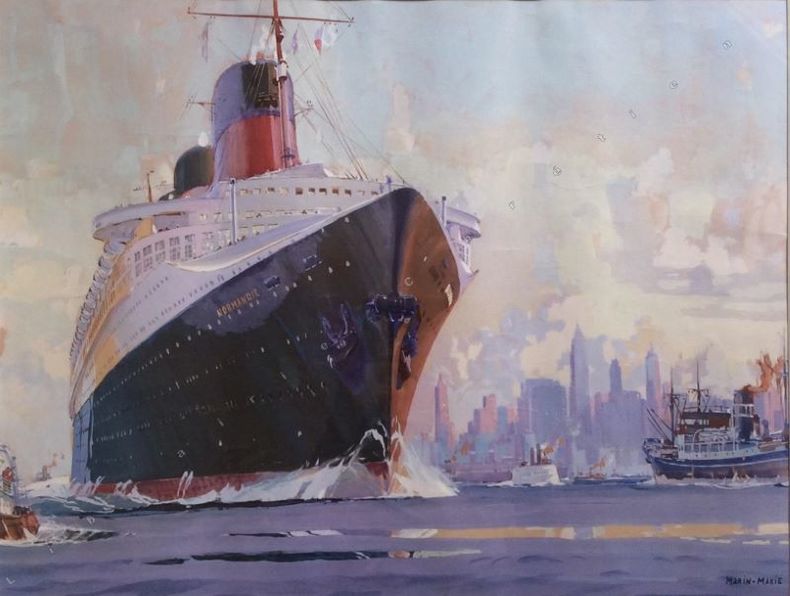
1952231381952 Affiche tirage offset signée en bas à gauche dans la planche, (1952), 48 x 63.5 cm., encadrée.
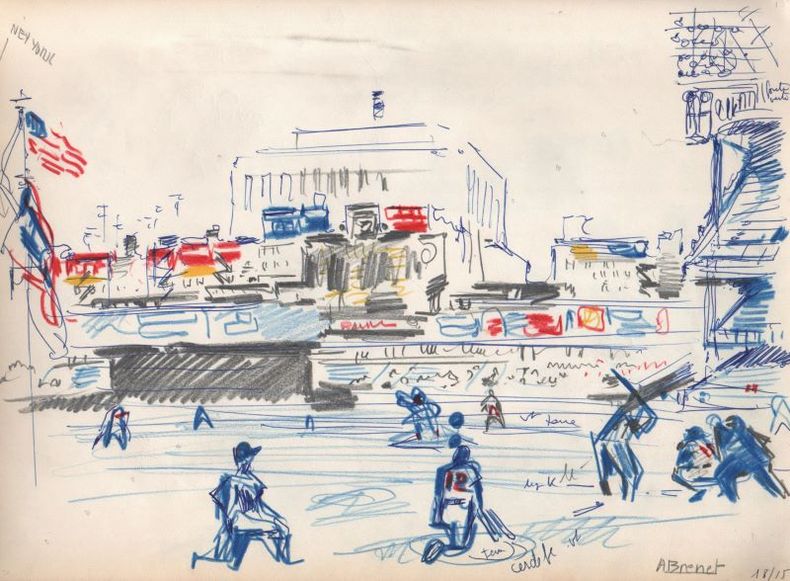
1958233201958 27 dessins signés, encres, mine de plomb, fusains et crayons de couleurs réunis dans un carnet de croquis à spirale, 1958, 27 x 36 cm,
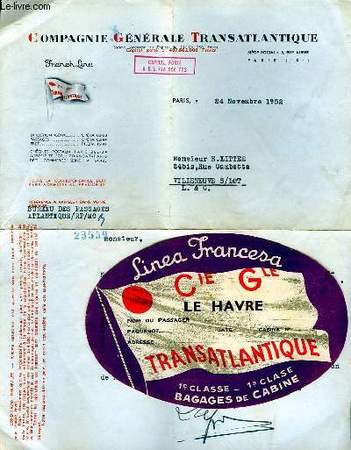
1952RO30075844"***. 1952. In-12. Broché. Bon état, Couv. convenable, Dos satisfaisant, Intérieur frais. 1 lettre de la compagnie générale translatlantique adressé à un client pour la confirmation de la réservation de places sur le bateau ""Colombie"". Une étiquette pour les bagages de cabine (vierge) ""Linea Francesa 1° classe bagage de cabine"". . . . Classification : 1700-Documents Divers"
1958ABE-17318569875031: PAQUEBOT EN MER-2: APPARTEMENT DE LUXE "ALSACE" 1ère CLASSE-3: SALON BIBLIOTHEQUE DE 1ère CLASSE-4: CABINE DE 1ère CLASSE EXTERIEURE-5: FUMOIR DE 1ère CLASSE-6: SALLE A MANGER DE 1ère CLASSE-7: SALLE DE SPECTACLE DE 1ère CLASSE-8: GRAND SALON DE 1ère CLASSE-9: CABINE EXTERIEURE CLASSE CABINE-10: SALON DE LECTURE ET DE CORRESPONDANCE CLASSE CABINE-(26D)
25434Letter from 'S. S. Transylvania' en route from Glasgow to New York 24 26 and 29 November 1928. Postcard undated but contemporaneous. TSS Transylvania the prefix stands for ‘Twin Screw Steamship’ was built in Glasgow for the Anchor Line and launched in 1925. She had three funnels but two were redundant only serving to render the ship more attractive to prospective passengers. In 1940 she requisitioned by the Royal Navy and the following year she was torpedoed by the Germans sinking with the loss of 36 lives. The letter is 13pp 12mo; with neat single-space typing on thirteen leaves. It contains three line diagrams and on a separate 12mo leaf is an ink drawing with captions titled ‘As the Herrewich sic appeared when we last saw her’. Also present is a sepia postcard of ‘T.S.S. TRANSYLVANIA’. The letter and diagram are in fair condition aged and worn but with text clear and entire. The postcard is good with light aging. Signed in type ‘Alex.’ With manuscript diagrams and salutation to ‘Dear Mother and Father’. A well written missive the use of catch-words implies a good education beginning: ‘It is surprising that now more than five days after leaving Glasgow we should be only about 1000 miles from home. The explanation is probably well known to you all: but although you will have had newspaper accounts of the great storm and of the wreck we stood by I’m quite sure that some amplifications in the form of our personal experiences will be both welcome and of interest. In the first place let me hasten to assure you that none of us came to any harm. In the main we are all well. Mary has not been able to be out of bed much so far but on the other hand she has been free from sickness - which is a very remarkable thing considering our experiences.’ After news of ‘Anne’ and ‘Virginia’ ‘Mary’ and ‘Aunt Mima’ are also referred to he reports that they ‘arrived at Moville about midnight on Monday and spent a great night in Lough Foyle. At 10.00 o’clock next morning the Londonderry tender came alongside and we took 350 passengers and their baggage on board - making the total passenger compliment about 1100. There are about 25 in the first class.’ He finds the Transylvania ‘a splendid ship for watching the sea from. The forward extension of B. deck in front of the bridge is very clear of truck and there are no boats on it as there are on the others’. The account of the journey continues followed by a seven-page account of the storm and rescue beginning: ‘In the evening of Tuesday it was apparent that the sea was rising higher and higher as was the wind: and through the night it was obvious that something unusual in the way of weather was blowing up. / Now I’ve thought previously that we have been in Atlantic storms before. Two years ago on the “Cameronia†was a bad time: and one day last year the “Caledonia†was thrown about considerably: but our in pencil ‘my’ farthest stretch of imagination - even my wildest fears - have never pictured anyting so in pencil ‘as’ tremendous as we awoke in pencil ‘the situation’ to on Wednesday morning.’ He gives a vivid description of the ship ‘riding out the storm magnificently’ as he is caught by ‘plants flowerpots chairs and so on’: ‘The second and third class passengers were locked in and battened down for about two days. The stern of the ship was almost completely under water and the hatchways to the steward’s quarters were stove in during the night and all the stewards woke up to find themselves invaded by a foot or two of water.’ The storm subsides and she comes across the wreck of a ‘large German tramp’ he calls the ‘Herrenwich’ ‘a poignant and pathetic spectacle; and more so was the view we had of the hapless crew clinging to what was left on the bare decks. We gradually got the story bit by bit as it filtered through the bridge where it was picked up I suppose by signals. A great wave had landed on the “Herrenwich†and had stove in the hatch of No. 3 hold on the forward well deck. This hold was full of water and the restraining bulkheads were bulging. The captain sent out his S. O. S. and immediately there - after another sea came on board and carried off bodily the bridge the wireless the wireless room and all the boats save one which was stove in. The captain and a quartermaster were swept overboard with the bidge and were lost immediately.’ He describes ‘a masterly exposition magnificently executed of the tactics of sea rescue. It was obviously impossible to go right up to the ship but sometimes we were not more than 100 yards away and communication by megaphone was possible. It was equally impossible for us simply to take up a position on the nether side and so act as a breakwater. The manoeuvre which was carried out time after time therefore was to circle the wreck as quickly as possible and to drift past her on the weather side and so give her a certain degree of intermittent protection. This meant that twice in every circuit the captain had to bring the “Transylvania†broadside on to the seas and every time this happened there came the sickening sense of going over on our beam ends - as I believe many less seaworthy and splendid ships would have done. And each time of course until everything was secured anything movable was thrown about in the wildest way. Oil was poured on the water with each circuit and the difference it made was wonderful.’ The seven-page account of the storm and rescue ends with the information that ‘the bridge is 62 feet from the waterline and when we were in the trough 19 out of every 20 waves were seen to be on a level with or higher than the bridge’. It reflects: ‘I’ve often told myself that I wanted to experience a real Atlantic storm. Now I have experienced it. I’d like it again but never again would I like to take Mary and the children into it.’ The letter finishes with two two-page updates from 26 and 29 November the last beginning with the information that the ship has ‘passed Nantucket light ship and may therefore expect to reach quarantine to-night’. See Image. Letter from 'S. S. Transylvania' (en route from Glasgow to New York), 24, 26 and 29 November 1928. Postcard undated, but contemp unknown
194732064New-York - Montréal Cercle du Livre de France 1947
ORD-12569Paris. Imprimerie Transatlantique. 1973. Chaque menu au format 240 x 340 mm de 4 pages, belle illustration couleurs sur la 1ère, menu en français sur la deuxième, en anglais sur la troisième, poème sur la quatrième. Bel ensemble.
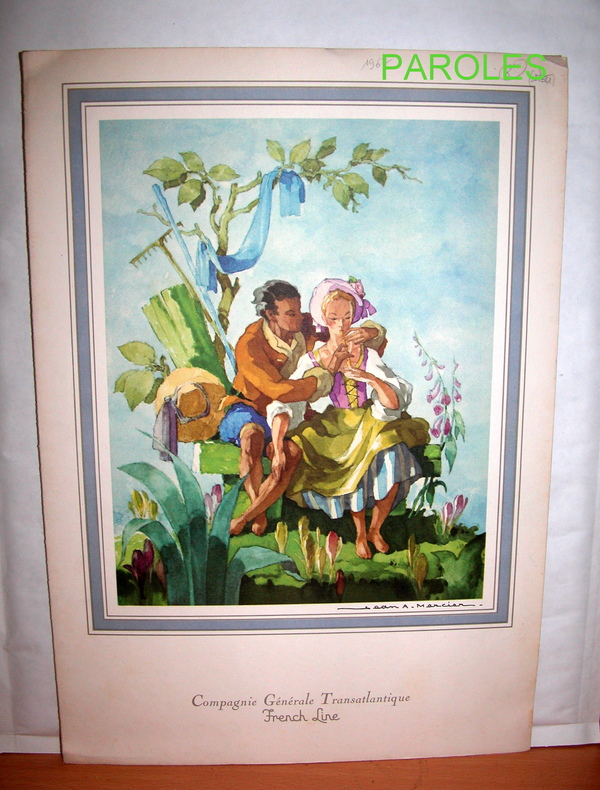
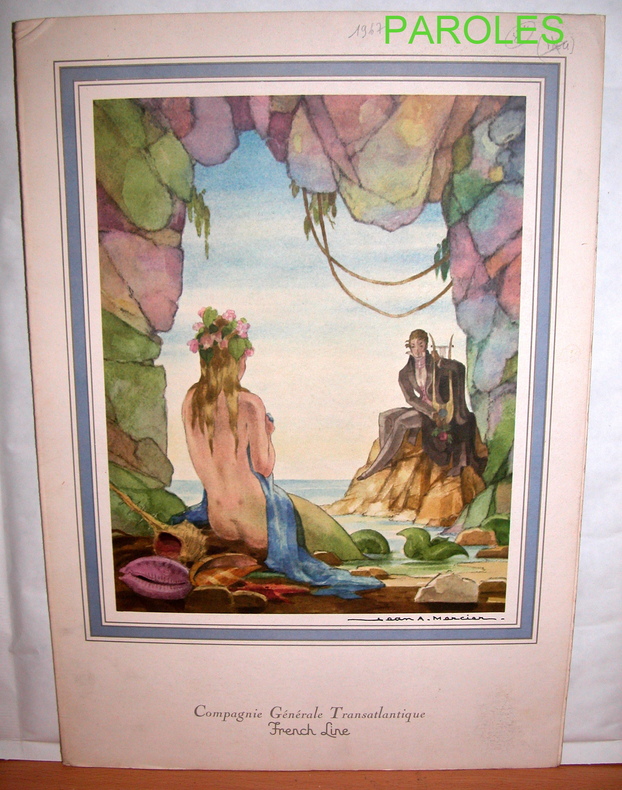
20905[s.l., Paris], Compagnie Générale Transatlantique, 1967 1 volume 24 x 34cm En feuilles au 1er plat illustré couleurs. Double feuillet (= 4 pages); grande illustration couleurs en 1ère page.
20906[s.l., Paris], Compagnie Générale Transatlantique, 1967 1 volume 24 x 34cm En feuilles au 1er plat illustré couleurs. Double feuillet (= 4 pages); grande illustration couleurs en 1ère page.
20907[s.l., Paris], Compagnie Générale Transatlantique, 1967 1 volume 24 x 34cm En feuilles au 1er plat illustré couleurs. Double feuillet (= 4 pages); grande illustration couleurs en 1ère page.
1866254301866 Le Charivari, trente-cinquième année, mardi 21 août 1866 - Hauteur: 43.6cmx Largeur: 31cm- Trait carré :Hauteur: 25.1cmxLargeur: 21.7cm- 1 feuillet (4 pages) ; illustration page 3. - Au-dessus de l'image, au centre : "ACTUALITÉS,", et à droite : "150" ; signé dans l'image en bas à gauche : "A. Darjou.", sous l'image à gauche : "A.de Vresse, R. Rivoli, 55." et à droite : "Lith Destouches, r.Paradis Pois" ; au-dessous, au centre : "Les nouveaux frères Siamois. Great attraction.",texte imprime au dos,bon etat.
19509752Paris Editions Blondel la Rougery 1950. Route map of the western Mediterranean and Northwest Africa 63.5 x 99 cm printed in three colours lined on linen. Shows the routes from Marseille and Bordeaux to Tunisia Alergira and Morocco with considerable detail of the road network inland. Decorative elements include a compass rose a matelot steering a ships wheel and a couple of steamships in the upper border. Map unknown
190916213Paris Imprimerie J. Barreau 1909 1 in-4 Paris, Imprimerie J. Barreau, (1909), in-4 oblong, percaline éditeur illustrée.
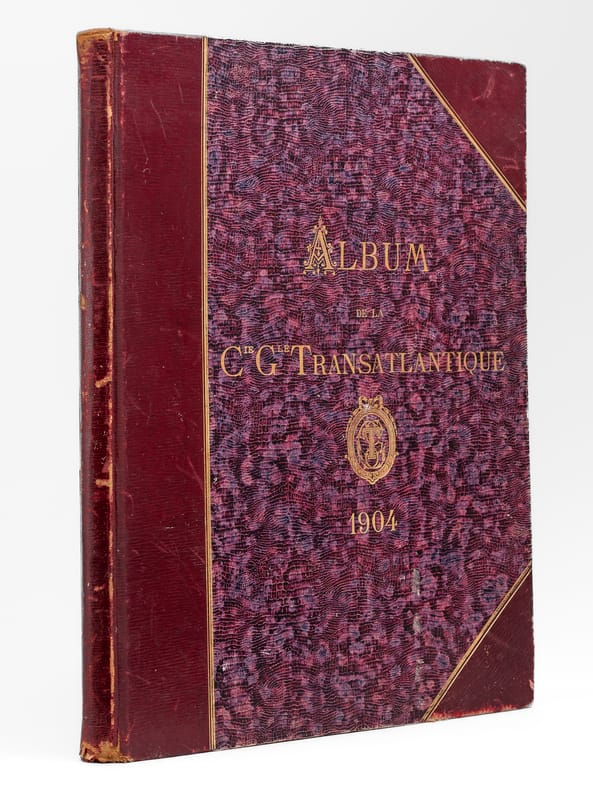
1904698591 vol. in-folio reliure de l'époque demi-cuir maroquiné bordeaux, double filet doré en mors et coins, s.n., Imprimerie Maréchal et Montorier, A. Maréchal Succr., Paris, 1904
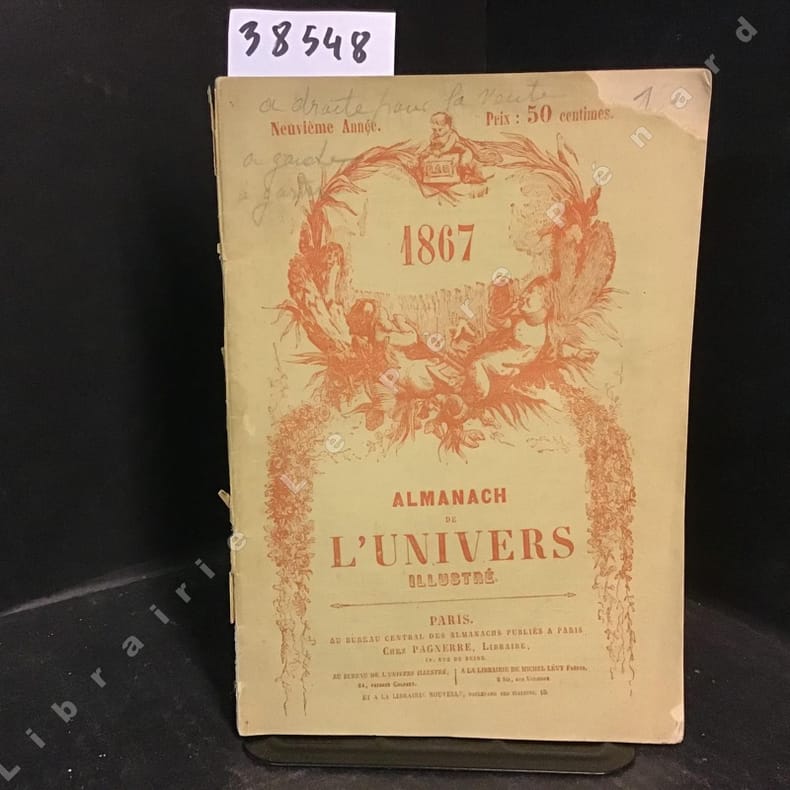
38548in-8 broché - neuvième année - 60 pages - Paris, Au Bureau Central des Almanachs publiés à Paris chez Pagnerre, Libraire / au bureau de l'Univers Illustré / A la Librairie de Michel Lévy Frères / et A la Librairie Nouvelle
192 pages. Index. Bibliography. Numerous black and white photographic plates. "Relates the exciting and extraordinary story of the first 'breakthroughs' in transatlantic communications, and of the vision and endeavours of the few men who made them." - from dust jacket. Address label inside front board. Clean and unmarked with minimal wear. Dust jacket now preserved in glossy new archival-grade Brodart cover. Excellent copy. Book
198223533Paris France Empire 1982 In-8 317 pp, illustrations N&B in et hors-texte ; 1er plat illustré en couleur
68-6320Paris France: CGT 1962. Ticket Inserted into Sleeve. 20 cm. x 9.5 cm. Very Good. En Francais. Stamped and ticket details documented in ink. Paris, France: CGT, 1962. unknown
68-6324Paris France: CGT 1951. Ticket Inserted into Sleeve. 10 cm. x 12.5 cm. Very Good. En Francais. Stamped and ticket details documented in ink within. Paris, France: CGT, 1951. unknown