2 041 résultats
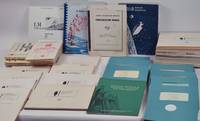
196929710various: various 1969. various. Very Good. Our consignor's father was an aeronautical engineer working for Boeing and assigned to work with NASA on the Apollo program. He did a significant favor for a member of the astronauts office while living in Houston. They asked him what they might do in return. He requested "a full set of Apollo astronaut training manuals" the result of which you see here - 34 items in total. They have remained in the family since. A list of the manuals follows. Many are by the sub-contractors responsible for building the particular systems involved. A remarkable archive. In addition to a letter of provenance from the consignor the archive includes a 1968 Nassau Telephone book showing the previous owner as well as a goodly number of astronauts.<br /> <br /> GRUMMAN MANUALS: The following manuals all state "For training purposes only: In support of LM-5 & Subsequent Subsystem Briefings." and are part of "Contract NAS 9-1100 Exhibit E: Paragraph 3.7.4 Type III Document." They are all three hole punched and held together with dual post "prestong" brand adjustable metal straps with robin blue colored Grumman binder paper with cut-outs for the titles. The metal straps are rusted to varying degrees the paper still bright and clean.<br /> 1 LSG 770-154-6 - LM-5 & Sub. June 1969. "Abort Guidance Section Study Guide Lunar Module LM-5 & Subsequent." Light green paper. No copies OCLC.<br /> 2 LSG 770-430-40 LM-5 & Sub. April 1969. "Instrumentation Subsystem Study Guide Lunar Module LM-5 & Subsequent." Yellow paper. No copies OCLC.<br /> 3 LSG 770-154-7 - LM-5 & Sub. April 1969. "Control Electronics Section Study Guide Lunar Module LM-5 & Subsequent" Light green paper. No copies OCLC.<br /> 4 LSG 770-154-5 - LM-5. April 1969. "Radar Section Study Guide Lunar Module LM-5" Blue paper. No copies OCLC.<br /> 5 LSG-770-154-9-LM-5 & Sub. May 1969. "Propulsion & RCS Subsystem Study Guide Lunar Module LM-5 & Subsequent" Dark green paper. No copies OCLC.<br /> 6 LSG 770-154-4-LM-5 & Sub. May 1969. "Electrical Power Subsystem Study Guide Lunar Module LM-5 & Subsequent" Yellow paper. No copies OCLC.<br /> 7 LSG-770-154-3-LM-5 & Sub. May 1969. "Environmental Control Subsystem Study Guide Lunar Module LM-5 & Subsequent" Tan/orange paper. No copies OCLC.<br /> 8 LSG 770-154-10-LM-5. May 1969. "Lunar Module Structures Handout LM-5" Light grey ash paper. No copies OCLC.<br /> Wikipedia note on the LM-5: "Lunar Module Eagle LM-5 is the spacecraft that served as the crewed lunar lander of Apollo 11 which was the first mission to land humans on the Moon. It was named after the bald eagle which was featured prominently on the mission insignia. It flew from Earth to lunar orbit on the command module Columbia and then was flown to the Moon on July 20 1969 by astronaut Neil Armstrong with navigational assistance from Buzz Aldrin. Eagle's landing created Tranquility Base named by Armstrong and Aldrin and first announced upon the module's touchdown. The name of the craft gave rise to the phrase "The Eagle has landed" the words Armstrong said upon Eagle's touchdown."<br /> <br /> The Grumman manuals below have different wrapper colors but the same metal strap binding.<br /> 9 LSG 770-430. Nov 1967. "Orientation Study Guide Lunar Module" White printed wrappers have ink stamp of "Mutter H.P." White paper internally. No copies OCLC.<br /> 10 LSG 770-430-48 -LM-3. "August 1967. Propulsion and RCS Study Guide Lunar Module LM-3" White printed wrappers. Green paper internally. Inked "Oscar Bernard" on top wrapper. No copies OCLC.<br /> 11 LMA790-1. LMA790-01001C. October 15 1965. Superceeds LMA790-1 dated March 15 1965. "Lunar Excursion Module Familiarization Manual" Exhibit E Paragraph 10.2 NAS 9-1100. Type II Document. Inked in red "Crew Systems" at head of top wrapper with small piece of top wrapper excised. two copies this title OCLC<br /> 12 "Lunar Module Subsystem Assembly and Installations". 52 pages. Printed green wrappers. What appears to be a commercial advertising item rather than a training manual. No copies OCLC.<br /> <br /> GENERAL MOTORS CORPORATION manuals<br /> 1 "Apollo CM Primary Guidance Navigation and Control System Student Study Guide". CSM Digital Autopilots. DAP 2100. June 2 1969. Perfect bound with light blue paper. 3 copies this title OCLC<br /> 2 "Apollo Lunar Module Primary Guidance Navigation and Control System Student Study Guide." LM PGNCS Level III System Mechanization Course SM31000. Dates January 27 1967 Oct 1 1967 and finally Jan 30 1969. Bound with blue plastic comb binding. Blue paper. No copies OCLC.<br /> <br /> NASA MANUALS:<br /> 1 FLIGHT CONTROL DIVISION manual NASA. FC027. 3/15/68. "Lunar Module Systems Handbook Vehicle LM-3" MSC8305-68. 5 hole punched. Not bound. No copies OCLC.<br /> 2 MSC Internal Note MSC-CF-E-68-12. "Photo Equipment for Manned Space Flight Handbook" June 20. 1968. 5 hole punched. Stapled. "Oscar Bernard x-5821" inked on top wrapper and a few inked notes on the bottom wrapper. No copies OCLC.<br /> <br /> NORTH AMERICAN ROCKWELL CORPORATION SPACE DIVISION MANUALS. All note "For Training purposes only". All 11 x 8 1/2 inches.<br /> 1 CSM Logistics Training : Guidance and Control System - Block II May 15 1969. Prefect bound white and blue paper No copies OCLC.<br /> 2 CSM Logistics Training: Sequential Systems EDS SECS LES ELS Course No A-318 Handout No. 1. June 15 1969. Perfect bound light yellow paper. No copies OCLC.<br /> 3 Apollo CSM Logistics Training. Apollo Operations Handbook Subsections 2.2 and 2.3. Guidance and Control. May 1 1969. Perfect Bound blue paper. No copies OCLC.<br /> 4 Apollo CSM Logistics Training. Apollo Operations Handbook Subsection 2.8 Telecommunications. May 1 1969. Perfect bound dark brown paper. No copies OCLC.<br /> 5 Apollo CSM Logistics Training. Apollo Operations Handbook Subsection 2.6 Electrical Power System May 1 1969. Perfect bound yellow paper. No copies OCLC.<br /> 6 Apollo CSM Logistics Training. Apollo Operations Handbook Subsection 2.9 Sequential Systems May 1 1969. Perfect bound tan paper. No copies OCLC.<br /> 7 Apollo Training. Apollo Operations Handbook CSM Preliminary Subsection 2.9 Sequential Systems June 26 1968 Perfect bound light yellow paper some folding on "fax" paper. Ink stamp "Mutter H.P." on top wrapper and spine.<br /> 8 Apollo Training. Structures and Mechanical Subsystems Course Number A-5125. June 13 1969. Perfect bound grey paper. No copies OCLC.<br /> 9 Apollo Training. Block II CSM Propulsion Subsystem. Dec 12 1968. Perfect bound pale green paper. No copies OCLC.<br /> 10 Apollo Training. Electrical Power Subsystem Block II CSM. Nov 1 1968. Perfect bound oblong yellow paper. No copies OCLC.<br /> 11 Apollo Training. CSM/LM Docking and Crew Transfer Block II handout. Apr 15 1968. Perfect bound oblong pale brown paper. Stamp "Mutter H. P." on top wrapper and spine. No copies OCLC.<br /> 12 Apollo Training. Environmental Control System Block II. Apr 1 1969. Perfect bound oblong orange sherbert paper. No copies OCLC.<br /> 13 Apollo Training. Crew Equipment Course A512 C. Jan 1 1969. Perfect bound pink paper. No copies OCLC.<br /> 14 Apollo Training. Crew Equipment Course A512C. June 26 1968. Perfect bound pink paper. No copies OCLC.<br /> #7-14 above show "Apollo Logistics Training" logo on the top wrapper with little or no mention of Rockwell in the document although we believe it is clearly their output given the names physical addresses to use for questions about the documents and production details of the various manuals.<br /> Wikipedia note on the CSM: "The Apollo command and service module CSM was one of two principal components of the United States Apollo spacecraft used for the Apollo program which landed astronauts on the Moon between 1969 and 1972. The CSM functioned as a mother ship which carried a crew of three astronauts and the second Apollo spacecraft the Apollo Lunar Module to lunar orbit and brought the astronauts back to Earth."<br /> <br /> <br /> NORTH AMERICAN AVIATION Inc. SPACE AND INFORMATION SYSTEMS DIVISION manuals<br /> 1 SID 64-1613A GFE Command and Service Module - Manned Space Flight Network Signal Performance and Interface Specificaiton Block II. NAS 9-150 Revised Nov 22 1966. Copy made on "fax" style paper three hole punched with two aluminum screw posts holding the pages together. Another stamp unclear if on the original or here stamped notes Recorded Jul 18 1967 by the Saturn V Data management at the Boeing C. Technical Data Central. Note on orginal document notes 60 8 1/2 x 11 and 20 11 x 17 foldouts presumably. No copies OCLC.<br /> 2 SID 64-1389 GFE NASA Furnished Crew Equipment Performance and Interface Specification Block II. NAS 9-150. Revised Feb 22 1965 Copy made on "fax" style paper three hole punched with two aluminum screw posts holding the pages together. Another stamp unclear if on the original or here stamped notes Recorded Aug 2 1967 by the Saturn V Data management at the Boeing C. Technical Data Central. Note on orginal document notes 164 pages. No copies OCLC.<br /> 3 SID 64-1388. GFE Scientific Equipment Performance and Interface Specification Block II - CM. NAS9-150. Revised Feb 22 1965. Note on original document indiates 51 pages. Stamped upper left rusted one page loose in rear. No copies OCLC.<br /> 4 SID 64-1866. GFE Command and Service Module - Manned Space Flight Network Signal Performance and Interface Specification - Block 1. NAS9-150. January 5 1965. Exhibit I Paragraph 4.1. "Fax" style paper three hole punched with two aluminum screw posts for binding. No copies OCLC.<br /> NOTE: GFE stands for Government Furnished Equipment - where the government would provide equipment to the contractor to assist in their work<br /> <br /> NOTE: The # in the lists above are included solely for convenience of reference. Identifying numbers on the documents if any follow that number.<br /> <br /> Provided with a letter of provenance and the Sept 1968 Nassau Bay TX Telephone Co directory with the consignor's father listed in it as well as a fair number of well known astronauts. various. A remarkable archive of training manuals only a few of which appear in OCLC and only one of which we've seen in the last 20 years. various unknown
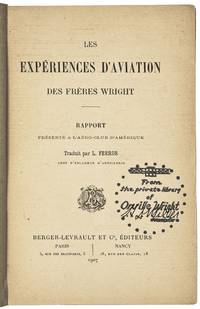
19074284<p>OFFPRINT IN FRENCH OF WRIGHT BROTHERS REPORT RECORDING THE LONGEST FLIGHT AT THE TIME</p><p>8vo pp. 1-3 4-7 8 blank. In original printed publisher's wrappers. Printed advertisements on back cover. Ink stamp "From the private library of Orville Wright" on title page signature of H. A. Miller. Uncut.</p><p>A fine copy of the first French edition of Wright brothers' report from March 12 1906 to the secretary of the recently created Aero Club of America recording the longest flight in history at the time. This French edition was published the same year that the Wright brothers traveled to Europe in an effort to secure monopoly on air travel and negotiate for the sale of the Wright airplane. In 1908 the Wright brothers would return to Europe to perform 200 demonstrative flights.</p><p>The report summarizes the last stage of the brothers' flying experiments which began in 1899 and allowed them to develop a plane capable of making routine flights. Upon completing their experiments in Dayton Ohio in the fall of 1905 the brothers did not fly again for 2.5 years focusing their attention on securing a patent which they were granted in May 1906.</p><p>In the report the brothers write that the flights of 1905 made "in a swampy meadow about 8 miles east of Dayton Ohio and continued from June until the early days of October" were meant to correct some problems "necessary to overcome before it would be safe to employ flyers for practical purposes." The experiments proved successful: "Owing to frequent experimental changes in the machine and the resulting differences in its management the earlier flights were short; but towards the middle of September means of correcting the obscure troubles were found and the flyer was at last brought under satisfactory control." The report includes a chart documenting the brothers' progress: on October 5 Wilbur made his longest flight in which he circled the field 30 times in 39 minutes.</p><p>The report also summarizes the brothers' experiments prior to 1905: "Previous to the year 1905 we had experimented at Kitty Hawk North Caroline with man-carrying gliding machines in the years 1900 1901 1902 and 1903. Flights to the number of more than 100 had also been made at Dayton Ohio in 1904."</p><p>This copy sold at Sotheby's for $4375 in 2008. We were able to locate only two copies worldwide: in the U.S. at MIT and at the Bibliothèque nationale de France.</p><p> <em>Published Writings of Wilbur and Orville Wright</em> p. 6.</p> Berger-Levrault et Cie, Éditeurs paperback
1785ST15350Paris: Cuchet 1783-1784; 1784; Amsterdam and Paris: Gueffier 1785. FIRST EDITIONS. Second Issue of the first work with the four-page "Supplément" at the end. 223 x 127 mm. 8 x 5". Three separately published works bound as a three-volume set the first work occupying the first two volumes. <br/> Uniform contemporary orange paste-paper boards backed with marbled sheepskin corners tipped with vellum raised bands flanked by decorative gilt rolls one red and one green morocco label. First work with a folding table and 14 ENGRAVED PLATES nine numbered plates in first volume five in second two of the latter folding; second with three engraved plates; third work with one folding plate. First work: Darmon 51; PMM 229; Norman I 769; Maggs Bros. "The History of Flight" 65. A hint of rubbing to extremities intermittent minor browning small rust spots or offsetting in the text bed largely due to inferior paper stock four leaves with one-inch brown stain to text nothing obscured a couple of short marginal tears from rough opening but QUITE A FINE SET--the text clean fresh and well-margined the plates with excellent impressions and the binding remarkably well preserved with few signs of wear.<br/> <br/> This is the second issue with the rare "Supplément" in the second volume of the earliest account of the first public experiments with hot air balloons and it is considered to be the first authoritative technical and historical work on aerostation as well as the first serious discussion of balloon travel as a practical possibility. The experiments were conducted by the Montgolfier brothers Joseph 1740-1810 and Etienne 1745-99 who had been intrigued by the experiments of Cavendish and Priestly with "inflammable air." The eminent scientist Faujas 1741-1823 who was the promoter financier and chronicler of the Montgolfiers quickly published this account after the brothers had launched a balloon at Annonay in June of 1783 then a balloon carrying some farm animals in September and finally a balloon carrying Pilatre de Rozier and the Marquis d'Arlandes in November. This last flight--the first manned aerial voyage in history--covered five-and-one-half miles across Paris and lasted 25 minutes. Plate 8 here shows the two original aeronauts viewed from the terrace of Franklin's home in Passy. <br /> <br /> The third volume begins with a discussion of the inflammable gas used to lift the balloons and gives a summary of Montgolfier's history of balloon flights. The final work sets forth another scientific innovation an electrostatic machine that employed sheets of taffeta to create friction that produced static electricity. The Royal Academy of Sciences tested the machine and found it a great improvement--less expensive and less liable to accidents--than earlier machines that had used plates of glass. The work seems to be very rare: we could find no copy sold at auction in either RBH or ABPC. This is a most appealing set its combination of works on inventions offering a glimpse of the popular fascination with emerging technologies especially those related to flight in the late 18th century. Cuchet, 1783-1784; 1784; Amsterdam and Paris: Gueffier unknown
151979430Hammondsport New York and Newport News Virginia 1915-1917. The captions were formerly attached to the photographs with paperclips with some crimping to the photographs and captions. Some marginal damage to a couple of the photographs; images unaffected and quite interesting. . Various sizes; 14 measure 8 / 10 inches; 54 are 4 x 6 inches. . Many of the captions are quite informative if a bit illiterate for example: "Capt. Baldwin in the first Derigable sic were built for the U.S. Gov. Capt. Baldwin built his machine and was accepted by U.S. Gov. on all trials. Capt. Baldwin--inventor of a Parachute and first man to ever jump. built at Hammondsport." In addition to the the 68 photographs that clearly belong to a single archive there are two additional 8 x 10" Curtiss photographs and 15 additional smaller early aviation photographs. unknown
74692An archive of research and writing materials gathered for a biography of Ormer Locklear the daredevil aerial stuntman who was the first to change planes mid-air and died while filming the silent movie The Skywayman 1920. It took more than a decade for author Art Ronnie to research Locklear’s life and find a publisher for his book Locklear: The Man Who Walked on Wings 1973.<br /> <br /> Born in Greenville Texas Locklear 1891–1920 became fascinated with flying when aviation pioneer Calbraith Perry Rodgers landed in a Fort Worth field to unclog a fuel line. With his brothers Locklear built gliders and later learned to fly after joining the U.S. Army Air Force in 1917 eventually becoming a flight instructor. He left the Army in 1919 and with two colleagues joined show promoter and manager William Pickens to form an aerial circus before he was recruited for the silver screen. In his personal life Locklear married Ruby Graves in 1915 but they separated in 1919 and thereafter she refused to grant him a divorce. After moving to Hollywood he became involved with silent screen actress Viola Dana who was at the airfield the night of the accident and witnessed his death. One of the key items in this archive is a scarce original poster for Locklear’s first feature film The Great Air Robbery Universal 1919. After watching one of Locklear’s aerial circus shows Carl Laemmle signed Locklear to a series of motion pictures. In this movie Locklear played Larry Cassidy a pilot for the U.S. Air Mail Service who defends a shipment of $20000 in gold from the villainous clutches of the evil Chester Van Arland Ray Ripley. The film made use of all the stunts that had made Locklear a household name as a barnstormer. The picture was a hit and Locklear was well on his way to a fabulous career on the silver screen. The stone lithographic posters measures 27†x 41†and features a portrait of the daring aviator. It is archivally framed with an acid-free mount and UV plexiglass. This film and The Skywayman are both considered “lost films†as no known prints exists in archives.<br /> <br /> This archive also includes more than 300 hundred negatives and photographs of Locklear’s short life and career that were collected by Art Ronnie from Locklear family members newspapers movie studios and historical societies. Included among them is a framed 8†x 10†black-and-white photograph that is signed by Locklear who is wearing his military uniform. A second framed photograph from his Hollywood days includes a signature framed below the photo. Neither of these images have been inspected outside the frame. Ronnie was a meticulous record keeper. This archive includes copies of letters the author wrote to Locklearfamily members friends film studios libraries and historical societies. It includes two expandable folders containing copies of the more than 300 letters Ronnie wrote researching the book with the recipients’ responses attached. He began his research in 1961 while working at the Los Angeles Herald Examiner using the newspaper’s stationary with the intention of writing a magazine piece on spec.<br /> <br /> After the initial article was published he decided to pursue a book and many of his later letters reflect the struggle to find a publisher. By 1962 he is using Twentieth Century Fox Television letterhead after having switched careers to be a publicist with the network. Among the early letters Ronnie wrote is one to Locklear’s sister Anita Mae Locklear who still lived in the family’s hometown of Fort Worth Texas. “Would you please write down anything you recall about Ormer – his personality his motorcycling and racing days any amusing anecdotes his first desires to fly his decision to come to Hollywood and his funeral which I understand was one of the largest ever held in Fort Worth.†In her return letter Anita shared a few facts: “He was flying with Pickens Flying Circus when the studio was interested and signed him up for the pictures.†Ronnie appeared to have the most success and the longest running correspondence with Locklear’s brother James who became the point person for the family. The two men corresponded excitedly after uncovering a copy of the Barron Field Review which contained a photo feature of “Locklear’s Class in Aerial Calisthenics.â€<br /> <br /> Ronnie tracked down one of Locklear’s fellow aviators who recalled in a letter that Locklear was fearless and often got in trouble for aerial antics: “He liked stunts and thrills and experimented with crawling all over the plane which finally gave him the idea that he could change planes in the air.†Among the letters is a typed signed reply from the actress Mary Pickford who provides Ronnie with a contact to Charlie Chaplin and notes that her brother Jack and Ormer were good friends: “On the night that Locklear was killed my brother was scheduled to go up with him but mother had prepared Jack’s favorite dinner and as luck would have it the dinner was late.†Ronnie also chased down leads that didn’t pan out. He corresponded in 1961 with movie producer Robert Youngson about a rumor that Locklear was one of the stunt pilots involved in the unplanned mid-air collision of two planes during the filming of the Harry Houdini movie The Grim Game. “My own guess is that the stuntman on that wing could not possibly have escaped and must have been killed†Youngson wrote. The publicity machine around the 1919 film claimed Houdini was involved and escaped the crash but Ronnie’s research uncovered the fact that Houdini was nowhere near the planes. Miraculously his stunt double survived the crash with just a few cuts and bruises.<br /> <br /> After working on the project for more than a decade Ronnie landed A.S. Barnes as a publisher. One of the folders in this archive contains dozens of rejection letters he received from publishers between 1962 and 1971 when he signed his publishing deal. For the first several years he was represented by literary agent Carolyn Willyoung Stagg of Lester Lewis Associates. After receiving feedback from Holt she wrote the following in January 1962 to Ronnie: “Are you at all interested in doing a couple of consecutive chapters which will be less ‘journalistic and slap-dashed style’ and will get down the essential motivation and characterization which made Locklear a colorful figure†In 1969 Barnes rejected Ronnie’s manuscript but decided to move forward with it in 1971. He was paid a $250 royalty advance. Once the book went to press Ronnie pushed the publisher about its promotion and sales strategies taking on much of the public relations campaign himself calling in favors and urging those he knew in the media to mention his book. He seemed less impressed with Barnes’ sales efforts writing to Julien Yoseloff of Barnes in October 1973: “When a book has received the publicity Locklear has I believe it behooves the publisher to let the booksellers know about it…I believe the publicity Locklear has received in very unusual. In addition to reviews more than 800 newspapers have mentioned it and excerpts have appeared in eight magazines.†Ronnie’s personal copy of the book is included with the archive. It contains his bookplate and is inscribed by Viola Dana and her sister Shirley Mason also an actress from the silent film era. This copy is also signed by Jimmy Doolittle who provided Ronnie with an opening quote for the book.<br /> <br /> The materials including several typescript versions of the book in this collection are stored in three banker boxes and all the materials are in very good condition. This archive provides a complete record of an important early aviator who transitioned into movie making. In addition it is an important writers archive demonstrating how original research is developed and the evolution of a book as well as its printing and promotion. Please inquire for a complete inventory of this archive. unknown
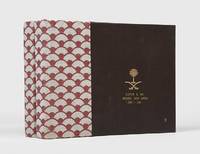
163098Jeddah: Kingdom of Saudi Arabia Ministry of Defense and Aviation; Lockheed Aircraft International 1983. The Saudi approach is unique Unrecorded institutionally and commercially this attractive set of albums celebrates Lockheed's role in augmenting Saudi Arabia's air traffic control systems both commercial and military over the period 1972-82. They comprise a total of 80 leaves covering summaries of developments "information flow" diagrams for Kaia Riyadh International Dhahran and Jeddah airports colour maps charts and photographs of facilities operatives and aircraft. Writing in Arabian Studies in 1976 aviation expert Elda I. Stifani notes: "By virtue of its geographical position and the strategic economic and political interests of both local and worldwide powers the Middle East plays a major role in civil aviation operations The Saudi approach is unique. No other country in the Arabian Peninsula has an equally determined and precise policy of national aviation development" Arabian Studies III p. 36. Interestingly he also notes that "Bahrain handles air traffic for all the UAA United Arabian Airlines Qatar part of Oman of Kuwait and of Saudi Arabia Dhahran". In March 1974 the Saudi airline Saudia ordered two of Lockheed's new TriStar airliners specially fitted with increased wing fuel tankage. By 1978 Saudia had increased its fleet of TriStars to thirteen. Provenance: presented to Clifford G. Fay of Lockheed Saudi Arabia 1980-82 with his name and dates of service on the front covers. Loosely inserted is a typed letter from Lockheed to Fay presenting the volumes and mentioning that they have been supplied by Joe Akers who was a Lockheed veteran with 28-years' experience at the company retiring as chairman in 1988 26 June 1983 Jeddah letterhead in English and Arabic. 2 vols landscape quarto 235 x 320 mm. With 80 sheets presented recto and verso in clear plastic pockets. Original ring binders fan-patterned cloth spines brown morocco-grain faux leather sides upper covers and front flaps with gilt arms of Saudi Arabia. Cloth sides just a little rubbed tear to first pocket in vol. II not affecting image minor creasing to presentation letter. An excellent set. Elda I Stifani "Civil Aviation in the Gulf: The Role of Commercial Interests in the Issue of Traffic Rights" Arabian Studies III 1976. hardcover
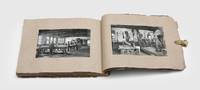
19191881971919. The nuts and bolts of the air war in the desert Superbly detailed visual record of the RAF's central logistical hub for the Middle East theatre serving the region from Egypt to the Hejaz. The depot offered complete servicing from erection out of the crate to scrapping after strike off. Images include personnel groups exteriors and interiors of workshops warehouses hangars and auxiliary buildings: a complete survey of the staffing and facilities of the complex. The prints are of striking quality the images sharply focussed and crisply printed rewarding close examination under a lens with a wealth of detail. Perhaps the most arresting photographically are the shots of the storage spaces unoccupied aisles extending into the distance filled with fastidiously ordered ranks of parts; a touch uncanny but effectively evocative of scale and rigorous organization. Based at RAF Aboukir Abu Qir near Alexandria X AD was the largest such facility in the region part of a complex including an airfield home base for a flight school and several training squadrons - craft where identified Nieuports and SE-5s bear tail numbers assigned to regional trainers - all of which continued in use until the end of WWII. The present copy is uncaptioned but comparison with records of the two copies traced through auction - the only others found - it is possible to identify a number of the images: various groups of personnel HQ staff carpenters fitters stores staff football and gymnastics teams; the headquarters buildings; tool stores; the contents of the parts stores encompassing small fabric pieces aircraft fittings spare wings and planes motor machine-gun engine and balloon spares; the depot's motor transport vehicles mainly Crossley tenders; the base tennis courts; the engine-erecting shop; outdoor engine testing; hangars; the riggers' shop dismantling shop dope shop and salvage hangar. Landscape album 195 x 260 mm containing 66 original official gelatine silver prints including title page 100 x 155 mm some with light sepia toning mounted on 34 leaves of greyish yellow light card. Cord sewn into greyish yellow light card wraps. Covers worn creased and stained with some areas of loss to the extremities; but the contents clean and sound the photographs themselves crisply defined and with great tone; very good. paperback
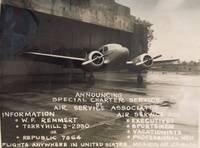
194255329St. Louis MO & Pompano FL: William F. Remmert Elizabeth Douglas Remmert Remmert-Werner Inc. 1942-1963. Thick folio. 14.75 x 12 x 3.5 in. 166 pp unpaginated. most original folio sized beige paper other smaller mylar sleeves with photos & clippings inserted many pages with significant manuscript in ink. With 230 total photographs tipped-in some in corners some inserted into archival sleeves occasional old scotch tape mountings over 30 in colour sized from 2.5 x 3.5 in. up to 8 x 10 in. and even 6 x 14 in. most with pencil ink typed or printed captions beside in the lower margins or amongst the 200 clippings mounted and tipped-in to the sheets many large folding two original dealer’s catalogues for the Sabreliner aircraft including dealer literature and business cards. Original padded post-binder embossed & raised decorations in gilt & silver on front cover typed title label taped to upper fore-edge some scuffing edgewear chipping & tears to some leaves toning to newspaper clippings offsetting and ghosting from tape some photos w/ minor tears occasional offsetting from clippings still an excellent exemplar. This impressive and well-documented photo album/scrapbook filled with 230 photographs provide an incomparable visual and textual record for the aviation company Remmert-Werner Inc. from World War II to the 1960s. Remmert 1913-1989 was a high school dropout working at the Curtiss-Wright hangar at Lambert Field in St. Louis where his father worked as a Watchmen in the 1930s. He quickly rose in the company becoming the Curtiss-Wright Company Tech Rep in China during the opening years of World War II and in 1943 became a Naval Officer inspecting material production for aircraft until 1945. As shown in the photographs and explained through clippings and manuscript notes in Remmert’s bold hand Remmert-Werner Air Service was founded at Lambert Field following World War II selling Beechcraft and Cessna Aircraft and buying up war surplus airplanes for conversion. The images depict the Air Ambulance charter service with a fleet of three Beechcraft airplanes from 1945-1946 as well as the Air Service establishing themselves as dealers for Motorola Piper Swift and Fairchild Aircraft founding a Flight Training School and contracting with Texaco to sell aviation fuel at the field. The images also portray Remmert-Werner quickly buying up a couple surplus PT-19 biplane trainers when their flight school expanded to Starling Airport by 1947. They would later begin selling and leasing Beechcraft Lodestar and eventually the Sabreliner corporate jets. The photographs also display their twin engine Beech D18S aircraft setting in front of the Remmert-Werner hangar with Texaco signage and Texaco oil truck the Cessna 140 winner of the Miami Air Races Motorola Radio J3 Cub aircraft their Vultee BT-13 Valiant trainer aircraft and even a Convair B-36 Peacemaker which was the largest mass-produced piston-engined aircraft ever built on display at an Army air show on Lambert field with the Remmert-Werner hangars in the background. Remmert-Werner quickly moved into converting aircraft for corporate clients in 1946 and over the next two decades would convert over 200 aircraft service 1000s of planes and became famous for their luxurious flying penthouses for corporate and wealthy clients. Not only are their images showing the clients visiting the Remmert-Werner hangars and airfields with clippings specifying and promoting their clients but also many images of the company dog named Myrtle setting on discarded parts or nosing her way into photos. Remmert & Werner began their career by converting a surplus C-47A to the DC-3 “Prairie Wings†by enlarging the windows installing luxurious seats galley operations and upon completion took the whole company to the Indianapolis Air Races in 1948 which were the first following World War II. They also converted and maintained the corporate fleet for the Gaylord Container Corporation by buying up a number of surplus B-25 aircraft and turning them into corporate and freighter planes for Gaylord. In 1948 they began work on creating a deluxe aircraft for Arthur Godfrey 1903-1983 radio and TV entertainer and aviation enthusiast with photos showing the progress the painting news clippings and even an inscribed thank you note from Godfrey. Their other clients included Coca-Cola Procter & Gamble International Harvester Olin Matheson Chemical Grumman Aircraft and Hercules Powder. Their conversions involved gutting the planes and installing completely new systems and interiors including lounge chairs sofas tables lamps galleys and any other special furnishings. They were well known for their DC-3 window modifications which increased the size of the windows for passengers. They also established company affiliates in Toledo OH Cleveland OH Mercer County Airport at Trenton NJ and an airfield in Pompano Beach Florida in 1956. See: Remmert-Werner. . . Big-Change Artists Flying Magazine Dec. 1957 pp. 54-56; Bill Remmert & Bob Werner Airplane Purveyors Aviation Week 2004. William F. Remmert, Elizabeth Douglas Remmert, Remmert-Werner, Inc., unknown
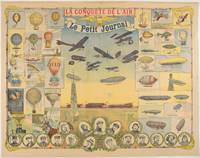
190932820694This spectacular color lithograph commemorates the Grande Semaine d'Aviation of 1909 the first international public flying event and a turning point in aviation history. The powered aircraft featured at the event dominate the center. Surrounding it are portraits of pioneering figures in flight including Wright Curtiss Latham Fournier and Blériot and vignettes from aviation history.The event held at Reims France in August 1909 attracted more than 500000 spectators to watch famous aviators compete in contests of distance altitude and speed all from the massive grandstands constructed for the event. The meeting signified a transition in the public perception of flight. Once an experimental curiosity practiced by a few it came to be seen as a viable technology with the potential for practical application.This print a supplement to Parisian newspaper Le Petit Journal highlights technological advances in aviation history. The fall of Icarus is depicted in the upper right corner next to two unrealized designs for flying machines from the 17th century. Vignettes show the various hot air balloons of the 18th century and capture the 19th-century shift to airships capable of controlled flight.At the center the collection of heavier-than-air planes flown at Reims in the early 20th century point to the transitional nature of this pioneer era. In 1903 the Wright brothers achieved a twelve-second flight in their biplane; in 1909 technology had advanced enough for Louis Blériot to cross the English Channel in a powered monoplane. The array of airplanes shown in Reims exemplified this transformational period as Wright-style flyers and propeller-led monoplanes were featured side by side. The debut of lightweight more reliable engines at Reims also indicated the advances that were to come.The Grande Semaine showed that heavier-than-air flight was proven to be a viable technology full of possibilities. The next few decades brought the first major wartime use of airplanes the invention of the jet engine and growth of commercial aviation. Within sixty years man's "conquest of the air" had extended to outer space.This is a visually stunning record of a critical moment in technological history marking the beginning of modern aviation. Le Petit Journal
190932820695This spectacular color lithograph commemorates the Grande Semaine d'Aviation of 1909 the first international public flying event and a turning point in aviation history. The powered aircraft featured at the event dominate the center. Surrounding it are portraits of pioneering figures in flight including Wright Curtiss Latham Fournier and Blériot and vignettes from aviation history.The event held at Reims France in August 1909 attracted more than 500000 spectators to watch famous aviators compete in contests of distance altitude and speed all from the massive grandstands constructed for the event. The meeting signified a transition in the public perception of flight. Once an experimental curiosity practiced by a few it came to be seen as a viable technology with the potential for practical application.This print a supplement to Parisian newspaper Le Petit Journal highlights technological advances in aviation history. The fall of Icarus is depicted in the upper right corner next to two unrealized designs for flying machines from the 17th century. Vignettes show the various hot air balloons of the 18th century and capture the 19th-century shift to airships capable of controlled flight.At the center the collection of heavier-than-air planes flown at Reims in the early 20th century point to the transitional nature of this pioneer era. In 1903 the Wright brothers achieved a twelve-second flight in their biplane; in 1909 technology had advanced enough for Louis Blériot to cross the English Channel in a powered monoplane. The array of airplanes shown in Reims exemplified this transformational period as Wright-style flyers and propeller-led monoplanes were featured side by side. The debut of lightweight more reliable engines at Reims also indicated the advances that were to come.The Grande Semaine showed that heavier-than-air flight was proven to be a viable technology full of possibilities. The next few decades brought the first major wartime use of airplanes the invention of the jet engine and growth of commercial aviation. Within sixty years man's "conquest of the air" had extended to outer space.This is a visually stunning record of a critical moment in technological history marking the beginning of modern aviation. Le Petit Journal
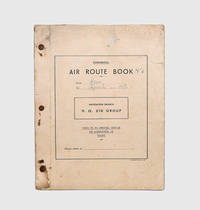
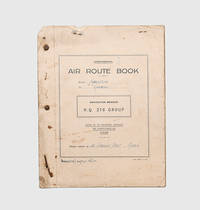
1945183077Cairo West: H.Q. 216 Group 1945. A detailed handbook for RAF transport pilots A confidential navigational aid correct to July 1945 including folding maps of radio and responder beacons on and around the Arabian Peninsula and emergency airfields in the Gulf Iraq and Persia. Individual plans give the layout of Cairo West and other airfields in Palestine Iraq Bahrein and Sharjah. In Arabia RAF pilots were served by emergency airfields at Abu Dhabi Muscat and Shinas and by beacons in Bahrein Sharjah and Ras al Hadd. The text details instrument approach procedures obstructions lighting and services at key locations gives procedures to be followed after forced landings "in the blue" and lists distress signals. Formed in May 1942 within Middle East Command No. 216 Ferry Group later No. 216 Air Transport and Ferry Group handled all transport requirements for the Middle East theatre and was commanded for most of the war by Air Commodore Whitney Willard Straight 1912-1979. Quarto. With 17 leaves 4 folding of colour and black-and-white maps 15 sides of letterpress and duplicated typescript notices and instructions loosely inserted folding sheet with graphs of daylight and darkness on both sides. Original buff card covers fixed with butterfly pins through punch holes front cover lettered in black with manuscript additions. Covers worn from use pins rusting but holding firm short closed tear at head of Jiwani map sheet light creasing internally: very good. unknown
195847619Otrokovice: S. Kucera n.p. Moravan 1958. Oblong atlas folio. 19.5 x 14.25 x 2.25 in. 49 leaves of thick dark gray paper stock each leaf retaining original tissue guards. Title page & colophon in white ink calligraphy. 185 tipped-in real photos 46 leaves with tipped-in printed histories & descriptions matched to the tipped-in photos. Embossed & stitched padded leather post binding brown silk braid at gutter margin elaborate gilt embossed illustration & logo on front cover of Moravian Airplane w/ laurel leaf cluster around 25 LET slight shelfwear a fine copy. This spectacular and exceptionally large Soviet-era photo album offers an invaluable visual record of the 25 year history of the central European Zlin/Moravan Aviation Company. This amazing production is beautifully done and all of the photographs are quite crisp. The first 6 leaves illustrated with photos and text detail the history of the company from its formation in 1933 as the Zlin Aviation Company which was commissioned to build gliders by the Masaryk Air League since the major shareholder the Bata Company was not allowed by the Ministry in charge of aircraft production to produce powered aircraft. These early gliders were designed by the Czech aeronautical engineer Kryspin and included the Kluzak Zlin I Vetron Zlin II the Kluzak Zlin III designed by R. Dohnalek and then several designed by F.O. Mayer including the Kluzak - Zlin V VI the very popular Vetron Zlin VII -- Akela which was used throughout Europe as a racing glider and others. Zlin Aviation began producing powered aircraft finally in late 1934 and 1935 with prototypes of the Zlin Z-XII sport and two-seater trainer monoplane. The Z-XII trainer designed by Jaroslav Lonek became the most popular aircraft of its kind in Czechoslovakia and Germany during the 1930s eventually producing over 200 of them powered by Walter Mikron engines illustrated here in the catalogue and later with Persy I and Persy II engines. One of the images included shows the Z-XII at the 1938 races where the plane finished 29th. After World War II the aircraft were used by the Czech Army and as courier planes and were called the K-72 -- replicas of these are being built to this day. Just before the Nazis took over Czechoslovakia in 1938 the company experimented with producing a racing plane called the Letoun Zlin 13 but only 1 was built. After the Germans took over and renamed the company Zlin Aviation Enterprise they built 1 Letoun Zlin-20 which was to be a small two-engine passenger plane but it was quickly superseded by the need to produce the Bu 181 for the Luftwaffe which was the Z-181 Z-281 -- a two seat primary trainer which continued to be built for air forces around the world after World War II. They also produced a variety of gliders for the Luftwaffe and private individuals during the War. After the war the company was nationalized by the Communist Government and became part of the Automotive Enterprise and later renamed Zlinavion. In 1953 it was again renamed Moravan Company and began producing the very successful trainers and aerobatic planes used in aerobatic competition around the world. The Letoun Z-226 Trainer followed by the Z-326 which in this catalogue is still a prototype resulted in numerous different models and over 800 aircraft eventually built by the company and sold around the world. In addition the final leaf shows the Moravan Vrtulnik HC 2 a small 2-seater helicopter which also proved popular for the company. S. Kucera, n.p. Moravan, hardcover
1918185856Glasgow: 1918. Airframes bombs and engines A handsome album depicting the construction and trial of an early seaplane on the banks of the Clyde. The Fairey Campania built from 1917 to 1919 was among the earliest aircraft produced for use on aircraft carriers. Some 62 airframes were built of which 12 were subcontracted to Barclay Curle & Co. the Glasgow shipbuilders who compiled this album. The 20 images display the first airframe in various stages of construction along with bomb-rack trials and a shot of the 350hp Eagle VIII the first aero engine produced by Rolls Royce. Oblong quarto album. With 20 gelatin silver landscape photographs 216 x 164 mm to 115 x 72mm mounted recto on 20 green card leaves with manuscript captions in blue ink. Original green cloth front cover lettered in gilt and decoratively embossed in blind. Presentation business card of one Leonard R. Mackay of Langside Glasgow tipped to initial leaf. Light bumping and wear: a very good copy. hardcover
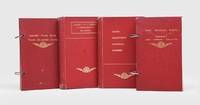
1933180520London: Shell Aviation Department 1933-39. The early years of commercial aviation Four rare navigational aids from Shell's newly formed aviation department each offering plans descriptions and facilities information for dozens of aerodromes across north Africa and the Middle East as well as guidance on flying conditions customs tariffs and permit requirements. The folding route maps also identify prohibited airspace. The March 1937 Cairo-Damascus-Calcutta schedule has been updated in places in a contemporary hand. For example at El Qantara Egypt fuel and lubricating oil are now available Baghdad's runways are recorded as "under construction" and the airfield at Bandar Dilam in Persia is noted as abandoned. The handful of Shell aviation guides held institutionally are all found in the US. 4 works octavo. Each with folding route map and plans in text. Original red cloth spiral-bound or fixed with metal rings through punch holes front covers lettered in gilt with gilt Shell logo two with volvelle ground speed calculator on inner front board. Later two works ex-British Air Ministry with usual ink accession and deaccession stamps and manuscript markings. One spiral-bound work now loose in its cloth covers and other with rear inner hinge cracked bindings rubbed occasional foxing: a very good collection. hardcover
171949895Kelly Field TX; Chanute Field IL; Scranton ND; Denver City TX: Almond Orwald Peterson 1917-1956. Two vols. Oblong folio. 1st. 13.25 x 10.25 in.; 12.25 x 10 in. 80; 80 pp unpaginated both with thick black paper stock with 359 tipped-in photos ranging in size from 1.75 x 2 in. up to 8 x 10 in many of them clearly marked in pencil and/or ink on versos some with signatures in lower white margin a images nearly all on glossy photo stock a couple hand-coloured many with minor creasing some damage to corners a couple with tears along the upper fore-edge still nearly all of the images are still quite clear and distinct; 4 leaf typescript on onion paper 24.5 x 36 in. blueprint folded for radio receiving station; 6 different course certifications for Peterson in handling oil field and natural gas pumping equipment. First album is contemporary ribbed cloth post-binder tied at gutter margin with black silk cord some bumping wear bumping to corners fraying; second padded leather album rounded corners gilt lettering front cover slots in leaves for postcards minor bumping head & foot of spine edgewear; still VG- set. These remarkable photo albums furnish an indispensable visual record of the history of American aviation just after World War I at Kelly Field TX and Chanute Field IL. Almond Orwald Peterson 1901-1977 son of Norwegian immigrants was born in Twin Valley MN moved with his family later to Billings and Scranton ND enlisted in the Army after High School trained as a radio operator and airplane mechanic worked as a mechanic after his service in North Dakota and then Texas and finally worked in the oil fields surrounding Denver City TX. Kelly Field in Texas was one of the Army Air Service’s primary fields for training and deploying pilots during World War I. After the massive demobilization at the end of the War the Kelly Field and Chanute Field in Illinois served as essential training grounds for Army pilots to exhibit their skills holding air races balloon races and training technicians. All technical schools were joined with the mechanics school at Chanute Field in 1922 and were re-designated the Air Corps Technical School by 1924. These excellent photographs not only include detailed shots of the barracks the radio towers the equipment rooms servicemen and more but also encompass a vast array of the aircraft which flew in and out of these fields along with many aerial shots. There are photos of German Fokker triplanes French Spads Curtiss DH-4s many of the Barling Bomber the Witteman-Lewis XNBL-1 an experimental long-range three-wing strategic bomber which proved massively unwieldy because it was too underpowered with its six engines a colour-tinted image of the USS Los Angeles Zeppelin and several other lighter-than-air balloons and airships as well. In addition there are many photographs of plane crashes showing the high attrition and danger of flying during the 1920s often in World War I surplus aircraft and even a few images of funerals and caskets for lost comrades. Almond Orwald Peterson, hardcover
194486284Belgium: The 942nd Engineer Aviation Topographical Battalion 1944. Presumed First Edition First printing The unit at the end had 30 Officers and 550 men--edition likely did not exceed 750 to 1000 copies. Wraps. Good. Format is approximately 7.875 inches by 10.25 inches. Unpaginated 68 pages. RARE not found in Dornbusch!!! Illustrated front cover. Illustrations. Maps. Cover has some wear and soiling. This is largely a pictorial work with many head shots of individual members of the Battalion. In addition includes some photographs of Belgium High Wycombe Battalion activities. When the Battalion was activated in was located at Kew Gardens Surrey within the limits of greater London. On April 17th 1944 the Battalion arrived at its permanent quarters which were located at AAF Station 101 Eighth Air Force Headquarters High Wycombe. Upon arrival the Battalion was immediately engaged in much preparatory work for the invasion D-Day. With the advent of "Bombing through the clouds" the Battalion was called upon to originate and develop a map for radar navigational purposes. This map was used to guide the bombers to the target even though clouds obscured the check points. The Rhine River and Siegfried Line defenses were photo-mapped and a 1:5000 scale mosaic of Berlin one of the largest mosaics ever attempted in the theater was successful completed. Important 'Dropping Zone" maps for airborne landings were made. One of the several jobs that were produced for 'outside the Theater" planning agencies was a series of special maps of power facilities of Japan. This particular project involved the use of as many as 157 different color patterns. In January 1945 the Battalion was reorganized and became an integral part of the 325th Reproduction and Interpretation Center at Virton Belgium. A new technique for the reproduction of photos with a maximum amount of detail retained was developed by Lt. George. For this work he was awarded the Bronze Star Medal. A further honor was given to M/Sgt. Pollina who received the Legion of Merit for his exemplary work in reproduction. Also a unit citation was given by the General commanding the First French Army for specialized work completed for this army. At the front of this work are commendations from General Omar Bradley Commanding Twelfth Army Group Lieutenant General J. H.Jimmy Doolittle Commanding the Eighth Air Force and Colonel Elliott Roosevelt Commanding the 325th Photographic Wing. In 1939 Gen. Hap Arnold negotiated with the U.S. Army Chief of Engineers for a special engineer unit to work with the Air Corps. The original concept envisioned a small group of skilled construction and engineer troops closely trained alongside air units with the ability to repair bomb damaged airfields to camouflage airfields and if necessary to defend airfields. These troops would also be capable of constructing light duty airfields in forward locations. After the German invasion of Poland demonstrated the value of such an organization the War Department created the 21st Engineers Aviation Regiment at Fort Benning Ga. on June 4 1940. At first responsibility for constructing heavy duty airfields remained with the Corps of Engineers but by mid-1941 the mission of the aviation engineers expanded beyond runway repair and light runway construction. As the possibility of American involvement in a global war grew the planners agreed to give the air forces enough men and equipment to construct their own heavy duty bases in forward areas. Without knowing exactly what would be needed to build air bases in deserts in jungles and on coral islands the planners devised the Engineering Aviation Battalion a self-contained unit that became the core of aviation engineering efforts during World War II. Originally established with 27 engineer officers and 761 enlisted men a battalion would be capable of "independently constructing an advanced airdrome and all appurtenances." Manned with well-trained and experienced personnel 12 EABs had been formed by the time of Pearl Harbor and sent to the Philippines to islands across the Southwest Pacific and northward to the Aleutian Islands. It became apparent however that more EABs would be needed quickly. Between December 1941 and December 1942 the number of battalions jumped from 12 to 51 and three-fourths of them were already overseas. The United States Army Corps of Engineers USACE is an engineer formation of the United States Army that has three primary mission areas: Engineer Regiment military construction and civil works. Military Surveying or Topography as it is technically called has the same object in view as Civil Surveying; that is the production of maps which bring under review in a small compass the general features both natural and artificial of a large extent of country. Maps are useful in many professional and business callings but to the soldier they are indispensable. The 942nd Engineer Aviation Topographical Battalion paperback
1945183037Cairo West: H.Q. 216 Group 1945. A detailed guide for RAF transport pilots A confidential navigational aid amended to August 1945 including a map of aviation routes along the southern tip of the Arabian Peninsula and down the Gulf as well as maps and plans of emergency airfields in southern Arabia primarily natural surface landing strips and airfields at Aden Riyan Salalah and Masira. The text details instrument approach procedures obstructions lighting and services for key airfields gives procedures to be followed after forced landings "in the blue" and lists distress signals. Formed in May 1942 within Middle East Command No. 216 Ferry Group later No. 216 Air Transport and Ferry Group handled all transport requirements for the Middle East theatre and was commanded for most of the war by Air Commodore Whitney Willard Straight 1912-1979. Quarto. With 14 leaves 3 folding of colour and black-and-white maps 12 sides of letterpress and duplicated typescript notices and instructions typescript notice wire-stitched on inside front cover. Contemporary manuscript alterations in contents. Original buff card covers fixed with butterfly pins through punch holes front cover lettered in black with manuscript additions. Covers creased and pins rusting as expected binding still holding firm chip at head of front cover occasional soiling: very good. unknown
181956097Bethany Hartford & Ansonia CT; Wayne MI; Dallas TX; Syracuse NY; Wichita KS: Stinson Aircraft Division of Vultee Aircraft Inc.; Luscombe Airplane Corporation; Aircooled Motors Inc. Cessna Aircraft Co. ca. 1918-1965. 8 vols. 4to. 56 silver gelatin photographs 1 in colour sized from 3.75 x 3.75 in. up to 11.5 x 14.5 in. with most sized 5 x 7 in. and 8 x 10 in. all sleeved w/in archival mylar sleeves many w/ annotations at lower fore-edge a few w/ photographer’s negative no. w/in the image several w/ annotations on versos in pen and pencil some w/ photographer’s or identifying stamps. All preserved in 3-ring binder stamping on front cover & spine. 4to. 2 25 leaves; 42 pp. w/ 5 large folding charts & exploding diagrams mimeographed; 25 leaves w/ 14 charts & diagrams many folding mimeographed; 7 1-69 pp. diagrams illustrations throughout tables; 128 pp. w/ many large folding charts diagrams tables; Approx. 70 pp paginated in each section separately; 34 pp. Tables together with 6 leaves mimeographed letter TLS four bound into original split-pin binders w/ printed or typed labels on front cover four w/ original printed softcovers minor soiling edgewear rubbing ownership stamps of the Bethany Airways Inc. Bethany Airport Bethany CT all from the collection of James Markey. An uncommon archive of photographs and aircraft manuals from the now-abandoned Bethany Airport which was one of the earliest private airports in New England. Originally organized on land purchased by Harris Whittemore Jr. of Naugatuck in 1922 recognizing the commercial potential with an airport situated near Hartford CT. Of historic note and interest is the large photo of the Cairns Aircraft X-329V which was a sleek mono-wing design built entirely of metal in Naugatuck CT originally powered with 90 horsepower motor and changed out according to the ALS on the verso with a 165 horsepower 5-Cylinder Wright J-6 Engine. On March 2 1932 Elliot McCune an experienced pilot took the plane up for an exhibition flight and the wing separated less than 500 feet from the ground and was killed when the chute had little time to open and the plane was destroyed. Edmond Burke Cairns b. 1883 notes in January 1966 after the closure of the Bethany Airport that this was “the only photo I have of the first plane we built in Naugatuck.†The other photos collected by the former airport owner as well as amateur pilots and aviation enthusiasts Markey & Highbridge include images of Major William Gerson Ladd b. 1896 commander of the 118th Observation Squadron 43rd Division Aviation and the Connecticut National Guard Air Service in Hartford; photo of Lt. Mather with the 118th Observation Squadron; an historic image of Huestis “Hugh†Wells delivering the first airmail for Colonial Air Transport of Naugatuck CT July 1 1925 along the route from Boston to New York by way of Hartford; along with an aerial photo of Hartford taken by the 118th Photo Section. Also preserved in the collection are a signed photo of Torrey H. Webb who on May 15 1918 was the first air carrier of airmail leaving Belmont Park NY with 2457 pieces of airmail delivery together with TLS from Texaco to James E. Markey mentioning the inclusion of the 1943 Texaco Start with story of the event. There are also images of a Cessna Model 170B built in 1952 a 1930 Monocoupe 90A fitted later with a Lycoming O-320 engine a Grumman single engine Model G-164 a Stinson Reliant the Wedell-Williams Racer #44 and many others. Addressed to Highbridge are the promotional literature partial blueprints and pricing with photos for the Falconar AMF-S14 Maranda a 2-seat light kit aircraft based on the Adam RA-14 Loisir a Lycoming O-320 engine and folding wings so it could be towed behind a car; another brochure for the Mignet HM290 “Airport†also known as the Flying Flea and photos showing the construction of the kit planes. The original inspection and operations manuals are quite scarce and those included in this grouping encompass the manual for the 1934 SR-5 Stinson Reliant built with a 41-foot wingspan with 145 produced the SR-7 Reliant which had a wing of 41 feet as well but it was the first taper-wing gull-wing Reliant and subsequently the plane earned the nickname of Stinson “Gullwing.†The 1940 Stinson Voyager Model 105 developed after Consolidated Vultee purchased the company was a 3-passenger aircraft and very successful with such notable owners as James Stewart and Howard Hughes snapping up theirs in the first Voyagers produced. During World War II the L-5 Sentinel version became the U.S. Army’s most used and least recognized aircraft serving as artillery spotter medical evacuation aerial reconnaissance and passenger transport. The parts catalogue included here for the 1946-47 provides invaluable historical reference for the very popular Flying Station Wagon or the Stinson 108 resulting in nearly 5000 produced and after being sold to Piper in 1949 the remainder were sold as Piper-Stinson aircraft for years. The very rare parts list and diagrams detailing the Luscombe Aircraft produced in Dallas TX shows the upgrades to the aircraft with an all metal wing two 12.5 gallon wing tanks and rear windows increasing visibility. No copies located of the 1934 or 1936 Stinson Manuals or Cessna Parts List 1 copy located of the 1940 Stinson 105 1947 Stinson Catalog Silvair Parts List & Franklin Canada Science & Technology Museum; See: Paul Freeman Bethany Airport Bethany CT Abandoned & Little-Known Airfields 2019; Peter Marteka Hiking at Abandoned Bethany Airport 2018; Bethany Connecticut -- March 2 1932 New England Aviation History May 14 2019. Stinson Aircraft, Division of Vultee Aircraft, Inc.; Luscombe Airplane Corporation; Aircooled Motors, Inc., Cessna Aircraft Co., paperback
191152972San Antonio TX: H. Rudolph Fox Photographer 1911. One large panoramic photo. 48 x 7.5 in. captions scratched into negative at lower margin minor restoration to small portion at the very lower far right fore-edge minor creasing still a VG exemplar. This exceedingly scarce original panoramic photograph features the United States Army maneuvers in March 1911 and was one of the earliest such camps to coordinate with US Army fliers. Within the image the YMCA tent is identified as well as the placement of the field hospital field artillery the Signal Corps as well as the Depot Commissary in the foreground. Above three different biplanes are shown flying maneuvers including the Wright Model B flown by Lt. Benjamin D. Foulois who along with Phil Parmalee flew the first military reconnaissance scouting missions in a fixed-wing aircraft along the US-Mexico border; as well as planes flown by Robert McCormic an early Chicago aviator and inventor who would later construct and house several experimental aircraft at Fort Sam Houston as well as Ben Johnson a San Antonio inventor who flew a Johnson Wright Model B airplane. The Wright Model B was the Wright brothers’ most successful aircraft produced from 1910 to 1914 and they were shipping nearly 4 aircraft a month. Unfortunately the rear elevator made the Model B more tail heavy and prone to stall and within two years faster propeller first aircraft with drag-reducing fuselages began appearing. Fort Sam Houston was a very popular experimental airfield for flying meets air races because it occupied 800 acres and the field was unbroken by no hills of real prominence. Established in 1890 as a post the War Department began expanding the Fort after the Spanish-American War adding Cavalry and Light Artillery from 1905-1912 and also served as the birth of military aviation. Lt. Foulois had made his first solo flight the year before in March 1910. See: Edmond Percy Noel America Now Has Forty Flying Fields San Antonio Tex. Aero and Hydro 1912 Vol. 4 pp. 59 66; McFarland The Papers of Wilbur and Orville Wright 1953 p. 1183. H. Rudolph, Fox Photographer, unknown
194952958Portland OR: Ackroyd Photography Inc. 2116 NW 20th Ave. May 1949. 4to. 88 pp unpaginated thin yellow-tinted paper w/ 215 original silver gelatin photographs sized from 3.5 x 4.5 in. up to 8 x 10 in. a number are 4.5 x 7 in. mounted with glue on the leaves stamped Ackroyd on versos each with negative number on verso some w/ negative numbers in fore-edge of image. Original tan softcover split-pin binder sewn at gutter margin w/ cotton twine occasional creasing to covers minor shelfwear some images w/ minor folds or creases especially those at gutter margins still a VG exemplar. This fascinating photographic proof book provides historic images of the first transcontinental private “Air Tour†following World War II and the lifting of aviation restrictions at the end of the War. With 1000s of returning fliers from the United States armed forces with flying experience Americans began taking to the skies in record numbers. Participants were able upon their return later to Portland OR go to the photographer’s studio and pick out which images they would like to purchase and add to their own souvenir books. On May 21 1949 the Portland Oregon Chamber of Commerce had organized an air tour which was similar to those which had heavily promoted civil aviation in the 1920s and 1930s from Portland OR across the continent to Portland Maine. Fifty-five aircraft plus a US Air Force C-47 assembled at Troutdale Airport and took off surrounded by the Chamber of Commerce Aviation Committee. Ackroyd 1913-2012 noted aviation commercial photographer and aerial aficionado was contracted along with KGW Radio’s director of public events Bob Tomlinson and Earl Peterson technical supervisor to document the historic tour. These images show the 55 planes parked across the tarmac participants eating and loading their planes appearances by representatives from the 1949 Pendleton Round-Up including cowboys and Native Americans in native dress and the decidedly cramped quarters inside a few of the larger aircraft. Peterson and Tomlinson are shown setting up their equipment and broadcasting campy skits featuring the Grants Pass air club members in cave man costumes “kidnapping†and carrying off female members others in pirate costumes along with a tour of a B-29 superfortress. There are photos of aircraft taking off and landing at airports in Salt Lake City UT Cheyenne WY Wichita KS Indianapolis IN Akron OH Lock-Haven PA including the Portland Rose Festival plane float planes with all finally reaching Portland ME on May 28 1949. Upon arrival there was a huge lobster feast party featuring a map decorated cake and the fliers were met by Portland ME officials and Governor Frederick G. Payne. Ackroyd shows the welcome banners airport and the planting of gift roses in front of the Portland ME sign. Of particular interest are the series of aerial photos over Manhattan and the other boroughs of New York City in 1949. Ackroyd was a Canadian photographer who began shooting photos at the age of 16 in British Columbia moved to Hollywood where he shot celebrity portraits but eventually moved to Portland OR before World War II and began shooting pictures of ships and barges for Gunderson Inc. and Shaver Transportation Co. He was adept at aerial photography and was well known for his images of Mt. Hood and the Columbia River Gorge from the air. See: Bill Alley Hands Across America -- The 1949 Air Tour Logbook Magazine Vol. 12 No. 1 2014; Lev Richards First 25 Years of the CAA Columbia Aviation Association 2017; Talk of the Trade The Billboard Radio-Television May 21 1949 p. 9; Flying Oregonians Make Merry Munch Lobster as City’s Guests May 29 1949 Portland Press Herald May 29 1949 p. 6; Air Tour Vanguard Arrives May 28 1949 Portland Press Herald pp.1-2. Ackroyd Photography Inc., 2116 NW 20th Ave., paperback
B4016Toronto: Canadian Flying Clubs Association. Text and plates are clean and crisp. Spines are worn. . Binding: Original half morocco with cloth boards. Tooled Gilt lettering. Size: 4to 225mm x 299mm Illustration: Illustrated with a profusion of different drawings and designs of different airplanes and a series of delightful period advertisements. Volume: 6 yearly volumes Category: Book Transportation General; Canadian Flying Clubs Association hardcover
1945CAT01371945. Various sizes and dates. Clara Adams was a wealthy widow who took up air travel in its early days setting records for transatlantic flights and circumnavigation as a commercial airline passenger. In doing so she helped popularize flying as a safe and comfortable way to travel. She was friends with many famous women of aviation including pilots Amelia Earhart Alys McKey Bryant and Thea Rasche. This collection includes three photographs with Earhart and one with Rasche some with holograph inscriptions. Also present are items related to the captain of the Graf Zeppelin Hugo Eckener; a rare Ohio hobbyist magazine; and a curious leaflet advertising light art Clavilux recitals. An unusual collection collected by Adams and showing her range of interests. <br /> <br /> Contents arranged chronologically:<br /> <br /> Sproul William Cameron. ALS. Postmark: Dec 8 1927. Single leaf 2 pp.; together with envelope. Sproul was a governor of Pennsylvania he writes to Adams that he is staying at a hunting lodge in Virginia and quite unwell. He died in 1928. <br /> <br /> Earhart Amelia Photograph of Clara Adams and Amelia Earhart 1929. 8 x 10 inches somewhat faded signed by Chautauqua portrait photographer Harold Wagner. Photograph taken at the home of Dr. and Mrs. Arthur Bestor after Earhart landed her plane at the Chautauqua Golf Course on July 20 1929. <br /> <br /> Earhart Amelia Two photographs of Clara Adams and Amelia Earhart with Earhart’s plane 1929. Each: 3 â… x 5 ¾ inches and 2 ¾ x 5 ½ in. in corner mounts on vintage album paper very good. Another photograph verso of Adams and unidentified group of people.<br /> <br /> Eckener Hugo Two Photographs of Adams with Dr. Hugo Eckener 1929. Each approximately 3 ¼ x 5 inches captions in Adams’ handwriting with date and place Lakehurst N.J. Together with an envelope from Eckener to Adams postmarked 1947. Eckener was the captain of the Graf Zeppelin which departed from Lakehurst Naval Air Station during its record-setting circumnavigation in 1929. <br /> <br /> Rasche Thea Photograph with Thea Rasche n.d. 7 â…› x 5 inches very good. Rasche was a German aerobatics pilot at Tempelhof airport ca. 1930s. Very good.<br /> Photograph of Clara Adams with Nazi officers. 5 â…ž x 4 inches very good. Adams and the officers are in a hot air balloon presumably in Germany. Very good.<br /> <br /> Hamburg America Line Canceled Check to Hamburg Am Line 1935. Written by Clara Adams to the transatlantic shipping company Hamburg America Line in the amount of $123.50. Very good. <br /> <br /> National Coin Journal and Hobby News: The Hobbiests sic Mail-Order Journal. No. 1 Feb.-Apr. 1936. Lorain Ohio: The Hobby Shop 1936. Featuring Clara Adams on cover 8vo 28 pp.; toned and frayed covers separated. Rare single-issue hobbyist magazine. OCLC locates one institutional holding the National Postal Museum. <br /> <br /> Mortiz Carol Joan. “To Clara Adams.†In The Brooklyn Eagle Nov. 23 1940. Newspaper clipping mounted to Pan American Airways stationary with ink notation presumed to be in Adams’s hand. <br /> <br /> Boeing. “Tomorrow’s air-liner--today’s record breaker.†Advertisement clipped from Life magazine 1945. With photo of the Stratoliner and inscription in Adams’ hand noting that she was a passenger on the first flight “N.Y. to Cal. / Cal. back to N.Y.†Folded else good.<br /> Undated:<br /> <br /> Eleven photographs of Clara Adams various dates most approx. 4 x 2 ½ in. a few smaller good. Including image of her in front of the stairs to the “Mainliner†and in Hawaii. <br /> Lorraine Studio Brooklyn photo sleeve. 5 â… x 3 ½ in; empty.<br /> <br /> Adams press photo. 7 â…› x 5 inches; holograph signature recto; verso pencil inscription also lists photographer Glen Lowry.<br /> Unsigned press photo corner bent.<br /> <br /> Wilfred Thomas Clavilux Recitals played by Thomas Wilfred. New York: n.d. Single leaf folded 4 pp.; illus. with Adams holograph signature to front. Wilfred invented the Clavilux “light organ†to play lumia an artform combining light and music. This item advertising performances at the Grand Central Palace in New York where Wilfred ran the Art Institute of Light until the beginning of WWII. unknown
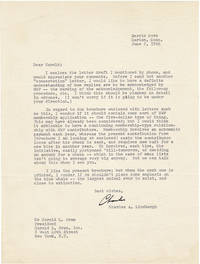
1966100290<p>Darien Connecticut June 2 1966. 1966. Fine. - Over 230 words typed on 10-7/8 inch high by 8-1/2 inch wide watermarked paper. Writing to the founder of the Oram Group Harold L. Oram who raised funds for humanitarian and conservation groups the famous aviator Charles Lindbergh writes with his suggestions for the World Wildlife Fund's membership drive and letter. "Before I send out another 'conservation' letter I would like to have a definite understanding of how replies are to be acknowledged by WWF." "In regard to the brochure enclosed with letters such as this I wonder if it should contain some sort of WWF membership application -- the five-dollar type of thing." He goes on to suggest the possibility that "Membership involves an automatic payment each year whereas the present contribution form brochure I am looking at enclosed casts the contributor loose after his check is sent and requires new bait for a new bite in another year." He concludes by saying that while he likes the present brochure he suggests emphasizing the blue whale in the next one. Signed "Charles". Folded for mailing with a minor crease to the top left corner else fine.</p><p>The American aviator military officer and writer Charles Augustus Lindbergh 1902-1974 flew his aircraft the Spirit of St. Louis on the first nonstop flight from New York to Paris on May 20 & 21 1927. In doing so Lindbergh sent a new flight distance world record and initiated a new era of air transportation. In later life he became heavily involved in humanitarian and conservation movements and campaigned to protect endangered species and as well as protecting the way of life for native tribes in the Philippines and Africa. Lindbergh's essays introduced millions to the conservation cause.</p><p>Harold L. Oram 1907-1990 was the founder and president of the Oram Group a fund raising organization for humanitarian conservation and environmental causes. Oram started his career in 1939 by aiding the relief efforts for for Spanish Loyalists battling the Falangists led by Francisco Franco. Oram raised money for the NAACP Legal Defense and Educational Fund The World Population Emergency Campaign which merged with Planned Parenthood The Natural Resources Council the American Civil Liberties Union and the World Wildlife Fund WWF among others.</p> Darien, Connecticut, June 2, 1966.
191960735Great Lakes Chicago & Waukegan IL: Naval Aviation Training School L. Blakemore Isaack Wallenstein & Western Photo Studio Photographers ca. 1919-1921. Oblong atlas folio. 21.5 x 9 in. 43 leaves unnumbered. on thick black paper stock. With 52 original silver gelatin photos tipped-in sized from 5 x 7 in. up to 19 x 8 in. 36 panoramas sized from 18 x 3 in. up to 19 x 18 in. some w/ photographer’s imprint w/in negative at lower fore-edge some captioned all tipped-in. Contemporary Spruce plywood post-binder covers same as wood used for spars and biplane bodies in World War I rounded corners piano hinge front joint gilt decorative lettering & logo on front cover minor scuffing shelfwear still VG exemplar. This outstanding souvenir album depicts the height of the vital Naval Aviation Training School which provided essential technical expertise and training to entire generations of Naval Aviators and Naval aviation mechanics and carpenters through World War I and beyond. Founded originally in 1904 when a board appointed by President Theodore Roosevelt selected two farms of north of Lake Bluff IL as a training station which originally covered 172 acres. By Armistice Day at the end of World War I the facility had expanded to 1200 acres and over 45000 men underwent training. Of particular interest in this album are the 36 panoramic photographs documenting Naval Aviator and Naval Aviation mechanic classes for the 15th Regiment and 1st Battalion 15th Regiment from 1919-1920 as well as class rooms machine shops for aviation mechanics and Naval instructors. Others encompass the cutaway model Aviation engines with instructional charts on the surrounding wals the carpenter’s shop with aviation machinery jigs on work benches and airline bodies under construction. One photo depicts the Motor Laboratory Steam Laboratory and Equipment from the USS Eagle 25 at the Aviation Mechanics’ School a US Navy patrol boat which had sunk in a storm in June 1920 and then been raised and sold off as a hulk by Dec. 1921. Other panoramic photos capture the Riggers’ School classroom at Great lakes with full scale biplanes and seaplanes scale model dirigible the Coppersmith School classroom the Fittings classroom with airplane propellers hanging from the walls dip baths for machined parts and nickel plate coating and several of the Naval Aviation School football baseball and other sporting teams including the largest panorama of the Inter-Training Station Baseball championship team from Great Lakes. Wallenstein 1861-1958 was a longtime Chicago photographer through the first four decades of the 20th Century who operated his studio out of his 3928 N. Kenneth home and specialized in panoramic photographs. Western Photo Studio in Waukegan IL appears to have been short-lived as the Waukegan IL directories from 1918-1921 do not list the business but possibly connected with the Western Union Telegraph offices as the address was interchangeable. Volpe 1885-1950 began working in New York originally as a bookbinder before enlisting as an aviation mechanic with the US Navy in 1910 assigned originally to the newly formed ground school in Pensacola and later became Chief Warrant Officer Pilot Airman and Instructor who oversaw the Naval Aviation Training School from 1918-1921. He was also the assistant Athletic officer for baseball and tennis at the base. Naval Aviation Training School, L. Blakemore, Isaack Wallenstein, & Western Photo Studio (Photographers), unknown
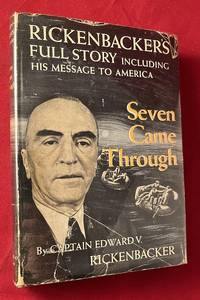
19435515Garden City NY: Doubleday Doran and Company 1943. First Edition First Printing. Hardcover. Very Good/Very Good. 5 3/4 X 8 Inches. 118 PP. Signed "To my good friend & associate / "Hugh Knowlton" / With my very best wishes / Capt. Eddie Rickenbacker 1943" directly on the FFEP.<br /> <br /> Stated "First Edition" on the copyright page. Original price of $1.50 intact on front flap. Signed by Capt. Eddie Rickenbacker to his friend and the man largely responsible for his purchase of Eastern Airlines from General Motors in 1938. Rickenbacker a Medal of Honor Recipient is best known as the most successful fighter ace of WWI. After WWI Rickenbacker parlayed his fame into an eventual purchase of Eastern Airlines for $3.5 million. In 1942 Rickenbacker was sent by the Secretary of War Henry Stimson on a tour of Pacific Theater Operations at the outset of WWII and survived 24 days adrift at sea after his plane crashed. <br /> <br /> A clean copy with minor toning. DJ a bit chipped and worn at edges and folds. Tape repairs to inside of DJ. Doubleday, Doran and Company hardcover