GONZALES, JulienLivre Rare Book

128 résultats
20101258372010 Editions à compte d'auteur - 2010 - In-4 broché, couverture illustrée - 350 pages - Illustrations en N&B dans le texte - Avec un envoi de l'auteur en page de titre
2012146016München. GeraMond Verlag 2012. 150 (1) Seiten. Mit zahlreichen meist farbigen Abbildungen. Farbig illustrierter OKart.-Einband. (Bindung etwas gelockert). 24x17 cm
201688381EPA, Chêne 2016 In-4 cartonné 31,2 cm sur 25. 192 pages. Très bon état d’occasion.
200818359E/p/a 2008 183 pages In-4 oblong. 2008. Cartonné/Jaquette. 183 pages. Avec illustrations et reproductions photographiques
2009113619Kessinger Publishing's Rare Reprints, 2009. 23 cm ; kart.
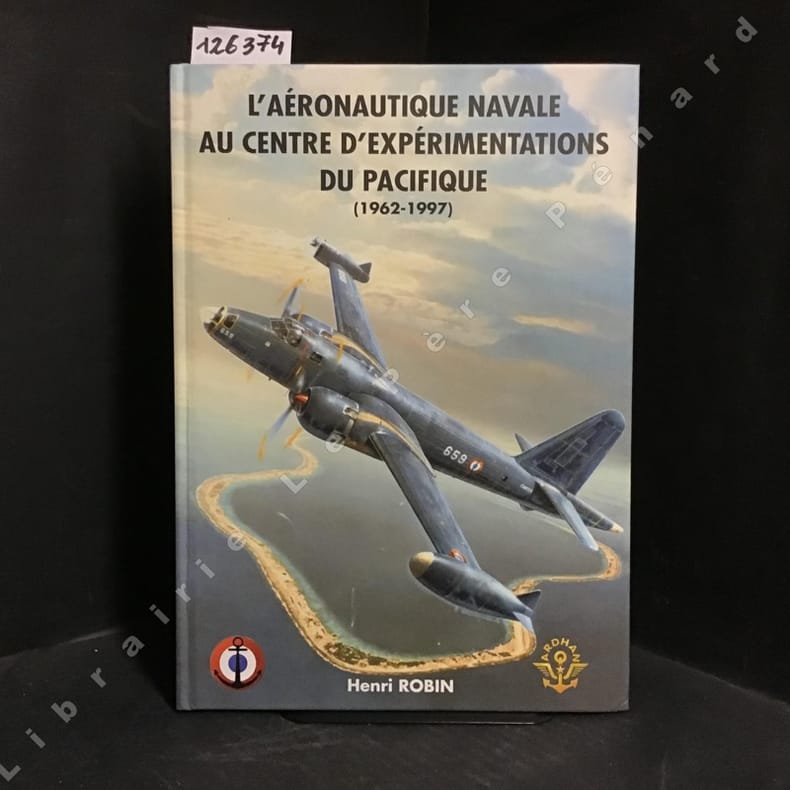
2007881332007 Paris, Association pour la Recherche de Documentation sur l'Histoire de l'Aéronautique Navale (ARDHAN), 2007, in 4°, cartonnage illustré de l'éditeur, 520 pages ; texte sur deux colonnes ; importante iconographie en noir et en couleurs.
2016500230024JPO 2016 240 pages 21x29 3x1 2cm. 2016. Broché. 240 pages.
201685615Capelle-Lès-Hesdin 62140, Chez l’auteur 2016 In-4. Broché, couverture illustrée en couleurs, 223 pp., illustrations en noir & blanc.
201785616Capelle-Lès-Hesdin 62140, Chez l’auteur 2017 In-4. Broché, couverture illustrée en couleurs, 231 pp., illustrations en noir & blanc.
20071169622007 Editions Confluences - 2007 - Fort in-8, broché, couverture illustrée sous jaquette illustrée de l'éditeur - 400 p. - Reproductions photographiques hors texte en N&B - Probable envoi de l'un des auteurs sur la 1ère page
200658389ABBad Waldsee, Liebel Verlag, 2006. 8° (30x21), 180 S., mit zahlr. teils historischen fotograf Aufnahmen, ill OPbd, ohne Gebrauchsspuren, offensichtlich ungelesen, frisch,
200323845Arthaud 2003 Preface de Jean-Claude Killy. Dessins des avions par Philippe Mitschke. In-4, cartonnage sous jaquette illustrée, 200 p. Plus de 200 illustrations, principalement photographies n&b. Etat neuf.
2015ARCHEOLLL51215Suisse, Gollion, Infolio Editions, 2015, 23,5 x 28,5, 340 pages sous cartonnage éditeur illustré. Abondante iconographie en couleurs.
2005181261Tallandier Paris, Tallandier, 2005. Grand et fort In-8 de 1129 pages. Couverture à rabat. Illustrations dans le texte en noir et blanc. Bon état
200522886Privat 2005 371 pages in-4. 2005. Cartonné/Jaquette. 371 pages. Avec de nombreuses illustrations
2016500123036JPO 2016 240 pages 21x29 3x1 2cm. 2016. Broché. 240 pages.
2010167182Chichester, UK. : Praxis Publishing (Leipzig; Amazon), 2010. xviii.; 439 S. Gr.-8°, Broschur
20121263742012 Association pour la Recherche de Documentation sur 'Histoire de l'Aéronautique Navale - 2012 - In-4 relié, cartonnage illustrée - 421 pages - Tirage à 1500 exemplaires - Nombreuses illustrations en N&B et en couleurs, in et hors texte, dans l'ouvrage
2003AME_9781563476259Aeronautics 2003. 1st. Hardcover. New/New. Aeronautics hardcover
200352301Washington DC: GPO 2003. Wraps. good ex-library condition. 261 pages CDROM wraps volume 1 only of the 6-volume set color illustrations figures endnotes appendices usual library markings covers somewhat soiled. Includes CDROM with over 100 MB of video plus over 700 pages of NASA documents including the STS-107 press kit and NASA's implementation plan for return to flight and beyond. Investigates loss of the Space Shuttle Columbia STS-107 and its seven-member crew on February 1 2003. Four parts entitled: The Accident; Why the Accident Occurred; A Look Ahead; and Appendices A B C. Concludes with recommendations. Appendices D E F G and H comprise the remaining 5 volumes not present and provide information on technical documentation and transcripts of Accident Board public hearings. This volume comprises the major assessment conclusions and recommendations. GPO paperback
201186082Houston TX: National Aeronautics and Space Administration Johnson Space Center 2011. Presumed First Edition First printing of multiple originals. Single sheet printed on both sides. Very good. The format is approximately 8.5 inches by 11 inches. This is a single sheet with printing/imagery on both sides in a plastic sleeve. On the front side is a large color photograph of the four astronauts/Shuttle Crew members. On the other side are primarily four columns of text one column for each of the crew members with a small one-column spread with a picture of the four crew members at the top left corner and a larger two-column spread with an illustration of the STS-135 Mission Patch and a text description. The four crew members were Commander Christopher J. Ferguson Captain United States Navy ret. Pilot Douglas G. Hurley Colonel U.S. Marine Corps Mission Specialist Sandra H. Magnus Ph.D. and Mission Specialist Rex J. Wallheim Colonel U.S. Air Force ret. The STS-135 patch represent the Space Shuttle embarking on its mission to resupply the International Space Station. The Shuttle is centered over elements of the NASA emblem depicting how the Space Shuttle has been at the heart of NASA for the previous 30 years. The Patch also pays tribute to the entire NASA and contractor team that made possible all the incredible accomplishments of the Space Shuttle. Omega the last letter in the Greek alphabet signifies that this mission is the last flight of the Space Shuttle Program. STS-135 ISS assembly flight ULF7 was the 135th and final mission of the American Space Shuttle program. It used the orbiter Atlantis and hardware originally processed for the STS-335 contingency mission which was not flown. STS-135 launched on July 8 2011 and landed on July 21 2011 following a one-day mission extension. The four-person crew was the smallest of any shuttle mission since STS-6 in April 1983. The mission's primary cargo was the Multi-Purpose Logistics Module MPLM Raffaello and a Lightweight Multi-Purpose Carrier LMC which were delivered to the International Space Station ISS. The flight of Raffaello marked the only time that Atlantis carried an MPLM. Although the mission was authorized it initially had no appropriation in the NASA budget raising questions about whether the mission would fly. On January 20 2011 program managers changed STS-335 to STS-135 on the flight manifest. This allowed for training and other mission specific preparations. On February 13 2011 program managers told their workforce that STS-135 would fly regardless of the funding situation via a continuing resolution. Until this point there had been no official references to the STS-135 mission in NASA documentation for the general public. During an address at the Marshall Space Flight Center on November 16 2010 NASA administrator Charles Bolden said that the agency needed to fly STS-135 to the station in 2011 due to possible delays in the development of commercial rockets and spacecraft designed to transport cargo to the ISS. "We are hoping to fly a third shuttle mission in addition to STS-133 and STS-134 in June 2011 what everybody calls the launch-on-need mission. and that's really needed to buy down the risk for the development time for commercial cargo" Bolden said. The mission was included in NASA's 2011 authorization which was signed into law on October 11 2010 but funding remained dependent on a subsequent appropriations bill. United Space Alliance signed a contract extension for the mission along with STS-134; the contract contained six one-month options with NASA in order to support continuing operations. The federal budget approved in April 2011 called for US$5.5 billion for NASA's space operations division including the shuttle and space station programs. According to NASA the budget running through September 30 2011 ended all concerns about funding the STS-135 mission. The reduced crew size also allowed the mission to maximize the payload carried to the ISS.20 It was the only time that a Shuttle crew of four flew to the ISS. The last shuttle mission to fly with just four crew members occurred 28 years earlier. The Multi-Purpose Logistics Module MPLM Raffaello made up the majority of the payload. This was Raffaello's fourth trip to the International Space Station since 2001 and the 12th use of an MPLM. Unlike previous MPLM missions that delivered large compartments and devices to outfit the space station laboratories STS-135 delivered only bags and supply containers. The MPLM was filled with 16 resupply racks which is the maximum that it could handle. Eight Resupply Stowage Platforms RSPs two Integrated Stowage Platforms ISPs six Resupply Stowage Racks RSRs and one Zero-G Stowage Rack ZSR which sits above another rack during transport. On flight day 4 Raffaello was lifted out of Atlantis's payload bay using the station's Canadarm2. It was berthed to nadir port of the Harmony node. After completing the cargo transfers to the ISS Raffaello was loaded with almost 5700 pounds of unneeded equipment and station waste to be brought back to Earth. On flight day 11 the MPLM was detached from Harmony and was secured in the cargo bay of the shuttle. National Aeronautics and Space Administration, Johnson Space Center unknown
200486160Houston TX: National Aeronautics and Space Administration Johnson Space Center 2004. Presumed First Edition First printing one of multiple originals. Single sheet printed on both sides. Very good. The format is approximately 8.5 inches by 11 inches. This is a single sheet with printing/imagery on both sides in a plastic sleeve. On the front side is a large color photograph of the seven astronauts/Shuttle Crew members. On the other side are primarily four columns of text with text for each of the crew members with a small two-column spread with a outline with names of the seven crew members at the top center and a half-column spread at the bottom of the fourth column with an illustration of the STS-114 Mission Patch and a text description. The STS-114 patch signifies the return of the Space Shuttle to flight and honors the memory of the STS-107 Columbia crew. The Shuttle rising above Earth's horizon includes the Columbia constellation of seven stars echoing the STS-107 patch and commemorating the seven members of that mission. The crew of STS-114 carry the memory of their mission back into Earth orbit. The dominant design element of the STS-114 patch is the planet Earth which represents the unity and dedication of the many people whose efforts allow the Shuttle to safely return to flight. Against the background of the Earth at night the blue orbit represents the International Space Station ISS with the EVA crewmembers named on the orbit. The red sun on the orbit signifies the contributions of the Japanese Space Agency to the mission and to the ISS program. The multi-colored Shuttle plume represents the broad spectrum of challenges for this mission including Shuttle inspection and repair experiments and International Space Station re-supply and repair. STS-114 was the first "Return to Flight" Space Shuttle mission following the Space Shuttle Columbia disaster. The crew members were Commander Eileen M. Collins Colonel USAF Pilot James M. Kelly Lieutenant Colonel USAF Mission Specialist Soichi Noguchi JAXA Astronaut Mission Specialist Stephen K. Robinson Ph.D. Mission Specialist Andrew S. W. Thomas Ph.D. Mission Specialist Wendy B Lawrence Captain USN and Mission Specialist Charles J. Camarda Ph.D. Discovery launched at 10:39 EDT 14:39 UTC July 26 2005. The launch 907 days approx. 29 months after the loss of Columbia was approved despite unresolved fuel sensor anomalies in the external tank that had prevented the shuttle from launching on July 13 its originally scheduled date. The mission ended on August 9 2005 when Discovery landed at Edwards Air Force Base in California.2 Poor weather over the Kennedy Space Center in Florida hampered the shuttle from using its primary landing site. Analysis of the launch footage showed debris separating from the external tank during ascent; this was of particular concern because it was the issue that had set off the Columbia disaster. As a result NASA decided on July 27 to postpone future shuttle flights pending additional modifications to the flight hardware. Shuttle flights resumed a year later with STS-121 on July 4 2006. STS-114 marked the return to flight of the Space Shuttle after the Columbia disaster and was the second Shuttle flight with a female commander Eileen Collins who also commanded the STS-93 mission. The STS-114 mission was initially to be flown aboard the orbiter Atlantis but NASA replaced it with Discovery after improperly installed gear was found in Atlantis' Rudder Speed Brake system. During OMM for Discovery an actuator on the RSB system was found to be installed incorrectly. This created a fleet wide suspect condition. The Rudder Speed Brake system was removed and refurbished on all three remaining orbiter vehicles and since Discovery's RSB was corrected first it became the new Return to Flight vehicle superseding Atlantis. Seventeen years prior Discovery had flown NASA's previous Return to Flight mission STS-26. The STS-114 mission delivered supplies to the International Space Station. However the major focus of the mission was testing and evaluating new Space Shuttle flight safety techniques which included new inspection and repair techniques. The crewmembers used the new Orbiter Boom Sensor System OBSS - a set of instruments on a 50 feet extension attached to the Canadarm. The OBSS instrument package consists of visual imaging equipment and a Laser Dynamic Range Imager LDRI to detect problems with the shuttle's Thermal Protection System TPS. The crew scanned the leading edges of the wings the nose cap and the crew compartment for damage as well as other potential problem areas engineers wished to inspect based on video taken during lift-off. STS-114 was classified as Logistics Flight 1. The flight carried the Raffaello Multi-Purpose Logistics Module built by the Italian Space Agency as well as the External Stowage Platform-2 which was mounted to the port side of the Quest Airlock. They deployed MISSE 5 to the station's exterior and replaced one of the ISS's Control Moment Gyroscopes CMG. The CMG was carried up on the LMC Lightweight Multi-Purpose Experiment Support Structure Carrier at the rear of the payload bay together with the TPS Repair Box. National Aeronautics and Space Administration, Johnson Space Center unknown
200786117Kennedy Space Center FL: National Aeronautics and Space Administration Kennedy Space Center 2007. Presumed First Edition First printing. Wraps. Very good. The format is approximately 8.25 inches by 11 inches. 8 pages. Illustrations some in color. This includes information on STS-114 STS-121 STS-115 and STS-116 the 17th 18th 19th and 20th Space Station flights The write-ups include mission highlights EVAs Launch and Landing. A latter version of Volume 3 had 12 pages and included two more missions into 2007. This variant is now quite scarce having been superseded. The International Space Station ISS is the largest modular space station in low Earth orbit. The project involves five space agencies: the United States' NASA Russia's Roscosmos Japan's JAXA Europe's ESA and Canada's CSA. The ownership and use of the space station is established by intergovernmental treaties and agreements. The station serves as a microgravity and space environment research laboratory in which scientific research is conducted in astrobiology astronomy meteorology physics and other fields. The ISS is suited for testing the spacecraft systems and equipment required for possible future long-duration missions to the Moon and Mars. The Space Shuttle was a partially reusable low Earth orbital spacecraft system operated by NASA the National Aeronautics and Space Administration. Its official program name was Space Transportation System STS taken from a 1969 plan for a system of reusable spacecraft of which it was the only item funded for development. Operational missions launched numerous satellites conducted science experiments in orbit and participated in construction and servicing of the International Space Station ISS. The first of four orbital test flights occurred in 1981 leading to operational flights beginning in 1982. From 1981 to 2011 a total of 135 missions were flown all launched from Kennedy Space Center KSC in Florida. During that time period the fleet logged 1322 days 19 hours 21 minutes and 23 seconds of flight time. The longest orbital flight of the Shuttle was STS-80 at 17 days 15 hours while the shortest flight was STS-51-L at one minute 13 seconds when the Space Shuttle Challenger broke apart during launch. The cold morning shrunk an O-Ring on the right Solid Rocket Booster causing the external fuel tank to explode. The shuttles docked with Russian space station Mir nine times and visited the ISS thirty-seven times. The highest altitude apogee achieved by the shuttle was 386 milrd when deploying the Hubble Space Telescope. The program flew a total of 355 people representing 16 countries and with 852 total shuttle fliers. The Kennedy Space Center served as the landing site for 78 missions while 54 missions landed at Edwards Air Force Base in California and one mission landed at White Sands New Mexico. The first orbiter built Enterprise was used for atmospheric flight tests ALT but future plans to upgrade it to orbital capability were ultimately canceled. Four fully operational orbiters were initially built: Columbia Challenger Discovery and Atlantis. Challenger and Columbia were destroyed in mission accidents in 1986 and 2003 respectively killing a total of fourteen astronauts. A fifth operational orbiter Endeavour was built in 1991 to replace Challenger. The Space Shuttle was retired from service upon the conclusion of STS-135 by Atlantis on 21 July 2011. National Aeronautics and Space Administration, Kennedy Space Center paperback
200586140Washington DC: National Aeronautics and Space Administration NASA Center for AeroSpace Information CASI Publications and Graphics Department 2005. Presumed First Edition First printing of this annual report. Trade paperback. Very good. Lynette Cook Front cover art. The format is approximately 11 inches by 8.5 inches. 167 1 pages. Illustrations most with color. Annual report on technology transfer or "technology twice used" inventions from NASA. Since 1976 Spinoff has profiled technologies that benefit from NASA investment and expertise. These developments have transformed into commercial products and services that are used throughout daily life from your cell phone camera to the memory foam in your mattress. When Congress created NASA it mandated the agency disseminate its innovations as widely possible. To that end the Technology Transfer Program was created in 1964 and it has functioned ever since making it NASA’s longest continuously operated mission. Early publications about NASA inventions made available to the scientific and engineering communities resulted in feedback indicating a broad interest in the private sector in adapting NASA technology for commercial uses. As products began to emerge NASA began preparing annual reports on these successes to present at congressional budget hearings. Spinoff has been published in a four-color editionand it has been released every year since 1976. All together since its first edition NASA has shared the stories of more 2000 products and services that began as or have benefited from NASA technology. In addition to the general public NASA sends copies of Spinoff to politicians representatives at the United Nations economic decision makers company CEOs academics scientists engineers professionals in technology transfer the news media and many others. The early black-and-white Technology Utilization Program Reports published in 1973 and ‘74 generated so much public interest that NASA decided to turn them into an attractive publication for a general audience. NASA SPINOFF now features dozens of success stories annually online and in its print publication demonstrating the wider benefits of America’s investment in its space program. The 2005 edition highlights Partnership Benefits in Health and Medicine Transportation Public Safety Consumer/Home/Recreations Environment and Resources Management; Computer Technology and Industrial Productivity/Manufacturing Technology. National Aeronautics and Space Administration, NASA Center for AeroSpace Information (CASI), Publications and Graphics Departmen paperback
200967232Moffett FIeld CA: United States National Aeronautics and Space Administration 2009. Reprint. Second Printing. Wraps. Very good. Includes: illustrations diagrams. Various paginations approximately 125 pages. References. From Wikipedia: "The Stratospheric Observatory for Infrared Astronomy SOFIA is a joint project of NASA and the German Aerospace Center DLR to construct and maintain an airborne observatory. NASA awarded the contract for the development of the aircraft operation of the observatory and management of the American part of the project to the Universities Space Research Association USRA in 1996. The DSI Deutsches SOFIA Institut manages the German parts of the project which are primarily science and telescope related. SOFIA's telescope saw first light on May 26 2010. SOFIA is the successor to the Kuiper Airborne Observatory.SOFIA is based on a Boeing 747SP wide-body aircraft that has been modified to include a large door in the aft fuselage that can be opened in flight to allow a 2.5 meter diameter reflecting telescope access to the sky. This telescope is designed for infrared astronomy observations in the stratosphere at altitudes of about 41 000 feet about 12 km. SOFIA's flight capability allows it to rise above almost all of the water vapor in the Earth's atmosphere which blocks some infrared wavelengths from reaching the ground. At the aircraft's cruising altitude 85% of the full infrared range will be available. The aircraft can also travel to almost any point on the Earth's surface allowing observation from the northern and southern hemispheres. Once ready for use the expectation is for observing flights to be flown 3 or 4 nights a week for the next 20 years. SOFIA is now based at NASA's Dryden Aircraft Operations Facility at LA/Palmdale Regional Airport California while staff at NASA Ames Research Center in Mountain View California operate the SOFIA Science Center where astronomical observation missions are planned for the flying observatory. The NASA logo reflected in SOFIAs 2.5-meter primary mirror. SOFIA uses a 2.5-meter reflector telescope which has an oversized 2.7 meter diameter primary mirror as is common with most large infrared telescopes. The optical system uses a Cassegrain reflector design with a parabolic primary mirror and a remotely configurable hyperbolic secondary. In order to fit the telescope into the fuselage the primary is shaped to an f-number as low as 1.3 while the resulting optical layout has an f-number of 19.7. A flat tertiary dichroic mirror is used to deflect the infrared part of the beam to the Nasmyth focus where it can be analyzed. An optical mirror located behind the tertiary mirror is used for a camera guidance system. The telescope looks out of a large door in the side of the fuselage near the airplane's tail and will initially carry nine instruments for infrared astronomy at wavelengths from 1 655 micrometres and high-speed optical astronomy at wavelengths from 0.3 1.1 micrometres. The main instruments are the FLITECAM a near infrared camera covering 1 5 micrometres; FORCAST covering the mid-infrared range of 5 40 micrometres and HAWC which spans the far infrared in the range 42 210 micrometres. The other four instruments include an optical photometer and infrared spectrometers with various spectral ranges. SOFIA s telescope is by far the largest ever to be placed in an aircraft. For each mission one interchangeable science instrument will be attached to the telescope. Two groups of general purpose instruments are available. In addition an investigator can also design and build a special purpose instrument. On April 17 2012 two upgrades to HAWC were selected by NASA to increase the field of view with new detector arrays and to add the capability of measuring the polarization of dust emission from celestial sources. The open cavity housing the telescope will be exposed to high-speed turbulent winds. In addition the vibrations and motions of the aircraft introduce observing difficulties. The telescope was designed to be very lightweight with a honeycomb shape milled into the back of the mirror and polymer composite material used for the telescope. United States, National Aeronautics and Space Administration paperback