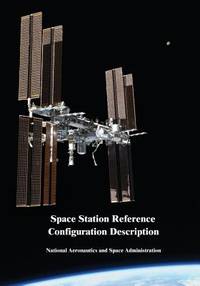
857 résultats
199183822Washington DC: National Aeronautics and Space Administration 1991. Presumed First Edition First printing before correction to replace Discovery with Atlantis. Single sticker sheet printed on both sides. Good. RARE with Discovery attribution. Approximately 5 inches at its highest and 4 inches at its widest. Some soiling noted. STS-43 the ninth mission for Space Shuttle Atlantis was a 9 day mission whose primary goal was launching the TDRS-E satellite TDRS-5. The flight also tested an advanced heatpipe radiator for potential use on the then-future space station and conducted a variety of medical and materials science investigations. Apparently Space Shuttle Discovery was originally intended to fly this mission. From the text on the sticker's peelable back the STS-43 insignia portrays the evolution and continuity of the U.S. space program by highlighting 30 years of American manned spaceflight experience from Mercury to the Space Shuttle. The emergence of the shuttle Discovery from the outlined configuration of the Mercury space capsule commemorates this special relationship. The energy and momentum of launch are conveyed by the gradations of blue which mark the shuttle's ascent from Earth to space. Once in Earth orbit Discovery's cargo bay opens to reveal the Tracking and Data Relay Satellite which appears in gold emphasis against the white wings of Discovery and the stark blackness of space. As primary mission objective the Tracking and Data Relay Satellite System will enable almost continuous communication from Earth to space for future space shuttle missions. The stars on the insignia are arranged to suggest this mission's STS number: four stars left of Shuttle and three starts to the right. NOTE: Later versions of the sticker properly reference the Shuttle Atlantis! The five astronauts are named on the front: Blaha Baker Lucid Adamson and Low. John Elmer Blaha born August 26 1942 in San Antonio Texas is a retired United States Air Force colonel and a former NASA astronaut. He is a veteran of five space missions aboard the Space Shuttle and Mir. Michael Allen Baker born October 27 1953 is a retired captain in the United States Navy former NASA astronaut and the International Space Station Program Manager for International and Crew Operations at NASA's Johnson Space Center. Shannon Matilda Wells Lucid born January 14 1943 is an American biochemist and retired NASA astronaut. At one time she held the record for the longest duration stay in space by an American as well as by a woman. She has flown in space five times including a prolonged mission aboard the Mir space station in 1996; she is the only American woman to have served aboard Mir. George David Low February 19 1956 - March 15 2008 was an American aerospace executive and a NASA astronaut. In addition to holding some technical assignments he logged more than 700 hours in space including stints on the Columbia the Atlantis and the Endeavour Space Shuttles before he left NASA in 1996. James Craig Adamson born March 3 1946 is a former NASA astronaut and retired Colonel of the United States Army. James Adamson flew on two missions STS-28 and STS-43 and completed 263 orbits and 334 hours in space. In terms of mission highlights the primary payload TDRS-E attached to an Inertial Upper Stage IUS was deployed about six hours into flight and the IUS propelled the satellite into geosynchronous orbit. TDRS-5 became the fourth member of the orbiting TDRS cluster. Secondary payloads were Space Station Heat Pipe Advanced Radiator Element SHARE II; Shuttle Solar Backscatter Ultra-Violet SSBUV instrument; Tank Pressure Control Equipment TPCE and Optical Communications Through Windows OCTW. Other experiments included Auroral Photography Experiment APE-B Protein Crystal Growth Ill PCG Ill; Bioserve / Instrumentation Technology Associates Materials Dispersion Apparatus BIMDA; Investigations into Polymer Membrane Processing IPMP; Space Acceleration Measurement System SAMS; Solid Surface Combustion Experiment SSCE; Ultraviolet Plume imager UVPI; and the Air Force Maui Optical Site AMOS experiment. TDRS-E which became TDRS-5 on orbit was successfully boosted to geosynchronous orbit at more than 22000 miles 35400 km 22000 mi above Earth by two firings of the Inertial Upper Stage IUS booster the last of which occurred approximately 12½ hours into the mission. TDRS then deployed its antennas and solar panels and separation from the IUS took place less than 45 minutes later. National Aeronautics and Space Administration unknown
201186133Washington DC: National Aeronautics and Space Administration 2011. Xerox-style reproduction presumably one of only a few press kits produced. Stapled at upper left corner. Very good. ii 164 pages plus covers. This also has the logo of the United Space Alliance on the front cover. STS-135 ISS assembly flight ULF7 was the 135th and final mission of the American Space Shuttle program. It used the orbiter Atlantis and hardware originally processed for the STS-335 contingency mission which was not flown. STS-135 launched on July 8 2011 and landed on July 21 2011 following a one-day mission extension. The four-person crew was the smallest of any shuttle mission since STS-6 in April 1983. The mission's primary cargo was the Multi-Purpose Logistics Module MPLM Raffaello and a Lightweight Multi-Purpose Carrier LMC which were delivered to the International Space Station ISS. The flight of Raffaello marked the only time that Atlantis carried an MPLM. This press kit covers the Space Shuttle History; STS-135 Mission Timeline Profile and Objectives; Mission Personnel; STS-135 Atlantis Crew; Payload Overview; Rendezvous and Docking; Spacewalks; STS-135 Experiments; Shuttle Reference Data; Launch & Landing; Acronyms & Abbreviations; Media Assistance; Public Affairs Contacts; and The Future. Although the mission was authorized it initially had no appropriation in the NASA budget raising questions about whether the mission would fly. On January 20 2011 program managers changed STS-335 to STS-135 on the flight manifest. This allowed for training and other mission specific preparations. On February 13 2011 program managers told their workforce that STS-135 would fly regardless of the funding situation via a continuing resolution. Until this point there had been no official references to the STS-135 mission in NASA documentation for the general public. During an address at the Marshall Space Flight Center on November 16 2010 NASA administrator Charles Bolden said that the agency needed to fly STS-135 to the station in 2011 due to possible delays in the development of commercial rockets and spacecraft designed to transport cargo to the ISS. "We are hoping to fly a third shuttle mission in addition to STS-133 and STS-134 in June 2011 what everybody calls the launch-on-need mission. and that's really needed to buy down the risk for the development time for commercial cargo" Bolden said. The mission was included in NASA's 2011 authorization which was signed into law on October 11 2010 but funding remained dependent on a subsequent appropriations bill. United Space Alliance signed a contract extension for the mission along with STS-134; the contract contained six one-month options with NASA in order to support continuing operations. The federal budget approved in April 2011 called for US$5.5 billion for NASA's space operations division including the shuttle and space station programs. According to NASA the budget running through September 30 2011 ended all concerns about funding the STS-135 mission. On July 21 2011 NASA hosted an employee appreciation event outside OPF-2 with Atlantis parked. Cheryl Hurst the director of education and external relations at KSC spoke first and invited Susan Lambert to lead the crowd with the American national anthem. A pledge of allegiance followed from KSC children and NASA Administrator Charles Bolden and KSC Director Robert Cabana spoke to the shuttle program employees. During the event Rita Wilcoxson and Patricia Stratton were presented with highest NASA honors: the Distinguished Service Medal and the Distinguished Public Service Medal respectively. The citations on both were identical stating "for continuous outstanding leadership contributions provided to the nation's space shuttle program". A public "welcome home" ceremony was held for the crew at Houston's Ellington Field Hangar 990 on July 22. National Aeronautics and Space Administration unknown
201186173Washington DC: National Aeronautics and Space Administration 2011. Presumed first edition first printing thus. Single sheet printed on one side. Very good. The format is approximately 4.25 inches by 5.5 inches. Illustration and text on one side. The other side is blank. RARE surviving commemorative item of the last Space Shuttle launch!!! The STS-135 Launch Salute was in honor of the hundreds of thousands of men and women who have devoted their time careers and passion over the previous 40 years to the success of the Space Shuttle Program and in remembrance of the Challenger and Columbia crews who paid the ultimate price we ask you to join and raise hands as you watch Atlantis ascend into the heavens during the final space shuttle launch. At ten seconds to liftoff stand up. at liftoff join and raise hands For first ten second of flight keep hands raised. With this gesture we convey the thanks of a grateful nation and world for the legacy of space exploration that has been set for the future. NASA continues preparations for the mission that everyone hopes will never be needed: the STS-335 flight to rescue the STS-134 crew in the event that Endeavour becomes disabled during the program’s planned final flight. STS-135 ISS assembly flight ULF7 was the 135th and final mission of the American Space Shuttle program. It used the orbiter Atlantis and hardware originally processed for the STS-335 contingency mission which was not flown. STS-135 launched on July 8 2011 and landed on July 21 2011 following a one-day mission extension. The four-person crew was the smallest of any shuttle mission since STS-6 in April 1983. The mission's primary cargo was the Multi-Purpose Logistics Module MPLM Raffaello and a Lightweight Multi-Purpose Carrier LMC which were delivered to the International Space Station ISS. The flight of Raffaello marked the only time that Atlantis carried an MPLM. Although the mission was authorized it initially had no appropriation in the NASA budget raising questions about whether the mission would fly. On January 20 2011 program managers changed STS-335 to STS-135 on the flight manifest. This allowed for training and other mission specific preparations. On February 13 2011 program managers told their workforce that STS-135 would fly regardless of the funding situation via a continuing resolution. Until this point there had been no official references to the STS-135 mission in NASA documentation for the general public. During an address at the Marshall Space Flight Center on November 16 2010 NASA administrator Charles Bolden said that the agency needed to fly STS-135 to the station in 2011 due to possible delays in the development of commercial rockets and spacecraft designed to transport cargo to the ISS. "We are hoping to fly a third shuttle mission in addition to STS-133 and STS-134 in June 2011 what everybody calls the launch-on-need mission. and that's really needed to buy down the risk for the development time for commercial cargo" Bolden said. The mission was included in NASA's 2011 authorization which was signed into law on October 11 2010 but funding remained dependent on a subsequent appropriations bill. United Space Alliance signed a contract extension for the mission along with STS-134; the contract contained six one-month options with NASA in order to support continuing operations. The federal budget approved in April 2011 called for US$5.5 billion for NASA's space operations division including the shuttle and space station programs. According to NASA the budget running through September 30 2011 ended all concerns about funding the STS-135 mission. National Aeronautics and Space Administration unknown
200886137Washington DC: National Aeronautics and Space Administration 2008. Xerox-style reproduction. Assumed to be one of only a limited number made for media representatives. Stapled at upper left corner. Very good. ii 114 pages plus front cover. Illustrations. Three-hole punched. Front cover also includes the logo of the United Space Alliance. Contents include STS-126 Mission Overview; Timeline Overview; Mission Profile; Mission Priorities; Mission Personnel; STS-126 Endeavour Crew; Payload Overview; Rendezvous and Docking; Environmental Contol and Life Support System ECLSS; Solar Alpha Rotary Join SARJ; Spacewalks; Experiments; Advanced Resistive Exercise Device; Shuttle Reference Data; Launch and Landing; Acronyms and Abbreviations; Media Assistance; Public Affairs Contacts. STS-126 was the one hundred and twenty-fourth NASA Space Shuttle mission and twenty-second orbital flight of the Space Shuttle Endeavour OV-105 to the International Space Station ISS. The purpose of the mission referred to as ULF2 by the ISS program was to deliver equipment and supplies to the station to service the Solar Alpha Rotary Joints SARJ and repair the problem in the starboard SARJ that had limited its use since STS-120. STS-126 launched on 15 November 2008 at 00:55:39 UTC from Launch Pad 39A LC-39A at NASA's Kennedy Space Center KSC with no delays or issues. Endeavour successfully docked with the station on 16 November 2008. After spending 15 days 20 hours 30 minutes and 30 seconds docked to the station during which the crew performed four spacewalks and transferred cargo the orbiter undocked on 28 November 2008. Due to poor weather at Kennedy Space Center Endeavour landed at Edwards Air Force Base on 30 November 2008 at 21:25:09 UTC. STS-126 included the Leonardo Multi-Purpose Logistics Module MPLM on its fifth spaceflight. Leonardo held over 14100 lbs of supplies and equipment. Among the items packed into the MPLM were two new crew quarters racks a second galley kitchen for the Destiny laboratory a second Waste and Hygiene Compartment WHC rack lavatory the advanced Resistive Exercise Device aRED two water reclamation racks spare hardware and new experiments. Also included in Leonardo was the General Laboratory Active Cryogenic ISS Experiment Refrigerator or GLACIER a double locker cryogenic freezer for transporting and preserving science experiments. The shuttle also carried irradiated turkey candied yams stuffing and dessert for a special Thanksgiving meal at the station as well as an Official Flight Kit with mementos for those who supported the astronauts and helped them complete their mission successfully. Also carried was a Lightweight MPESS Carrier LMC carrying a Flex Hose Rotary Coupler FHRC and returning a Nitrogen Assembly Tank from Quest for refurbishment. STS-126 was the only mission to land on the temporary runway 04 at Edwards Air Force Base as the main runway was completing refurbishment. The use of the temporary runway required new braking and rollout techniques that have never been used before as the runway is 2990 ft shorter than the normal runway. This was the last landing at Edwards for Endeavour. National Aeronautics and Space Administration unknown
1966728681PN. New. 1966. Soft Cover. Date is original print. This is a reprint edition. . PN paperback
194946665Washington DC: GPO 1949. Revised Edition. good. 109 wraps 3-hole punched illus. diagrams references writing on cover covers worn and somewhat soiled. Ephemera on Detroit Stamping Co. Toggle Clamps bound in. This was issued bythe Subcommittee on Air Force-Navy-Civil Aircraft Design Criteria of the Munitions Board Aircraft Committee. The purpose of this document was to recognize that since many aircraft manufacturers supply airplanes for both commercial and military use standardization of the requirements of the various Government procuring or certifying agencies would be of direct benefit to the manufacturers. This publication has been prepared to eliminate the necessity for referring to different handbooks and bulletins in calculating the allowable stresses or minimum strength of typical structures. This type of technical information is increasingly scarce. It is of particular relevance to military and aviation museums restoration facilities military and civilian equipment collectors and military and comercial aviation technologists. GPO paperback
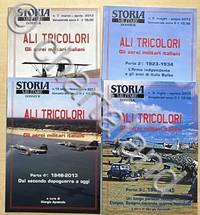
139900Storia Militare Dossier N. 7 8 9 10 - 2013 Ali Tricolori - Opera completa pp. 514 con molte illustrazioni - Lingua italiana - Copertina semirigida - Condizioni molto buone unknown
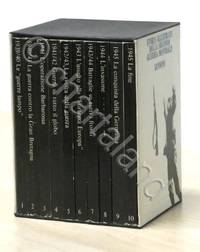
131223Storia illustrata della Seconda Guerra Mondiale - ed. 1969 Sansoni - Opera completa in 10 volumi - 1: 1939-40 : le guerre lampo - 2: 1940-41 : la guerra contro la Gran Bretagna - 3: 1941 : l'operazione Barbarossa - 4: 1941-42 : guerra su tutto il globo - 5: 1942-43 : la svolta della guerra - 6: 1943 : l'assalto alla fortezza Europa - 7: 1943-44 : battaglie su tutti i fronti - 8: 1944 : l'invasione - 9: 1945: la conquista della Germania - 10: 1945: la fine - Pag. 191; 192; 191; 192; 191; 191; 191; 192; 190; 192. Con moltissime illustrazioni. - Copertina morbida - Testo in italiano. - Buone condizioni generali. Con cofanetto. unknown
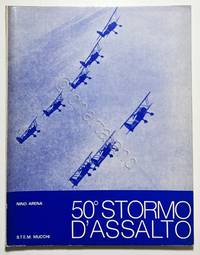
125387Stato Maggiore Aeronautica - N. Arena - 50° Stormo d'Assalto - ed. 1979 - Testo in lingua italiana. Pagine 233 con illustrazioni. - Copertina morbida. - Condizioni molto buone con piccoli segni del tempo. unknown
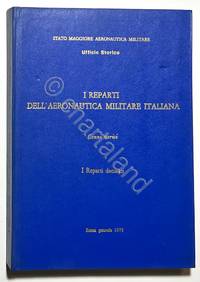
127630Stato Maggiore Aeronautica - I Reparti dell'Aeronautica Militare Italiana: Cenni storici - ed. 1973 - Testo in lingua italiana. Pagine 272 con tavole illustrate. - Copertina rigida. - Condizioni molto buone. unknown
23112235like new. unknown
1505399378.Gpaperback. Good. Access codes and supplements are not guaranteed with used items. May be an ex-library book. paperback
1982765255PN. New. 1982. Soft Cover. Date is original print. This is a reprint edition. . PN paperback
B9781288911134Paperback / softback. New. paperback
200586140Washington DC: National Aeronautics and Space Administration NASA Center for AeroSpace Information CASI Publications and Graphics Department 2005. Presumed First Edition First printing of this annual report. Trade paperback. Very good. Lynette Cook Front cover art. The format is approximately 11 inches by 8.5 inches. 167 1 pages. Illustrations most with color. Annual report on technology transfer or "technology twice used" inventions from NASA. Since 1976 Spinoff has profiled technologies that benefit from NASA investment and expertise. These developments have transformed into commercial products and services that are used throughout daily life from your cell phone camera to the memory foam in your mattress. When Congress created NASA it mandated the agency disseminate its innovations as widely possible. To that end the Technology Transfer Program was created in 1964 and it has functioned ever since making it NASA’s longest continuously operated mission. Early publications about NASA inventions made available to the scientific and engineering communities resulted in feedback indicating a broad interest in the private sector in adapting NASA technology for commercial uses. As products began to emerge NASA began preparing annual reports on these successes to present at congressional budget hearings. Spinoff has been published in a four-color editionand it has been released every year since 1976. All together since its first edition NASA has shared the stories of more 2000 products and services that began as or have benefited from NASA technology. In addition to the general public NASA sends copies of Spinoff to politicians representatives at the United Nations economic decision makers company CEOs academics scientists engineers professionals in technology transfer the news media and many others. The early black-and-white Technology Utilization Program Reports published in 1973 and ‘74 generated so much public interest that NASA decided to turn them into an attractive publication for a general audience. NASA SPINOFF now features dozens of success stories annually online and in its print publication demonstrating the wider benefits of America’s investment in its space program. The 2005 edition highlights Partnership Benefits in Health and Medicine Transportation Public Safety Consumer/Home/Recreations Environment and Resources Management; Computer Technology and Industrial Productivity/Manufacturing Technology. National Aeronautics and Space Administration, NASA Center for AeroSpace Information (CASI), Publications and Graphics Departmen paperback
0160841917.Gpaperback. Good. Access codes and supplements are not guaranteed with used items. May be an ex-library book. paperback
ANAIS-0160664624United States Government Printing. paperback. Good. 0x0x0. Buy with confidence. Excellent Customer Service & Return policy. United States Government Printing paperback
0160814235New. Brand new and still unused unknown
59139Paperback. Fine. Spacesuit guidebook HOW TO BUILD A SPACESUIT paperback
198974608Lyndon B. Johnson Space Center Houston TX: National Aeronautics and Space Administration 1989. Presumed First Edition First printing. Wraps. Good. vii 1 44 pages plus covers. Illustrations most in color. Cover has some wear and soiling with edge tear at back. Format is approximately 8.5 inches by 11 inches. The Spacelab Life Sciences 1 SLS-1 mission originated with a call to the scientific community for experiments in 1978. Accepted experiments involved humans primates rodents amphibians and plants. The original payload configuration was reduced to include human passive rodent and basic biology experiments and engineering evaluations. Human experiments will address effects of micro-gravity on various physiological parameters during and postflight. Investigations with nonhuman subjects will study microgravity effects on the cardiopulmonary cardiovascular and musculoskeletal systems on the regulation of blood volume and erythropoiesis and on calcium metabolism and gravity receptors. SLS-1 was to serve as a stepping stone in establishing capabilities for flying nonhuman subjects and performing in-flight manipulations on these subjects without jeopardizing the crew environment. Fundamental technology incorporated in the animal holding facilities and laboratory work bench will be used in subsequent missions and in the future Space Station. Space Life Science-1 SLS-1 launched aboard Space Shuttle Orbiter Columbia STS-40 on June 5 1991 was the first Spacelab mission dedicated solely to life sciences research. The laboratory for the research took place in a module shown here carried in the cargo bay of the Columbia. The purpose of the mission was to study the mechanisms magnitudes and time courses of certain physiological changes that occur during space flight to investigate the consequences of the body's adaptation to microgravity and readjustment to Earth's gravity and to bring the benefits back home to Earth. The mission was designed to explore the responses of the heart lungs blood vessels kidneys and hormone-secreting glands to examine the causes of space motion sickness and study changes in the muscles bones and cells. Many studies started during SLS-1 provided data that served as the foundation for investigations on the International Space Station. National Aeronautics and Space Administration paperback
195988472Washington DC: U. S. Government Printing Office 1959. Presumed First Edition First printing. Wraps. Good. The format is approximately 10.5 inches by 8.5 inches. 32 pages plus covers. Wraps. Illustrations photographs and drawings. Diagrams. Tabular Data. Some wear and soiling to covers. On July 29 1958 President Eisenhower signed an act of Congress creating the National Aeronautics and Space Administration. The act declared "that is is the policy of the United States that activities in space should be devoted to peaceful purposes for the benefit of mankind." On October 1 1958 this new agency was established. This 1959 initial publication there were later editions/versions is thus one of the earliest official NASA publications. This work briefly presents a historical perspective then discusses Sounding Rockets Satellites and Space Probes Manned Space Flight Human Factors and Future Explorations. NASA traces its roots to the National Advisory Committee for Aeronautics NACA. Despite being the birthplace of aviation by 1914 the United States recognized that it was far behind Europe in aviation capability. Determined to regain American leadership in aviation the United States Congress created the Aviation Section of the U.S. Army Signal Corps in 1914 and established NACA in 1915 to foster aeronautical research and development. Over the next forty years NACA would conduct aeronautical research in support of the U.S. Air Force U.S. Army U.S. Navy and the civil aviation sector. After the end of World War II NACA became interested in the possibilities of guided missiles and supersonic aircraft developing and testing the Bell X-1 in a joint program with the U.S. Air Force. NACA's interest in space grew out of its rocketry program at the Pilotless Aircraft Research Division. The Soviet Union's launch of Sputnik 1 ushered in the Space Age and kicked off the Space Race. Despite NACA's early rocketry program the responsibility for launching the first American satellite fell to the Naval Research Laboratory's Project Vanguard whose operational issues ensured the Army Ballistic Missile Agency would launch Explorer 1 America's first satellite on February 1 1958. The Eisenhower Administration decided to split the United States' military and civil spaceflight programs which were organized together under the Defense Department's Advanced Research Projects Agency. As the United States' premier aeronautics agency NACA formed the core of NASA's new structure by reassigning it its 8000 employees and three major research laboratories. NASA also proceeded to absorb the Naval Research Laboratory's Project Vanguard the Army's Jet Propulsion Laboratory JPL and the Army Ballistic Missile Agency under Wernher von Braun. This left NASA firmly as the United States' civil space lead and the Air Force as the military space lead. U. S. Government Printing Office paperback
195980605Washington DC: National Aeronautics and Space Administration c1959. Presumed First Edition First printing. Booklet. Good. Format is approximately 10.5 inches by 8 inches. 32 pages plus covers. Illustrations. Reference was found on page 21 to selection of candidates having begun in early 1959. Other references to early 1959 and 1958 noted. This work starts out with a brief history of the scientific inquiry into space and space travel. It the discusses sounding rockets Satellites Spacecraft Space Probes Jupiter C Vanguard I Juno II Tracking Station Manned Space Flight Human Factors Project Mercury and space exploration. This is an early NASA general audience publication. The National Aeronautics and Space Administration NASA is an independent agency of the U.S. Federal Government responsible for the civilian space program as well as aeronautics and space research. NASA was established in 1958 succeeding the National Advisory Committee for Aeronautics NACA. The new agency was to have a distinctly civilian orientation encouraging peaceful applications in space science. Since its establishment most US space exploration efforts have been led by NASA including the Apollo Moon landing missions the Skylab space station and later the Space Shuttle. NASA is supporting the International Space Station and is overseeing the development of the Orion spacecraft the Space Launch System and Commercial Crew vehicles. The agency is also responsible for the Launch Services Program which provides oversight of launch operations and countdown management for uncrewed NASA launches. National Aeronautics and Space Administration unknown
1508722633.Gpaperback. Good. Access codes and supplements are not guaranteed with used items. May be an ex-library book. paperback
1508722633New. Brand new and still unused unknown
23710525like new. unknown