857 résultats
mon0003942945National Academies Press 1/19/2024 12:00:01 A. paperback. Like New. 0.9449 11.0630 8.5039. National Academies Press paperback
mon0004057725National Academies Press 1/19/2024 12:00:01 A. paperback. Very Good. 0.9449 11.0630 8.5039. National Academies Press paperback
1976751946PN. New. 1976. Soft Cover. Date is original print. This is a reprint edition. . PN paperback
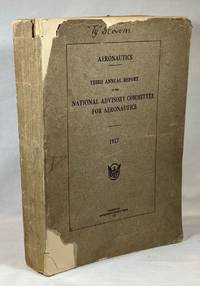
191824798Washington DC: National Advisory Committee For Aeronautics/United States Senate 1918. An original copy with an aged textblock which is dog-eared fragile and corner-chipped/worn but complete; Original grey printed covers are worn torn creased chipped and generally depressed but otherwise present and holding; Reports 13 to 23; This is the third annual report on the state of aeronautics as of 1917 vis-a-vis the technology and science of flight Advances in aircraft design aircraft engines and propellors fabrics wing and landing gear construction and the various aspects of aerodynamics flight safety flight instruments communications mapping aerial observation and reconnaissance safety of flight weather considerations and more; 495p. plus dozens of diagrams charts schematics and photographs. Fifth Edition. Grey Printed Wraps. Good. Illus. by Photographs Tables Charts Graphs. 4to - Over 9 " -12" Tall. Paperback. National Advisory Committee For Aeronautics/United States Senate Paperback
199238204Washington DC: AIAA 1992. fair. 716 wraps covers somewhat worn and soiled ink name ins fr cover. Includes a section on Multilingual Astronautical Terminology. The National Aeronautics and Space Adminstration and the U.S. National Academy of Sciences along with AIAA provided the auspices for the World Space Congress. Includes the 43rd Congress of the International Astronautical Federation and the 29th Plenary Meeting of the Committee on Space Research. AIAA paperback
1493692399.Gpaperback. Good. Access codes and supplements are not guaranteed with used items. May be an ex-library book. paperback
2009f14424xU.S. National Aeronautics and Space Administration 2009-10-12. paperback. Like New. 7x0x9. Brand New Book U.S. National Aeronautics and Space Administration paperback
1782662952.Ghardcover. Good. Access codes and supplements are not guaranteed with used items. May be an ex-library book. hardcover
198279941Greenbelt Maryland: NSA/Goddard Space Flight Center 1982. Presumed First Edition First printing. Wraps. Very good. Various paginations approximately 1.25 inches thick. Cover has some wear and soiling. Name of previous owner written in ink at type of spine. The Goddard Space Flight Center of the National Aeronautics and Space Administration organized a workshop held on May 18-22 1981 centered around three working groups corresponding to the three chapters in this report--a Trace Species Working Group; a Multidimensional Aspects Working Group; and a Trends and Predictions Working Group. Over 100 scientists representing most of the institutions in the world engaged in upper atmospheric research attended the workshop. At the end of the workshop each working group prepared a summary document and these have been assembled into this report. The basic theme for the workshop and the report was the comparison of theory and measurement. Appendix A-I includes in part: References Acronyms Stratospheric Instruments and Analysis Chemical Kenetics and Photochemistry and a Reference Solar Spectral Irradiance for use in a Atmospheric Modeling It should be stressed that this is not a consensus document. If more than one conclusion could be maintained by the scientific data then both of these conclusions have been quoted. It is aft all a significant test of the present state-of-knowledge if more than one scientific conclusion can be drawn from the same experimental data.<br /> <br /> The stratosphere is the second major layer of Earth's atmosphere just above the troposphere and below the mesosphere. The stratosphere is stratified layered in temperature with warmer layers higher and cooler layers closer to the Earth; this increase of temperature with altitude is a result of the absorption of the Sun's ultraviolet radiation by the ozone layer. This is in contrast to the troposphere near the Earth's surface where temperature decreases with altitude. The border between the troposphere and stratosphere the tropopause marks where this temperature inversion begins. Near the equator the lower edge of the stratosphere is as high as 20 km 66000 ft; 12 mi at midlatitudes around 10 km 33000 ft; 6.2 mi and at the poles about 7 km 23000 ft; 4.3 mi Temperatures range from an average of 51 °C 60 °F; 220 K near the tropopause to an average of 15 °C 5.0 °F; 260 K near the mesosphere.6 Stratospheric temperatures also vary within the stratosphere as the seasons change reaching particularly low temperatures in the polar night winter. Winds in the stratosphere can far exceed those in the troposphere reaching near 60 m/s 220 km/h; 130 mph in the Southern polar vortex. NSA/Goddard Space Flight Center paperback
197640798Washington DC: GPO 1976. Presumed First Edition/First Printing. Wraps. good. xi 1 231 1 pages. Wraps. Frontis illustration. Illustrations. Acronyms. Author index. Pencil erasure on half-title. This volume contains the author's summaries of their papers on the space telescope presented at the 21st annual meeting of the American Astronautical Society at Denver Colorado August 26-28 1975. Space-based astronomy had begun on a very small scale following World War II as scientists made use of developments that had taken place in rocket technology. The first ultraviolet spectrum of the Sun was obtained in 194612 and the National Aeronautics and Space Administration NASA launched the Orbiting Solar Observatory OSO to obtain UV X-ray and gamma-ray spectra in 1962. An orbiting solar telescope was launched in 1962 by the United Kingdom as part of the Ariel space program and in 1966 NASA launched the first Orbiting Astronomical Observatory OAO mission. OAO-1's battery failed after three days terminating the mission. It was followed by OAO-2 which carried out ultraviolet observations of stars and galaxies from its launch in 1968 until 1972 well beyond its original planned lifetime of one year. The OSO and OAO missions demonstrated the important role space-based observations could play in astronomy and in 1968 NASA developed firm plans for a space-based reflecting telescope with a mirror 3 m in diameter known provisionally as the Large Orbiting Telescope or Large Space Telescope LST with a launch slated for 1979. These plans emphasized the need for manned maintenance missions to the telescope to ensure such a costly program had a lengthy working life and the concurrent development of plans for the reusable space shuttle indicated that the technology to allow this was soon to become available. GPO paperback
200967232Moffett FIeld CA: United States National Aeronautics and Space Administration 2009. Reprint. Second Printing. Wraps. Very good. Includes: illustrations diagrams. Various paginations approximately 125 pages. References. From Wikipedia: "The Stratospheric Observatory for Infrared Astronomy SOFIA is a joint project of NASA and the German Aerospace Center DLR to construct and maintain an airborne observatory. NASA awarded the contract for the development of the aircraft operation of the observatory and management of the American part of the project to the Universities Space Research Association USRA in 1996. The DSI Deutsches SOFIA Institut manages the German parts of the project which are primarily science and telescope related. SOFIA's telescope saw first light on May 26 2010. SOFIA is the successor to the Kuiper Airborne Observatory.SOFIA is based on a Boeing 747SP wide-body aircraft that has been modified to include a large door in the aft fuselage that can be opened in flight to allow a 2.5 meter diameter reflecting telescope access to the sky. This telescope is designed for infrared astronomy observations in the stratosphere at altitudes of about 41 000 feet about 12 km. SOFIA's flight capability allows it to rise above almost all of the water vapor in the Earth's atmosphere which blocks some infrared wavelengths from reaching the ground. At the aircraft's cruising altitude 85% of the full infrared range will be available. The aircraft can also travel to almost any point on the Earth's surface allowing observation from the northern and southern hemispheres. Once ready for use the expectation is for observing flights to be flown 3 or 4 nights a week for the next 20 years. SOFIA is now based at NASA's Dryden Aircraft Operations Facility at LA/Palmdale Regional Airport California while staff at NASA Ames Research Center in Mountain View California operate the SOFIA Science Center where astronomical observation missions are planned for the flying observatory. The NASA logo reflected in SOFIAs 2.5-meter primary mirror. SOFIA uses a 2.5-meter reflector telescope which has an oversized 2.7 meter diameter primary mirror as is common with most large infrared telescopes. The optical system uses a Cassegrain reflector design with a parabolic primary mirror and a remotely configurable hyperbolic secondary. In order to fit the telescope into the fuselage the primary is shaped to an f-number as low as 1.3 while the resulting optical layout has an f-number of 19.7. A flat tertiary dichroic mirror is used to deflect the infrared part of the beam to the Nasmyth focus where it can be analyzed. An optical mirror located behind the tertiary mirror is used for a camera guidance system. The telescope looks out of a large door in the side of the fuselage near the airplane's tail and will initially carry nine instruments for infrared astronomy at wavelengths from 1 655 micrometres and high-speed optical astronomy at wavelengths from 0.3 1.1 micrometres. The main instruments are the FLITECAM a near infrared camera covering 1 5 micrometres; FORCAST covering the mid-infrared range of 5 40 micrometres and HAWC which spans the far infrared in the range 42 210 micrometres. The other four instruments include an optical photometer and infrared spectrometers with various spectral ranges. SOFIA s telescope is by far the largest ever to be placed in an aircraft. For each mission one interchangeable science instrument will be attached to the telescope. Two groups of general purpose instruments are available. In addition an investigator can also design and build a special purpose instrument. On April 17 2012 two upgrades to HAWC were selected by NASA to increase the field of view with new detector arrays and to add the capability of measuring the polarization of dust emission from celestial sources. The open cavity housing the telescope will be exposed to high-speed turbulent winds. In addition the vibrations and motions of the aircraft introduce observing difficulties. The telescope was designed to be very lightweight with a honeycomb shape milled into the back of the mirror and polymer composite material used for the telescope. United States, National Aeronautics and Space Administration paperback
1503339394.Gpaperback. Good. Access codes and supplements are not guaranteed with used items. May be an ex-library book. paperback
1959706292PN. Good. 1959. Soft Cover. G346 Date is original print. This is a 2021 reprint edition. . PN paperback
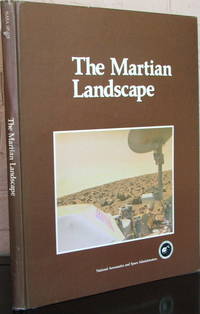
1978008599Washington D. C.: GPO. First edition. Hard cover in original cloth. Published Washington DC: GPO 1978. Folio 11 1/4" x 14 1/4" vii160pp. illustrated with black and white and color images. Includes unused 3D viewer in pocket at rear. Near fine. . Near Fine. Hard. 1st. 1978. GPO unknown
197812271Washington DC: GPO 1978. First Printing. good. 11" x 14" 160 profusely illus. many in color tables 3D viewer in pocket at rear of volume boards somewhat scuffed and some edge wear. Pictures from the Viking 1 and Viking 2 Landers as well as an account of the decade leading up to the Mars pictures by Tim Mutch leader of the Viking Lander Imaging Team. GPO hardcover
197872350Washington DC: National Aeronautics and Space Administration Scientific and Technical Information Office 1978. Presumed First Edition First printing. Hardcover. good. 11" x 14" vii 1 160 pages profusely illus. some in color tables Cover has some fading. Some pages has slight corner creasing. No dust jacket present. 3D viewer in pocket at rear boards have some edge wear. Oversized item requires more shipping charges if sent overseas. The Viking program consisted of a pair of American space probes sent to Mars Viking 1 and Viking 2. Each spacecraft was composed of two main parts: an orbiter designed to photograph the surface and a lander designed to study the planet from the surface. The orbiters also served as communication relays for the landers. The Viking program grew from NASA's earlier Voyager Mars program. Viking 1 entered Mars orbit on June 19 1976 with Viking 2 following suit on August 7. After orbiting Mars for more than a month and returning images used for landing site selection the orbiters and landers detached; the landers then soft-landed. The Viking 1 lander touched down on the surface of Mars on July 20 1976 and was joined by the Viking 2 lander on September 3. The orbiters continued imaging and performing other scientific operations from orbit while the landers deployed instruments on the surface. Pictures from the Viking 1 and Viking 2 Landers as well as an account of the decade leading up to the Mars pictures by Tim Mutch leader of the Viking Lander Imaging Team. The Viking landers were the first completely successful spacecrafts to land on Mars. Before Viking arrived at Mars landing sites were chosen for both Viking landers. On July 20 1976 Viking lander 1 arrived at its chosen site in the western part of Chryse Planitia. On August 7 1976 Viking lander 2 touched down on Utopia Planitia. Each of the Viking landers carried a series of science packages which included a weather station a seismometer a chemical analysis package two cameras a soil composition package and a biological experiment package. Within minutes of lander 1's touch down the first picture was taken in case something happened to the spacecraft. This picture showed what looked like a sandy dusty surface with rocks up to 10 cm in diameter. The two cameras on each lander were mounted on opposite sides of the space craft. This allowed stereoscopic images to be taken which could be used to calculate distances from the lander to the features in the pictures. National Aeronautics and Space Administration, Scientific and Technical Information Office hardcover
0309052831.Gpaperback. Good. Access codes and supplements are not guaranteed with used items. May be an ex-library book. paperback
Q-0309052831National Academies Press. Paperback. New. New. In shrink wrap. Looks like an interesting title! National Academies Press paperback
1984011296Washington D.C.: U.S. Government Printing Office 1984 317 numbered pp.; HB. Pages: clean bright tight off-white eps; no defects. Cover: green reverse artwork front reverse titles front/spine; minimal shelfwear mild bump head. Includes: Aseroids Comets and Planet Formation; Mercury; Venus; Earth; Moon; and Mars. Includes maps of each terrestrial planet. Edited by Michael H. Carr. U.S. Government Printing Office hardcover
1966B1G0023570Izdatel'stvo "Nauka 1966. Paperback. Good. A nice copy. Text in mint/unmarked condition. Cover has some wear with owners name on it. Binding is tight. Izdatel'stvo "Nauka paperback
1258633426.Gpaperback. Good. Access codes and supplements are not guaranteed with used items. May be an ex-library book. paperback
197172114Washington DC: GPO 1971. Wraps. Good. 352 pages wraps quarto illus. a few in color tables charts footnotes chapter references small 1/2" tear at front top hinge slight wear and soiling to covers The Biosatellite Program was the first serious U.S. attempt to design a spaceflight system tailored to the needs of biologic experimentation and Biosatellite II was the first successfully completed mission. Topics covered include experiments with invertebrates experiments with plants and experiments with cellular systems. GPO paperback
0260304883.Gpaperback. Good. Access codes and supplements are not guaranteed with used items. May be an ex-library book. paperback
0260913189.Ghardcover. Good. Access codes and supplements are not guaranteed with used items. May be an ex-library book. hardcover
196238406Washington DC: GPO 1962. good. 10.25" x 7.5" 6 wraps profusely illus. small creases in margins slight wear to covers. Illustrations of Carpenter's flight aboard Aurora 7 and a condensation of his remarks at the press conference two days after the flight. GPO paperback