857 résultats
3503127like new. unknown
14312The Bristol Aeroplane Co. Ltd. Filton Bristol. Brochure printed by 'Edward Everard Broad Street Bristol. Circa 1928. The Bristol Aeroplane Company was an early and important innovator in the field of aircraft design and development. Four variants of its Titan engine I IIF II Special and IV were produced in 1928. The present brochure and photographs are contained in a large manila envelope with 'The "Bristol" Aeroplanes' printed in green on front. The photographs are all in very good condition and all measure around 18 x 23.5 cm. The brochure is 4pp. 4to printed in brown on a bifolium of cream paper. It is in good condition with a little wear and creasing. It carries three illustrations of the engine and ends with the 'Leading Particulars' of 'The "Bristol" Titan. - Series II' fifteen specifications beginning with 'Type - 5 cylinder air cooled radial' and ending with 'Standard Weight Bare - 525 lbs.'. It begins: 'The Titan completes the range of "Bristol" air cooled aero engines and was designed to meet the requirements for an engine of "Bristol" standard in the popular 200 H.P. class at present so much in demand for the instructional touring and lighter multi-engined commercial machines. Since its introduction as a type in 1928 extensive bench and flight tests have been carried out and the present production model is conservatively rated of robust construction reliable and simple to maintain.' None of the photographs is captioned but the four of the engine all portrait carry the numbers in the bottom left-hand corners 3430 3871 3910 and 5860. The seven photographs of the planes are all landscape and six show the planes standing on grass with five captioned in the bottom left-hand corner T142/19 T142/23 T130/23 T130/25 and T130/29 with the seventh showing a plane in flight. The Bristol Aeroplane Co., Ltd., Filton, Bristol. [Brochure printed by 'Edward Everard, Broad Street, Bristol.] [Circa 1928.] unknown
2009Q-0160419360US National Aeronautics and Space Admin 2009-11-13. Hardcover. New. In shrink wrap. Looks like an interesting title! US National Aeronautics and Space Admin hardcover
200786172Washington DC: National Aeronautics and Space Administration c2007. Presumed First Edition First printing this. Single sticker sheet printed on both sides peal line is about one third up from the trangle's base. Very good. Michael Okuda. The format is an equilateral triangle with each side measuring approximately 5 inches. Rare surviving copy. One side is the ARES logo designed by Star Trek artist Michael Okuda. The other side has the following text: The Ares Projects The United States is leading the next phase of human Space exploration. The journey begins with two new launch vehicles--the Ares I crew launch vehicle and the Area V cargo launch vehicle--being developed by the Ares Projects managed out of NASA'a Marshall Space Flight Center in Huntsville Alabama. These launch vehicles were for missions to the International Space Station the Moon and beyond. The rockets are part of NASA's Constellation fleet which includes the Orion crew exploration vehicles a lunar lander habitats rovers and scientific equipment. Space exploration propelled by the area rockets promotes leading-edge science leads to innovative technologies and products expands economic opportunities and inspires the next generation of scientists and explorers. Star Trek artist Michael Okuda designed the Ares logo which will adorn both Ares I and Ares V. The Logo's 10 stars represent 10 NASA centers that ware working on the new vehicles. A bright star representing the Ares rocket ascends above Earth's outline depicted in the background. Michael Okuda is an American graphic designer known for his work on Star Trek including designing computer user interfaces known as "okudagrams". His work for NASA's Project Constellation subsequently canceled included logos for the Ares booster the Altair lunar lander and the Orion spacecraft. Ares I was the crew launch vehicle that was being developed by NASA as part of the Constellation program. The name "Ares" refers to the Greek deity Ares who is identified with the Roman god Mars. Ares I was originally known as the "Crew Launch Vehicle" CLV. NASA planned to use Ares I to launch Orion the spacecraft intended for NASA human spaceflight missions after the Space Shuttle was retired in 2011. Ares I was to complement the larger uncrewed Ares V which was the cargo launch vehicle for Constellation. NASA selected the Ares designs for their anticipated overall safety reliability and cost-effectiveness. However the Constellation program including Ares I was canceled by U.S. president Barack Obama in October 2010 with the passage of his 2010 NASA authorization bill. In September 2011 NASA detailed the Space Launch System as its new vehicle for human exploration beyond Earth's orbit. Unlike the Space Shuttle where both crew and cargo were launched simultaneously on the same rocket the plans for Project Constellation outlined having two separate launch vehicles the Ares I and the Ares V for crew and cargo respectively. Having two separate launch vehicles allows for more specialized designs for the crew and heavy cargo launch rockets. The Ares I rocket was specifically being designed to launch the Orion Multi-Purpose Crew Vehicle. Orion was intended as a crew capsule similar in design to the Apollo program capsule to transport astronauts to the International Space Station the Moon and eventually Mars. Ares I might have also delivered some limited resources to orbit including supplies for the International Space Station or subsequent delivery to the planned lunar base. NASA selected Alliant Techsystems the builder of the Space Shuttle Solid Rocket Boosters as the prime contractor for the Ares I first stage. NASA announced that Rocketdyne would be the main subcontractor for the J-2X rocket engine on July 16 2007. NASA selected Boeing to provide and install the avionics for the Ares I rocket on December 12 2007. On August 28 2007 NASA awarded the Ares I Upper Stage manufacturing contract to Boeing. The upper stage of Ares I was to have been built at Michoud Aerospace Factory which was used for the Space Shuttle's External Tank and the Saturn V's S-IC first stage. The Ares V formerly known as the Cargo Launch Vehicle or CaLV was the planned cargo launch component of the canceled NASA Constellation program which was to have replaced the Space Shuttle after its retirement in 2011. Ares V was also planned to carry supplies for a human presence on Mars. The Ares V was to launch the Earth Departure Stage and Altair lunar lander for NASA's return to the Moon which was planned for 2019. It would also have served as the principal launcher for missions beyond the Earth-Moon system including the program's ultimate goal a crewed mission to Mars. The uncrewed Ares V would complement the smaller and human-rated Ares I rocket for the launching of the 4–6 person Orion spacecraft. Both rockets deemed safer than the then-current Space Shuttle would have employed technologies developed for the Apollo program the Shuttle program and the Delta IV EELV program. National Aeronautics and Space Administration unknown
21024204like new. unknown
1495414167.Gpaperback. Good. Access codes and supplements are not guaranteed with used items. May be an ex-library book. paperback
MA04A-04843Western Periodicals. Collectible - Good. North Hollywood CA: Western Periodicals 1973. Volume 11. Sm 4to. 127pp. Illus. Good book. Spine toned. Corners fanned. sailing sailboats design construction congresses Inquire if you need further information. Western Periodicals unknown
190910468New York: American Society of Mechanical Engineers 1909. Half Leather. Very Good binding. Octavo. xi 1 1255 1 pp. frontis plates illus. First edition. Bound in morocco-backed boards with corners. Light rubbing to the binding; contents clean and binding is solid. <br /> <br /> An interesting collection of papers but undoubtedly the contribution of principal interest is that of George O. Squire "The Present Status of Military Aeronautics" pp. 639 – 721. It is a survey of worldwide developments in aeroplane heavier than air and dirigible designs and practice. Significant discussion of the testing of the Wright Brothers aircraft in September 1908 at Fort Myer VA. Includes the Army request for proposals and specifications for both the aeroplane and dirigible aircraft. This specification resulted in the first U.S. military aircraft contract. Includes many black and white pictures of aircraft and dirigibles including pictures of the Wright Brothers aircraft tested at Fort Myer. American Society of Mechanical Engineers unknown
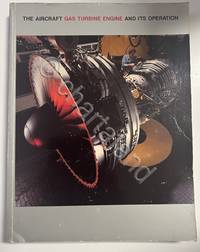
135633The aircraft gas turbine engine and its operation - ed. 1988 pp. 200 ca. con illustrazioni e schemi - Lingua inglese - Copertina semirigida - Condizioni molto buone unknown
1995283028PN. New. 1995. Soft Cover. Date is original print. This is a reprint edition . PN paperback
1987780270PN. New. 1987. Soft Cover. Date is original print. This is a reprint edition. . PN paperback
1988781219PN. New. 1988. Soft Cover. Date is original print. This is a reprint edition. . PN paperback
199247164Washington DC: NASA c. 1992. First Edition. First Printing. very good. 535 & 537 wraps 2-vol. set illus. diagrams slight wear and soiling to covers. NASA Conference Publication 3136. The Conference was held in San Jose CA and was sponsored by NASA the Technology Utilization Foundation and NASA Tech Briefs Magazine. NASA paperback
199144049Washington DC: NASA 1991. very good. 28 cm 533 & 537 wraps 2-vol. set illus. diagrams references. NASA paperback
199111413Washington DC: NASA 1991. very good. Quarto 538 v.2 only wraps illus. figures tables charts references small crease to lower corner front cover and a few pages. This conference was jointly sponsored by NASA the Technology Utilization Foundation and NASA Tech Briefs Magazine. This volume contains 60 papers presented during 30 concurrent sessions on topics including materials sciences robotics artificial intelligence electronics software engineering and medical advances. NASA Conference Publication 3136 Vol. 2. NASA paperback
199138202Washington DC: NASA 1991. First Edition. First Printing. good. 28 cm 420 & 375 2-vol. set wraps illus. references some wear scuffing creasing & soiling to covers. NASA conference publication 3109. Mailing label on rear covers. NASA paperback
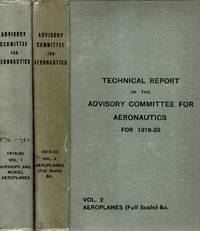
1923253214United Kingdom: HMSO 1923. Book. Very Good. hardback. hardback two volumes complete grey cloth lettered black octavos a very good set tightly bound aside from the neat stamps of the M.A.E.E Experimental Section Library with a clean and unmarked text diagrams charts etc. of which many folding. HMSO Hardcover
197194264London: R.Ae.S. 1971. 1st edition. Very Nice Copy. small folio. stiff wrappers 14 40pp. b/w plates text ills. diags. bibliog. Author was the successor of Dr. Mario Castoldi designer of the famous Macchi racers that flew very successfully in the Schneider Trophy races. This lecture was given at Coventry & Southampton in March 1971. Very scarce R.Ae.S. unknown
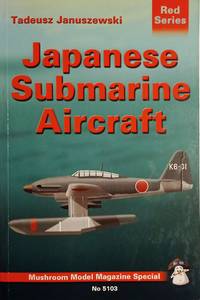
106363T. Januszewski - Japanese Submarine Aircraft - ed. 2002 - Testo in lingua inglese. Pagine 128 con illustrazioni. - Copertina morbida. - Condizioni molto buone. unknown
1495380416.Gpaperback. Good. Access codes and supplements are not guaranteed with used items. May be an ex-library book. paperback
190649754Paris Gauthier-Villars 1906. 4to. No wrappers. In: "Comptes Rendus Hebdomadaires des Séances de L'Academie des Sciences" Tome 142 No 2 and No 13. Pp. 69- 120 a. pp. 741- 816. Entire issues offered. Seux's papers: pp. 79-81 and pp. 772-773. <br/><br/><em>First printing of these 2 pioneering papers in aeronautics the theory here stated eventually lead to the construction of the "Seux monoplane" and the "Roesch-Seux aeroplane".Brockett "Bibliograpy of Aeronautics" No 11072 a. 11083. </em> unknown
196181080Washington DC: United States The Secretary of the Air Force and The Chief of the Bureau of Aeronautics 1961. Revised version. Wraps. Good. FORMERLY CLASSIFIED AS CONFIDENTIAL. Security classification has expired based on Executive Order 13526. Also designated as NAVWEPS 01-4DAVA-1A. Three-hole punched. Ink notation on front cover. Some ink notations to text and at rear. Front and back cover stiff card. Latest date observed was 1961 some earlier dates present. 2 iv 5- 168 2 pages. Pages 1-4 were officially deleted. Pagination uncertain as some pages have additions such as 6A. Page numbers 15-16 and 41-42 absent. Based on preceding and following pages These could be "page intentionally left blank" and were removed. Illustrations diagrams drawings tables some with color. This version canceled or previously incorporated Interim Revisions Nos 1 through 34. This includes the following sections: Description and Operation of Auxiliary Equipment Operating Limitations Flight Characteristics Appendix I Operating Data Charts. Two mimeographed copies of Target Study Log notations on back. Includes information on ASM-N-7 Bullpup Guided Missile Weapon System AN/AWW-1 Fuze Function Control System Carrier Operations Flight Controls Diving Angle of Attack Long Range Attack Tanker Configuration. The Douglas A-4 Skyhawk is a single-seat subsonic carrier-capable light attack aircraft developed for the United States Navy and United States Marine Corps in the early 1950s. The delta-winged single turbojet engine Skyhawk was designed and produced by Douglas Aircraft Company and later by McDonnell Douglas. It was originally designated A4D under the U.S. Navy's pre-1962 designation system. The Skyhawk is a relatively lightweight aircraft with a maximum takeoff weight of 24500 pounds 11100 kg and has a top speed of 670 miles per hour 1080 km/h. The aircraft's five hardpoints support a variety of missiles bombs and other munitions. It is capable of carrying a bomb load equivalent to that of a World War II-era Boeing B-17 bomber and can deliver nuclear weapons using a low-altitude bombing system and a "loft" delivery technique. The A-4 was originally powered by the Wright J65 turbojet engine; from the A-4E onwards the Pratt & Whitney J52 engine was used. The Douglas A-4 Skyhawk is a very versatile light attack-bomber that has been a U.S. Navy first-line aircraft for many years. Despite its relatively small size it is able to carry a large and varied assortment of aerial weapons. In the early 1950s some of the aircraft design group at the Douglas Aircraft Company became concerned by the trend toward increasing complexity and weight in combat aircraft. The group led by Ed Heinemann whose design philosophy was to "Simplicate and Add Lightness" proposed a new attack plane with a gross weight of about half the official specification weight of 30000 lb. The A4D-1 was the first production version of the Skyhawk. The first A4D-1 BuNo 137813 took off on its first flight on August 14 1954 only two months after the first flight of the prototype XA4D-1. A total of 165 A4D-1s were built the last one being delivered in 1957. The A4D-1 was much the same as the XA4D-1 but differed from the XA4D-1 in having a "sugar scoop"-shaped jet tailpipe fairing. and was fitted with an arrester hook. All three weapons pylons were fitted one underneath the fuselage centerline and one underneath each wing just outboard of the main landing gear. Up to 5000 pounds of ordinance could be carried on the three underwing pylons. Alternatively up to three drop tanks could be carried with a combined capacity of 800 gallons. A large blade antenna for the UHF radio was installed immediately aft of the cockpit. The frameless windshield of the XA4D-1 was replaced by a framed windscreen. An internal armament of two 20-mm Colt Mk 12 cannon was fitted one gun in each wing root with 100 rounds per gun. The aircraft did not carry any radar the nose cone being filled with avionics equipment. The A4D-1 was powered by the 7700 lb.s.t Wright J65-W-4 or W-4B turbojet. The next model of the Skyhawk was the A4D-2 A-4B which included provisions for inflight refueling both as a receiver and as a tanker a powered rudder and some structural strengthening. The A4D-2N A-4C first flown in 1959 incorporated radar in the nose and an improved ejection seat. United States, The Secretary of the Air Force and The Chief of the Bureau of Aeronautics paperback
1979759834PN. New. 1979. Soft Cover. Date is original print. This is a reprint edition. . PN paperback
1980760484PN. New. 1980. Soft Cover. Date is original print. This is a reprint edition. . PN paperback
19971302007PN. New. 1997. Soft Cover. Date is original print. This is a reprint edition . PN paperback