[Manhua]:Livre Rare Book

25 871 résultats
3699Xiao Pan. Affiche sur papier photo au format 50 x 70 cm., en belle condition.
Very Good Turkish, Ottoman (1500-1928) A modern fine black leather bdg. Small 4to. (26 x 18 cm). In Ottoman script. 3 volumes set: ([13], 448, [11], [6] p.; 386, [12], [6] p.; 203 p). Ibn Battuta was the greatest medieval Muslim traveler and the author of one of the most famous travel books, the Ri?lah (Travels). His great work describes his extensive travels covering some 75,000 miles (120,000 km) in trips to almost all of the Muslim countries and as far as China and Sumatra (now part of Indonesia). Ibn Battuta was from a family that produced a number of Muslim judges (qadis). He received the traditional juristic and literary education in his native town of Tangier. In 1325, at the age of 21, he started his travels by undertaking the pilgrimage (hajj) to Mecca. At first his purpose was to fulfill that religious duty and to broaden his education by studying under famous scholars in Egypt, Syria, and the Hejaz (western Arabia). That he achieved his objectives is corroborated by long enumerations of scholars and Sufi (Islamic mystic) saints whom he met and also by a list of diplomas conferred on him (mainly in Damascus). Those studies qualified him for judicial office, whereas the claim of being a former pupil of the then-outstanding authorities in traditional Islamic sciences greatly enhanced his chances and made him thereafter a respected guest at many courts. That renown was to follow later, however. In Egypt, where he arrived by the land route via Tunis and Tripoli, an irresistible passion for travel was born in his soul, and he decided to visit as many parts of the world as possible, setting as a rule "never to travel any road a second time." His contemporaries traveled for practical reasons (such as trade, pilgrimage, and education), but Ibn Battuta did it for its own sake, for the joy of learning about new countries and new peoples. He made a living of it, benefitting at the beginning from his scholarly status and later from his increasing fame as a traveler. He enjoyed the generosity and benevolence of numerous sultans, rulers, governors, and high dignitaries in the countries he visited, thus securing an income that enabled him to continue his wanderings. From Cairo, Ibn Battuta set out via Upper Egypt to the Red Sea but then returned and visited Syria, there joining a caravan for Mecca. Having finished the pilgrimage in 1326, he crossed the Arabian Desert to Iraq, southern Iran, Azerbaijan, and Baghdad. There he met the last of the Mongol khans of Iran, Abû Sa'îd (ruled 1316-36), and some lesser rulers. Ibn Battuta spent the years between 1327 and 1330 in Mecca and Medina leading the quiet life of a devotee, but such a long stay did not suit his temperament. Embarking on a boat in Jiddah, he sailed with a retinue of followers down both shores of the Red Sea to Yemen, crossed it by land, and set sail again from Aden. This time he navigated along the eastern African coast, visiting the trading city-states as far as Kilwa (Tanzania). His return journey took him to southern Arabia, Oman, Hormuz, southern Persia, and across the Persian Gulf back to Mecca in 1332. There a new, ambitious plan matured in his mind. Hearing of the sultan of Delhi, Mu?ammad ibn Tughluq (ruled 1325-51), and his fabulous generosity to Muslim scholars, he decided to try his luck at his court. Forced by lack of communications to choose a more indirect route, Ibn Battuta turned northward, again passed Egypt and Syria, and boarded ship for Asia Minor (Anatolia) in Latakia. He crisscrossed that "land of the Turks" in many directions at a time when Anatolia was divided into numerous petty sultanates. Thus, his narrative provides a valuable source for the history of that country between the end of the Seljuq power and the rise of the house of Ottoman. Ibn Battuta was received cordially and generously by all the local rulers and heads of religious... Hejra: 1333; 1335; 1336 = Roumi: 1335 ; 1337; 1340 = Gregorian: 1917; 1919; 1921. Ozege: 21289. For fihrist: 5771.
9440Beijing, Beijing tebie shi gongshu, 1940 (ROC 29). 1 volume-in 8, 65 pp., black fabric hardback with a printed Chinese motif on the cover, flat spine, equipped with a paper slipcase in bad condition, decorated with 129 photos and 1 map of Beijing and its surrounding, in very good condition.
3700Xiao Pan. Affiche sur papier photo au format 50 x 70 cm., en belle condition.
1785LBW-3647[1785]. 366 x 458 mm.
1735LBW-2732[Paris, 1735]. 421 x 529 mm.
1785LBW-3631[1785]. 391 x 247 mm.
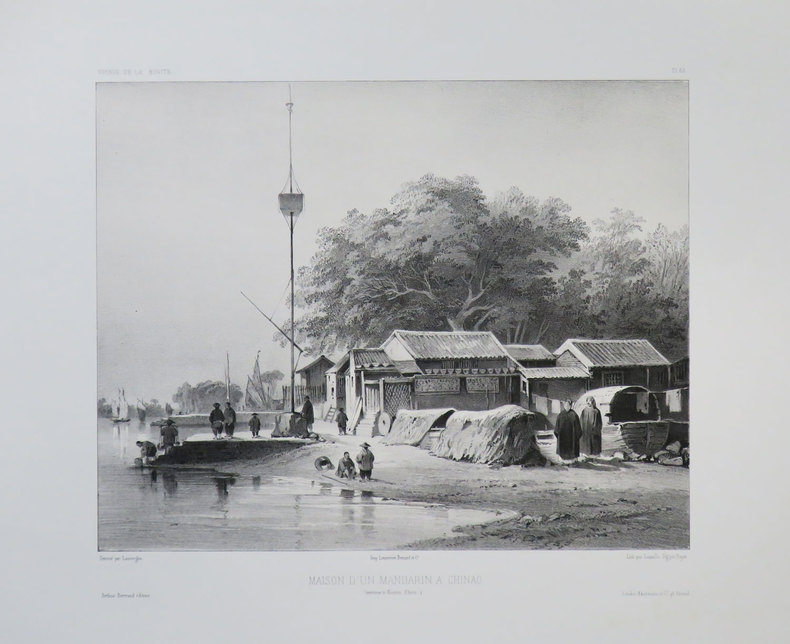
1833LBW-1990Paris, 1833-1839. 270 x 368 mm.
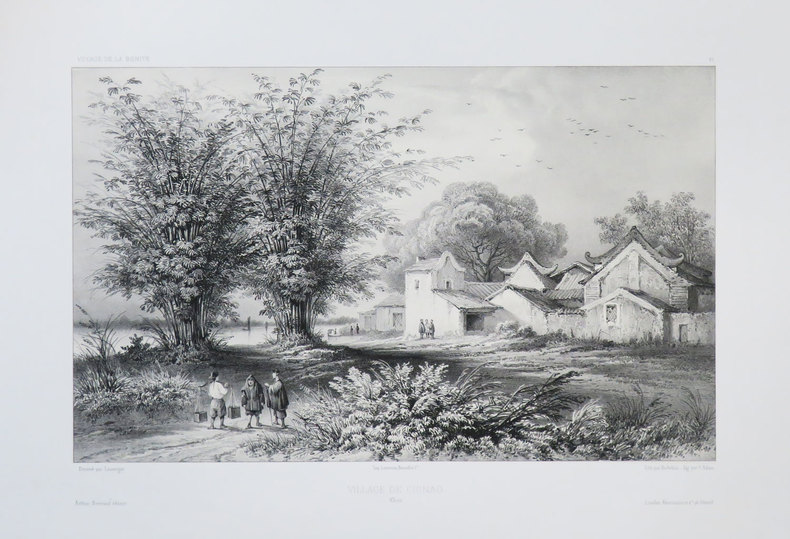
1840LBW-3679[1840]. 235 x 263 mm.
1840LBW-3680[1840]. 219 x 314 mm.
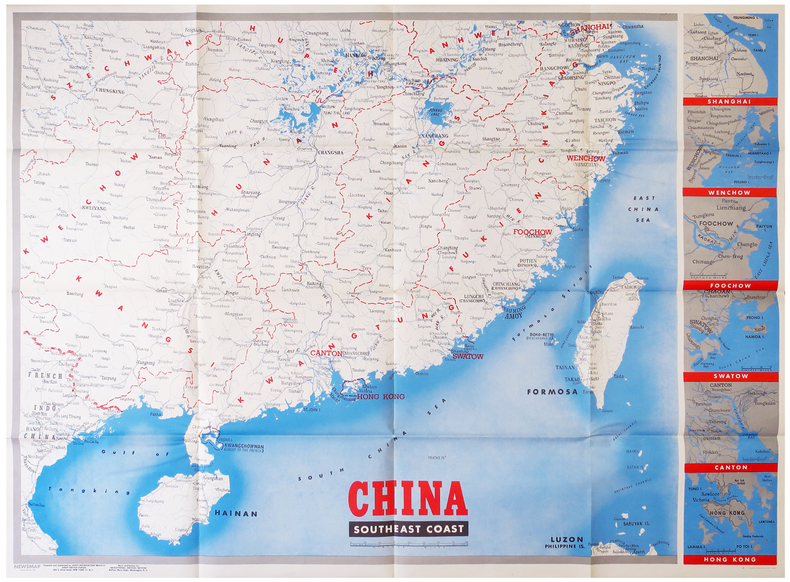
1945LBW-6798[1945]. 0,87 x 1,17 m.
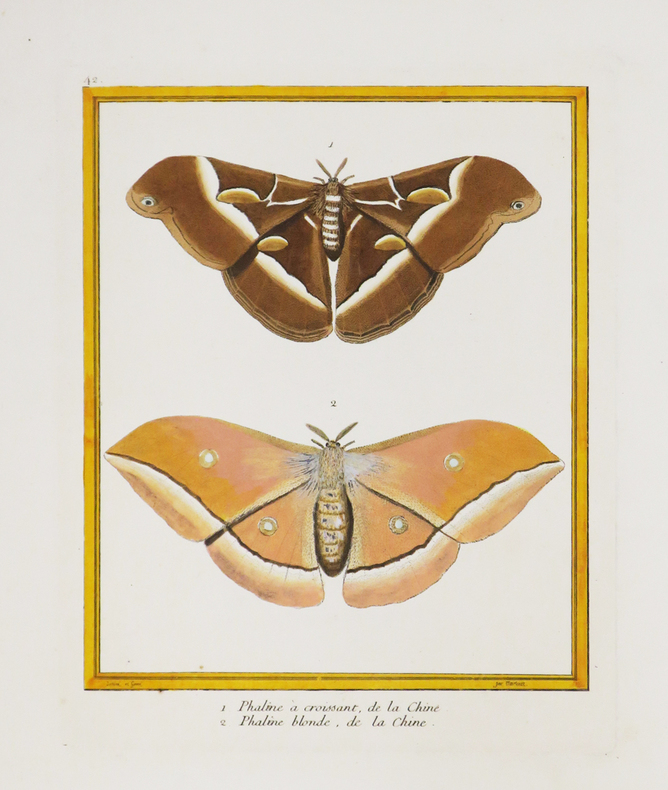
1771LBW-4389[Paris, 1771-1786]. 228 x 183 mm.
1771LBW-4390[Paris, 1771-1786]. 242 x 189 mm.
Very Good Uighur Original wrappers. Cr. 8vo. (20 x 14 cm). In Uighur with the Latin alphabet. [20], 155, [2] p., b/w ills. Exceedingly rare first and only Uyghur translation of the speeches of the revolutionary leaders and members of the CCP or authors and intellectuals like Hua Guofeng, (1921-2008), Deng Xiaoping, (1904-1997), Fang Yui, (1916-1997), Guo Moruo [Dindang], (1892-1978), Ji Dengkui, (1923-1988). These speeches were made at the National Science Conference held in Beijing on March 18-31,1978. We couldn't find any copy in OCLC.
1905012782Rostock, Volckmann, 1905. VI, 384 S., 2 Blatt. Dekorativer Orig.-Leinenband. Cordier: Bibliotheca Sinica 2172f. und 2598. Ausgeschiedenes Bibliotheksexemplar: mehrfach gestempelt und der Rücken mit kleinem Signaturschildchen, sonst schönes, gut erhaltenes Exemplar mit nur leichten Gebrauchsspuren.
1902008760Dinglingen, China-Inland-Mission, 1902. VII, 276 S. Orig.-Leinenband. Nicht bei Cordier: Bibliotheca Sinica. Der Vortitel mit kleinem chinesischem Stempel, sonst gut erhaltenes Exemplar mit nur leichten Gebrauchsspuren.
1909008725Leipzig, Dieterich'sche Verlagsbuchhandlung Theodor Weicher, 1909. XI, 236 S. Orig.-Leinenband. Cordier: Bibliotheca Sinica 4179. Das Titelblatt mit kleinem chinesischem Stempel und ca. 20 Seiten mit kleinen Randnotizen in Bleistift, sonst gut erhaltenes Exemplar mit nur leichten Gebrauchsspuren.
1979008735Wiesbaden, Franz Steiner, 1979. 4 Blatt, 360 S. Orig.-Broschur. Das Titelblatt mit kleinem chinesischem Stempel, sonst gut erhaltenes Exemplar mit nur leichten Gebrauchsspuren.
1991008266Hong Kong, FormAsia, 1991. 150 S., 2 Blatt. Großer querformatiger Orig.-Pappband mit Schutzumschlag. Ein gut erhaltenes Exemplar mit nur leichten Gebrauchsspuren.
1956008758London, Lion and Unicorn Press, 1956. 26 Blatt. Etwas größerer Orig.-Leinenband. Eins von 200 handschriftlich numerierten Exemplaren. Mit Exlibris des britischen Typografen und Buchgestalters Ruari McLean (1917-2006). Ein schönes, gut erhaltenes Exemplar mit nur kleichten Gebrauchsspuren.
1895008798Stuttgart, Strecker & Moser, 1895. 87 S. Orig.-Leinenband. Max von Brandt (1835-1920) war Konsul in Japan, kaiserlich-deutscher Gesandter in China und Ostasien-Experte: "Seine vielbeachteten Abhandlungen und Sachbücher über Ostasien zählten zu den besten völkerkundlichen Beschreibungen, die zu seiner Zeit zur Verfügung standen" (Wikipedia). Cordier: Bibliotheca Sinica 3165. Mit kleinem chinesischen Stempel und gering fleckig, sonst gut erhaltenes Exemplar mit nur leichten Gebrauchsspuren.
1798007522Paris, F. Buisson An 6 de la République 1798 bzw. Lepetit 1807, 1798. viii, 515; 412; 399 S. Unbeschnittene Orig.-Interimsbroschuren mit gedruckten Rückenschildchen. Der Atlas als kleinformatiger, unter Verwendung des alten Materials restaurierter Lederband der Zeit mit dreiseitigem Goldschnitt. (Fortsetzung des Titels:) a la suite de l'Ambassade de Lord Macartney, par John Barrow; Traduit de l'Anglais par J. B. J. Breton. Mit 21 doppelblattgroßen Kupferstich-Tafeln (davon 2 koloriert) (= Bibliothèque portative des Voyages, Tome XLII). Zur besseren Durchsetzung britischer Interessen in China ernannte König George III. Lord Macartney (1737-1806) zum ersten Botschaft am chinesischen Kaiserhof. Er wählte Georges Staunton (1737-1801) als Sekretär und Stellvertreter auch wenn die Popularität von dessen Beschreibung der ersten großen britischen Chinareise kaum darüber hinwegzutäuschen vermochte, daß den Briten vieles im Reich der Mitte unklar und dunkel blieb. Immerhin enthält Stauntons Werk die ersten ausführlichen Nachrichten über den Pei-ho, den die Gesandtschaft im August 1793 bis zur Stadt Tung-tschóu hinauffuhr. Unser Exemplar der ersten französischen Übersetzung leider ohne den vierten Textband mit den 3 gefalteten Karten! Cordier: Bibliotheca Sinica 2384f. Die Broschuren mit stärkeren Gebrauchsspuren, jedoch unbeschnitten und damit zum Aufbinden geeignet. Der kleinformatige Atlas mit Besitzvermerk von 1888. Insgesamt handelt es sich um ein noch ordentliches Exemplar, dessen beiliegender Tafelband einen guten Eindruck von Land und Leuten Chinas zur damaligen Zeit vermittelt.
1928008713Berlin, Albertus-Verlag, 1928. XVI, 200 S. Großformatiger Orig.-Leinenband. Vorne mit zwei kleinen chinesischen Stempeln und der Vorderdeckel oben mit kleinem, dunklem Fleck, sonst gut erhaltenes Exemplar mit nur leichten Gebrauchsspuren.
Very Good Turkish Original wrappers. Cr. 8vo. (20 x 14 cm). In Turkish. 185, [4] p. First Turkish edition of the "Chinese War of Independence" written by Mao Zedong in 1936 during the war with the Kuomintang and Japan. It was translated by Ahmet Angin (1919-1977) from the French text. This translation was published by Bülent Habora (1940-2014) (the owner of Habora Publishing House). Habora left his studies at Ankara University, Faculty of Law and worked as a journalist and publisher. He managed Habora Publishing House, which he founded (1966-95). OCLC 62124547.
1750900130AG[Leipzig:, Arkstee und Merkus, 1750]. Kupferstich, Blattmaß: 22,5 x 19 cm. Bildmaß: 19 x 14 cm.