826 résultats
Very Good Turkish, Ottoman (1500-1928) Original fine 1/4 leather bound in Ottoman lettered gilt. Demy 8vo. (22 x 14 cm). In Ottoman script (Old Turkish with Arabic letters). 174 p. Hegira: 1277 = Gregorian: 1860. Rare early (second) edition of this eye witness and first-hand account, and one of the most important chronicles describing the history of late Safavid Iran in the 18th century, the Iranian invasion of Afghanistan and the siege and the fall of Isfahan in 1722 written by Kruzinski who was a Polish Jesuit missionary served in the Persia in the early 18th century. In 1720 he was nominated advocate general of the mission in Persia and became the secretary to the Bishop of Isfahan. Krusinski himself, however, claimed later on that he is not only the author but also the translator of this work. As a chronicle, this is a history of Iran under the Safavids from 1499 up to 1727 with a special focus on the 1722 Afghan invasion that terminated the Safavid dynasty. "His account of the conditions and events preceding and during the siege and the subsequent demise of the Safavids is unique. It also offers key insights into the workings of the late Safavid state and government as well as the functions of the royal harem." (Bloomsbury). Translated and expanded by Ibrahim Müteferrika of Kruzinski's Latin manuscript written in 1726 in Istanbul and entitled "Historia revolutionis monarchia Persica". The book was first published in Italian, French, and English translations, in Rome (1727), Paris (1728), and London (1728). The founder of the legendary first printing house in the Islamic world, Ibrahim Müteferrika (1674-1745), was the editor of this book. Ceridehâne [i.e. Journal House] Printing House is the successor of the Müteferrika Press in the early 19th century. "The book is a Turkish translation of the history of Iran written in Latin by the Jesuit missionary Judas (Jan) Tadeusz Krusinski (1675-1751). The work, whose title can be translated as 'A voyager's description on the apparition of the Afghans and on the reasons of the Safavid Empire being undermined', focuses on the Afghan invasion of 1722 which led to the fall of the Safavid dynasty, but also offers an overview on the historical processes of early 18th-century Safavid Iran. The publication of this work was made actual not only by the vicinity of Iran to the Ottoman Empire but also by the historical turn reorganizing the relations of power in the region and triggering the intervention of the Ottomans as well. This may have been the reason that among the first Turkish incunabula this was the work published in the highest number of copies. This publication also offers an early example of copyright disputes, as Krusinski considered the Turkish translation as his own work, while Müteferrika, who does not mention his name in the printed version, suggests himself to be the translator". (Source: The Mysterious Printer Ibrahim Muteferrika and the Beginnings of Turkish Book Printing: Library of Hungarian Academy of Sciences Online). Özege: 19897.
Very Good Turkish, Ottoman (1500-1928) Contemporary fine quarter leather binding. Five raised bands to spine, second gilt title as "Tarih-i seyyâh", others gilt decorations. Brown boards are embossed decoratively. Demy 8vo. (21 x 15 cm). In Ottoman script (Old Turkish with Arabic letters). [12], 194 p. Hegira: 1142 = Gregorian: 1729. Slightly wear on colophon and the first page. Otherwise a good copy. Extremely uncommon first Ottoman edition printed in the first printing house of the Islamic world as the third Islamic incunabula, of this eye witness and first-hand account, and one of the most important chronicles describing the history of late Safavid Iran in the 18th century, the Iranian invasion of Afghanistan and the siege and the fall of Isfahan in 1722 written by Kruzinski who was a Polish Jesuit missionary served in the Persia in the early 18th century. In 1720 he was nominated advocate general of the mission in Persia and became the secretary to the Bishop of Isfahan. Krusinski himself, however, claimed later on that he is not only the author but also the translator of this work. As a chronicle, this is a history of Iran under the Safavids from 1499 up to 1727 with a special focus on the 1722 Afghan invasion that terminated the Safavid dynasty. "His account of the conditions and events preceding and during the siege and the subsequent demise of the Safavids is unique. It also offers key insights into the workings of the late Safavid state and government as well as the functions of the royal harem." (Bloomsbury). Translated and expanded by Ibrahim Müteferrika of Kruzinski's Latin manuscript written in 1726 in Istanbul and entitled "Historia revolutionis monarchia Persica". The book was first published in Italian, French, and English translations, in Rome (1727), Paris (1728), and London (1728). The founder of the legendary first printing house in the Islamic world, Ibrahim Müteferrika (1674-1745), was the editor and translator of this book. Ceridehâne [i.e. Journal House] Printing House is the successor of the Müteferrika Press in the early 19th century. "The book is a Turkish translation of the history of Iran written in Latin by the Jesuit missionary Judas (Jan) Tadeusz Krusinski (1675-1751). The work, whose title can be translated as 'A voyager's description on the apparition of the Afghans and on the reasons of the Safavid Empire being undermined', focuses on the Afghan invasion of 1722 which led to the fall of the Safavid dynasty, but also offers an overview on the historical processes of early 18th-century Safavid Iran. The publication of this work was made actual not only by the vicinity of Iran to the Ottoman Empire but also by the historical turn reorganizing the relations of power in the region and triggering the intervention of the Ottomans as well. This may have been the reason that among the first Turkish incunabula this was the work published in the highest number of copies. This publication also offers an early example of copyright disputes, as Krusinski considered the Turkish translation as his own work, while Müteferrika, who does not mention his name in the printed version, suggests himself to be the translator". (Source: The Mysterious Printer Ibrahim Muteferrika and the Beginnings of Turkish Book Printing: Library of Hungarian Academy of Sciences Online). The workshop of Müteferrika began its historical mission in 1728. They published 17 works in 22 volumes. The printing house served as a means to the long-term goal of Müteferrika, his efforts to broaden the horizon and modernize the knowledge of Ottoman society and Islamic civilization. This is evidenced by the subjects of the books selected for publishing, the motivations put forth in the publisher's introductions, as well as by the documents illuminating the background of the publication of each book, also published in print. One of 1200 copies. OCLC: 312516053 (For printed copies: Two copies).; Özege: 19897.
br. In che senso la guerra cominciata in Afghanistan si possa definire nuova non è chiaro. Dagli schermi televisivi o sulle pagine dei giornali è parso piuttosto di assistere alla replica di un copione collaudato che prevede un'alternanza di immagini stereotipe e leggende talvolta risibili. Siamo di fronte a una regia anonima quanto sapiente che veicola un contenuto di informazione prossimo allo zero. Ma le cose cambiano se ci si sposta sul terreno di battaglia, come ha fatto per due mesi Tim Judah inviando alla "New York Review of Books" i quattro lunghi reportage che compongono questo libro.
La lotta della autrice contro i signori della guerra e l'oppressione delle donne afgane. Un racconto di passione e coraggio.
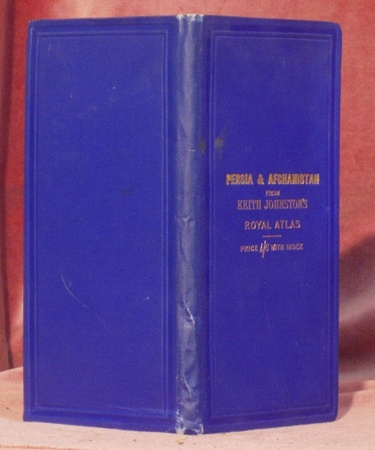
19068London, 1906, 235x115mm, Carte montée sur toile. Couverture percaline bleue, titre doré sur le plat supérieure. Book in very good condition.
200484363BBLondon/New York:, Zed Books, 2004. 8°. XIV, 237 S., sw-Abbildungen, broschiert (gut erhalten)
1975X71567Stuttgart, Kohlhammer 1975 525pp.with ills. + 2 folding maps out-of-text, 24cm., cloth, dustwrapper (bit used), else VG, X71567
525pp.with ills. + 2 folding maps out-of-text, 24cm., cloth, dustwrapper (bit used), else VG, X71567
1985048493Tübingen., Im Selbstverlag des Geographischen Instituts der Universität Tübingen., 1985. Mit 19 Karten, 29 Abbildungen und 81 Tabellen. XII, 415 Seiten. Reihe: Tübinger Geographische Studien, Heft 87. Zustand: Aus einer Institutsbibliothek ausgeschieden, unterer Rücken mit kleinem Aufkleber (Gewebestreifen), Titelblatt mit Bibliotheksstempel und Inventarnummer. Gr.-8°. S OBroschur / Okarton.
1983041372Tübingen., Selbstverlag des Geographischen Instituts der Universität Tübingen., 1983. XII, 415 Seiten. Mit 19 Karten, 29 Abbildungen, 81 Tabellen. Reihe: Tübinger Geographische Studien, Heft 87. Zustand: Einbandränder minimal gedunkelt, abgesehen hiervon ist das Buch in gutem Zustand. 8°. S OBroschur / Okarton.
1983105227Tübingen 1983. 415 S. mit zahlreichen Abbildungen und Karten, Groß 8°, Original-Karton (Softcover), Name auf Vorsatz, gutes Exemplar,
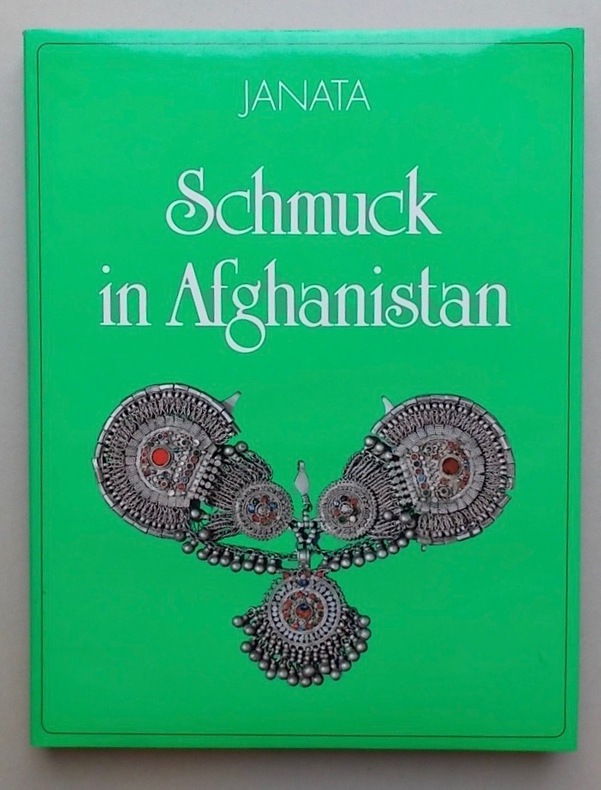
198120501Graz, Adeva, (1981). 211 S., 2 Bll. mit zahlr. teils ganzseit. teils farb. Textabb. 8°. OLwd. (kl. Gebrssprn.) mit OU.
198124237Graz, Akademische Druck- u. Verlagsanstalt, 1981. 211 S., mit zahlr. teils farb. Illustr. 4°, OLwd., OSu.
35364Graz, Akademische Druck-u. Verlagsanstalt, 1981. In-4°, 211 pages. Reliure pleine toile d'éditeur, sous jaquette illustrée.
In-4, 211 pages. Edition en langue allemande. Ouvrage de référence sur les bijoux d'Afghanistan. Abondante iconographie en noir et en couleurs. A l'état de neuf. Mit 72 (2) ausfuhrlich beschriebenen teils farbigen Kunstdrucktafeln und 1 ausfaltbaren 'Bevolkerungskarte Afghanistan'. - Silbergeprogter schwarzer Original-Leineneinband mit farbig illustriertem grunen Orig.-Schutzumschlag. In perfekt Zustand.
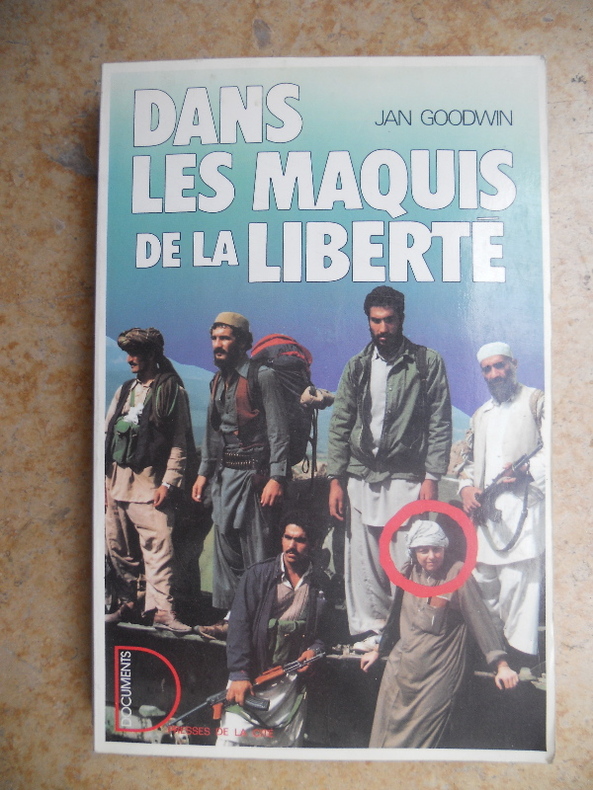
23788Presses de la Cite, 1988. Format 16x24 cm, broche, 276 pages.Bon etat, petites traces d'usage sur un livre d'occasion.
8vo., First Edition, with a coloured portrait frontispiece, 15 plates on 12 and 16 maps in the text and front and rear endpaper maps, some light and inoffensive spotting, original navy blue cloth, gilt back, blue top, fore-edges lightly spotted else a very good, clean copy. This copy was formerly in the library of the eminent naval historian J H Owen and bears his initials on half-title.
200142095München List, 2001. gebundene Ausgabe
4to., First Edition, with illustrated title and numerous photographs and maps throughout; red cloth, gilt back, a near fine copy in unclipped dustwrapper. Chronological account of the continuous conflicts in Afghanistan.
185221121Wien, Staatsdruckerei, 1851 - 1852. S. 119 - 190, 73 - 109. 3 (2 gefalt.) lithograph. Karten. 4°. Mod. Kart. [5 Warenabbildungen]
1950105652Kobenhavn 1950. 211 S. mit zahlreichen Abbildungen, Groß 8°, Original-Karton (Softcover), Ecken und oberes Kapital bestoßen, Rücken mit Lesefältchen, Name auf Vorsatz, insgesamt gutes und innen sauberes Exemplar,
2007111194Frankfurt am Main : Büchergilde Gutenberg, 2007. 381 S. Leinen, gebundene Ausgabe, Lesebändchen.
200719661ABBerlin, Berliner Taschenbuch Verlag, 2007. 19 cm, 385 Seiten, Taschenbuch. 22. Auflage minimale Gebrauchsspuren, sehr gute Erhaltung.
200716626Bloomsbury Berlin Verlag, Berlin, 2007. 381, (3) Seiten. 8vo. OPb. mit OSchU.
201339548Frankfurt, M. : S. Fischer, 2013. 440 S. 8°. 2. Aufl. OPpbd. mit Lesebändchen u. SU.