235 résultats
19450088251945. Very good. Envelope only no letter. <br /><br />The envelope was addressed to Private First Class Walter Mikucki at the Osaka Yodogawa Bunsho POW Camp in Japan. It has a typed "Prisoner of War Postage Free" free frank in the upper right corner and has received a Chicago "War Savings machine postmark dated Jan 13 1944. The envelope was opened by a U.S. censor and resealed using censor tape annotated "Examined by 6587." The address was subsequently obliterated with a red cross and black bands using grease pencil or crayon. It has a circular handstamp in the lower right corner dated Nov 20 1945 with text that appears to read "LIBERATED HQ. USMC. WASH. D.C." There is a USMC "pointing finger" return-to-sender hand stamp that point to the return address. <br /><br />Pfc. Mikucki was a member of the 4th Marine Regiment when as war clouds rumbled in the Pacific it was sent from China to Corregidor to defend Manila Bay in the Philippines. Shortly after its arrival Japan launched its infamous sneak attack on Pearl Harbor and allied bases throughout the Pacific. Corregidor was bombed continuously from late December 1941 until May 5 1942 when an overwhelming force of Japanese soldiers landed on the island. After tanks were brought ashore the following day Lt. Gen. Jonathan Wainwright realized defeat was imminent and surrendered fearing the thousand or so wounded men and bedraggled defenders would be annihilated. <br /><br />Although most of the 4th Marine Regiment had been killed the remaining men were transported to prison camps in Japan. The Yodogawa Bunsho Camp near Osaka was one of the smallest Japanese prisoner of war camps and records in the National Archives identify only 12 prisoners that were known to have been held there. Pfc. Mikucki's name is not on that list. <br /><br />Other records show that Mikucki may also have been imprisoned at various times at the Itchioke Chikko and Umeda Bunsho camps. He died from unknown causes on March 11 1943. <br /><br />Clearly this information was not provided by the Japanese to the Red Cross as Mikucki's parents sent this letter ten months later. <br /><br />Examples of mail sent to American prisoners held in Japan are very scarce and this example may be unique for at the time of this listing I find no mention in philatelic or ephemera auction records in sale listings or institutional holdings of other returned mail for Corregidor Marines who died in Japanese prisoner of war camps . Also there is no mention of anything similar in Gruenzner's <i>Postal History of pf American POWs</i>. <br /><br /> books
1935857951935. MAGICIANS - JAPAN. TAMC KAIHÔ OFFICIAL ORGAN OF THE TOKYO AMATEUR MAGICIANS CLUB. Vol.1 #1 thru Vol.2 #1 5 issues in all. Published in Tokyo from January 1935 to May 1936. Text in Japanese but the first 4 issues of 4 and 8 pp. include translations into English on mimeographed sheets the last issue of 12 pp. includes no such translation. Illustrated with photo plates throughout. The first issue is a bit tattered else the others are good or better condition. Very unusual and interesting run of this ephemeral magazine. unknown books
1928897801928. JAPAN ADVERTISER. ENTHRONEMENT OF THE ONE HUNDRED TWENTY-FOURTH EMPEROR OF JAPAN. Tokyo: Benjamin Fleisher 1928. Folio-size purple cloth-covered boards with rooster decoration bound Japanese-style; xvi 179pp. With an original print by Hiroshi Yoshida opposite p.58. The nicest example we have seen bright in the original edgeworn dustwrapper and clasped chitsu cloth covered case with original printed paper title label. Extraordinary in this condition. unknown books
181954848Washington D.C.: Army Air Forces. 10-18- 1943. Color poster / map 47 x 35 1/2 inches 120 x 90 cm folding as issued now professionally mounted on linen backing. Wear and a little paper loss along the fold lines has been infilled light toning to lower centrefold; the poster presents very well with bright color. Stunning image of a hemispherical view with Japan at the centre encompassing the area from Iran in the west Australia in the south and as far as the west coast of the U.S. at the east of the map. The map maker is F.E. Manning one of the distinguished news illustrators of the war in a style very similar to that of Richard Edes Harrison. There is a scale along the lower edge which was intended to be clipped and used to measure distances of places on the map from Tokyo. Text reads: "This map is a photographic view of the world with the center at Tokyo. Thus with the detachable scale distances can be measured along any line running thru Tokyo. It should be noted that an inch at the center represents less mileage than an inch closer to the edges. The detachable scale has been designed to compensate for this and should be used only with the center at Tokyo. The photographic process used in making this map makes all distances measured with the tape approximate only. Distances are shown in statute miles. Lines between key cities do not represent regular air routes in all cases. They show distances between points that do not fall on a line going thru the center of the projection." The Newsmap posters were displayed in offices and factories to keep the American public updated with news of the war and to encourage their participation in the winning of it. . Army Air Forces. unknown books
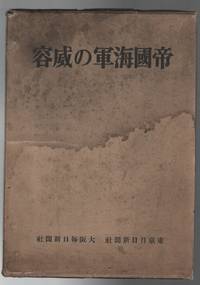
194222314Tokyo: Tokyo Nichinichi Shimbunsha 1942. First Edition. Hardcover. Very good. Oblong 4to. Blue and silver boards in slipcase. Case structurally sound but heavily water-stained with scuffing and chipping to spine ends and corners. Boards lightly rubbed and bumped at corners. Endpapers toned. Very good in good slipcase. 72pp. <br/><br/>Black and white photographs of the Japanese navy during World War II dramatically composed and arranged for wartime propaganda purposes. Includes one of the earliest published sequence of images of the attack on Pearl Harbor. Additionally illustrated with maps and drawings. Text in Japanese. Scarce. Tokyo Nichinichi Shimbunsha hardcover books
1900857941900. MAP - JAPAN IMPERIAL GEOLOGICAL SURVEY OF JAPAN. TOPOGRAPHICAL MAP OF THE JAPANESE EMPIRE. Engraved by N. Matsudaira printed by G. Yoshii at the Toyodo in Tokyo 1900. This huge 5.33'x 6'164 x 183 cm map has a colored inset of the political divisions of the empire and another inset of Taiwan and environs as well as a superbly detailed map of Japan itself. There is some weakening of folds but overall in good condition folded and enclosed in a printed cover box. A monumental work in English throughout. By no means common. unknown books
18101654221810. JAPAN. Japanese Fabric Samples. 30 Samples mounted in an album. Oblong 4to. 255 x 175 mm bound in contemporary wrappers in a new chitsu case. NP. ND. A handsome collection of early twentieth century Japanese fabric samples each measuring approximately 170 X 125mm. unknown books
19391652281939. PHOTOMONTAGE. Showa Juninendo Renshu Kantai Junko Kinego. Illustrated throughout with photomontages. With an illustrated map laid in. Oblong folio. 295 x 220 mm bound in publisher's green cloth. Tokyo: Teikoku Kaigunsha 1940. An elaborate and beautifully produced book commemorating the Japanese fleet's 1939 training exercises. As with many of this type of Japanese photobook there is a certain disconnect between great care lavished on the design from the decorative endpapers to the layout and the subject matter. Remains of staples in the gutter a very nice copy. OCLC records only 2 copies of which the one in the US is at Penn. hardcover books
1923851721923. PHOTOGRAPHY - JAPAN ALBUM OF 85 SNAPSHOTS OF JAPAN 1916 - 1923 FUJIYAMA AND MORE PLUS SIX LOOSE PHOTOGRAPHS AND A PHOTO POSTCARD. 5 1/2 x 8 inch flexible black cloth covers cord-bound with "Photographs" in gilt on front cover. Black paper mounts neatly captioned in white ink mostly in English with some Japanese. Images are b/w sepia or color only two are in color and range in size from 2 1/4 x 3 inches to 4 x 6 inches. The majority 63 are the smaller size. The album is in good condition as are the page mounts and the photographs are in very good condition. The loose photographs range in size from 2 1/4 x 3 inches to 4 x 6 inches and are sepia or b/w. They are captioned in ink on the reverse. Most of the album photos depict expeditions to climb Fujiyama and various of the Japan Alps with scenes along the way of people and places -ecstatic pilgrims the Imperial bodyguard women's groups schoolchildren and the photographer and his many climbing companions foreign and Japanese. The owner is not identified although some of his companions are: Arnold Bauer Charles W. Copp Harry Collins Professor Fujimura McKinnon etc. along with a group of boys from Matsumoto High School and several others. Excellent and interesting group of photos of the breathtaking mountain scenery of Japan. Mountaineering was and is a defining interest of the Japanese - there are still gods in those mountains. unknown books
1870811701870. BASEBALL - JAPAN Shihon Gakkou-hen. SHÔGAKU TOKUHON Maki no Ichi. Aichi-ken Nagoya Shihongakkô Teacher's College n.d. 1870's An interesting little elementary school reader from the first series of textbooks designed and created by the Teachers College Normal School system in Japan after the Meiji restoration to introduce "Western Learning" to the country. What follows is a series of excerpts from an informative article found online at http://wwwwp.mext.go.jp/hakusyo/book/hpbz198103/hpbz198103_2 _035.html "The Normal School which was under the direct jurisdiction of the Department of Education was also requested to compile elementary school textbooks on the basis of its practical experience. Also an office for editing elementary school textbooks was set up in the Normal School in December 1872. The Department of Education encouraged independent prefectures to reprint the textbooks and other educational material which it and the Normal School had compiled and it was not long before most of the prefectures adopted this practice and the reprinted textbooks were in nationwide use. Especially following the establishment of regulations for the course of study for elementary schools by the Normal School the textbooks prepared by this institute gained wide acceptance. These textbooks included elementary school readers introductory geography outlines of Japanese topography outlines of world topography outlines of Japanese history outlines of world history elementary school arithmetic etc. .The elementary school textbooks proved to be an interesting introduction of the new knowledge based on the Civilization and Enlightenment Bunmeikaika thought and they were accepted not only as textbooks but also as popular reading material for the public at large. Thus their influence was of considerable importance in the dissemination of the new culture." It is pretty clear that the introduction of Western culture also entailed the introduction of a least a variety of baseball in the 1870's as well a fact confirmed by other sources on the origins of baseball in Japan. The American educational consultants and their Japanese colleagues in Aichi saw fit to include a cut and a story with a group of boys playing with bats and balls pitching and hitting - interesting proof that baseball is nearly as old in Japan as it is in the States. The text of the story crude. unknown books
19301598251930. JAPANESE COMMERCIAL DESIGN. A Collection of approximately 200 labels for food and drink products. Various sizes mounted in an album. Small folio 305 x 225mm bound in pale blue wrappers in a recent brown chitsu case. NP. ND. Japan 1930's. An eclectic collection of Japanese food and drink labels from the first quarter of the twentieth century. Fruits vegetables spirits candies canned meats and fishes are all represented on colourful labels featuring combined western and Japanese design sensibilities. They are neatly tipped into an accordion style album of thick pale blue paper and mostly remain in fine condition. unknown books
194760276NP Osaka Japan: Liaison Office Osaka Railway Division 1947. 4to. 66 pp. Text primarily in the form of charts includes types and measurements of main locomotives used for passenger and freight trains gasoline cars electric locomotives and cars passenger cars and freight cars. Mounted through the text are 89 original black and white photographs each measuring 4 x 6 inches of the rolling stock including a picture of the "Dixie Limited an express train for exclusive use of the Allied Forces running between Tokyo and Hakata." During World War II many Japanese companies were consolidated as part of the war effort. With Japan's defeat and occupation by allied forces the various conglomerates that had been created were broken up by order of the Supreme Commander Allied Powers. This included the Japanese railway companies though railroads remained a vital means of transportation not only for locals but for the occupying forces. Apparently not recorded on OCLC. Light brown paper-covered boards; black lettered title on front board. A very good copy. <br/><br/> Liaison Office, Osaka Railway Division hardcover books
193513899np Japan nd ca. 1935. Hardcover. Near fine. Oblong 4to. double string-tied commercial album silk brocade bound 9" x 12". Containing 60 4.5" x 6" silver gelatin prints mounted to heavy gilt-edges card-stock one to a page both recto and verso. Printed captions in English additionally mounted below each photo. Near fine or better with only touches of wear to extremities. Quite well-preserved. <br/><br/>A handsome and rather lavish production by an unknown but likely professional photographer possibly as presentation for special occasion or visit from foreign dignitary/delegation. Undated but clearly pre-war and based on internal evidence ca. 1935-1940. A broad range of scenes from Japanese domestic and cultural life are included: cormorant fishing the tea ceremony flower arrangement Kabuki and Noh theater Sumo and other sports kendo archery battledore shuttlecock festivals musicians rice and tea harvesting as well as scenes of shrines temples cherry blossoms and gardens. More modern scenes include Tokyo street scenes a Nikko cable car and silk mill workers. An attractive and informative look at Japan in the years immediately preceding WWII. hardcover books
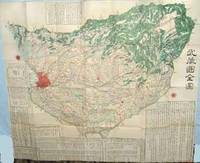
1856826971856. MAP - JAPAN Gyokuransai SADAHIDE & Kikuchi Shûzo. MUSASHI NO KUNI ZENZU. Edo Kikuya Kosaburo & 12 others. Ansei 3 1856 112 X 127 cm. An interesting colored woodcut map of the Musashi plain. Folds into its original titled covers 28 x 18.6 cm. Nice colors impression and colors. Sadahide was not only a talented printmaker but was also responsible for several important maps of the time. Beans 1856.13 in Supplement B page 41. See the UBC website at http://angel.library.ubc.ca/cdm4/item_viewer.phpCISOROOT=/t okugawa&CISOPTR=312&REC=3 for more info on this map. From The Keyes collection. unknown books
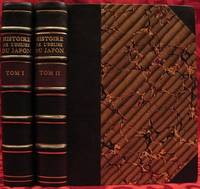
1717E05562 volumes. 2865911 pages with 4 plates and index; 106786 pages with 4 plates one folding and index. Quarto 10" x 8" bound in half leather with raised spine bands in gilt lettering to spine over marbled boards. Streit-Dindinger VI 1418. Second edition of a 1689 history of missions to Japan prefaced with a general account of the country.<br /><br />Jean Crasset was an ascetical writer born at Dieppe France 3 January 1618 and died at Paris 4 January 1692. He entered the Society of Jesus in 1638 became professor of humanities and philosophy was director for twenty-three years of a famous sodality of men connected with the professed house of the Jesuits in Paris and was also a successful preacher. Crasset is the author of many ascetical works among which are:Methode d'oraison; Considérationes chrétiennes pour tous les jours de l'année; La chrétienne in soli tude; Dissertation sur les oracles des Sibylles which was vigorously attacked; Entretiens pour la jeunesse. He also published in 1689 a Historie de l'église du japon which has been translated into several languages but which is considered inferior to that of Charlevoix. Crasset's history was scarcely original for it was drawn in great part from the work which Father Solier had issued in 1627; he merely retouched the style and continued the narrative from 1624 to 1658. The objection is made that the work lacks precision is heavy and is crowded with details. The author attributed the origin of the persecution of 1597 to the imprudence of the friars in making their religious ceremonies public. There is a posthumous work of his entitled La foy victorieuse de l'infidélite et du libertinage. On 9 September 1656 the Bishop of Orléans issued an interdict against him for having in one of his sermons charged several ecclesiastics with sustaining the propositions condemned by the Bull of Innocent X Cum occasione 31 May 1653. The interdict was removed in the following February.<br /><br />Condition:<br /><br />Nicely rebound in half leather. Contents toned and damp-stained St. Charles Borromeo Seminary stamp on titles else a very good set. François Montalant hardcover books
1900WRCAM45650Various locations in Japan 1900. Ten leaves containing eighty photographs each 2 1/4 x 3 1/4 inches. Oblong octavo. Contemporary black three- quarter morocco and cloth. Hinges and corners lightly worn. Bookplate on front pastedown. Light foxing primarily to mounts and not images. Prints sharp and clear. Very good. Eighty attractive images of turn-of-the- century Japan as seen through a Western lens. Evidently narrating a trip in Japan each photograph is captioned in English usually stating location which include Kagoshima the Kuma River Kumamoto Nakatshu Fukuoka Nagasaki and Isahaya. While most of the images show landscapes and the scenery of the area many of them include local people - at temple and shrines in city streets going about every day life. Of particular interest are a photograph of a woodcutter's hut with the family in the foreground a fortuneteller plying his trade a group of young men washing vegetables a view of Suizenji Park a Buddhist Temple threshing rice the sulphur springs at Nagasaki and various scenes in native villages. A nice collection of images with the bookplate of New Zealand photo-historian Frederic Hardwicke Knight. hardcover books
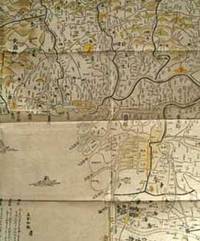
1748826931748. MAP - JAPAN. SETTSU NO KUNI MEISHO. Kyoto Kimura Juyodo Kan'en Gannen 1748. A handcolored woodblock printed map of Settsu provice containing the area of Osaka castle etc. 117.3 X 129.1 cm folds into heavy paper covers of approximately 27.7 x 18.9 cm. The original title slip is gone replaced by a handbrushed label: "Osaka no Kuni" "Carte Baie d'Osacca". Lovely and interesting map found at Beans main volume p.22 1748.1. Condition is very good printed on very strong and supple paper. For a detaiuled illustration see the record at UBC's website for the Beans copy: http://angel.library.ubc.ca/cdm4/item_viewer.phpCISOROOT=%2 Ftokugawa&CISOPTR=286&DMSCALE=50&DMWIDTH=600&DMHEIGHT=600&DM MODE=viewer&DMFULL=0&DMX=75&DMY=44&DMTEXT=&DMTHUMB=1&REC=2&D MROTATE=0&x=266&y=296 Our copy has different hand-coloring. The Beans copy hand-colors the harbor ours hand-colors the land primarily. From the collection of Roger Keyes. unknown books
89757CANDY - JAPAN A COLLECTION OF 560 CANDY WRAPPERS AND LABELS AND 55 DECORATED BOXES EARLY 20TH CENTURY. The wrappers and labels range from small 2.5 x 3 cm to large 32 x 45 cm although the majority are somewhere in the middle. Many are elegantly printed woodblocks employing traditional Japanese botanical motifs while others combine traditional and contemporary design elements with contemporary methods of printing. The boxes have been carefully compressed and along with the wrappers and labels are mounted onto 291 loose leaves of light brown paper 30 x 22.5 cm to one side only. Besides advertising the expected fruit flavored sweets such as orange lemon cherry grape and apple other tastes on offer are chestnut walnut honey lychee and even parsnip. Collected from small candy makers and larger firms located all over Japan. A few of the labels and wrappers show some foxing and/or discoloration but are mostly clean. Printed in clear and saturated colors with occasional flashes of metallic ink the wrappers labels and boxes in this collection still entice and charm. Two of the designs even have the original cellophane wrapper that accompanied each. A collection assembled almost certainly before the war with some wrappers going back to the early 20th century. Mostly from the teens twenties and the thirties. Very unusual and interesting ephemera. unknown books
1852864251852. MAP - JAPAN SEKISUI Chô & SUZUKI Kien. ZOTEI DAI NIHON KOKUGUN YOCHI ROTEI ZENZU. Edo Osaka & Kyoto. Zodiacal date of Kaei 5 1852. Identical to the copy illustrated online from the UC Berkeley collection save that their copy is a standard one-piece folding map in covers. See: http://www.lunacommons.org/luna/servlet/detail/RUMSEY~9~1~24 291~110045:Zotei-Dai-Nihon-kokugun-yochi-rotei Ours is the same size when assembled some 102 x 183 cm but is bound in 12 separate folding sections each identified on the cover by area each approximately 35 x 46 cm. This would seem to have been done by the publisher for ease of use a series of "pocket maps". They are all enclosed in a small clasped chitsu case some 12 x 8 x 3 cm in size with a mica-paper liner and a cloth exterior. There is a smaller size version some 72 x 40 at 1852.1 in the first volume of Beans referenced from Ramming 1934 at #28 - obviously a misprint of some kind as it would be hard to understand a smaller size recut map existing. In any case a very interesting format and a lovely detailed map in a "modern" style employing degrees of latitude but printed in traditional color woodblock. Very good condition impression and colors. An excellent example of Japanese cartography in transition. unknown books
44211<p>Japan and Western Medicine. Oranda jin Geka ryoji no zu Dutch Surgery in Nagasaki. Original pen ink and watercolor drawing on light brown-toned silk with 4 vertical lines of Japanese characters in the upper left corner. Japan: late 18th or early 19th century. 483 x 363 mm. mounted as a scroll at a modern date on light grey silk backed with paper with a half-round hanging rail with braided ribbon attached at the top and a suspension bar at the foot measuring 914 x 443 mm. overall; preserved in a custom-made wooden box. A few tiny pinholes in upper corners of image but fine with the coloring fresh and bright.</p> <p> This striking image showing an amputation carried out by a Dutch surgeon in Japan was most likely painted in the late eighteenth or early nineteenth century during Japan's self-imposed period of national isolation. The hand-painted image is related but by no means identical to a Nagasaki woodblock print titled "Surgery by a Dutch Physician" one of many popular souvenir prints depicting scenes unique to Nagasaki which at the time was the sole point of contact between Japan and the outside world. See our reproduction of the print. It may be that our scroll is the original of the image; however it is also possible that both hand-painted and woodcut versions of the image were produced simultaneously.</p> <p> Western surgery came to Japan in the sixteenth and seventeenth centuries via the Portuguese who in 1543 became the first Europeans to make direct contact with Japan and the Dutch who became the only European nation allowed to trade with Japan after Japan's expulsion of the Portuguese in 1639. Surgeons attached to the Dutch East India Company established practices at the island of Dejima in Nagasaki Bay which led to the formation of several Japanese schools of surgery based on European methods. "This aspect of Western medicine known as K m -ry geka or ‘Surgery of the Red-Haired' has had a profound effect on the development of surgical practice in Japan" Van Gulik p. 37. Van Gulik "Dutch surgery in Japan" in Red-Hair Medicine: Dutch-Japanese Medical Relations ed. Beukers et al. pp. 37-50. </p> <p>. unknown books
1854WRCAM52135Yokohama 1854. 1p. Oblong folio sheet previously folded. A couple minor creases with very light dampstaining at foot of sheet. Very good. An impressive survival from Commodore Perry's expedition a decorative manuscript menu from the banquet that celebrated the agreement of the Treaty of Kanagawa between the United States and Japan in 1854. Although an official and extensive trade agreement between the two countries was not reached until 1858 the Treaty of Kanagawa achieved Perry and the United States government's primary goal of opening Japan to U.S. trade by allowing the use of two ports at Shimoda and Hakodate by American ships granting a degree of freedom of movement to American sailors while in port and establishing diplomatic relations via the appointment of an American consul. <br> <br> The banquet was held in the Treaty House at Yokohama which had been purpose-built for negotiating the agreement between the two countries. It was a return engagement following a first event hosted by the Americans on board Perry's flagship the U.S.S. Powhatan at which copious amounts of lamb beef and whiskey were reportedly served. The menu for the Japanese meal reflected the country's altogether different culinary tastes offering a long series of soup and seafood courses including sea bream and a number of other fish. It is unclear which side found the other's food more distasteful but Perry remarked that the Japanese offerings "Seemed particularly meager in comparison with American fare and soup however desirable in its proper place was found to be but a poor substitute for a round of beef or a haunch of mutton." For their part the Japanese were unimpressed by the Americans' loud and uncouth behavior at the event and were amused by their inability to use chopsticks. <br> <br> Despite the reservations of each side the banquet served as a capstone to one of the most critical moments in the development of Japanese-American relations. This possibly unique piece of ephemera is a wonderful document of that entertaining cross-cultural episode and the culmination of the Perry expedition. unknown books
1858WRCAM52130AJapan 1858. Five volumes. 58; 58; 54; 58; 58pp. Original stiff textured tan wrappers stitched as issued each with printed paper title label. Some minor shelf wear and dust soiling. Very good. An attractive set of the "Ansei Five-Power Treaties" the formal diplomatic engagements between Japan and the United States United Kingdom France Russia and the Netherlands ending Japan's 250 years of seclusion and opening its ports to worldwide commercial trade so named for their signing in the fifth year of the Ansei era. The first treaty also known as the Harris Treaty was signed by the U.S. on the deck of the USS "Powhatan" in Edo now Tokyo Bay on July 29 1858. It opened the ports of of Shimoda Hakodate Kanagawa and Nagasaki to foreign trade effective July 4 1859 and then Niigata and Hyogo on January 1 1860 and January 1 1863 respectively. In addition to extensive trade and consular provisions the treaty also established the rights of U.S. citizens to reside permanently lease property purchase real estate and construct residences and warehouses; established a system of extraterritoriality whereby U.S. residents were subject only to the laws of their own consular courts and not the Japanese legal system; and established freedom of religious expression and the right to construct churches to serve the needs of U.S. residents within the confines of designated foreign settlements. The treaty followed the Convention of Kanagawa signed under threat of force in 1854 after Commodore Matthew Perry's aggressive visits to the Shogunate in 1853 and 1854. The Convention had granted coaling rights for U.S. ships and allowed for an American consul in Shimoda but Perry left the more important trading negotiations to Townsend Harris New York businessman and eventually the first U.S. Consul General to Japan. <br> <br> Each of the five volumes details the negotiations between Japan and a specific foreign power. These other accords are similar and duly inspired by the U.S. treaty; each nation forced Japan to grant the same "favored nation" provisions they had granted to the U.S. The Dutch already had several treaties with Japan; they were the only Western power to retain trade relations with Japan after the final expulsion of Europeans in 1638 and had been advising and supplying the Japanese navy since 1853. However once the U.S. had sealed its "Treaty of Amity" the Dutch quickly revised theirs to match on August 18 1858; Russia followed on August 19; Lord Elgin signed for Britain on August 26; and Jean-Baptiste Louis Gros commander of the French expedition in China signed for France on October 9 1858. Subsequent Japanese and Chinese scholars refer to these treaties and subsequent agreements as the "unequal treaties" as none of the provisions were ever reciprocated. <br> <br> This set is uncommon. We found only one record for another incomplete set at auction. This is the first time we have handled this title. unknown books
1853WRCAM55689Japan 1853. 14pp. including three double-page woodblock illustrations. Gathered signatures stitched as issued. Mild wear. Near fine. Rare kawaraban newsbook announcing the arrival of Commodore Perry and the Black Ships to Japan in 1853. The work includes three double-page illustrations: a dominating portrait of Perry's flagship; Perry and a contingent of marines marching in procession to a meeting with local dignitaries at Kurihama with two cabin boys carrying boxes presumably official gifts or President Fillmore's letter requesting harmonious commerce; and a map of Edo Bay where the Black Ships entered. Listings of the Samurai and Daimyo Feudal Lords entrusted with the protection of Japan from foreign invasion are found on the final leaves. Such kawaraban - news sheets broadsides or small periodicals - provided the most immediate contemporary news of events in Japan including Commodore Perry's momentous first visit. unknown books
1900235312Japan 1900. 50 hand colored-albumen prints mounted on card. Each print framed by two original watercolor vignettes. Tissue guards. 1 vols. Oblong folio 12-1/2 x 15-1/2 inches; image 8 x 10⁻¹/2/ inches. Lacquered wood covers with hand-painted title in gold; central vignette depicting rickshaw and passenger; floral motif background to front and rear covers. A.e.g. Spine neatly rebacked in leather. Fine. 50 hand colored-albumen prints mounted on card. Each print framed by two original watercolor vignettes. Tissue guards. 1 vols. Oblong folio 12-1/2 x 15-1/2 inches; image 8 x 10⁻¹/2/ inches. Fifty finely pastel hand-colored albumen prints some captioned in English in the negative some with pencil captions. Includes scenes of Koyoto Nara Osaka Kobe and Nagasaki; Japanese junk European steamer a tea house at Tokyo street vendors Kabuki actors including a member of the renowned Danjuro lineage sumo wrestlers dancers and geisha as well as some studio portraits.<br/><br/>Each image is framed by two original watercolor vignettes a total of 100 unique images mostly depicting scenes of nature. unknown books
1860347451860. Two small broadsides each 9 x 11 3/4 inches. Previously folded. Moderate toning and dust soiling faint foxing at outer margins. Good plus. Japanese news sheet on foreigners.<br/> <br/>Two interesting Japanese Kawaraban woodblock news sheets documenting some of the foreigners who visited Japan's shores in the 1850s as the country opened up to the west. The first sheet is in four sections and titled "Western Products and Strange Things." It contains images of an English Captain a black sailor a microscope of Dutch style and a mummified body wrapped in sheets. The second shows a Captain's wife and her wolfhound dog an American Flag and a depiction of four Russian coins obverse and reverse and two other coins dated 1843 and 1854. unknown books