TAVERNIER , Jean-BaptisteLivre Rare Book
74 résultats
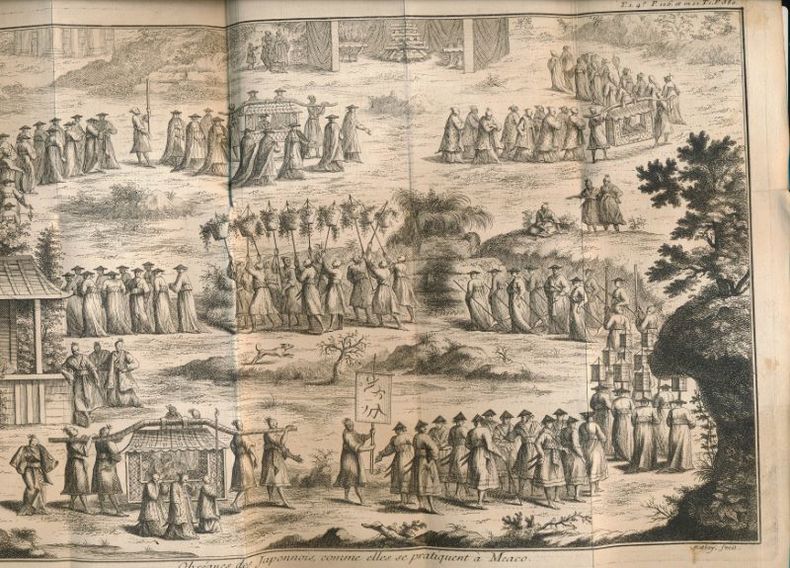
1713PHO-1341A Paris, Chez Pierre Ribou et Rouen chez Jean Baptiste Machuel (tome 5), 1713. 6 volumes in-12, relié plein veau époque, dos à nerfs orné avec pièce de titre et tomaison, tranches marbrées, Tome 5, reliure légèrement différent avec tranches rouges, coins et coiffes usés .T1,27p-501p-1f(table); T2, 1f-465-1f (table);T3 ,1f-402-3f(table);T4,1f-367-2f(table);T5 ,3f(titre, épître)-467-2f(table),T6 3f(titre, épitre)244 -2f (table) .Illustré de 63 planches la plupart repliées, dont un portrait et 3 grandes cartes (manque la carte du Japon) ; quelques vignettes dans le texte , quelques planches au tome 5 volantes, 1 planche doublée.
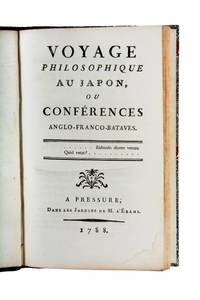
17883005361Pressure" Paris: Dans les Jardins de M. l'Ebahi 1788. A good copy. Octavo half-title woodcut vignette of a ship setting sail at start of text; neat modern quarter calf. <p><p>First edition scarce: a witty and urbane discussion of everything from the rules of Japanese society to the French Compagnie des Indes. The unknown author's reflections on religion and satirical comments on Europe meant that the work must have been skirting very close to being censored.</p> <p>Presumably published in Paris the imprint is meant to refer to l'Ebahi's stately home the Chateau de Pressure in a salon of which the three main characters the much-travelled Monsieur l'Ebahi "Mister Flabbergasted" the Englishman "Thincker" and the Dutchman "Wurtzheim" are comfortably seated as they swap tales of their marvellous adventures not only in Japan but throughout Asia. The whole story is told with such brio that it could almost pass for actual reportage if it were not for the knowing interjections of the author who says at the outset that the only philosophical lesson worth learning is to admire the teachings of Democritus and be amused by the foibles of mankind.</p> <p>The work does appear quite rare with copies recorded in the British Library and the Bibliothèque Nationale de France but with apparently few others.</p> </p> . Dans les Jardins de M. l'Ebahi unknown
1736PHO-2144Paris, Chez Giffard, Rollin, Gandouin, Lamesle, Nyon, 1736, 2 volumes in-4 (26x21cm), 4ff.-LVIII-667pp. & 1f.-XII-746pp., titre en noir et rouge, texte sur 2 colonnes, relié plein veau époque, dos à nerfs ornés, pièces de titre et tomaison, triples filets aux plats, tranches dorées, ex-libris armorié en page de garde, charnières fendues, coins usés, coiffes arasées, manque une pièce de titre, pièce de titre avec manque, cachets effacés aux titres, réparation au titre(t2), 2 planches avec réparation, manque la page 699-700 (en copie).
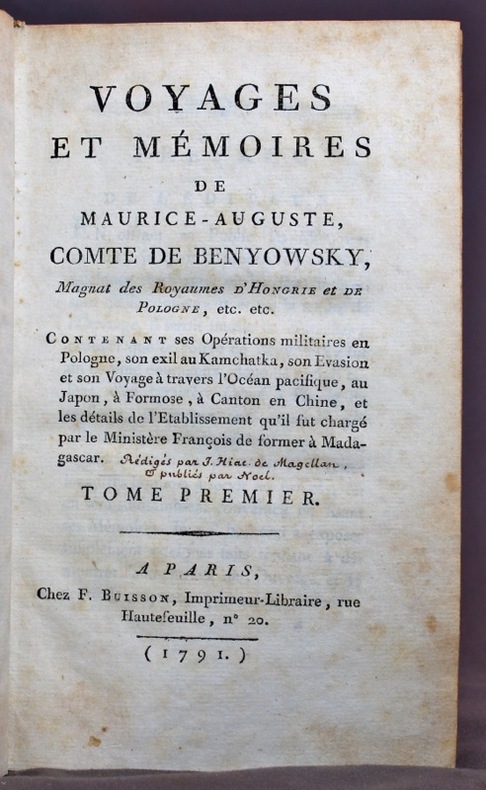
179115636Paris, Buisson, 1791. 2 volumes in-8 de 4-VIII-466; [4]-486 pages, demi-basane brune à coins, dos lisses ornés de filets dorés, pièces de titre beige et de tomaison, ronde et verte, en forme de médaillon. Ex-libris Monvert et signature de Ch. L. Monvert, avocat. Une note à l'encre sur la page de titre précise Rédigés par J. Hiac. de Magellan, & publiés par Noel.
1754PHO-1440Paris, Giffart , 1754. 6 volumes in-12 de (2) ff., xxiv pp., 417 pp., 1 carte, 19 planches; (2) ff., lxxxv pp., (1) f., 429 pp., 2 planches; (2) ff., 528 pp. mal chiffrées 558, (1) f., 1 carte, 2 planches; (2) ff., 534 pp., (1) f., 1 planche; (2) ff., 479 pp., 1 planche; (2) ff., 386 pp., (3) ff., 1 carte, 28 planches , relié plein veau époque , dos à nerfs avec pièce de titre et tomaison , tranches rouges , ex libris manuscrit aux titres ,coiffes , coins et coupes usés , dos frottés , petits trous de ver au tome 5 , manque au dos tome 1 , trous de vers au tome 1 , mouillures au tome 6 , quelques déchirures aux plis sans manque .
173814843BBAugsburg, Gedruckt bey Anton Maximilian Heiss für Franz Anton Jlger, 1738. 31x230,5 cm. 8 Bl., 534 S.; 559 (recte 555) S. Mit 8 (von 9) gestochenen Tafeln. Ldr.-Bd. der Zeit mit Rückenschild und Rückenvergoldung. (2 Teile in 1 Band).
1715E05562 volumes. 2865911 pages with 4 plates and index; 106786 pages with 4 plates one folding and index. Quarto 10" x 8" bound in half leather with raised spine bands in gilt lettering to spine over marbled boards. Streit-Dindinger VI 1418. Second edition of a 1689 history of missions to Japan prefaced with a general account of the country.<br /><br />Jean Crasset was an ascetical writer born at Dieppe France 3 January 1618 and died at Paris 4 January 1692. He entered the Society of Jesus in 1638 became professor of humanities and philosophy was director for twenty-three years of a famous sodality of men connected with the professed house of the Jesuits in Paris and was also a successful preacher. Crasset is the author of many ascetical works among which are:Methode d'oraison; Considérationes chrétiennes pour tous les jours de l'année; La chrétienne in soli tude; Dissertation sur les oracles des Sibylles which was vigorously attacked; Entretiens pour la jeunesse. He also published in 1689 a Historie de l'église du japon which has been translated into several languages but which is considered inferior to that of Charlevoix. Crasset's history was scarcely original for it was drawn in great part from the work which Father Solier had issued in 1627; he merely retouched the style and continued the narrative from 1624 to 1658. The objection is made that the work lacks precision is heavy and is crowded with details. The author attributed the origin of the persecution of 1597 to the imprudence of the friars in making their religious ceremonies public. There is a posthumous work of his entitled La foy victorieuse de l'infidélite et du libertinage. On 9 September 1656 the Bishop of Orléans issued an interdict against him for having in one of his sermons charged several ecclesiastics with sustaining the propositions condemned by the Bull of Innocent X Cum occasione 31 May 1653. The interdict was removed in the following February.<br /><br />Condition:<br /><br />Nicely rebound in half leather. Contents toned and damp-stained St. Charles Borromeo Seminary stamp on titles else a very good set. François Montalant hardcover
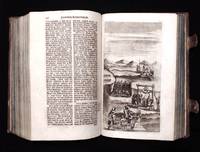
17152254François Montalant 19,5 x 26 Paris 1715 Deux volumes in-4, Paris, François Montalant, 1715, seconde édition, reliure plein veau glacé d'époque, pièces de titre de maroquin rouge, dos à cinq nerfs ornés, léger filet noir d'encadrement sur les plats, tranches unies rouges, dentelle dorée sur les coupes, [28], (titre, préface, « Argumens », privilège du Roy), 659, [11] pp.(tables des matières) ; [10], 678, [6] pp. et 7 planches gravées (Tome 1, p.9 "Habillement de deux personnes de qualités", p.10, "Figures d'une dame de qualité", p.14 "Château & maison de plaisance près de Fisen", p.277 "Throne de l'Empereur" / Tome 2, p.23 "Partie du palais de l'Empereur", p.246 "Chrétiens brulés vifs" , p.528 "Chrétiens suppliciés" et une gravure in-texte tome 2, p. 53 " Croix des Japonnois" . Publié pour la première fois en 1689, l'ouvrage du Père jésuite Crasset (1615-1692) est la relation de la mission jésuite au Japon initiée par François-Xavier à partir des implantations portugaises de Goa (il débarque au Japon en août 1549) et poursuivie par ses successeurs. Dans sa préface, Crasset rappelle ses sources, tout particulièrement l'ouvrage du Père Jésuite Solier paru en 1627-1629 "Histoire ecclésiastique des Isles et du royaume du Japon" ou celui du Père Bartoli. Crasset prolonge le récit de 1624 à 1658. La "Notice du Japon" qui introduit l'ouvrage est un point d'historiographie intéressant sur la perception du Japon par l'Europe de la fin du XVIIe siècle. Le livre de Crasset, suivi en 1715 par celui du Père de Charlevoix, connut un grand succès par les détails qu'il donne sur le Japon et les Japonais de Sengoku à Tokugawa, sur le rejet des Européens et les cruelles persécutions du début XVIIe. Il fut traduit en plusieurs langues. Diderot, élève des Jésuites à Langres de 1723 à 1728 reçut en prix le livre de Crasset à la fin de la classe de seconde ! Coiffes et coins habilement restaurées, quelques taches sur les plats, absence d'une gravure hors texte, traces de mouillures sans conséquences dans le tome 2, bel exemplaire. Rare. (B41) PHOTOS NUMERIQUES DISPONIBLES PAR EMAIL SUR SIMPLE DEMANDE-DIGITAL PHOTOGRAPS MAY BE AVAILABLE ON REQUEST. Livre
17152254François Montalant 19,5 x 26 Paris 1715 Deux volumes in-4, Paris, François Montalant, 1715, seconde édition, reliure plein veau glacé d'époque, pièces de titre de maroquin rouge, dos à cinq nerfs ornés, léger filet noir d'encadrement sur les plats, tranches unies rouges, dentelle dorée sur les coupes, [28], (titre, préface, « Argumens », privilège du Roy), 659, [11] pp.(tables des matières) ; [10], 678, [6] pp. et 7 planches gravées (Tome 1, p.9 "Habillement de deux personnes de qualités", p.10, "Figures d'une dame de qualité", p.14 "Château & maison de plaisance près de Fisen", p.277 "Throne de l'Empereur" / Tome 2, p.23 "Partie du palais de l'Empereur", p.246 "Chrétiens brulés vifs" , p.528 "Chrétiens suppliciés" et une gravure in-texte tome 2, p. 53 " Croix des Japonnois" . Publié pour la première fois en 1689, l'ouvrage du Père jésuite Crasset (1615-1692) est la relation de la mission jésuite au Japon initiée par François-Xavier à partir des implantations portugaises de Goa (il débarque au Japon en août 1549) et poursuivie par ses successeurs. Dans sa préface, Crasset rappelle ses sources, tout particulièrement l'ouvrage du Père Jésuite Solier paru en 1627-1629 "Histoire ecclésiastique des Isles et du royaume du Japon" ou celui du Père Bartoli. Crasset prolonge le récit de 1624 à 1658. La "Notice du Japon" qui introduit l'ouvrage est un point d'historiographie intéressant sur la perception du Japon par l'Europe de la fin du XVIIe siècle. Le livre de Crasset, suivi en 1715 par celui du Père de Charlevoix, connut un grand succès par les détails qu'il donne sur le Japon et les Japonais de Sengoku à Tokugawa, sur le rejet des Européens et les cruelles persécutions du début XVIIe. Il fut traduit en plusieurs langues. Diderot, élève des Jésuites à Langres de 1723 à 1728 reçut en prix le livre de Crasset à la fin de la classe de seconde ! Coiffes et coins habilement restaurées, quelques taches sur les plats, absence d'une gravure hors texte, traces de mouillures sans conséquences dans le tome 2, bel exemplaire. Rare. (B41) PHOTOS NUMERIQUES DISPONIBLES PAR EMAIL SUR SIMPLE DEMANDE-DIGITAL PHOTOGRAPS MAY BE AVAILABLE ON REQUEST. Livre
17241-0-128Rouen / Paris, Machuel de Pere / Pierre Ribou, 1724. 8° (17x11cm), mit gest. Portrait, gest Titel, 4 gest. ausfaltb. Ktn., 54 (v.58) (45 ausfaltb.) Kupfertaf. und einigen Texths., 26 Bll., 501(1) S., 1 Bl.; 1 Bl., 465(1) S., 1 Bl.; 1 Bl., 402 S., 3 Bll.; 1 Bl., 367(1) S., 2 Bll.; 1 Bl., 467 S., 2 Bll.; 1 Bl., 460 S., 2 Bll., Ldr. d. Zt
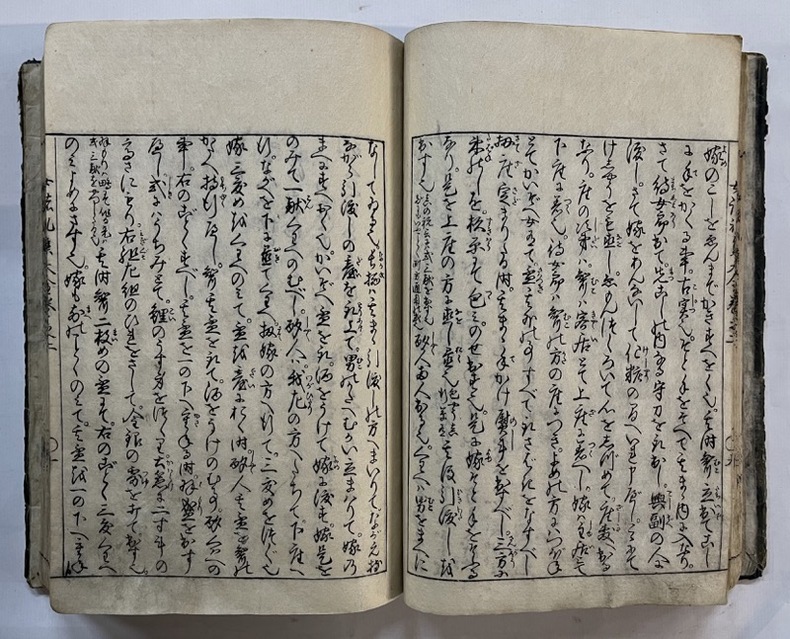
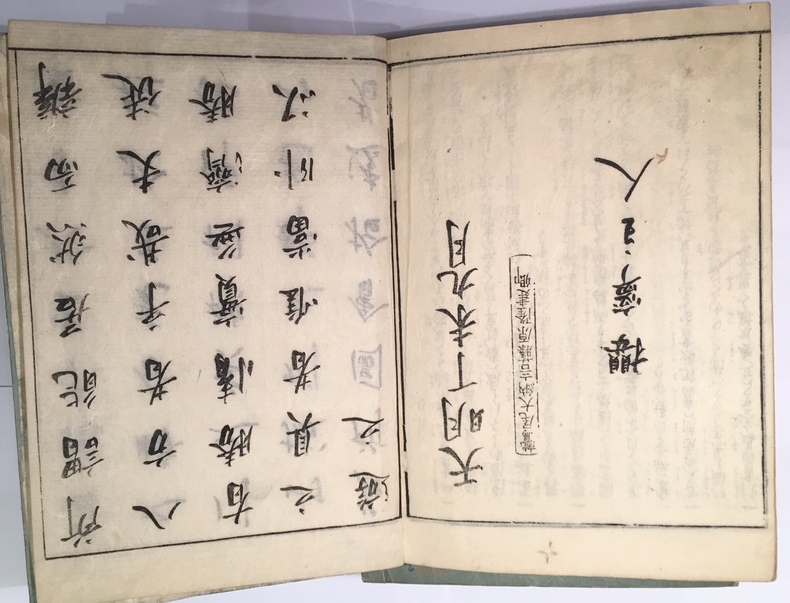
1756131098Librairie Jiangdu Langhua Shulin 1756 In-4 27 x 18,5 cm. Reliure japonaise traditionnelle, couvertures bleues, avec pièces de titre contrecollées, non paginé [256] pp., texte en alphabet hiragana, 26 estampes hors texte dont 1 en couleurs et 8 doubles, nombreux dessins dans et hors-texte. Texte en japonais. Couverture d’usage, coupes frottées, intérieur frais.
1717E05562 volumes. 2865911 pages with 4 plates and index; 106786 pages with 4 plates one folding and index. Quarto 10" x 8" bound in half leather with raised spine bands in gilt lettering to spine over marbled boards. Streit-Dindinger VI 1418. Second edition of a 1689 history of missions to Japan prefaced with a general account of the country.<br /><br />Jean Crasset was an ascetical writer born at Dieppe France 3 January 1618 and died at Paris 4 January 1692. He entered the Society of Jesus in 1638 became professor of humanities and philosophy was director for twenty-three years of a famous sodality of men connected with the professed house of the Jesuits in Paris and was also a successful preacher. Crasset is the author of many ascetical works among which are:Methode d'oraison; Considérationes chrétiennes pour tous les jours de l'année; La chrétienne in soli tude; Dissertation sur les oracles des Sibylles which was vigorously attacked; Entretiens pour la jeunesse. He also published in 1689 a Historie de l'église du japon which has been translated into several languages but which is considered inferior to that of Charlevoix. Crasset's history was scarcely original for it was drawn in great part from the work which Father Solier had issued in 1627; he merely retouched the style and continued the narrative from 1624 to 1658. The objection is made that the work lacks precision is heavy and is crowded with details. The author attributed the origin of the persecution of 1597 to the imprudence of the friars in making their religious ceremonies public. There is a posthumous work of his entitled La foy victorieuse de l'infidélite et du libertinage. On 9 September 1656 the Bishop of Orléans issued an interdict against him for having in one of his sermons charged several ecclesiastics with sustaining the propositions condemned by the Bull of Innocent X Cum occasione 31 May 1653. The interdict was removed in the following February.<br /><br />Condition:<br /><br />Nicely rebound in half leather. Contents toned and damp-stained St. Charles Borromeo Seminary stamp on titles else a very good set. François Montalant hardcover books
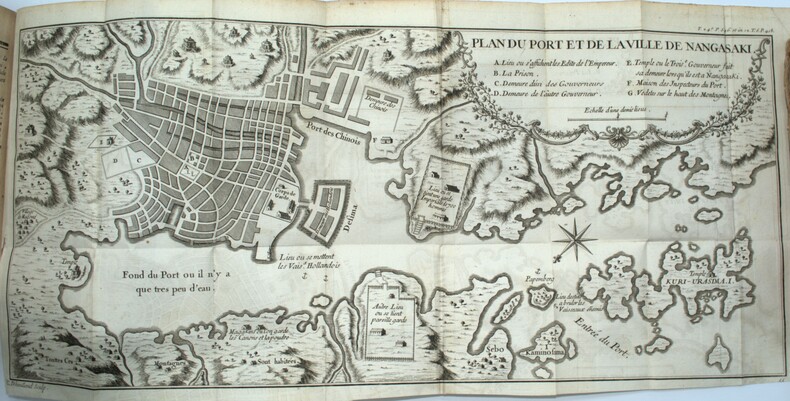
1736130433Chez Jean-Michel Guadouin A Paris, Chez Julien-Michel Gandouin, 1736, Quai de Conti, aux trois Vertus. Chez Jean-Baptiste Lamesle, rue vieille Boucherie, à la Minerve. Chez Pierre-François Giffart, rue S.Jacques, à Sainte Thérèse. Chez Rollin fils, Quai des Augustins près de la rue de Hurpois, à Saint Athanase. Chez Nyons fils, rue de Hurpois, à lOccasion. Avec Approbation & Privilège du Roi. Ou l'on trouvera tout ce qu'on a pu apprendre de la nature & des Productions du Pays, du Gouvernement & du Commerce, de Révolutions arrivées dans lEmpire & dans la Religion; & lexamen de tous les Auteurs,qui ont écrit sur le même sujet. Avec les fastes chronologiques de la découverte du nouveau monde. Enrichie de Figures en taille-douce. 9 volumes In-12 reliés plein veau de l'époque. Dos ornés à 5 nerfs, pièce de titre et de tomaison maroquin rouge. Coiffes et queues faibles ou parfois manquantes, mors fendus, coins parfois émoussés, reliures frottées, rousseurs. Tome 1 : 1 ff. b, faux-titre, titre, XXXII + 418 pages, 2 ff (privilège), 1ff.blanc,. 1 carte dépliante (Empire du Japon, déchirure sans manque), 10 planches dépliantes. Petit manque au bas de la page 3 avec perte de texte partielle sur la dernière ligne. Tome 2 : 1 ff. b, faux-titre, titre, X (table), 1 ff. non chiffré d'errata, 586 pages, 1 ff.blanc. 1 planche dépliante (Plan de la ville de Meaco). Tome 3 : 1 ff. b, faux-titre, titre, XII (table), 590 pages, 1 ff. non chiffré d'errata, 1 ff. blanc. 2 planches dépliantes (Plan de la ville et château d'Anzuquiama, plan de la ville Dozaca et de son château). La page 215 est paginée 115 par erreur. Tome 4 : 1 ff. b, faux-titre, titre, XII (table et errata), 493 pages, 1 ff. blanc.1 carte dépliante (Corée), 1 planche dépliante. Tome 5 : 1 ff. b, faux-titre, titre, XVI (table et errata), 575 pages, 1 ff. blanc. 1 carte dépliante (Plan de Jédo). Tome 6 : 1 ff. b, faux-titre, titre, VIII (table), 432 pages, 1 ff. non chiffré d'errata, 1 ff. blanc. 1 carte dépliante (Isles du Japon). Tome 7 : 1 ff. b, faux-titre, titre, VIII (table et errata), 475 pages, 1 ff. blanc. Tome 8 : 1 ff. b, faux-titre, titre, II (table), 407 pages, 1 ff. blanc. 1 carte dépliante (Plan du port et de la ville de Nagansaki), 9 planches dépliantes, 28 planches hors-texte. Tome 9 : Faux-titre, titre, 442 pages, 1 ff. blanc (bibliographie et une liste alphabétique des "auteurs qui ont écrit du japon". Chronologie de la découverte du nouveau monde depuis 1363, table générale des matières). Exemplaire bien complet des 55 cartes, planches et plans. Malgré les défauts aux reliures mentionnés ci-dessus et dont notre prix tient compte, exemplaire très frais intérieurement. Très rare.
1748826931748. MAP - JAPAN. SETTSU NO KUNI MEISHO. Kyoto Kimura Juyodo Kan'en Gannen 1748. A handcolored woodblock printed map of Settsu provice containing the area of Osaka castle etc. 117.3 X 129.1 cm folds into heavy paper covers of approximately 27.7 x 18.9 cm. The original title slip is gone replaced by a handbrushed label: "Osaka no Kuni" "Carte Baie d'Osacca". Lovely and interesting map found at Beans main volume p.22 1748.1. Condition is very good printed on very strong and supple paper. For a detaiuled illustration see the record at UBC's website for the Beans copy: http://angel.library.ubc.ca/cdm4/item_viewer.phpCISOROOT=%2Ftokugawa& CISOPTR=286&DMSCALE=50&DMWIDTH=600&DMHEIGHT=600&DMMODE=viewer&DMFULL=0 &DMX=75&DMY=44&DMTEXT=&DMTHUMB=1&REC=2&DMROTATE=0&x=266&y=296 Our copy has different hand-coloring. The Beans copy hand-colors the harbor ours hand-colors the land primarily. From the collection of Roger Keyes. unknown
1748826931748. MAP - JAPAN. SETTSU NO KUNI MEISHO. Kyoto Kimura Juyodo Kan'en Gannen 1748. A handcolored woodblock printed map of Settsu provice containing the area of Osaka castle etc. 117.3 X 129.1 cm folds into heavy paper covers of approximately 27.7 x 18.9 cm. The original title slip is gone replaced by a handbrushed label: "Osaka no Kuni" "Carte Baie d'Osacca". Lovely and interesting map found at Beans main volume p.22 1748.1. Condition is very good printed on very strong and supple paper. For a detaiuled illustration see the record at UBC's website for the Beans copy: http://angel.library.ubc.ca/cdm4/item_viewer.phpCISOROOT=%2 Ftokugawa&CISOPTR=286&DMSCALE=50&DMWIDTH=600&DMHEIGHT=600&DM MODE=viewer&DMFULL=0&DMX=75&DMY=44&DMTEXT=&DMTHUMB=1&REC=2&D MROTATE=0&x=266&y=296 Our copy has different hand-coloring. The Beans copy hand-colors the harbor ours hand-colors the land primarily. From the collection of Roger Keyes. unknown books
17916424A Paris, Chez F. Buisson, Imprimeur-Libraire, rue Hautefeuille, n°20. (1791). 1791 2 vol. in-8° (200 x 125 mm.) de : I. [2] ff. (titre, f. t.), viii, 466 pp.; II. [2] ff. (titre, f. t.), 486 pp. Initiales manuscrites à l'encre "L R" surles faux titres. Demi-basane dépoque, dos lisses ornés et titrés à l'or, coins de parchemin, plats recouverts de papier à la colle bleu.
178223766Nürnberg, Christoph Weigel und Schneider, 1782. Nach der 1773 in Lemgo im Nachlaß der Brudertochter gefundenen Handschrift. Vorliegende überarbeitete, gekürzte und ergänzte Ausgabe beruht auf der von Dohm herausgegebenen Ausgabe: Engelbert Kaempfers Geschichte und Beschreibung von Japan, Lemgo, 1777 und 1779. Die Ergänzungen beruhen auf den in Breslau herausgekommenen kritischen und philosophischen Bemerkungen über Japan und die Japaner. Mit 7 ausklappbaren Kupferkarten. 8°, ca. 19,2 x 11,4 cm, 7 Bl., 350 S., 1 Bl. Verlagsanzeige, roter Farbschnitt, Original-Halblederband. Inhalt: Vorrede / Anzeige und Erklärung der Kupfer / Erklärung der vorkommenden japanischen Münze / Reise von Batavia über Siam nach Japan / Geographie, Naturgeschichte und Einwohner von Japan / Politische Verfassung des japanischen Reichs / Von der Religionsverfassung und den verschiedenen Sekten in Japan / Beschreibung von Nangasacki / Vom Handel der Ausländer nach Japan, und besonders von der Verfassung der Holländer / Allgemeine Reisenachrichten von Japan / Erste Reise des Verfassers nach Jedo und wieder zurück / Zweite Hofreise. Tafel I: Schwimmende Dörfer, oder bewohnte Kähne der Siamer / Tafel II: die zwei Höfe des Berklams Tempel / Tafel III: eine Mia oder Sintos Tempel / Tafel IV: der Tempel des Tensjo Daisin zu Isje (nur zur Hälfte erhalten) / Tafel V: Aufzug der Holländischen Gesandschaft / Tafel VI: Prospect vom Schloß, Stadt und Hafen Muru / Tafel VII: der (kaiserliche) Audienzsaal. Die Vorrede dieser Ausgabe ist erweitert - gegenüber der Ausgabe in der Staats- und Stadtbibliothek, Augsburg. Name auf Titelblatt: F. Lichtewitz oder Lichtewick ?. Engelbert Kaempfer (geboren 16. September 1651 in Lemgo; gestorben 2. November 1716 in Lieme) deutscher Arzt und Forschungsreisender. Im Zuge einer fast zehnjährigen Forschungsreise (1683 bis 1693) die ihn schließlich 1690 - 1692 nach Japan führte, sammelte er zahlreiche Kenntnisse zur Geographie, Natur, Gesellschaft, Religion, Politik, Verwaltung sowie den Wissenschaften und Künsten der bereisten Regionen. 1. Auflage dieser Ausgabe. Rücken mit Einriß, Einband berieben und bestoßen, Tafel IV nur zur Hälfte vorhanden, Seiten vereinzelt fleckig, S. 293 mit Tintenfleck, sonst gut erhalten
1770135640Hosaki Jogwanken 1770 6 volumes 26,5 x 18,5, Reliure japonaise d’origine, étiquettes d’origine petits manques pour 3 volumes, 236 pp. de gravures en noir. Légère humidité éparse, plus marquée pour un volume. Quelques attaques de vers.. Manque le 21ème feuillet du premier volume. Au 6ème volume, un frontispice avec le titre Jimbutsu no Bu. Gwafu Hoï, supplément de Gafu, puis quelques pages d’introduction non signée.
1738018990Augsburg: Franz Antoni Alger 1738. First Edition. Hardcover. Nineteenth century signature to front fly leaf and early signature to title some very light staining in various places throughout mostly only visible in margins; expected soiling to binding. A clean and attractive Near Fine example. Quarto 8-1/2" x 12-1/2" with two parts bound together in contemporary blind-stamped pigskin over wooden boards clasps lacking but catches present title on spine label stamped in blind; 24 534 2 559 1 pages. Title in red and black engraved head- and tail-pieces and initials. Illustrated with 9 engraved plates. The First German Edition of this history of the Jesuit Mission in Japan. While Christianity in Japan flourished for a brief period in the mid 1500s the religion was banned in 1620 and existed only underground. The Catholic church took some exception to Crasset's work saying that he "attributed the origin of the persecution of 1597 to the imprudence of the friars in making their religious ceremonies too public" Catholic Encyclopedia IV 468. <br/><br/> Franz Antoni Alger hardcover
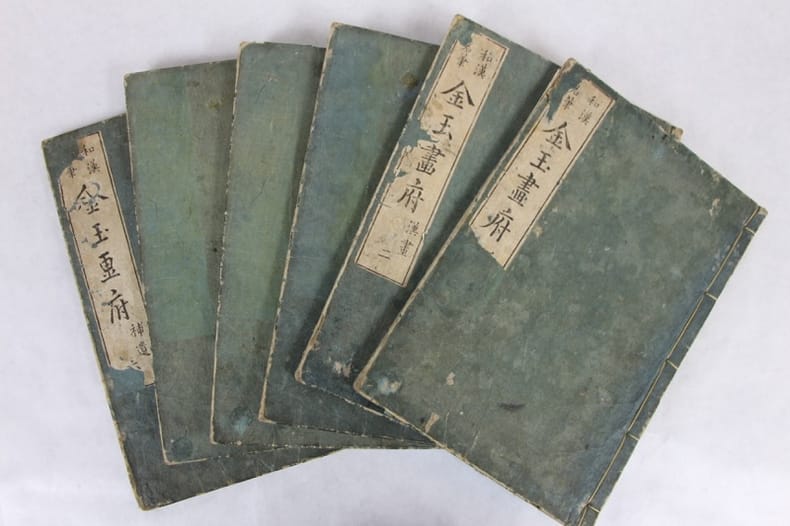
17804225Kyoto, 1780 (1786). 1780 5 vol. in-8° (260 x 184 mm.) de : [60] ff.; [51] ff.; [52] ff.; [58] ff.; [76] ff.; plus de 250 gravures sur bois dont une grande partie sur double-page; texte gravé sur bois. Brochage éditeur dépoque, cartonnage bleu, pièces de titre en japonais, titre manuscrit en français sur les couvertures.
173812027ABAugspurg (Augsburg), Franz A. Ilger, 1738. Gr.-4°. 12 n.n. Bll. + 534 + Leerbl. + 559 + 1 S. OLd. der Zeit, mit zwei Orig. Schließen., Abbildung
172949188ABLa Haye, P. Gosse et J. Neaulme, 1729. Folio (35x24cm). (8), LII, 217pp; (4), 313 (recte 323), 96pp. With engr. frontispiece, 2 engr. title-vignettes, engr. head piece, 45 (partly folding) engr. plates. Contemp. full calf, richly gilt.
1728019215London: for the Publisher and Thomas Woodward and Charles Davis 1728. First Edition. Hardcover. Light dampstaining in second volume. Generally clean and bright Near Fine. Two folio 8-1/2" x 13-3/4 volumes in contemporary calf leather neatly rebacked preserving the original gilt spine labels. First edition in English second issue with the additional appendix in volume 2 translated from the German by J. G. Scheuchzer. Titles printed in red and black with additional engraved titles and 45 mostly double-page or folding plates and maps. Kaempfer's HISTORY OF JAPAN "was for more than a century the chief source of Western knowledge of the country. It contains the first biography of Kaempfer; an account of his journey; a history and description of Japan and its fauna; a description of Nagasaki and Deshima; a report on two embassies to Edo with a description of the cities which were visited on the way; and six appendices on tea Japanese paper acupuncture moxa ambergris and Japan's seclusion policy" DICTIONARY OF SCIENTIFIC BIOGRAPHY. Kaempfer was a physician for the Dutch East India Company's trading settlement at Nagasaki in the late 17th century. Sir Hans Sloane acquired the manuscript after Kaempfer's death and arranged for it to be translated into English for this edition. Of significance is the fine folding map of Japan "Imperium Japonicum in Sexaginta et Octo Provincias Divisum." <br/><br/>Cordier JAPONICA pages 414-15; Cox I: 332; Garrison-Morton 6374.11; See Nissen BBI 1019 note; Wellcome III: 376. for the Publisher, and Thomas Woodward and Charles Davis hardcover
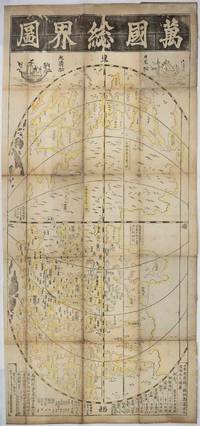
1708219243東京. Tokyo.: 須原屋茂兵衛. Suwaraya Mohei. Hoei 5 1708. Black and white woodblock map with yellow outlining in original hand colour 55.8 x 127cm map; 59.5 x 131cm sheet folding into the original Japanese wrappers chipped and rather worn 26.4 x 17.4cm the map with old repairs laid down on washi rather browned and wormed at the folds but with no serious loss the sheet age-toned and a little dusty but overall in remarkably good condition. Preserved in a modern blue linen Japanese case with toggle-closures. A famous woodblock-printed Japanese map of the world by renowned Edo Period map-maker Ishikawa Tomonobu who is also known as Ishikawa Ryūsen. This is a revised version of an earlier map produced by Ishikawa in 1688. <br> <br>The map appears to draw on Chinese and Portuguese geographical knowledge. The Chinese production of world maps had been transformed by the influence of the Italian Jesuit Matteo Ricci who collaborated with Chinese cartographers to produce a 1584 map of the world. In Japan the production of maps of "the myriad countries" or "the international countries" bankoku had been inspired by contact with Portuguese missionaries and with the Dutch in the 16th century. <br> <br>Ishikawa's map broadly resembles the Ricci map in being placed in an oval frame with the Pacific and thus also China and Japan at the centre. The content though is different. While Ricci's map is oriented to the north Ishikawa's is oriented to the east with America at the top of the page and the sketchy outlines of Europe including 'Ikiresu' England and a large and clearly marked Holland and Africa 'Kafuri' at the bottom. This orientation apparently influenced by the first world map in Japan "Bankoku Sōzu" 万国総図 which was published in 1645. Interestingly although Ishikawa had earlier produced a quite detailed and fairly accurate map of Japan the Japan shown on this world map is a rather loosely outlined collection of islands in which for example Ryūkyū the Ryukyu Kingdom now Okinawa and Hachijōjima appear much larger than they are in reality. Japan is also unusually oriented making it appear as though Ezo now Hokkaido is in the middle of the Pacific. It seems that the cartographer's interest here was less in outlining Japan in detail than in broadly setting out the country's place in relation to the land masses to the east and west. <br> <br>Like other Japanese world maps of the Edo period and like Ricci's map Ishikawa's image of the world includes imagined countries such as 'The Land of Giants". The continuing centrality of China in Japanese thought is indicated by the fact that Ishikawa's map contains a very clearly marked depiction of the Great Wall and that the map is decorated at the top with depictions of a Japanese and a Chinese sailing ship. The text at the bottom gives estimated distances between Hizen Province where the port of Nagasaki provided Japan's main official outlet to the world in this age of seclusion and various places in China and between Hizen and the Ryūkyū Kingdom. It also gives the estimated distance from Korea to Tsushima Island which served as Japan's gateway for diplomatic and trade relations with Korea. <br> <br>Engelbert Kaempfer a German physician and explorer brought back the 1688 edition of this map printing to Europe after his stay in Japan between 1690 and 1692. The map was introduced to European audiences in the 17th century and impacted on later European cartographic endeavours. <br> <br>Copies of this rare and historically significant map are held only in a handful of major collections: the British Library National Diet Library NDL of Japan the Staatsbibliothek of Berlin University of California Berkeley's Japanese Historic Maps Collection and the University of British Columbia. . 須原屋茂兵衛. [Suwaraya Mohei]. unknown