[USA- JAPAN- TREATY].Biblio.com
188 résultats
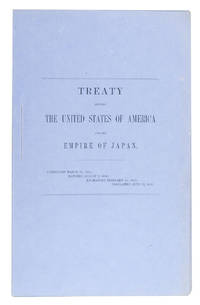
1855876DLLAMJKGSWashington D.C. 1855. Folio. Original printed self-wrappers stitched. Signed in type by Franklin Pierce as President and by W. L. Marcy as Secretary of State. 5 1 blank pp. Second recorded copy of the Kanagawa Treaty of Friendship resulting in the opening of Japan to trade with the West. The American expection to open Japan was undertaken at the suggestion of its leader Commodore Matthew Calbraith Perry 1794-1858. ''The key document caried by Perry to Japan was a letter to the Emperor from President Fillmore in which the President requested Japan to open relations cooperate in the development of trade assist distressed whalers and provide bunkering and supplies for ships on the California to China run. The Treaty of Friendship 1854 negotiated by Perry provided for 'perfect permanent and universal piece' and it contained assurances that the Japanese would meet the demands of the United States for safe haven and acces to naval supplies. Two ports Shimoda and Hakodate were to be openened for this purpose and Americans using them were to be allowed to exhange gold and silver for goods 'under regulations for this purpose' and were not to be subject to restrictions on movement as stringent as those applied to the Dutch and Chinese. The treaty does not include provisions for the development of normal foreign trade'' Howe but it did provide for the stationing of American consuls in Japan of which the first was Townshend Harris 1804-1878 an avid student of Engelbert Kaempfer who played an important part in the early economic education of Japanese leadership and among others was the negotiator of the Treaty of Shimoda in 1857 which granted the Americans extraterritorial rights. Fine copy. Extremely rare document concerning the opening of Japan to trade with the West and an important Americanum as well.l Howe The origins of Japanese trade supremacy London 1999 pp. 73-74; WorldCat and RLIN 1 copy in Harvard; not in Cordier Japonica; the Library of Congress; Nipponalia; NUC; Sabin. unknown
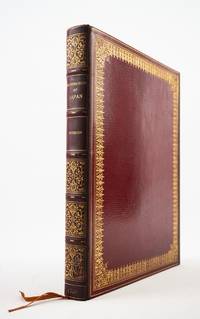
1822ST20877London: Printed for R. Ackermann 1822. First English Edition. 300 x 235 mm. 11 3/4 x 9 1/2". xvi 325 1 pp.Translated by Frederic Shoberl. <br/> Imposing contemporary crimson straight-grain morocco gilt covers with filigree frame with densely massed scrolling fleurons raised bands spine gilt in compartments with radiating viny scrolls surrounded by leaves and annular dots marbled endleaves all edges gilt. WITH 13 HAND-COLORED PLATES in etching and aquatint many after Japanese artworks one folding. Bookplate removed from front flyleaf. Bookseller's ticket of J. L. Thompson & Co Kobe Japan on front pastedown. Abbey Travel 557; Tooley 489; Martin Hardie "English Coloured Books" pp. 113-14. See also E. F. Strange "Japanese Illustration" pp. xxiii-xxiv. Spine and fore-edge of upper board slightly darkened a few minute flakes to lowest spine compartment but the binding extremely well preserved with very lustrous boards. Final 10 leaves slightly creased one repaired marginal tear but still A FINE COPY INTERNALLY exceptionally bright smooth and entirely fresh and clean.<br/> <br/> This generously proportioned production illustrated with 13 vibrant colored plates is a rare European account of Japan during the period in which the country was "closed" to the west offered here in its first English edition. Originally published in French in 1820 "Illustrations of Japan" is comprised of a history and description of the Tokugawa shogunate which Titsingh had translated from the Japanese plus Titsingh's own observations on the language customs and ceremonies of the Japanese people. The present English edition is accompanied by plates in etching and aquatint enhanced with hand coloring. Our author Dutch diplomat Isaac Titsingh 1745-1812 spent 14 years in Nagasaki for the Dutch East India company and between 1779-84 he served as trade director-cum-ambassador travelling to Edo now Tokyo for audiences with the shogun and other high officials in the shogunate. Unlike most of his Western contemporaries Titsingh was open-minded and curious about the people he encountered engaging with their art and culture; in fact art historian and Victoria & Albert Museum keeper Edward F. Strange tells us that Titsingh is the earliest known European collector of Japanese prints of which a number appear in the present volume. Our publisher Rudolph Ackermann 1764-1834 made his living issuing sumptuously illustrated books such as the present volume and was an early adopter of color aquatint and lithography technologies; Hardie writes that he was "the great presiding genius before whose magic wand so many pictorial books sprang into existence." In very attractive period morocco this is a particularly appealing copy of the work free of the foxing and offsetting that often plague copies of this and other large-format color illustrated books. Printed for R. Ackermann unknown
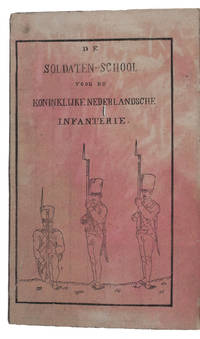
18568CFB37BBNOWBcopy imprint: The Hague & Amsterdam 1856. 8vo. Gebroeders van Cleef Contemporary Japanese brown paper covers side stitched and oversewn through 4 holes near the head and near the foot and 2 holes between them. In a modern Japanese gold brocade cloth chitsu folding case with 2 bone fastenings and a brown paper label. Printed from woodblocks on Japanese paper in the traditional Japanese manner on the outside of double leaves with the fold at the fore-edge. With woodcut Japanese text on the half title and last leaf. With an illustrated title-page printed on paper which has been dyed red facing the half-title showing three soldiers. 15 179 6 pp. Very rare first and only Japanese edition of a Dutch military manual being a concise guidebook for the military school originally intended for the Royal Dutch Infantry. It discusses various topics for the beginning foot soldier for example the order of rank within the army the education of soldiers and higher ranks such as officers how a soldier should stand and march and of course how to carry load and fire a rifle and the many different ways to do so. It therefore presents the basics for a trainee soldier and was commonly used at the Dutch military schools.The present manual is a beautiful example of the many Dutch military science books that were imported to and distributed throughout Japan during the Bakumatsu 1853-1867 the final years of the Edo period when the Tokogawa shogunata ended and the Meiji government was restored. Earlier Dutch editions were printed in 1826 1831 and 1833 by the brothers Van Cleef in The Hague and Amsterdam. The present edition is of great importance to illustrate the Dutch-Japanese exchange of military science but also of the utmost rarity. WorldCat records only 1 copy of the present edition in the library of Leiden University.Binding only very slightly worn a few wormholes without loss of text the last leaf with Japanese text slightly stained red colour of the illustrated title-page a little faded but overall still in good condition. Rare Japanese edition in the original Dutch language of a military manual preserved in a Japanese gold brocade folding case.l WorldCat 1 copy; not in Alt Japan Kat.; Cordier Nipponalia. hardcover
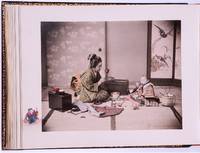
1892019217@1892. Hardcover. Photographs are Fine and bright with tissue guards. Both boxes in nice shape. The front cover of the album with a horizontal crack about 3 inches from the bottom and extending across most of the cover doing little to detract from the lovely decorative scene. Overall a beautiful example uncommon in such nice condition. Oblong Folio 14" x 10-1/2" with a black morocco leather spine with gilt designs and exquisite black enamel painted and onlaid covers. Containing 50 hand-colored 10-1/4" x 7-3/4" albumen photographs laid down onto heavy cardboard pages titled in the negative in English and with small color drawings of figures in the margins of each page. Images include cityscapes landmarks and scenes of daily life and rituals in mid-to-late Meiji period Japan. Places shown include Tokyo Kyoto Yokohama Nagoya Enoshima the shrines of Nikko and two views of Mt. Fuji. Occupational scenes include women spinning cotton men striking wheat a rice plantation men transporting rice bales on horseback a samurai a Shinto priest Shinto pilgrims a "blind shampooer" a pottery shop a shoe shop a grocery a cloth store "reading at home" "gathering the cocoons" "playing at ball" and more. Albums such as this were sold to overseas visitors to Japan ca 1880s- early 1900s who would choose their favorite scenes from the photography studio's stock and whether to pay extra for hand-coloring fine binding and artistic covers. We have offered a handful of examples over the years and this is easily the finest in content with more occupational and daily life scenes as opposed to the standard landmarks as well as special touches such as the small hand-painted characters in the margins of each page and also in the finest condition. Housed in a clamshell box with decorative cloth covers and likely the original tin container used for shipment to America. <br/><br/> hardcover
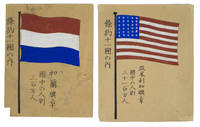
186034745Edo 1860. Two woodblock-printed Kawaraban broadsides on Japanese paper each 9 x 11 5/8 inches. Two late Edo Kawaraban broadsides recording foreign people objects coinage dress and material culture at the moment of Japan's accelerated contact with Europe and America.<br/> <br/> These two Kawaraban belong to the popular printed culture that developed around Japan's encounter with foreign powers in the 1850s and early 1860s. Produced for circulation beyond official channels such broadsides translated diplomatic and commercial contact into a form legible to a broad Japanese readership combining image caption anecdote and report. Their interest lies in the way they classify the foreign world through visible particulars: clothing physiognomy tools coins flags animals weapons and curiosities. The first broadside is arranged in four compartments under a title describing Western products and curiosities. It includes figures identified as foreign visitors or crewmen among them an English captain and a Black sailor together with a Dutch-style optical instrument and a draped clay or stone figure possibly a classical statue. The second broadside combines a portrait of a captain's wife with her dog a depiction of a foreign flag and examples of foreign coins shown obverse and reverse including Russian coinage and coins dated 1843 and 1854. Here the focus is less on a single event than on the material signs by which foreign nations could be distinguished. The woman's dress the dog the flag and the coins are presented as objects of information and curiosity evidence of a public appetite for visual knowledge about the peoples then appearing in Japanese ports. Together the broadsides show how Kawaraban helped mediate the experience of opening Japan to foreign trade and diplomacy. Their compact format and direct visual language made them effective vehicles for reporting and interpreting the unfamiliar preserving a popular Japanese response to the presence of Westerners at a moment of rapid political and cultural change. unknown
1893ABC_46387Japan 1893. 19th-century wrappers of thick handmade Japanese paper reinforced with straps of paper containing Japanese characters and blue and red stamps; with the title of ad 1 in Japanese characters on the front wrapper. Collection of drawings of 131 flags banners etc. on separate leaves of varying sizes most of them coloured. 131; 10 ll. Ad 1: Very interesting collection of drawings of 131 flags code and signal flags banners standards crests etc. made in late 19th-century Japan most of them coloured in red blue white black yellow and some decorated with gold and/or silver paint. Many with mottos and captions in Japanese characters. The collection can be divided into 8 subcategories. 1 34 flags on black poles of European and other powers. 2 17 rectangular Samurai banners on a pole with a horizontal pole at the top mostly in red and white. 3 28 pennants and banners of various shapes mostly on crested poles and some of them decorated or partly decorated with gold and/or silver paint. 4 27 Japanese military Samurai flags and banners in red and white some with Japanese characters including the flag of the imperial Japanese army: the red sun with the red sunrays. 5 11 Japanese military flags and banners in blue black and white. 6 4 unfinished and uncoloured sketches of Japanese military flags and banners. 7 3 symbolic banners with mottos in Japanese characters. 8 7 unfinished but partly coloured in sketches of flags banners and pennants.Ad 2: 10 folded leaves of Japanese so-called rice-paper mostly containing decorative flower designs one with fans and another with traditional Japanese dolls. All are executed with a brush and black paint two of the flower designs are executed in black red and green paint.With Japanese characters in pencil and/or black and blue ink as well as red owners stamps on the inside of the wrapper. Wrapper slightly browned with some minor signs of wear some margins slightly frayed some leaves with minor stains or browning. unknown
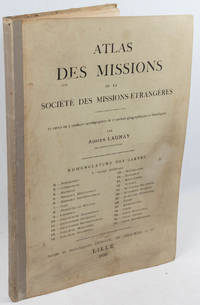
1890219322Lille.: Société de Saint Augustin. 1890. Large thumb-indexed atlas 27 full page colour maps with accompanying text 53 x 38 cms; original paper covered boards a little stained and abraded front hinge tender but sound a few gatherings loosening front free endpaper chipped at the lower corner prelims and thumb tabs soiled but the maps in very good clean condition. Adrien Launay 1853 - 1927 a Catholic priest in the Société des Missions Étrangères was the author of many books on the Society's history and that of many of the individual missions. His atlas now scarce on the market gives maps and a gazzetteer of the Société's missions in Asia. . Société de Saint Augustin. hardcover
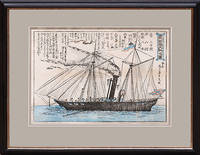
1854103501Nagasaki: c.1854. Wonderful locally-produced image of the Vostok a steamship that took part in Vice-Admiral Euphimy Vasil'evich Putiatin's mission to negotiate trade arrangements with the Tokugawa shogunate which were to result in the signing of the Treaty of Shimoda the first treaty between the Russian and Japanese Empires. Putiatin sailed from Russia in the frigate Pallas and stopped at Portsmouth for refitting before facing the rigours of rounding the Cape of Good Hope and while there he also purchased an "iron-hulled screw steamer the Fearless and renamed it Vostok" Grainger The First Pacific War p.51. The Vostok was captained by Voin Andreevich Rimsky-Korsakov a graduate of the St Petersburg School of Mathematics and Navigational Sciences and elder brother of the famous composer. Various delays meant that Putiatin's squadron arrived shortly after Admiral Perry's similar expedition but the Russian's more measured approach contrasted distinctly with that of the Americans and were to eventually ensure a highly successful outcome. It was recorded that during the squadron's second visit to Nagasaki "just before he left Nakamura Tameya the secretary to the plenipotentiaries a member of the new special committee to introduce steam ships to Japan came to the schooner Vostok with Putiatin and a Japanese artist to have a look at its engine. The artist made a quick sketch. It was the first steam ship to visit Nagasaki harbour and only the third to visit Japan" McOmie The Russians in Nagasaki 1853-54 p.54. The present print was probably based upon the drawings and notes made on that occasion. The captioning includes reference to the squadron's first arrival in August 1853 departure in November their return in January 1854 and departure the following month with no mention of mission's subsequent return in April. The rest of the text is largely given over to technical data; length 30 ken or a shade under 60 metres and width 8 ken 16 metres; two masts; funnel circumference 6 shaku about 2 metres; and a note identifying where the "power comes from to create the steam to turn the propeller which is under the ship". Russia is interestingly described in a manner assuming little knowledge of the world outside Japan: "The country of Russia is to the east of Japan. To west is Tartary and to the south is the Yezo continuing on to the country of Japan. The number of ri approx. 4 km of the land of the large country is east to the west 1000 ri. From the south to north it is more than 1500 ri. Their customs literally customs/manners/looks are similar to those of the Americans But are also unlike them". A fascinating and uncommon commemoration of this world-historically important first contact. Woodblock print with applied colour 354 x 475 mm. Window-mounted in ebonized wood frame with gilt sight-line. Lightly browned and a few minor creases judicious restoration to a few short splits and scrapes but overall very good indeed. unknown
1900235312Japan 1900. 50 hand colored-albumen prints mounted on card. Each print framed by two original watercolor vignettes. Tissue guards. 1 vols. Oblong folio 12-1/2 x 15-1/2 inches; image 8 x 10⁻¹/2/ inches. Lacquered wood covers with hand-painted title in gold; central vignette depicting rickshaw and passenger; floral motif background to front and rear covers. A.e.g. Spine neatly rebacked in leather. Fine. 50 hand colored-albumen prints mounted on card. Each print framed by two original watercolor vignettes. Tissue guards. 1 vols. Oblong folio 12-1/2 x 15-1/2 inches; image 8 x 10⁻¹/2/ inches. Fifty finely pastel hand-colored albumen prints some captioned in English in the negative some with pencil captions. Includes scenes of Koyoto Nara Osaka Kobe and Nagasaki; Japanese junk European steamer a tea house at Tokyo street vendors Kabuki actors including a member of the renowned Danjuro lineage sumo wrestlers dancers and geisha as well as some studio portraits.<br /> <br /> Each image is framed by two original watercolor vignettes a total of 100 unique images mostly depicting scenes of nature. unknown
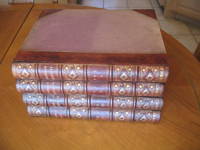
1880023430London circa 1880: J. S. Virtue and Co 1880. First Edition . Hardcover. Very Good . 13" Tall. Engravings on Steel and Wood. Vol 1: X;Vi; 240; Vol 2: Vi 240; Vol 3 Vi 240; Vol 4 Vi 236. Half Morocco Spine And Tips Over Purple Pebbled Cloth; Spines With 5 Bands Six Compartments Gilt Title And Volume Number Ornate Gilt Decorations In Other Four Compartments; Original Yellow Endpapers; All Edges Of Page Block Gilt. The Books Are 13" Tall 10 1/2" Deep And The Four Volumes Are 6 3/4" Wide On The Shelf. Undated But Circa 1880. Front Hinge To Vol Ii Cracked Binding Solid. Original Leather Recently Professionally Conditioned And Refreshed Professional Repairs To A Few Splits At Top/Bottom Of Spine Edges; Gilt Bright; No Names No Marks No Bookplates. Also With An Additional 41 Loose Plates Of Same Size As Those In The BooksPossibly From Another Copy Of This Set Or Perhaps Never Bound. Shipping Weight About 30 Pounds Insurance Required Shipping Requires Additional Charges Depending On Destination. Palestine Refers To The Area Immediately North Of Egypt Along The Mediterranean Coast Inhabited By Countless Peoples And Conquered More Or Less Mercilessly Countless Times By Various Empires From England To Central Asia. The Volumes May Or May Not Include References To This Unrivaled Mix Of Ethnicities Most Of Whom Were Then Living At Pece With Each Other. <br/> <br/> J. S. Virtue and Co hardcover
189032522AB1890. Japan Kyoto / Nikko and other locations c. 1890-1900. Each slide 8.3 cm x 8.3 cm. One Plate in Black-and-White all other 44 Plates in colour. Very good condition with only minor signs of wear. All Plates with their original uncleaned Patina. Only one slide with a slightly broken off corner held by a strip of paper. unknown
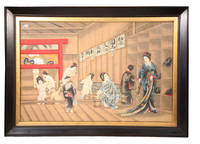
1900D55FLLW1EWHEJapan 1900. 70 x 98.5 cm. Watercolour on silk highlighted with white gold and perhaps mica. Large Japanese watercolour with a charming scene in a Japanese bath house. The interior of the bath house shows seven women and four children washing themselves and dressing. One of the women is already fully dressed in a blue and green kimono. In good condition. unknown
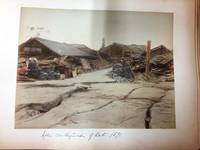
1892019216@1892. Hardcover. Cardboard pages in album have a slight wave; prints have light toning along edges and light silvering a few prints with light soiling and foxing affecting content; all prints have good exposure. Heavy fraying and wear to covers spine dry with moderate chipping and a tear along one edge. Covers Fair but overall the photographs themselves are Very Good. Oblong Folio 13-1/2" x 10-1/2" in worn decorative cloth over heavy wooden boards and leather spine with tissue guards for the photos. A personalized travel album from 19th century Japan with 50 hand-colored 10" x 7-5/8" albumen photographs laid down onto heavy cardboard pages with titles in the negative and occasionally in manuscript below the image all in English. This was the album of Frank Leslie Coombs 1853-1934 who was a United States Minister ambassador to Japan from June 1892 to August 1893. Most images found within this album depict peaceful scenes of landscapes temples tea houses and roads. Five images however illustrate the aftermath of the Mino-Owari earthquake also known as the Great Earthquake of 1891. With a magnitude of 8.0 this quake left significant damage some of it recorded here. Images include views of twisted bridges crumpled buildings and the town of Osaka burned to the ground. <br/><br/> hardcover
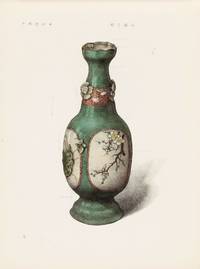
1876018471Tokyo 1876-1877 and 1879-1880. First Edition. Wraps. Wrappers of Part I quite worn with one title label mostly lost; front wrapper of Part III creased. Some offsetting and color bleedthrough; occasional edge browning; a few leaves very slightly moisture warped from coloring. Tape or glue residue in places on the versos of the plates in Part I. Near Fine with stunning hand-colored plates. First edition of Ninagawa's study of Japanese pottery arranged in chronological order from ancient times onward. Apparently one of only 300 copies published. Seven oblong folio parts 15-1/4" x 10-3/8" stitched as issued in the original blue paper wrappers with lithographed title labels on the front wrappers in French and Japanese Parts I-V and in English and Japanese Parts VI and VII. Each part with lithographed text in Japanese 5; 10; 11; 9 11; 10; and 14 leaves respectively. Printed on rectos only. Ninagawa's red stamp appears on the last leaf of text in each part. Illustrated with 125 numbered hand-colored lithographed plates several heightened with gum arabic 17 plates in Part I and 18 plates each in Parts II-VII. Some plates and items numbered with small printed labels. An excellent copy of this fragile set with the extremely scarce Parts VI and VII. This copy without the five octavo booklets containing the French translation of Parts I-V Tokyo: H. Ahrens & Co. 1876-1878 or the publisher's silk chitsu or portfolio issued with the first five parts. <br/><br/> paperback
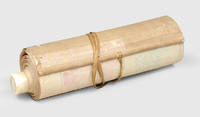
1870127747Japan: c.1870. The feudal lordships of Meiji Japan Highly attractive and distinctly uncommon early Meiji-period scroll showing the flags of 29 daimy s feudal lordships and giving details of annual revenue recorded in kokus of rice approximately 280 litres originally defined as enough to feed one person for one year provinces capitals of their respective territories or han and the cadet branch of each clan illustrated with flags for each both the -uma-jirushi "great standard" and ko-uma-jirushi "lesser standard". The scroll opens with the Hinomaru "circle of the sun" and imperial chrysanthemum mon or crest above the standards of the Tokugawa shogunate three hollyhock leaves within a circle. The sixteen-petalled Imperial Chrysanthemum Crest was first recognized as the exclusive emblem of the imperial household in 1868; the Hinomaru was adopted officially in 1854: "Japan had no national flag until 1854 when upon a petition by the lord of Satsuma han Shimazu Nariakira the bakufu military government determined that Japanese ships should fly a white flag bearing the Rising Sun emblem in order to identify themselves as Japanese. In 1870 the Meiji government following the late Tokugawa precedent decreed that Japanese ships ought to use the Rising Sun flag as the national flag" Takashi Fujitani Splendid Monarchy: Power and Pageantry in Modern Japan 1998 p. 49. The British Museum notes that the flags are presented here "on western-style horizontal flags mounted on flag poles" and not in the Japanese manner. This is a fascinating record dating to the advent of the Meiji Restoration 1868 which curtailed the power of the daimy s: "On paper the abolition of the old domains and with them the daimy as well and the creation of the new administrative units called prefectures seemed to be in 1868 the most politically dangerous of the Meiji reforms. Great care and planning went into this reform announced in 1871 lest the daimy s fight it" Louis G. Perez The History of Japan 1998 p.98. Among British and Irish institutional libraries Library Hub cites only the copy at the Society of Antiquaries of London WorldCat adds Harvard both this and the SoA copy bound in book form; we have traced a copy at the British Museum catalogued as "Flags of the different Daimyos of Japan" which survives as a scroll; only one entry on auction records 2013 apparently the present copy. A superb survival from the period of the opening of Japan perhaps intended for the tourist market when foreign trade was being established in effect acting as a guide to the leading families of Japan. Scroll 180 x 400 mm. 88 hand-coloured woodblock flags on paper text in English and Japanese. Original polished bone jikugi central cylindrical rod pale brown silk tie. Exterior a little darkened otherwise in remarkably good condition. unknown
19002111902160201143Shinshu Ueda Town Japan Linguistics Joint Stock Company 1900. Soft Cover. Fine. Number of books: 1 Shinshu Ueda Town Japan Linguistics Joint Stock Company paperback
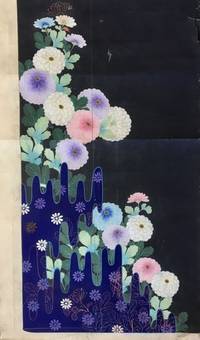
181956897Kyoto Japan: Marubeni Shoten Design Dept. Keimeikai Textile & Dyeing Studio Tanioka Shoten Design Dept. ca. 1918-1945. Folio. 61 original hand-painted inked and pencil designs with a few on a lightly toned but quality semi-translucent paper the majority on thick paper stock and still others with two pieces carefully pasted together with contiguous designs sized from 9 x 15 in. up to 19.25 x 38.5 in. with 13 of the pieces larger the larger size a number of them sized 18 x 32 in. and many in the 14.25 x 15.5 in. size colour painted; the majority feature the design studio chop or crest at lower corners throughout many w/ annotations in margins several w/ change orders neatly annotated or even the title of the design and still many others w/ Roman numeric inventory codes in margins as well two still retaining original small silk samples many with creasing or minor tears & edgewear or creasing to fore-edges a few w/ small & large closed tears while others show some creasing and thumbing from continued use still an exceptional group of manuscripts. This superb archive of 61 original hand-painted kimono designs furnishes an exceptional visual array of Taisho- and early Showa-era Japanese motifs and styles. A number of the designs evoke traditional Japanese Ukiyo-e woodblock prints with deep vivid colours and well rendered illustrations. Many of these designs incorporate floral patterns including Kiku Chrysanthemum Botan Mon Peony Pattern Manju Kiku Marigolds Japanese Irises Morning Glory Cockscomb Ivy Dahlias and many other botanical motifs. In addition there are many illustrating ornately embroidered designs austere bamboo mushrooms and intriguing landscapes some with a small portion fully painted in with brilliant colouring while the outline of the kimono fills out the drawing. Two of the designs still features their original small attached silk kimono sample more reminiscent of Western Design houses which often attached their chosen fabric samples to their clothing designs. A few of the designs are executed on translucent thin paper for the kimono draper to transfer the design to white silk or other fabrics via some type of carbon paper process. Another of the designs has been executed on a stunning silver metallic paper with palm or bamboo leaf fronds executed in vivid blues & browns. Some feature a nearly surrealist quality while several others include illustrations of doves or chickens. Two of the designs incorporate Art Deco representations of Chinese Junks and Japanese sailing vessels typical of the 1930’s prior to World War II. In the Taisho Era a new era opened for textile designers working with Kyoto drapers and department stores with many having trained at new art colleges and then working in the design studios of Marubeni Keimeikai Textile & Dyeing Studio and others. The Tachiki Artist design studio designs on thin translucent paper include one with designer stamp of character embedded within a skull. Some appear to have two different date stamps for the Marubeni Shoten Design and some are unsigned or stamped. The Taisho- and Showa-era kimonos featured brighter colours more groundbreaking designs as Japan’s designers embraced traditional dress and transformed it into a new garment equally appealing to the “Moga†or brazen “Modern Girl.†The designer notes include instructions to “leave a little more space between the fans;†“Drop the little fan crest;†“too much white bush clover†on the pine cones and even that Matsuo Taishichi had ordered a design for “clothes for paying a visit for a young person.†The Marubeni Shoten originated with Chubei Itho who began in 1858 as a salesman for linen cloth and by 1872 had opened his drapery store Benchu in Senba Osaka. By 1918 Chubei Itoh had expanded the business into Osaka and deciced to merge with Itochu Shoten Ltd. becoming Marubeni Shoten with their own drapers shops and many contracts with department stores. Later by the mid-1950s Marubeni merged with the company that operated the Takashimaya Dept. Store Chain all the while preserving their design studio and artists. See: Yuko Fukatsu-Fukuoka The Evolution of Yuzen-dyeing Techniques and Designs After the Meiji Restoration 2004; Arisa Shinko Tomikawa Hand Painted Kyo Yuzen Atelier “Arisa†A Brief Introduction 2020; Annie Van Asche Japanese Kimono Fashion of the Early Twentieth Century Textile Society of America Symposium Proceedings 2000; Our History Our Roots Marubeni Corporation 2020. Marubeni Shoten Design Dept., Keimeikai Textile & Dyeing Studio, Tanioka Shoten Design Dept., hardcover
1897186729Tokyo: 1897. The dress of the classical Japanese nobility An attractive manuscript copy of this rare treatise on Heian-period ceremonial attire. Only one other copy is known held by the National Archives of Japan. The copyist Ishimoto Shuen was an artist-historian whose research focused on ancient clothing. She was named as one of the most accomplished artists in Tokyo by a 1916 broadside. Shozoku shokushikimoku otherwise known as Shozoku imon or in the case of the other known copy Kinpi shozoku imon introduces over 40 examples of different types of clothing worn throughout Japanese history and manuscript captions explain their features. The clothing ranges from kanmuri headwear to ceremonial leather belts sekitai swords fans and ritual omigoromo robes. Different examples of each are given depending on the season and the rank of the person who was permitted to wear certain colours and designs. According to the colophon the text was first found in the collection of Ise Sadatake 1718-1784 a samurai and notable historian of court etiquette. A copy was made in 1772 then another in 1856 and finally this example in 1897. Ishimoto Shuen was the protégé of the famous academic and Shinto scholar Kosugi Sugimura. The pair produced a number of books and hanging scrolls depicting Heian-period and earlier court dress especially in the late 1890s. Ishimoto's ownership signatures and seal are on the first and final pages. The illustrations in this copy are in a slightly different layout to the other surviving example although the colours are more vivid. Quarto 264 x 190 mm with 26 leaves of mica-infused paper. Manuscript text and watercolour illustrations throughout. Original blue paper wrappers renewed white thread fukuro-toji binding. A little rubbed and creased wrappers with scattered patches of discolouration contents bright with very minor wormholing: a very good example. hardcover
1855030323London / Madrid / New York: Germer Bailliere 1855. 1st Edition . Hardcover. Very Good. 574 Pp 1 Pp Errata At End. Blue Morocco Gilt Over Blue Marbled Paper Covered Boards Marbled Endpapers Somewhat Similar Color Speckles On Edges Of Page Block. Binding Clean And Complete Original With Small Repairs To Corners No Chipping Hinges Tight No Names Or Marks Or Bookplates. Contents Fine Slight Even Aging To Pages No Wear To Pages. <br/> <br/> Germer Bailliere hardcover
1824027252London: Richard Priestley 1824. 2nd Edition 1st Printing. Hardcover. Very Good. Maps and Plates. Xv 409; Iii 341; Iii 392 Pp With Half Titles In Volumes 2 And 3. A Complete Set In Original Brown Cloth Spines Over Gray Boards With Original Paper Spine Labels 4.7 Cm Tall Volume Numbers In Arabic Numerals Also Known With Taller Spine Labels With Roman Numerals Priority Unknown. Taylor's Corrected Second Edition Adding His Notes Which Were Omitted From The First Printing. Worn With Some Fraying At Corners Volume 1 With Cracked Front Joint Along Which Is A 2 1/2" X 1/4" Loss Of Spine Cloth Not Affecting The Labels. Bookplates Of Francis Davies Of Pershore With Rampant Lion And Motto "Lucem Spero" No Other Names Or Marks. Per Wikipedia General Sir Francis John Davies Kcb Kcmg Kcvo 1864 - 1948 Was A Senior British Army Officer Who Commanded The 8Th Division During The First World War. Davies Was Born In London The Son Of Lieutenant General Henry Fanshawe Davies And His Wife Ellen Christine Alexandra Hankey. His Grandfather Was General Francis John Davies Brother And Heir Of Thomas Henry Hastings Davies Mp For Worcester And His Great-Grandfather Was Admiral Of The Fleet Sir Thomas Byam Martin. The Family Seat Was Elmley Castle Pershore Worcestershire. His Younger Brother Was Major General Henry Rodolph Davies. He Was Educated At Eton College. In October 1899 He Served As A Daag Responsible For Intelligence At Army Headquarters In South Africa And As Acting Commissioner Of Police For Johannesburg In 1900. In 1902 He Was Temporarily Employed In The Intelligence Department Until He Became Deputy Assistant Quartermaster General Daqmg At The War Office On 7 September 1902. Two Years Later He Was Appointed Assistant Director Of Military Operations In 1904 He Was Made General Officer Commanding Goc Of The 1St Guards Brigade. He Then Took Over As Brigadier General General Staff Bggs Of Aldershot Command. He Was Promoted To Major General In May 1913 And In October Of That Year Became Director Of Staff Duties At The War Office. In October 1914 Davies Was Appointed As Goc Of The 8Th Division. The Division Along With Its Goc Was Soon Sent To The Western Front. Towards The End Of July Davies Was Posted Away From The Fighting In France And Belgium To Take Over The Command Of Viii Corps Then Heavily Engaged In The Gallipoli Campaign. Davies Promoted To The Temporary Rank Of Lieutenant-General30 Took Over As Its Goc On 8 August . He Brought With Valuable Combat Experience And It Is Said " Over The Five Months Of His Tenure His Ideas And Energy Were The Catalyst For A Myriad Of Tactical And Systematic Improvements Which Greatly Improved The Fighting Efficiency Of His Force Allowing His Troops To Achieve Tactical Superiority Over The Enemy Facing Them". In The Aftermath Of The Evacuation Of British And Allied Forces From Gallipoli In January 1916 Davies Was Moved On To Being Goc Of Ix Corps. Davies Was In Command Only Until June When He Returned To The United Kingdom To Serve As Military Secretary At The War Office. He Held This Post Until After The End Of The War.His Rank Of Lieutenant General Became Substantive In January 1917. Later That Year Davies Was Appointed General Officer Commanding-In-Chief Goc-In-C Of Scottish Command In June 1919. After Being Promoted To The Rank Of Full General In July 1921And After Serving As Lieutenant Of The Tower Of London Which He Had Been Appointed To In June 192335 He Retired From The Army In April 1926. He Had Been Appointed An Aide-De-Camp General To King George V In April 1922. <br/> <br/> Richard Priestley hardcover
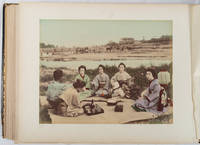
1890215089Japan. Circa 1890s. 50 hand-tinted albumen prints 30 captioned with studio stock references mounted on thick gilt-edged card leaves19.5 x 25 cms in an album 27.5 x 35 cms; elaborately lacquered boards scuffed and chipped inlaid with mother of pearl with loss over quarter calf renewed bevelled edges gilt dentelles endpapers gilt-flecked some fading and spotting to the images and toning to the margins of the card leaves but a very good handsomely bound collection.<P> Beautiful studio album containing a collection of 50 hand coloured photos of Japan with a splendid lacquered and decorated cover. The photos were commercially produced images which were sold to foreign visitors who had the studio place photographs in an album of their choice. This album is unusually interesting because unlike many where photographs were more randomly placed the images have been selected and arranged geographically beginning in Tokyo and moving southwards: Nikko Yokohama Miyanoshita & Hakone Lake Mount Fuji Kyoto Osaka Kobe and Nagasaki. <br> <br>There are fine images and portraits of geisha including an uncaptioned image of geisha seated possibly by the Kamo River in Kyoto entertaining a male guest. A lute is placed on the rice mat together with a tray of beer. One of the geisha is looking straight to camera a striking composition. Another uncaptioned in the Kyoto group is likely to be in Arashiyama shows a sandalled figure on a mountain path overlooking the leisure boating below. <br>There are also images of pagoda fishing rice planting street vendors and markets. <br> <br>More than half the photographs appear to be from the studio of the Yokohama based photographer Tamamura Kozaburo c.1856-192 who at his height was described as "the best photographer in Yokohama". As Terry Bennett has attested Tamamura's business strategy of selling souvenir albums of views and costumes to foreigners became a "winning formula". see Terry Bennett "Early Japanese Images" Tuttle 1996 and "Photography in Japan 1853-1912" Tuttle 2006<P> <b>When referring to this item please quote stockid 215089</b> . hardcover
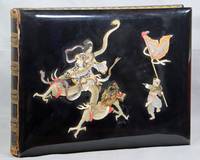
1890000012919n.p.: n.p. 1890. Hardcover. Good. Oblong 8vo. 27.5 cm x 38 cm. 50 hand-colored albumen photographs on double-sided stiff cardstock leaves. All tissue guards present. Black lacquered boards with beautiful raised decorations carved and painted on bone on the front board: a woman wearing a kimono riding a dragon and a child waving a flag the rear board with decorations stamped in orange and gold; the spine in five compartments gilt decorations and rules on the spine; all edges gilt. Binding is sewn cloth. White endpapers and pastedowns. Most photographs with a caption in the corner. Photographs measure 19 cm x 25.5 cm. The photographs depict landscapes of Nagasaki a statue of Buddha temples street life in Japan Kioto Tokyo women playing instruments clothing and porcelain shops and so much more. A stunning album of daily life in Japan at the end of the nineteenth century. The front board nearly detached from the spine but holding to the binding on the front gutter cloth. A few photographs may have had their red color touched up but it is difficult to tell. n.p. hardcover
18842091202133212089Hobunkan 1884. Soft Cover. Fine. Number of books: 70 books in total Hobunkan paperback
1880613<p>Manuscript 12pp. of gouache paintings on fine cloth pages calligraphic labels in Japanese next to each specimen tipped into a modern binding with a gilt appliqué border 150 x 230mm c.1880</p><p>This album contains illustrations of moths butterflies dragonflies a spider a stag beetle a lady bird a wasp lizards frogs and toads cicadas grasshoppers hornets a cockroach a centipede and the full life cycle of a silkworm executed by a skilled artist in gouache.</p><p>This was produced during the Meiji period an important time for Japanese art. In 1868 the restoration of imperial rule in Japan brough the Edo shogunate to an end and marked the start of the Meiji era which would last until the death of Emperor Meiji in 1912. During this brief period Japan transformed itself from an isolated feudal nation to a world power. The historic skills of Japan's traditional arts played a vital part in the struggle to compete in international markets.</p><p>The masterpieces of Meiji art in a unique style blending the best of traditional design with prevailing international taste are unrivalled in the quality of their craftsmanship and were avidly sought by Western collectors. The blending of styles can be seen in this album of illustrations which were most likely produced for export. The addition of the european-style gilt border exemplifies this.</p> hardcover
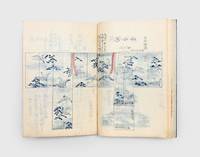
1893163107No place of publication.: 天眞堂. Tenshindō. Meiji 26 1893. A beautifully illustrated colour manuscript Meiji period "house geomancy" 家相 plan folded scale 1:50. On heavy good quality Japanese paper. Pop-up walls gate and some buildings turnable geomantic compass. Some creasing light soiling or browning but generally very good. 179 x 95cm. House divination originated in ancient China and became popular in Japan from the 19th century on. The idea of the house divination remains popular in Japan to this day. <br> <br>This beautiful sheet gives a detailed floor plan of a traditional Japanese house designed for a person of high status. This house was possibly on the grounds of Tenshindō in Yamanashi near Tokyoas Tenshindō is mentioned in the text. The 24 red lines which represent 24 hexagrams diverge from the central movable paper geomantic compass indicating 24 directions. The geomantic compass its range taking in the entire plan enables the planner to be certain that rooms and objects will be placed in such a way as to benefit the residents. By the same token the compass serves to make sure that planning does not work to the detriment of the residents. . [天眞堂]. [Tenshindō] unknown