11 476 résultats
20092091502133903843RSVP 2009. Soft Cover. Fine. Volume: 1 RSVP paperback
102102581X.Ghardcover. Good. Access codes and supplements are not guaranteed with used items. May be an ex-library book. hardcover

19852111902160700568Nature Conservation Society of Japan 1985. Soft Cover. Fine. Number of pages: 494p Size: 22cm Nature Conservation Society of Japan paperback
19922111902158300524Japan Hotel Association 1992. Soft Cover. Fine. Number of pages: 179 p Out of print Size: Size cm: 21 x 15 x 1.3 Number of books: 1 Japan Hotel Association paperback
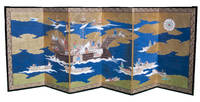
1700ABC_49540Japan 1700. 104 x 272 cm each illustrated panel: ca. 90.5 x 44.5 cm. Ink watercolours gold paint and gold leaf on paper. The image is surrounded by a frame of silk brocade a narrow frame in burgundy and gold and a wider frame in yellow gold and black with a clear floral pattern; together the frame is 5 cm wide the whole is mounted on six roiro black lacquered wood panels with gilt metal fittings on the outer corners of the outer panels. The panels are backed with decorative paper. A remarkable example of a Nanban byobu literal translation: Southern Barbarian screen a type of Japanese folding screen byobu depicting the arrival of Europeans especially the Portuguese in Japan during the late 16th- and early 17th centuries. It shows the vast expanse of the Portuguese seaborne empire. From their possessions along the coast of the Indian subcontinent and their lease of Macau individual Portuguese reached Japan in 1542 and were followed by traders and missionaries the most famous being Francis Xavier. Nanban art provides a unique glimpse into a period of significant cultural exchange and the Japanese perspective on the arrival of the Portuguese in their islands. While inspired by the arrival of and trade with the Portuguese in Japan before the enforcement of the isolationist foreign policy commonly known as Sakoku by the Japanese Tokugawa shogunate from 1633/1639 onwards it remained a popular subject to depict on these folding screens and in other artworks during the Edo period and beyond. The image on the present folding screen shows a large four-masted ship probably approaching the port of Nagasaki. Crew members both Portuguese and people from Portuguese possessions in the Indian subcontinent are seen furling the sails and performing remarkable acrobatic feats in the ship's rigging. The artist emphasises the balloon-like bagginess of their bombacha trousers typically associated with the Portuguese and other Europeans but focuses also on distinctive details such as heavy gold necklaces facial hair hats capes frilly white handkerchiefs and ruffled collars. The foreigners are depicted as being exotic but not scary or very "other" they are depicted as being different while still simply being human. The decoration and colours of the flags flown at the top of each mast are reminiscent of Christian symbols the Cross of Christ and Portugal's colours green and red. Cargo and passengers are offloaded into small boats that pull alongside the ship the top right corner shows a 12-point wind rose including a depiction of the globe. The whole scene is enschrouded in gold clouds.After the Sengoku period a period of practically consecutive and almost continuous civil wars and social upheavals in the 15th- and 16th centuries Japan entered a more peaceful and prosperous period. Folding screens such as the present example were used to divide larger homes and generally show of the growing wealth and prosperity of the warrior and merchant classes. The screens are finely executed in detail and using vibrant colours and copious amounts of gold paint and/or gold leaf. Thematically the painting here continues a tradition of now-lost screens of Chinese trade ships that were in vogue during the 15th- and 16th centuries at the peak of the Sino-Japanese tribute missions that brought entourages numbering in the thousands from the Ming court. The precise subject of these paintings had since shifted from Chinese trade ships to Chinese- or more general Southeast Asian-style ships carrying European including men from the European possessions in Africa and Asia crews. The scene illustrates the dynamic convergence of Eastern and Western cultures through trade around 1600. Portuguese traders first arrived in Japan in 1543 and by 1570 they had established the Bay of Nagasaki as a strategic hub for their commercial operations which were largely unregulated. They generated significant profits by exchanging Chinese silk for Japanese silver although some European goods were also part of the trade. The Portuguese carracks massive three-decked vessels weighing up to 1600 tons captivated local observers with their impressive scale unfamiliar crews and exotic cargo.Alongside these traders Jesuit missionaries sought to spread Christianity finding particular success in Kyushu where many local daimyo converted. However a Christian-led rebellion in 1638 alarmed the Tokugawa authorities raising fears of European colonial interference. As a result the Portuguese were expelled in 1639. When a Portuguese delegation attempted to restore diplomatic relations the following year all sixty members were executed. In 1640 the shogunate instituted a policy of national seclusion restricting foreign contact to limited trade with Chinese merchants a small number of Dutch traders and occasional Korean envoys. By 1650 Christianity was outlawed and any missionary work was punishable by death. The present screen is a slightly later example and the focus of the scene lies mostly on trade and the ship's crew itself and not directly on any Christian identity of the foreigners arriving on Japanese shores.This screen belongs to approximately ninety surviving Nanban screens ranking second only to capital city scenes in popularity among Japanese patrons. The earliest examples date to the 1590s and their continued production throughout the Edo period demonstrates the lasting impact of the Portuguese encounter on Japanese culture.Some minor flaking of the gold paint/gold leaf barely any soiling the decorative paper back of the work shows some traces of wear and use. The image remains clear and the colours vibrant. Overall in very good condition. This exceptional screen offers collectors an important historical document that captures both Portuguese maritime exploration and the Jesuit mission to Japan-a unique period of cultural exchange between East and West. unknown
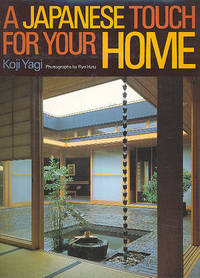
19913487Tokyo : Kodansha International ; New York : Distributed by Kodansha America 1991 ©1982. 1991. Hardcover. Very Good/Fine. 1st edition 9th printing ; 84 pp. ; illustrated some in color ; floor plans ; 31 cm. ; ISBN: 477001015X ; OCLC: 27762699 ; LC: NA7205 ; textured creme-tan cloth in color photographic dustjacket; textured paper endpapers ; ex-library stamps donation label ; remains of original Japanese quarter-sized label laid in ; sensitive photos ; text in English ; "Shows how to adapt aspects of Japanese home design: formal entranceways alcoves screens partitions and diffuse lighting into Western style homes" ; VG/FINE <br/> <br/> Tokyo : Kodansha International ; New York : Distributed by Kodansha America, 1991, ©1982. hardcover
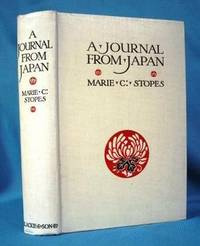
19109941London: Blackie & Sons Limited. Very Good. 1910. First Edition. Hardcover. Clean white cloth with black lettering. Text tight clean & intact. Pictorial frontispiece. B/W photo illustrations. A few pages very lightly foxed. Prior owners signature. Asia Japan; B&W Photographs; 8vo 8" - 9" tall; 280 pages . Blackie & Sons Limited hardcover
19812090502124701355Kokinshoin 1981. Soft Cover. Fine. Number of books: 1 Kokinshoin paperback
110834Maps of the four main islands of Japan and the Korean Peninsula are surrounded by borders of cherry blossom and bamboo with scenes of Mt Fuji a pagoda and birds on the wing. Major cities are shown on the maps; Korea has Pyongyang Seoul and Pusan with '38° LINE' in a much larger font across the centre. The album 275 × 390 mm contains three series of commercially produced small photographic views loosely inserted behind photo-corners 40 hand-coloured views of Japan; 56 black and white views of Tokyo; and 40 black and white views of the Kure-Hiro district as well as 11 larger personal photographs of Bangkok. The last three items in the album are more significant: they are professionally produced photographs of two destroyers of the RAN - HMAS 'Anzac' D59 and HMAS 'Warramunga' D123 - and a large group portrait of three officers and twelve sailors of the 'Warramunga'. Both these ships served in the Korean War. The album and its contents appear to have been purchased by one of the crew members of the 'Warramunga' after she became one of the first Australian warships assigned to the Far East Strategic Reserve in 1955. unknown
19772090202120415829Nikkan Kogyo Shimbun 1977. Soft Cover. Fine. Number of books: 1 Nikkan Kogyo Shimbun paperback
20042091502133534968Futabasha 2004. Soft Cover. Fine. Number of books: 1 Futabasha paperback
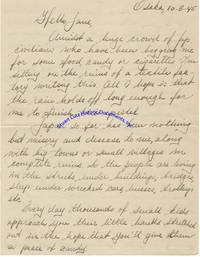
5824OCCUPIED JAPAN. ALS. 4 pages. 8 x 10 . Osaka Japan October 8 1945. An autograph letter signed Van to Jane describing the misery on the ground in Japan right after the end of the Second World War. Van is writing Amidst a large crowd of Jap. civilians who have been begging me for some food candy or cigarettes. He later writes that Japan so far has been nothing but misery and disease to me along with big towns or small villages in complete ruins. So the people are living in the streets under buildings bridges sleep under wrecked cars busses trolleys etc. Every day thousands of small kids approach you their little hands stretched out in the hope that youll give them a piece of candy. Women unable to feed their babies come up to you with the little child sucking away on their breast but not getting any milk at all. They beg for milk on their knees. Other women offer their gold wedding rings for a couple of C ration crackers. Disease is all over. Children with sores as big as a silver dollar all over their skinny bodies by the dozens. How the heck can you possibly refuse to give them a negative answer. This afternoon I actually couldnt walk because I was surrounded by women who kneeled down in front of me begging for food. I finally had to show them that they had no reason to be afraid of me so I bent over and put my hand underneath the chin of a young women who was quite pretty. I lifted up her head and lookedThe people here have no food at all except for a few potatoes that they manage to grow in the streets or among the ruined buildings. They all carry huge sums of money in the hope that some G.I. will sell them a can of C-rations or a K-ration which they will pay for with as much as 500 yen $30.00 of course it is strictly sic forbidden. But some guys get away with it and are making a fortune at the present. After a few concluding thoughts and sending Loads of Love Van writes a postscript saying he expects to be home by Easter. Pages are numbered at the top. The collection is missing the third and fourth pages and contains a noticeable horizontal crease across the middle of the pages but is in otherwise very good condition. unknown
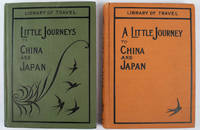
1900166942Chicago.: A. Flanagan Company. 1900. Coloured map of China Indochina and Korea and a coloured map of Japan containing insert maps of Formosa Ryukyu Island Ezo and Chishima and an Outline map of Japan. Coloured frontispiece and one other colour illustration together with black & white photographic illustrations engravings and line drawings throughout the text. Original green decorated cloth stamped & lettered in black. 90pp 79pp and 6 pages of book advertisements. Prior owner signature on front free endpaper. A particularly good copy offered together with the 1931 edition which omits any mention of the Boxer Rebellion. <br>The 1931 edition was published by A. Flanagan Company Chicago. 166pp Original tan cloth covered boards with a prior owner bookplate on the front pastedown. Written for intermediate and upper grade American schoolchildren the earlier of these two editions of this textbook published in 1900 contains a description of the Boxer rebellion that has been removed from later editions: <br> <br>" How we have longed to visit this wonderful country! A few months ago such a visit would not have been possible for China was at war with our nation and many of the nations of Europe. Our lives would have been in danger and the journey to China might have been the last we should ever have taken. <br> <br>You have heard of the Boxers of China who killed many foreigners and also many Christianized Chinese in the late revolution in that country. Do you know who these Boxers are They are members of a secret patriotic society. They love their country and want to prevent it from falling into the possession of foreigners. They believe that these foreigners have come to overthrow their government and to destroy their religion. They are opposed to the ruling family in China who are Manchus. These Manchus came from a territory outside of China Proper and Chinese Boxers have always disliked to have the rulers of their country chosen from Manchuria." There is a particularly gruesome illustration of Boxer heads in cages exposed as a warning to passers-by. <br> <br>The 1931 edition omits any reference to the Boxers and the illustration described above has also been removed. . A. Flanagan Company. hardcover
20012080202104502401Catholic Central Council 2001. Soft Cover. Fine. Number of pages: 129p Size: 19cm Number of books: 1 Catholic Central Council paperback
1998Q-4533013813Books Nippan 1998-04-01. Paperback. New. New. In shrink wrap. Looks like an interesting title! Books Nippan paperback
DADAX4533003079Brand: Books Nippan 0000-00-00. 19th. paperback. New. 0.50x4.50x6.00. Buy with confidence. Excellent Customer Service & Return policy. Brand: Books Nippan paperback
19842090502126802184Baifukan 1984. Soft Cover. Fine. Number of books: 1 Baifukan paperback
19752111902160100834Not Available 1975. Soft Cover. Fine. Number of pages: 45 Size: Showa print Not Available paperback
2091502135500929Not Available N.A. Soft Cover. Fine. Number of pages: 18x110cm Not Available paperback
19412082402113501449Japan Mining Newspaper 1941. Soft Cover. Fine. Volume: 1 Japan Mining Newspaper paperback
19702090202118204130Kaibundo shuppan 1970. Soft Cover. Fine. The book is in fine condition. Kaibundo shuppan paperback
20012111902154609083Tankosha 2001. Soft Cover. Fine. The book is in fine condition. Tankosha paperback
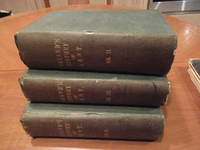
1829018979London: G. Virtue 1829. First Edition . Hardcover. Good. 9" x 6" x 7. Plates at Front. Three Volumes. 713 Xv. 698 Xviii Index At End. 780 Xiii 2 P Directions For Placement Of Plates. Original Green Cloth Original Yellow Endpapers No Marks Not Institutional Copies. Vols. Ii And Iii Dated 1829 On Title Pages Vol. Iv No Such Date. Frayed At Top And Bottom Of Spines And At Upper Rear Tips Spine Gilt Strong Spine Cloth Aged To Brown. Hinges Neatly Broken. <br/> <br/> G. Virtue hardcover
20022080202104501879Yugisha 2002. Soft Cover. Fine. Number of pages: 230p Size: 20cm Number of books: 1 Yugisha paperback
19932080502106909759Chikura shobo 1993. Soft Cover. Fine. The book is in fine condition. Chikura shobo paperback