11 476 résultats
19712090202120300325Not Available 1971. Soft Cover. Fine. Volume: 1 Not Available paperback
19682083002116412229Human traffic company 1968. Soft Cover. Fine. The book is in fine condition. Human traffic company paperback
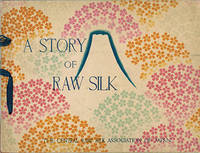
MA04K-00310Tokyo: The Central Raw Silk Association of Japan. Used - Good. Tokyo: The Central Raw Silk Association of Japan 1939. Oblong 12mo string bound silk wraps. Shiny flecked endpapers. 26pp. B/W photos. Near Very Good book. trade catalog silkworm Inquire if you need further information. Tokyo: The Central Raw Silk Association of Japan paperback
51-1110Tokyo: The Central Raw Silk Association of Japan 1939. Color printed silk cover with tassels and decorative endpapers. First edition; oblong 7 x 9 1/2; pp. 26; ; illustrated with photographs; overall very good condition. Published "for those who love the grace and beauty of silk and for those who are not informed on the origin of and the utility of silk the story of raw silk will be told." it follows the process of obtaining the material and manufacturing the fabric and describes the characteristics of raw silk. Tokyo: The Central Raw Silk Association of Japan, 1939 unknown
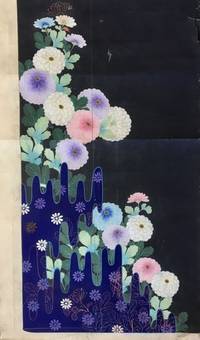
181956897Kyoto Japan: Marubeni Shoten Design Dept. Keimeikai Textile & Dyeing Studio Tanioka Shoten Design Dept. ca. 1918-1945. Folio. 61 original hand-painted inked and pencil designs with a few on a lightly toned but quality semi-translucent paper the majority on thick paper stock and still others with two pieces carefully pasted together with contiguous designs sized from 9 x 15 in. up to 19.25 x 38.5 in. with 13 of the pieces larger the larger size a number of them sized 18 x 32 in. and many in the 14.25 x 15.5 in. size colour painted; the majority feature the design studio chop or crest at lower corners throughout many w/ annotations in margins several w/ change orders neatly annotated or even the title of the design and still many others w/ Roman numeric inventory codes in margins as well two still retaining original small silk samples many with creasing or minor tears & edgewear or creasing to fore-edges a few w/ small & large closed tears while others show some creasing and thumbing from continued use still an exceptional group of manuscripts. This superb archive of 61 original hand-painted kimono designs furnishes an exceptional visual array of Taisho- and early Showa-era Japanese motifs and styles. A number of the designs evoke traditional Japanese Ukiyo-e woodblock prints with deep vivid colours and well rendered illustrations. Many of these designs incorporate floral patterns including Kiku Chrysanthemum Botan Mon Peony Pattern Manju Kiku Marigolds Japanese Irises Morning Glory Cockscomb Ivy Dahlias and many other botanical motifs. In addition there are many illustrating ornately embroidered designs austere bamboo mushrooms and intriguing landscapes some with a small portion fully painted in with brilliant colouring while the outline of the kimono fills out the drawing. Two of the designs still features their original small attached silk kimono sample more reminiscent of Western Design houses which often attached their chosen fabric samples to their clothing designs. A few of the designs are executed on translucent thin paper for the kimono draper to transfer the design to white silk or other fabrics via some type of carbon paper process. Another of the designs has been executed on a stunning silver metallic paper with palm or bamboo leaf fronds executed in vivid blues & browns. Some feature a nearly surrealist quality while several others include illustrations of doves or chickens. Two of the designs incorporate Art Deco representations of Chinese Junks and Japanese sailing vessels typical of the 1930’s prior to World War II. In the Taisho Era a new era opened for textile designers working with Kyoto drapers and department stores with many having trained at new art colleges and then working in the design studios of Marubeni Keimeikai Textile & Dyeing Studio and others. The Tachiki Artist design studio designs on thin translucent paper include one with designer stamp of character embedded within a skull. Some appear to have two different date stamps for the Marubeni Shoten Design and some are unsigned or stamped. The Taisho- and Showa-era kimonos featured brighter colours more groundbreaking designs as Japan’s designers embraced traditional dress and transformed it into a new garment equally appealing to the “Moga†or brazen “Modern Girl.†The designer notes include instructions to “leave a little more space between the fans;†“Drop the little fan crest;†“too much white bush clover†on the pine cones and even that Matsuo Taishichi had ordered a design for “clothes for paying a visit for a young person.†The Marubeni Shoten originated with Chubei Itho who began in 1858 as a salesman for linen cloth and by 1872 had opened his drapery store Benchu in Senba Osaka. By 1918 Chubei Itoh had expanded the business into Osaka and deciced to merge with Itochu Shoten Ltd. becoming Marubeni Shoten with their own drapers shops and many contracts with department stores. Later by the mid-1950s Marubeni merged with the company that operated the Takashimaya Dept. Store Chain all the while preserving their design studio and artists. See: Yuko Fukatsu-Fukuoka The Evolution of Yuzen-dyeing Techniques and Designs After the Meiji Restoration 2004; Arisa Shinko Tomikawa Hand Painted Kyo Yuzen Atelier “Arisa†A Brief Introduction 2020; Annie Van Asche Japanese Kimono Fashion of the Early Twentieth Century Textile Society of America Symposium Proceedings 2000; Our History Our Roots Marubeni Corporation 2020. Marubeni Shoten Design Dept., Keimeikai Textile & Dyeing Studio, Tanioka Shoten Design Dept., hardcover
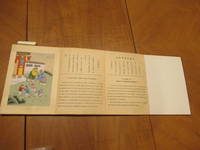
033501No Publisher Indicated. Hardcover. Very Good . Maroon Silk Over Boards Paper Cover Label In Black With Small Red Stamp.Accordian Style Pages Title Page Plus Ten Pairs Of Page With Colored Paste-In Illustration On Left Text In Chinese And English On Right One Pair For Each Of The Ten Major Festivals. Clean And Bright Well Preserved But Silk Worn Right At Corners. There Is A Nearly Invisible 1 1/2" Tear At The Top Of The Tedxt Page #3 Near The Gutter Edge. Undated But Probably Circa 1910-1935. <br/> <br/> No Publisher Indicated hardcover
19682080502106914075Japan Management Publishing Association 1968. Soft Cover. Fine. The book is in fine condition. Japan Management Publishing Association paperback
19492080502106910511Not Available 1949. Soft Cover. Fine. The book is in fine condition. Not Available paperback
19662091502135415977Not Available 1966. Soft Cover. Fine. Number of books: 1 Not Available paperback
19782092902140304414Sobunsha 1978. Soft Cover. Fine. Number of books: 1 Sobunsha paperback
19602110502150311241Federation of Kagawa Salt Industry Associations 1960. Soft Cover. Fine. Volume: 1 Federation of Kagawa Salt Industry Associations paperback
19362092902140302542Greater Japan Union Youth Group 1936. Soft Cover. Fine. Number of books: 1 Greater Japan Union Youth Group paperback
19862091502135420456Japan Kim Il Sung Doctrine Study Group 1986. Soft Cover. Fine. Number of books: 1 Japan Kim Il Sung Doctrine Study Group paperback
19922091502135309320Seibunsha 1992. Soft Cover. Fine. Number of books: 5 Seibunsha paperback
19782092902137500626Sobunsha 1978. Soft Cover. Fine. Size: A5 size Number of books: 1 book Sobunsha paperback
19772091502135420468Japan Youth Juche Idea Study Group 1977. Soft Cover. Fine. Number of books: 1 Japan Youth Juche Idea Study Group paperback
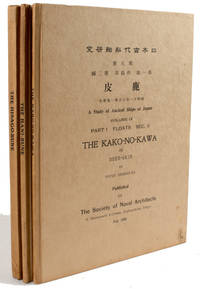
1934162281Tokyo: The Society of Naval Architects. 1934- 1936. 3 volumes which make up the complete floats section of A Study of Ancient Ships of Japan. <br> <br>Volume II Part 1. Floats Sec. 1. The Hisago-bune or Calabash Boat. Revised and enlarged edition. Black and white line illustrations and photographic plates v 86pp. <br> <br>Volume IX Part 1. Floats Sec. 11. The Kako-no-kawa or Deer-Skin. Black and white line illustrations and photographic plates iv 87 - 128pp. <br> <br>Volume X Part I. Floats Sec. III. The Hani-bune or Clay-Boat. Folding map with areas where floats are found highlighted in colour 129 - 160pp. Staples rusted one leaf loose but all present. <br> <br>In original paper covered boards each complete with paper backstrips which are frequently damaged. Free endpapers browned some browning at staples. Very good copies in paper covered boards which show a little minor wear. . The Society of Naval Architects. hardcover
1980KOS01400077TBD 1980. Soft Cover. Fine. KOS01400077 TBD paperback
2083002115600558Chuokoronsha N.A. Soft Cover. Fine. Number of pages: 300p Size: 19cm Chuokoronsha paperback
19192080502106913390Not Available 1919. Soft Cover. Fine. The book is in fine condition. Not Available paperback
19882082402113510918Not Available 1988. Soft Cover. Fine. Number of books: books Not Available paperback
20042080502106914048Japan Society of Bookkeeping 2004. Soft Cover. Fine. The book is in fine condition. Japan Society of Bookkeeping paperback
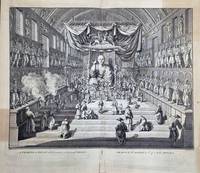
1740196135London.: William Jackson for Claude du Bosc. circa1740. Double-page copper-plate engraving image 30.5 x 41 cms; 39.3 x 44 cms sheet including plate-mark and captions edges chipped sheet age-toned with several patches noticeably darkened mainly outside the image area several repaired short tears to edges no loss to the image in sound condition. Bernard Picart's dynamic rendering of worshippers in a Japanese temple the Sanjūsangen-dō Buddhist temple in Kyoto first published in his landmark work "Ceremonies et Coutumes Religieuses de tous les Peuples du Monde" between 1723 and 1737 a history of religious ceremonies manners and dress from all countries of the world this from volume 4 of the first complete English edition 1733-1739. . (William Jackson, for Claude du Bosc) unknown
19972091502133900254Not Available 1997. Soft Cover. Fine. Number of books: 8 Not Available paperback
19922090502113702817Not Available 1992. Soft Cover. Fine. The book is in fine condition. Not Available paperback